Vinyl QR code stickers combine durable adhesive materials with scannable digital links, making them one of the most practical tools for printing QR codes that must survive real-world handling, weather, cleaning, and repeated use. In simple terms, a QR code is a two-dimensional barcode that stores information such as a website URL, app download link, menu, payment page, product record, or contact card. Vinyl refers to a flexible plastic film used for labels and decals because it resists moisture, abrasion, and fading better than ordinary paper. When those two elements are paired, businesses get a printed code that stays readable longer and performs reliably across packaging, storefronts, equipment, vehicles, events, and industrial settings.
I have worked on QR code rollouts where the design looked perfect on screen, then failed in the field because the wrong material was chosen. Paper labels absorbed moisture in refrigerated storage. Gloss finishes created glare under retail lighting. Tiny codes on curved bottles lost scan accuracy. Vinyl solved many of those problems because it conforms well, accepts high-resolution printing, and can be paired with laminates, permanent or removable adhesives, and outdoor-grade inks. That matters because the best QR strategy is not just about generating a code; it is about preserving scanability from the moment the sticker is applied until the campaign or operational task ends.
This topic matters to marketers, operations teams, manufacturers, restaurants, healthcare providers, and local businesses because printed QR codes now support both customer journeys and internal workflows. A single sticker can direct a buyer to setup instructions, capture a lead at a trade show, verify inventory in a warehouse, or link a resident to a property management portal. As smartphone camera scanning has become standard on iPhone and Android devices, the barrier to use has dropped sharply. The challenge has shifted from user adoption to execution quality: choosing the right size, substrate, adhesive, contrast, finish, placement, and testing process so the code scans instantly in the environment where it will actually live.
As a hub for printing QR codes, this article focuses on vinyl QR code stickers because they sit at the intersection of design, material science, print production, and user experience. Understanding their benefits and use cases gives you a foundation for choosing print methods, setting artwork specifications, evaluating indoor versus outdoor durability, and deciding when stickers are better than direct printing, metal plates, paper labels, or static signage. If you need QR codes that work beyond a short campaign and keep working after exposure to touch, friction, sun, rain, cleaning chemicals, or handling, vinyl is usually where the serious conversation starts.
Why Vinyl Is a Strong Material for Printed QR Codes
Vinyl is widely used for QR code stickers because it offers a better balance of print quality, durability, and application flexibility than standard paper stocks. Cast and calendered vinyl films are common choices. Calendered vinyl is economical for flat or slightly curved surfaces and often works well for indoor labels, retail decals, and short- to medium-term promotions. Cast vinyl is thinner, more conformable, and better suited for vehicles, textured substrates, rivets, and longer outdoor life. For QR codes, that distinction matters because surface conformity affects whether the printed squares remain optically consistent when scanned by a phone camera.
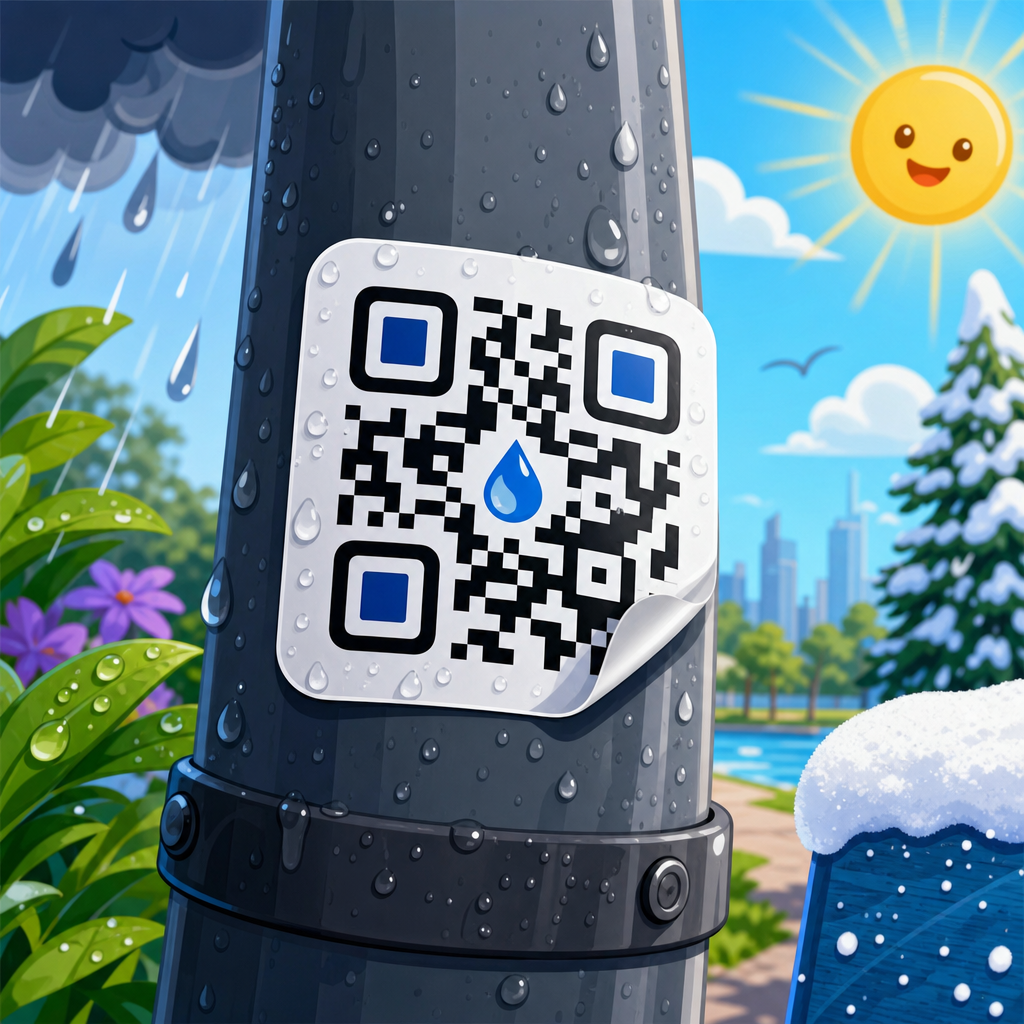
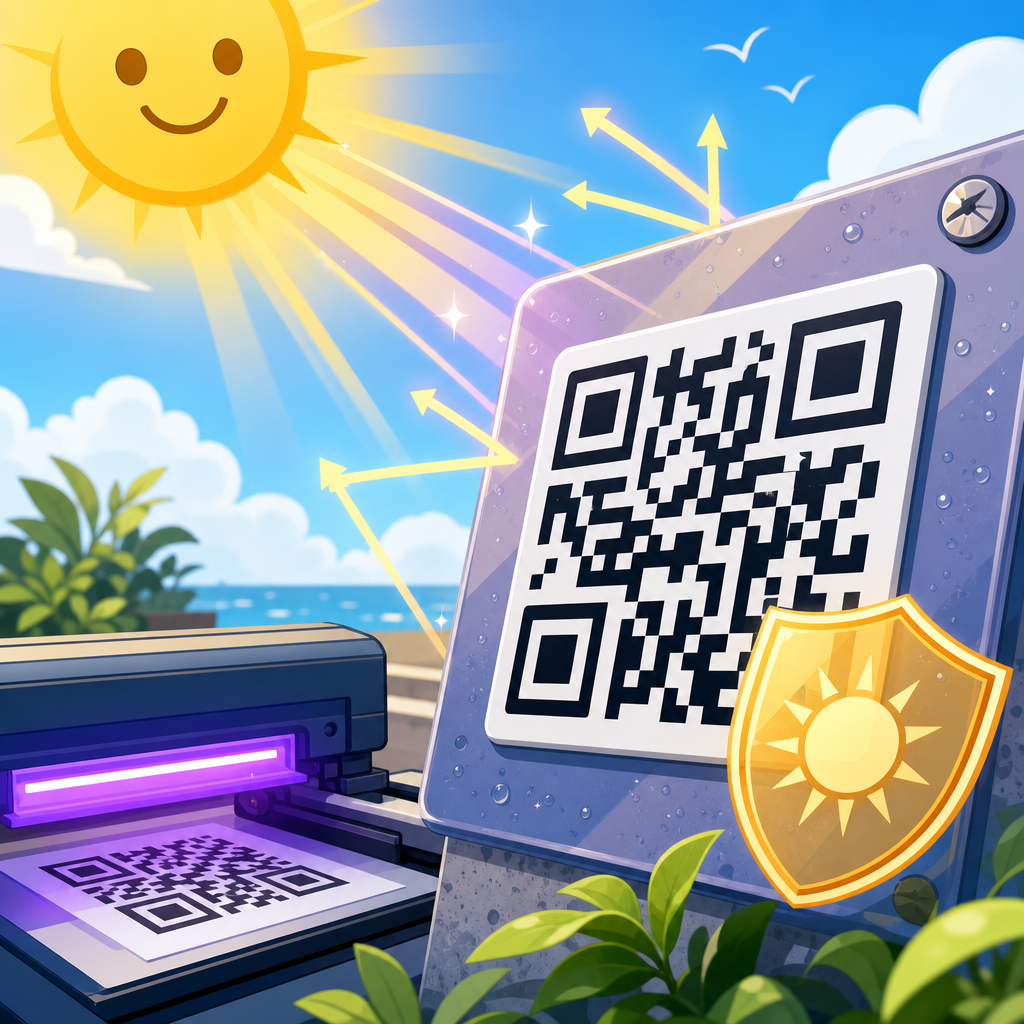
Durability is the clearest advantage. Vinyl resists water, oils, mild chemicals, and UV exposure better than paper. Add a laminate, and you further improve scratch resistance and reduce ink wear from repeated wiping. In restaurants, gyms, hospitals, and industrial facilities, cleaning is routine. A menu sticker on a table, a check-in code near a front desk, or a maintenance QR code on machinery may be wiped dozens of times per week. With paper, edge lift and print degradation appear quickly. With vinyl plus a protective overlaminate, codes remain readable much longer, especially when printed at appropriate contrast using resin thermal transfer, UV inkjet, eco-solvent, latex, or durable toner systems.
Another practical benefit is adhesive choice. Permanent acrylic adhesives are common for long-term placement on metal, glass, painted surfaces, and many plastics. Removable adhesives are useful for temporary promotions, event signage, and leased spaces where residue is a concern. High-tack variants can help on low-energy plastics or rougher surfaces, though substrate testing is essential. In my experience, adhesive mismatch causes as many failures as poor code design. A perfectly printed QR sticker that curls at the edges or lifts in humidity eventually becomes a scanning problem. Material selection and adhesion testing should be treated as part of QR code performance, not as separate production details.
Printing QR Codes Correctly on Vinyl
Printing QR codes on vinyl starts with file quality and ends with environmental testing. The code itself should be generated at high resolution, ideally as a vector file such as SVG, EPS, or PDF, so edges remain crisp at any output size. A QR code needs strong contrast, typically black on white, and it needs a quiet zone, the blank margin around the symbol, usually four modules wide at minimum. Designers often break these rules by crowding logos too close, reversing colors without adequate testing, or placing the code on busy artwork. On vinyl, those mistakes become more costly because the label may be durable but still unscannable.
Print method selection depends on quantity, lifespan, and exposure. Digital toner and production inkjet presses are effective for short runs, variable data, and fast turnaround. Wide-format eco-solvent, latex, and UV printers are common for decals, window graphics, and larger stickers. Thermal transfer is widely trusted in industrial labeling because resin ribbons produce durable, chemical-resistant marks on compatible synthetic stocks. Whatever method you use, resolution matters. Soft edges, ink spread, banding, and insufficient density reduce scanner confidence. ISO/IEC 15415 and ISO/IEC 18004 provide established references for two-dimensional code quality and symbol structure, and serious print programs benefit from verifier-based checks rather than relying only on smartphone testing.
Size should be driven by scan distance and context. A small product label scanned from six to twelve inches may work at around 0.75 inches square if printing is crisp and the data payload is modest. A storefront decal intended to be scanned through glass from several feet away should be much larger. Curved surfaces require extra caution because distortion can affect module geometry. If you use a dynamic QR code, the printed symbol can stay constant while the destination changes, which is especially useful for packaging, asset labels, and campaigns that need analytics or later updates. That flexibility often makes vinyl stickers a better long-term investment than static print pieces tied to a single URL.
| Printing consideration | Best practice | Why it matters |
|---|---|---|
| File format | Use vector artwork when possible | Maintains sharp edges at any sticker size |
| Contrast | Dark code on light background | Improves scan speed and reliability |
| Quiet zone | Keep clear space around the code | Helps cameras isolate the symbol |
| Finish | Prefer matte when glare is likely | Reduces reflections from lights and sun |
| Testing | Scan across devices and lighting conditions | Finds real-world failures before rollout |
Benefits of Vinyl QR Code Stickers in Real Environments
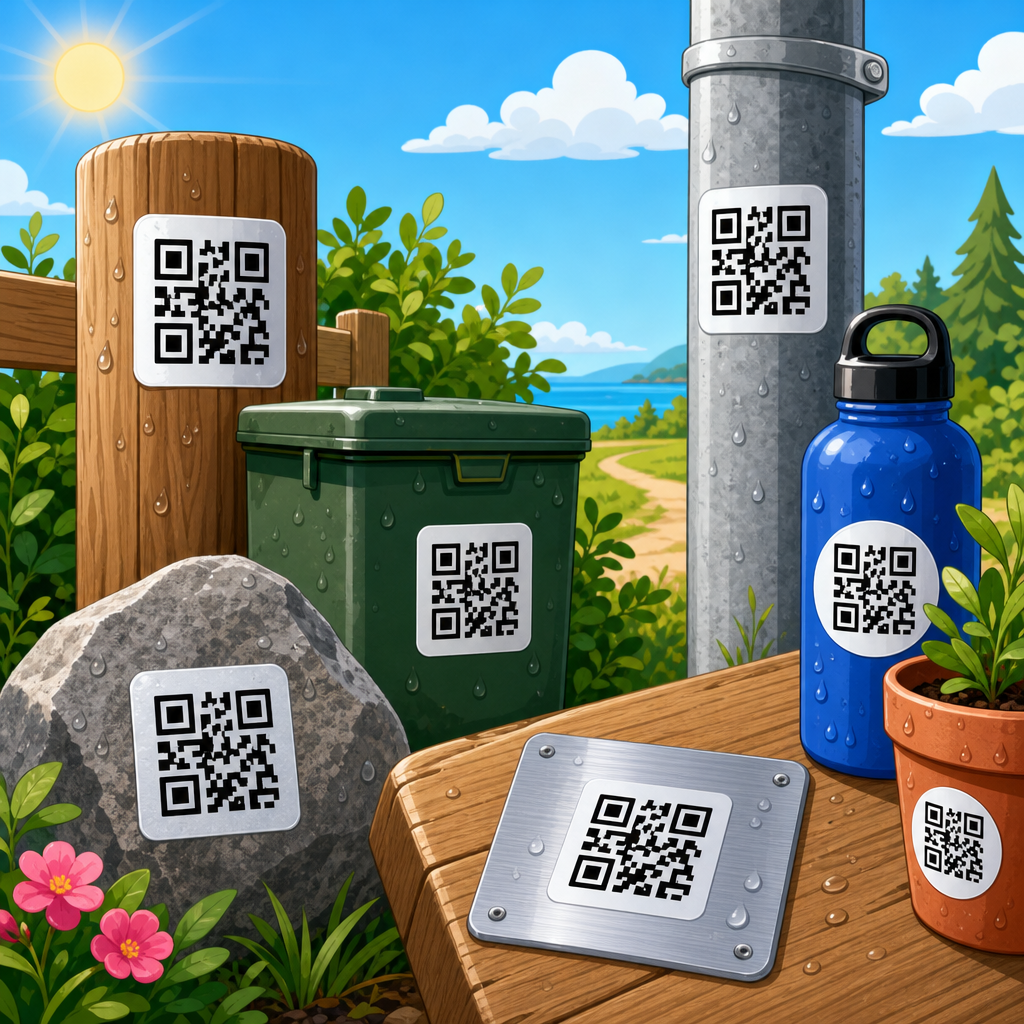
The main benefit of vinyl QR code stickers is reliability over time. In retail, that means shelf talkers, product callouts, and window decals keep working after customers touch them, carts bump them, and sunlight hits them daily. In hospitality, poolside signs and room information labels withstand humidity better than paper. In manufacturing and warehousing, rack labels and equipment tags need a surface that tolerates dust, abrasion, and occasional solvent contact. In property management, common-area decals may be exposed to weather, cleaning crews, and seasonal temperature swings. Vinyl is not indestructible, but it is materially better suited to these environments than ordinary label paper.
Vinyl also supports better visual integration without sacrificing function. Because it is available in white, clear, opaque, removable, high-tack, destructible, and specialty finishes, it can be matched to branding and application needs. Clear vinyl can work on glass when backed with a white flood coat for contrast. Matte white vinyl is often the safest choice for universal scanability. Tamper-evident or destructible vinyl variants can be used for asset tracking or authenticity labels where removal should be obvious. These options expand the usefulness of QR code printing beyond simple marketing stickers and into compliance, warranty, maintenance, and security applications.
Another overlooked benefit is operational speed. Stickers are easier to deploy than replacing packaging plates, reprinting cartons, or fabricating permanent signs. When teams need to add digital instructions, safety documentation, multilingual content, or updated routing information quickly, vinyl QR labels can be printed and applied with minimal disruption. I have seen companies use them as a bridge strategy during product transitions: a durable sticker on existing packaging linked customers to revised manuals and support videos while the next packaging run was still months away. That kind of agility is one reason QR code stickers remain attractive even when direct print options exist.
Use Cases Across Industries
Retailers use vinyl QR code stickers on windows, shelves, endcaps, and packaging to connect physical browsing with digital conversion. A window decal can send after-hours foot traffic to current inventory. A shelf label can open product comparisons, ratings, or replenishment options. On packaging, a code can deliver setup guides, warranty registration, and accessory recommendations. The vinyl format works because it can be sized for visibility, replaced without redesigning the entire package, and laminated for durability during shipping and handling. For seasonal campaigns, removable vinyl gives stores flexibility without leaving heavy residue on fixtures or glass.
Restaurants and hospitality businesses use vinyl stickers for menus, ordering, reviews, loyalty signups, and property information. Tabletop QR stickers should resist repeated sanitizing and food spills, which is where laminated vinyl outperforms paper cards. Hotels place room, lobby, elevator, and pool-area codes that link to amenities, digital directories, or service requests. Event venues use them for ticketing support, wayfinding, sponsor activations, and lead capture. Because many of these locations feature bright overhead lighting or direct sun, matte lamination and careful placement become critical. A code hidden under glare does not fail occasionally; it fails at the exact moment the guest wants help.
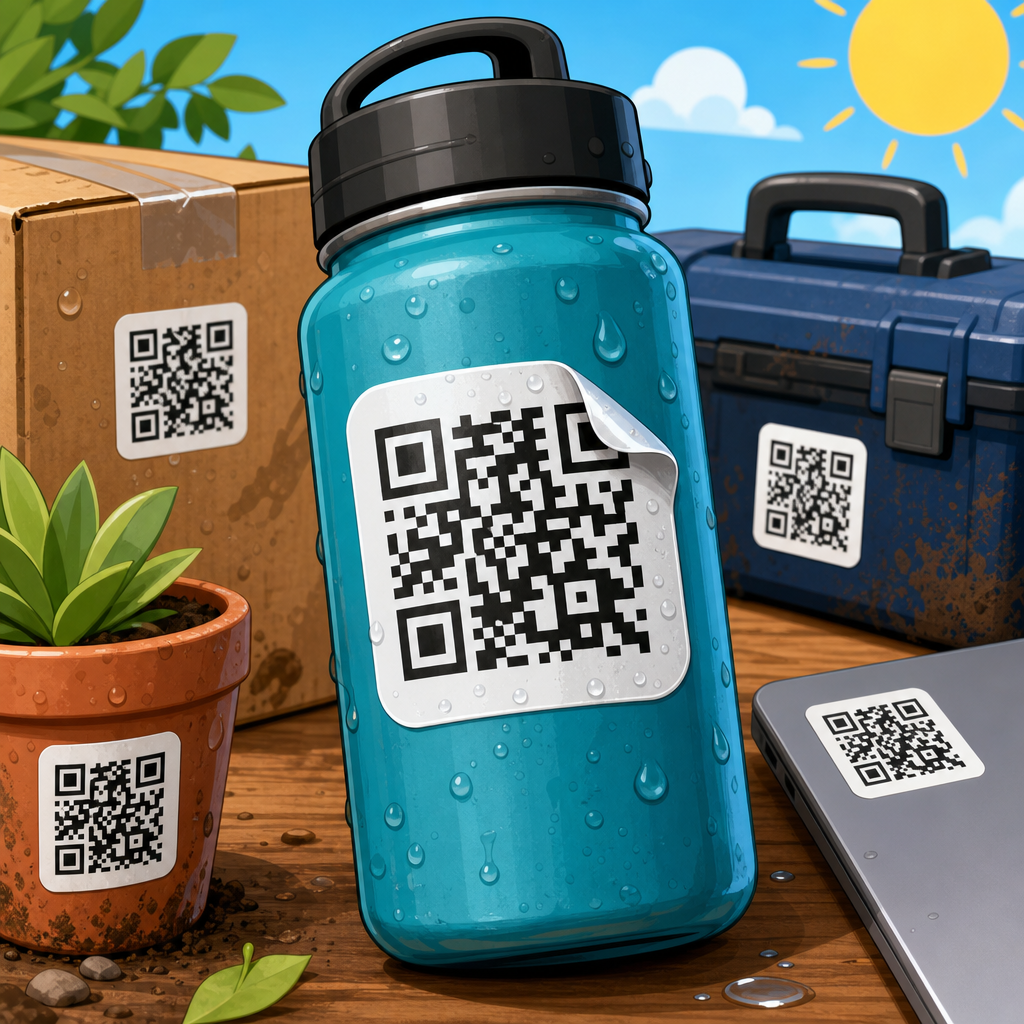
Industrial, healthcare, and field-service use cases are equally strong. Maintenance teams place vinyl QR stickers on equipment to open service histories, lockout procedures, parts lists, and inspection forms. Laboratories and clinics use synthetic labels where moisture and cleaning are routine, though material and adhesive selection must align with regulatory and sterilization requirements. Logistics operators use QR labels on bins, pallets, and racks for workflow tracking, often choosing thermal transfer printed synthetics for durability. In construction and facility management, stickers on panels, doors, or assets can link technicians to manuals and service tickets. These applications demand practical print discipline, not decorative experimentation.
Design and Placement Mistakes to Avoid
The most common mistake is treating the QR code as a decorative element rather than a functional interface. Excessive styling, low contrast palettes, tiny sizes, and crowded layouts are frequent causes of poor scan performance. Logos can be added, but only within the tolerance of the code’s error correction level and only after testing. Another mistake is using gloss where matte is needed. On a polished wall, refrigerated cooler door, or south-facing window, reflections can make a technically correct code hard to capture. I recommend testing under the harshest likely lighting, not just under office conditions.
Placement errors are equally costly. Codes should sit where users can comfortably approach, frame the image, and scan without awkward body angles or safety risk. A QR sticker behind a reflective counter, too low on a door, or wrapped across a bottle seam may look acceptable in a mockup but perform poorly in use. Surfaces must be clean before application, and cure time matters for some adhesives. For long-life outdoor deployments, edge sealing or laminate selection may be necessary. The best printed QR code is the one that scans instantly in context, survives the environment, and leads to a mobile-friendly destination that answers the user’s next question.
Choosing Vinyl QR Stickers as Your Printing Hub Strategy
For organizations building a broader QR code printing program, vinyl stickers are often the most versatile hub option because they let you test placements, messaging, landing pages, and campaign structures without committing to permanent production changes. They work as pilot tools, retrofit tools, and long-term identifiers. You can apply them to packaging, displays, windows, equipment, binders, kiosks, and shipping materials while you learn which destinations are actually used. Pair them with dynamic QR management, analytics, and a documented print specification, and you create a repeatable system instead of a series of disconnected labels.
The key takeaway is simple: vinyl QR code stickers succeed when material, print quality, adhesive, finish, size, and placement are treated as one system. Their core benefit is dependable scanning in real environments, not just attractive appearance at the moment of installation. They are especially valuable when a code must endure touch, weather, cleaning, or operational wear while still linking people to current digital information. If you are building out your QR code design, printing, and materials strategy, start by standardizing vinyl specifications, testing across devices and locations, and documenting what performs best. Then expand with confidence.
Frequently Asked Questions
What are vinyl QR code stickers, and why are they better than standard paper QR labels?
Vinyl QR code stickers are QR code labels printed on a flexible plastic film rather than standard paper stock. The main advantage is durability. While paper labels can work for short-term indoor use, they tend to absorb moisture, tear, fade, curl, or become unreadable when exposed to handling, spills, sunlight, cleaning products, or changing temperatures. Vinyl is specifically valued in label and decal applications because it resists moisture, surface wear, and everyday environmental stress far better than paper alternatives.
That makes vinyl QR code stickers a practical choice whenever the code needs to stay scannable over time. For example, if a business places a QR code on packaging, equipment, windows, menus, product displays, payment stations, or outdoor surfaces, the material matters just as much as the code itself. A damaged sticker can lead to failed scans, poor user experience, and lost conversions. Vinyl helps preserve print clarity, contrast, and adhesion, which are all essential for reliable scanning.
Another important benefit is appearance. Vinyl labels often look cleaner and more professional, especially in customer-facing settings. They can be produced in matte or gloss finishes, cut to different shapes and sizes, and paired with laminates for even greater protection. In short, vinyl QR code stickers are better than standard paper labels when durability, presentation, and dependable long-term performance are priorities.
What are the main benefits of using vinyl QR code stickers for businesses?
Vinyl QR code stickers offer several meaningful advantages for businesses that want to connect printed materials with digital actions. First, they provide durability in real-world conditions. A QR code is only useful if customers can still scan it after repeated contact, exposure to weather, cleaning, or transport. Because vinyl is designed to hold up better than basic label materials, it helps maintain scannability in demanding environments.
Second, vinyl QR code stickers are highly versatile. A single code can link customers to a website, product page, digital menu, app download, contact form, review platform, payment page, support documentation, or inventory record. That flexibility makes them useful across marketing, operations, customer service, logistics, and retail. Businesses can place them on packaging, countertops, tables, machinery, vehicles, storefronts, promotional materials, and event signage without worrying as much about quick deterioration.
Third, they support efficiency and convenience. Instead of typing URLs or printing large amounts of changing information, businesses can use a QR code to direct people instantly to the most current digital destination. This reduces friction for customers and can simplify updates when dynamic QR codes are used. It also helps conserve physical space on labels and signs by moving detailed information online while keeping the printed sticker compact and easy to use.
Finally, vinyl QR code stickers can improve brand trust and professionalism. A clean, intact, easy-to-scan code signals that a business pays attention to quality. In environments where customers rely on quick mobile interactions, such as ordering, paying, registering, or verifying information, that matters. The combination of durability, ease of use, and visual reliability makes vinyl QR code stickers one of the most effective print-to-digital tools available.
Where are vinyl QR code stickers most commonly used?
Vinyl QR code stickers are used in a wide range of settings because they bridge physical objects and digital information so effectively. In retail, they are commonly applied to product packaging, shelf displays, and window signage to send shoppers to product details, promotions, how-to content, loyalty programs, or checkout pages. In restaurants and hospitality, they are often used for digital menus, ordering systems, guest feedback, Wi-Fi access, room information, and contactless payment options.
They are also extremely useful in operational and industrial environments. Warehouses, manufacturing facilities, and service teams use vinyl QR labels on bins, tools, machines, panels, and equipment to access maintenance records, inspection checklists, asset tracking systems, training videos, or safety documentation. Because these settings involve frequent handling and sometimes harsh conditions, the toughness of vinyl is especially valuable.
Healthcare and office environments benefit from them as well. Clinics may use QR stickers for patient check-in, room information, sanitation logs, or equipment tracking. Offices can place them on doors, desks, visitor stations, and shared devices to connect people to schedules, booking systems, employee directories, onboarding materials, or IT support pages. Event organizers use them on badges, booths, displays, and handouts for registration, lead capture, maps, and digital brochures.
Outdoor and mobile applications are another major category. Vinyl QR code stickers are often applied to vehicles, job site signage, curbside pickup stations, real estate boards, lockers, and public-facing decals where weather resistance and strong adhesion are important. In all of these cases, the common thread is simple: the sticker must remain readable and attached long enough to deliver consistent scanning performance.
How can you make sure a vinyl QR code sticker stays easy to scan over time?
Long-term scan performance depends on more than just choosing vinyl as the material, although that is an excellent starting point. The QR code itself must be generated correctly, printed at a suitable resolution, and sized appropriately for the viewing distance. If the code is too small, too dense, or printed with poor contrast, users may struggle to scan it even if the sticker is physically intact. In most cases, a dark code on a light background offers the best reliability.
Placement is also critical. Even durable vinyl stickers can become difficult to use if they are wrapped across sharp curves, placed over textured or dirty surfaces, or installed where glare, abrasion, or constant folding affects the printed image. Flat, clean, well-prepared surfaces usually produce the best results. For outdoor or high-touch applications, adding a protective laminate can help shield the printed code from scratching, fading, chemicals, and repeated cleaning.
Testing should always be part of the process. Before ordering large quantities, it is smart to test the QR code with multiple smartphone models and scanning apps under realistic conditions. If the code will be used outdoors, test it in bright light. If it will be mounted on equipment, test it after application to that actual surface. It is also wise to confirm that the linked digital destination is mobile-friendly, fast-loading, and relevant, because a successful scan still fails as an experience if the landing page is poor.
Businesses should also think strategically about maintenance and updates. Dynamic QR codes can be especially useful because they allow the destination URL to change without replacing the printed sticker. That extends the life of the label and reduces waste. Periodic inspections help ensure stickers remain legible, adhered, and current. When material quality, print quality, placement, and testing all work together, vinyl QR code stickers can remain dependable for long periods in demanding use cases.
Are vinyl QR code stickers suitable for outdoor use, cleaning, and repeated handling?
Yes, in many cases vinyl QR code stickers are specifically chosen for those conditions. One of vinyl’s biggest strengths is that it handles moisture, routine wear, and environmental exposure much better than standard paper labels. That makes it a strong option for outdoor signage, storefront windows, parking pickup stations, equipment labels, water-resistant packaging, and other applications where the sticker may face rain, humidity, dirt, sunlight, or temperature changes.
They are also well suited to environments where regular cleaning is necessary. In restaurants, healthcare spaces, gyms, retail counters, and shared public areas, surfaces are often wiped down repeatedly. A properly produced vinyl QR sticker, especially one paired with a suitable laminate or protective coating, is more likely to keep its printed quality and remain attached through that routine maintenance. This is important because QR codes depend on clear visual patterns; even minor damage or smudging can interfere with scanning.
Repeated handling is another area where vinyl performs well. Stickers placed on reusable packaging, product containers, tools, kiosks, menus, and check-in stations may be touched constantly. Vinyl’s flexibility and toughness help it resist tearing and edge lifting better than more fragile materials. That said, performance still depends on the exact product construction, adhesive type, print method, and environmental conditions. For the most demanding use cases, businesses should choose outdoor-rated vinyl, use permanent adhesive when appropriate, and confirm the sticker has been designed for UV exposure, abrasion resistance, and the cleaning methods it will face.
So while not every vinyl sticker is identical, vinyl as a category is one of the most reliable materials for QR codes that need to survive real-world use. When durability, weather resistance, and ongoing scannability matter, it is often the most sensible choice.