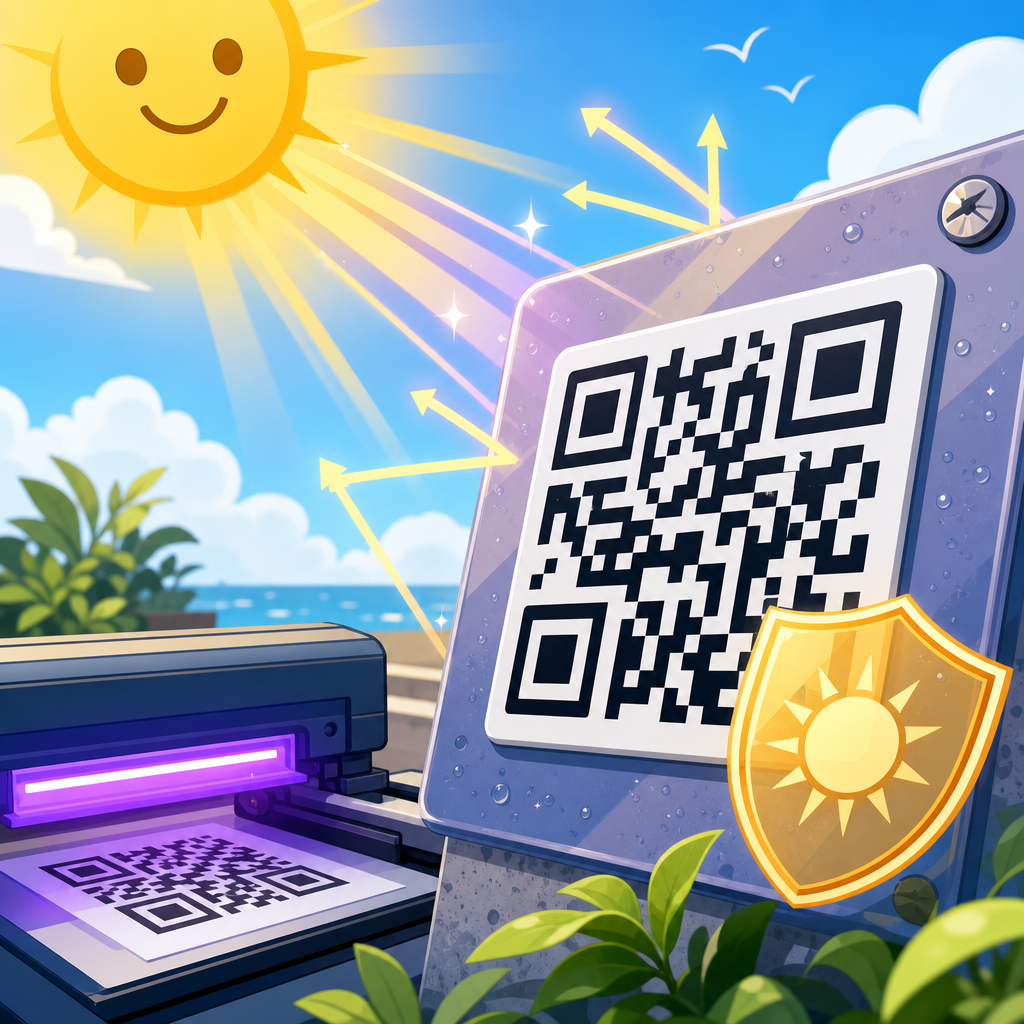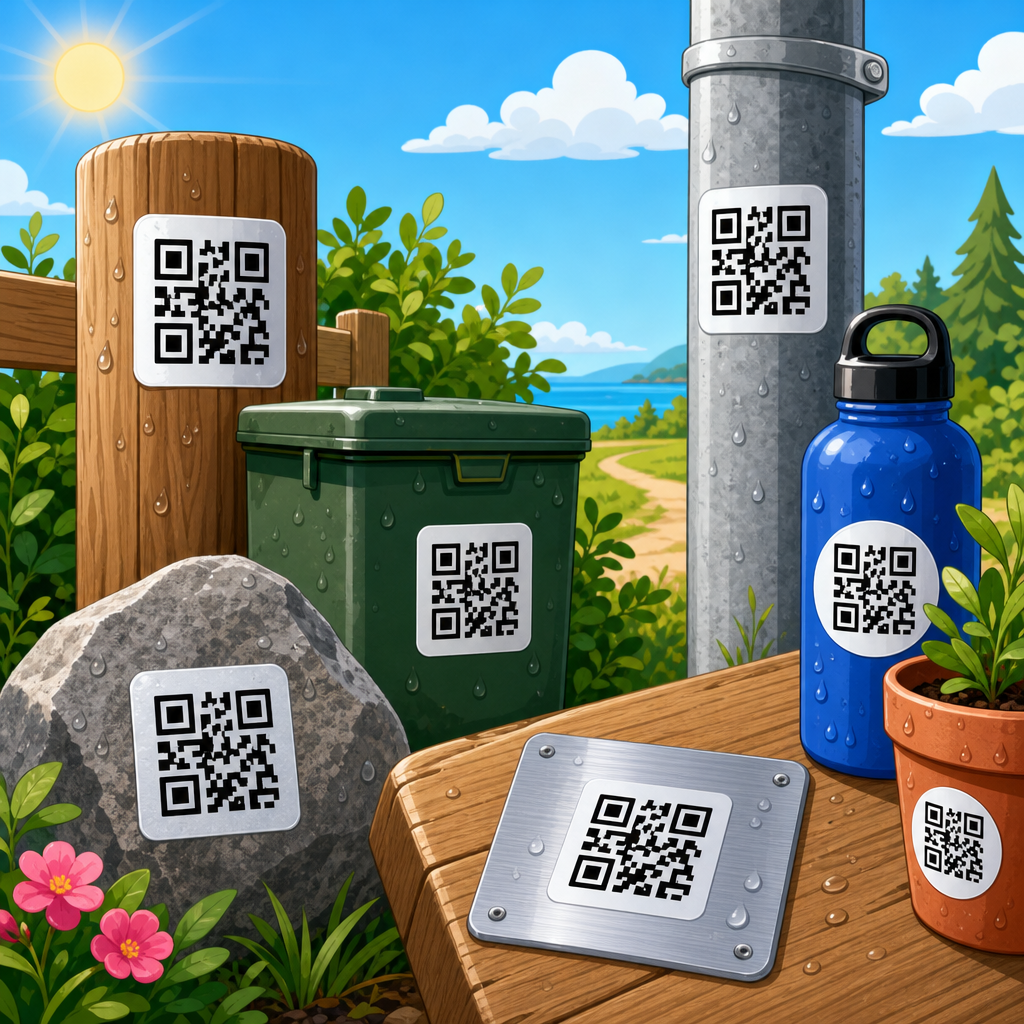
Outdoor QR code stickers fail for predictable reasons: sun fades the print, rain attacks adhesive, abrasion scuffs the modules, and poor material choice destroys scan reliability long before the campaign ends. The best materials for outdoor QR code stickers are durable substrates and laminates that preserve contrast, shape, and adhesion under weather, cleaning, and daily handling. In practice, that usually means polyester, cast vinyl, polycarbonate, anodized aluminum labels, or specialty outdoor acrylic systems matched to the environment. Choosing correctly matters because a QR code is only useful when it remains scannable, and scannability depends on material performance as much as design. In this guide, I’ll cover durable QR code solutions from the perspective of specifying, printing, and testing them for real outdoor use. You’ll learn which materials suit storefront windows, equipment tags, vehicles, park signage, and long-term asset labels, how adhesives and overlaminates affect life span, and what tradeoffs to expect in cost, flexibility, removability, and scan consistency.
A durable outdoor QR code sticker is more than a printed label. It is a construction made from face stock, ink or toner, adhesive, liner, and often a protective laminate. Face stock is the top material carrying the code. Adhesive determines whether the label bonds to glass, powder-coated metal, plastic, concrete, or textured surfaces. Laminate shields the printed image from ultraviolet light, solvents, pressure washing, and scratching. Durability refers to how long the code remains attached and readable in its intended conditions. Weather resistance includes UV stability, water resistance, humidity tolerance, thermal cycling, and dimensional stability. Scan reliability means a smartphone camera can still interpret the code quickly from normal distance and angle. Those definitions matter because many labels marketed as waterproof are not truly outdoor-grade, and many outdoor decals still fail because the wrong adhesive or finish was selected.
For businesses building a durable QR code solutions program, this topic sits at the center of the broader work of QR code design, printing, and materials. Material selection influences print method, contrast ratio, mounting location, maintenance instructions, and replacement cycle. It also affects how well connected resources perform, such as your QR code sizing guide, outdoor signage specifications, adhesive selection notes, and testing checklist. I’ve seen the same code printed beautifully on a desktop label sheet and become unusable within six weeks on a south-facing door, while a properly laminated polyester label on the adjacent frame lasted years. That gap is why a hub article on best materials for outdoor QR code stickers needs to be practical. The goal is not simply to pick the toughest material. It is to match environment, expected life, surface energy, and user interaction so the code stays readable for the full duration of the campaign or asset life.
What makes a QR code material truly outdoor durable
A QR code sticker is outdoor durable when it preserves three things at once: optical contrast, geometric accuracy, and physical attachment. Optical contrast means the dark modules stay dark and the light background stays light despite sun exposure, dirt, and scratches. Geometric accuracy means edges do not bleed, shrink, warp, or crack in ways that confuse phone cameras. Physical attachment means corners do not lift and the label does not slide, bubble, or shear off under moisture and temperature swings. Standards used by industrial label suppliers often evaluate UV exposure, salt fog, chemical resistance, abrasion resistance, and service temperature ranges. While no single certification covers every QR use case, reputable materials are usually backed by outdoor durability ratings, UL recognition for certain constructions, or manufacturer testing data from companies such as 3M, Avery Dennison, Brady, and Zebra.
The biggest environmental variables are sunlight, water, heat, cold, surface texture, and touch frequency. A marina sign exposed to reflected UV and salt spray needs very different materials than a shaded botanical garden marker. A vehicle door code faces car wash brushes, detergents, and flexing metal. A machine asset tag on construction equipment must withstand oil, impact, and pressure washing. In every case, the material must work with the print process. Resin thermal transfer ribbons on polyester labels can produce highly chemical-resistant codes. UV-cured ink on premium vinyl can hold color outdoors well, but only if paired with a suitable overlaminate. Laser-printable labels may resist moisture in mild conditions yet fail at the edges when subjected to prolonged wet-dry cycling. Material durability is therefore not a single feature but a system choice.
Best materials for outdoor QR code stickers by use case
Polyester is the default recommendation for many outdoor QR code stickers because it balances durability, print sharpness, and cost. White polyester labels accept thermal transfer, digital, screen, and some laser print processes, and they hold fine edges extremely well. For fixed asset tags, access points, utility markers, and equipment identification, polyester often provides the most reliable scan performance over time. It resists tearing better than paper, handles moisture well, and remains dimensionally stable in heat. When I need a code that must stay crisp for years on smooth metal, painted surfaces, or rigid plastic, polyester is usually my first choice. A matte protective laminate can reduce glare without sacrificing durability, which matters because highly reflective finishes often hurt phone scanning more than minor dirt does.
Vinyl is popular because it conforms to slight curves and installs easily on windows, vehicles, bins, and outdoor signs. Calendared vinyl works for short- to mid-term promotions, while cast vinyl is better for longer outdoor life and surfaces with curves or rivets. If you are printing removable promotional QR code stickers for an event, a quality outdoor vinyl with removable adhesive can make sense. If you need a code to survive years on a vehicle or kiosk, choose cast vinyl with UV-stable ink and a cast laminate. Vinyl’s weakness is that cheaper constructions can shrink over time, causing edge lift or subtle distortion. That distortion may not look dramatic to the eye but can interfere with scanning, especially in small codes with tight quiet zones.
For the highest durability, hard-coated polycarbonate and metal-based labels outperform standard stickers. Polycarbonate subsurface graphics protect the printed code beneath a clear layer, making them ideal for equipment panels and high-contact environments. Anodized aluminum photo labels and etched metal tags excel in extreme outdoor settings, including industrial, marine, and long-life public infrastructure. These options cost more and may require mechanical mounting or specialty adhesives, but they deliver exceptional abrasion and UV resistance. Outdoor acrylic plaques can also work when presentation matters, such as museum gardens or premium real-estate displays, though they are better described as mounted QR markers than stickers.
| Material | Best use | Typical life | Main strength | Main limitation |
|---|---|---|---|---|
| Polyester | Asset tags, doors, equipment | 2 to 5+ years | Sharp print, strong stability | Less conformable on complex curves |
| Cast vinyl | Vehicles, windows, curved surfaces | 3 to 7 years | Conforms well, good outdoor life | Higher cost than basic vinyl |
| Calendared vinyl | Short-term signage, promotions | 6 months to 3 years | Affordable, easy to install | Can shrink and lift over time |
| Polycarbonate | Control panels, heavy-use labels | 5+ years | Excellent abrasion resistance | Usually more rigid and expensive |
| Anodized aluminum | Industrial, marine, public assets | 5 to 20 years | Extreme weather durability | Not a flexible sticker format |
Adhesives, laminates, and finishes that extend sticker life
The most overlooked part of an outdoor QR code sticker is the adhesive. Permanent acrylic adhesive is the standard choice for long-term outdoor use because it resists moisture, UV exposure, and temperature swings better than many rubber-based systems. High-tack acrylic formulations are especially useful on low-surface-energy plastics, textured powder coat, and slightly rough substrates. Removable adhesives are valuable for temporary campaigns on glass or painted panels, but they are not ideal when longevity is the priority. Surface energy matters: labels stick easily to clean glass and stainless steel, but polypropylene bins, polyethylene cases, and dusty masonry often need specialty adhesive systems or alternative mounting methods. Before large runs, adhesion testing on the exact substrate is essential.
Laminates and topcoats preserve the code image. Clear polyester or cast vinyl overlaminates block UV light, reduce abrasion, and protect against cleaners. Matte laminate is usually the smartest option for scan performance because it minimizes glare under direct sun and flash. Gloss finishes can look more vibrant, but on windows, polished metal, and outdoor kiosks they frequently create reflections that slow scanning. Anti-graffiti laminates are useful in public installations because they allow marker or paint removal without destroying the code beneath. In high-traffic retail or transit locations, that extra protection often costs less than repeated replacement. Edge sealing can also help on labels exposed to frequent washdown.
Color and finish should support readability, not just branding. The safest outdoor QR construction is black on white with a nonreflective finish and a generous quiet zone. Transparent stickers can work on glass, but they often scan worse outdoors because background lighting changes throughout the day. Metallic films are visually striking yet risky because reflections and lower contrast reduce first-pass reads. If brand requirements push you toward custom colors, test them under noon sun, overcast light, and evening conditions with multiple phone models. A code that scans in the studio but fails on a bright sidewalk is not durable in any meaningful business sense.
Printing methods, sizing, and placement for reliable scanning
The best material will still fail if the print method produces soft edges or if the code is too small for the scanning distance. For outdoor QR code stickers, print resolution should be high enough to keep module boundaries crisp; thermal transfer, UV inkjet, screen printing, and professionally calibrated digital presses can all work when matched to the substrate. In industrial labeling, resin ribbons on polyester are a proven combination because they resist chemicals and abrasion better than wax or wax-resin blends. For consumer-facing signage, latex and UV printers can produce durable results on vinyl when profiles are dialed in and drying or curing is complete before lamination.
Size should be determined by viewing distance and expected user behavior. A common rule is that scanning distance in inches should be roughly ten times the code width, though real-world conditions vary with camera quality and lighting. For a code intended to be scanned from two feet away, a width around two to three inches is usually safe outdoors. Smaller stickers can work for equipment labels viewed up close, but tiny codes are less forgiving when dirt, scratches, or glare appear. Always preserve the quiet zone around the code, ideally four modules wide, and avoid crowding it with logos or decorative borders.
Placement is as important as material. Do not install outdoor QR code stickers where users must stand in traffic, face direct afternoon sun, or bend into awkward angles to scan. Flat mounting surfaces outperform corrugated, deeply textured, or flexible ones. Clean the substrate with the manufacturer-recommended method, allow it to dry fully, and apply within the specified temperature range. After installation, let the adhesive dwell before exposing it to heavy rain or washing. In fleet work and municipal signage, I routinely recommend a short field test with duplicate labels in multiple locations before full rollout. That small step reveals glare issues, vandalism risk, and cleaning challenges early.
How to choose the right durable QR code solution
Start with service life. If the code only needs to last through a three-month event, premium metal labels are unnecessary. If it must remain readable on public infrastructure for five years, cheap vinyl is false economy. Next define the surface: glass, painted metal, powder coat, plastic, concrete, wood, and composite panels all behave differently. Then list exposures: full sun, salt air, freeze-thaw cycles, pressure washing, solvents, hand contact, or abrasion. Finally, decide whether removal matters and whether the code is static or dynamic. Dynamic QR codes are usually the better outdoor choice because the destination can be updated without replacing the label.
The best buying process is to request data sheets, narrow to two or three constructions, and test them in the exact environment for at least several weeks. Check scan speed with iPhone and Android devices, inspect edges, and clean the label as staff or customers would in real life. If you manage many locations, create a simple specification sheet covering substrate, adhesive, laminate, finish, minimum code size, placement height, and maintenance. That turns durable QR code solutions from guesswork into a repeatable system. Review your current labels, upgrade weak materials, and build your next outdoor QR campaign on materials designed to last.
Frequently Asked Questions
What are the best materials for outdoor QR code stickers?
The best materials for outdoor QR code stickers are the ones that protect scan accuracy while standing up to sun, rain, temperature swings, abrasion, and routine cleaning. In most real-world outdoor applications, the strongest choices are polyester, cast vinyl, polycarbonate, anodized aluminum labels, and specialty outdoor films designed for harsh environments. Each material has a different strength profile, so the right option depends on where the code will be placed and how much abuse it will take.
Polyester is a popular choice because it offers strong dimensional stability, good print quality, and reliable resistance to moisture and chemicals. It works well for equipment labels, outdoor signage, utility tagging, and many general-purpose QR applications. Cast vinyl is especially useful when the sticker needs to conform to curved or irregular surfaces, such as poles, helmets, vehicle panels, or outdoor equipment. Polycarbonate is often selected when impact resistance and surface toughness matter, making it a strong option for industrial settings or areas with frequent handling. Anodized aluminum labels are among the most durable solutions available because the image can be sealed into the metal surface, providing exceptional resistance to UV exposure, scratches, solvents, and weather. Specialty outdoor films bridge the gap for applications that need a custom balance of flexibility, chemical resistance, and environmental durability.
The key point is that outdoor performance is not just about the base material. A successful outdoor QR sticker is usually a system: durable facestock, outdoor-grade adhesive, UV-stable print method, and a protective laminate or overlaminate. If any one of those elements is weak, the code may fade, peel, scuff, or distort enough to stop scanning well before the intended campaign or service life ends.
Why do outdoor QR code stickers fail so often?
Outdoor QR code stickers usually fail for a few predictable reasons, and most of them come back to material mismatch. Sunlight is one of the biggest problems because ultraviolet exposure can fade black modules, yellow white backgrounds, and lower the contrast needed for reliable scanning. Rain and humidity can weaken poor-quality adhesives, especially on textured, dirty, low-energy, or frequently wet surfaces. Abrasion from hands, tools, brushes, road grit, or cleaning wipes can scratch the print and break up the sharp edges that QR readers depend on.
Another common failure point is dimensional instability. Some lower-grade materials shrink, expand, or warp when exposed to heat and cold cycles. That can subtly distort the QR pattern, especially if the sticker is printed too small to begin with. Adhesive failure is also a major issue. A sticker may look fine at installation, then start lifting at the corners after exposure to water, heat, or repeated washing. Once the label lifts or bubbles, scan performance drops quickly. On top of that, poor printing methods or low-quality inks may not be truly outdoor rated, so the image can degrade long before the substrate itself does.
Installation mistakes can make even good materials fail. Applying a sticker to a dusty, oily, chalky, or uneven surface reduces bond strength. Placing a code where it is constantly rubbed, pressure-washed, or exposed to chemicals without selecting the right laminate shortens its life. In short, outdoor QR stickers fail not because QR codes are fragile by nature, but because the material, adhesive, print process, and environment were not matched properly from the start.
Is vinyl good enough for outdoor QR code stickers, or should I choose polyester or metal?
Vinyl can absolutely be good enough for outdoor QR code stickers, but only when the type of vinyl matches the application. For example, cast vinyl is significantly better than lower-cost calendered vinyl for long-term outdoor use, especially on curved surfaces or surfaces exposed to heat. Cast vinyl is thinner, more conformable, and more dimensionally stable, which helps preserve the QR code’s geometry over time. If the code is being applied to a pole, vehicle, outdoor housing, or other uneven surface, cast vinyl is often one of the best practical choices.
Polyester is often a better fit when you need stiffness, clean print definition, and strong resistance to chemicals and moisture on flat surfaces. It is commonly used for durable asset labels, machinery labels, warning labels, and product identification outdoors. Polyester generally offers a more “label-like” feel than vinyl and is a reliable option when conformability is less important than stability and durability. Polycarbonate moves further toward rugged industrial performance, particularly where impact, surface wear, or heavy handling is a concern.
Metal, especially anodized aluminum, is usually the premium option when maximum longevity matters more than cost or flexibility. If the QR code needs to survive years of sun, abrasion, solvents, and outdoor exposure with minimal degradation, anodized aluminum labels are hard to beat. They are especially valuable for permanent identification, industrial asset management, trail markers, equipment tags, and infrastructure labeling. So the answer is not that one material is always best. Vinyl is excellent in many outdoor situations, polyester is a dependable all-around durable label material, and metal is the top-tier choice for extreme durability and long service life.
Do outdoor QR code stickers need a laminate or protective coating?
Yes, in most cases outdoor QR code stickers should have a laminate or protective coating if you want them to maintain scan reliability over time. A laminate acts as a barrier against UV light, moisture, abrasion, dirt, chemicals, and cleaning. Without that protection, even a decent substrate can lose performance because the printed image itself is exposed. Since QR codes rely on crisp, high-contrast modules, even minor fading or scuffing can reduce scan success, especially in bright outdoor lighting or on lower-quality phone cameras.
UV-protective laminates are especially important because direct sun is one of the fastest ways to degrade printed graphics. A good overlaminate helps preserve black density and prevents background discoloration. Scratch-resistant laminates also matter in high-touch environments such as entry points, kiosks, shared equipment, parking systems, and outdoor retail displays. If the sticker will be cleaned regularly, the laminate should also be compatible with the cleaning agents used, because alcohol, detergents, and stronger chemicals can damage unprotected prints.
That said, the protective layer must be chosen carefully. A laminate that is too glossy can create glare, making scanning harder in direct sunlight. A layer that is too textured can interfere with readability if the code is very small. The best approach is to use an outdoor-rated laminate engineered for label or signage use and to test the final construction in the actual lighting conditions where it will be scanned. In other words, a laminate is not just extra protection; it is often a critical part of making an outdoor QR sticker usable for the duration of its intended life.
How can I make sure an outdoor QR code sticker stays scannable for as long as possible?
Start by choosing a material system built for the environment, not just a printable surface. That means selecting a durable substrate such as polyester, cast vinyl, polycarbonate, anodized aluminum, or another true outdoor film, then pairing it with an adhesive designed for the target surface and exposure conditions. A smooth painted metal panel, a textured plastic bin, a powder-coated machine, and a concrete wall all behave differently, so adhesive selection matters just as much as the face material. If the sticker will face sun, add UV protection. If it will be touched, cleaned, or rubbed, add abrasion resistance. If it will be exposed to solvents or industrial chemicals, make sure the entire construction is chemically resistant.
Next, protect scan performance through good code design. Use high contrast, usually black on white, with generous quiet zones around the code. Avoid printing the code too small for the expected scanning distance. Keep the modules crisp and do not overload the design with decorative elements that reduce readability. If outdoor grime or wear is likely, leaving more margin in the design helps preserve performance even as the label ages. It is also wise to use a destination URL that can be updated later through a dynamic QR code platform, so the physical label remains useful even if campaign content changes.
Finally, focus on installation and testing. Clean the surface thoroughly before application and allow proper curing time for the adhesive. Avoid placing the code where heavy glare, constant friction, or repeated impact is unavoidable unless the material is specifically engineered for that environment. After installation, test the QR code with multiple phones, in different weather, and at different times of day. The longest-lasting outdoor QR sticker is not just made from a tough material; it is designed, printed, protected, placed, and verified with real-world conditions in mind.