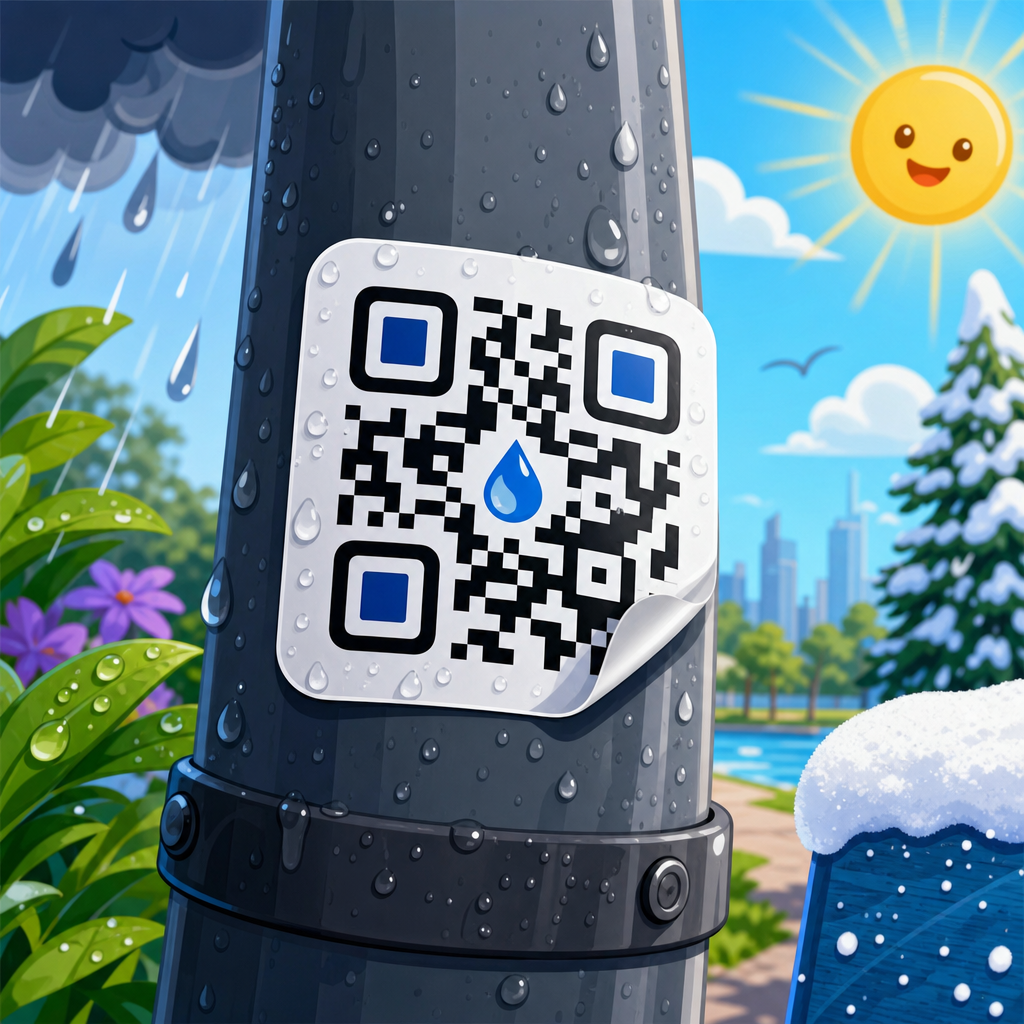
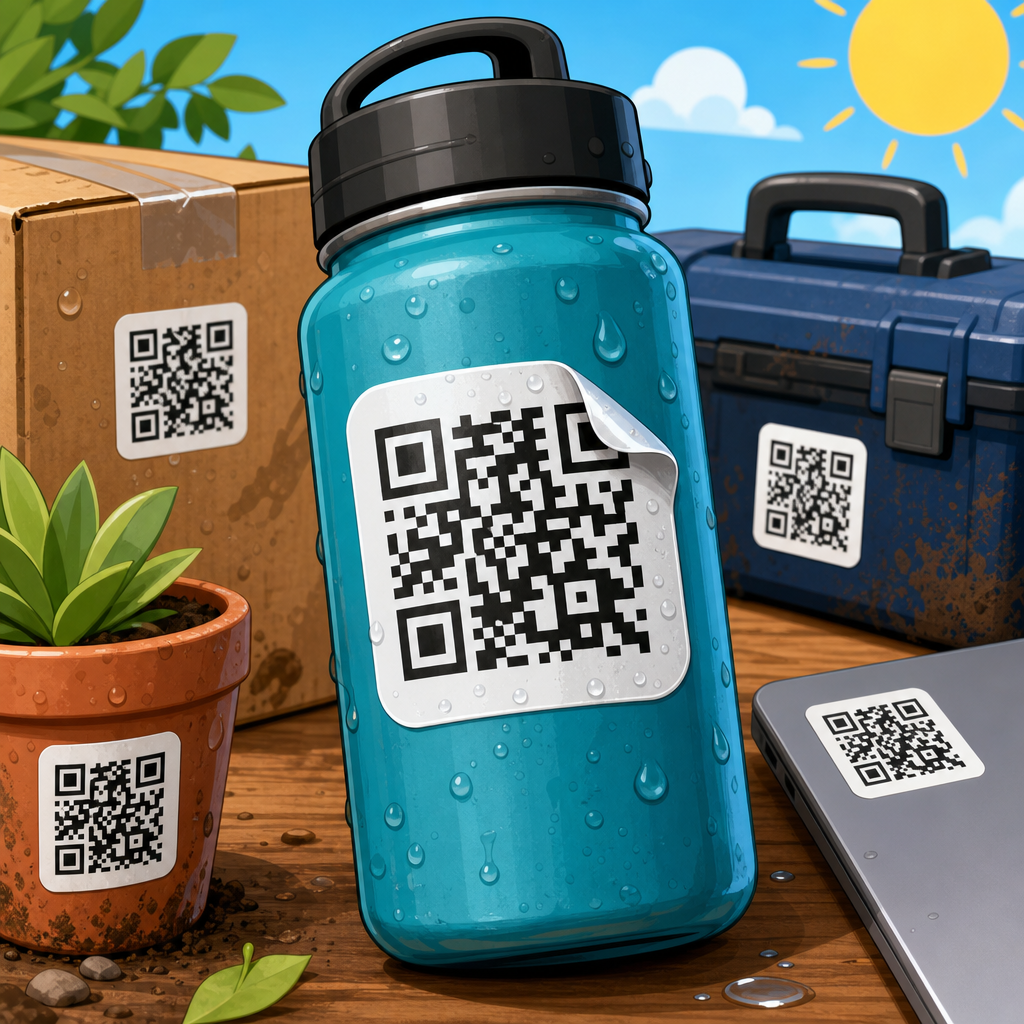
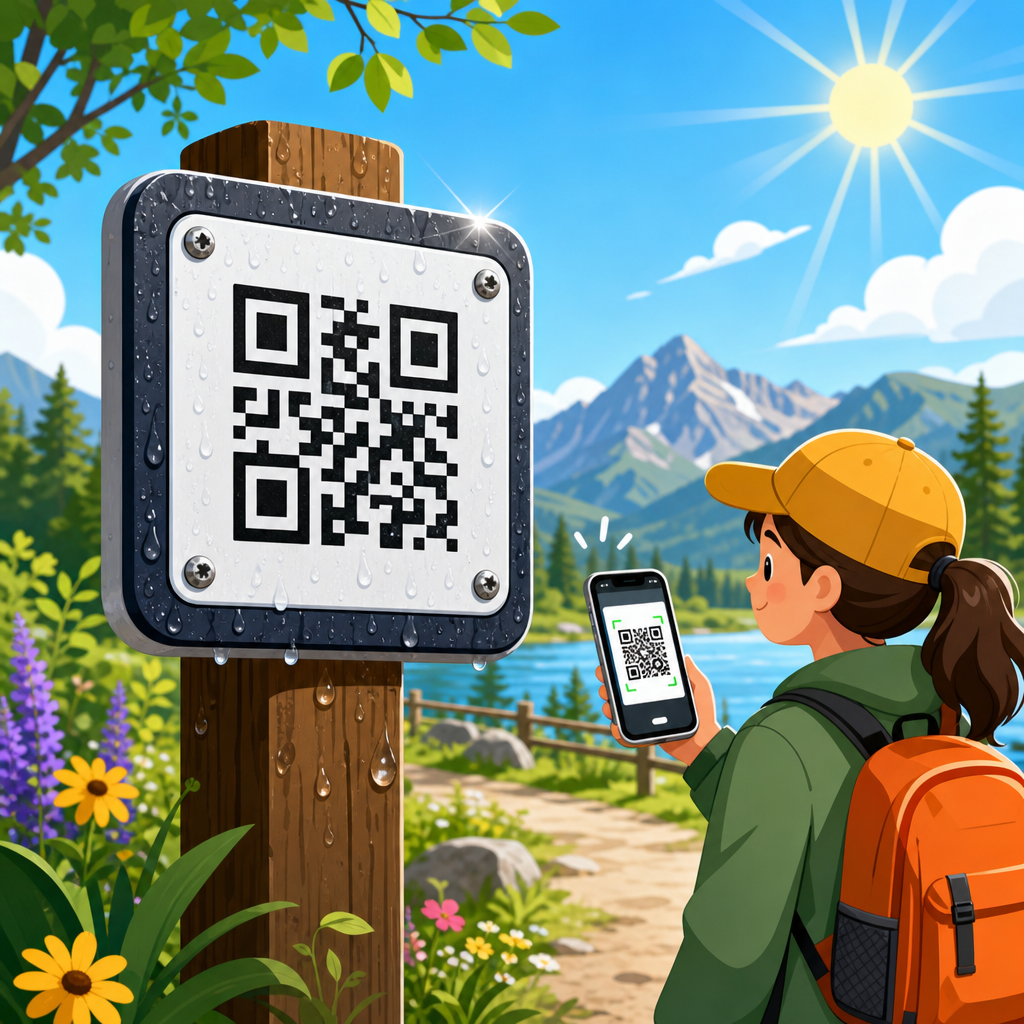
Waterproof QR code stickers are the most practical way to keep scannable information available on products, equipment, packaging, and signage that must survive rain, washing, condensation, chemicals, and rough handling. In simple terms, a waterproof QR code sticker is a printed label built from moisture-resistant face stock, adhesive, ink, and protective finishing so the code remains readable throughout real-world use. That distinction matters because many labels marketed as waterproof are only water resistant under light indoor conditions. In my work specifying labels for warehouses, food packaging trials, outdoor assets, and hospitality operations, the difference between a truly durable construction and a basic paper sticker usually shows up within weeks: edges curl, toner fades, laminate lifts, and scan rates drop.
As a hub within QR code design, printing, and materials, this guide explains the full landscape of durable QR code solutions. It covers the materials, print methods, adhesives, testing standards, use cases, and design choices that determine whether a code survives. It also answers the questions buyers usually ask first: What makes a QR sticker waterproof, how long will it last, what material works outdoors, and when should you use metal plates or polyester labels instead of standard vinyl? If you need a label for shampoo bottles, brewery kegs, utility poles, medical trays, reusable bins, or plant tags, the right answer depends on exposure, substrate, expected lifespan, and scan distance. A durable QR program works when the code, the material, and the environment are matched from the start.
What Makes a QR Code Sticker Truly Waterproof
A waterproof QR code sticker is a system, not a single material. Four parts decide performance: face stock, print method, overlaminate or coating, and adhesive. The face stock is the label surface, commonly vinyl, polyester, polypropylene, or polyethylene. Vinyl is flexible and popular for consumer products and outdoor decals. Polyester is tougher, more dimensionally stable, and often better for industrial asset labels because it resists tearing, heat, and abrasion. Polypropylene is common on bottles and packaging where cost, moisture resistance, and decent print quality matter. Polyethylene works well on squeezable containers because it flexes with the package.
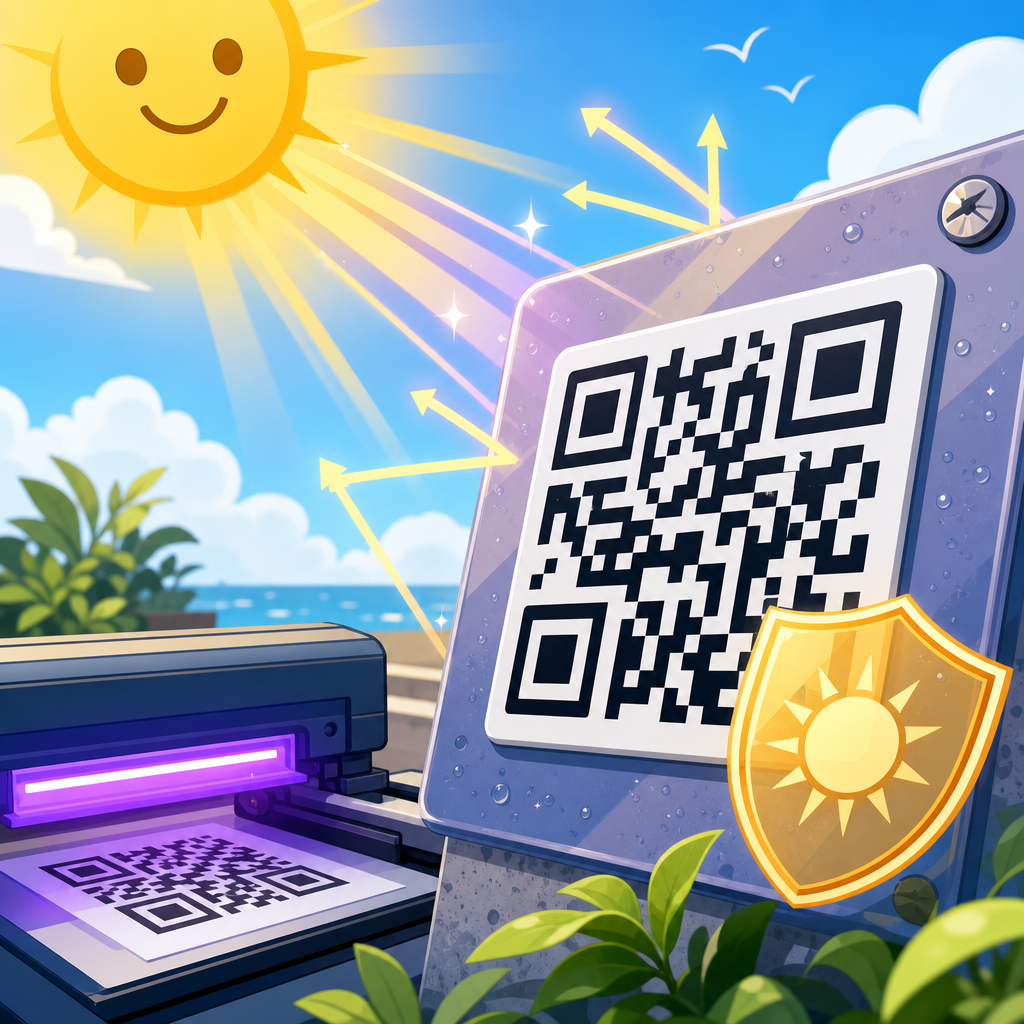
Print technology matters just as much. Thermal transfer printing with resin ribbons is a standard choice for durable industrial QR code labels because resin bonds well to synthetic materials and resists chemicals, abrasion, and moisture. UV inkjet can also produce excellent outdoor labels when paired with the right substrate and laminate. Laser printing on synthetic sheets can be serviceable for limited use, but not every office printer or toner formulation holds up under repeated washing or sun exposure. Direct thermal is usually the wrong choice for waterproof QR stickers because heat-sensitive coatings fade and scuff too easily.
The finishing layer is where many low-cost labels fail. A clear laminate adds scratch resistance, UV protection, and a barrier against cleaning fluids. Without it, even a water-safe material may lose scan reliability when the printed modules abrade. Adhesive is the final variable. Acrylic adhesives generally provide strong long-term performance outdoors and across temperature swings, while rubber-based adhesives may offer fast tack but weaker chemical and heat resistance. For refrigerators, coolers, marine settings, or wet manufacturing lines, choosing an adhesive rated for the exact surface and temperature range is nonnegotiable.
Best Materials for Durable QR Code Solutions
The best material depends on where the label lives. For general outdoor use, white gloss polyester is one of the most dependable options because it prints sharply, resists tearing, and stays stable in sunlight and humidity. For curved bottles, cosmetic containers, and food packaging, white polypropylene often balances appearance, cost, and moisture resistance. For flexible applications such as squeeze bottles or soft plastic containers, polyethylene performs better because it bends instead of lifting. For temporary promotions or event badges, waterproof vinyl may be enough, but for multi-year asset tagging, polyester usually outlasts it.
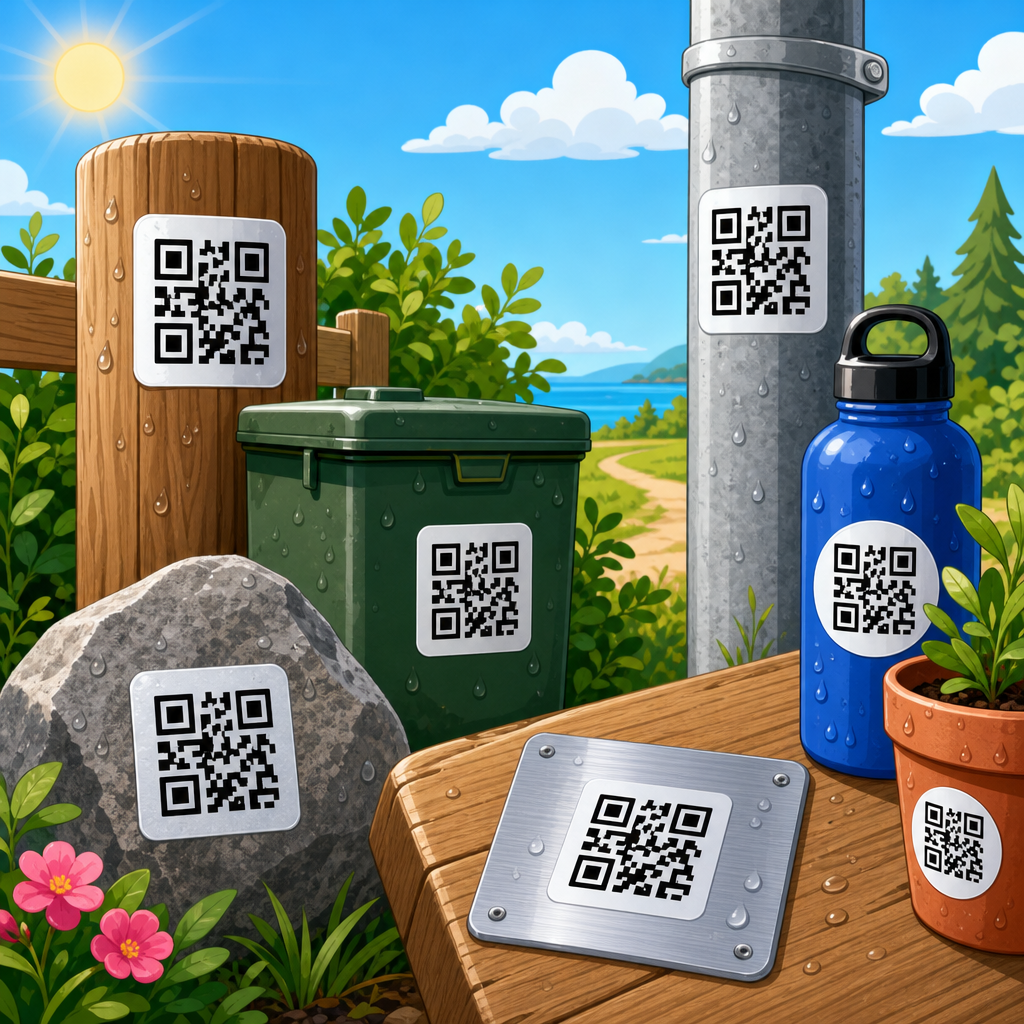
In harsher environments, durable QR code solutions extend beyond standard stickers. Anodized aluminum QR plates are excellent for outdoor equipment, municipal assets, and heavy machinery because the image is sealed into the metal surface and can last for years under UV exposure. Stainless steel tags work where abrasion, solvents, and extreme temperatures would destroy plastic labels. Tamper-evident polyester helps with warranty seals, compliance labels, and returnable transport items where unauthorized removal must be obvious. For laboratory and healthcare use, specialty film labels can be built to tolerate sterilization, cryogenic storage, or aggressive disinfectants.
Surface type also changes material choice. Low-surface-energy plastics such as polyethylene bins, powder-coated metal, textured equipment housings, and rough lumber need specialized adhesives, sometimes with thicker conformable films to maintain full contact. A glossy film on a smooth product box can scan beautifully in a studio but fail in a warehouse if condensation forms and the label shifts. That is why experienced printers ask for details about the substrate, not just the environment. Material selection is less about finding the strongest label on paper and more about choosing the construction that stays bonded and readable on the actual item.
Printing, Adhesives, and Protective Finishes
For waterproof QR code stickers, print quality and durability must be treated together. A perfectly encoded QR symbol still fails if contrast drops or quiet zones get damaged. In production, I usually recommend black graphics on a matte white synthetic stock because high contrast improves scan performance across phone cameras and industrial scanners. Matte surfaces also reduce glare, which matters on glossy bottles, windows, and metal housings. If branding requires color, keep the QR code itself dark and avoid reversing light modules out of a dark background unless the code is tested on multiple devices.
Protective finishing should match the threat. For labels exposed mainly to water and handling, a thin polyester laminate may be sufficient. For chemical splash, disinfectant wiping, or repeated scrubbing, choose a more robust overlaminate rated for those fluids. UV-blocking laminates can significantly improve outdoor life by slowing fading and adhesive breakdown. In field deployments, I have seen labels with strong face stock fail because the laminate edge seal was poor or because the wrong adhesive was chosen for cold application. Many adhesives need a minimum application temperature and a dwell period to achieve full bond strength.
| Environment | Recommended Material | Preferred Print Method | Key Protection |
|---|---|---|---|
| Outdoor equipment | Polyester or anodized aluminum | Thermal transfer resin or UV print | UV laminate, acrylic adhesive |
| Beverage and bath bottles | Polypropylene or polyethylene | Flexographic, digital, or UV inkjet | Moisture-resistant adhesive, scuff laminate |
| Warehouse bins and totes | Industrial polyester | Thermal transfer resin | Abrasion resistance, permanent adhesive |
| Medical and lab items | Specialty film label | Thermal transfer resin | Chemical resistance, sterilization tolerance |
Adhesive selection deserves direct attention. Permanent acrylic adhesives are the default for long-term waterproof labels because they age well and resist moisture. Removable adhesives are useful for temporary campaigns or reusable containers, but they rarely match permanent systems under prolonged wet conditions. High-tack formulations help with textured plastics and powder-coated surfaces. Marine applications may require salt-spray resistance and compatibility with gelcoat or painted aluminum. If labels will be applied by hand, clean the surface with isopropyl alcohol, avoid touching the adhesive, use firm pressure, and allow cure time before immersion or exposure to heavy rain.
Design Rules That Keep Waterproof QR Codes Scannable
Durability means little if the code is hard to scan. A waterproof QR code sticker should be designed with a proper quiet zone, error correction level suited to the use case, and a physical size that matches scanning distance. As a baseline, keep a white border of at least four modules around the code and avoid crowding it with icons, copy, or decorative frames. For labels scanned at arm’s length, many applications work well between 0.8 and 1.2 inches square, but outdoor signs, machinery labels, and vehicle decals often need larger codes because users scan from farther away and at awkward angles.
Error correction is often misunderstood. Higher error correction allows some damage or obstruction, but it also increases code density. On very small labels, boosting correction too high can make modules too fine for lower-resolution printing or dirty camera lenses. In practice, medium or quartile correction is often a good balance for durable stickers, while branded designs with embedded logos require careful testing. Rounded modules, gradients, metallic inks, and embossed finishes may look attractive, yet they frequently reduce reliability when water droplets, glare, or scratches are introduced.
Destination management matters too. Dynamic QR codes are often better for durable labels because the printed symbol stays the same while the destination can be updated if a URL changes, a product page moves, or campaign tracking evolves. For asset management, the code may point to a record in a maintenance system. For consumer packaging, it may direct users to instructions, ingredients, warranty registration, or multilingual support. Since this article is a hub, related topics worth exploring next include QR code sizing, label adhesive selection, outdoor QR code testing, thermal transfer printing, and anti-tamper label design. A durable sticker solves only half the problem; the linked experience must remain stable.
Testing for Water, Weather, Chemicals, and Real-World Wear
The most reliable way to choose waterproof QR code stickers is to test them under realistic conditions before a large run. A proper label qualification process includes bond testing on the actual surface, wet exposure, abrasion, sunlight simulation, and scan verification after each stage. Recognized methods provide structure. ASTM and UL standards are often used in label evaluation, while ISO methods may guide barcode quality assessment. For QR readability, verifiers based on ISO/IEC 15415 can grade symbol quality, though many teams also validate with common smartphone cameras because consumer behavior matters as much as lab scores.
Real-world testing should mirror actual abuse. If a code goes on shampoo bottles, submerge samples, squeeze the container, expose it to warm showers, and check whether soap residue creates glare. If labels sit on warehouse totes, drag them across shelving, wipe them with cleaners, and scan from forklift height. Outdoor asset tags should face UV, freeze-thaw cycles, and pressure washing if that is part of maintenance. In one rollout for reusable bins, the first material passed splash tests but failed after repeated alkaline cleaning because the laminate clouded and the adhesive edge lifted. Switching to industrial polyester with resin printing solved it.
Lifespan claims from suppliers should always be tied to conditions. A sticker described as waterproof for five years may only achieve that on vertical outdoor surfaces in temperate climates, not on horizontal surfaces under full sun and standing water. Chemical resistance also varies widely. Alcohol wipes, bleach solutions, oils, fuels, and detergents attack different layers in different ways. The practical rule is simple: if failure would interrupt operations, request samples, document the environment, and test before scaling.
Applications, Buying Criteria, and When to Upgrade Beyond Stickers
Waterproof QR code stickers are used across industries because they connect a physical object to digital information at very low cost. Retail and consumer goods brands use them on bottles, jars, and pouches for product education, authenticity, promotions, and refill instructions. Hospitality businesses place them on poolside signage, menus, room assets, and maintenance logs. Manufacturers use them on tools, spare parts bins, and machine panels for manuals, lockout documentation, and service histories. Agriculture operations tag irrigation controls, plant trays, and field equipment. Healthcare and laboratories rely on durable codes for specimen tracking, tray identification, and inventory workflows.
When buying, define six things first: environment, surface, lifespan, scan method, data strategy, and compliance needs. Environment includes water, UV, chemicals, abrasion, temperature, and cleaning frequency. Surface means the exact substrate and texture. Lifespan separates a short campaign from a five-year asset label. Scan method asks whether users have smartphones, rugged scanners, or fixed readers. Data strategy determines whether you need static or dynamic QR codes, analytics, and integration with inventory or maintenance systems. Compliance may involve food contact, medical labeling, UL recognition, or customer-specific durability requirements.
Sometimes the right answer is not a sticker. If the item is exposed to solvents, grinding, constant impact, or decades of outdoor weather, move to metal tags, etched plates, embossed markers, or direct part marking. Those options cost more up front but can lower replacement labor and data loss. For most businesses, though, a well-specified waterproof synthetic label is the sweet spot: affordable, fast to deploy, easy to customize, and reliable when engineered correctly. Start with the harshest condition the label will face, not the most convenient one. That mindset leads to better material choices, stronger scan rates, and fewer surprises after installation. If you are planning durable QR code solutions, audit one live use case, test two label constructions, and build your standard from measured results.
Frequently Asked Questions
What is a waterproof QR code sticker, and how is it different from a standard QR label?
A waterproof QR code sticker is a QR label specifically engineered to keep the code readable when exposed to water, humidity, condensation, cleaning, and routine wear. Unlike a standard paper-based QR label, a true waterproof version is usually made from synthetic materials such as polyester, polypropylene, or vinyl rather than absorbent paper. It also uses adhesives designed to hold in wet or challenging environments, inks or print methods that resist smudging and fading, and often a laminate or protective topcoat that shields the printed code from abrasion, chemicals, and UV exposure.
That difference is important because many labels are described as waterproof when they are only mildly water-resistant. A water-resistant label may survive a few splashes, but it can still fail when exposed to repeated washing, outdoor weather, refrigeration, steam, oils, sanitizers, or rough handling. Once the surface degrades, the contrast drops, edges lift, or the printed modules blur, scanning reliability suffers quickly. A genuine waterproof QR code sticker is designed as a complete construction, not just a label with stronger glue, so every layer works together to keep the code intact and scannable over time.
In practical use, waterproof QR code stickers are ideal for products, equipment, packaging, warehouse bins, medical and laboratory environments, outdoor signage, and industrial assets. If the code must stay available in the real world rather than in a clean, dry office setting, waterproof construction is usually the safer choice.
What materials and features make a QR code sticker truly waterproof and durable?
Several components determine whether a QR code sticker is genuinely waterproof. The first is the face stock, or the visible label material. Synthetic films such as polyester, polypropylene, and vinyl are common because they do not absorb water the way paper does. Polyester is often chosen for high durability, chemical resistance, and dimensional stability. Polypropylene is a strong option for packaging and product labeling where flexibility and moisture resistance matter. Vinyl is frequently used for outdoor applications because it conforms well to surfaces and handles weather exposure effectively.
The second major factor is the adhesive. A label can have a waterproof surface and still fail if the adhesive loosens under moisture, temperature swings, or cleaning. Permanent acrylic adhesives are often preferred because they bond well to many surfaces and perform better in humid, cold, or wet environments. For specialized uses, there are adhesives formulated for low-energy plastics, curved surfaces, freezer conditions, or removable applications.
The print itself also matters. Thermal transfer printing with resin ribbons, UV printing, laser printing on compatible stocks, and other durable print methods usually outperform standard office inkjet printing for moisture-heavy environments. If the printed QR code can smear, bleed, or fade, the label stops being dependable no matter how good the material is. A laminate or clear protective coating adds another layer of defense by protecting the code from scratches, solvents, cleaners, and handling damage.
Finally, durability depends on how the entire label system matches the application. Exposure to saltwater, disinfectants, engine oil, sun, pressure washing, or repeated refrigeration cycles all place different demands on the sticker. The best waterproof QR code sticker is not just “strong”; it is built for the exact environment where it will be used.
Where are waterproof QR code stickers most commonly used, and why are they so effective in those environments?
Waterproof QR code stickers are used anywhere information has to remain scannable despite moisture, cleaning, outdoor exposure, or tough handling. One of the most common uses is on product packaging, especially for bottles, jars, pouches, and containers that may be refrigerated, shipped through humid conditions, or handled with wet hands. They are also widely used on equipment and asset tags, where maintenance teams need to scan a code to access manuals, service logs, inspection records, or replacement part information.
In industrial and warehouse settings, waterproof QR labels are effective because they hold up better on bins, shelves, machinery, and tools exposed to dust, condensation, washdowns, and abrasion. In healthcare, laboratory, and food-service environments, labels often need to survive sanitizing procedures, cold storage, and repeated cleaning, making waterproof construction essential for reliable tracking and compliance. Outdoor signage, garden centers, construction sites, and utility applications also benefit from QR codes that remain readable through rain, sunlight, and temperature changes.
What makes these stickers so effective is not just their resistance to water, but their ability to preserve scan quality over time. A QR code only works if the camera can still clearly distinguish the pattern. Waterproof materials help prevent swelling, tearing, ink spread, lifting corners, and surface wear that interfere with contrast and sharpness. That means the sticker continues to function in daily operations instead of becoming a weak link that needs frequent replacement.
For businesses, that reliability translates into fewer scanning failures, less relabeling, better user experience, and more dependable access to digital information. Whether the QR code leads to instructions, authentication, inventory data, menus, registration forms, or maintenance records, waterproof construction helps ensure the link stays usable when it matters.
How can you make sure a waterproof QR code sticker remains easy to scan over time?
Long-term scannability depends on both smart QR code design and the right physical label construction. First, the code itself should be generated at a high resolution with strong contrast, typically dark modules on a light background. Small, overly dense QR codes are more likely to fail when printed on labels that may get dirty or scratched, so it is usually better to use a slightly larger code with enough quiet zone around the edges. If the sticker will be scanned at arm’s length, on curved packaging, or in poor lighting, increasing the code size improves real-world performance.
Material selection is just as important. Choose a face stock and print method that preserve edge sharpness and prevent blurring. Add a laminate or topcoat if the label will be exposed to rubbing, cleaners, chemicals, or repeated contact. If the sticker is going on a difficult surface such as textured plastic, powder-coated metal, or equipment exposed to temperature swings, use an adhesive designed for that substrate. A label that lifts or wrinkles can distort the code and make scanning inconsistent.
Placement also affects results. Avoid putting QR stickers over seams, deep curves, rivets, heavily textured areas, or locations where dirt and water pool. Place the label where users can easily find it and scan it without awkward angles. For outdoor or industrial use, it helps to test the sticker after installation under real conditions rather than relying only on a desktop scan test.
Finally, verify performance before full rollout. Print samples, apply them to the intended surface, and test them after exposure to water, washing, abrasion, sunlight, refrigeration, or chemicals that the label will face in actual use. Many scanning problems are preventable when testing happens early. A waterproof QR code sticker should not only survive the environment physically; it should remain fast and effortless to scan throughout its service life.
What should you look for when choosing waterproof QR code stickers for your business or project?
The best starting point is to define the environment clearly. “Waterproof” can mean very different things depending on whether the label will face occasional splashes, full outdoor weather, commercial dishwashing, cold-chain storage, industrial cleaners, or constant handling. Before choosing a sticker, consider the surface material, temperature range, moisture level, expected lifespan, chemical exposure, UV exposure, and how often the code will be scanned. The more specific the use case, the easier it is to select the right construction.
Look closely at the label material, adhesive, print durability, and protective finish. For many long-term or industrial uses, synthetic film labels with permanent adhesive and a laminate provide the best balance of durability and scan reliability. If branding matters, confirm that the label can support the desired finish without compromising contrast. If variable data or on-demand printing is required, make sure the printing process is compatible with waterproof performance rather than assuming any printer can produce a durable result.
It is also wise to ask practical questions: Will the sticker be applied by hand or machine? Does it need to adhere to metal, plastic, glass, painted surfaces, or corrugated packaging? Should it be removable, tamper-evident, freezer-grade, or chemical-resistant? Does the QR code link to static content or a dynamic URL that may be updated later? These details influence not only the material choice but the long-term value of the label system.
Most importantly, do not judge by marketing language alone. Ask for specifications, performance data, or samples, and test under real conditions. A sticker that works perfectly in a sales sample may fail quickly in field use if the adhesive, print, or topcoat is not matched to the application. Choosing waterproof QR code stickers strategically helps protect scanning performance, reduce replacement costs, and ensure the information behind the code remains accessible wherever your operation needs it.