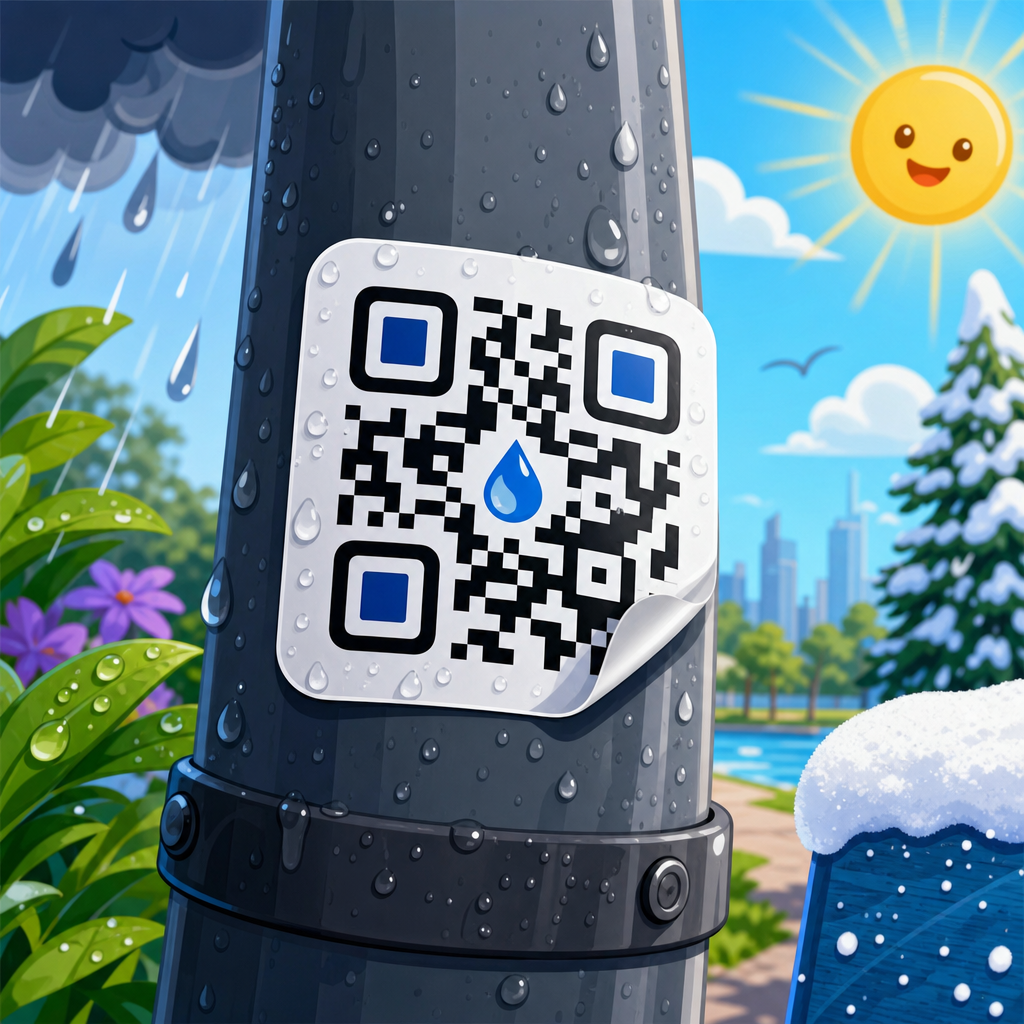
Durable QR code stickers are scannable labels engineered to keep working after exposure to sunlight, rain, abrasion, chemicals, temperature swings, and frequent handling. In practice, that means the printed code, adhesive, face stock, and protective finish are selected as a system rather than as a generic sticker. I have specified QR labels for warehouses, restaurant patios, manufacturing floors, healthcare carts, and outdoor equipment, and the same lesson repeats every time: a QR code is only useful when it remains readable in the exact environment where people need to scan it. For businesses investing in digital menus, asset tracking, maintenance logs, product authentication, and customer self-service, durability is not an upgrade. It is the baseline requirement that determines whether the code delivers value for months or fails in days.
A durable QR code solution combines four elements. First, the symbol itself must be created with proper error correction, contrast, quiet zone, and module size so smartphone cameras can read it quickly. Second, the print method must hold edge definition; blurry modules, ink spread, or fading reduce scan reliability. Third, the substrate and adhesive must match the surface, from powder-coated metal to corrugated packaging to curved plastic. Fourth, the finish must protect against the actual threats in the field, whether that means UV laminate for storefront windows, chemical-resistant polyester for laboratories, or scratch-resistant overlaminate for shared devices. When people ask what are durable QR code stickers, the shortest accurate answer is this: they are purpose-built labels designed to preserve scan performance under real-world stress.
This matters because QR codes sit at the intersection of physical and digital operations. A sticker on a machine may open a maintenance history, a code on a returnable tote may connect to an inventory system, and a label on a product may direct a buyer to setup instructions or authenticity checks. If that sticker peels, fades, or becomes unreadable, the failure affects more than aesthetics. It slows technicians, interrupts customer journeys, undermines compliance workflows, and creates hidden replacement costs. Companies often focus on artwork and destination URL first, then discover that material choice, adhesive chemistry, and installation conditions decide long-term success. Understanding durable QR code solutions helps teams choose materials, testing methods, and printing standards that fit the job from the beginning.
What makes a QR code sticker durable
A durable QR code sticker stays readable and firmly attached for the intended service life in its operating environment. Readability depends on high contrast, stable dimensions, and damage tolerance. Attachment depends on adhesive compatibility with the surface energy, texture, curvature, and contamination level of the application surface. Service life depends on resistance to the specific stressors present. Outdoor labels usually fail from UV exposure, water ingress, and temperature cycling. Industrial labels often fail from solvents, oils, abrasion, and pressure washing. Consumer-use labels commonly fail from finger wear, cleaning sprays, and poor adhesion to textured plastics. Durability is therefore not one property. It is the result of matching design, print, material, adhesive, and application method to the use case.
The QR symbol design itself deserves attention. A code with higher error correction can tolerate some damage, but that does not compensate for bad printing or tiny module size. In field deployments, I aim for generous quiet zones and enough physical size to support quick scans from normal user distance. ISO/IEC 18004 defines the QR Code symbology, while print quality is commonly assessed using barcode verification practices aligned with ISO/IEC 15415. Even when a smartphone can scan a marginal code in ideal light, low-quality printing becomes a problem when the label is scratched, dirty, or viewed at an angle. Durable performance begins with a code that is easy to read before any environmental stress is added.
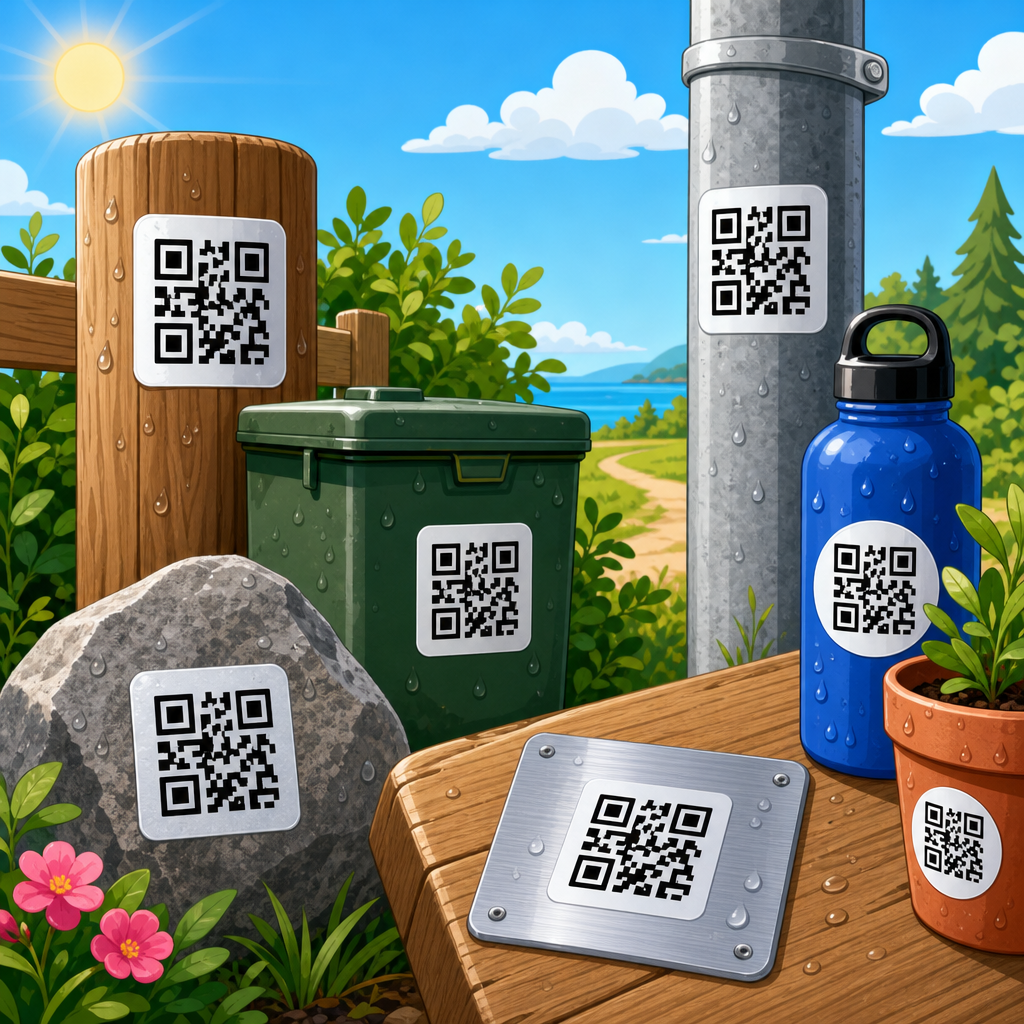
Material selection is equally important. Paper labels can work indoors for short campaigns, but they are not durable QR code stickers in the strict sense. Durable constructions typically use polyester, polypropylene, vinyl, polycarbonate, anodized aluminum, or specialty films. Polyester is widely used because it offers excellent dimensional stability, chemical resistance, and print receptivity. Vinyl conforms well to curved or irregular surfaces but can stretch, which matters when preserving module geometry. Polycarbonate supports high-end overlays and control panels. Metal tags, including laser-marked stainless steel or anodized aluminum, are chosen when extreme heat, solvent exposure, or very long service life is required. The right choice depends on where the label lives and what it must survive.
Materials, adhesives, and protective finishes
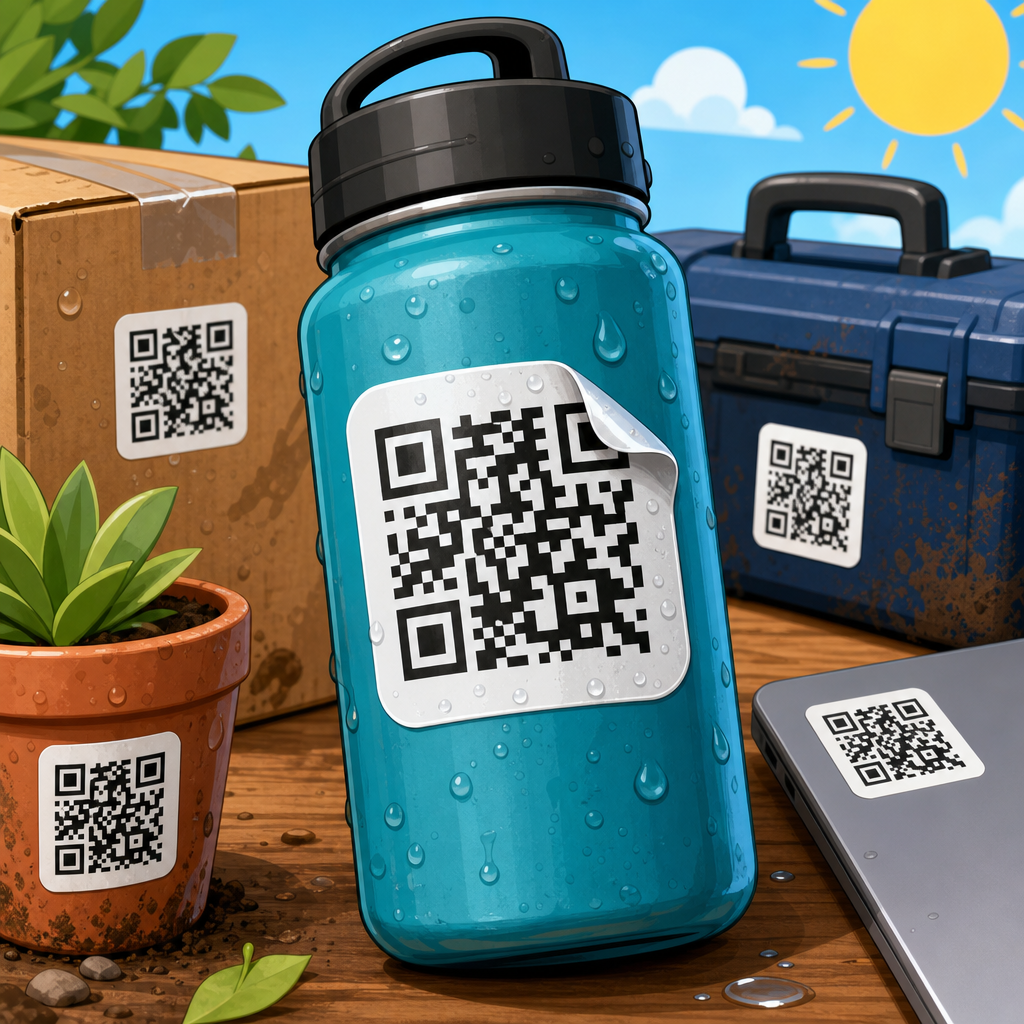
Face stock and adhesive work together, and poor pairing is a common cause of sticker failure. Permanent acrylic adhesives are a standard choice for durable QR code stickers because they bond well to many metals, painted surfaces, glass, and high-surface-energy plastics. Rubber-based adhesives can offer fast tack on rough surfaces and some low-surface-energy plastics, but they may have lower long-term heat or UV resistance. Specialty formulations are available for polypropylene bins, polyethylene containers, freezer storage, and removable applications that still need clean scanning. Surface preparation also matters. Dust, mold release, oil, oxidation, and cold application temperatures can prevent adhesive wet-out, leading to edge lift or total failure even with premium materials.
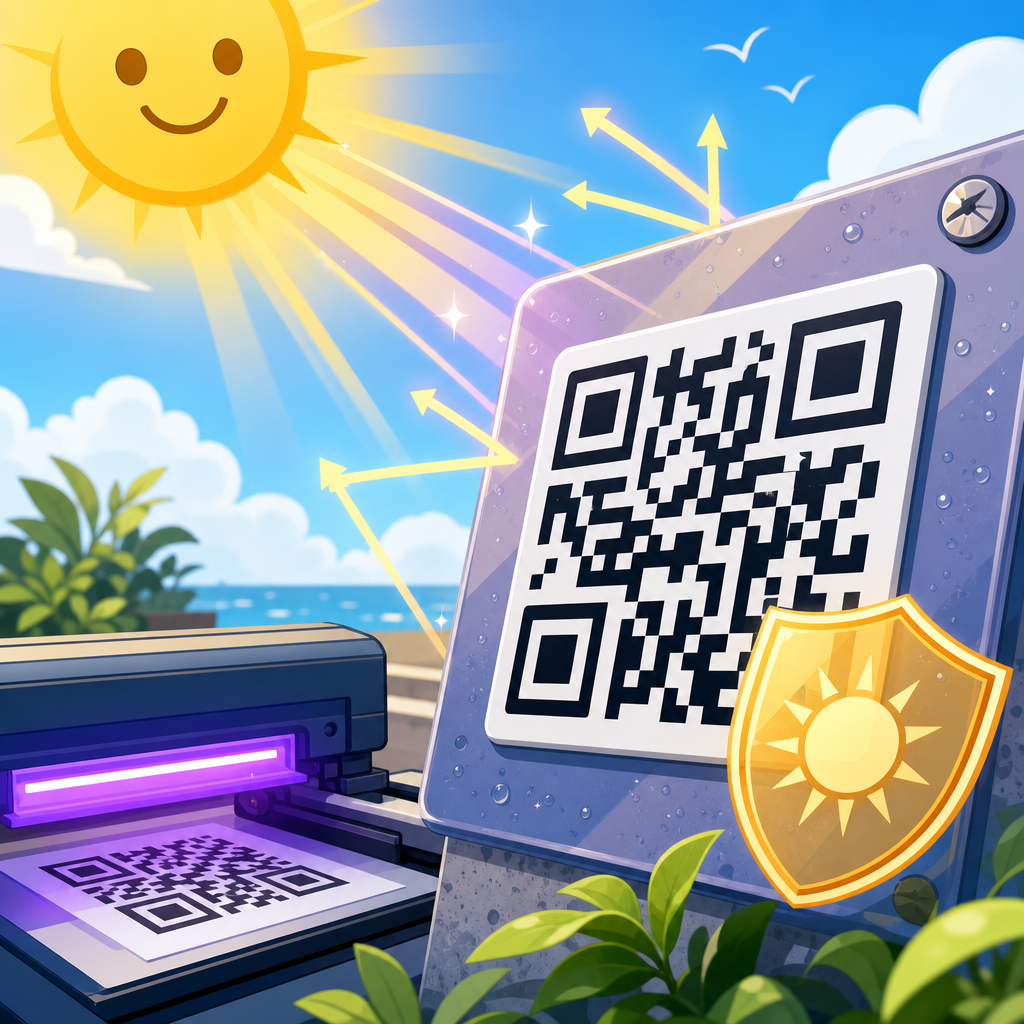
Protective finishes determine how well the printed code survives attack. Lamination adds a clear film over the print, improving resistance to abrasion, moisture, and chemicals. UV-resistant laminates slow fading in sun-exposed locations such as outdoor signage, vehicles, and garden equipment. Overlaminates can be matte or gloss; matte reduces glare, which often improves smartphone scan performance under direct light. Varnishes and topcoats can help, but they usually do not match the long-term protection of a true laminate in harsh settings. In industrial programs, I often specify thermal transfer printing on polyester with a resin ribbon plus overlaminate because that combination resists rubbing, cleaners, and moderate chemical splash far better than standard direct thermal labels.
When comparing materials, the most reliable approach is to define the environment first, then choose the construction. The table below summarizes common durable QR code solutions and the situations they fit best.
| Material | Best use case | Strengths | Limitations |
|---|---|---|---|
| Polyester | Assets, equipment, healthcare, laboratories | Chemical resistance, dimensional stability, clean print quality | Less conformable on complex curves |
| Vinyl | Outdoor decals, curved surfaces, utility equipment | Flexibility, weather resistance, strong outdoor performance | Can stretch if mishandled during application |
| Polypropylene | Consumer products, packaging, indoor operational labels | Good moisture resistance, lower cost, clean appearance | Usually less durable than polyester in harsh industrial use |
| Anodized aluminum | Extreme outdoor or industrial identification | Long life, heat resistance, tamper resistance | Higher cost and rigid format |
Printing technology should be chosen with the same rigor as material selection. Thermal transfer remains a workhorse for durable variable-data labels because resin ribbons can produce sharp, solvent-resistant prints on polyester and polypropylene. UV inkjet is strong for outdoor graphics and short to medium runs, especially when paired with compatible laminate. Laser marking and etching provide exceptional permanence on metal plates and some engineered plastics, making them ideal for fixed asset tags and compliance labels. Standard office inkjet and low-end desktop printing usually fail in durability programs because water, abrasion, and heat quickly degrade the image. The more demanding the environment, the more important print process control becomes.
How durable QR code stickers are used in the real world
Durable QR code stickers support many operational and customer-facing workflows. In manufacturing, machine labels often link operators to lockout procedures, maintenance records, spare parts lists, and troubleshooting guides. The sticker must survive oil mist, cleaning chemicals, and repeated wipe-downs. In logistics, reusable containers and pallets may carry QR labels for cycle counts, return tracking, and chain-of-custody records. Here, abrasion from stacking and forklift handling becomes the key threat. In hospitality and retail, outdoor table tents, window decals, and product display labels need to endure sun, rain, and frequent touching while still scanning instantly on a customer’s phone.
Healthcare and laboratory settings create another set of demands. Labels placed on carts, analyzers, sample storage, and mobile devices must survive disinfectants such as isopropyl alcohol, quaternary ammonium compounds, and hydrogen peroxide-based cleaners. A standard paper label may look fine on day one and fail within a week of sanitation cycles. Durable polyester labels with chemical-resistant topcoats perform far better. In universities and offices, asset tracking programs use QR labels on laptops, monitors, furniture, and AV equipment. These may not face harsh chemicals, but they do face constant touching, movement, and attempts at removal, so tamper-evident constructions or destructible films can add security where needed.
Product authentication and brand protection are also growing uses. A durable QR code on packaging, hangtags, or the product itself can connect buyers to registration, provenance, warranty activation, and anti-counterfeit verification. For field tools and rental equipment, the code may link to inspection checklists and user manuals. On construction sites, labels endure dirt, weather, UV, and rough handling, so thick laminates or metal tags become practical. These examples show why a hub on durable QR code solutions must cover more than sticker stock. The application determines the failure mode, and the failure mode determines the correct material, adhesive, print method, and protective finish.
Best practices for design, printing, testing, and installation
Reliable performance starts at the design stage. Use strong contrast, normally black on white or another very light background, and avoid decorative treatments that reduce edge clarity. Keep the quiet zone intact on all sides. Size the code for the expected scan distance; tiny symbols may scan at arm’s length in perfect light, but they fail in motion or low light. Use dynamic QR codes when destinations may change, but keep the redirect infrastructure fast and well managed. I also recommend short, clean URLs and mobile-optimized landing pages because scan success is only the first step. A durable sticker that opens a slow or broken page still creates a poor user experience.
Testing is where good plans become dependable deployments. Before ordering thousands of labels, run application-specific trials. Apply samples to the real surface, not a similar one. Test cold, heat, moisture, UV, and chemical exposure that matches the actual environment. Check scan performance after abrasion, cleaning, and aging. If outdoor life matters, ask suppliers for accelerated weathering data and compare it with your expected service period. For industrial programs, document the label construction, ribbon, printer settings, and laminate so replacements remain consistent. Installation should be treated as a process, not an afterthought. Clean the surface, apply within the recommended temperature range, use proper pressure, and allow adhesive dwell time before heavy use or washdown.
It also helps to think in terms of lifecycle cost. A cheaper label that must be replaced every month usually costs more than a higher-grade construction that lasts two years. Replacement labor, downtime, rescanning attempts, and user frustration all carry cost. Good governance matters too. Establish naming conventions, destination management, and review cycles so QR content stays current. On a hub page about durable QR code solutions, the central principle is simple: durable materials protect the symbol, but disciplined design, validation, and maintenance protect the whole system. Teams that treat QR labels as operational infrastructure consistently get better results than teams that treat them as disposable graphics.
How to choose the right durable QR code solution
The best way to choose is to answer a short set of practical questions. Where will the sticker live: indoors, outdoors, refrigerated, washed down, or exposed to solvents? What surface will it attach to: smooth metal, textured plastic, curved equipment, painted panel, or cardboard? How long must it last: weeks, months, or years? Will people touch it often, or will machinery rub against it? Does it need tamper evidence or a premium branded finish? Once those answers are clear, the material choice becomes straightforward. Polyester with resin printing suits many assets and industrial labels. Vinyl with UV laminate suits many outdoor applications. Metal tags suit extreme durability requirements.
Supplier capability should be evaluated just as carefully as product specs. Ask whether they can provide material data sheets, adhesive recommendations by surface type, and expected outdoor life. Ask what verification they perform for print quality and whether they have experience with QR deployments rather than generic label production. Good suppliers will discuss scan distance, laminate glare, smartphone usability, and environmental testing without being prompted. They will also tell you when a sticker is not the right answer. For very high heat, direct part marking or metal nameplates may outperform any adhesive label. The goal is not simply to buy a durable QR code sticker. It is to implement the most durable scannable identification method for the job.
Durable QR code stickers are valuable because they preserve access to information wherever physical assets, products, and people meet. The strongest programs combine readable code design, proven print technology, compatible materials, correct adhesives, and environmental testing. They are used to support maintenance, asset tracking, authentication, customer engagement, and compliance, but they only work when durability is planned from the start. If you are building a QR Code Design, Printing & Materials strategy, treat durable QR code solutions as a foundational layer, then map each use case to its environment and lifespan. Start with a sample set, test it under real conditions, and choose the construction that keeps scanning when ordinary stickers fail.
Frequently Asked Questions
What exactly makes a QR code sticker “durable”?
A durable QR code sticker is designed to remain readable and securely attached even after prolonged exposure to real-world wear. That durability does not come from just printing a QR code on any adhesive label. It comes from choosing the right combination of materials: the face stock, the adhesive, the print method, and the protective finish. When these elements are engineered to work together, the sticker can continue scanning after exposure to sunlight, rain, abrasion, cleaning chemicals, temperature shifts, and repeated handling.
In practical terms, durability means the code stays high-contrast enough for scanners and smartphone cameras to read it, and the label itself stays in place on the intended surface. For example, a QR code used on outdoor equipment may need UV-resistant materials and an aggressive adhesive, while one used on a healthcare cart may need resistance to disinfectants and frequent wiping. A sticker is only as durable as its weakest component, so if the ink fades, the laminate scratches, or the adhesive fails, the QR code can become useless even if the rest of the label still looks acceptable.
That is why durable QR labels are usually specified for the environment they will face, not treated like generic stickers. In warehouses, manufacturing floors, restaurant patios, and field settings, labels often deal with rough handling, moisture, grease, and changing temperatures. A durable QR code sticker is built specifically to survive those conditions and keep delivering a consistent scan experience over time.
Where are durable QR code stickers commonly used?
Durable QR code stickers are used anywhere a scannable label needs to keep working beyond clean, controlled indoor conditions. Common examples include warehouses, manufacturing facilities, healthcare environments, commercial kitchens, restaurant patios, outdoor equipment, fleet assets, utility infrastructure, and retail back-of-house operations. In each of these settings, labels are exposed to some combination of dirt, friction, liquids, UV light, cleaning agents, and temperature fluctuation.
In warehouses, durable QR labels are often applied to racks, bins, pallets, and equipment where they may be bumped by carts, exposed to dust, or handled constantly by staff. On manufacturing floors, labels may face oil, solvents, vibration, and abrasion from daily operations. In healthcare settings, QR stickers placed on carts, devices, or storage systems must tolerate routine disinfecting without smearing, peeling, or losing contrast. For restaurants and hospitality spaces, patio table QR codes and service labels need to survive sun, rain, and repeated wiping while still scanning quickly for guests and staff.
Outdoor equipment is another major use case. A QR code on a tool, machine, sign, or asset can connect users to service records, manuals, inspections, or tracking systems, but only if the label remains readable after weather exposure. That is the value of durable construction: it protects the code’s function in environments where ordinary labels often fail. If the sticker supports workflows like maintenance, inventory, ordering, or compliance, durability becomes essential rather than optional.
What materials and features should you look for in a durable QR code sticker?
The best durable QR code stickers start with a face material suited to the environment. Polyester and vinyl are common choices because they hold up better than standard paper under moisture, handling, and outdoor exposure. Polyester is often preferred for industrial and asset-label applications because it provides dimensional stability and a clean print surface. Vinyl can be useful when flexibility or conformability is important, especially on curved or uneven surfaces. The face stock should be matched to the use case rather than selected on price alone.
Adhesive is equally important. A durable label needs an adhesive that bonds well to the specific surface, whether that surface is metal, plastic, painted equipment, glass, or textured material. Some environments require permanent high-tack adhesives, while others may call for removable or specialty formulations. Surface energy, cleanliness, and application temperature all affect performance. A strong-looking label can still fail quickly if the adhesive is wrong for the substrate.
You should also pay close attention to print quality and protection. Durable QR codes are typically produced with printing methods and inks that resist fading and smearing, then protected with a laminate or topcoat. That protective finish helps guard against scratches, chemicals, UV exposure, and repeated cleaning. In many applications, the laminate is what preserves scan reliability over time. Other useful features can include tamper-evident construction, weatherproofing, chemical resistance, freezer-grade adhesives, or resistance to disinfectants. The key point is that durability is system-based: the material, adhesive, print, and finish all need to support the same performance goal.
How long do durable QR code stickers last?
The lifespan of a durable QR code sticker depends on the environment, the materials used, the application surface, and how the label is maintained. In light-duty indoor settings, a well-made durable label may remain readable and adhered for years. In more demanding conditions, such as full sun, harsh weather, industrial abrasion, or repeated chemical cleaning, life expectancy will vary based on how well the label was specified for those exact exposures. There is no single universal lifespan because the difference between a climate-controlled storage room and an outdoor machine yard is substantial.
What matters most is not just whether the sticker is still physically present, but whether it still scans reliably. A QR code can become functionally dead before the label fully peels off. Fading, scratching, staining, edge lifting, or adhesive failure can all interfere with scanning performance. That is why durability should be measured in terms of operational usefulness, not just appearance. If the code supports asset tracking, maintenance records, digital menus, equipment histories, or inventory control, even a partial failure can create workflow disruptions.
Manufacturers may provide durability estimates such as indoor life, outdoor life, or resistance ratings, but those are best treated as guidelines rather than guarantees. Real-world testing is often the smartest approach, especially for demanding applications. If the QR code is critical to operations, it is worth testing sample labels on the actual surface, in the actual environment, and with the actual cleaners or handling patterns the label will encounter. That is the most reliable way to estimate service life and avoid early failure.
How can you make sure a durable QR code sticker stays scannable over time?
To keep a durable QR code sticker scannable over time, start with proper specification and good code design. The QR code itself should be printed at an appropriate size, with strong contrast and enough quiet space around it for scanners to detect it easily. If the code is too small, too dense, or poorly printed, no material upgrade will fully solve the problem. For long-term use, it also helps to include a suitable error correction level so the code can still scan if minor surface damage occurs.
Application matters just as much as production. The label should be applied to a clean, compatible surface using the correct pressure and at the recommended temperature. Dirt, oil, moisture, or textured surfaces can reduce adhesive performance and create bubbles, lifting, or premature edge failure. Placement is also important. Avoid areas that receive constant scraping, direct impact, or unnecessary chemical exposure if another position is available. A durable label can withstand a lot, but smart placement extends its life significantly.
Ongoing maintenance and verification complete the process. If labels are in a harsh environment, inspect them periodically for fading, scratches, peeling, or residue buildup. Clean them only with products the materials are designed to tolerate. It is also wise to test scans routinely, especially in operational settings where labels support important workflows. A durable QR code sticker is meant to reduce failures, but the best results come when the label is thoughtfully designed, correctly installed, and periodically checked in the real conditions where it must perform.