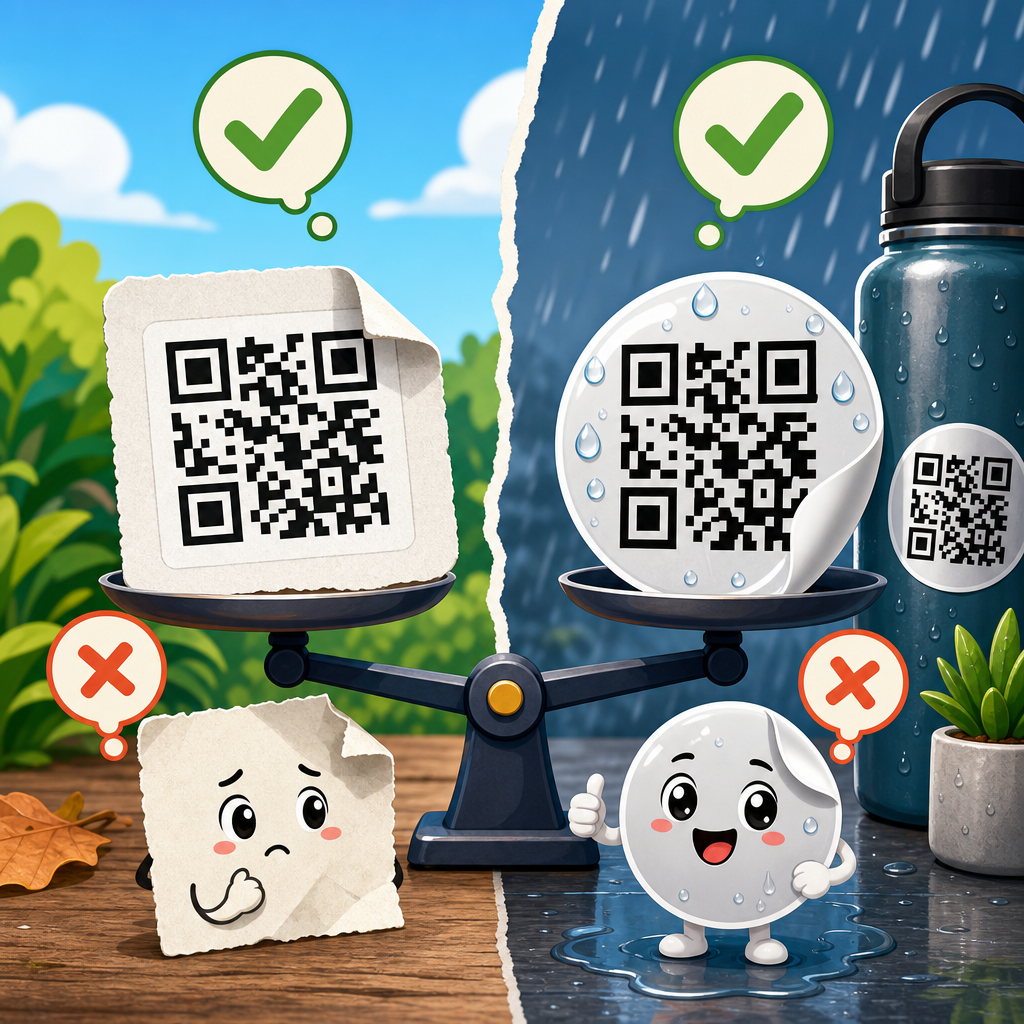
Choosing between paper and vinyl QR code stickers affects scan reliability, lifespan, printing cost, and where the code can be used. In practical terms, a QR code sticker is only successful when a smartphone camera can detect high contrast, clean module edges, and a quiet zone that remains unobstructed over time. I have tested codes on menus, packaging, warehouse bins, windows, and outdoor signs, and the material choice routinely determines whether a code still scans after a week, a season, or a year. For businesses building a printing program, paper vs vinyl QR code stickers is not a minor design preference. It is a production decision that shapes durability, appearance, maintenance, and replacement cycles.
Paper stickers use a paper face stock with an adhesive backing, usually finished in matte, gloss, or uncoated options. Vinyl stickers use a plastic film, commonly PVC or polypropylene, paired with stronger adhesives and better resistance to moisture, abrasion, and UV exposure. Both can carry QR codes effectively if the print is sharp and the size is appropriate, but they behave very differently under heat, water, cleaning chemicals, and repeated handling. This matters because printing QR codes is not just about generating an image. It includes material selection, printer compatibility, lamination, surface placement, adhesive performance, and testing under real use conditions.
As the hub page for printing QR codes within QR code design, printing, and materials, this guide explains where paper stickers work, where vinyl stickers clearly outperform them, and how to choose based on environment, budget, and expected scan volume. It also covers print methods, sizing, finishing, and quality control, because even the best material fails if the code is undersized or poorly produced. If you need one rule up front, use paper for short-term, indoor, low-abuse applications, and use vinyl for long-term, exposed, or frequently handled placements. The sections below break down that rule in detail so you can print once and get dependable scans.
What paper QR code stickers do well
Paper QR code stickers are the economical default for indoor campaigns, temporary labels, and projects where replacement is expected. In restaurants, trade show booths, retail shelf talkers, and event check-in stations, paper is often the right answer because the code only needs to remain clean and readable for days or weeks. Paper also accepts a wide range of printing methods, including laser, offset, and inkjet, making it easy to produce in-house or through almost any commercial printer. Matte paper is especially useful for scan performance because it reduces glare under overhead lighting, which helps lower camera reflection issues.
Another advantage is unit cost. If you are printing thousands of QR labels for product inserts, internal inventory tags, or seasonal promotions, paper face stock keeps budgets under control. I have used paper labels successfully for box-top instructions, short-run direct mail, classroom materials, and tabletop promotions where staff could replace damaged stickers quickly. Paper is also easier to write on, which can help in operational settings where teams add dates, initials, or batch notes beside a static or dynamic QR code. For simple indoor use on dry, flat surfaces, paper often delivers the best cost-to-function ratio.
Its limits are straightforward. Paper absorbs moisture, scuffs easily, tears on edges, and degrades faster when exposed to oils, friction, and cleaning agents. Gloss paper can also introduce glare that makes scanning less consistent at certain angles. In kitchens, bathrooms, refrigerated storage, or storefront windows receiving direct sun, paper generally fails sooner than expected. Once the surface wrinkles or the printed modules feather from moisture, scan performance drops quickly. That is why paper should be treated as a short-term material unless the environment is tightly controlled and the sticker is protected from wear.
Where vinyl QR code stickers outperform paper
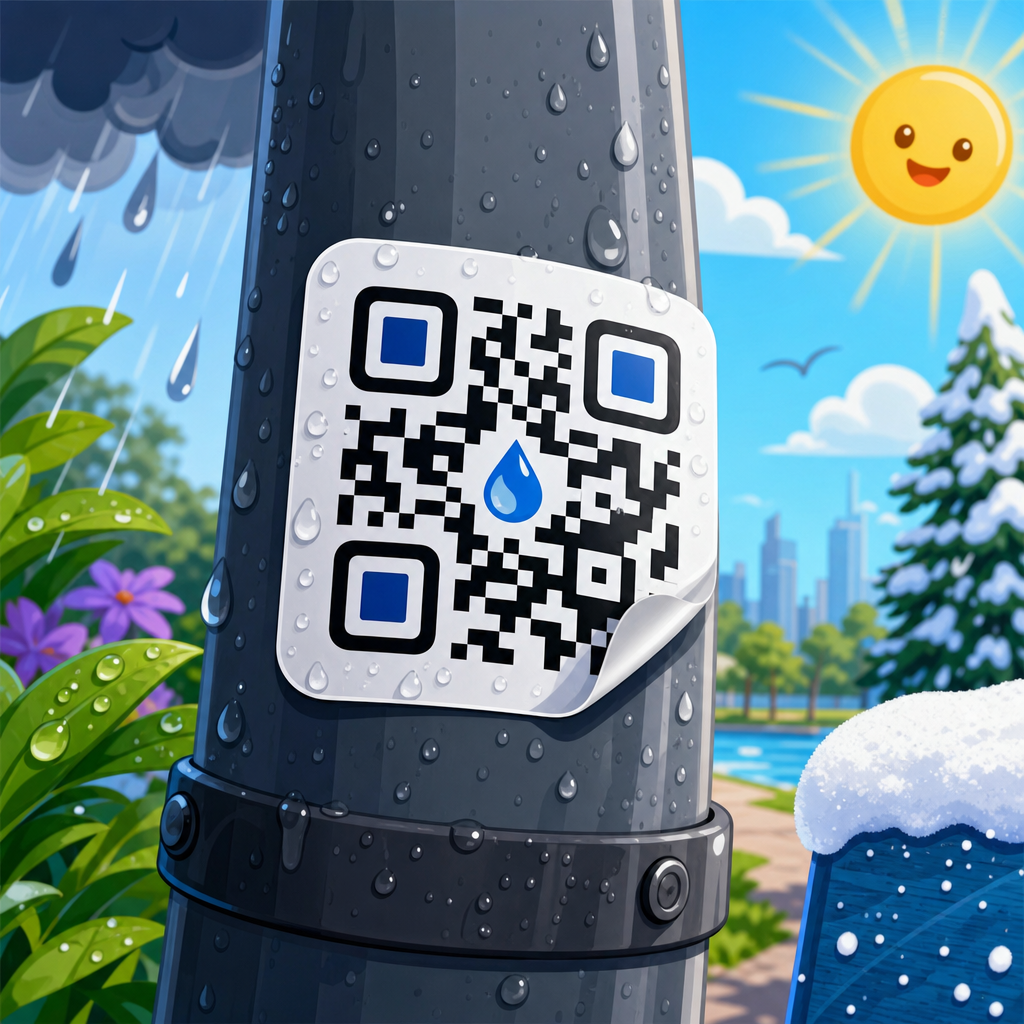
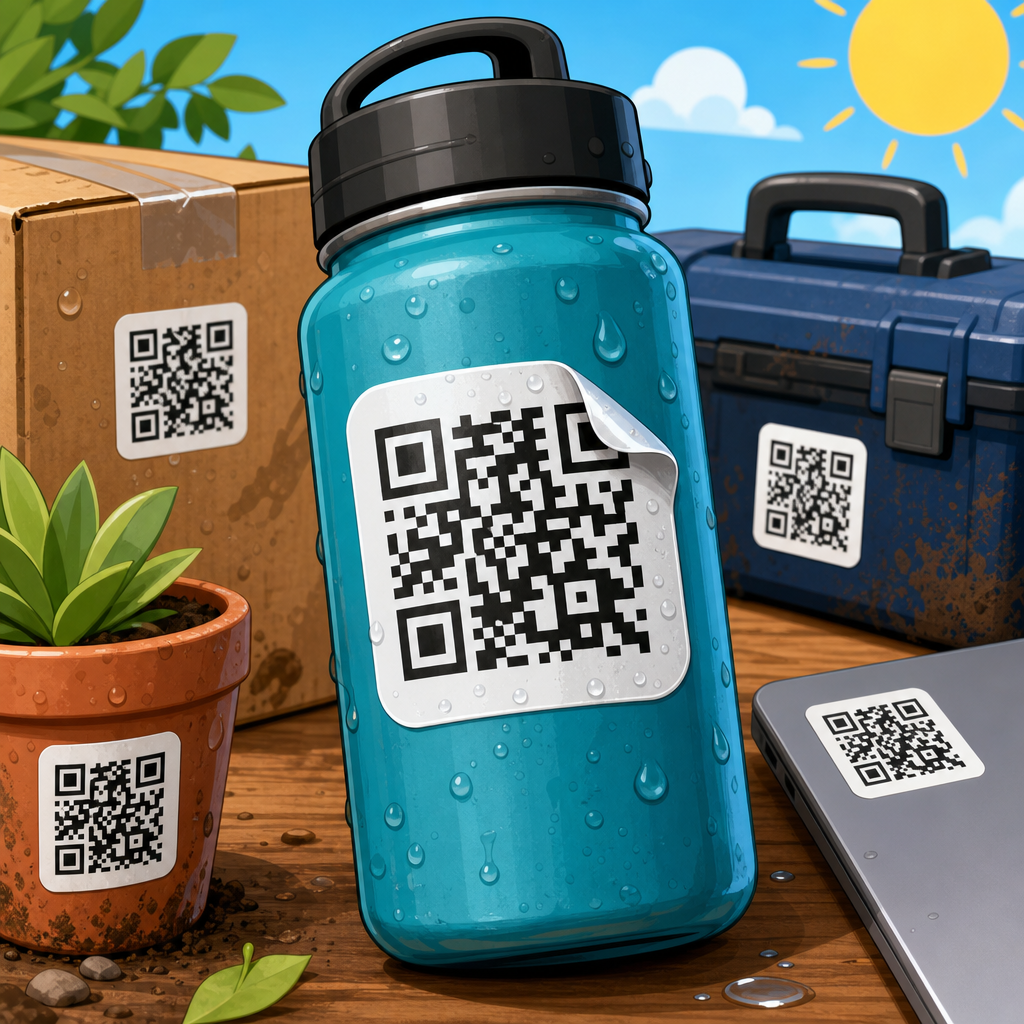
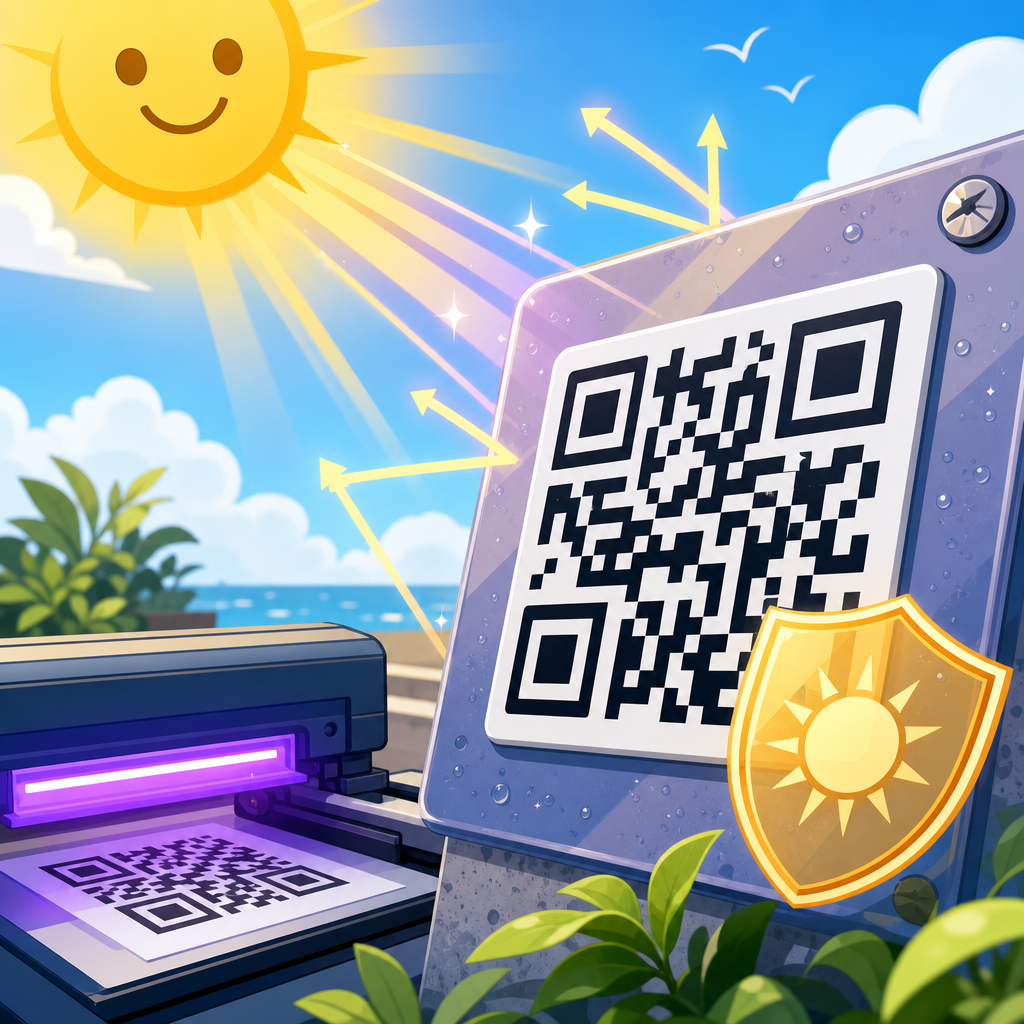
Vinyl QR code stickers are designed for endurance. A properly printed vinyl QR code resists water, tearing, abrasion, UV exposure, and many cleaning routines, which makes it the standard choice for outdoor use, industrial spaces, and high-touch placements. When I specify QR labels for pickup windows, gym equipment, equipment tags, vehicle decals, or wayfinding signs, vinyl is usually nonnegotiable. The material remains stable when temperatures shift, and premium films hold crisp printed edges much longer than paper. That stability matters because QR codes depend on square module boundaries. Distortion, swelling, and surface breakdown all reduce readability.
Vinyl also conforms better to challenging surfaces. Cast or calendared vinyl can adhere to glass, painted metal, plastic enclosures, and lightly curved surfaces more reliably than paper stock. For QR code stickers on doors, outdoor kiosks, machinery, or reusable product containers, that adhesive and film performance is often the deciding factor. Many vinyl products are available with permanent, removable, or high-tack adhesive systems, letting you match the sticker to the substrate and removal requirements. Lamination adds another layer of defense, protecting the print from scratches without compromising scan reliability when the finish is chosen correctly.
The tradeoff is cost and production complexity. Vinyl materials cost more, and not every office printer handles them well. Some require eco-solvent, latex, UV, or thermal transfer printing for best durability. If you choose low-quality vinyl or a laminate that adds heavy gloss, you can still create scan issues through reflection. Vinyl can also be excessive for one-day events or disposable packaging. The material shines when the sticker must survive months of weather, frequent wiping, or repeated customer interaction. In those cases, the higher upfront cost is usually lower than the labor cost of replacing failed paper labels.
Paper vs vinyl QR code stickers at a glance
The fastest way to compare these materials is to look at lifespan, print quality under stress, and total ownership cost. In real deployments, I have seen paper labels last a few days on handled packages and several months on untouched indoor signage, while vinyl labels commonly remain serviceable for one to five years depending on ink system, laminate, sun exposure, and cleaning intensity. The best material is the one that preserves contrast and shape long enough for the business objective. A coupon code on a weekend flyer does not need the same construction as a maintenance link on warehouse equipment.
| Factor | Paper QR Stickers | Vinyl QR Stickers |
|---|---|---|
| Best use case | Short-term indoor labels, events, packaging inserts | Outdoor signs, windows, equipment, high-touch surfaces |
| Water resistance | Low unless specially coated | High, especially with laminate |
| Abrasion resistance | Low | High |
| UV resistance | Low to moderate | Moderate to high |
| Print compatibility | Excellent across common printers | More selective by printer and ink type |
| Cost | Lower | Higher |
| Expected replacement rate | Higher | Lower |
If your team is building a print standard, use that comparison as a baseline, then test in the exact placement environment. Surface texture, sunlight angle, and cleaning frequency matter as much as the base material. A vinyl sticker on a greasy fryer hood can still fail if the adhesive is wrong. A paper sticker behind acrylic can last surprisingly well. Material decisions should always follow the actual use case, not habit.
Printing QR codes correctly on either material
Material choice matters, but printing discipline matters just as much. A QR code should be exported in a high-resolution format, ideally vector for professional printing, so the module edges remain sharp at any size. Raster files can work, but low-resolution PNG files often produce soft edges that reduce decoding accuracy. I recommend high contrast, usually black on white, and I avoid decorative gradients or busy backgrounds unless the code has been tested on multiple devices. ISO/IEC 18004 defines the QR code standard, and while many customizations are possible, reliable readability still depends on clean geometry and contrast.
Size selection should be based on expected scan distance. A practical rule is that the scanning distance should be roughly ten times the code width, although modern phones sometimes perform better than that estimate. For close-range uses such as menus, packaging, and tabletop displays, 0.8 to 1.2 inches may be enough if print quality is excellent. For posters, windows, and wall signs, larger is safer. Quiet zone is nonnegotiable: keep a clear margin around the code, typically four modules wide, free from borders, logos, or text. When stickers are die-cut too tightly, scans often fail because the quiet zone is lost.
Printer and ink choices affect durability. Laser printing on paper can create crisp edges for indoor use. Thermal transfer is strong for industrial labels. For vinyl, latex and UV printing are popular because they offer durability and good adhesion on film media. Lamination should usually be matte or low-gloss when glare is a concern, especially for codes placed behind windows or under spotlights. Before full production, test several phones, both iPhone and Android, at normal distances and under realistic lighting. The best QR sticker is not the prettiest sample on a desk. It is the one that scans consistently in the field.
How environment, surface, and use determine the right sticker
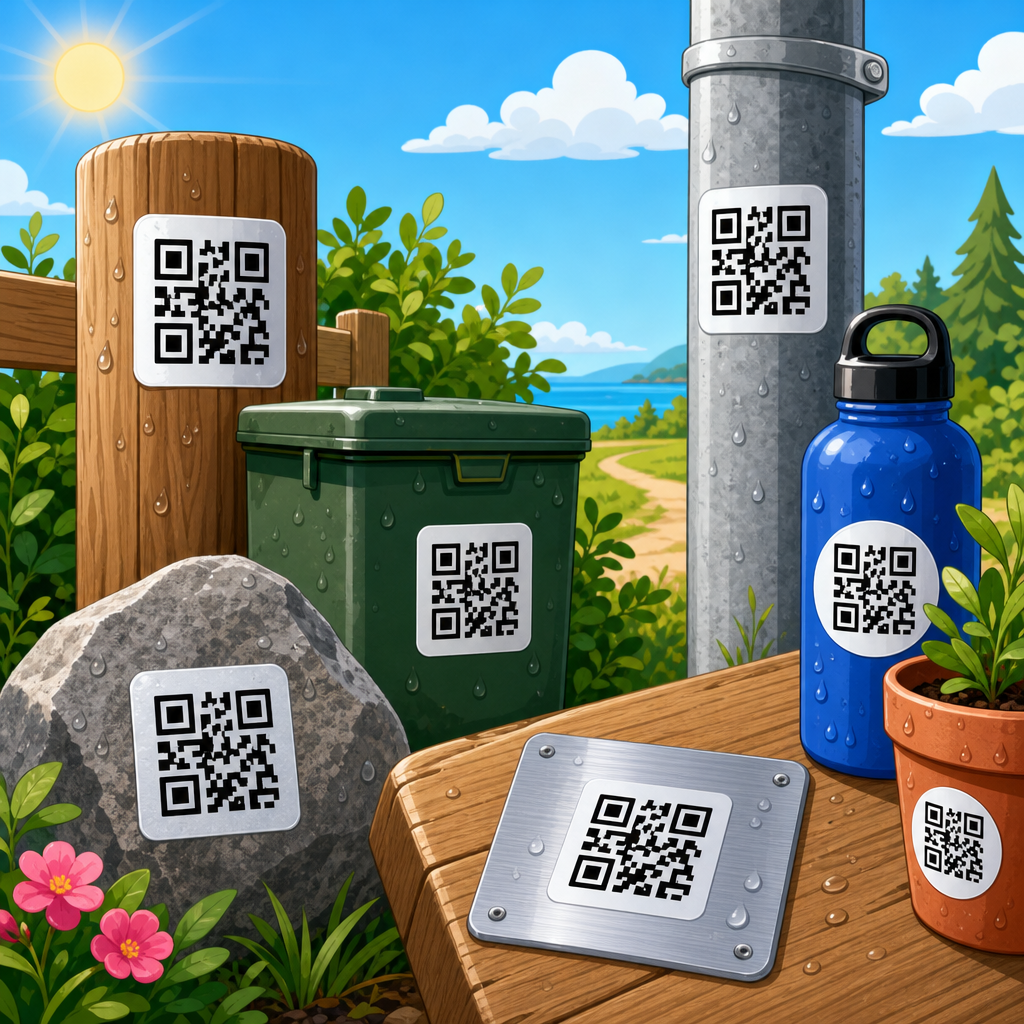
The right material becomes obvious when you map the sticker to its environment. Indoor dry office walls, product cartons, and handouts are low-risk applications where paper usually performs well. Restaurant tables, restroom doors, salon mirrors, gym machines, and curbside pickup signs are higher-touch and cleaned frequently, pushing the decision toward vinyl. Outdoor placements add rain, UV, wind-driven grit, and temperature swings, which almost always eliminate ordinary paper. In logistics and manufacturing, labels may face forklift contact, dust, solvents, and rubbing from gloves, again favoring vinyl or specialty synthetic labels over paper.
Surface type also matters. Smooth glass, sealed metal, and painted plastic generally accept vinyl very well, especially after proper cleaning with isopropyl alcohol and full adhesive cure time. Cardboard and paperboard packaging often suit paper labels because the lifespan of the package is short and the substrate itself is disposable. On textured walls, low-energy plastics, powder-coated metals, or curved containers, adhesive selection becomes critical. Standard paper labels often lift at corners in those conditions. High-tack vinyl or specialty adhesives solve many of those failures, but they should be tested to avoid residue or difficult removal.
Use pattern is the final filter. If a code is scanned once during an unboxing experience, paper is often enough. If a code is scanned dozens of times daily for payments, menus, or instructions, the print must withstand fingerprints, scratches, and routine cleaning. Dynamic QR codes can reduce reprint frequency because the destination can change without changing the printed symbol, but the sticker still has to remain readable. In practice, I advise clients to estimate not only exposure time but handling intensity. A two-week campaign in a busy café can be harder on a sticker than six quiet months in an office corridor.
Cost, maintenance, and long-term value
Many buyers focus first on unit price, but the more useful metric is lifecycle cost. Paper is cheaper to buy, yet more expensive to maintain if staff must replace curled, wet, or scuffed stickers repeatedly. Vinyl costs more upfront but reduces labor, reprints, and missed scans in demanding settings. That difference becomes visible quickly in multi-location operations. A chain with fifty stores can absorb the higher per-sticker cost of vinyl if it prevents weekly replacements on entrance doors or pickup counters. Failed scans also carry opportunity cost: lost orders, missed signups, and weaker analytics from underused codes.
Maintenance practices should match material. Paper stickers need dry placement, gentle cleaning around the label, and periodic inspection for edge lift and fading. Vinyl stickers still need care, but they tolerate routine wiping far better. In regulated or industrial environments, consider whether cleaning chemicals, abrasion standards, or asset-label requirements apply. Some use cases may justify polyester or specialty synthetic stocks rather than standard paper or vinyl. As a hub for printing QR codes, that is an important point: paper and vinyl cover most needs, but not every need. Freezer labels, chemical labels, and tamper-evident labels can require more specialized constructions.
The smartest buying process is to print a pilot batch, apply it to the real surface, and inspect scan performance over time. Track scan success, visible wear, and replacement intervals for thirty to sixty days. Then standardize by use case: paper for inserts and short-term indoor promotions, vinyl for windows, equipment, and outdoor signs. That kind of specification prevents ad hoc ordering and helps maintain consistent quality across locations. If you are building a broader QR printing program, connect this page to deeper guidance on QR code size, sticker adhesives, laminate finishes, printer types, and outdoor QR code signage so every print decision supports reliable scanning.
Paper vs vinyl QR code stickers is ultimately a question of performance under real conditions. Paper is affordable, easy to print, and effective for short-term indoor applications where moisture, abrasion, and frequent cleaning are minimal. Vinyl is the durable choice for outdoor exposure, repeated handling, glass or metal mounting, and any placement where replacing failed stickers would cost time or revenue. In both cases, success depends on more than the substrate. Sharp printing, strong contrast, adequate size, preserved quiet zone, and real-world testing determine whether the code scans quickly for the user.
For teams responsible for printing QR codes at scale, the practical approach is simple. Match material to environment, choose print and finish options that protect readability, and test before full rollout. Use paper where low cost and short lifespan make sense. Use vinyl where durability and consistent scanning justify the premium. Document those standards by placement type so purchasing, design, and operations work from the same playbook. That is how you avoid common failures such as glare, edge lift, fading, and undersized codes.
If you are planning a new QR sticker project, start by listing where the sticker will live, how long it must last, how often it will be touched, and how it will be cleaned. Then select paper or vinyl based on those facts, not assumptions, and run a small pilot. A well-printed QR code sticker should feel invisible to the user: they point, scan, and move on without friction. Build for that outcome, and your printed QR codes will perform better from day one.
Frequently Asked Questions
What is the main difference between paper and vinyl QR code stickers?
The biggest difference is durability. Paper QR code stickers are inexpensive and work well for short-term indoor use, but they are much more vulnerable to moisture, abrasion, grease, sunlight, and general handling. Vinyl QR code stickers cost more upfront, yet they are far better suited for environments where the code needs to stay scannable over time. In real-world use, that matters because a QR code does not fail only when it tears in half. It also fails when the surface gets dirty, the edges of the modules soften, the print fades, the sticker curls, or the quiet zone around the code becomes visually interrupted.
From a scanning standpoint, both materials can perform well on day one if the code is printed correctly with strong contrast and enough clear space around it. The long-term difference appears after the sticker is exposed to routine conditions. A paper sticker on a menu, shipping box, or temporary shelf tag may scan perfectly at first, then degrade after spills, rubbing, or repeated contact. A vinyl sticker is more likely to maintain sharp module edges and a clean surface, which helps smartphone cameras detect the code consistently. So if the question is not just “Will it scan now?” but “Will it still scan next month?” vinyl usually has the advantage.
Which material is better for scan reliability over time?
Vinyl is generally better for scan reliability over time because it better protects the visual structure that QR scanners depend on. Smartphone cameras need crisp contrast between dark and light areas, clearly defined module boundaries, and an unobstructed quiet zone. When a sticker surface absorbs moisture, scuffs easily, wrinkles, or collects dirt that cannot be cleaned off, scan performance drops quickly. Paper tends to be more susceptible to those issues, especially in busy, humid, or high-contact settings.
That does not mean paper is automatically unreliable. For controlled indoor applications such as event handouts, short-run product labels, tabletop promotions, or temporary retail signage, paper can be completely acceptable if it is printed well and used for a limited period. The key is matching the material to the exposure level. If the code will be touched frequently, cleaned regularly, placed near food or liquids, attached to bins in a warehouse, applied to windows, or used outdoors, vinyl is a safer choice. In those scenarios, the sticker material often determines whether the code remains readable after a week, a season, or a longer deployment cycle.
It is also worth noting that reliability is not only about the face stock. Adhesive performance matters too. If the label lifts at the edges, bubbles, shrinks, or peels unevenly, the code can distort enough to affect scan success. Vinyl products are often paired with stronger adhesives and laminates, which adds another layer of protection for long-term readability.
When should I choose paper QR code stickers instead of vinyl?
Paper QR code stickers are the better choice when budget is tight, the campaign is short-lived, and the environment is relatively gentle. If you are labeling packaging for a limited run, creating inserts for an event, marking indoor items that will not face moisture or abrasion, or testing a QR code deployment before scaling up, paper can be the most practical option. It is cost-effective, easy to print in volume, and often perfectly adequate when the expected lifespan is measured in days or weeks rather than months or years.
Paper also makes sense when the sticker is unlikely to be handled much after application. For example, a QR code on sealed product packaging that will be scanned shortly after purchase may not need the added resilience of vinyl. The same goes for temporary menus, promotional displays, internal office use, and one-time campaigns. In these cases, paying for vinyl may not deliver enough additional value to justify the cost.
That said, choosing paper should come with realistic expectations. It is less forgiving if the sticker is exposed to steam, refrigerated storage, oils, cleaning chemicals, rough surfaces, or direct sun. Even indoor environments can be harder on labels than expected. Restaurant menus get wiped down, warehouse labels get bumped, and storefront materials near windows can heat up and fade. If there is any doubt about exposure, expected handling, or required lifespan, upgrading to vinyl is often the more economical decision in the long run because it reduces replacements and failed scans.
Is vinyl always the best option for outdoor or high-touch QR code applications?
In most cases, yes. Vinyl is usually the strongest choice for outdoor and high-touch QR code applications because those conditions are exactly where label materials are tested the hardest. Outdoor use introduces UV exposure, rain, temperature swings, dust, and surface movement. High-touch use adds fingerprints, scratching, repeated cleaning, and edge wear. All of these factors can reduce contrast, damage print quality, or interfere with the quiet zone that scanners need. Vinyl handles those stresses much better than standard paper.
For outdoor signs, window decals, pickup instructions, equipment labels, parking information, and public-facing wayfinding, vinyl offers a much better chance that the code will remain both attached and readable. It is also more suitable for warehouse bins, reusable containers, gym equipment, hospitality environments, and any application where the sticker may be wiped, bumped, or exposed to grime. If the sticker needs to survive a season or longer, vinyl is often the default recommendation.
However, “vinyl” alone does not guarantee success. Print method, laminate, adhesive type, code size, placement, and surface color all still matter. A glossy finish can create glare on windows or under strong lighting. A poor adhesive can fail even if the face material is durable. A code placed on a curved or textured surface may distort. So vinyl is usually the better material, but the best outcome still depends on producing the sticker correctly and applying it in a scan-friendly location.
How can I make sure either paper or vinyl QR code stickers scan well?
Start with the fundamentals of QR readability. Use strong contrast, ideally a dark code on a light, non-reflective background. Keep the module edges sharp and avoid low-quality printing that causes bleeding, feathering, or blurry corners. Preserve a clear quiet zone around the code so no text, graphics, borders, folds, or dirt interfere with detection. Make the code large enough for the expected scanning distance, and test it with multiple smartphones before full production. These rules matter more than many people realize, and they apply whether you choose paper or vinyl.
Next, match the material and finish to the environment. If glare could be an issue, consider a matte finish rather than a glossy one. If the sticker will be exposed to cleaning, weather, or repeated handling, choose vinyl with a protective laminate. If using paper, reserve it for dry, low-contact settings and shorter timeframes. Apply stickers to smooth, stable surfaces whenever possible, because wrinkles, bubbles, and surface texture can interfere with scanning. Also avoid placing the code where the quiet zone might later be covered by dirt, tape, condensation, or edge lifting.
Finally, think beyond initial print quality and plan for the full life of the sticker. Test after application, not just from the printer sheet. Check the code under the lighting conditions where people will actually scan it. Re-test after exposure if the use case is demanding. In practice, a QR code sticker succeeds when it stays visually clean and structurally stable long enough for real users to scan it easily. That is why the material choice matters so much: paper can work well for temporary, controlled use, while vinyl is usually the better investment when you need dependable scanning over time.