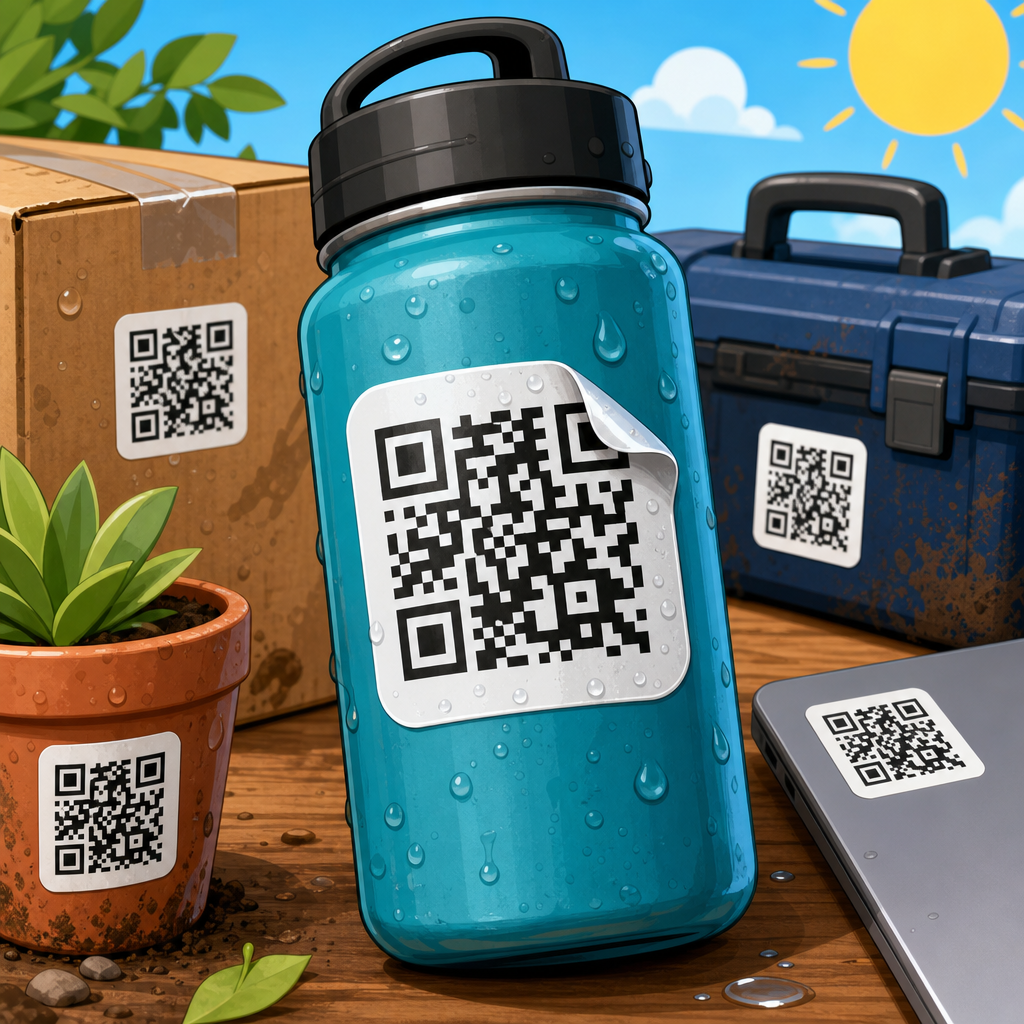
Metal is one of the most durable surfaces for QR code printing, and yes, you can print QR codes on metal successfully when the design, marking method, contrast, and scanning environment are handled correctly. In practice, metal QR codes are used on industrial equipment, medical devices, tools, asset tags, outdoor signage, packaging, and high-end products because they survive abrasion, heat, chemicals, and weather better than paper or standard adhesive labels. The core question is not whether metal can hold a QR code, but which metal printing method produces a code that remains readable after manufacturing, shipping, and years of use.
A QR code is a two-dimensional matrix barcode made of square modules arranged inside a fixed grid. Smartphones and industrial scanners read those modules by detecting contrast between dark and light areas, plus the quiet zone around the symbol. When people search for printing QR codes on metal, they usually mean one of several production approaches: laser engraving, laser annealing, chemical etching, UV printing, screen printing, anodized aluminum marking, embossing, or attaching a printed metal nameplate. Each method changes durability, contrast, cost, and scan reliability. I have tested codes on brushed stainless plates, powder-coated aluminum panels, and anodized tags, and the same digital QR code file can perform very differently depending on finish and lighting.
This matters because a QR code that looks premium but scans inconsistently fails its job. In manufacturing and field service, unreadable codes slow inventory checks, maintenance logging, warranty claims, and product authentication. In retail and hospitality, reflective glare can stop a customer from reaching a menu, registration form, or product story page. As the hub for printing QR codes, this guide explains the full picture: what makes metal different, which printing methods work, how to size and test codes, where common failures happen, and how to choose a process that matches your environment, budget, and lifespan requirements.
Why Metal Changes QR Code Printing Requirements
Printing QR codes on metal is fundamentally different from printing on paper, plastic, or corrugated packaging because metal introduces reflection, texture, thermal stress, and harder manufacturing tolerances. A camera reads a QR code by capturing contrast. Highly polished stainless steel, chrome, and bright aluminum can throw glare directly into the lens, washing out module edges. Brushed finishes can help by diffusing light, but heavy grain may still interfere with small modules. Powder-coated or painted metal often scans better than bare reflective surfaces because the coating creates a more even, lower-gloss background.
Durability requirements also rise on metal applications. If you place a QR code on a machine frame, hand tool, gas cylinder, or outdoor sign, it may face solvents, UV exposure, pressure washing, abrasion, or temperatures that destroy ordinary labels. That is why direct part marking standards, especially in industrial contexts, matter. Many manufacturers use principles from AIM DPM guidance and ISO/IEC barcode verification practices even when the code is a standard consumer QR rather than a Data Matrix symbol. The reason is simple: permanence means nothing if the code cannot be decoded under realistic conditions.
Metal also affects production economics. A short run of custom aluminum tags may be ideal for serialized assets, while mass consumer packaging may favor printed tin or aluminum surfaces integrated into existing lines. The same project can require different solutions for prototypes, pilot runs, and full production. For example, a UV-printed QR code on powder-coated aluminum may work for indoor branded signage, but an aerospace supplier will often move to laser marking or etched stainless plates for traceability because failure costs are much higher.
Best Methods for Printing QR Codes on Metal
The best method depends on use case, metal type, required lifespan, and desired appearance. Laser marking is the most common professional answer because it offers precision, permanence, and excellent control. Fiber lasers are widely used on stainless steel, anodized aluminum, brass, and coated metals. They can engrave material away, anneal the surface to produce dark oxidation without cutting deeply, or remove a top coating to reveal a contrasting substrate. Annealed marks on stainless are especially attractive for medical instruments because they preserve corrosion resistance better than aggressive engraving while maintaining clean contrast.
Chemical etching is another durable option. In this process, the QR code image is transferred to the metal and exposed areas are etched using chemicals. Etched stainless steel plates are common for harsh environments because they resist wear and can be paint-filled for higher contrast. The tradeoff is slower setup and more process steps compared with laser marking. For moderate indoor use, UV printing can place sharp black QR codes onto coated aluminum, brass plaques, or stainless signs with very good visual quality. However, UV inks vary in chemical and abrasion resistance, so this is not the right choice for every factory floor or outdoor installation.
Screen printing works well for larger production runs when the design will remain fixed. It is cost-effective on panels, product housings, and metal signage, especially when paired with powder coating or enamel surfaces that support strong contrast. Anodized aluminum deserves separate attention because it is one of the most reliable materials for readable metal QR codes. The anodic layer can be marked with lasers or sealed dyes to produce crisp, dark symbols on a matte finish that scans consistently. Embossing and stamping are less ideal for QR codes unless the modules are large and the lighting is controlled, because raised or recessed patterns can create shadows and insufficient tonal contrast.
| Method | Best Use | Main Advantage | Main Limitation |
|---|---|---|---|
| Fiber laser marking | Industrial parts, tools, equipment tags | Permanent, precise, high durability | Reflective finishes may still need optimization |
| Chemical etching | Harsh-environment nameplates | Excellent longevity, can be paint-filled | Longer setup and production time |
| UV printing | Indoor signage, decorative metal packaging | Sharp graphics and flexible branding | Lower resistance to abrasion and solvents |
| Screen printing | High-volume panels and signs | Economical for repeat runs | Less flexible for variable data |
| Anodized aluminum marking | Asset tags, consumer products, electronics | Strong contrast and good scan reliability | Material choice is more limited |
Design Rules That Make Metal QR Codes Scan Reliably
The most important rule for printing QR codes on metal is contrast. Scanners need clear separation between dark modules and the lighter background. Black on matte silver, black on white-coated metal, or laser-darkened marks on anodized aluminum generally perform well. Tone-on-tone metallic finishes often look sophisticated but regularly fail in real-world scanning. If brand standards push you toward subtle contrast, increase the size of the code, reduce the encoded data, and test under multiple lighting conditions before approval.
Size matters more on metal because surface finish can soften edge definition. As a practical baseline, I avoid very small QR codes unless the encoded content is short and the production process is tightly controlled. For general consumer smartphone scanning, codes around 20 to 30 millimeters square can work well at close range when printed cleanly. Industrial scanning distance or rougher surfaces often require larger symbols. Module size is the real variable: if each square is too small relative to the tool resolution, ink spread, etch depth, or laser spot, the code becomes visually muddy.
Quiet zone is another frequent failure point. Every QR code needs a blank margin around all four sides, typically at least four modules wide. On metal tags and machine plates, designers often crowd the code with borders, logos, rivet holes, or text. That reduces readability. Error correction can help, but it is not a substitute for proper layout. Higher error correction levels allow more damage tolerance, yet they also make the matrix denser, which can hurt performance on small metal codes. Good practice is to encode only necessary data, usually a short URL or identifier, then keep the symbol simple and generously spaced.
Material, Finish, and Environment Considerations
Different metals behave differently during printing and scanning. Stainless steel is strong and chemically resistant, making it popular for industrial QR code plates, food equipment, and medical tools. Its challenge is reflectivity, especially in polished grades. Brushed or bead-blasted stainless usually scans better because it reduces glare. Aluminum is lighter and easier to work with, and anodized aluminum is one of the most forgiving choices for QR code printing because the finish is typically matte and high contrast. Brass and copper can look premium on products and plaques, but oxidation and decorative patinas may alter appearance over time.
Coatings can help or hurt. Powder coating creates a stable, low-glare surface that accepts screen printing, UV printing, or laser ablation very well. Painted metals are similar, though paint adhesion and outdoor durability vary by system. Clear coats add protection, but glossy clears can reintroduce reflection. If the QR code will be exposed to oils, cleaners, sunlight, salt spray, or mechanical rubbing, test the full stack, not just the base metal. I have seen beautiful prototype codes fail after installation because a topcoat yellowed, a solvent softened the ink, or surface scratches broke the module pattern.
Environment determines the right margin of safety. Indoor hospitality signage can tolerate a decorative UV print that is cleaned gently. A warehouse rack label may need abrasion-resistant laminate over a printed metal plate. A marine application should assume corrosion, UV, and salt exposure from day one. In field service, scanning angle matters because technicians often read codes under poor light with one hand. For these jobs, matte contrast beats visual elegance every time. If the code is business-critical, specify the lighting, scan distance, cleaning agents, and expected years in service before choosing the process.
Common Problems When Printing QR Codes on Metal
The most common problem is glare. A code may scan perfectly on a bench under diffuse light and then fail on site under direct sun or bright overhead LEDs. The fix is usually a combination of matte finish, larger symbol size, and stronger contrast. Another routine issue is overprocessing. Deep engraving can distort module edges or create debris and micro-shadows, especially on tiny codes. More depth does not automatically mean better readability. For many applications, a clean surface color change or shallow, high-definition mark is superior.
Variable data introduces another challenge. If every metal part gets a unique QR code, production software and verification become critical. Marking systems from Keyence, Trotec, Epilog, Gravotech, and FOBA can generate serialized codes, but they need consistent templates, file handling, and post-mark inspection. A bad database field, an incorrect URL format, or a merged quiet zone can create hundreds of defective parts quickly. On high-value items, manufacturers often add camera-based verification immediately after marking so unreadable parts are rejected before shipment.
Design embellishments also cause failures. Logos inserted into the center, rounded modules, metallic inks, or decorative frames can work in digital campaigns, but metal is less forgiving than paper. Dirt and wear add noise over time, so conservative design is safer. Another issue is trying to encode too much data directly into the symbol. Long URLs create dense matrices that are harder to scan on small metal surfaces. A short redirect URL or a unique ID tied to a database is usually the better engineering choice, especially for serialized asset tracking.
How to Test and Choose the Right Printing Approach
The right way to choose a metal QR code method is to prototype, verify, and test under actual use conditions. Start by defining the purpose: consumer marketing, asset identification, maintenance records, authentication, or regulatory traceability. Then decide whether the code must be permanent, tamper-evident, or replaceable. Create sample codes at multiple sizes and finishes. Test with both modern smartphones and any dedicated scanners your operation uses. A code that reads on one flagship phone may struggle on an older warehouse scanner with a lower-resolution imager.
Formal verification is worth considering when scan reliability affects operations or compliance. ISO/IEC 15415 is commonly used for assessing the print quality of two-dimensional symbols, while direct part marking applications may use methods aligned with ISO/IEC TR 29158, often known in industry as DPM quality guidance. Even if you do not run full verification grades in-house, the principles are useful: evaluate contrast, modulation, fixed pattern damage, axial non-uniformity, and decode success. This replaces guesswork with measurable quality control.
For most buyers, the decision framework is straightforward. Choose anodized aluminum or coated metal for the easiest path to reliable scanning. Choose laser marking or etching for high durability. Choose UV or screen printing when appearance and production efficiency matter more than extreme wear resistance. Keep contrast high, avoid tiny dense codes, protect the quiet zone, and test in the exact lighting and distance users will encounter. If you are building a broader program around QR code design, printing, and materials, use this page as the starting point, then standardize your specifications across substrates so every printed code performs consistently from concept to field use.
Printing QR codes on metal is absolutely practical, and in many applications it is the best option because metal offers durability that paper, plastic, and ordinary labels cannot match. The key takeaway is that successful metal QR code printing depends less on the file itself and more on the interaction between symbol design, marking method, surface finish, and scanning conditions. A code that is permanent but reflective, stylish but low contrast, or tiny but data-heavy will create avoidable failures. The winning approach is always a system: appropriate material, readable design, controlled production, and realistic testing.
For most projects, matte anodized aluminum, powder-coated metal, etched stainless steel, and well-tuned laser marking provide the strongest balance of readability and lifespan. If the application is decorative and indoors, UV printing or screen printing can be excellent choices. If the code supports asset tracking, maintenance, compliance, or authentication, prioritize contrast, verification, and durability over visual novelty. Keep the quiet zone clear, use short encoded data, and validate performance with the devices and lighting your users actually have. These details determine whether the QR code becomes a reliable operational tool or a recurring support problem.
As a hub for printing QR codes within the broader design and materials topic, this guide should help you evaluate methods, ask better supplier questions, and avoid the most common mistakes before production starts. The next step is simple: define your use environment, shortlist two or three metal printing methods, and run side-by-side scan tests before you commit to a full order.
Frequently Asked Questions
Can you print QR codes on metal and still expect them to scan reliably?
Yes, QR codes can be printed or marked on metal very successfully, and in many applications metal is actually one of the best substrates available. The reason is simple: metal is durable, stable, and able to withstand conditions that quickly destroy paper labels, plastic stickers, or standard packaging materials. When a QR code is applied correctly to metal, it can continue working through abrasion, moisture, chemicals, heat exposure, UV light, and general outdoor wear. That is why metal QR codes are widely used for industrial equipment, tools, medical devices, asset tracking plates, outdoor signage, and premium branded products.
That said, the real issue is not whether metal works, but whether the code is designed and marked properly for the intended environment. Reliable scanning depends on several factors working together: enough visual contrast between the code and the background, an appropriate marking method, the right QR code size for the expected scanning distance, and a surface finish that does not create excessive glare. A polished stainless steel plate with a tiny low-contrast code may technically contain the right data but still scan poorly in the field. By contrast, a laser-marked or etched code with strong contrast and sufficient quiet zone can perform extremely well for years.
In other words, metal is not a problem surface. It is often an ideal surface, provided the code is engineered for real-world use. If the code must be scanned on a factory floor, outdoors in bright sun, or by workers using mobile phones rather than dedicated scanners, those conditions should influence the design from the start. When those details are handled correctly, metal QR codes can be among the most dependable and long-lasting options available.
What is the best method for putting a QR code on metal?
The best method depends on how durable the code needs to be, what type of metal is being used, the production volume, and the environmental conditions the item will face. Common methods include laser marking, chemical etching, engraving, anodized printing on aluminum, direct UV printing, screen printing, and metal label or nameplate production. For harsh environments, laser marking and etching are often the top choices because they create highly durable marks that resist wear, chemicals, and weather better than surface-applied inks or adhesives.
Laser marking is especially popular because it can produce precise, permanent QR codes directly on stainless steel, aluminum, titanium, and other metals. Depending on the laser type and metal finish, the process can create dark marks, light marks, annealed marks, or textured contrast. This makes it a strong option for serial tracking, asset identification, and compliance labeling. Chemical etching and deep engraving are also excellent where longevity is critical, especially if the code may be exposed to repeated cleaning, abrasion, or outdoor use. These methods physically alter the surface, making the code less vulnerable to fading or peeling.
For decorative or premium products, anodized aluminum printing or high-quality metal plates may offer a very clean visual result while still delivering good scan performance. On the other hand, direct printing methods can work well for packaging or lighter-duty applications but may not hold up as well in rough industrial environments unless protected by coatings or laminates. The most important takeaway is that the marking method should match the use case. A code for luxury packaging has different requirements than a code on a machine part, and a code intended for sterile medical cleaning cycles has different needs than one placed on indoor office equipment.
What makes a QR code on metal hard to scan?
The most common scanning problems on metal come from poor contrast, reflective glare, undersized code dimensions, and incorrect placement. Metal itself is not the enemy; the challenge is that many metal surfaces are shiny, textured, curved, or dark in ways that reduce scanner readability. If the code and background do not have enough contrast, a phone camera or industrial scanner may struggle to distinguish the modules clearly. For example, a subtle gray mark on brushed steel may look elegant but perform inconsistently under mixed lighting.
Glare is another major factor. Highly polished or reflective metal can bounce light directly into the scanner, washing out the image and making the QR pattern difficult to detect. This is why matte finishes, recessed etching, black-on-silver contrast, or specially selected laser settings often outperform glossy decorative treatments. Curved metal surfaces can also distort the code, especially if the symbol is too large relative to the radius of the object. Cylindrical tools, pipes, and bottles often require special placement and sizing to maintain scan accuracy.
Another frequent issue is trying to make the code too small while storing too much data. The more information encoded, the denser the QR code becomes. Dense codes require higher print precision and better scanning conditions. On metal, where environmental variables may already be challenging, simpler is better. Short URLs, reduced data payloads, adequate quiet zones, and realistic module sizes all improve performance. Finally, many failures come from skipping field testing. A code that scans at a desk under ideal light may fail on a production line, in direct sunlight, or after exposure to dirt and scratches. Real-world testing is essential before full deployment.
Are metal QR codes better than paper labels or standard adhesive labels?
In demanding environments, yes, metal QR codes are often far better than paper labels and standard adhesive labels. Paper labels are inexpensive and easy to produce, but they are vulnerable to moisture, tearing, abrasion, UV exposure, cleaning chemicals, and general wear. Standard adhesive labels can work well in controlled indoor settings, yet they still have limits. Over time they can peel, curl, fade, or become unreadable, especially on equipment that gets hot, wet, greasy, or frequently handled.
Metal offers a major advantage because it provides a rigid, durable base that can support permanent marking methods. If the QR code is laser marked, etched, engraved, or applied to a high-quality metal nameplate, it becomes much more resistant to environmental stress. This is why metal QR codes are commonly chosen for equipment identification, maintenance tracking, fleet assets, outdoor installations, utilities, aerospace parts, laboratory gear, and medical instruments. In those settings, reliability over time matters more than the lowest upfront cost.
That does not mean metal is always the right choice. For short-term campaigns, disposable packaging, temporary event materials, or high-volume low-cost labeling, paper or synthetic labels may still make more sense. But when the goal is longevity, resistance, and professional appearance, metal has clear advantages. It is particularly valuable when replacing failed labels would be expensive, inconvenient, or unsafe. The stronger the exposure to wear, weather, heat, or chemicals, the more compelling metal becomes as the preferred QR code medium.
What design tips help a QR code work well on metal surfaces?
Start with contrast, because that is the single biggest contributor to scan success. A QR code should have a clear difference between the dark and light areas, even after the chosen marking process is completed. On metal, this often means creating a dark mark on a lighter surface, or using a coated or treated plate that gives the scanner an obvious pattern to detect. Avoid subtle tone-on-tone effects if performance matters more than aesthetics. A stylish low-contrast code may look premium, but it can fail in practical use.
Next, choose the right size for the viewing distance and scanning device. If a code will be scanned up close with a smartphone, it can be smaller than a code intended to be read from farther away on equipment or signage. Keep the data payload as lean as possible so the QR pattern stays less dense and more forgiving. Using a short URL instead of embedding too much information directly in the code is often a smart move. Also preserve the quiet zone around the QR code so scanners can identify the symbol boundaries correctly.
Surface finish and placement matter as much as graphic design. Try to avoid highly reflective areas, weld seams, heavy texture, or sharply curved sections when selecting the marking location. A flat or gently curved matte area usually delivers better results than a polished edge or decorative contour. If the product will be used outdoors, test in sunlight and shadow. If it will be used in a factory, test with dirt, oil, and motion in mind. If it will be cleaned aggressively, confirm that the mark remains legible after exposure to solvents or sterilization cycles. The best metal QR code designs are not just visually correct in a file; they are engineered for the exact environment in which they will be scanned.