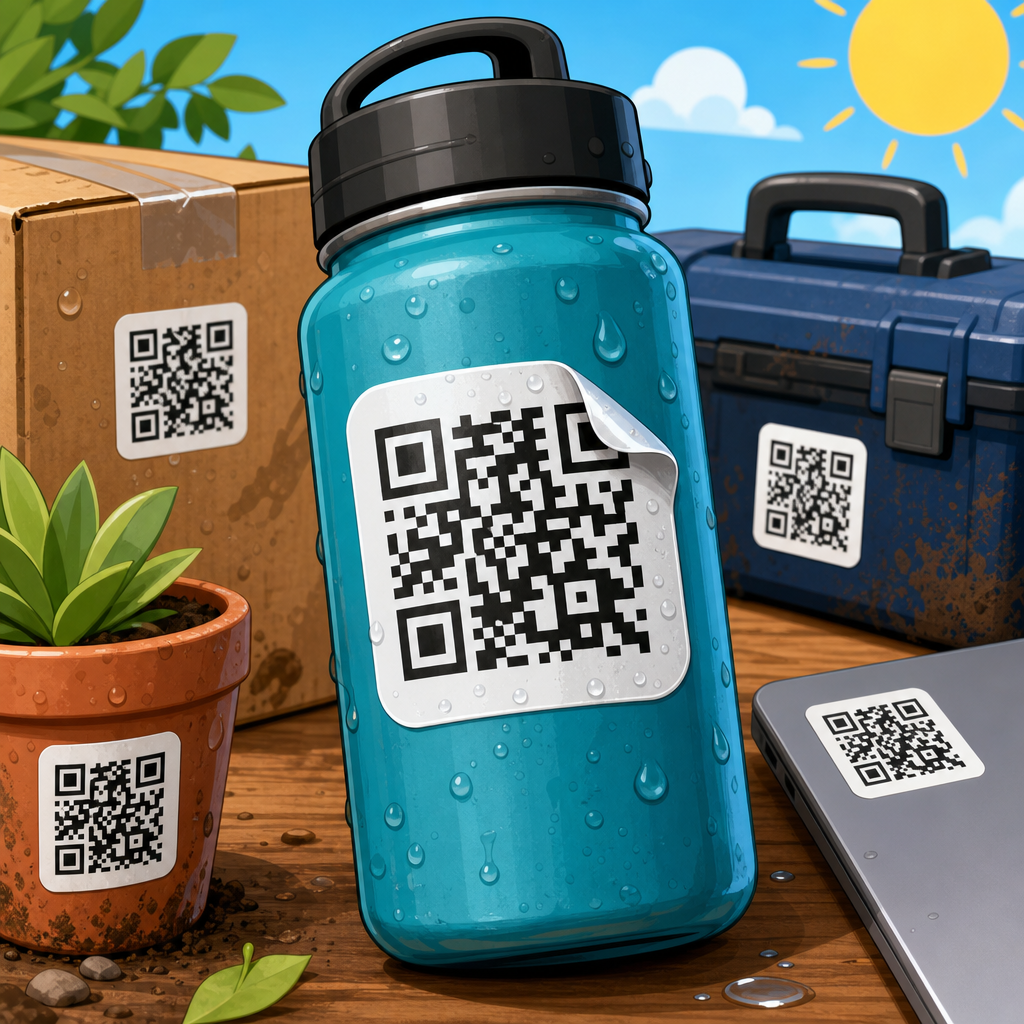
QR code stickers for equipment and assets give organizations a fast, low-cost way to identify physical items, retrieve records, and keep maintenance, inventory, and accountability workflows accurate. A QR code is a two-dimensional barcode that stores a web link, serial data, or a unique asset identifier that opens with a phone camera or scanner. In asset management, the sticker matters as much as the code itself. If the label fades, peels, smears, or becomes unreadable after exposure to heat, chemicals, abrasion, sunlight, or washdowns, the tracking system fails at the point of use.
I have worked on QR labeling programs for tools, mobile devices, production machinery, medical carts, fleet components, and outdoor utility assets, and the same lesson repeats every time: durability is not a printing afterthought. Durable QR code solutions combine the right facestock, adhesive, print method, laminate, code size, contrast, and placement strategy for the environment. A warehouse laptop tag needs different materials than a pressure-washed food processing asset. A school district Chromebook sticker faces different risks than an oilfield valve marker. Choosing correctly reduces replacement cycles, failed scans, data entry errors, and maintenance delays.
This matters because asset labels sit at the intersection of operations and information. A technician scans a code to see service history. A facilities manager confirms location and custodian. An IT team checks device assignment. A field worker reports damage with a phone form tied to the asset record. In each case, the sticker is the gateway to the system behind it. A strong durable label program improves uptime, audit readiness, and labor efficiency, while a weak one creates workarounds, missing records, and mistrust in the data.
As a hub page under QR code design, printing, and materials, this guide explains how to select durable QR code stickers for equipment and assets, which materials perform best in common environments, what design rules preserve scan reliability, and how to match labels to maintenance, inventory, and compliance workflows. It also clarifies tradeoffs. The toughest label is not always the best label if the adhesive damages surfaces, if the laminate adds glare, or if the code is oversized for the available mounting area. Durable solutions work when material science, print quality, and operational use are aligned.
What durable QR code solutions include
Durable QR code solutions are labeling systems designed to keep a QR symbol readable and attached for the intended service life of the asset. In practice, that means more than ordering weatherproof stickers. The solution includes the substrate, adhesive chemistry, print technology, protective topcoat or laminate, code content, artwork, quiet zone, placement rules, and the software record the code points to. If one part is weak, the whole system becomes unreliable.
For equipment and assets, the most common construction starts with polyester, polypropylene, or vinyl facestock. Polyester is usually the strongest general-purpose choice for indoor industrial assets because it resists abrasion, solvents, and dimensional change better than paper and many films. Polypropylene works well for lower-cost labels where moderate durability is enough. Vinyl is useful on curved, textured, or outdoor surfaces because it conforms better, though it can stretch and is not ideal for every high-precision application. Specialty options include tamper-evident films, destructible vinyl for theft deterrence, retroreflective materials, foil labels for high heat, and anodized aluminum nameplates for extreme environments.
Print method matters. Thermal transfer printing with resin ribbons is a proven standard for durable variable-data labels because resin bonds well to synthetic stocks and stands up better to chemicals and abrasion than wax or wax-resin formulations. UV inkjet can produce high-resolution full-color labels, but durability depends on ink set, curing, and overlamination. Laser printing can work for office-issued labels, yet many desktop outputs are not suitable for wet, abrasive, or chemical-heavy environments. For long-life asset tags, I generally recommend industrial thermal transfer or professionally produced digital labels with tested laminates.
Adhesive selection often decides success. Permanent acrylic adhesives handle many indoor and outdoor uses and usually age better than basic rubber adhesives. High-tack formulations help on low-surface-energy plastics, powder-coated metal, and lightly textured surfaces. Removable adhesives are useful for bins, temporary staging, and short-term projects but are risky for fixed assets. Surface preparation is equally important. Dirt, oil, release agents, and oxidation reduce bond strength even when the label stock is correct.
Choosing materials by environment and asset type
The right durable QR code sticker depends on where the asset lives, how it is cleaned, what rubs against it, and how long it must remain readable. There is no universal label. I start projects by mapping environmental stressors and expected life, then matching those conditions to materials with known performance characteristics.
Indoor office and education environments are the easiest. Laptops, monitors, printers, tablets, and classroom devices usually need scratch resistance, frequent handling tolerance, and clean removability from smooth plastics or coated metals. Polyester labels with a clear laminate work well here. If theft deterrence matters, destructible vinyl or tamper-check polyester can make removal obvious. Healthcare adds disinfectants, alcohol wipes, and stricter cleaning cycles, so tested chemical resistance becomes essential. A label that survives normal office use may fail quickly when exposed to quaternary ammonium cleaners or repeated isopropyl alcohol wiping.
Manufacturing and warehouse assets face tougher conditions: forklifts, hand tools, conveyors, testing instruments, pallets, racks, and returnable containers may see impact, oil mist, dust, abrasion, and temperature swings. Here, polyester with resin printing and a hard overlaminate is a dependable baseline. For curved tool bodies or rough bins, flexible vinyl or specialty high-tack constructions may scan better over time because they stay bonded. In food and beverage production, washdowns and caustic cleaners can defeat ordinary labels, so chemical-resistant films or metal tags are often necessary. In cold storage, adhesives must be rated for application and service at low temperatures; many labels bond poorly if applied below their minimum application temperature.
Outdoor and field assets require extra planning because UV exposure, rain, freeze-thaw cycles, and grime steadily degrade labels. Utility boxes, landscaping equipment, site signage, solar assets, and municipal infrastructure often need UV-stable films and laminates. White polyester can chalk or yellow over time if not properly protected. In the harshest settings, anodized aluminum tags with a printed or laser-marked code can outlast polymer labels by years. The higher upfront cost is justified when replacing labels is labor-intensive or access requires permits, lifts, or shutdowns.
| Environment | Typical Assets | Recommended Material | Key Reason |
|---|---|---|---|
| Office and education | Laptops, monitors, tablets | Polyester with laminate | Good scratch resistance and clean appearance |
| Healthcare | Medical carts, pumps, devices | Chemical-resistant polyester | Withstands disinfectant wiping |
| Warehouse and manufacturing | Tools, forklifts, racks | Thermal transfer polyester | Strong abrasion and solvent performance |
| Outdoor field use | Utility boxes, site equipment | UV-stable polyester or anodized aluminum | Better weathering and longer service life |
| Curved or textured surfaces | Bins, cylinders, molded housings | Conformable vinyl with high-tack adhesive | Improved bond on difficult surfaces |
Design rules that keep QR codes scannable
A durable sticker still fails if the QR code design is poor. Scan reliability depends on contrast, size, error correction, quiet zone, print sharpness, and placement. The best-performing asset labels use black codes on a matte white background because cameras detect that contrast consistently under mixed lighting. Inverse or decorative codes may look branded, but they reduce first-pass scanning and should be avoided on operational assets.
Size should match scanning distance and device quality. For hand-scanned equipment labels viewed from six to eighteen inches, a code around 0.75 to 1.25 inches square often works well if the data payload is short and the print resolution is high. As data density increases, modules become smaller, and durability problems show up faster because scratches or ink spread affect more of the symbol. That is why I prefer encoding a short unique ID or URL slug rather than long text strings. Shorter payloads create simpler, more robust codes.
Error correction helps but is not a cure-all. Higher correction levels allow some damage, yet they also increase symbol density. In real asset programs, medium to high correction is usually appropriate, but the better strategy is to preserve a larger module size and strong print quality. The quiet zone, the blank margin around the code, is non-negotiable. If borders, text, or edge damage intrude into that area, scan rates drop sharply.
Placement is equally practical. Do not put a code where hands constantly rub, where a clamp covers it, where cables obscure it, or where curved geometry distorts the symbol. On metal equipment, choose flat, visible surfaces that cleaners can reach and technicians can scan without awkward angles. Matte laminates reduce glare from overhead lights better than glossy finishes. Before approving a label, test it with the lowest-quality phone likely to be used in the field, not only with a flagship device in ideal lighting.
Printing, testing, and lifecycle management
The strongest durable QR code solutions come from a repeatable process, not one-time label buying. I build programs around specification, pilot testing, documented application methods, and planned replacement intervals. First, define the asset classes and environments. Second, choose two or three candidate constructions. Third, test them on real surfaces with the actual cleaners, handling, and temperature conditions the asset experiences. Lab data from suppliers is useful, but field validation prevents expensive rollouts of the wrong label.
Application discipline makes a measurable difference. Surfaces should be cleaned with the correct solvent for the substrate, dried fully, and labeled at the recommended temperature. Pressure should be applied evenly to activate the adhesive, especially on high-tack acrylic systems. Many failures blamed on materials are actually installation failures: labels applied over oil residue, onto dusty powder coat, or onto cold equipment straight from a loading dock.
Ongoing management matters too. Asset systems should log label issue date, material type, printer settings, and replacement history. If a department reports repeated scan failures, that data helps isolate whether the cause is a certain cleaner, a specific printer ribbon, or a placement rule that was ignored. Platforms such as CMMS tools, EAM systems, and mobile asset apps become more valuable when every physical label is consistent and traceable. Common integrations include linking the QR code to a maintenance record in Fiix, UpKeep, Limble, IBM Maximo, or a custom inventory database.
Security and governance deserve attention. Public QR codes that open unrestricted records can expose sensitive asset data. A safer pattern is to encode a neutral identifier or short URL that requires authentication before displaying details. Dynamic QR code management can help when record locations change, but it should be controlled centrally with redirects that remain stable over time. For regulated sectors, label content, retention, and inspection schedules should align with internal quality procedures and any applicable standards.
Common mistakes and how to avoid them
The most common mistake is choosing labels by price per sheet instead of total cost of ownership. A cheap sticker that fails in six months is expensive once rescanning, relabeling, and lost technician time are included. Another frequent mistake is using generic “waterproof” labels without asking what they resist. Water resistance does not mean solvent resistance, UV stability, autoclave compatibility, or abrasion durability.
I also see teams underestimate substrate complexity. Powder-coated metal, textured plastic, rubberized housings, and oily cast surfaces all challenge adhesion. A label that performs perfectly on a smooth steel cabinet may peel from a molded tool case. Similarly, overloading the code with data creates tiny modules that are harder to print and less tolerant of wear. Keep the code simple and let the software hold the details.
Poor visual hierarchy causes avoidable scan issues. Tiny human-readable text, oversized logos, crowded borders, and glossy finishes make labels harder to use in the field. Good asset labels are not miniature marketing pieces. They are utility components. Clear asset names, a readable backup ID, and a high-contrast code outperform decorative layouts every time.
Finally, many organizations skip periodic audits. Even the best durable materials have service limits. UV exposure accumulates. Cleaners change. Equipment is repainted. A quarterly or semiannual scan audit on critical asset classes catches decline before labels become operational blind spots. Durable QR code stickers work best when treated as part of the asset management system, not as a one-time print purchase.
QR code stickers for equipment and assets deliver their full value when durability is engineered from the start. The winning approach is straightforward: match the material to the environment, use a print method built for variable data and abrasion resistance, keep the code design simple and high contrast, apply labels correctly, and test them on real assets before scaling. Polyester, vinyl, specialty tamper materials, and metal tags each have a place, but the right choice depends on exposure, surface type, cleaning method, and expected service life.
For teams building a durable QR code program, the biggest benefit is reliability. Reliable labels produce reliable scans, and reliable scans support better maintenance history, faster audits, cleaner inventories, and less manual entry. That translates into lower labor costs and more confidence in the data your technicians, facilities teams, and managers use every day. If this page is your starting point for durable QR code solutions, map your asset environments, document your label requirements, and pilot two or three constructions before rollout. A well-specified sticker is a small component that protects the performance of the entire asset system.
Frequently Asked Questions
What are QR code stickers for equipment and assets, and how are they used?
QR code stickers are labels placed on physical equipment, tools, machinery, devices, furniture, and other business assets so each item can be identified quickly and accurately. The QR code itself can store a unique asset ID, serial number, URL, maintenance page, warranty details, or a link to a cloud-based asset record. When someone scans the code with a smartphone camera, tablet, or dedicated scanner, they can instantly pull up the information connected to that item without manually typing numbers or searching spreadsheets.
In practical use, organizations rely on QR code stickers to speed up inventory checks, assign assets to employees or departments, confirm locations, document inspections, log repairs, and track maintenance history. A technician can scan a label on a generator and immediately see service intervals, past work orders, and replacement part information. An IT team can scan a laptop sticker to verify ownership, deployment date, and user assignment. A warehouse team can scan shelving, pallets, or mobile equipment to keep counts updated in real time.
What makes QR code stickers especially useful is that they connect the physical item to its digital record with very little friction. That reduces data entry errors, improves accountability, and helps teams maintain consistent records across multiple sites. For many organizations, they are a simple but powerful upgrade from handwritten labels, basic nameplates, or systems that rely entirely on serial numbers that are hard to read or easy to mistype.
Why does the sticker material matter as much as the QR code itself?
The quality of the sticker matters because even the best QR code design is only useful if it remains scannable in the real environment where the asset is used. Equipment and asset labels are often exposed to heat, cold, moisture, cleaning chemicals, UV light, abrasion, oils, dust, and repeated handling. If the face stock fades, the adhesive fails, the print smears, or the surface scratches too easily, the code can become unreadable. Once that happens, the connection between the physical asset and its digital record breaks down, slowing operations and creating avoidable errors.
Different environments require different materials. Indoor office assets may do well with standard polyester or vinyl labels, while manufacturing plants, laboratories, field service fleets, and outdoor infrastructure often need more durable options such as industrial polyester, laminated labels, tamper-evident constructions, or metal asset tags with printed or etched QR codes. Adhesive choice also matters. A label applied to smooth painted metal may need a different adhesive than one used on textured plastic, powder-coated equipment, curved surfaces, or items stored in high-humidity spaces.
Print method is another important factor. Thermal transfer printing, laser marking, resin ribbons, overlaminates, and protective coatings can dramatically improve resistance to smearing and fading. In short, organizations should think beyond the code image alone and evaluate the full label construction: material, adhesive, print technology, laminate, and expected environmental exposure. A durable sticker protects scanning performance over time, which is what makes an asset tracking system dependable in daily operations.
What information should a QR code sticker link to for effective asset management?
A QR code sticker should link to the information that employees, technicians, auditors, and managers need most often at the moment they scan the asset. In most cases, the best practice is to use the QR code as a pointer to a digital asset record rather than trying to place too much raw data directly inside the code. That record can include the asset name, unique ID, serial number, model, manufacturer, purchase date, assigned user, location, department, warranty status, maintenance schedule, service logs, inspection forms, photos, and retirement details.
For maintenance-heavy assets, it is especially useful to connect the code to live service information. A scan might open a page showing the last maintenance date, next scheduled inspection, open repair tickets, approved procedures, safety documents, or parts lists. For IT and office assets, the linked record may focus more on assignment history, lifecycle stage, software details, and replacement planning. For regulated environments, the record may also include calibration history, compliance checklists, chain-of-custody data, or document acknowledgments.
Organizations should also think about permissions and workflow. Not every user should see or edit every field. A good setup allows a scan to open a mobile-friendly page that shows relevant information immediately while still controlling access to sensitive records. The goal is not just to identify an item, but to make every scan useful. When the QR code leads to clean, current, actionable data, teams can move faster and make better decisions without chasing paperwork or outdated spreadsheets.
How can businesses make sure QR code asset labels stay readable and reliable over time?
Long-term readability starts with proper label specification, but it also depends on good design, printing, application, and maintenance practices. First, the QR code should be generated at an appropriate size and contrast level for the scanning distance and device type. High contrast, typically black on a white or light background, gives the best performance. The code should include a quiet zone around it, and it should not be shrunk so small that phones or scanners struggle to read it on worn or uneven surfaces.
Second, the label should be matched to the asset and environment. A clean, dry application surface helps adhesive performance. Labels should be placed where they are easy to scan but less likely to be scraped, bent, soaked, or exposed to direct wear. On frequently handled equipment, adding a laminate or using a more abrasion-resistant material can make a major difference. In harsh industrial or outdoor settings, businesses may need chemical-resistant labels, UV-resistant constructions, or rigid tags instead of standard paper-based options.
Third, organizations should build label checks into routine operations. During audits, maintenance visits, or inventory counts, staff can verify that labels remain attached and scannable. Damaged stickers should be replaced promptly, and the replacement process should preserve the asset’s unique identifier so records remain consistent. It is also wise to maintain print quality standards and test scans before labels are deployed broadly. A small investment in materials, placement, and periodic verification helps prevent the much larger cost of lost asset visibility later.
What are the main benefits of using QR code stickers for equipment and assets instead of manual tracking methods?
The biggest advantage is speed with accuracy. Manual asset tracking often depends on handwritten notes, typed serial numbers, spreadsheet updates, or memory-based processes, all of which introduce delays and mistakes. QR code stickers simplify the interaction to a quick scan, which reduces transcription errors and makes it easier for employees to update records in real time. That alone can significantly improve inventory accuracy, service documentation, and asset accountability.
QR code stickers are also cost-effective. Compared with more complex tracking technologies, they are relatively inexpensive to produce and easy to deploy across a wide range of assets. Businesses do not need highly specialized hardware to get started because many teams can scan codes using existing smartphones or tablets. This makes QR labels an accessible option for companies that want better visibility without a large upfront investment.
Operationally, the benefits extend across the asset lifecycle. Teams can use QR labels to streamline receiving, check-in and check-out, employee assignment, maintenance scheduling, audit preparation, loss prevention, and disposal records. Managers gain better insight into where assets are, who is responsible for them, and what condition they are in. Technicians can access service histories instantly. Finance and operations teams can make more informed decisions about repair versus replacement. In short, QR code stickers help turn asset management into a more reliable, measurable, and scalable process, especially when the labels are durable enough to hold up in the environments where assets actually live and work.