Choosing the best adhesives for QR code stickers is not a minor production detail; it determines whether a code stays readable, attached, and scannable through shipping, weather, cleaning, abrasion, and daily handling. In durable QR code solutions, the adhesive is the hidden performance layer that decides if a label survives on corrugated boxes, powder-coated metal, glass, polyethylene drums, freezers, or outdoor equipment. I have specified QR labels for warehouses, retail displays, asset tags, and industrial environments, and the same lesson repeats: print quality matters, but adhesive selection often causes the real failures. A crisp code that curls at the edge, slides on a low-energy plastic, or leaves residue on a removable application is a failed code.
Adhesive, in this context, means the pressure-sensitive layer that bonds the sticker facestock to a surface after light application pressure. Durable QR code solutions combine three material decisions: facestock, adhesive, and laminate. The adhesive may be permanent, removable, repositionable, freezer-grade, all-temperature, high-tack, or chemically resistant. Surface energy, temperature at application, dwell time, moisture exposure, and expected service life all influence performance. This article serves as the hub for the durable QR code solutions section within QR Code Design, Printing & Materials, so it focuses on the core choices you need to make before printing labels at scale.
Why does this matter so much? Because QR codes fail in predictable ways. Labels detach from textured powder coat because the adhesive cannot wet out. Stickers applied in cold rooms lift because standard acrylic systems need warmer application temperatures. Warehouse labels on reusable totes fall off after repeated washing. Outdoor QR code stickers fade, then crack, then peel because the construction was designed for shelf products instead of UV, water, and thermal cycling. If the code links to setup instructions, warranty registration, menus, inventory records, or safety documentation, every lost label creates friction, support costs, and data gaps. The best adhesive for QR code stickers is therefore the one matched to the surface, environment, and removal requirement, not simply the strongest product on a spec sheet.
How adhesive choice affects QR code durability
A durable QR code solution begins with bond mechanics. Pressure-sensitive adhesives work by flowing into the microscopic peaks and valleys of a substrate, a process called wet-out. Good wet-out creates more actual contact area, which increases bond strength over time. That is why a label may feel lightly attached on day one and much stronger after twenty-four to seventy-two hours. Acrylic adhesives usually offer better UV resistance, aging stability, and temperature performance, while rubber-based adhesives often deliver aggressive initial tack, especially on difficult surfaces, though they can be less stable under prolonged heat or sunlight depending on formulation.
For QR code stickers, bond stability directly affects scan reliability. Edge lifting causes shadows and warping that can interfere with smartphone autofocus and scanner aiming. Adhesive ooze can trap dirt at the border of the code. Shrinkage from an incompatible adhesive and film combination may distort module geometry over time, particularly on small codes with tight quiet zones. In practice, the label must remain flat, clean, and fully attached for the entire intended life of the code. That is why adhesive selection should be discussed alongside symbol size, print method, and protective overlaminate rather than after design approval.
Application conditions are as important as service conditions. A label intended for freezer storage might need to be applied at room temperature before the product enters cold storage, or it may require a true freezer adhesive capable of bonding below 0°C. The same principle applies to rough wood, curved containers, and oily machine housings. In my projects, failures blamed on “bad stickers” usually traced back to mismatched application conditions: labels installed on dusty surfaces, compressed before full dwell, or applied to plastics with mold release still present. A good adhesive cannot fully compensate for poor surface preparation.
Permanent, removable, and specialty adhesives for QR code stickers
The first practical question is simple: should the QR code sticker stay for life, come off cleanly, or be repositionable during installation? Permanent adhesives are the default for durable QR code solutions because they are designed for long-term bonding and higher resistance to peel failure. They are common on asset tags, equipment identification, packaging that must remain labeled through fulfillment, and product labels that support post-sale scanning. Permanent acrylic adhesives are often the most balanced option for indoor and outdoor QR code stickers because they combine strong ultimate adhesion with better resistance to sunlight and aging.
Removable adhesives are used when the label must be taken off without damaging the surface or leaving heavy residue. Typical examples include temporary event signage, seasonal retail displays, rental equipment instructions, and short-term logistics labels. The tradeoff is lower long-term bond strength, especially under heat, moisture, or repeated handling. Repositionable adhesives go one step further by allowing repeated lift-and-reapply cycles during installation, but they are rarely the best choice where QR durability matters over months or years. If the code will be touched often, cleaned, or exposed outdoors, repositionable systems are usually a compromise.
Specialty adhesives solve edge cases that standard permanent or removable products cannot. High-tack adhesives are designed for low-surface-energy plastics such as polyethylene and polypropylene, common in totes, bins, and molded containers. Freezer-grade adhesives bond in cold-chain environments. Void or destructible constructions provide tamper evidence for asset protection. Chemical-resistant systems are paired with polyester or polyimide facestocks for laboratory, automotive, and electronics use. The best adhesive category depends on the job, which is why durable QR code solutions should be specified by substrate and environment first, then by removability requirement.
Matching adhesive to the surface and environment
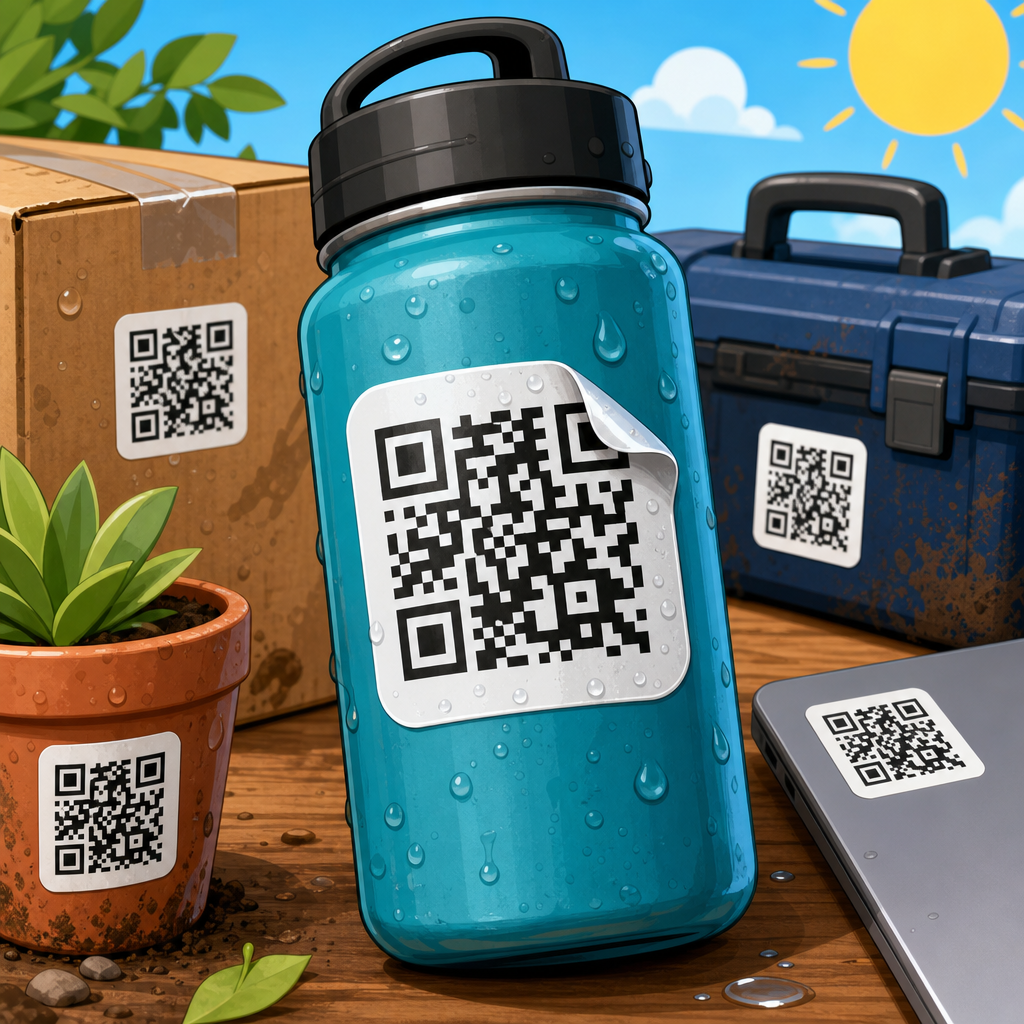
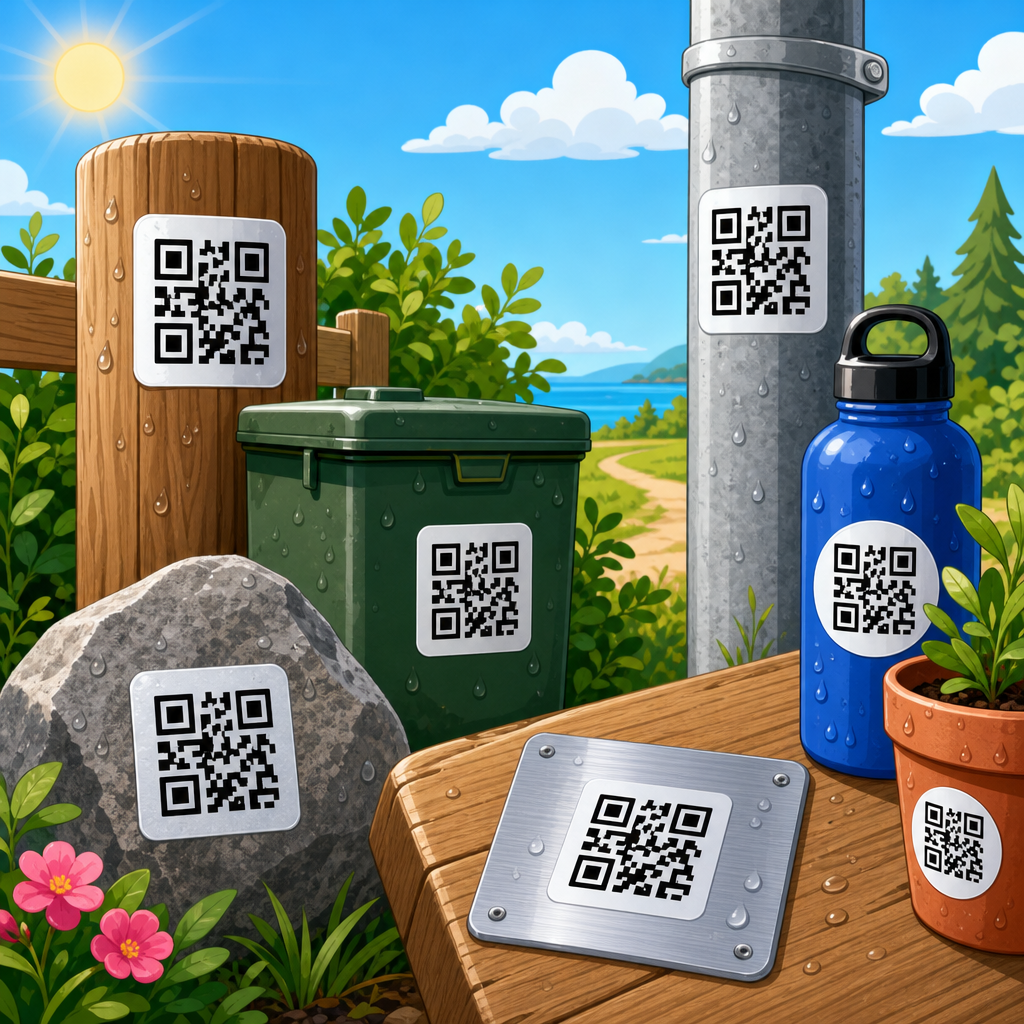
The surface you apply to is the strongest predictor of performance. Glass, stainless steel, and aluminum are high-surface-energy materials, so many standard permanent acrylic adhesives bond well to them. Powder-coated metal, textured paint, cardboard, and wood are more variable because surface texture reduces contact area. Polypropylene, polyethylene, and some powder coats are lower-energy surfaces that commonly defeat general-purpose label stock. In those cases, a high-tack adhesive with a conformable film facestock, often polypropylene or polyethylene film, performs better than a stiff paper label.
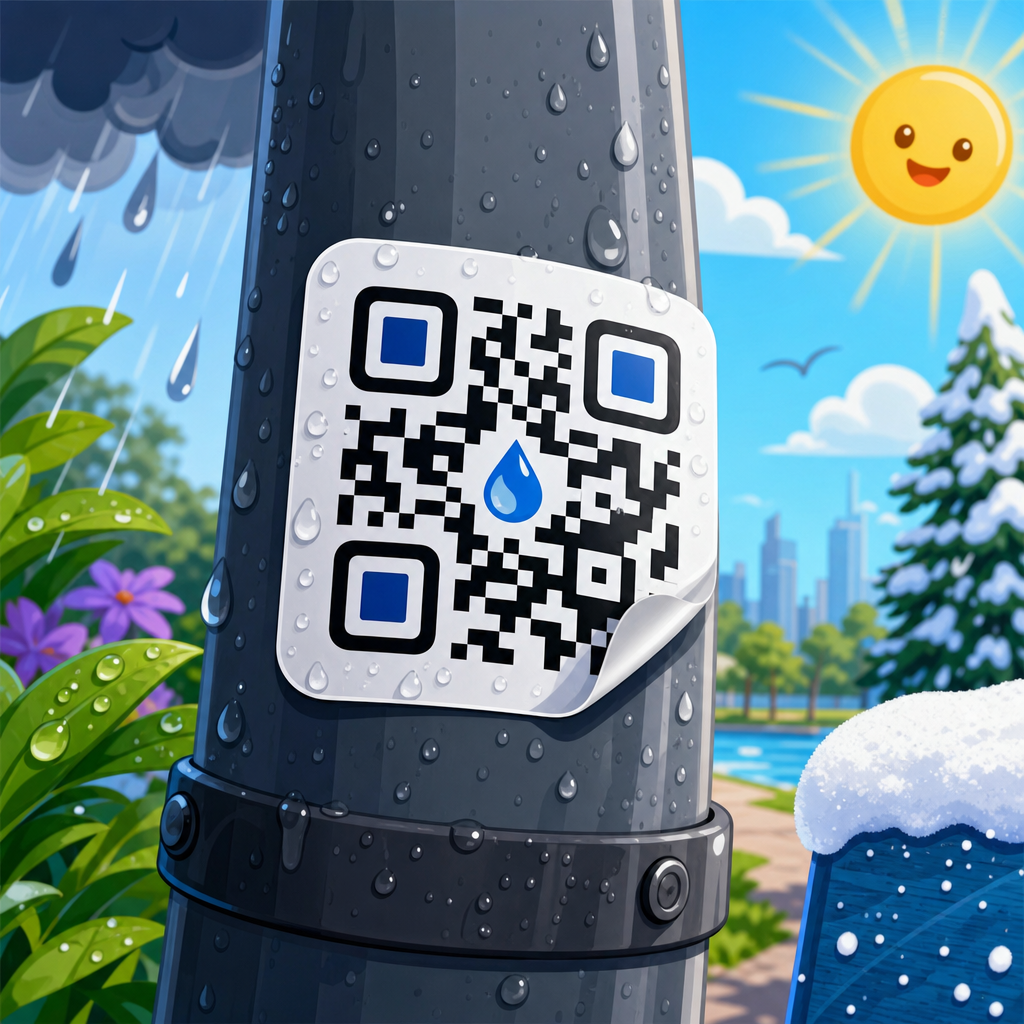
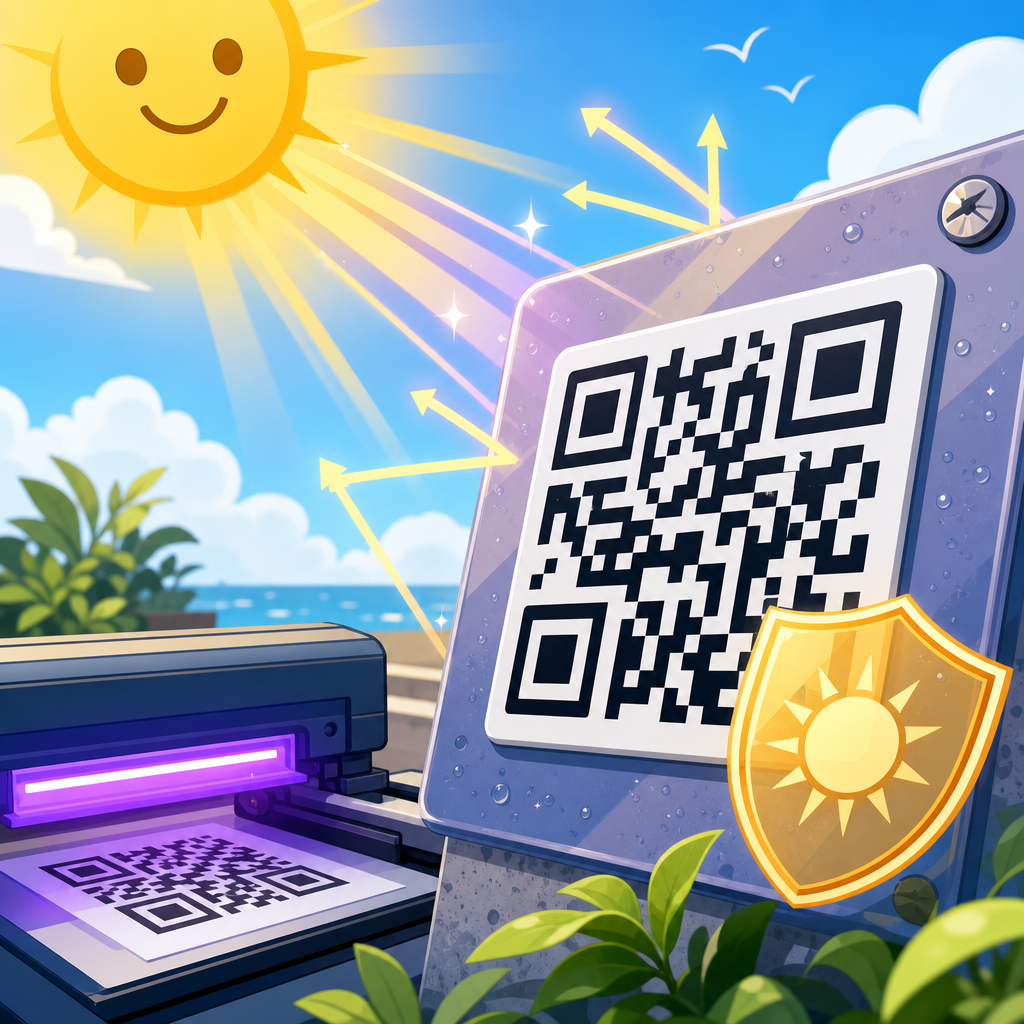
Environmental stress narrows the options further. For outdoor QR code stickers, choose UV-stable acrylic adhesive systems with weatherable films such as polyester or premium vinyl, then protect the print with a laminate rated for sunlight and moisture. For washdown areas, look for adhesive constructions tested for water resistance and cleaner exposure. In freezers, specify both minimum application temperature and service temperature. In industrial settings with oils, plasticizers, or solvent splash, consult chemical compatibility data; some adhesives soften, some harden, and some lose bond entirely after prolonged contact. No adhesive is universally best across all exposures.
A simple comparison helps teams avoid expensive reprints and relabeling:
| Use case | Recommended adhesive | Typical facestock | Main caution |
|---|---|---|---|
| Indoor asset tags on metal | Permanent acrylic | Polyester | Clean oils before application |
| Outdoor equipment labels | UV-resistant permanent acrylic | Polyester or durable vinyl | Add laminate for fade and abrasion resistance |
| Reusable plastic totes | High-tack acrylic for low-energy plastics | Polypropylene film | Test on specific resin and texture |
| Cold-chain packaging | Freezer-grade adhesive | Paper or film | Verify application temperature, not only service temperature |
| Short-term promotional displays | Removable adhesive | Paper or vinyl | Heat can increase residue risk |
Material combinations that create durable QR code solutions
Adhesive cannot be selected in isolation because the full label construction determines durability. Paper labels can work well for indoor, short-to-medium-term QR applications, especially on cartons and consumer packaging, but they absorb moisture and abrade easily unless protected. Film facestocks such as BOPP, vinyl, polyethylene, and polyester are more durable. BOPP is common for product labeling because it balances cost and moisture resistance. Vinyl conforms well to curved or uneven surfaces. Polyester is the workhorse for long-life asset labels because it resists tearing, temperature swings, and many chemicals better than softer films.
Lamination matters just as much. A durable adhesive paired with an unprotected thermal transfer print may still fail if solvents or abrasion remove the image. For long-term QR readability, I usually recommend either resin thermal transfer on polyester or UV-stable digital/inkjet systems protected with a matched laminate. The laminate should not create excessive glare that impairs scanning under direct light; matte or low-gloss finishes often scan more consistently in industrial settings. Quiet zone preservation is also important. If the laminate shrinks or the adhesive pulls the label around a curved edge, the code may remain attached but become harder to scan.
Testing complete constructions beats trusting isolated data sheets. A label converter may quote high peel values, but those numbers are often measured on stainless steel under controlled conditions. Your real substrate may be a textured HDPE bin or a painted machine panel cleaned with alcohol every day. Ask suppliers for application-specific recommendations and sample rolls. Reputable material suppliers such as Avery Dennison, UPM Raflatac, and 3M publish technical bulletins on adhesive families, minimum application temperatures, and substrate compatibility. Use those documents as starting points, then confirm with your actual print process and end-use environment.
How to test QR code sticker adhesives before full production
The best way to choose among adhesives is a structured field test. Start with three to five candidate constructions, not just three adhesives, because facestock stiffness and laminate affect results. Apply samples to the exact surfaces you will use in production, including any painted, textured, recycled, or low-energy plastics. Record application temperature, surface preparation method, applied pressure, and dwell time. Then inspect labels after twenty-four hours, seventy-two hours, one week, and one month. Look for edge lift, corner curl, adhesive ooze, bubbling, print damage, and scan success under normal lighting.
If the labels face environmental stress, simulate it. Put freezer labels through chill-down and thaw cycles. For outdoor QR code stickers, expose samples to sunlight, water spray, and temperature swings. In warehouses, test abrasion from handling and pallet contact. For reusable containers, run wash cycles with the actual detergents and drying methods used on site. A simple peel test by hand is useful, but real-world abuse reveals more. I have seen labels pass bench tests and then fail after repeated forklift vibration on corrugated plastic bins because the edge impact was never considered.
Use measurable acceptance criteria. Define the minimum readable scan distance, the percentage of labels that must remain fully adhered, and any residue limits for removable applications. If the QR code directs users to critical information, plan for redundancy: duplicate labels on opposite sides, larger module sizes, or protected placement away from wear points. Testing should also confirm that the adhesive does not interact negatively with inks, varnishes, or overlaminates. Some combinations look fine initially and then tunnel, silver, or shrink after aging. Production confidence comes from evidence, not assumptions.
Common mistakes when selecting adhesives for QR code labels
The most common mistake is buying on “permanent” alone. Permanent is not a performance standard; it is a broad category. Another mistake is assuming indoor success predicts outdoor durability. Sunlight, moisture, and thermal cycling rapidly separate commodity label constructions from true durable QR code solutions. Teams also underestimate surface contamination. Finger oils, dust, release agents, and cleaning residues reduce bond strength, especially on plastics and powder-coated metals. A short cleaning step with the correct solvent, followed by full drying, often improves performance more than upgrading the adhesive one tier.
Another failure point is choosing a label based solely on adhesion without considering scan usability. Very aggressive adhesives on thin films can conform so tightly to rough substrates that the printed QR image becomes visibly distorted. Highly glossy laminates may reflect overhead lights and reduce first-pass scans. Tiny codes placed near seams or curves may remain attached yet scan poorly. Good durable QR code solutions balance adhesion, print contrast, symbol size, protective layers, and placement. The sticker has to stay on, but it also has to remain easy to scan with ordinary phones.
Cost-only purchasing creates hidden expense. A cheaper stock that fails six months early is rarely cheaper after labor, replacement printing, support calls, and missed scans. The better approach is lifecycle costing: match the label construction to the required lifespan and risk of failure. For cartons used once in normal distribution, standard permanent paper stock may be perfectly appropriate. For returnable assets, cold storage, healthcare equipment, or outdoor service manuals, invest in a tested film and adhesive system. The right adhesive is not always the strongest one; it is the one engineered for the actual job.
The best adhesives for QR code stickers are the ones chosen with substrate, environment, lifespan, and removability in mind. For many indoor permanent applications, acrylic permanent adhesives paired with film facestocks provide the most reliable balance of bond strength and aging resistance. For low-energy plastics, use high-tack systems. For cold-chain applications, use freezer-grade constructions and verify application temperature. For short-term campaigns, removable adhesives make sense if residue-free removal matters more than maximum lifespan. Across all cases, durable QR code solutions come from selecting the full label construction, not a single adhesive specification.
If you treat adhesive choice as part of QR code design, printing, and materials strategy, you reduce scan failures and avoid relabeling costs. Start with the surface, define the exposure conditions, test complete constructions, and confirm readability after aging and handling. That process consistently delivers labels that stay attached, stay legible, and stay useful. Use this hub as your starting point for durable QR code solutions, then build your specification around real conditions rather than generic claims. When in doubt, request samples, run field tests, and choose evidence over assumptions every time.
Frequently Asked Questions
What type of adhesive is best for QR code stickers used on different surfaces?
The best adhesive for a QR code sticker depends heavily on the surface it will be applied to, because cardboard, metal, glass, and low-surface-energy plastics all behave differently. For general-purpose indoor labeling on smooth, clean surfaces, permanent acrylic adhesives are usually the most reliable choice. They offer strong bond strength, good aging performance, and solid resistance to temperature swings, moisture, and routine handling. That makes them a common fit for retail displays, warehouse bins, packaging, asset tags, and many industrial labels.
When QR code stickers need to bond to difficult materials such as polyethylene drums, polypropylene containers, powder-coated finishes, or textured plastics, a more aggressive adhesive is often required. In those cases, high-tack acrylic adhesives or specialty adhesives formulated for low-surface-energy substrates perform better than standard permanent options. These are designed to wet out and anchor more effectively on surfaces that usually resist adhesion. For glass and stainless steel, standard permanent acrylics often work very well, provided the surface is properly cleaned before application.
Rubber-based adhesives can also be useful when very fast initial tack is needed, especially on rough or uneven surfaces, but they generally do not match acrylic adhesives for long-term UV resistance, heat resistance, or overall outdoor durability. If the QR code sticker will be used outdoors, exposed to cleaners, or expected to last for years, acrylic systems are usually the better long-term investment. In short, there is no single universal “best” adhesive; the right choice comes from matching the adhesive chemistry to the substrate, environment, and expected service life.
How do I choose an adhesive that keeps QR codes scannable in warehouses, shipping, and daily handling?
Scannability is not just about print quality; it also depends on whether the label stays flat, attached, and undamaged over time. In warehouses and shipping environments, QR code stickers are exposed to friction, pallet movement, dust, humidity, box flexing, and repeated handling. If the adhesive fails, edges lift, or the label shifts on the surface, the code can wrinkle or become partially obscured, reducing scan performance. That is why the adhesive should be selected as part of the total durability system, not as an afterthought.
For corrugated boxes, a permanent adhesive with strong initial grab and good fiber anchorage is important, especially if the boxes will move through fulfillment operations or cold-chain logistics. For reusable totes, metal racks, shelving, and equipment, durable acrylic adhesives are typically preferred because they hold up better to cleaning and repeated contact. If the item will face abrasion, the adhesive should be paired with a strong facestock and, in many cases, a laminate or topcoat that protects the printed QR image from scuffing and chemicals. The adhesive holds the label in place, but the overall construction protects the code itself.
It is also important to think about application conditions. Even the best adhesive can underperform if it is applied to a dusty, oily, or very cold surface. Labels should ideally be applied to clean, dry substrates with firm pressure to ensure good adhesive wet-out. If the product is going into a freezer or refrigerated environment, use an adhesive specifically rated for cold application or freezer service. In practical terms, the best adhesive for warehouse and shipping QR labels is one that matches the substrate, tolerates environmental stress, and supports a label construction that keeps the printed code crisp and readable from day one through end use.
Are removable or repositionable adhesives a good idea for QR code stickers?
Removable or repositionable adhesives can be a smart choice, but only in the right use case. If the QR code sticker is intended for temporary promotions, short-term retail displays, event signage, returnable packaging, or applications where residue-free removal matters, a removable adhesive may be exactly what you want. These adhesives are designed to provide enough holding power for normal use while still allowing relatively clean removal later. Repositionable versions add flexibility during installation, which can help when precise placement is important.
That said, removable adhesives are usually not the best option for long-term durability, rough handling, or harsh environments. They generally do not offer the same ultimate bond strength as permanent adhesives, especially on textured surfaces, cardboard, outdoor equipment, or substrates exposed to moisture and heat. In applications such as asset tracking, industrial labeling, warehouse identification, and outdoor QR code deployment, a removable adhesive can lead to edge lift, accidental peeling, or full label loss over time. If a QR code must remain available for scanning throughout the life of a product or asset, permanent construction is usually the safer route.
The decision comes down to the business objective. If ease of removal is more important than lifespan, removable adhesive can work very well. If uninterrupted scannability and long-term attachment are essential, permanent adhesive is the better default. A good rule is to test removable adhesives not only for clean removal, but also for how they perform after exposure to handling, storage, temperature changes, and real-world contact. What feels secure on day one may behave very differently after weeks or months in use.
What adhesive works best for outdoor, freezer, or chemical-exposed QR code stickers?
For demanding environments, standard indoor label adhesives are often not enough. Outdoor QR code stickers need adhesive systems that resist UV exposure, rain, humidity, heat, and temperature cycling without shrinking, hardening, or losing bond strength. In these applications, permanent acrylic adhesives are typically the leading choice because they offer better long-term environmental stability than many rubber-based systems. They are widely used on equipment labels, utility markings, asset tags, and product identification stickers where weather resistance matters.
Freezer environments introduce a different challenge. Some adhesives perform acceptably at room temperature but fail when applied in cold conditions or when the labeled item moves rapidly from ambient storage into refrigeration or freezing. For freezer and cold-chain applications, it is important to choose an adhesive specifically engineered for low-temperature application and service. These adhesives are designed to bond even when surfaces are cold and to remain flexible enough to maintain contact despite condensation or thermal contraction. This is especially important for food packaging, laboratory samples, and logistics labels that must remain scannable after freezing.
Chemical exposure and regular cleaning also affect adhesive selection. If QR code stickers will be wiped with alcohol, detergents, disinfectants, or industrial cleaners, the adhesive should be paired with a chemical-resistant facestock and protective top layer. The adhesive alone cannot compensate for a printed surface that degrades under cleaning. For harsh-use environments such as manufacturing, healthcare, laboratories, and field equipment, the most dependable solution is usually a full durable label construction: aggressive or specialty acrylic adhesive, durable film facestock, and protective laminate or coating. That combination gives the QR code the best chance of staying attached and scannable over time.
How should I test adhesive performance before ordering QR code stickers in volume?
Testing is the smartest step you can take before committing to a large production run, because adhesive performance is highly application-specific. A label that performs perfectly on one surface can fail quickly on another, even if both seem similar at first glance. The right way to evaluate QR code sticker adhesive is to test samples on the exact substrates you plan to use, such as corrugated boxes, powder-coated metal, glass panels, polyethylene drums, plastic totes, or painted equipment. Surface texture, coatings, contamination, and environmental conditions all affect bond strength.
Start by applying multiple sample constructions under realistic conditions. Use the actual application method, whether by hand or machine, and apply labels to clean and typical production surfaces. Then observe initial tack, edge lift, full bond development, and scan reliability over time. It is useful to check the labels after 24 hours, several days, and several weeks if possible. If the labels will face moisture, cold, heat, sunlight, abrasion, or cleaning, include those exposures in the test. For example, if the QR code will be used in a warehouse, rub-test the label, stack boxes against it, and scan it after routine handling. If it will be used outdoors, expose it to weather and sunlight. If it will be cleaned, test the exact chemicals and frequency.
Also evaluate failure mode, not just pass-or-fail results. If a label peels cleanly, splits, leaves residue, or lifts at the corners, those details help determine whether you need a stronger adhesive, a different facestock, or better surface preparation. In many cases, the best-performing QR code solution comes from adjusting the full construction rather than changing adhesive alone. A controlled field test with real substrates and real abuse conditions is far more valuable than relying only on a datasheet. For volume orders, that testing process can prevent costly relabeling, scanning failures, and premature replacement in the field.