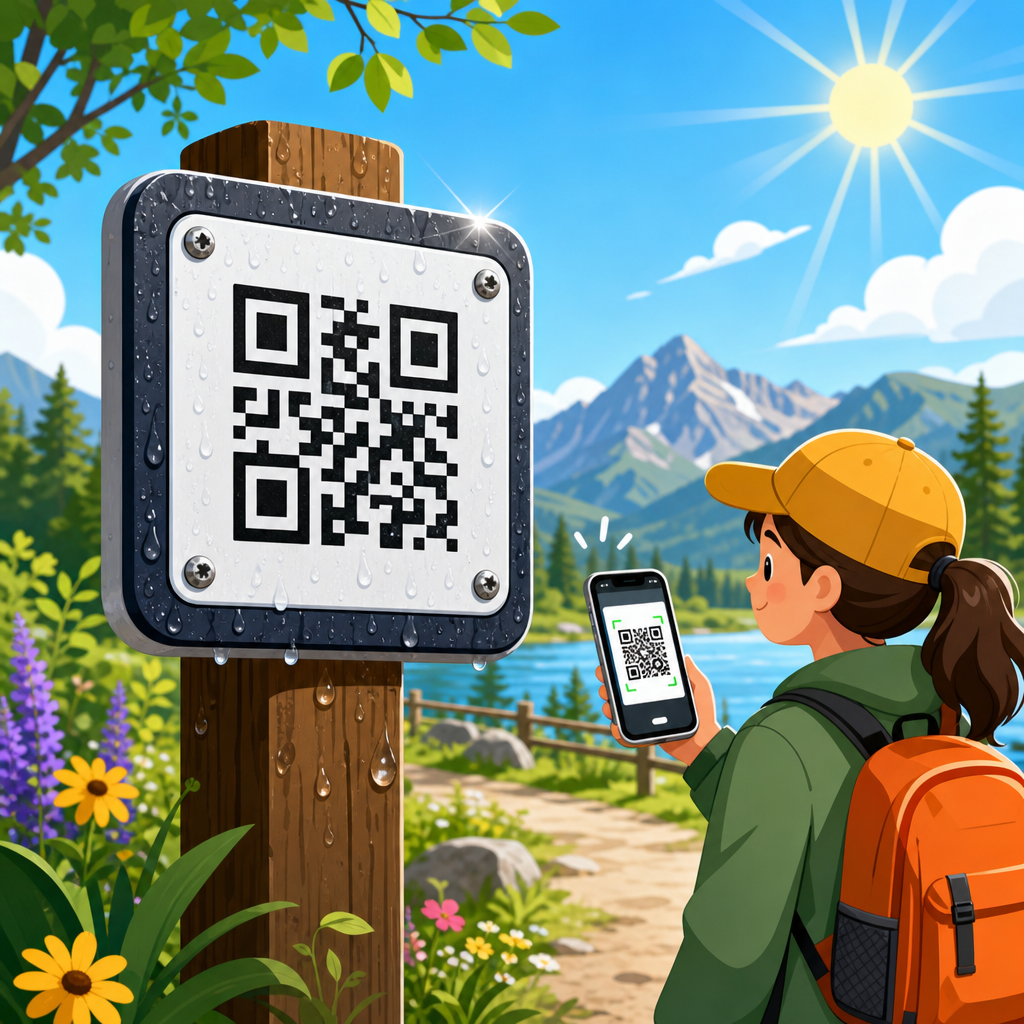
QR code stickers can last anywhere from six months to more than ten years, depending on the sticker material, adhesive, print method, surface preparation, and the environment in which the code is used. In practice, when clients ask me how long a QR code sticker will last, they are usually asking a broader question: what combination of material and printing choices will keep the code scannable for the intended life of the product, sign, asset tag, package, or campaign? That broader question matters because a QR code that still looks intact but fails to scan has already reached the end of its useful life.
Durability, in this context, means more than whether the sticker remains attached. A durable QR code solution must keep four things working together: the substrate must resist tearing and shrinkage, the adhesive must maintain bond strength, the printed image must retain contrast, and the code design must remain readable within the error-correction limits built into the symbol. Longevity is therefore a system outcome, not a single material property. I have seen economy paper labels survive for years indoors on clean acrylic, and I have also seen premium vinyl decals fail in weeks when they were applied to oily powder-coated steel or exposed to constant abrasion.
For businesses managing QR code design, printing, and materials, this topic is a hub because sticker lifespan touches every downstream decision. Choosing between paper, polypropylene, polyester, vinyl, laminated constructions, tamper-evident stocks, or metalized labels affects installation cost, maintenance cycles, brand presentation, and user experience. It also affects whether you should route readers to related guidance on outdoor QR code labels, waterproof QR code stickers, UV-resistant printing, industrial adhesives, or lamination methods. Understanding lifespan first helps narrow those options. The goal of this guide is simple: explain how long QR code stickers last, what shortens or extends that lifespan, and which durable QR code solutions fit real-world use cases.
What Determines How Long QR Code Stickers Last?
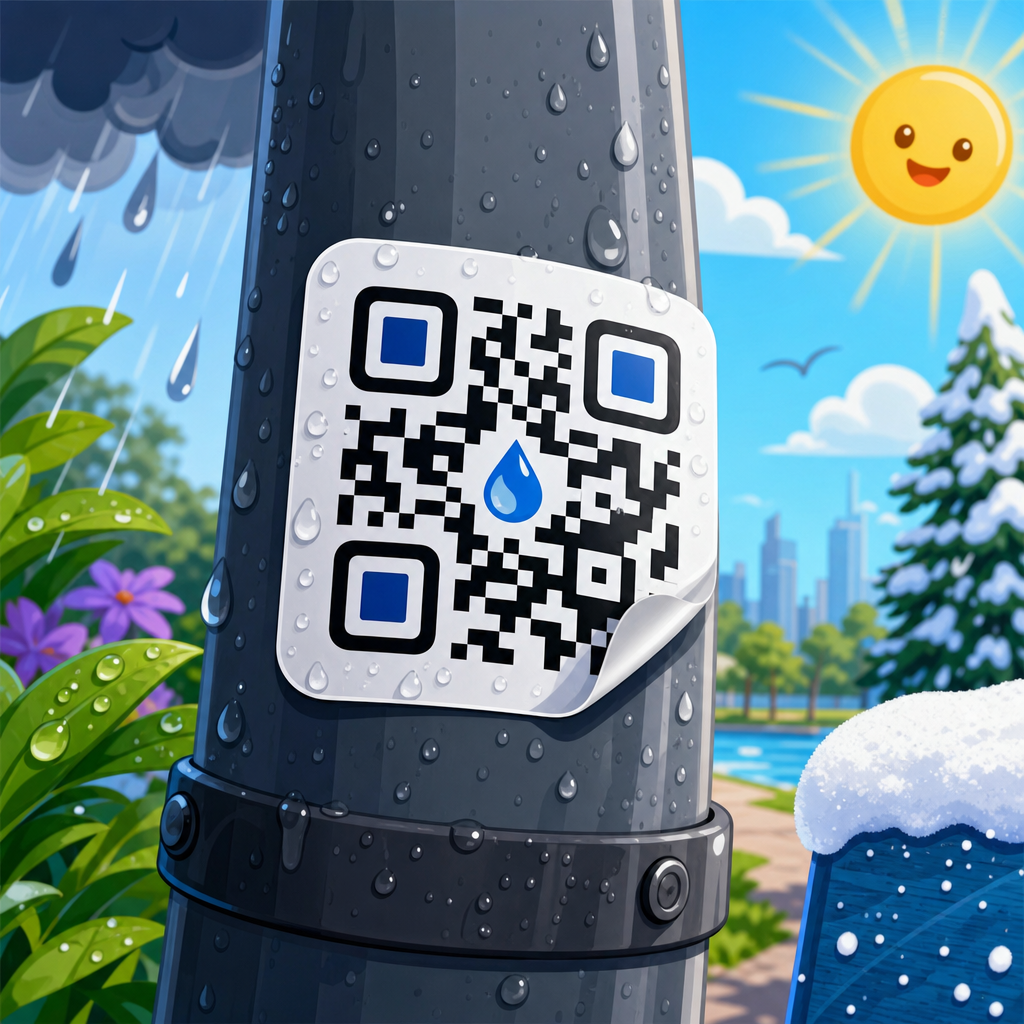
The lifespan of a QR code sticker is determined by five primary factors: material, adhesive, print technology, protective finishing, and exposure conditions. Material controls physical stability. Adhesive controls whether the sticker stays bonded. Print technology controls resistance to fading, smearing, and chemical attack. Protective finishing, such as laminate or varnish, shields the printed code. Exposure conditions include sunlight, moisture, temperature swings, friction, cleaning chemicals, and handling frequency. If one of those factors is weak, the label can fail even if the others are excellent.
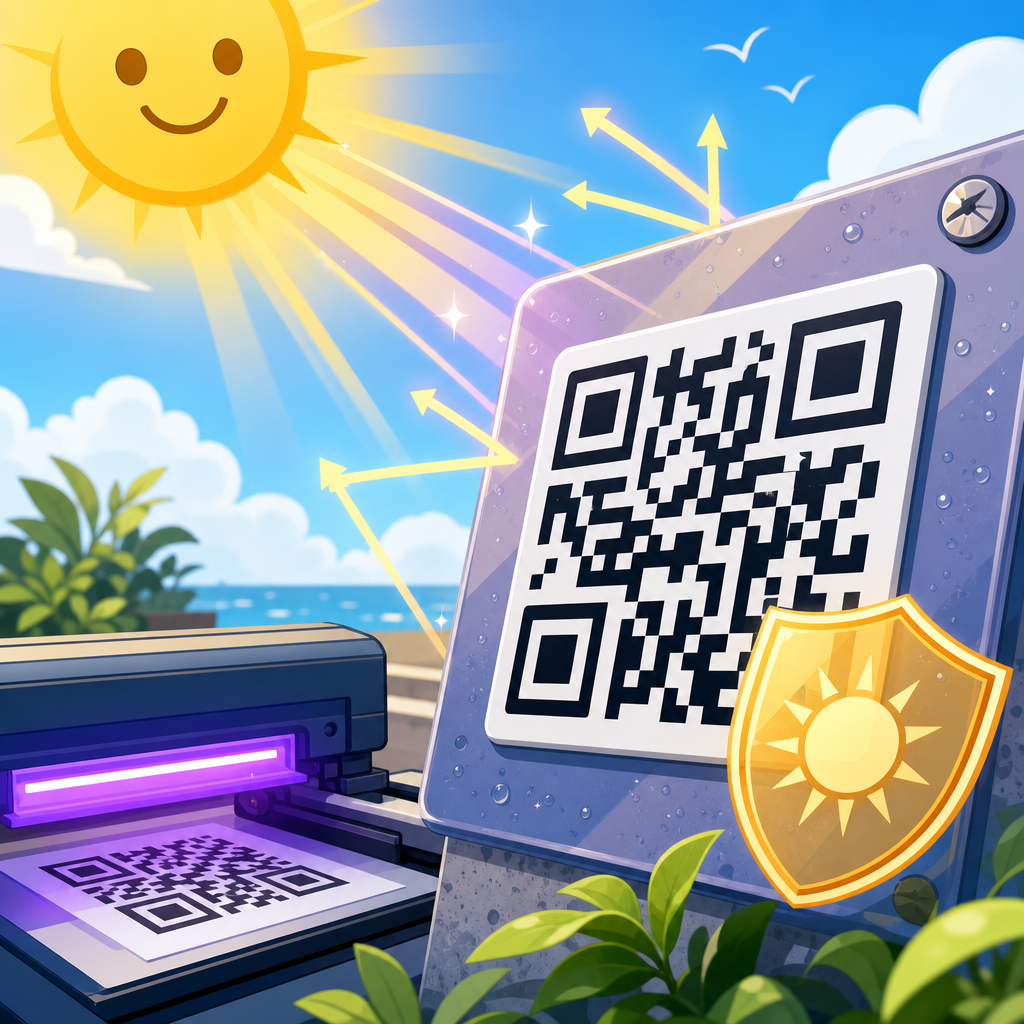
Indoor office use is the easiest environment. A paper or basic polypropylene QR code sticker placed on a smooth, dry indoor surface often remains scannable for one to three years, and sometimes longer. Retail shelf labels, museum placards, office visitor signs, and event check-in decals usually fall in this range. Outdoor use is much harder. Direct ultraviolet exposure degrades many inks and plastics, while rain and humidity test both adhesive and edge sealing. In these settings, an unlaminated economy sticker may fade or peel within months, while a laminated polyester or premium cast vinyl label can remain functional for three to seven years.
The scanning requirement adds a technical constraint many buyers miss. A sticker does not need to look perfect; it needs enough edge definition and contrast for phone cameras to resolve the modules. Minor scratches, slight discoloration, or surface wear may be acceptable because QR codes include error correction, typically at levels L, M, Q, or H. However, if gloss glare, mud, abrasion, or fading removes too much contrast, scan reliability drops sharply. In field audits, I often find that labels fail from reduced readability before they fail from total detachment.
Expected Lifespan by Sticker Material and Construction
Paper QR code stickers are the least durable option, but they remain useful for short campaigns, packaging inserts, and indoor promotions. Standard paper labels may last six months to two years indoors if left dry and untouched. They are vulnerable to water, tearing, abrasion, and oils from hands. Thermal paper performs even worse for longevity because heat and light can darken or erase the image over time. If the use case involves shipping, refrigeration, or daily handling, paper is generally the wrong choice for long-term scannability.
Polypropylene, often called BOPP in label manufacturing, is a common step up from paper. It offers better moisture resistance, better tear resistance, and a cleaner appearance for consumer packaging. For indoor applications, polypropylene QR code stickers frequently last one to three years. They can also perform outdoors for limited periods if laminated, though they are not the top choice for harsh weather. Polyester is more dimensionally stable and more chemically resistant, which is why it is widely used for asset tags, equipment labels, and compliance markings. A good polyester QR code label with thermal transfer resin ribbon or UV-stable digital printing can last three to seven years, sometimes longer in protected conditions.
Vinyl is the familiar choice for decals and outdoor graphics. Calendered vinyl is suitable for medium-term use, while cast vinyl is the premium option for long-term outdoor exposure and conformability on curved surfaces. Premium vinyl QR code stickers with outdoor-rated adhesive and overlaminate can remain functional for five to ten years on signs, windows, lockers, utility boxes, and vehicles, although actual service life depends heavily on sun exposure and washing methods. For the harshest industrial cases, anodized aluminum or etched metal tags outperform stickers entirely, but they belong to a different product category.
| Material | Typical Indoor Life | Typical Outdoor Life | Best Use Case |
|---|---|---|---|
| Paper | 6 months to 2 years | Days to weeks | Short-term promotions, packaging, temporary signs |
| Polypropylene | 1 to 3 years | Up to 1 year | Consumer packaging, light-duty indoor labels |
| Polyester | 3 to 7 years | 2 to 5 years | Asset tags, equipment labels, compliance use |
| Calendered vinyl | 3 to 5 years | 2 to 5 years | General decals, windows, medium-term outdoor use |
| Cast vinyl with laminate | 5 to 10 years | 5 to 10 years | Long-term outdoor graphics, vehicles, curved surfaces |
Adhesives, Surface Preparation, and Why Stickers Fail Early
Adhesive choice is often the deciding factor in sticker life. Permanent acrylic adhesives are the standard for durable QR code solutions because they hold well across a wide temperature range and resist moisture better than many rubber-based systems. Rubber adhesives can grab quickly on low-energy surfaces, but they may yellow, soften, or lose performance in heat. Removable adhesives are useful for temporary campaigns but should not be expected to support long service life. Specialized formulations exist for low-surface-energy plastics such as polyethylene and polypropylene, for rough masonry, and for freezer or cryogenic conditions.
Surface preparation matters just as much as adhesive chemistry. Dust, oil, wax, silicone residue, and condensation are common causes of premature failure. On painted metal, I routinely recommend cleaning with isopropyl alcohol, allowing the surface to fully dry, and applying at the manufacturer’s minimum installation temperature, which is often around 50°F or 10°C for many pressure-sensitive products. Bond strength usually increases over twenty-four to seventy-two hours as the adhesive wets out. If a label is applied in a cold warehouse onto a damp drum, no premium material will perform as advertised.
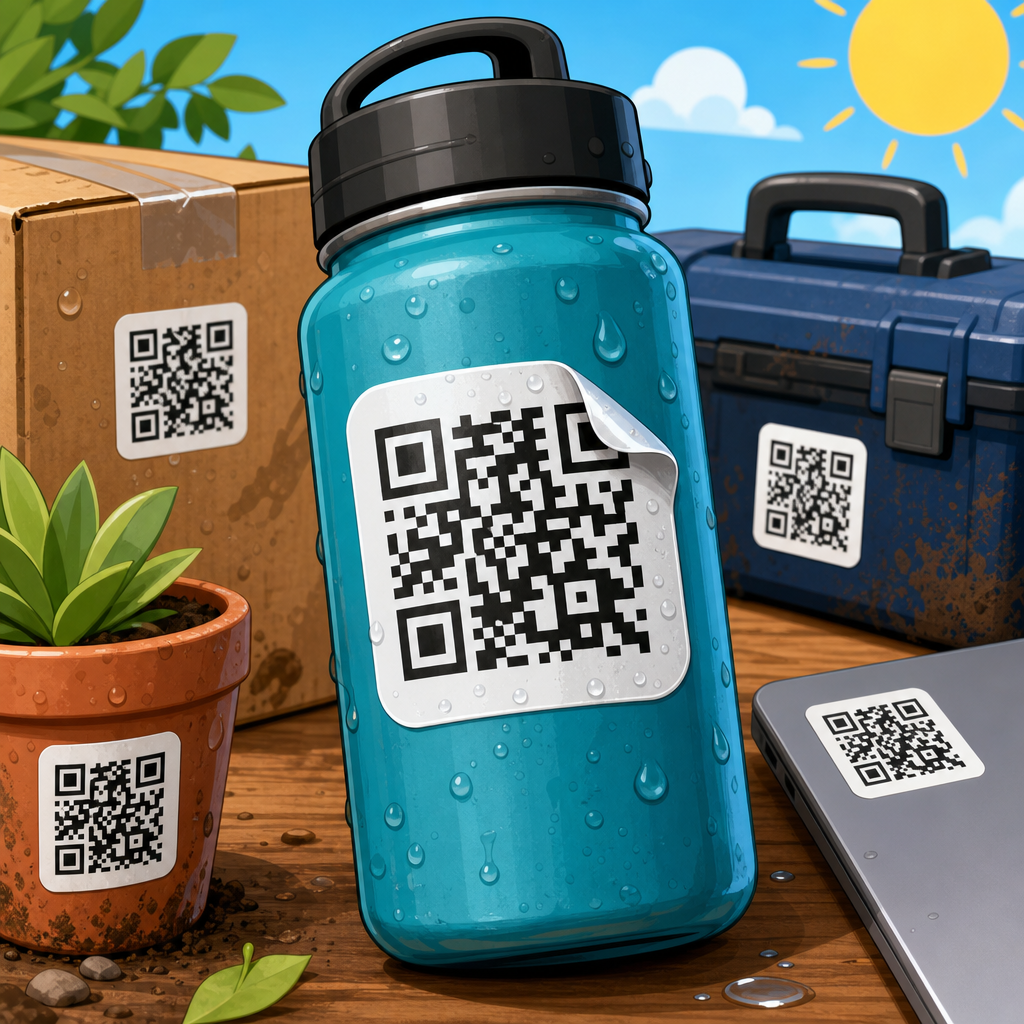
Texture and shape also matter. Rough concrete, pebbled powder coat, ribbed plastic, and deeply curved surfaces reduce contact area and create stress points. Edge lift starts there, then moisture and dirt work underneath. When clients need labels to survive washdowns or outdoor grit, I steer them toward conformable films, rounded corners, and edge-sealed laminates. These small production choices materially extend sticker life. Most early failures I inspect are not due to the QR code itself; they come from an adhesive-surface mismatch or rushed installation.
Printing Methods, Lamination, and Scan Reliability Over Time
How the QR code is printed has a direct impact on longevity. Office inkjet printing can work for prototypes, but dye-based inks often fade quickly in light and can smear when wet. Pigment inkjet inks are better, though still variable by media and coating. Laser printing offers sharper text and better water resistance on compatible stocks, making it acceptable for many indoor labels. For industrial labels, thermal transfer printing with resin ribbons remains a proven choice because it delivers excellent abrasion and chemical resistance on polyester and some synthetics. For branded outdoor decals, solvent, eco-solvent, latex, and UV-curable printing are common, each with different durability profiles depending on ink set and media pairing.
Lamination is one of the most effective ways to extend a QR code sticker’s useful life. A clear overlaminate protects against scratching, cleaning, moisture intrusion, and UV degradation. Gloss laminate can intensify color, but too much glare can reduce scan performance under direct light. Matte laminate usually scans more consistently in bright environments because it cuts reflections. In high-touch settings such as restaurant tables, gym equipment, and machine interfaces, lamination often doubles functional lifespan simply by preserving contrast and edge definition.
Code design still matters, even with premium materials. A durable sticker should use adequate quiet zone, high foreground-to-background contrast, and a physical size appropriate for the expected scanning distance. Tiny decorative codes with thin modules fail faster because they have less tolerance for wear. I advise clients to test sample labels using multiple current phone models before committing to a full run. Durability is not only about surviving weather; it is about preserving easy, first-try scans throughout the sticker’s service life.
Choosing Durable QR Code Solutions for Specific Environments
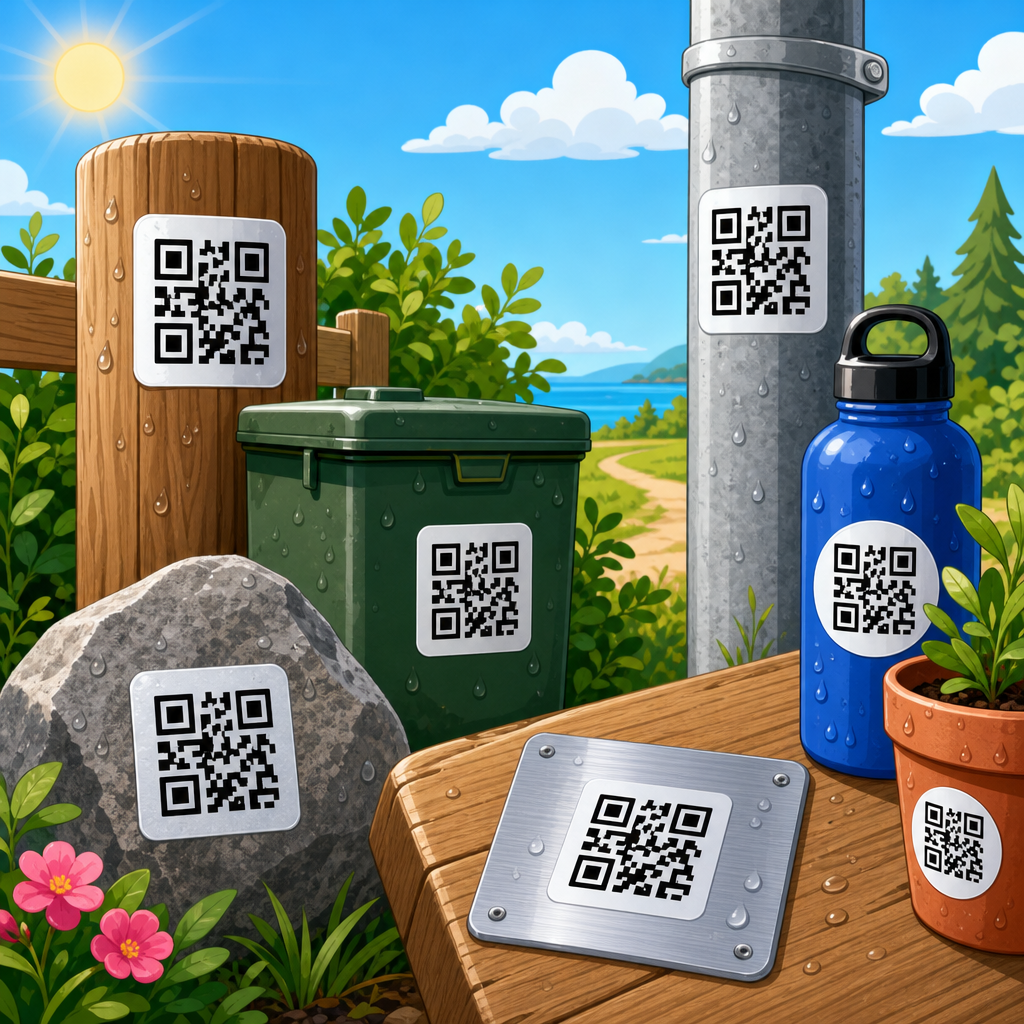
The right durable QR code solution depends on where the sticker will live and how people will interact with it. For indoor retail and office use, polypropylene or polyester labels with permanent acrylic adhesive usually provide enough life at a reasonable cost. For refrigerated packaging, look for facestocks and adhesives rated for cold application and condensation resistance. For bathrooms, kitchens, breweries, and healthcare spaces, moisture and aggressive cleaning chemicals push you toward polyester or laminated vinyl. For outdoor signage, UV exposure and heat cycling usually justify cast vinyl or polyester constructions with weatherproof overlaminate.
Industrial environments are especially demanding because multiple stressors combine at once. Asset tracking labels on forklifts, bins, tools, and electrical panels face abrasion, solvents, grease, and frequent scanning. In these cases, polyester with resin thermal transfer printing is a dependable specification. If tamper evidence matters, destructible vinyl or void-pattern labels add security, but they may trade away some long-term appearance. On vehicles or curved helmets, cast vinyl conforms better than polyester and resists lifting. On rough containers, no sticker performs indefinitely, and mechanical tags may be the better answer.
A useful rule is to match the label’s designed service life to the asset or campaign. Do not buy a ten-year label for a two-week event, and do not put a one-year consumer label on a five-year kiosk deployment. The best hub strategy for this topic is to branch from lifespan into the next practical question: waterproofing, UV resistance, adhesive selection, anti-scratch lamination, freezer performance, or tamper-evident construction. When buyers understand the environment first, choosing the correct QR code sticker becomes far more straightforward.
How to Extend Sticker Life and Know When to Replace It
You can extend the life of QR code stickers with a disciplined process. Specify the environment, choose the correct facestock and adhesive, print with durable methods, use laminate when exposure justifies it, and install on properly cleaned surfaces at the right temperature. After installation, inspect a sample set periodically for edge lift, discoloration, abrasion, and scan speed. In managed deployments, I like to test labels with both iPhone and Android devices under normal lighting because real-world scan reliability is the only metric that matters.
Replacement timing should be based on function, not appearance alone. If users need multiple attempts, if glare has become a recurring problem, if scratches obscure finder patterns, or if fading lowers contrast, replace the sticker even if it still adheres well. Dynamic QR codes can soften the operational risk because the destination can be updated without reprinting, but they do not extend the physical life of the sticker itself. Physical durability and destination flexibility are separate decisions.
QR code stickers last longest when material, adhesive, print method, laminate, and environment are treated as one system. For short indoor use, basic synthetics may be enough. For equipment, outdoor signs, and high-touch locations, polyester or premium vinyl with durable printing and protective laminate is the safer specification. That approach reduces rescans, maintenance visits, and customer frustration. If you are building a dependable labeling program under the broader QR code design, printing, and materials category, start by auditing each use case by exposure and expected lifespan, then choose a durable QR code solution that matches the real conditions rather than the lowest upfront price.
Frequently Asked Questions
How long do QR code stickers usually last?
QR code stickers can last anywhere from about six months to well over ten years, and that wide range is normal. The lifespan depends on the full specification of the sticker, not just the presence of a QR code. Material choice matters first: paper labels are often suitable for short-term indoor use, while vinyl, polyester, or specialty industrial films are built for much longer service. Adhesive selection is equally important, because a perfectly printed code still fails if the label lifts, curls, or falls off. Print method also affects durability, with some printing technologies resisting fading, abrasion, moisture, chemicals, and UV exposure far better than others.
In real-world use, the better question is not simply “How long will it last?” but “What combination of material, adhesive, and print quality will keep it scannable for the required life of the item?” A QR code on temporary packaging for a seasonal campaign may only need to remain readable for a few weeks or months. A code on an outdoor sign, asset tag, equipment label, or product identification sticker may need to stay functional for years. If the sticker is properly matched to the application and installed on a clean, suitable surface, long-term performance is very achievable. If the material is too cheap, the adhesive is wrong for the surface, or the environment is harsh, even a new sticker can fail much sooner than expected.
What factors have the biggest impact on how long a QR code sticker stays scannable?
The main factors are sticker material, adhesive type, print durability, surface preparation, and environmental exposure. Material affects resistance to tearing, shrinking, moisture, and abrasion. Adhesive affects whether the label remains firmly attached over time, especially on textured, curved, oily, low-energy plastic, or frequently handled surfaces. Print durability determines whether the dark and light contrast in the QR code remains strong enough for scanners and smartphone cameras to read it quickly. If the printed image fades, smears, scratches, or becomes dirty, scan reliability drops.
Environmental conditions are often the deciding factor. Indoor office use is very different from outdoor exposure, refrigerated storage, warehouse handling, industrial washdowns, direct sun, or high-heat manufacturing areas. UV light can fade inks, moisture can weaken certain materials or adhesives, and repeated abrasion from hands, tools, or packaging movement can damage the code surface. Surface preparation also makes a major difference. Even high-quality stickers perform poorly when applied to dusty, greasy, wet, or rough surfaces. A well-designed QR code sticker lasts longest when the material and adhesive are chosen for the exact environment and the label is installed correctly from the start.
Are some QR code sticker materials better for long-term use than others?
Yes. For short-term use, paper labels may be fine, especially indoors and in controlled environments. They are economical and work well for temporary promotions, shipping labels, short-run packaging, and limited-duration campaigns. However, paper is generally the least durable option for long-term QR code use because it can absorb moisture, tear easily, stain, and wear down with handling. If the code needs to remain readable for years, paper is usually not the best choice.
For longer-term applications, synthetic materials such as vinyl and polyester are far more dependable. Vinyl is popular because it offers good flexibility, weather resistance, and durability for many general-purpose indoor and outdoor uses. Polyester is often preferred for more demanding applications because it holds up well against heat, chemicals, abrasion, and long service lives, which is why it is common in asset labels and industrial identification. In more specialized environments, laminated constructions, tamper-evident films, or high-performance engineered label stocks may be appropriate. The best material depends on whether the sticker will be exposed to sun, water, cleaning agents, friction, temperature swings, or frequent touching. Long-term performance comes from matching the material to the job rather than choosing a one-size-fits-all label.
Can a QR code still work if the sticker fades, gets scratched, or starts peeling?
Sometimes yes, but only up to a point. QR codes include error correction, which means they can still be scanned even if part of the printed area is damaged or obscured. That feature gives them a practical durability advantage over some other marking methods. Minor scratches, light scuffing, or slight fading may not immediately make the code unusable, especially if the original print was sharp and had strong contrast. However, error correction is not a substitute for durable production. Once too much of the pattern is lost, distorted, covered, or detached from the surface, scanning becomes slow, inconsistent, or impossible.
Peeling is especially problematic because it often changes the shape of the sticker, creates glare or shadows, and exposes edges to more damage. Fading is another common issue, particularly outdoors or in sunlit locations where UV exposure can reduce contrast over time. Smudging, chemical exposure, and abrasion from repeated handling also degrade readability. This is why it is important to think beyond whether the QR code is technically scannable on day one. A durable QR sticker should remain easy to scan in normal conditions throughout its intended life. Good print quality, appropriate sizing, sufficient contrast, protective lamination when needed, and the right adhesive all help preserve real-world scan performance.
How can I make QR code stickers last as long as possible?
The most effective approach is to specify the sticker based on the actual use case. Start with the expected lifespan: weeks, months, or years. Then consider where the sticker will be used, what surface it will be applied to, and what it will encounter over time. For indoor short-term projects, a standard label may be enough. For outdoor signs, equipment, product labels, or asset tracking, move to more durable materials such as vinyl or polyester and consider adding a protective laminate. Choose a print method known for durability in the target environment, especially if the sticker will face UV light, moisture, abrasion, or chemicals.
Installation matters just as much as production. Apply the sticker to a clean, dry surface free from dust, oil, wax, and residue. Make sure the adhesive is appropriate for the substrate, whether that is metal, plastic, glass, painted surfaces, corrugated packaging, or textured materials. Avoid placing the code where it will be constantly rubbed, bent, or exposed to standing water if a better location is available. It is also wise to test samples before committing to a large run, particularly for industrial, outdoor, refrigerated, or high-traffic uses. Finally, design the QR code for reliable scanning: use adequate size, strong contrast, quiet space around the code, and a destination URL that will remain active as long as the sticker is in service. A durable sticker is only truly successful if the code remains both physically intact and digitally useful.