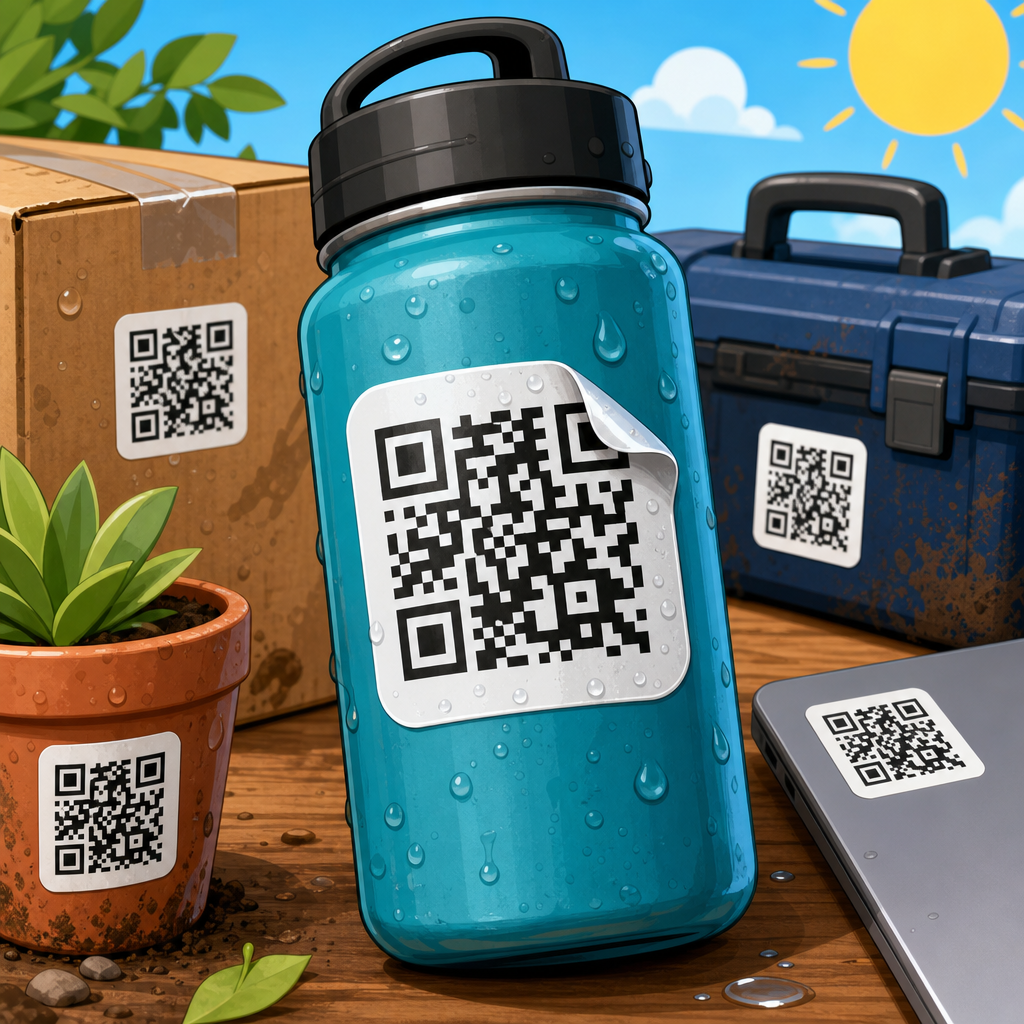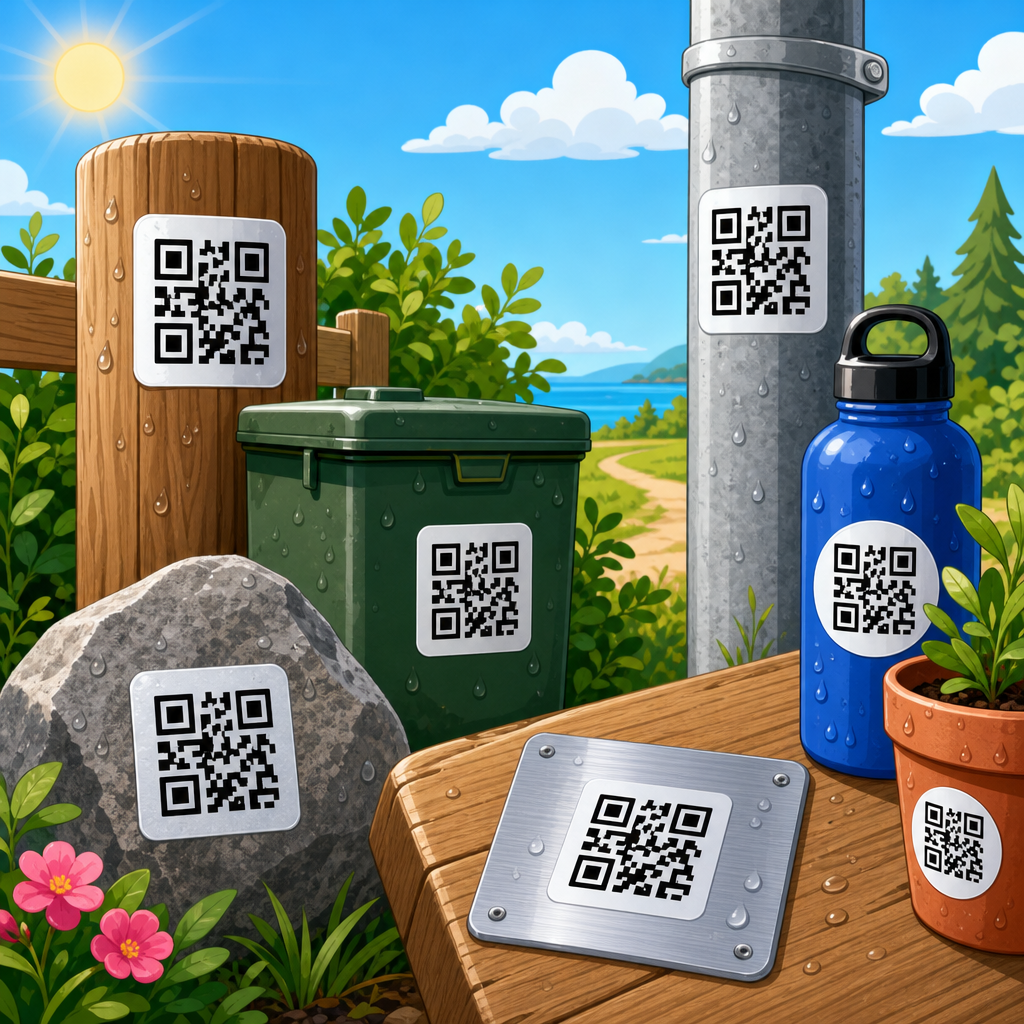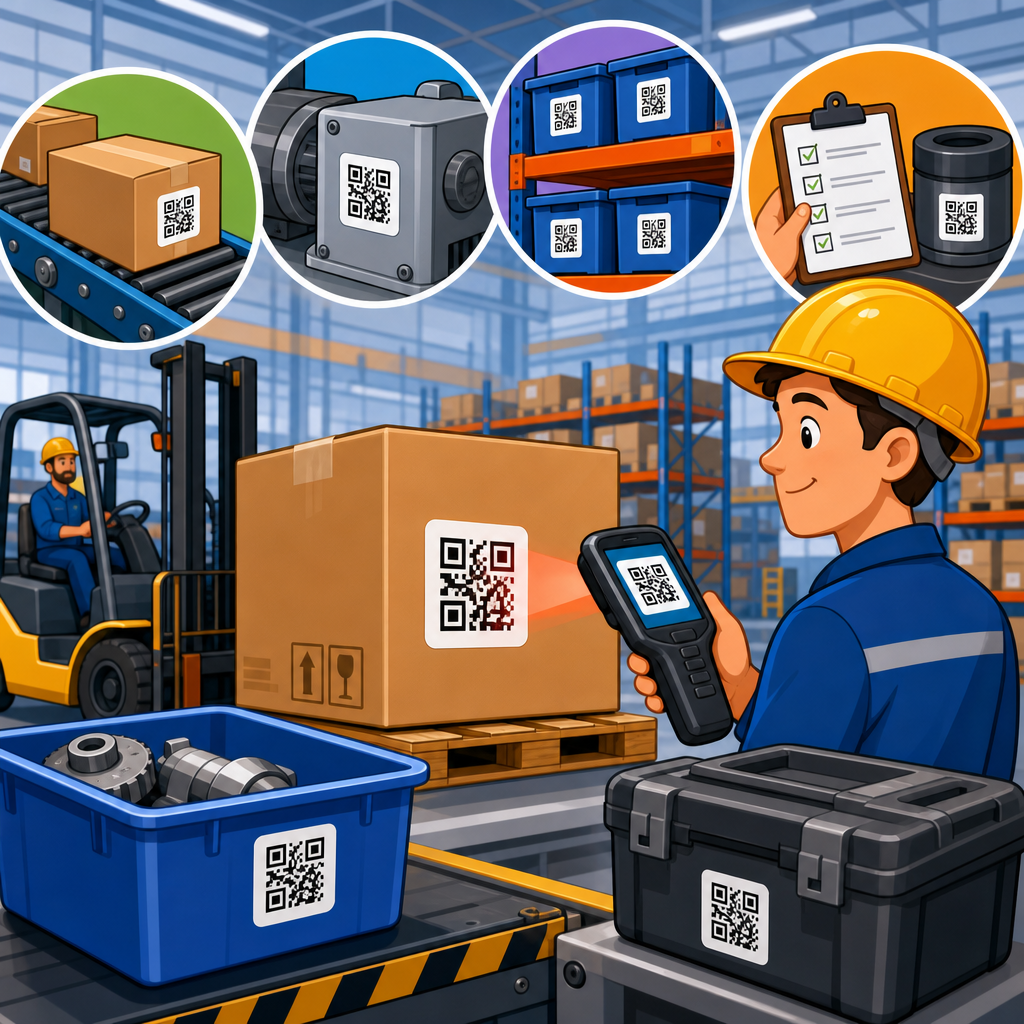
Industrial QR code labels are built to survive where ordinary labels fail, making them essential for manufacturers, warehouses, utilities, laboratories, and field service teams that need reliable asset identification under heat, abrasion, chemicals, weather, and constant handling. In practice, durable QR code solutions combine the code itself, the face stock, adhesive, print method, and surface preparation into one system. If any part is weak, scan performance drops, workflows slow, and traceability suffers. I have seen this repeatedly on plant floors: a perfectly generated code becomes useless when printed with the wrong ribbon, applied to oily metal, or exposed to solvents the material was never designed to resist.
A QR code label is a machine-readable symbol that stores data such as a serial number, URL, work order, batch ID, maintenance record, or digital product passport link. An industrial QR code label uses rugged materials and production methods so that data remains readable throughout the required service life. Durable QR code solutions matter because modern operations depend on rapid, accurate scanning. Inventory counts, work-in-progress tracking, calibration history, chain-of-custody records, equipment maintenance, and compliance audits all improve when labels scan the first time. They also support broader digital transformation efforts by linking physical assets to cloud systems, CMMS platforms, ERP records, and mobile apps used by technicians in the field.
For a sub-pillar hub under QR code design, printing, and materials, the goal is not only to explain what industrial labels are, but to show how to choose them correctly. The best solution depends on substrate, environment, scanning distance, cleaning routine, expected lifespan, and printing equipment. Polyester may outperform paper in a warehouse, while anodized aluminum or laser-markable labels make more sense for outdoor assets or high-heat exposure. The following guide covers the main use cases, materials, printing methods, performance requirements, and selection criteria that define successful industrial QR code labeling.
What makes a QR code label industrial grade
An industrial grade QR code label is designed for long-term readability in demanding conditions. The core requirements are durability, adhesion, contrast, and dimensional stability. Durability means the printed image and label construction resist water, UV light, oils, cleaning chemicals, abrasion, and temperature swings. Adhesion means the label stays attached to surfaces such as powder-coated steel, textured plastic, glass, corrugate, or rough cast metal. Contrast means scanners can easily distinguish dark modules from light background areas, even after wear. Dimensional stability means the material does not shrink, curl, crack, or distort enough to alter the code geometry.
In industrial environments, label failure usually comes from environmental mismatch rather than code generation errors. A warehouse freezer can cause standard adhesives to harden and lose tack. A fabrication shop can expose labels to metal fines and repeated abrasion. A chemical plant can dissolve topcoats or attack acrylic adhesives. Outdoor telecom cabinets face sun, rain, temperature cycling, and pressure washing. For those reasons, industrial buyers evaluate the whole label construction: face material, adhesive chemistry, topcoat, print technology, laminate if needed, and application process. Standards and test methods also matter. Teams often review UL recognition for safety labeling, CSA requirements, RoHS considerations, BS 5609 for marine durability, and ASTM-style abrasion or environmental tests depending on the product category.
Code design is equally important. Error correction helps maintain scanability after partial damage, but it is not a substitute for material strength. Quiet zone, module size, print resolution, and placement all affect readability. I recommend sizing the code for the real scanner and real distance, not for an ideal lab setup. A code that scans on a desktop verifier may fail when a forklift operator scans it from an angle under poor lighting. Industrial design always starts with the real operating environment.
Common use cases for durable QR code solutions
Industrial QR code labels support traceability across nearly every stage of operations. In manufacturing, they identify parts, subassemblies, tooling, jigs, and finished goods. A stamped metal component can carry a label linked to lot number, machine parameters, operator ID, and inspection results. In electronics assembly, QR labels often connect boards or enclosures to test records and warranty data. In warehouses and distribution centers, rack locations, totes, pallets, and reusable containers use rugged codes to speed receiving, put-away, replenishment, and cycle counts.
Asset management is another major use case. Facilities teams place durable QR labels on HVAC units, pumps, generators, forklifts, fire extinguishers, and calibration tools so technicians can open maintenance history instantly with a mobile device. In healthcare and laboratories, labels on instruments and carts must survive disinfectants and frequent wiping. Utilities and field service organizations use weather-resistant labels on poles, cabinets, valves, meters, and network equipment to support inspections and service documentation. Construction firms increasingly label rented equipment and temporary assets so they can monitor utilization, transfer, and loss prevention across jobsites.
Compliance and quality systems also benefit. QR labels can link directly to certificates of conformance, safety sheets, standard operating procedures, or training records. Food and beverage producers use them for lot tracing and sanitation workflows, while aerospace and automotive suppliers rely on serialized identification for audit readiness and recall containment. The value is straightforward: when every physical item has a durable digital pointer, data retrieval becomes immediate, errors decline, and the business gains a reliable foundation for automation.
Materials and print methods that hold up in harsh environments
The most common industrial label materials are polyester, polypropylene, vinyl, polyimide, and metal-based constructions such as anodized aluminum or stainless-steel tags. Polyester is the workhorse for indoor industrial labeling because it offers strong dimensional stability, chemical resistance, and compatibility with thermal transfer printing. Polypropylene can work for lower-cost applications but generally does not match polyester for heat and solvent resistance. Vinyl is useful where flexibility and conformability matter, such as curved surfaces or warning labels on uneven equipment. Polyimide is preferred for very high temperatures, especially in electronics and PCB processes. Metal photo anodized labels are ideal when exceptional UV, abrasion, and chemical resistance are required over many years.
Print method selection is just as important as substrate choice. Thermal transfer remains the standard for many industrial QR code labels because resin ribbons can produce sharp, durable images on synthetic stocks. Wax ribbons are usually not rugged enough for serious industrial use; wax-resin can be acceptable in moderate environments; full resin is the safer choice for chemicals, abrasion, and outdoor exposure. Direct thermal is generally a poor fit for durable applications because heat-sensitive coatings darken and fade. Laser marking works well on certain engineered materials and tags. Inkjet can perform if the media and ink system are industrially rated, but many operations still prefer thermal transfer for consistency and lower risk. For permanently marked assets, laser-etched metal or chemically etched nameplates often outperform printable labels when lifespan is measured in years rather than months.
| Environment or need | Recommended material | Preferred print method | Typical example |
|---|---|---|---|
| Indoor equipment tracking | Polyester with permanent acrylic adhesive | Thermal transfer with resin ribbon | Facility asset tags on pumps and panels |
| Cold storage and freezers | Freezer-grade polyester or polypropylene | Thermal transfer | Food distribution totes and shelves |
| High heat exposure | Polyimide | Thermal transfer or laser | Electronics process labels |
| Outdoor long-life assets | Anodized aluminum | Photo anodized or laser marked | Utility poles, telecom cabinets, solar assets |
| Chemical and abrasion resistance | Topcoated polyester or metal tag | Resin thermal transfer or laser | Manufacturing tools and shop-floor fixtures |
Key benefits: traceability, uptime, and data accuracy
The primary benefit of industrial QR code labels is dependable traceability. When labels remain readable, companies can follow assets, materials, and work status without manual re-entry. That reduces transcription errors and speeds every transaction tied to the item. In plants where operators previously typed serial numbers into MES or ERP screens, switching to durable QR labels typically cuts scan time to seconds and improves record accuracy. Better traceability also narrows the impact of quality problems. Instead of quarantining broad inventory ranges, teams can isolate specific lots, machines, or batches linked through serialized labeling.
Another major benefit is uptime. Maintenance technicians lose valuable time when equipment records are buried in binders or disconnected systems. A QR label on the asset can open service manuals, spare parts lists, lockout procedures, and maintenance history instantly. That accelerates troubleshooting and standardizes work across shifts. During audits, the same label can provide inspection evidence without searching multiple databases. For distributed operations, this is especially useful because field staff often work with mobile devices in low-bandwidth environments and need a direct, dependable way to access the right record at the point of work.
Durable QR code solutions also improve lifecycle cost, even when unit price is higher than standard labels. Cheap labels fail early, require relabeling, create rescanning effort, and increase the risk of lost assets or incomplete records. I have seen organizations save money simply by moving from paper labels to properly specified polyester with resin print, because replacement cycles dropped sharply and scan success improved. The real return comes from fewer interruptions, cleaner data, and stronger process discipline, not just from the label itself.
How to choose the right label for substrate, environment, and scanner
The best industrial QR code label starts with application analysis. First identify the substrate: smooth metal, textured plastic, powder-coated panel, glass, corrugated fiberboard, reusable tote, cable, or rough casting. Adhesive choice depends heavily on surface energy and texture. High-surface-energy materials such as stainless steel are usually easier to bond than low-surface-energy plastics like polyethylene. Dirty, oily, or dusty surfaces reduce initial tack dramatically, so cleaning protocol should be part of the specification. If a label must be repositionable during application, note that requirement early because it narrows adhesive options.
Next define the environment in measurable terms. What are the minimum and maximum temperatures during application and service? Will the label encounter diesel, isopropyl alcohol, acetone, hydraulic fluid, salt spray, UV light, or pressure washing? Is abrasion occasional or constant? Must the code remain readable for six months, three years, or the full equipment life? These details determine whether a standard synthetic label is sufficient or whether the job calls for overlamination, tamper evidence, freezer adhesive, polyimide, or metal identification plates.
Scanner conditions matter more than many teams expect. Camera-based imagers can read smaller QR codes than laser scanners read linear barcodes, but they still need adequate module size, contrast, and lighting. Consider scanning distance, angle, user behavior, and whether labels may be viewed through protective covers or behind grime. Verification is good practice for critical applications. Tools from Cognex, Zebra, Honeywell, Brady, and Brother are common in industrial programs, while software platforms such as CMMS, WMS, and ERP systems determine the payload and workflow design. Label selection should fit the entire scanning ecosystem, not just the printer.
Implementation best practices and common failure points
Successful rollout depends on disciplined testing. Before approving a material, print sample labels with production settings, apply them to real surfaces, and expose them to the actual environment. Then test scanability over time, not just on day one. Include rub tests, cleaner exposure, UV or outdoor simulation where relevant, freezer cycles, and adhesion dwell time. If labels are applied by line operators, evaluate whether placement is repeatable and whether the quiet zone stays unobstructed by screws, edges, or curved surfaces.
Common failure points are predictable. Low print darkness or poor ribbon-media matching causes washed-out modules. Label sizes are often reduced too aggressively to save space, making modules too fine for rugged scanning conditions. Surface contamination is a frequent issue; even a high-performance adhesive can fail on oily machinery. Another mistake is placing labels in wear zones where hands, hoses, or pallets hit them repeatedly. In harsh settings, a slight relocation can double label life. Data design matters too. Embedding unstable URLs or inconsistent naming conventions creates downstream confusion even when the physical label performs well. Durable labeling works best when governed as part of a broader identification standard.
As this hub expands, related articles should dive deeper into polyester versus polyimide, thermal transfer ribbon selection, outdoor UV-resistant constructions, chemical-resistant label testing, metal asset tag options, adhesive selection for difficult surfaces, and QR code sizing for mobile scanners. Together, those topics build a complete durable QR code strategy.
Conclusion: building a durable QR code labeling strategy
Industrial QR code labels deliver value when they are treated as engineered components of an identification system rather than disposable stickers. The right combination of code design, material, adhesive, print method, and placement enables reliable scanning in warehouses, factories, labs, utilities, and field service environments. That reliability supports faster maintenance, cleaner inventory records, stronger compliance, and better traceability across the asset lifecycle. Durable QR code solutions are not one-size-fits-all, but the selection logic is consistent: define the environment, match the material to the risk, validate with real-world testing, and standardize the workflow around dependable scanning.
If you are building out a QR code design, printing, and materials program, start by auditing your toughest labeling environments and your highest-value assets. Document where labels fail today, what chemicals and temperatures are involved, which devices scan the codes, and how long the labels must last. Then use that information to choose materials and print methods deliberately. A well-specified industrial QR code label pays for itself through fewer failures, faster work, and trustworthy data. Use this hub as your starting point, then map each application to the right durable label solution and test it before full deployment.
Frequently Asked Questions
What are industrial QR code labels, and how are they different from standard QR code labels?
Industrial QR code labels are identification labels engineered specifically for demanding environments where ordinary paper or low-durability labels tend to fail. While a standard QR code label may work well in clean, climate-controlled settings, industrial versions are designed to remain readable and securely attached when exposed to heat, cold, moisture, chemicals, abrasion, UV light, outdoor weather, and frequent handling. That difference matters because in industrial operations, a label is not just a sticker—it is a critical link to asset records, maintenance history, calibration data, inventory systems, compliance documentation, and traceability workflows.
The biggest distinction is that industrial QR code labels are built as a complete system rather than a simple printed code. The face stock must withstand the environment, the adhesive must bond properly to the application surface, the print method must produce a durable and high-contrast image, and the surface must be prepared so the label stays in place over time. If even one of those elements is mismatched, performance can drop quickly. For example, a durable polyester face stock paired with the wrong adhesive may still peel from a textured or oily surface. Likewise, a strong adhesive cannot compensate for a poorly printed code that fades or smears after chemical exposure.
In practical terms, industrial QR code labels are commonly made from materials such as polyester, polyimide, anodized aluminum, or other specialty synthetics chosen for specific use cases. They may be printed using thermal transfer, laser marking, or other methods that create sharp, long-lasting codes with strong scan contrast. Compared with standard labels, they are intended to support reliable scanning over a much longer service life and under much harsher conditions. That reliability helps organizations avoid downtime, misidentification, rescanning, relabeling, and the costly errors that come from losing the connection between a physical asset and its digital record.
Where are industrial QR code labels most commonly used?
Industrial QR code labels are used anywhere organizations need dependable asset identification and data access in environments that challenge ordinary labeling. Manufacturers use them on equipment, tools, work-in-process items, returnable containers, and finished goods to improve production tracking, traceability, quality control, and maintenance operations. Warehouses and distribution centers rely on them for inventory control, location labeling, rack identification, tote tracking, and asset management, especially when labels must survive repeated scanning, forklift traffic, rubbing, dust, and variable temperatures.
Utilities and infrastructure teams use industrial QR code labels on meters, transformers, control panels, poles, enclosures, pumps, valves, and remote field assets. In these settings, labels may face sun exposure, rain, wind, dirt, and temperature swings while still needing to scan reliably during inspections and service visits. Laboratories use durable QR labels on instruments, sample containers, chemical storage areas, and calibration assets where precise identification is essential and where labels may be exposed to solvents, cleaning agents, refrigeration, or regular handling. Field service teams also depend on them to identify installed equipment in customer facilities, construction sites, fleet operations, telecom networks, and serviceable machinery spread across large geographic areas.
One reason these labels are so broadly adopted is that they help connect physical items directly to digital workflows. A technician can scan a code and instantly view service history, inspection checklists, operating manuals, replacement parts data, or warranty information. A warehouse worker can scan a rack or bin to verify location accuracy. A production operator can scan a component to confirm lot tracking and process status. In all of these use cases, the label supports speed, accuracy, and accountability. The more demanding the environment and the more important the data link, the more valuable a truly industrial QR code label becomes.
What benefits do industrial QR code labels provide for asset tracking and traceability?
The primary benefit of industrial QR code labels is reliable traceability. When every critical asset, component, container, or piece of equipment has a durable, scannable identifier, organizations gain a consistent way to connect physical operations with digital records. That makes it much easier to track where assets are, how they are being used, when they were serviced, which lots they are associated with, and whether required inspections or maintenance tasks have been completed. In regulated or quality-sensitive industries, that level of traceability can be essential for audits, recalls, incident investigations, and compliance reporting.
Industrial QR code labels also improve speed and accuracy across everyday workflows. Manual entry introduces delays and errors, especially when serial numbers are long, equipment is dirty, or staff are working in fast-paced conditions. A durable QR code enables faster scans and reduces the risk of mistyped data, duplicate records, and lost maintenance history. Over time, that translates into better inventory visibility, more accurate asset status updates, fewer service delays, and stronger data integrity across systems such as CMMS, ERP, WMS, LIMS, or custom asset management platforms.
Another major advantage is durability-driven cost savings. Although industrial labels often cost more upfront than general-purpose labels, they typically reduce replacement frequency, failed scans, labor interruptions, and identification problems over the life of the asset. If a label remains readable through years of handling, washdowns, outdoor exposure, or chemical contact, teams spend less time relabeling equipment and less time troubleshooting broken data links. The result is not just a better label, but a more resilient process. In environments where uptime, accountability, and traceability matter, that operational stability is often far more valuable than the initial label cost alone.
What factors determine whether an industrial QR code label will perform well in harsh environments?
Successful performance depends on treating the label as a full engineered solution rather than focusing only on the QR code image. The first factor is the environment itself: temperature range, chemical exposure, abrasion, outdoor weather, UV exposure, moisture, cleaning procedures, and handling frequency all influence material selection. A label for a laboratory freezer requires different characteristics than one mounted on a hot motor housing or exposed to oil, solvents, and repeated wipe-downs on a production line. Choosing the wrong face stock can lead to cracking, fading, warping, or rapid wear even if the code looked perfect on day one.
Adhesive selection is equally important. Surfaces vary widely in texture, energy, cleanliness, and curvature. Painted metal, powder-coated equipment, textured plastics, stainless steel, galvanized surfaces, and rough cast components may all require different adhesive behaviors. If the adhesive is not matched to the substrate and service conditions, edge lift, peeling, or total label failure can occur. Surface preparation also plays a major role. Dust, oil, moisture, oxidation, or residue can prevent proper bonding, which means even a premium label can fail prematurely if the application surface is not prepared correctly.
Print quality and code design are also critical. Industrial QR code labels need high contrast, proper quiet zones, suitable sizing for scanning distance, and a print method that resists fading, smearing, and wear. Thermal transfer with the correct ribbon, laser marking, or other durable imaging methods are often preferred for harsh applications because they produce more stable results than consumer-grade printing. Finally, real-world testing matters. The best way to confirm performance is to test labels under actual operating conditions before full deployment. Exposure trials, adhesion checks, and scan verification help ensure the selected label system will support reliable scanning throughout the intended service life.
How can a company choose the right industrial QR code label for its application?
The best starting point is to define the real use conditions as specifically as possible. Companies should identify what the label will be applied to, how long it must last, what environmental stressors it will face, how often it will be scanned, and what information the QR code needs to connect to. A label for indoor warehouse shelving may need excellent abrasion resistance and dependable adhesion, while a label for outdoor utility equipment may also need UV, weather, and temperature resistance. If the asset will be cleaned with solvents, exposed to oils, or subjected to high heat, those factors should guide material and print decisions from the beginning rather than being treated as secondary concerns.
Next, companies should evaluate the complete construction: face stock, adhesive, print technology, code size, and application method. The right face stock might be polyester for general durability, polyimide for high-temperature conditions, or metal-based solutions for extreme longevity. The adhesive must match the substrate and service environment, especially if the surface is rough, curved, low-energy, or frequently exposed to moisture or chemicals. Print quality should be durable enough to preserve contrast over time, and the QR code should be sized for the expected scanner type and reading distance. It is also wise to consider whether human-readable text, serial numbers, barcodes, or branding elements need to be included alongside the QR code.
Finally, companies should work with a supplier that understands industrial labeling as a performance system, not just a print job. A knowledgeable partner can help assess the environment, recommend suitable materials, advise on application practices, and provide testing samples. Pilot testing is especially important before a large rollout. Applying sample labels to actual assets and monitoring adhesion and scan performance in the field can reveal issues early and prevent costly rework later. When selection is based on the full operating reality—not just appearance or initial price—industrial QR code labels become a dependable long-term tool for identification, traceability, and workflow efficiency.