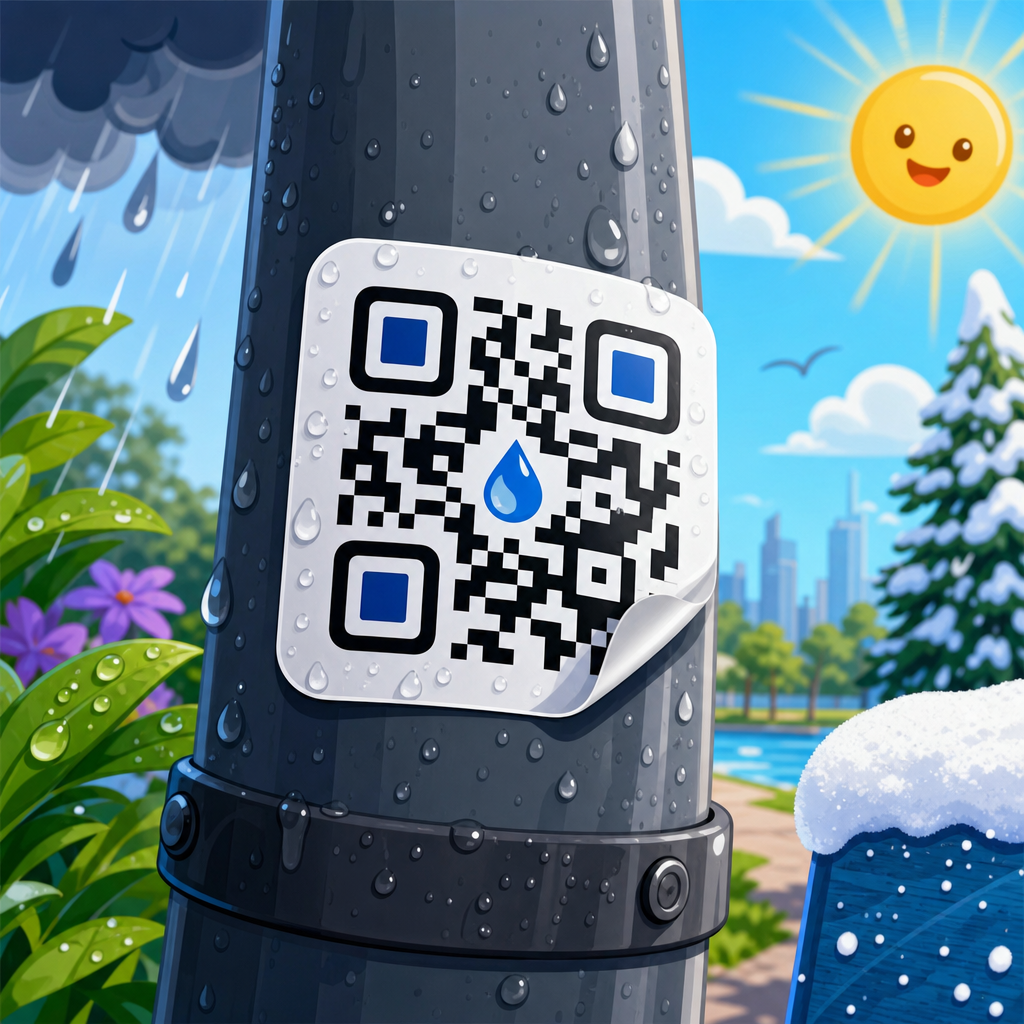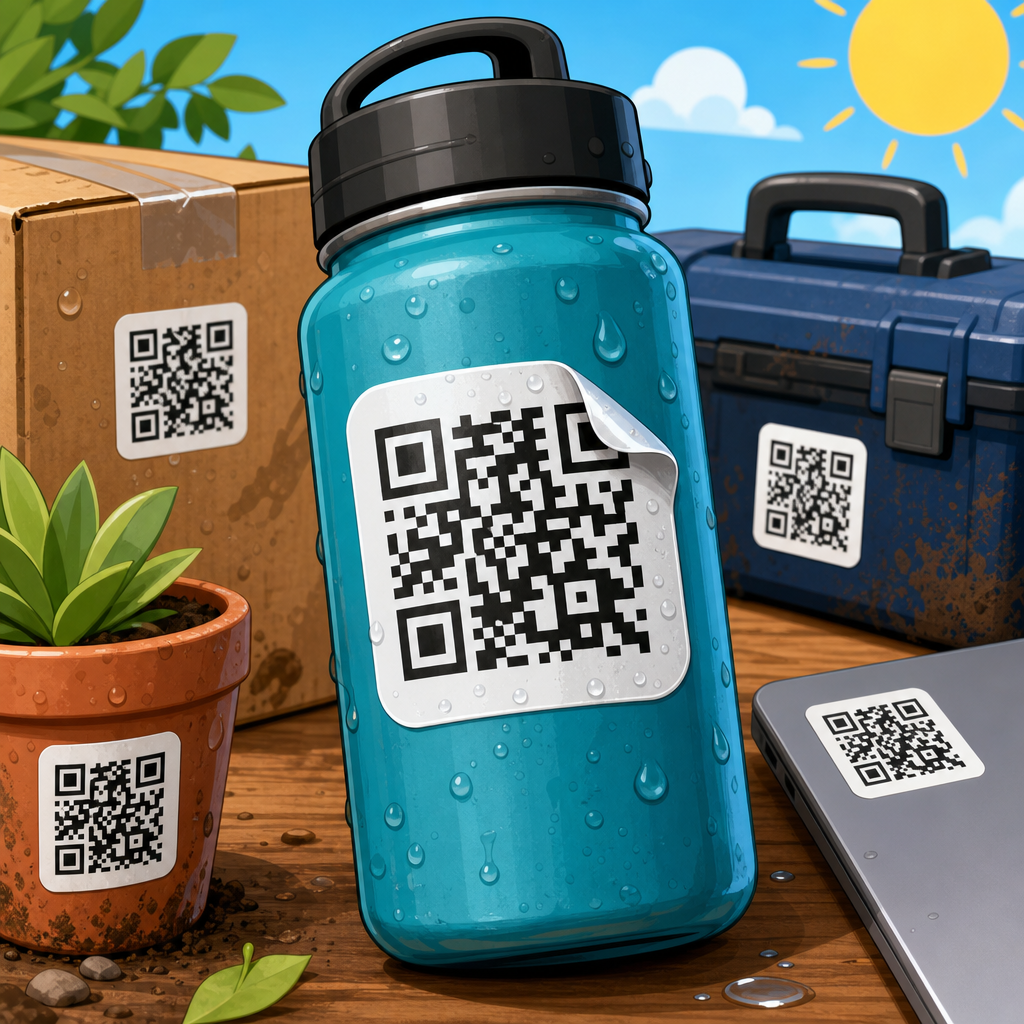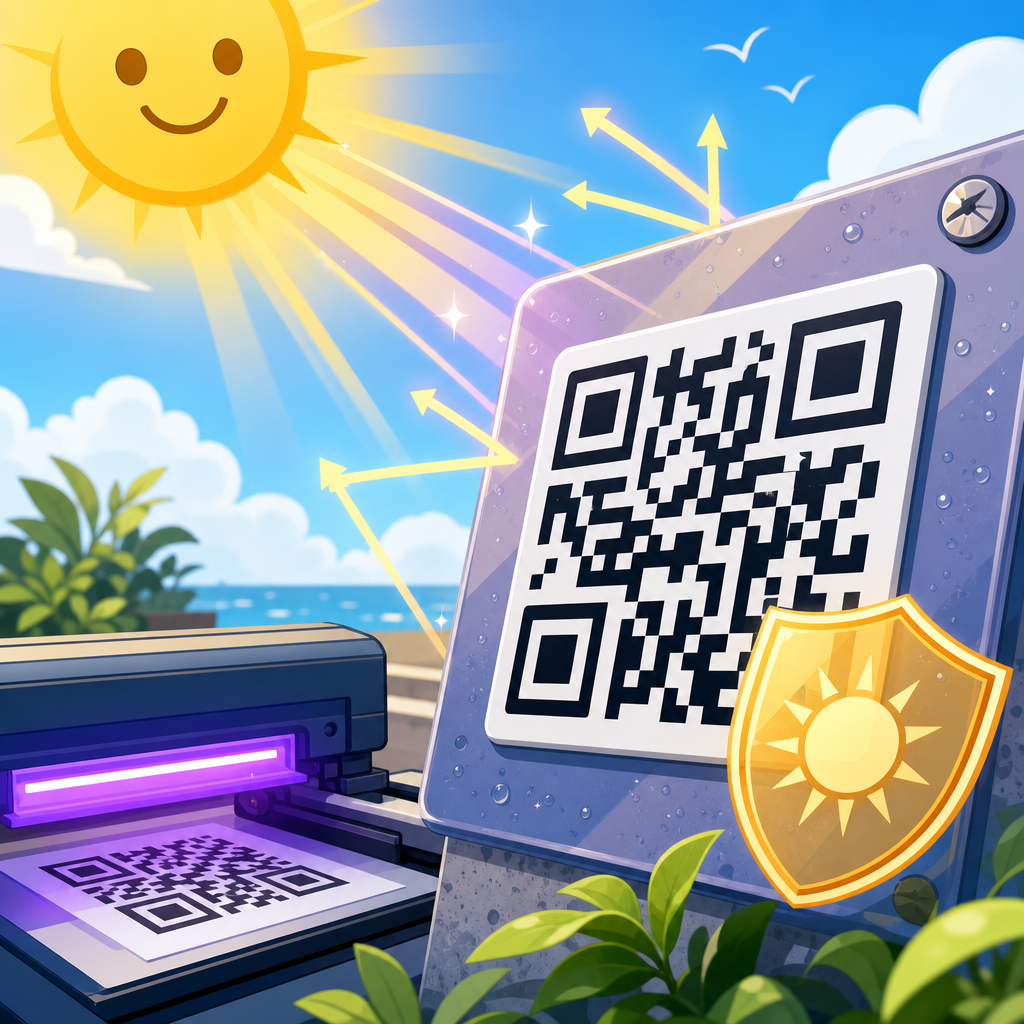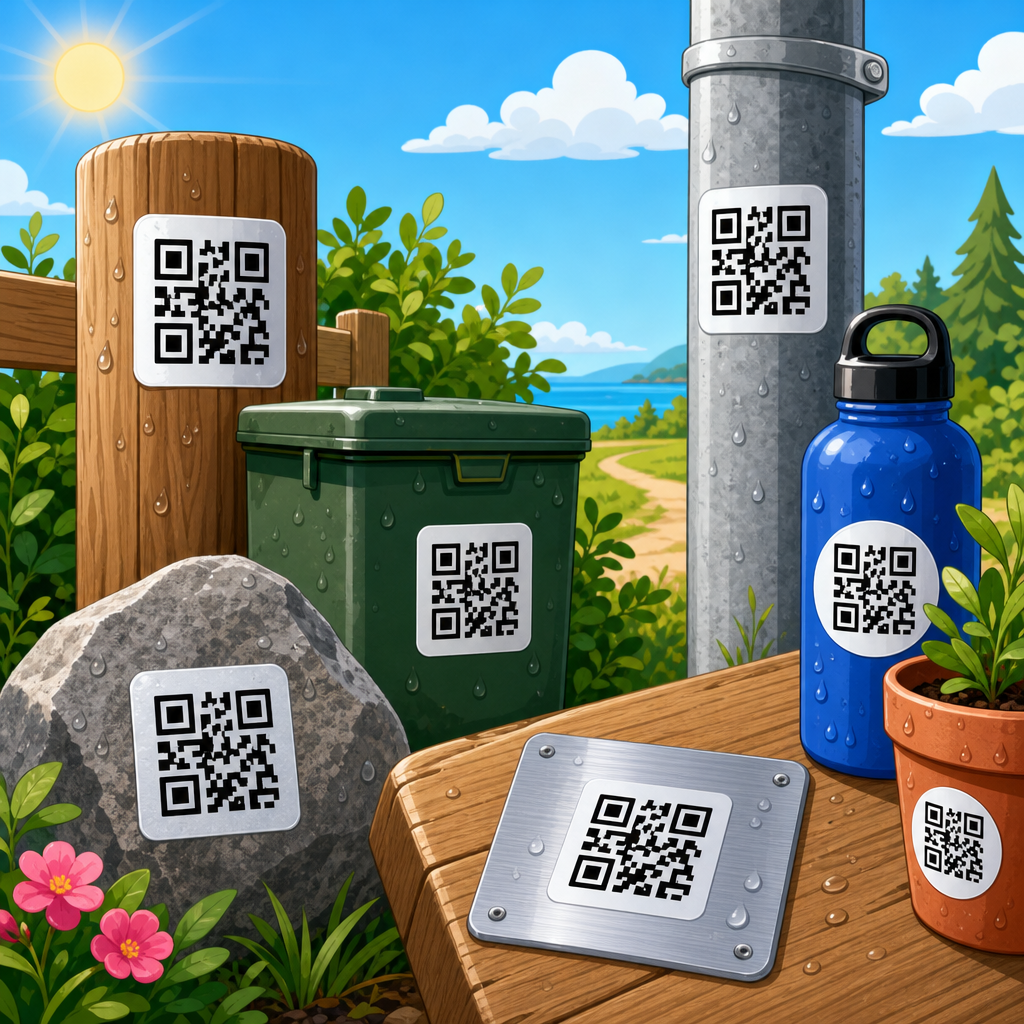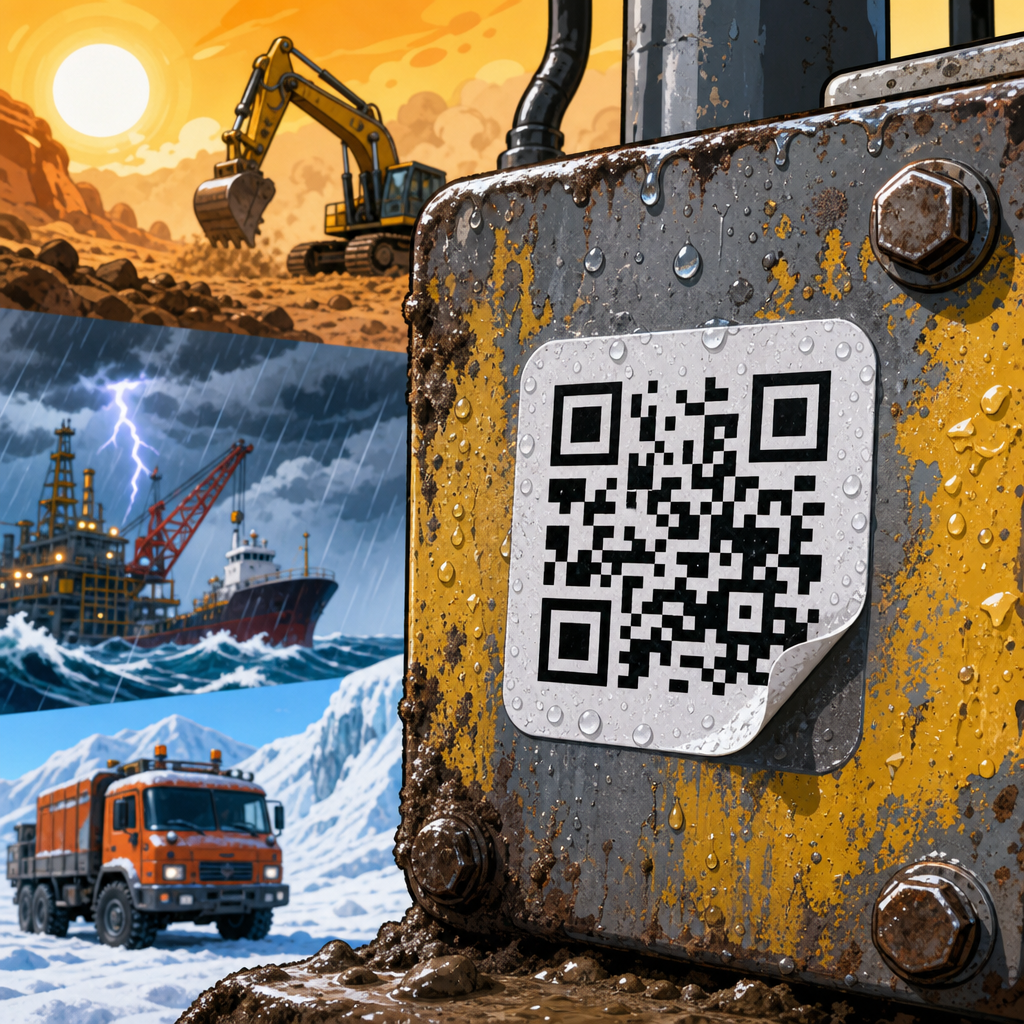
QR code stickers for harsh environments solve a simple but expensive problem: ordinary labels fail when heat, water, chemicals, abrasion, and sunlight attack the printed code. A harsh environment can mean a factory washdown line, an outdoor utility pole, a warehouse freezer, a construction site, or a hospital lab where disinfectants are used several times a day. In each setting, the QR code must remain scannable long after paper labels curl, ink fades, or adhesive lets go. When teams depend on QR codes for asset tracking, maintenance logs, safety instructions, traceability, or customer access to product information, failure is not cosmetic. It creates downtime, compliance gaps, and avoidable replacement costs.
Durable QR code solutions combine four elements: the right face material, the right print method, the right adhesive, and the right protective finish. If one element is wrong, the whole label can fail. I have seen polyester labels survive years on shop equipment while cheaper vinyl versions smeared in weeks because solvent exposure was underestimated. I have also seen well-printed labels fail because the surface energy of powder-coated metal was too low for the chosen adhesive. That is why spec selection matters more than the graphic itself. In practice, durable QR code stickers are engineered identification products, not just printed decals.
This hub article explains how to choose QR code stickers that keep working in demanding conditions. It covers materials, adhesives, print technologies, environmental testing, common failure modes, and selection criteria for different industries. It also sets the foundation for deeper articles on topics such as chemical-resistant labels, freezer-grade adhesives, metal asset tags, tamper-evident constructions, UV-stable laminates, and industrial printing methods. If you need durable QR code solutions, start by understanding what the label must survive, how it will be scanned, and what level of permanence the application requires.
What makes a QR code sticker durable
A durable QR code sticker remains attached, legible, and scannable for the required service life under defined conditions. That definition sounds obvious, but it prevents a common purchasing mistake: selecting by thickness or price alone. Durability is not one property. It is performance against specific stressors. The main stressors are temperature extremes, moisture and immersion, ultraviolet exposure, abrasion, oils and fuels, cleaners and solvents, impact, and substrate movement. A sticker on a curved HDPE drum in a wet plant needs a different construction from one on anodized aluminum outdoors.
Face stock is the visible layer carrying the code. Polyester is the workhorse for industrial QR labels because it offers dimensional stability, strong print receptivity, and good resistance to chemicals and heat. Polypropylene can work for moderate-duty applications at lower cost, especially in logistics. Vinyl conforms well to curved or irregular surfaces, but soft films can distort tiny modules if print quality is poor. Polyimide is preferred for very high temperatures, such as electronics manufacturing. For extreme wear or multiyear outdoor exposure, etched or laser-marked metal tags often outperform film labels.
Print method matters just as much. Thermal transfer printing with resin ribbons is a standard choice for harsh environments because resin bonds strongly to synthetic label materials and resists smearing, chemicals, and abrasion better than wax or wax-resin ribbons. UV inkjet and screen printing are also used for durable graphics, especially in larger production runs. Laser marking can create highly permanent codes on metal or engineered plastics. Whatever the method, the printed QR code needs sufficient contrast, edge definition, and quiet zone. Durability without scan reliability is wasted budget.
Material and adhesive choices by environment
The fastest way to choose a label is to start with environment, then narrow by substrate. Outdoor exposure usually calls for polyester or metal with UV-stable overlaminate and an acrylic adhesive rated for sunlight, rain, and thermal cycling. Freezer and cold-chain applications need adhesives formulated for low-temperature application or low-temperature service, because standard adhesives can become brittle and lose tack below recommended ranges. Wet and washdown areas often benefit from polyester with aggressive permanent acrylic adhesive and sealed edges where possible.
Chemical exposure changes everything. In plants using isopropyl alcohol, acetone, MEK, bleach, detergents, or oils, you need a face stock and print system validated against the exact fluid. Data sheets often list generic “chemical resistance,” but real-world performance varies by concentration, dwell time, and wiping pressure. In my experience, labels that pass a splash test may still fail under repeated rubs during sanitation. That is why engineered label suppliers run spot tests, soak tests, and rub tests on the complete construction, not just on the film alone.
Adhesive selection deserves special attention. Acrylic adhesives generally offer better aging, UV resistance, and heat performance than rubber-based systems. Rubber adhesives provide high initial tack and can bond difficult surfaces, but they may soften under heat or degrade faster outdoors. Surface energy matters too. Stainless steel and glass are relatively easy. Powder coats, textured plastics, and polyethylene are more difficult. Some low-surface-energy plastics require specialty adhesives or a mechanical alternative such as a riveted plate. Surface preparation can double success rates: clean with compatible solvent, remove oils, dry fully, and apply with firm pressure.
| Environment | Recommended face material | Typical print method | Adhesive approach | Key risk to test |
|---|---|---|---|---|
| Outdoor equipment | White polyester or anodized aluminum | Resin thermal transfer or laser marking | Permanent acrylic | UV fading and thermal cycling |
| Freezer and cold chain | Polyester or polypropylene | Resin thermal transfer | Freezer-grade acrylic | Application below service temperature |
| Chemical processing | Chemical-resistant polyester | Resin thermal transfer or screen print | Aggressive acrylic | Solvent rub resistance |
| Curved containers | Conformable vinyl or specialty film | UV inkjet or thermal transfer | Flexible permanent adhesive | Edge lift from flexing |
| High-heat electronics | Polyimide | Thermal transfer or laser | High-temperature acrylic | Shrinkage and adhesive flow |
Print quality, code design, and scan reliability
In harsh settings, QR code design is part of material engineering. Small, dense codes look efficient on screen, but they are less forgiving once dirt, scratches, or print spread appear. For industrial use, I usually recommend prioritizing larger module size over squeezing in more data. The better approach is to encode a short URL or unique identifier and store detailed records in the database behind it. This keeps the symbol simpler and easier to scan after wear. Error correction can help, but it is not a substitute for good design.
Contrast should be strong and stable over time. Black on white remains the safest choice for scanner performance, especially under variable lighting. Fancy colors, reverse codes, and glossy finishes are common causes of intermittent scans in the field. If branding matters, use color around the code rather than inside the data area. Maintain a clean quiet zone around the symbol so edge damage or nearby graphics do not interfere. On reflective metalized surfaces, matte topcoats often improve scanner consistency by reducing glare from handheld devices.
Verification should be routine for production labels. ISO/IEC 15415 is the recognized standard for two-dimensional code print quality, and it gives a more objective picture than “it scans on my phone.” A code may read on a premium smartphone in perfect light yet fail on a warehouse scanner with a worn lens or fixed-focus camera. For critical assets, verify sample labels after printing and again after environmental testing. This exposes whether abrasion, UV exposure, or chemical attack lowers contrast enough to push a once-good code below acceptable grade.
Testing durable QR code solutions before rollout
The most reliable way to avoid label failure is to test the full label construction on the real substrate in realistic conditions. Lab standards are useful starting points. ASTM methods are commonly used for adhesion, abrasion, and environmental exposure, while UL 969 is widely referenced for marking and labeling systems in durable goods. But a compliant material on paper does not guarantee success on your equipment. Curvature, textured coatings, sanitizer routines, and field installation habits create failure modes that no catalog description captures completely.
A practical validation plan is straightforward. First, define service life, substrate, and exposure profile. Second, print the actual QR code artwork with the intended printer and ribbon or ink. Third, apply samples using the real cleaning and application process. Fourth, expose them to the worst expected conditions: heat cycles, freezer storage, UV, washdown, chemical wipes, abrasion, or salt spray depending on use case. Finally, check both adhesion and scan performance at intervals. If codes remain attached but require multiple scan attempts, the label has still failed operationally.
Field pilots are especially valuable for distributed assets. I have seen labels pass accelerated testing, then fail in deployment because technicians applied them to dusty equipment or over embossed serial plates. A two-week pilot across a few representative sites often reveals more than a month of conference-room assumptions. Document the substrate, ambient temperature during application, cleaner used, scan distance, and failure observations. Those notes become the specification for full rollout and reduce the chance of buying a premium material for a problem that really needs better installation control.
Use cases across industries
Manufacturing plants use durable QR code stickers for maintenance access, lockout procedures, spare-parts lookup, calibration logs, and asset identification. In these settings, labels often face oils, coolant mist, forklift contact, and periodic degreasing. Polyester labels printed by thermal transfer resin are common because they balance cost and durability. Where machines run hot or labels sit near ovens, higher-temperature constructions are justified. Some facilities pair a printed QR label with a human-readable asset number so maintenance can still identify the machine even if the code is partially damaged.
Utilities and infrastructure teams need labels that survive years outdoors. QR codes on electrical cabinets, telecom enclosures, hydrants, poles, and solar equipment may face UV, rain, freeze-thaw cycles, and vandalism. Here, UV-stable laminates and tamper-evident options matter. For very long service intervals, metal tags with laser-marked codes are often a better life-cycle investment than stickers, especially when replacement visits are expensive. The QR code can link crews to manuals, circuit maps, inspection records, or GIS-linked asset histories directly from the field.
Healthcare, laboratories, and food production environments add sanitation pressure. Labels may be wiped repeatedly with alcohol, quaternary ammonium compounds, bleach solutions, or peroxide cleaners. In food facilities, washdown can combine moisture, chemicals, and abrasion from scrubbing. The label must not only stay attached but remain readable after repeated cleaning cycles. Chemical-resistant polyester with tested laminate systems is typical. In specimen tracking or medical device workflows, the requirement is even stricter because scan failure can disrupt chain of custody, inventory accuracy, or patient safety processes.
How this hub guides your durable QR code program
As a hub for durable QR code solutions, this page should help you decide what to evaluate next. If your main problem is fading or weathering, the next topic is outdoor QR code materials and UV-resistant laminates. If labels are peeling in cold storage, focus on freezer-grade adhesives and low-temperature application practices. If sanitizers or solvents are destroying prints, move into chemical-resistant QR labels and resin ribbon selection. If the surface is rough, oily, or low-energy plastic, substrate preparation and specialty adhesives should be the next step.
It also helps to separate temporary identification from permanent marking. For short campaigns, warehouse bins, or seasonal assets, a mid-duty synthetic label may be enough. For regulated equipment, capital assets, rental fleets, and infrastructure, durable labeling should be treated as part of the asset management system. That means specifying scan distance, expected lifespan, replacement procedure, and database governance along with the sticker itself. The QR code is only useful if the linked destination remains maintained, secure, and accessible over the life of the label.
Cost decisions should be made on total operating impact, not label unit price. A cheaper sticker that fails in six months is rarely cheaper once labor, downtime, reprinting, and rescanning are counted. Conversely, a premium metal tag is unnecessary for every indoor shelf or tote. The right solution matches risk, environment, and replacement economics. Start with a documented use case, test against actual exposure, verify the printed code, and standardize the winning construction. That disciplined approach produces QR code stickers that keep working when conditions are rough. Review your environments, shortlist materials, and test before you buy at scale.
Frequently Asked Questions
What makes a QR code sticker suitable for harsh environments?
A QR code sticker is considered suitable for harsh environments when the full label construction is designed to survive the specific conditions it will face, not just look durable on day one. That includes the face material, adhesive, print method, protective coating or laminate, and the way the code is sized and applied. In demanding settings such as washdown lines, outdoor utility installations, freezers, construction sites, and medical or laboratory spaces, labels often fail because moisture gets under the adhesive, chemicals attack the print surface, UV exposure fades the image, or abrasion physically damages the code. A harsh-environment QR sticker avoids those problems by using industrial-grade materials such as polyester, polyimide, or specialty vinyl, paired with adhesives engineered for metal, plastic, textured surfaces, cold storage, or high-heat applications.
Print durability matters just as much as the material. If the code is created with an ink or ribbon that can smear, bleach, or wear away, the sticker may still be attached but no longer scannable. That is why many harsh-environment labels use thermal transfer printing with resin ribbons, UV-stable inks, or laser-markable constructions. Some also include a protective overlaminate that shields the printed image from solvents, repeated cleaning, friction, and sunlight. The goal is simple: the QR code must remain readable after weeks, months, or years of exposure to the exact stresses of the work environment.
Just as important, the sticker must be matched to the use case. A freezer label needs a different adhesive profile than a label used near engines, boilers, or sterilization areas. An outdoor asset tag needs UV and weather resistance, while a hospital label may need to tolerate frequent disinfectant contact without clouding or lifting. In practice, a good harsh-environment QR sticker is less about one universal material and more about selecting the right engineered combination so the code remains attached, legible, and easy to scan over the life of the asset.
How do heat, water, chemicals, abrasion, and sunlight affect QR code labels?
These environmental factors attack labels in different ways, and any one of them can make a QR code fail. Heat can soften adhesives, cause shrinking or warping, and degrade printed images over time. In high-temperature settings, ordinary paper labels often dry out, curl, or discolor, while low-grade adhesives may lose bond strength and peel away. Water exposure creates a different set of issues. Repeated washdowns, rain, humidity, and condensation can cause paper labels to swell, separate, or break down completely, and moisture intrusion can also weaken the adhesive layer until corners begin lifting.
Chemicals are especially destructive because they may not only affect the adhesive but also attack the printed surface itself. Cleaners, oils, solvents, fuels, and disinfectants can smear inks, dissolve coatings, or haze the surface enough to interfere with scanning. In industrial and healthcare settings, this is one of the most common reasons labels fail long before expected. Abrasion adds a physical threat. If labels are routinely brushed by hands, tools, packaging, pallets, or machinery, the printed modules of the QR code can wear down, scratch off, or become obscured by scuffing. Even a small amount of damage can reduce scan reliability if the code was printed too small or without enough contrast.
Sunlight, particularly UV exposure, causes gradual but serious deterioration in outdoor applications. UV can fade black marks, yellow clear films, embrittle some plastics, and reduce adhesive performance. Over time, a label that originally scanned perfectly may become faint, cracked, or partially detached. Because QR codes depend on clear contrast and intact geometry, environmental damage does not need to be dramatic to create operational problems. A label can still appear present to the eye while already being difficult for scanners or mobile phones to read. That is why harsh-environment QR stickers are designed around resistance to the exact threats present at the site rather than relying on general-purpose labeling materials.
Which materials and adhesives are best for QR code stickers used in demanding conditions?
The best materials and adhesives depend on the environment, but several constructions are widely trusted for industrial and outdoor use. Polyester is one of the most common choices because it offers strong durability, dimensional stability, moisture resistance, and compatibility with high-performance printing methods. It works well for equipment labels, inventory tags, and asset tracking in warehouses, manufacturing plants, and many outdoor applications. Polyimide is often selected for very high-temperature environments because it can withstand heat levels that would quickly damage standard films. Vinyl can be useful when flexibility and conformity matter, especially on curved or uneven surfaces, though the exact formulation matters if long-term UV or chemical resistance is required.
Adhesive selection is just as critical as face stock selection. Permanent acrylic adhesives are widely used because they perform well across a broad range of temperatures and offer strong resistance to moisture and aging. For cold storage or freezer conditions, labels may need a freezer-grade adhesive that can bond during low-temperature application or remain stable after exposure to condensation and ice. For rough, powder-coated, textured, or low-surface-energy plastics, specialty adhesives are often needed to achieve consistent bonding. Outdoor utility and asset labeling may also require aggressive adhesives formulated for metal, plastic enclosures, and weather exposure over multiple seasons.
In chemical-heavy or sanitation-intensive environments, the best-performing labels usually combine a durable synthetic film, a resistant print method, and a protective laminate. That laminate acts as a shield against repeated wipe-downs, cleaning agents, and abrasion. In practice, the right answer is rarely “the strongest sticker” in a general sense. It is the label built for the surface, the application conditions, and the long-term exposure profile. A QR code sticker that performs perfectly on stainless steel in a factory may fail quickly on a dusty construction tool case, a polyethylene bin, or a freezer rack if the adhesive and material were not chosen for that specific job.
How can businesses make sure QR code stickers stay scannable over time?
Long-term scannability starts with good design before the label is ever printed. The QR code should be large enough for the expected scanning distance and device type, printed with strong contrast, and placed on a smooth, readable background. If the code is too small, too dense, or printed with weak edge definition, even a durable label can become difficult to scan once minor wear begins. It also helps to leave an adequate quiet zone around the code and avoid placing it where glare, seams, rivets, or surface texture may interfere with readability. In harsh environments, building in this margin of safety is important because labels rarely remain in pristine condition.
Material and print choices are the next major factor. Businesses should use industrial-grade synthetic labels, durable printing methods, and where needed, a clear protective overlaminate. The label should also be tested on the actual surface it will be applied to. A sticker that bonds well in the lab may fail in the field if the substrate is oily, cold, rough, or frequently cleaned. Proper surface preparation matters too. Dust, grease, moisture, and release agents can all reduce adhesion. Applying the label with firm pressure, at the correct temperature, and allowing adhesive cure time when required will significantly improve performance.
Ongoing reliability also benefits from smart implementation. Put labels where they can be scanned easily but are less likely to be scraped, submerged, or blasted directly during cleaning. If exposure is unavoidable, choose a label specifically built for that routine. Many organizations also benefit from scheduled inspection and replacement policies for high-risk assets, especially those exposed to extreme weather, caustic chemicals, or constant handling. Finally, use error-correction-capable QR codes appropriately, but do not rely on error correction as a substitute for durable labeling. The best results come from combining a robust code design with a material system engineered for the environment and a deployment process that treats the label as an operational asset rather than a disposable sticker.
Where are harsh-environment QR code stickers most commonly used, and why are they worth the investment?
Harsh-environment QR code stickers are commonly used anywhere assets, products, samples, tools, or equipment need to be identified reliably despite exposure to damaging conditions. In manufacturing, they are used on machines, bins, work-in-process containers, and maintenance checkpoints where oil, heat, washdowns, and abrasion are part of daily operations. In outdoor utilities and infrastructure, they appear on poles, cabinets, meters, transformers, and field equipment that must remain identifiable through rain, sunlight, temperature swings, and years of service. Warehouses and cold-chain operations use them on racks, totes, pallets, and inventory locations where condensation, freezer temperatures, and heavy handling can quickly destroy ordinary labels.
Healthcare, laboratories, and pharmaceutical environments are another major use case. There, the challenge is often not weather but repeated sanitation. Labels may be exposed to alcohol, bleach-based cleaners, and other disinfectants multiple times each day. Construction and field service teams rely on them for tool tracking, inspection records, safety documentation, and equipment history in environments that include dust, impact, rough handling, and prolonged outdoor exposure. Across all of these settings, the business value comes from consistency. If a QR code links workers to maintenance logs, operating procedures, chain-of-custody records, calibration data, or digital inventory systems, a failed label can slow work, create errors, and increase downtime.
That is why the investment