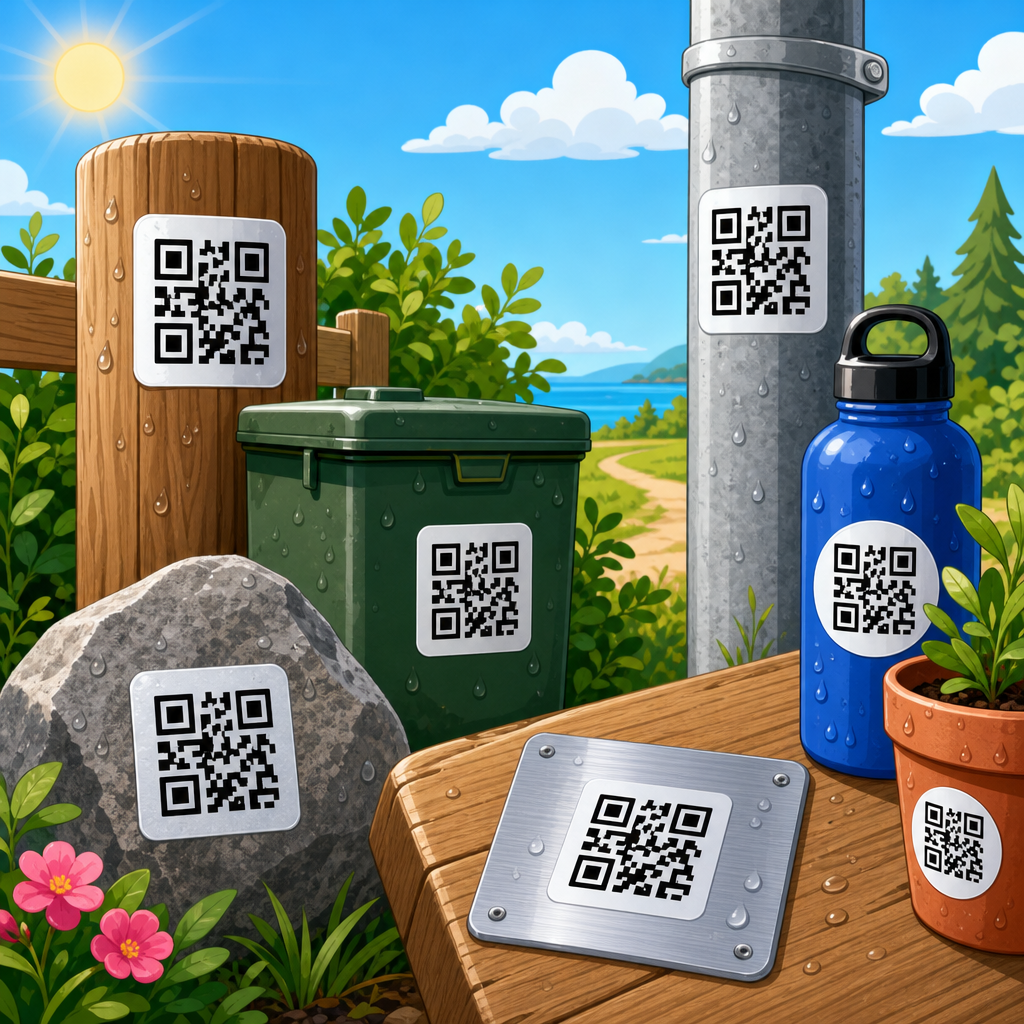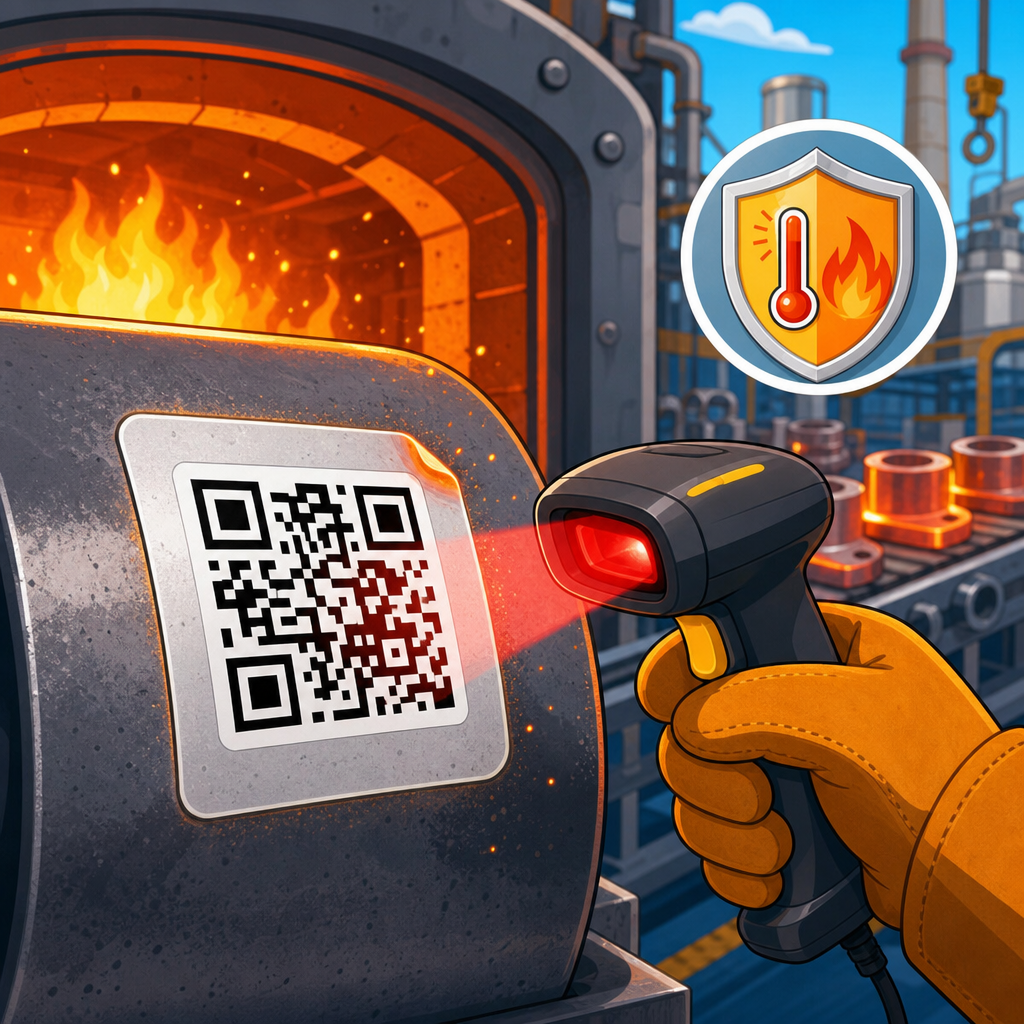
Heat-resistant QR code labels are engineered identification markers that remain scannable after exposure to elevated temperatures, thermal cycling, chemicals, abrasion, and outdoor weathering. In manufacturing, automotive, electronics, aerospace, energy, healthcare, and logistics, that durability is not a convenience feature; it is the difference between traceability that survives production and data loss that breaks compliance, service history, and inventory control. I have specified durable label systems for assets that move from washdown to curing ovens, and the lesson is consistent: a QR code works only when the entire construction—face stock, adhesive, print method, topcoat, contrast, and placement—matches the environment.
A heat-resistant QR code label typically combines a temperature-stable substrate such as polyester, polyimide, anodized aluminum, stainless steel, or ceramic-like coatings with an adhesive or mechanical attachment method rated for sustained or intermittent heat. The code itself must keep strong optical contrast, quiet zones, and module definition so cameras and handheld scanners can decode it quickly. “Heat resistant” is also not a single threshold. Some labels are designed for brief exposure to 150°C during powder coating, others for continuous service above 300°C on engine components, and specialized direct-part marks can survive even harsher conditions.
This topic matters because QR codes increasingly carry more than a serial number. They can link a technician to service manuals, certificates, maintenance logs, digital twins, lot genealogy, and warranty records. When labels fail, the cost extends beyond replacement. Teams lose production time, struggle with recalls, miss calibration windows, and create audit gaps. As a hub for durable QR code solutions, this article explains the main materials, printing methods, environmental limits, design rules, testing standards, and selection criteria you need before choosing a label for high-heat use.
What makes a QR code label truly heat resistant
A durable QR code solution is defined by system performance, not by one material claim on a datasheet. The first factor is the substrate. Polyester labels are common for moderate heat, often used on appliances, electronics housings, and warehouse assets where temperatures may intermittently reach 120°C to 150°C. Polyimide labels are the standard choice for printed circuit boards because they tolerate lead-free solder reflow profiles that can exceed 250°C for short durations. Metal tags, including anodized aluminum and stainless steel, are used when temperatures, solvents, UV exposure, and abrasion are all severe at once.
The second factor is how the information is created. Thermal transfer printing with a resin ribbon is widely used because resin bonds better to synthetic label stocks than wax or wax-resin formulations. For very demanding environments, laser marking, etched metal, or embedded anodic prints outperform conventional surface printing because the information is physically integrated into the tag. I have seen labels that looked fine after installation fail weeks later because the print layer softened, smeared, or oxidized before the face material itself showed damage.
Adhesive selection is equally important. Acrylic adhesives handle many industrial conditions and age well, but not all acrylics tolerate the same peak temperatures or dwell times. Silicone adhesives are often selected for extreme heat or difficult low-surface-energy substrates, though they can cost more and require tighter application control. Surface preparation matters more than buyers expect. Oil, release agents, oxidation, and rough cast textures can reduce bond strength enough that a technically “heat-rated” label lifts at the edges and loses scan reliability.
The final requirement is scan robustness. A QR code survives heat only if the finder patterns, timing patterns, and data modules remain distinct. High contrast between dark modules and the background is nonnegotiable. Curved surfaces, reflective metals, and soot buildup can lower read rates even when the code is still visible to the eye. That is why durable label design must account for the scanner, lighting, stand-off distance, and maintenance realities of the actual worksite.
Materials used for durable QR code solutions
Choosing among heat-resistant label materials starts with the temperature profile and the surrounding hazards. Polyester is usually the value-oriented option for moderate industrial heat, general chemicals, and abrasion. It is widely available in white, silver, and clear constructions and works well with resin thermal transfer printing. Polyimide, often recognized under common high-temperature circuit labeling categories, is built for electronics manufacturing, masking, and applications where labels must remain stable during soldering, wave processes, or curing operations.
Anodized aluminum tags offer a different level of permanence. In metalphoto-style constructions, the image is sealed beneath an anodic layer, which protects the code from abrasion, UV, many chemicals, and weather. These tags are strong candidates for outdoor equipment, military and aerospace assets, solar installations, and long-life industrial property identification. Stainless steel tags go further where mechanical abuse, corrosive washdown, or sustained heat would damage films or softer metals. They are common on engines, exhaust-adjacent components, refineries, and heavy equipment.
Specialty ceramic and glass-filled solutions appear in the harshest conditions, but they are usually more expensive and application-specific. For many buyers, the practical decision is between high-temperature polymer labels and metal tags. Polymer labels conform better to slight curvature and are faster to print and apply. Metal tags provide superior dimensional stability and longer life but often require rivets, screws, weld studs, or high-performance adhesives, which adds installation time.
| Material | Typical heat capability | Best uses | Main limitation |
|---|---|---|---|
| Polyester | Moderate intermittent heat | Appliances, electronics housings, asset tags | Not ideal for extreme peaks |
| Polyimide | Short high-temperature spikes | PCB tracking, reflow, curing lines | Less suitable for rough outdoor assets |
| Anodized aluminum | High heat plus UV and abrasion resistance | Outdoor equipment, aerospace, utilities | Higher unit cost than film labels |
| Stainless steel | Very high heat and harsh chemical exposure | Engines, energy, heavy industry | Rigid and slower to install |
When comparing options, do not focus only on maximum temperature. A label rated for 300°C for one hour is not equivalent to a tag that can live for years at 250°C. Exposure duration, cycling frequency, ramp rate, and contact with oils or cleaners will determine field life. Buyers should request both peak and continuous temperature ratings, along with adhesion performance on the exact substrate they intend to label.
Printing and marking methods that preserve scan quality
The most common print method for heat-resistant QR code labels is thermal transfer with resin ribbon. In practice, this works very well when the printer is calibrated for darkness, speed, and pressure and when the ribbon chemistry matches the face stock coating. Cheap ribbons are a common failure point. They can produce acceptable-looking codes at the bench and then fade or scratch off after handling. For durable QR code solutions, a premium resin ribbon paired with a matched synthetic stock is the baseline, not an upgrade.
Laser marking is often preferred for polyimide labels used in electronics because it creates crisp module edges and can tolerate process heat better than many surface-applied inks. On metal, several permanent methods are available: laser etching, laser annealing, chemical etching, dot peen, and photo-anodized imaging. Each has tradeoffs. Etching and photo-anodized methods provide strong permanence and good contrast, while laser annealing on stainless can preserve corrosion resistance because it changes the surface oxide rather than removing material. Dot peen works for direct-part identification but can be harder for lower-resolution scanners to read if the mark is too shallow or the surface is uneven.
Print resolution matters more than many teams realize. QR codes are fault tolerant, but error correction should not be used as a substitute for good marking. If modules are too small, edges blur after heat exposure or contamination, and the code becomes slow to decode. In field deployments, I prefer to oversize the symbol when space permits, protect a generous quiet zone, and test with the actual mobile devices or fixed readers used by operators. A code that scans with one premium verifier may still frustrate users on older phones or forklift-mounted scanners.
Lamination and topcoats can improve chemical and abrasion resistance, but they must be chosen carefully. Some clear films yellow, shrink, or create glare under high heat. In hot production cells, matte protective layers often scan better than glossy finishes because they reduce reflections. The right marking method is the one that keeps contrast stable after the full abuse profile, not simply the one that looks sharp on day one.
Design rules for heat-resistant QR code labels
A high-temperature label still follows the same fundamentals as any good machine-readable symbol. The QR code needs sufficient size, contrast, and clear space around the symbol. For industrial use, larger modules usually outperform dense data packing. That means encoding only the necessary payload on the label and linking to a database record instead of trying to store every attribute inside the symbol. Short URLs, serialized IDs, and controlled formatting improve resilience and make future updates easier.
Error correction levels should be selected intentionally. Higher error correction can help when dirt or scratching obscures part of the code, but it also increases symbol density. In extreme environments, I generally favor a balanced approach: keep the data payload small, use a medium or higher error correction level when justified, and enlarge the printed area so each module remains distinct after wear. This is especially important on curved pipes, textured castings, and brushed metal surfaces where visual distortion is common.
Placement is a design decision, not an afterthought. Avoid mounting labels near the hottest edge of a panel, directly beside exhaust pathways, or where operators grip, drag, or strike the asset. On outdoor equipment, place the code where rain runoff, mud accumulation, and UV intensity are lower when possible. On production tooling, ensure the code remains visible after fixtures, shields, or cable bundles are added. Many “label failures” are really placement failures that no material upgrade can fully solve.
Human readability should remain part of the design. Even when a QR code is the primary data carrier, a printed serial number, asset ID, or short text descriptor provides a fallback during damage or poor lighting. In regulated settings, pairing the QR code with linear barcodes or permanent alphanumeric text can support manual entry, service continuity, and audit verification.
Where these labels are used in the real world
Electronics manufacturing is one of the clearest examples. Polyimide QR code labels track boards, trays, and subassemblies through solder reflow, cleaning, testing, and final assembly. Without those labels, genealogy records can break, making defect isolation and recall management far harder. In automotive plants, heat-resistant labels identify under-hood parts, painted components, and work-in-process carriers exposed to curing ovens and wash chemicals. The labels must survive not only heat but also oils, coolants, brake fluid, and repeated handling.
Aerospace operators often use anodized aluminum or stainless tags for long-life asset identification on cabins, structures, and support equipment. The priority is decades of legibility across UV, vibration, cleaners, and maintenance cycles. Energy and utilities companies use durable QR code solutions on solar assets, transformers, meters, and field service equipment where weather, heat, and asset life are measured in years, not months. In hospitals and laboratories, autoclave-resistant and disinfectant-resistant labels are used on instruments, trays, and reusable containers that face heat, steam, and aggressive cleaning protocols.
Food processing and cold-chain logistics present a different pattern. Temperatures may not always be extreme, but repeated washdown, steam, and sanitizer exposure rapidly destroy ordinary paper labels. Durable synthetics or metal tags preserve traceability through cleaning cycles and support preventive maintenance workflows. Across these industries, the business case is simple: reliable labeling protects chain of custody, speeds servicing, reduces relabeling labor, and supports compliance documentation when auditors or customers ask for proof.
Testing, standards, and how to choose the right supplier
The best way to buy a heat-resistant QR code label is to validate it against the actual environment, not a generic marketing claim. Ask suppliers for documented performance on temperature range, dwell time, thermal cycling, adhesion to your substrate, chemical resistance, abrasion resistance, and outdoor weathering. In electronics, review process compatibility with reflow profiles and cleaning chemistries. For long-life industrial tags, ask about salt spray, UV exposure, and readability after abrasion. Verification should include both label survival and scan performance.
Use recognized quality checks. Barcode verification standards such as ISO/IEC 15415 for two-dimensional print quality and ISO/IEC 18004 for QR code specifications provide a more objective basis than “it scanned on my phone.” For harsh environments, conduct pilot tests on real parts with the intended printer, ribbon, scanner, and cleaning routine. I strongly recommend testing after installation and after environmental exposure, because adhesive failures and glare problems often appear only in final use conditions.
Supplier selection should go beyond price per label. Look for a converter or tag manufacturer that can discuss adhesive families, substrate prep, symbol grading, and installation methods in detail. Good suppliers will ask about service temperature versus peak temperature, indoor versus outdoor exposure, application surface energy, and whether the code must survive chemicals, pressure washing, or direct flame proximity. They should also offer samples for qualification and advise when a label is the wrong answer and a metal tag or direct-part mark is better.
Heat-resistant QR code labels succeed when the label is treated as an engineered component, not office stationery with a barcode printed on it. The durable QR code solution you need depends on the exact combination of heat, chemicals, abrasion, UV exposure, surface type, and service life. Polyester, polyimide, anodized aluminum, and stainless steel each have a clear role, but the winning choice also depends on print method, adhesive chemistry, code design, and placement. That is why this subtopic deserves a hub approach: every downstream decision, from ribbon selection to verification testing, affects scan reliability in the field.
The practical takeaway is straightforward. Start with the environment, define continuous and peak temperatures, identify the substrate, then choose a material and marking method that can maintain contrast and adhesion for the full lifecycle. Test with your actual scanners, users, and cleaning routines. If the application is harsh, enlarge the code, simplify the payload, and favor permanent marking methods over cosmetic-looking prints. Teams that follow those steps reduce relabeling, protect traceability, and get more value from every QR-enabled workflow.
If you are building a QR Code Design, Printing & Materials program, use this page as your starting point for durable QR code solutions, then map each application to a specific article on substrates, adhesives, printing methods, and verification. A short qualification project now is far cheaper than replacing failed labels after launch. Choose the environment first, qualify the label system second, and your QR codes will keep working long after standard labels have failed.
Frequently Asked Questions
What are heat-resistant QR code labels, and how are they different from standard QR labels?
Heat-resistant QR code labels are durable identification labels specifically engineered to keep their printed or marked QR codes readable after exposure to elevated temperatures and harsh operating conditions. Unlike standard paper or basic plastic labels, these labels are made with specialized face materials, high-performance adhesives, and print technologies designed to resist heat, thermal cycling, chemicals, abrasion, moisture, UV exposure, and outdoor weathering. Their purpose is not simply to stay attached to a surface, but to preserve accurate, scannable data throughout manufacturing, processing, storage, installation, and service life.
That distinction matters in industries where traceability cannot fail. In manufacturing, automotive, electronics, aerospace, energy, healthcare, and logistics, a label often carries critical information such as serial numbers, batch data, maintenance records, compliance details, asset IDs, or links to digital documentation. If a standard label curls, chars, smears, delaminates, or loses contrast after exposure to heat, the QR code may no longer scan. Once that happens, the organization can lose access to product history, quality documentation, chain-of-custody records, or maintenance data. Heat-resistant QR code labels are designed to prevent that breakdown by maintaining both physical integrity and scan reliability under demanding conditions.
In practical terms, the difference usually comes down to materials science and application fit. Heat-resistant labels may use polyester, polyimide, metalized constructions, aluminum foil, stainless steel nameplates, or other engineered substrates, depending on the temperature range and environment. They are often paired with thermal transfer resin ribbons, laser marking, or other durable marking methods that will not fade or blur under heat. Standard labels may work well in offices or light-duty warehousing, but they are not intended for production lines, engine compartments, sterilization cycles, soldering processes, or prolonged outdoor exposure. Heat-resistant QR code labels are built for those exact realities.
How much heat can a heat-resistant QR code label withstand?
The temperature tolerance of a heat-resistant QR code label depends on its material, adhesive system, print method, exposure duration, and the surface it is applied to. There is no single universal temperature rating. Some durable labels are designed for moderate high-heat environments, while others are built for extreme temperatures encountered in electronics assembly, powder coating, metal processing, sterilization, or engine-related applications. What matters most is matching the label specification to the real thermal conditions the part or package will experience.
For example, some polyester-based labels may be suitable for applications involving elevated temperatures and periodic heat exposure, while polyimide labels are often selected for much more demanding processes such as printed circuit board manufacturing, wave soldering, or reflow environments. Metal nameplates and etched or laser-marked tags may be used where temperatures, abrasion, and chemical exposure exceed the limits of film labels. In addition to peak temperature, buyers should evaluate dwell time, repeated thermal cycling, ramp-up and cooldown rates, and whether the label must survive heat while remaining immediately scannable or only after the process is complete.
It is also important to understand that heat performance is not just about the face stock. The adhesive must remain bonded to the surface at the target temperature, and the printed QR image must retain enough contrast and edge definition for scanners to read it reliably. A label might survive physically but still fail functionally if the code darkens, fades, or distorts. That is why testing against actual use conditions is essential. The most reliable approach is to review the full environmental profile of the application, including temperature peaks, exposure duration, chemicals, friction, outdoor weathering, and substrate type, then choose a label construction validated for those exact conditions.
Where are heat-resistant QR code labels commonly used?
Heat-resistant QR code labels are used anywhere products, components, equipment, or packaging must remain identifiable after exposure to heat and other stressors. In manufacturing, they are commonly applied to work-in-process items, finished goods, racks, tools, returnable containers, and equipment that move through ovens, curing lines, wash stations, or abrasive handling environments. In automotive settings, they may be used on under-hood components, replacement parts, assemblies, and service-tracked assets that experience heat, oils, vibration, and long-term wear.
In electronics, these labels are especially important because components and boards often pass through high-temperature assembly steps such as solder reflow or wave soldering. A standard label would quickly fail in those environments, but a properly specified heat-resistant QR label can preserve serial tracking, lot traceability, inspection records, and quality control data from production through field service. Aerospace and defense applications use durable QR labels and nameplates for parts identification, maintenance traceability, asset control, and compliance documentation, where readability and permanence are often mission-critical rather than merely operationally helpful.
The same logic applies in energy, healthcare, and logistics. Energy and utility organizations use durable labels on equipment, meters, tools, and infrastructure exposed to weather, heat, UV, and chemical contact. Healthcare environments may require labels that withstand sterilization, cleaning agents, handling, and repeated sanitation cycles while still supporting asset management or instrument identification. In logistics and supply chain operations, heat-resistant QR code labels can be valuable on reusable transport items, industrial packaging, and inventory systems that move through mixed environmental conditions. Across all of these sectors, the common requirement is simple: the code must still scan when traceability matters most.
What features should you look for when choosing heat-resistant QR code labels?
The best heat-resistant QR code label is the one engineered for the specific environment, substrate, and service life of the application. Start with the temperature profile: maximum heat exposure, average operating temperature, duration of exposure, and whether the label must survive repeated thermal cycling. Then evaluate the full environmental picture, including chemical exposure, abrasion, moisture, UV light, outdoor weathering, cleaning procedures, pressure washing, and contact with oils or solvents. A label chosen only for heat resistance may still fail if it is not also built for the other real-world conditions it will face.
Material and adhesive selection are critical. Different face stocks perform differently on metal, plastic, painted surfaces, rough textures, curved components, and low-surface-energy materials. The adhesive has to bond reliably through both installation conditions and long-term use, which may include heat, vibration, and contamination. Print durability is equally important. The QR code should be produced with a method known to resist smearing, fading, and degradation, such as a compatible thermal transfer resin system, laser marking, or another industrial-grade identification method. High contrast, proper quiet zones, code size, and error correction all contribute to long-term scan performance.
You should also consider the data and workflow requirements behind the label. Will the QR code link to a static product page, dynamic service history, serialized part record, maintenance log, or regulatory file? Does the application require sequential numbering, variable data, tamper evidence, UL recognition, CSA compliance, or resistance to specific chemicals? In many industrial settings, the most successful label programs begin with field testing rather than assumptions. Running sample labels through actual production conditions and then verifying adhesion, readability, and durability is the fastest way to confirm whether a label will perform reliably over time.
Why is scan reliability so important for heat-resistant QR code labels?
Scan reliability is the entire reason these labels exist. A label can look intact to the human eye and still fail its real job if the QR code no longer scans consistently. In industrial and regulated environments, that failure has consequences. A non-readable code can interrupt production, break chain-of-custody records, slow maintenance, complicate recalls, undermine warranty validation, and create compliance gaps. In sectors where every part, instrument, or asset needs a documented history, losing access to encoded information is more than an inconvenience; it can disrupt quality systems, service workflows, inventory accuracy, and audit readiness.
Reliable scanning depends on more than using a QR format. The code must maintain sharp definition, strong contrast, proper sizing, and enough surface stability to remain readable by the scanners used in the field. Heat, chemicals, abrasion, and weather can all reduce readability by distorting the printed pattern, dulling the surface, discoloring the background, or causing partial delamination. That is why well-designed heat-resistant QR code labels focus on total performance rather than just basic survival. They are engineered so the symbol remains machine-readable after the environmental stress has occurred, not just before it.
From an operational perspective, strong scan reliability improves speed, accuracy, and confidence across the entire lifecycle of a product or asset. Production teams can move units through workflows without manual intervention. Technicians can instantly access service records and specifications. Inventory teams can reconcile items accurately. Compliance personnel can retrieve traceability data during audits or investigations. In short, a durable heat-resistant QR code label protects the continuity of information. When the code still scans after heat exposure and harsh handling, the organization preserves the data link that keeps traceability, compliance, and day-to-day operations intact.