QR code security for payments and transactions has moved from a niche concern to a frontline business requirement as consumers scan codes to pay bills, authorize purchases, redeem tickets, and transfer money in stores, taxis, restaurants, parking meters, and peer to peer apps. A QR code, or Quick Response code, is a two dimensional barcode that stores data such as a payment address, merchant identifier, URL, or tokenized transaction request that a smartphone camera or scanner can interpret instantly. In payment workflows, secure QR code practices are the policies, technical controls, and user habits that reduce fraud, tampering, interception, misdirection, and unauthorized data collection. This matters because QR payments remove friction, but they also remove many of the visual trust cues people rely on when typing a known web address, inserting a chip card, or using contactless near field communication. I have helped teams review QR payment journeys in retail and hospitality, and the same pattern appears repeatedly: adoption is easy, but secure implementation is not automatic. Businesses must protect the printed code, the destination it resolves to, the app that reads it, and the back end that processes the transaction.
The growth of QR based transactions is easy to explain. They are cheap to deploy, work across most smartphones, and support both merchant presented and customer presented payment models. In a merchant presented flow, the seller displays a code and the buyer scans it to initiate payment. In a customer presented flow, the buyer shows a code generated by a wallet app and the seller scans it. Both models can be safe, but each creates different attack surfaces. Static codes can be copied or overlaid. Dynamic codes can reduce reuse, yet they depend on secure APIs, token lifetimes, and app integrity. Regulatory expectations also shape the risk landscape. The Payment Card Industry Data Security Standard, strong customer authentication rules in some regions, and bank level fraud monitoring all influence how secure QR payment systems should be designed. For organizations building or reviewing a QR payment program, this hub explains the major threats, the technical safeguards that matter most, the operational controls that prevent common failures, and the habits customers and staff should adopt every day.
How QR payment systems work and where risk enters
A QR payment is only as secure as the full chain behind it. The code itself is not magical security; it is simply a carrier for data. That data may contain a payment URI, a merchant account alias, a transaction amount, a session identifier, or a link to a hosted checkout page. When a user scans the code, the phone launches a payment app or browser, fetches transaction details, and asks for confirmation. Risk enters at every stage. A criminal can replace a printed code with another that redirects funds. A malicious website can imitate a legitimate checkout page. A compromised app can intercept session tokens. An insecure back end can accept altered amounts or fail to bind the code to the intended merchant. Understanding these layers is the starting point for secure QR code practices.
Static and dynamic codes deserve separate treatment because they behave differently. A static QR code usually points to a fixed account or URL and can stay on display for months. This makes deployment simple, especially for small merchants, but it also makes the code easy to copy, photograph, or replace. Dynamic QR codes are generated for a specific transaction, often embedding the amount, timestamp, merchant terminal ID, and a short lived token. In my experience, dynamic codes sharply reduce redirection fraud because each code can be validated server side and expire quickly. However, they demand stronger infrastructure, reliable connectivity, and tighter integration between point of sale systems, payment gateways, and fraud tools. Security improves when businesses choose the model that matches their risk profile rather than defaulting to the cheapest setup.
Common QR code payment threats businesses must address
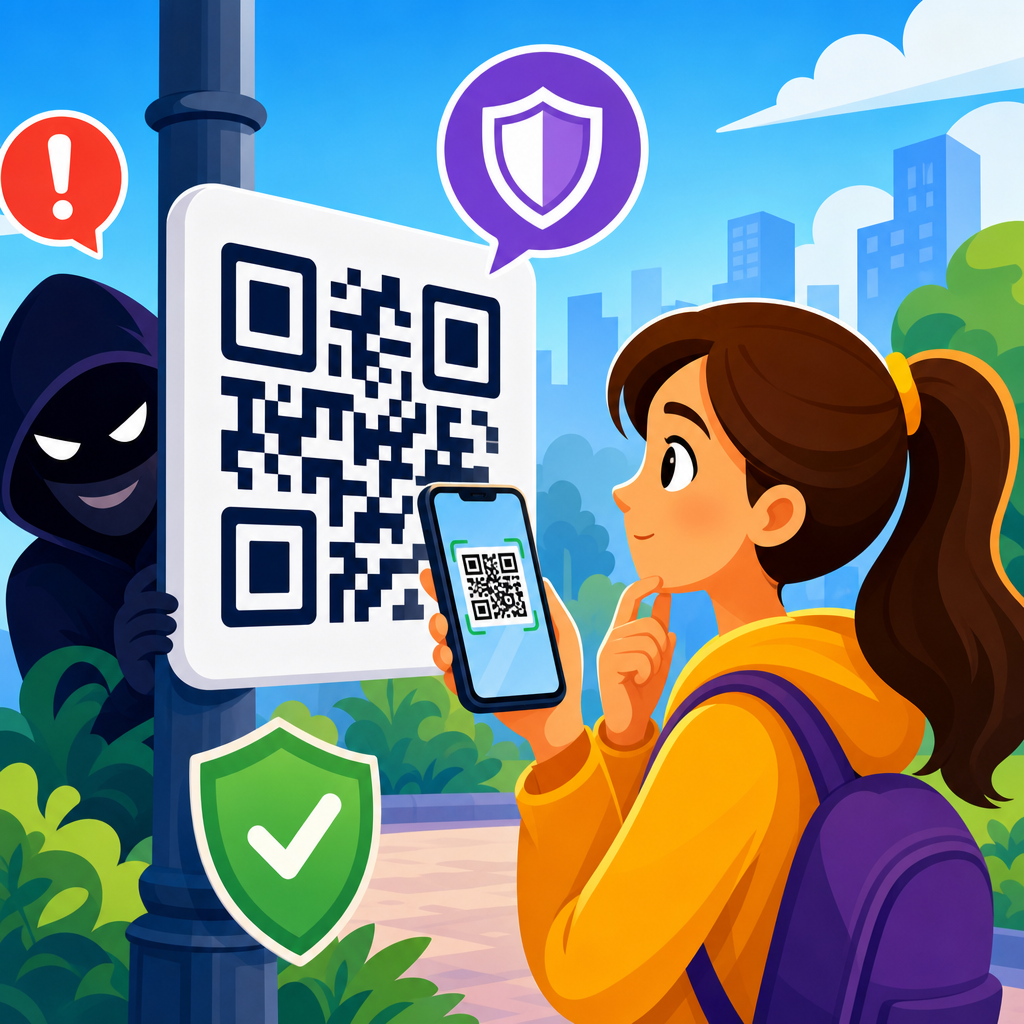
The most common attack is code substitution. A fraudster places a sticker over a real merchant QR code so payments go to a different wallet or checkout page. This tactic has been documented in parking kiosks, restaurant tables, and donation points because the attack is low cost and highly scalable. Phishing is the second major threat. Instead of changing where funds go directly, the attacker uses a QR code to send the victim to a convincing fake login, wallet recovery page, or card payment form. Once the user enters credentials or one time passwords, the criminal can take over the account or initiate separate fraud. Malware distribution also appears in QR campaigns when the destination prompts users to install a fake payment app or update package.
There are also less obvious risks. Parameter tampering can occur when the amount or reference value in a QR transaction is not properly signed or validated server side. Man in the middle attacks are rarer in modern mobile ecosystems but still relevant on hostile Wi Fi if a payment page lacks transport security or certificate validation is weak. Data leakage is another issue. Some QR systems expose customer identifiers, order details, or tracking parameters in plain text. Even if the transaction succeeds, unnecessary data embedded in the code can create privacy and compliance problems. Finally, insider misuse should not be ignored. Staff with access to print materials, merchant profiles, or POS settings can redirect codes, alter destinations, or disable validation checks unless roles, approvals, and logs are tightly controlled.
Core secure QR code practices for payments and transactions
Secure QR code practices begin with minimizing trust in the visible code and maximizing verification behind it. Use dynamic QR codes for higher risk environments because they support short expiration windows, unique transaction binding, and server side validation. Sign payment payloads or tokenize them so any change to merchant ID, amount, or destination is rejected. Force all web based payment destinations to use HTTPS with HSTS, valid certificates, and certificate pinning where appropriate in mobile apps. If the code launches a native wallet, deep links should be tightly allowlisted and tested against intent hijacking on Android and universal link abuse on iOS. The code should carry only the minimum data needed to initiate the transaction, never long lived secrets or sensitive personal information.
Operational controls matter just as much as cryptography. Printed payment codes should be tamper evident and inspected regularly, especially in public or unattended locations. Train staff to compare displayed merchant names, terminal IDs, or checkout references against what the POS expects. Require customer confirmation screens that clearly show the payee, amount, and purpose before authorization. Good interfaces prevent hurried mistakes. On the back end, monitor for anomalies such as sudden changes in receiving accounts, mismatched geolocation patterns, repeated payment failures, or unusual scan to conversion ratios. Those signals often reveal fraud before customer complaints arrive. Logging should be comprehensive enough to reconstruct who created a code, when it was displayed, what payload it contained, and how the payment was completed.
| Practice | What it protects against | Best use case |
|---|---|---|
| Dynamic QR with expiration | Code reuse, screenshot replay, amount changes | Retail checkout, invoices, event payments |
| Signed or tokenized payload | Parameter tampering, merchant spoofing | Bank apps, wallet integrations, POS systems |
| Tamper evident print materials | Sticker overlays, physical substitution | Restaurants, kiosks, parking meters |
| Customer confirmation screen | Misdirected payments, rushed approval | All consumer payment journeys |
| Fraud monitoring and alerting | Account takeover, mule accounts, insider changes | Merchants, PSPs, banks, marketplaces |
Designing a secure merchant workflow from print to settlement
A secure merchant workflow starts long before the first customer scan. Merchant onboarding should verify legal identity, settlement account ownership, and device or terminal registration. Once a merchant is approved, QR code generation must happen through a controlled system, not ad hoc image downloads passed around by email or chat. I recommend versioning every code artifact and storing the exact payload, format standard, creation date, and approver. For printed displays, use managed templates that include merchant branding, a human readable payee name, and a support contact. This gives customers an independent way to detect substitution. For digital displays, lock down kiosk mode, disable unauthorized app installs, and monitor screen content remotely so changed codes are detected quickly.
Settlement controls are equally important. The payment processor or acquiring bank should validate that the receiving account belongs to the intended merchant and that updates require step up authentication plus dual approval. Refund workflows need guardrails too, because fraud often shifts from payment collection to refund abuse once outbound transfers are easier to manipulate. Reconciliation should compare POS sales, QR scan records, authorization responses, and settled funds daily. Gaps reveal integration failures, duplicate payments, or diversion. Where standards exist, follow them consistently. EMVCo specifications for QR payments, PCI DSS controls for systems touching account data, and secure software development practices from OWASP all provide concrete guidance. None of these frameworks eliminates risk alone, but together they create a defensible operating model.
Customer and employee habits that prevent avoidable fraud
Most QR payment fraud succeeds because people are rushed, distracted, or unfamiliar with what normal looks like. Customers should treat a QR payment like any other financial instruction: verify the merchant name, inspect the amount, and confirm the destination before approving. If the payment page asks for unnecessary information, such as a full banking password, government ID, or app installation unrelated to the purchase, stop immediately. Official wallet and banking apps are generally safer than paying through a browser after scanning a code on a poster. Customers should also keep mobile operating systems updated, enable biometric authentication, and avoid completing financial scans on untrusted public Wi Fi when a cellular connection is available.
Employees need practical routines, not just annual awareness slides. Frontline staff should know how authentic codes are issued, what tamper evident materials look like, and how to respond if a customer reports a different payee on screen. Managers should inspect public facing codes on a schedule and document the checks. Support teams should be trained to recognize social engineering, especially urgent requests to replace a code, change settlement details, or bypass approval because a terminal is down. In organizations I have worked with, the most effective training included side by side examples of legitimate and malicious payment screens, plus simple escalation paths. People act faster when they know exactly whom to contact and what evidence to preserve, including photos, timestamps, and transaction references.
Testing, monitoring, and incident response for QR payment security
Secure QR code practices are not complete until they are tested under realistic conditions. Start with threat modeling: identify assets, trust boundaries, entry points, and likely attackers for each payment journey. Then validate the design through code review, mobile app testing, API security testing, and physical inspections of deployment sites. Penetration tests should include QR specific scenarios such as overlay stickers, manipulated amount fields, deep link abuse, malicious redirects, and replay of captured dynamic codes. Synthetic monitoring can scan live merchant codes periodically to confirm they still resolve to approved destinations. This catches silent failures and unauthorized changes before many customers are affected.
When an incident occurs, speed and clarity matter more than perfect information. The response plan should define how to disable a compromised code, rotate merchant identifiers or tokens, notify payment partners, and warn customers through official channels. Preserve server logs, app telemetry, screenshots, and physical evidence because fraud investigations often depend on stitching together digital and onsite activity. After containment, perform root cause analysis. Was the issue weak change control, missing signature validation, poor merchant verification, or inadequate staff inspection? Turn the findings into permanent control improvements. The best programs treat QR payment security as a living discipline. Review metrics monthly, retire weak implementations, and strengthen secure defaults so safe behavior becomes the easiest behavior. Audit your current QR payment journey, close the obvious gaps, and make every scan verifiable before the next transaction occurs.
Frequently Asked Questions
1. Why is QR code security so important for payments and transactions?
QR code security matters because a single scan can trigger a financial action, open a payment page, prefill account details, or authorize a transfer within seconds. That speed is convenient for customers, but it also creates an opportunity for fraud if the code has been tampered with, replaced, or generated by a malicious actor. In payment environments such as retail counters, restaurants, parking kiosks, taxis, event venues, and peer to peer transfers, users often assume that a visible QR code is legitimate. Attackers take advantage of that trust by placing fake stickers over real codes, redirecting scans to lookalike payment sites, or embedding fraudulent merchant credentials.
For businesses, the risk is not just a failed transaction. QR code abuse can lead to direct financial losses, chargebacks, customer disputes, reputational damage, and compliance concerns. If a customer scans a code believed to belong to a merchant but the funds are routed elsewhere, the customer may still hold the business responsible. Security therefore becomes a frontline requirement, not a technical afterthought. A secure QR payment experience protects revenue, reduces fraud exposure, and reinforces customer confidence that scanning a code is as safe as tapping a card or using a trusted payment app.
2. What are the most common QR code payment scams and threats?
The most common threat is QR code replacement, sometimes called “quishing” in broader QR phishing discussions. In a physical setting, a fraudster may place a counterfeit code over the original code on a table stand, meter, bill, poster, or checkout display. When scanned, the fake code can send the user to a fraudulent payment page or populate a payment destination controlled by the attacker. In digital settings, scammers may distribute QR codes through email, text messages, social media posts, or invoices that appear to come from a trusted sender. Because users scan rather than type, they may not closely inspect the destination before approving a transaction.
Another major risk is redirection to malicious websites designed to steal login credentials, card data, or one time authentication codes. Some attacks do not immediately ask for payment at all; instead, they impersonate a wallet, bank, or merchant and prompt the user to sign in, verify an account, or “resolve a failed payment.” There is also the danger of payment misdirection, where the code technically performs a valid payment flow but sends money to the wrong recipient. In more advanced cases, static QR codes can be copied and reused in unintended contexts, while poorly protected dynamic QR systems can be manipulated if the backend is not properly secured. The threat landscape spans both physical tampering and digital deception, which is why secure design, backend validation, and customer awareness all matter.
3. How can businesses make QR code payments more secure?
Businesses can improve QR code payment security by combining secure code generation, strong backend controls, and visible operational safeguards. One of the best practices is to use dynamic QR codes rather than static ones whenever possible. A dynamic code can reference a server side transaction session, token, or short lived payment request instead of embedding sensitive or permanent payment details directly in the code. That approach makes it easier to apply expiration rules, validate transaction amounts, bind requests to specific merchants or devices, and detect anomalies in real time.
Businesses should also use HTTPS everywhere, digitally controlled payment pages, and trusted payment providers that support tokenization, fraud monitoring, and transaction verification. Merchant identifiers, payment addresses, and transaction metadata should be validated server side before the payment is completed. Physical environments need controls too: inspect posted QR codes regularly, use tamper evident materials, place codes where employees can observe them, and replace damaged signage immediately. On the customer side, the payment confirmation screen should clearly display the merchant name, amount, and context so users can verify what they are about to approve. Logging, alerts, and fraud analytics are equally important because they help identify unusual scan volumes, mismatched geographies, repeated failed authorizations, or attempts to alter payment routing. In short, secure QR payments depend on both secure technology and disciplined operational execution.
4. Are static or dynamic QR codes safer for financial transactions?
In most payment scenarios, dynamic QR codes are safer than static QR codes. A static QR code usually contains fixed information such as a permanent payment address, merchant identifier, or URL. That simplicity can work for basic use cases, but it creates limitations. If a static code is copied, photographed, or reused outside its intended setting, the same destination remains valid unless other controls are in place. Static codes also make it harder to enforce transaction specific rules such as amount, expiration time, device binding, order reference, or one time use restrictions.
Dynamic QR codes are generally more secure because they can represent a unique, temporary transaction request generated by a backend system. The code can be tied to a specific amount, merchant session, location, or order, and it can expire after a short period. If suspicious behavior is detected, the transaction token can be invalidated without having to replace physical signage across all locations. Dynamic systems also support better audit trails, making it easier to investigate disputes or suspected fraud. That said, dynamic does not automatically mean secure. The backend infrastructure must still be well designed, access controlled, encrypted in transit, and monitored for abuse. A poorly implemented dynamic system can still expose users to redirects, session manipulation, or account compromise. But when implemented properly, dynamic QR codes offer a much stronger security foundation for payments and transactions.
5. What should consumers check before scanning a QR code to pay?
Consumers should first verify that the QR code appears to belong to the business or person they intend to pay. In physical spaces, look for signs of tampering such as stickers placed on top of another code, poor print quality, mismatched branding, or codes posted in unusual locations. If a payment code is on a parking meter, restaurant table, taxi seat, event sign, or bill folder, it should align with the surrounding business information. If anything seems off, ask staff or use the merchant’s official app or website instead.
After scanning, users should review the destination carefully before approving anything. Check the website domain, confirm that the payment page uses a secure connection, and make sure the merchant name, amount, and transaction purpose are accurate. Be cautious if the page asks for unrelated personal information, account passwords, one time passcodes, or full card details when a wallet or normal payment flow should be enough. It is also wise to avoid completing QR payments through public pressure or urgency, which scammers often rely on. Whenever possible, use trusted banking or payment apps that show the recipient identity clearly and provide transaction notifications. A few seconds of verification can prevent money from being sent to the wrong party and significantly reduce the chance of fraud.