QR codes are convenient, cheap to deploy, and easy to scale, which is exactly why they have become a meaningful security surface that organizations can no longer treat as a marketing afterthought. Monitoring QR code activity for security means collecting and reviewing the signals around every scan, redirect, destination, campaign change, and user interaction so you can detect tampering, abuse, privacy risk, and operational failure before they spread. In practical terms, this discipline sits inside broader secure QR code practices: creating codes safely, controlling where they point, validating landing pages, limiting unauthorized edits, and auditing scan behavior over time. I have helped teams investigate malicious sticker overlays on public posters, broken redirect chains in retail campaigns, and mislabeled dynamic codes in healthcare waiting rooms, and the pattern is consistent: if you cannot see what your codes are doing in the field, you cannot protect users or your brand.
Why does this matter now? Because QR usage expanded from menus and event check-ins into payments, product authentication, logistics, customer support, and employee workflows. That growth changed the threat model. A static code printed on a package may look harmless, yet it can route users to a phishing page if the destination domain expires and is later repurchased, or if a dynamic redirect dashboard is compromised. A payment code can be replaced by a fraudulent sticker in seconds. An employee training poster can expose internal users to credential theft if no one monitors unusual scan spikes, odd geographies, or redirects to newly registered domains. Security monitoring turns a blind spot into an observable system. It gives you evidence for incident response, input for policy decisions, and early warning when a code starts behaving differently from its approved baseline.
Before discussing methods, define the core terms. A static QR code encodes the final destination directly and cannot be changed without reprinting. A dynamic QR code points to a short URL or redirect service that can change the final destination and usually logs scan analytics. Scan telemetry includes timestamp, approximate location, device type, operating system, referrer context when available, and destination status. Redirect integrity means every hop between scan and landing page remains approved, encrypted, and free of unexpected scripts or trackers. Secure QR code practices combine technical controls, governance, and user education. The hub-level objective is simple: every QR code should have an owner, a documented purpose, a verified destination, measurable activity, and a response plan if something goes wrong.
Effective monitoring starts with inventory, because you cannot secure unknown assets. In every mature program I have built, the first step was a QR code register that listed code ID, business owner, use case, publication date, artwork file, encoded URL, redirect platform, expected scan volume, and retirement date. This register becomes the internal linking point for every related process: generation standards, incident handling, vendor review, physical inspection schedules, and privacy notices. Without it, teams cannot answer basic questions such as which codes are dynamic, which ones support payments, which point to third-party domains, or which are posted in unsupervised public spaces. Once the inventory exists, monitoring can map real scan behavior against approved intent and expose anomalies quickly.
Build a complete QR code asset inventory
A complete inventory is the foundation of QR code security monitoring because it establishes the baseline against which all activity is judged. Start by assigning each code a unique identifier that appears in the artwork filename, campaign record, and redirect configuration. Record whether the code is static or dynamic, who approved it, where it is displayed, and whether it links to a first-party domain, payment endpoint, app store listing, or document download. Include the print vendor, publication format, and any expiration policy. In regulated environments, add data classification for the linked content and whether the scan flow collects personal information.
This sounds administrative, but it solves real security problems. When a university discovered students were scanning a malicious replacement sticker on a dormitory poster, the response was delayed because the communications office did not know which team owned the original code or where the approved landing page was hosted. By contrast, a retailer I worked with maintained a register tied to asset management and could confirm within minutes that a point-of-sale QR code in one region had been swapped. The inventory also supports retirement. Old campaign codes often continue to circulate on screenshots, packaging, or archived PDFs, and abandoned destinations become takeover risks if domains lapse or cloud content is deleted.
For most organizations, the inventory should live in a system that supports version history and access control, such as a CMDB, a governed spreadsheet in Microsoft 365 or Google Workspace, or a lightweight asset database in Airtable or Notion with locked permissions. The key is not the tool but the discipline: every new QR code enters the register before publication, and every code change is logged. That process creates the visibility required for meaningful monitoring, especially when multiple departments produce codes independently.
Monitor scan telemetry and define normal behavior
Once you know what codes exist, collect telemetry that answers the core security questions: who scanned, when, from where, with what device, and what happened next. Most enterprise QR platforms and URL shorteners provide at least timestamp, country, device family, and total scans. Better setups add UTM parameters, first-party web analytics, redirect logs, and server-side request records from the landing domain. For high-risk use cases like payments or employee access, pair scan events with web application firewall logs, DNS logs, and endpoint detection data to confirm whether the destination remained trusted throughout the session.
Monitoring works only when you define what normal looks like. A museum exhibit code may get steady local scans during open hours and almost none overnight. A packaging code for a national product may show broad geographic spread but low repeat scans per user. A help-desk poster in an office should rarely receive traffic from foreign IP ranges. Document these expectations during deployment, then create thresholds for review. Sudden spikes, scans from unexpected regions, unusual operating systems, abrupt drops in conversions, or heavy activity outside business hours all deserve investigation. Not every anomaly signals an attack, but every pattern shift should be explainable.
Use both aggregate dashboards and code-level views. Aggregate dashboards reveal broad trends, while per-code analysis catches localized tampering. I have seen single compromised posters disappear inside healthy campaign totals because teams looked only at monthly scan counts. The best practice is to review summary metrics weekly and investigate high-risk codes daily during active campaigns or whenever they enable payments, authentication, or sensitive forms.
Protect dynamic redirects and destination integrity
Dynamic QR codes are operationally useful because they allow destination changes without reprinting, but that flexibility makes them a prime control point. Secure QR code practices require strict governance over redirect platforms, including multifactor authentication, role-based access control, approval workflows, and audit logs. If a marketing intern, agency contractor, or compromised admin account can change a destination silently, the QR code effectively becomes an unmanaged traffic switch. I recommend limiting edit permissions to a small group, using single sign-on where possible, and exporting audit logs into a SIEM such as Splunk, Microsoft Sentinel, or Google Security Operations for alerting.
Destination integrity also includes the technical path from scan to page load. Enforce HTTPS on every hop. Avoid long redirect chains that introduce third parties you do not control. Monitor destination domains for certificate changes, DNS alterations, and content drift. Tools such as VirusTotal, Google Safe Browsing, urlscan.io, and SecurityTrails can help validate whether a destination or newly inserted redirect has become suspicious. For first-party sites, set up synthetic monitoring that scans the QR destination on a schedule and confirms expected page title, status code, TLS certificate, and key page elements. If any of those change unexpectedly, alert the owner.
Another frequent weakness is domain lifecycle management. Short campaign domains look neat in print, but they become security liabilities if renewal is missed. Attackers actively watch for expired domains tied to old marketing materials because users still trust the printed code. The fix is straightforward: centralize domain ownership, enable auto-renewal, use registrar locks, and include domain expiration dates in the QR inventory.
Inspect physical placements and train users to spot tampering
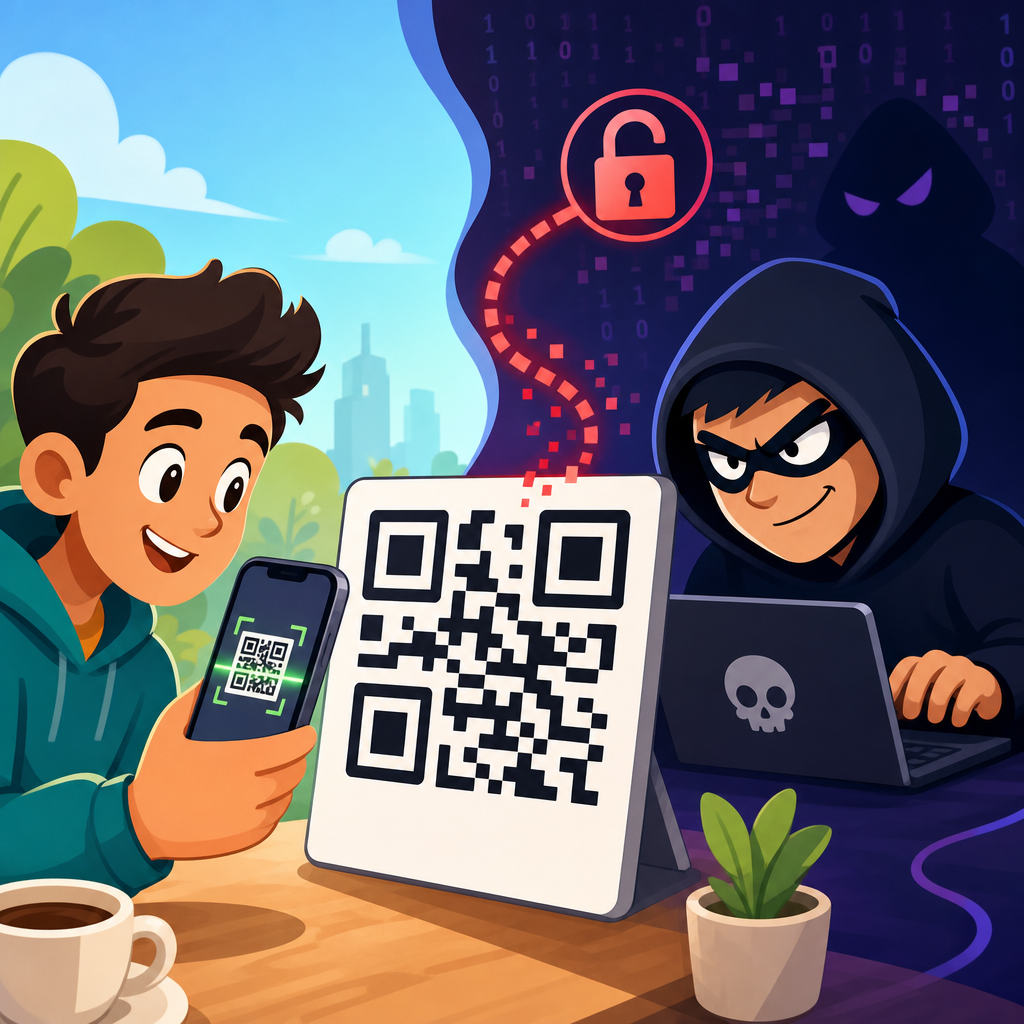
QR security is not only digital. Physical tampering remains one of the most common attack paths because replacing a sticker is easier than compromising a web server. Public posters, restaurant tables, parking meters, and payment stands are especially vulnerable. Monitoring therefore must include field inspection. For permanent placements, define an inspection cadence based on risk: weekly for payment points, monthly for indoor informational signage, and event-based checks for temporary installations before opening and after high-traffic periods. Inspectors should verify that the printed code matches the approved artwork, shows no overlay, and still leads to the correct branded domain.
User education matters because many incidents are first noticed by frontline staff or cautious customers. Teach employees to recognize suspicious signs: a code covered by a different sticker, a destination domain that does not match the brand, a browser warning, a shortened URL with no recognizable owner, or a landing page that immediately asks for credentials or payment. In customer-facing environments, simple signage helps. A payment placard can state the expected domain and tell users never to enter card details on any other site. These cues reduce success rates for tampering attacks and increase reporting quality.
| Monitoring area | What to check | Common risk | Recommended control |
|---|---|---|---|
| Inventory | Owner, destination, location, expiration | Unknown or abandoned codes | Central register with approval workflow |
| Telemetry | Scans by time, geography, device, outcome | Undetected abuse or anomalies | Dashboards, thresholds, SIEM alerts |
| Redirects | Edit history, HTTPS, domain reputation | Unauthorized destination changes | MFA, RBAC, audit logs, synthetic tests |
| Physical placement | Sticker overlays, damaged prints, signage | Tampering in public spaces | Inspection schedule and staff reporting |
| Privacy | Consent, retention, data minimization | Excessive collection or noncompliance | Documented policy and lawful basis review |
Use alerting, investigations, and privacy controls together
Security monitoring becomes effective when telemetry feeds clear alerts and those alerts trigger a repeatable investigation process. Start with practical rules: notify the owner if a dynamic destination changes, if scans originate from countries outside the approved audience, if scan volume exceeds historical baselines by a defined percentage, or if the landing page returns errors. For payment or account-related codes, add high-priority alerts for content changes, registrar modifications, certificate replacement, or sudden increases in mobile traffic from newly observed networks. Every alert should map to a runbook that explains how to validate the issue, suspend the redirect, inspect the physical placement, and communicate with affected users.
Investigations should preserve evidence. Save redirect logs, page screenshots, HTTP headers, certificate details, and copies of the printed asset. If physical tampering is involved, photograph the placement before removing the malicious sticker. These details matter when determining scope and root cause. In one transportation deployment, scan analytics showed a sharp increase from a single station over a weekend. Photos later confirmed a fraudulent sticker on a timetable board that redirected riders to a phishing survey promising discounted passes. Because logs were retained, the team could estimate exposure and coordinate takedown requests quickly.
Privacy cannot be separated from monitoring. Scan data may include IP addresses, coarse location, device identifiers, and referral context, all of which can trigger legal obligations under laws such as GDPR or CCPA depending on how the data is used. Collect only what you need for security and operations. Set retention periods, restrict access, update privacy notices, and avoid combining QR telemetry with unrelated personal profiles unless there is a clear lawful basis. Secure QR code practices are strongest when monitoring is precise enough to detect abuse without becoming excessive or opaque.
Monitoring QR code activity for security is not a single product purchase; it is an operating model built on inventory, telemetry, redirect governance, field inspection, and privacy-aware response. The organizations that do this well treat every QR code like a managed digital asset with a lifecycle, an owner, and measurable risk. They know where each code is deployed, what normal scanning looks like, who can change destinations, and how to react when a pattern shifts. That approach prevents small issues from becoming public incidents, especially in payments, customer support, healthcare, education, and workplace communications where users assume the code is trustworthy.
The main benefit is simple: visibility creates control. When you can see scan behavior, verify destinations, and audit changes, you can detect tampering early, reduce phishing exposure, protect user privacy, and keep campaigns functioning as intended. As the hub for secure QR code practices, this guidance should connect to your deeper work on dynamic versus static code risk, domain security, incident response, print inspection, and data governance. Start by building or cleaning your QR inventory this week, then add monitoring thresholds for your highest-risk codes. That first step turns QR codes from an unmanaged convenience into a defensible, measurable part of your security program.
Frequently Asked Questions
What does it actually mean to monitor QR code activity for security?
Monitoring QR code activity for security means treating every QR code as a live digital access point rather than a static image. A secure monitoring program tracks what happens before, during, and after a scan so teams can identify suspicious behavior early. That includes scan volume, scan timing, device and browser patterns, approximate location, redirect chains, final landing destinations, campaign edits, failed loads, and unusual changes in user behavior. The goal is not just to count engagement, but to understand whether a QR code is behaving as intended or whether it has become a path for phishing, malicious redirects, data leakage, or operational disruption.
In practice, this discipline sits at the intersection of security, analytics, infrastructure, and governance. For example, if a code that normally sends users to a product page suddenly redirects them through an unfamiliar domain, that is a security signal. If scans spike at unusual hours from unexpected geographies, that may indicate automated abuse or a cloned code circulating outside approved channels. If destination URLs are changed without a documented approval process, that creates both security and compliance risk. Effective monitoring turns those signals into actionable alerts so organizations can investigate quickly, contain issues, and maintain trust.
Why are QR codes now considered a meaningful security surface for organizations?
QR codes are now a meaningful security surface because they are easy to create, inexpensive to deploy, and widely trusted by users, which makes them attractive to both legitimate teams and attackers. Organizations place QR codes on packaging, posters, receipts, menus, kiosks, badges, email campaigns, and physical locations. Once deployed at scale, those codes become distributed entry points into websites, apps, forms, payment flows, and support systems. If they are not monitored, they can be tampered with, copied, redirected, or exploited without immediate visibility.
Attackers understand that many people scan codes without inspecting the destination first. That creates an opportunity for phishing, credential harvesting, malware delivery, fake payment collection, or traffic diversion. Even without an external attacker, internal misconfiguration can create risk. A destination page may be retired, a redirect may break, a campaign may be edited incorrectly, or sensitive parameters may be exposed in a way that violates privacy expectations. Because QR codes bridge physical and digital environments, failures can spread quickly and remain unnoticed longer than problems in more closely managed digital channels. Monitoring closes that gap by giving teams a way to detect misuse, validate destination integrity, and respond before a bad experience becomes a broader incident.
What kinds of signals should teams track to detect tampering, abuse, or operational problems?
Teams should monitor both security-focused and performance-focused signals, because the same data often reveals malicious activity and routine failure. Core signals include total scan count, scans over time, location trends, operating system and browser distribution, referral context when available, and differences between expected and actual audience behavior. On the technical side, organizations should track redirect chains, DNS or domain changes, HTTP status codes, page load failures, certificate errors, and whether the final destination matches the approved allowlist. These details help reveal broken links, unauthorized edits, suspicious infrastructure, and attempts to route users through unexpected domains.
It is also important to monitor change events around the QR code itself. That includes who created the code, who can edit its destination, when redirects were changed, whether campaign metadata was altered, and whether access permissions were updated. If a code is dynamic, audit logs are essential. They create accountability and help investigators determine whether a change was approved, accidental, or malicious. Teams should also watch for abnormal spikes in scans, repeated scans from the same pattern of devices, scans from regions where the code was never distributed, or sudden drops that may indicate a code has been covered, replaced, or rendered unusable.
Finally, user interaction signals can help separate harmless curiosity from meaningful risk. Bounce rate, time on page, form abandonment, conversion failure, and complaints to support may point to a misleading or compromised destination. When these signals are combined, they give security and operations teams a more complete picture of whether the QR code ecosystem is healthy, trustworthy, and functioning as intended.
How can organizations set up a practical QR code monitoring process without overcomplicating it?
A practical approach starts with inventory and ownership. First, create a centralized list of all production QR codes, where they appear, what each one is supposed to do, who owns it, and whether it is static or dynamic. Without that inventory, monitoring becomes fragmented and reactive. Next, define baseline expectations for each code or campaign: normal scan volume, expected geographies, approved destination domains, redirect behavior, and key business outcomes. Once baselines exist, it becomes much easier to spot anomalies that deserve attention.
From there, implement basic governance and technical controls. Use dynamic QR code management where possible so destinations can be updated centrally and logged properly. Restrict editing permissions to authorized users, require documented approvals for destination changes, and maintain an audit trail for every modification. Add monitoring through analytics dashboards, redirect logs, uptime checks, certificate monitoring, and alerting rules for unusual behavior such as destination mismatches, sudden traffic spikes, or failed landing pages. Even relatively simple alert thresholds can surface issues quickly if they are mapped to real-world expectations.
Organizations should also define a response workflow. Decide who reviews alerts, how suspicious codes are validated, when destinations should be disabled, and how affected teams are notified. For example, if a QR code on physical signage is suspected of tampering, the response may require both a digital fix and an on-site inspection. Periodic reviews are just as important as real-time alerts. Monthly or quarterly audits can identify outdated codes, unmanaged redirects, expired campaigns, privacy concerns, and access rights that should be tightened. The best monitoring programs are not the most complicated ones; they are the ones that are consistent, documented, and connected to incident response.
How does QR code monitoring support security, privacy, and customer trust at the same time?
QR code monitoring supports security by helping organizations detect abuse before it spreads, but its value goes beyond threat detection. It also improves privacy management and customer trust. When teams monitor where scans go, what data is collected, and how user journeys behave, they can identify privacy risks such as unnecessary tracking, exposed URL parameters, or redirects to third-party pages that do not meet policy standards. This is especially important when QR codes connect users to forms, payments, account pages, healthcare content, or any destination involving sensitive personal information.
From a trust perspective, users expect a QR code placed by a brand, employer, venue, or public institution to be legitimate. If that code leads to a broken page, a confusing redirect, or suspicious content, confidence drops immediately. Consistent monitoring helps ensure the experience is reliable and authentic. It reduces the chance that a legitimate code becomes a vehicle for phishing, and it allows teams to remove or fix problematic destinations before large numbers of people are affected. That reliability is not just a technical outcome; it is part of the organization’s reputation.
Strong monitoring also creates evidence. If a security review, compliance audit, or incident investigation occurs, teams can show how codes were governed, what activity was observed, when changes happened, and how alerts were handled. That level of visibility demonstrates maturity and makes it easier to prove that QR codes are being managed as a controlled digital channel rather than an unmanaged marketing asset. In short, monitoring protects users, strengthens operational resilience, and helps organizations preserve the confidence that makes QR codes useful in the first place.