QR code printing costs depend on far more than ink and paper. In practice, the final price is shaped by code size, scan distance, substrate, print method, finishing, durability needs, installation, and the level of testing required before launch. Businesses often assume a QR code is cheap because generating the image is easy, but printing a code that scans reliably in the real world is a production decision, not just a design task. I have seen campaigns fail because teams priced the print run only, then discovered they also needed weatherproof lamination, higher contrast, larger formats, and reprints after poor scan performance.
A printed QR code is a machine-readable matrix barcode that links a physical object to digital content. “Printing QR codes” includes everything from adding a small code to product packaging to producing large-format decals, posters, menus, mailers, labels, signage, event badges, and industrial asset tags. The cost question matters because a poorly printed code wastes media spend, while a well-produced one turns packaging, direct mail, retail displays, and field signage into measurable response channels. If your code cannot be scanned quickly under normal lighting and distance conditions, the lowest print price becomes the most expensive option.
This article serves as the hub for understanding QR code printing costs. It explains what you are paying for, typical cost drivers, common print methods, material choices, testing standards, and how to budget accurately. The goal is simple: help you estimate printing QR codes realistically and avoid hidden expenses that appear after design approval. By the end, you should know when a low-cost digital print is enough, when specialty materials are justified, and how to compare quotes based on scan reliability rather than unit price alone.
What Determines QR Code Printing Costs
The biggest drivers of QR code printing costs are format, quantity, material, color contrast, finishing, and environment. A code printed on a black-and-white office flyer may cost almost nothing beyond the base page. The same code produced as a UV-resistant outdoor decal with pressure-sensitive adhesive, anti-graffiti laminate, and installation can cost dramatically more per unit. Quantity changes economics too: digital printing usually wins for short runs and variable data, while offset, flexographic, or screen printing can become cheaper at scale once setup costs are spread across volume.
Size is not just a design choice; it is a cost and performance variable. The minimum practical printed size depends on scan distance, data density, camera quality, and surrounding conditions. A dense code with a logo in the center may need a larger physical footprint than a simple URL code. If the code must scan from two feet away on corrugated packaging, you can often print smaller than if it must scan from ten feet on a wall poster. In production, enlarging the code may force a larger label, a bigger package panel, or a more expensive sign format, which directly increases print cost.
Another major cost variable is whether the code is static or dynamic. The image may look similar, but dynamic QR programs often require variable data workflows, database control, campaign governance, and version tracking. On the print side, that matters most when every item carries a unique code, such as serialized labels, event badges, tickets, or direct mail pieces. Variable-data printing adds prepress complexity, proofing time, and quality control because one bad record can break an entire sequence. The print quote may still appear reasonable, but the production management cost rises.
Print Methods and Typical Use Cases
Digital printing is the default choice for many QR applications because it handles short runs, fast turnarounds, and variable data well. I use it most often for brochures, postcards, menus, temporary signage, packaging prototypes, and in-store materials. Toner and inkjet digital presses can produce sharp QR modules if the resolution is sufficient and the substrate is stable. The tradeoff is that unit cost stays relatively flat, so very large runs can become expensive compared with traditional methods. Color consistency can also vary by device, operator, and stock if press controls are loose.
Offset printing is common for high-volume packaging inserts, magazines, catalogs, and direct mail where unit economics improve with scale. Once plates and make-ready are paid for, offset can be highly cost-effective. It also delivers strong image quality on appropriate stocks. The caution with QR codes is dot gain, registration, and contrast on coated versus uncoated papers. If the code is too small, fine module edges can soften. Good prepress teams compensate for this, but that expertise is part of what you are buying in a professional print job.
Flexographic printing dominates labels, flexible packaging, and some corrugated applications. It is efficient for long runs, but QR performance depends heavily on plate quality, substrate behavior, and press calibration. Screen printing is often used for durable decals, industrial panels, and specialty signage because it lays down heavy ink films and performs well outdoors. Large-format inkjet is standard for posters, window clings, wall graphics, and trade show displays. Each method has a different setup cost, minimum order reality, and durability profile, so “what does it cost to print a QR code” cannot be separated from where and how it will be used.
| Print method | Best for | Main cost pattern | Common QR considerations |
|---|---|---|---|
| Digital | Short runs, variable data, fast updates | Low setup, higher unit cost at scale | Excellent for unique codes; watch toner spread and stock quality |
| Offset | High-volume paper printing | Higher setup, lower unit cost on long runs | Strong quality; prepress must manage dot gain and contrast |
| Flexographic | Labels and packaging | Efficient on long runs | Plate quality and substrate selection are critical |
| Screen | Durable decals and industrial signage | Moderate setup, durable output | Good outdoor life; thicker ink can help or hurt edge clarity |
| Large-format inkjet | Posters, wall graphics, retail signs | Material driven, moderate setup | Size supports distance scanning; finishing often adds cost |
Materials, Finishes, and Durability Costs
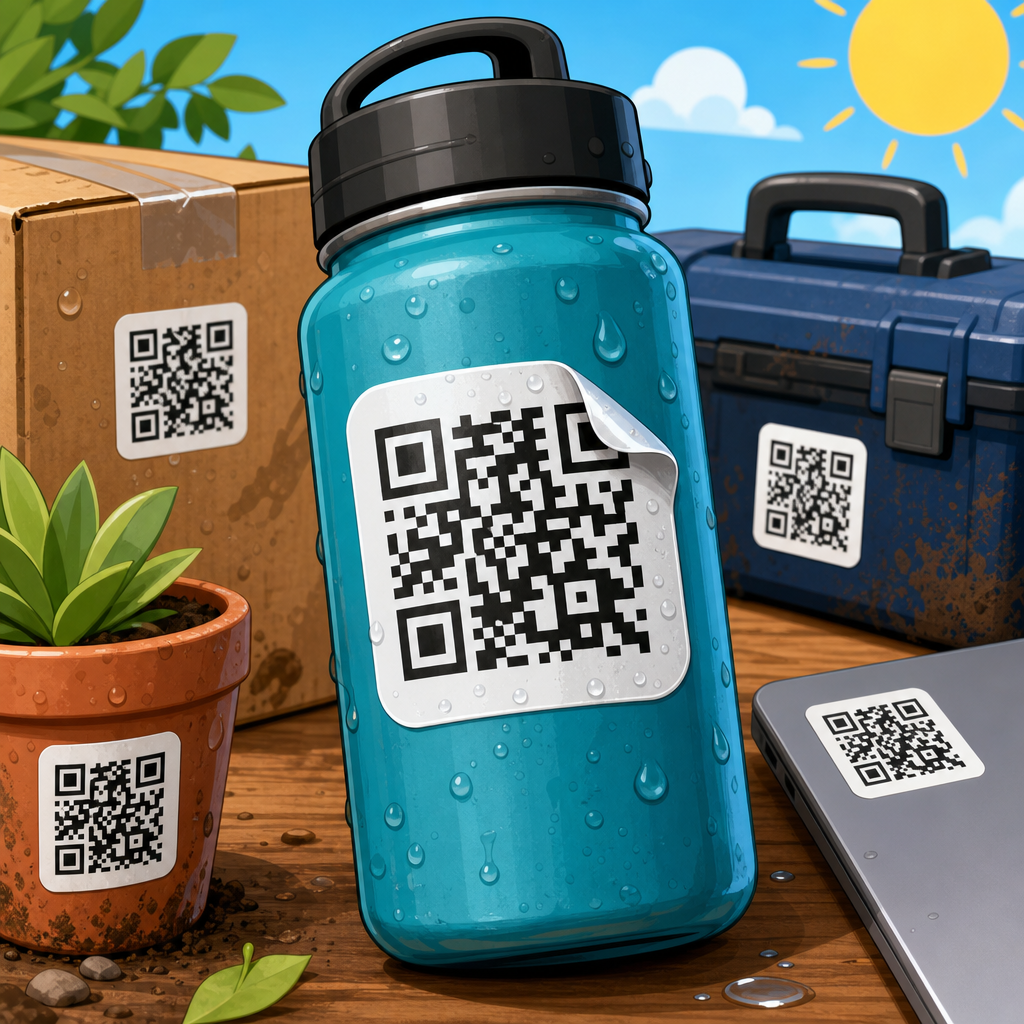
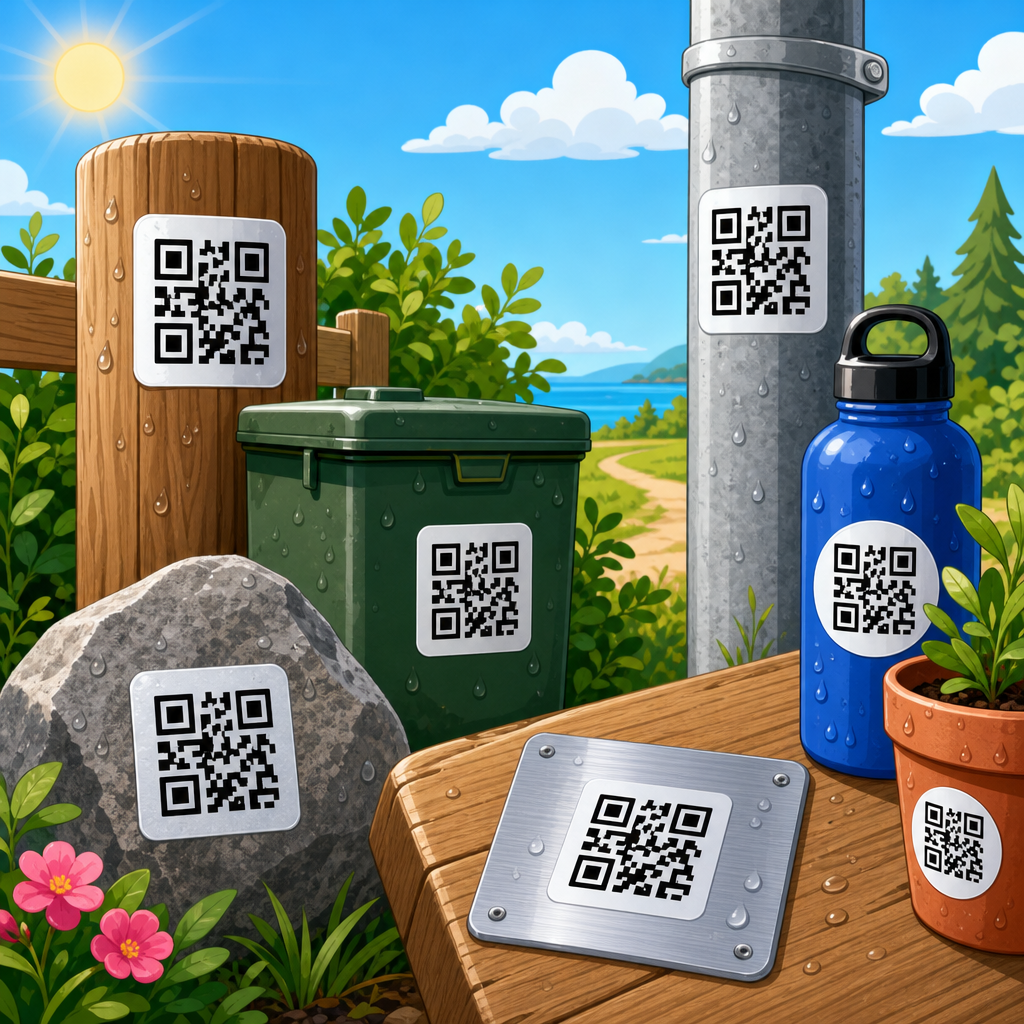
Material choice often explains the gap between a cheap quote and a realistic one. Plain coated paper is inexpensive and scans well when contrast is strong, but it is unsuitable for moisture, abrasion, oils, or prolonged UV exposure. For restaurant table tents, event signage, and indoor flyers, paper or card stock is usually enough. For product labels, warehouse bins, outdoor wayfinding, equipment tags, or window decals, you may need vinyl, polyester, polypropylene, aluminum plates, or synthetic papers. These materials cost more, but they preserve scan reliability over time.
Finishing adds another layer. Lamination improves abrasion resistance and can protect against rain, cleaning chemicals, and sunlight, yet gloss laminate can introduce glare that reduces scan speed under harsh lighting. Matte finishes usually scan more consistently because they reduce reflections, though they may show dirt faster. UV coatings, varnishes, anti-graffiti films, and overlaminates each raise cost and must be evaluated against the actual use case. In one retail rollout I managed, replacing gloss laminate with matte increased unit cost slightly but reduced customer scan failures enough to justify the change immediately.
Adhesives and mounting matter too. A QR code sticker for cold-chain packaging needs adhesive that performs at low temperatures. A code placed on textured corrugated stock may require stronger contrast and better ink holdout. A code mounted behind glass may need reverse printing or a face-stock chosen for optical clarity. Industrial applications sometimes require UL-recognized labels, tamper-evident constructions, or chemical-resistant topcoats. Those are not cosmetic upgrades; they are functional specifications. When pricing QR code printing, always ask how long the code must remain scannable and what it must survive during that period.
Design, Prepress, and Testing Expenses
Many buyers underestimate non-print production costs. The QR image itself may be free to generate, but professional execution includes vector preparation, quiet-zone protection, contrast checks, size validation, proofing, and test scanning across devices. If a designer places a code too close to copy, trims it into a fold, inverts it on a dark background, or overlays it on a busy image, the print job may look attractive but perform poorly. Correcting these issues at prepress stage is inexpensive; correcting them after delivery means reprints, replacement labor, and lost campaign time.
Testing is where serious teams protect budget. I routinely test printed codes on both iPhone and Android devices, under bright light, low light, and at expected scan distances. For packaging, I test on curved surfaces and after abrasion. For window graphics, I test through glare and from outside the store. International standards such as ISO/IEC 18004 define QR code symbology, while barcode verification practices and print quality grading frameworks help assess readability. Not every marketing job requires formal verification hardware, but higher-risk applications benefit from it, especially when a failed scan interrupts a sale or service workflow.
Proofing can be digital, press-side, or both. Soft proofs are fine for basic layout approval, yet they cannot reveal every real-world scanning issue because substrate, ink density, and finish change the result. A physical proof costs more but often saves far more than it adds. If you are printing thousands of labels or launching a national mailer, a production proof should be viewed as insurance. This hub page supports deeper planning across related topics like QR code size, quiet zone rules, color contrast, label materials, and outdoor durability because those factors all change the final print budget.
Real-World Cost Scenarios and Budgeting Guidance
The most useful way to estimate QR code printing costs is by scenario, not by a single universal price. A small restaurant printing tabletop QR menu cards on heavy matte card stock through a local digital printer may spend a modest amount, because quantities are low and the environment is indoor. A consumer brand adding one black QR code to an offset-printed product insert may see almost no meaningful increase beyond prepress and plate adjustments, because the code rides on an existing print job. By contrast, a construction company ordering weatherproof site signs with large-format QR codes, laminate, grommets, and installation should expect a materially higher budget.
Direct mail is another good example. If every postcard uses the same landing page, printing QR codes is straightforward. If every mail piece carries a personalized code tied to a CRM record, you now have variable-data composition, data hygiene work, proofing, and reconciliation. The physical print may still be affordable, but the production workflow becomes more expensive. Event operations face similar tradeoffs with badges and tickets. Unique codes enable access control and analytics, but they require precise sequencing, database checks, and contingency planning for damaged or unscannable badges onsite.
To budget accurately, ask six questions before requesting quotes: Where will the code live? How long must it last? From what distance must it scan? Will every piece use the same code or unique codes? What surface will it be printed on? What happens if scans fail after installation or distribution? Those answers quickly narrow the right print method and material. Then compare quotes on total delivered value, including proofs, finishing, shipping, installation, and reprint policy. The cheapest vendor is rarely the least expensive choice if they cannot demonstrate dependable scan performance.
QR code printing costs are ultimately the cost of dependable access between print and digital experience. If you define the use case clearly, choose the right print process, specify durable materials only when needed, and test before rollout, you can control spending without sacrificing scan reliability. The smartest buyers do not ask only, “How much does it cost to print a QR code?” They ask, “What will it cost to print a QR code that still scans in the exact conditions where customers will use it?” That question leads to better specifications, better vendor conversations, and better results.
As the hub for printing QR codes within QR code design, printing, and materials, this page should guide your next steps: evaluate size and placement, review substrate and finish options, confirm whether variable data is required, and insist on realistic proofing. Do that, and your budget will reflect real production needs rather than optimistic assumptions. Start with the environment, the scan distance, and the lifespan you need, then build the print specification from there.
Frequently Asked Questions
What factors have the biggest impact on QR code printing costs?
The biggest pricing factors usually have little to do with the QR code image itself and everything to do with how that code must perform once it is printed. Size is one of the first cost drivers. A small code on product packaging may be inexpensive to add during an existing print run, while a large-format code for a window display, sign, poster, vehicle wrap, or trade show wall may require different materials, higher-resolution output, and more careful production. Scan distance matters too. If people need to scan from several feet away, the code must be printed larger and with enough contrast and edge definition to remain readable, which can change the entire print specification.
Material choice also affects cost in a major way. Printing on paper, corrugated packaging, vinyl, plastic, metal, fabric, or weather-resistant labels all comes with different production requirements and price points. Then there is the print method: digital printing, offset printing, screen printing, UV printing, wide-format printing, and specialty labeling all have different setup costs, run efficiencies, and quality tolerances. Finishing can add another layer of expense. Lamination, coatings, mounting, adhesives, contour cutting, protective topcoats, and anti-scratch or anti-UV treatments may be necessary depending on where the code will be used.
Durability and testing are often underestimated in the budget. If the QR code will be exposed to sunlight, moisture, abrasion, chemicals, refrigeration, outdoor temperatures, or repeated handling, the print needs to hold up without fading, warping, or losing scan reliability. That can require premium substrates and protective finishes. Installation is another cost factor for signs, decals, displays, and architectural applications. Finally, proofing and scan testing are essential. A code that technically looks correct on screen can still fail in the field if quiet zones are compromised, contrast is poor, the finish causes glare, or the code is simply too small for its intended use. In other words, the final cost reflects performance requirements, not just the fact that a QR code is being printed.
Why can a printed QR code cost more than businesses expect?
Businesses often assume QR code printing should be cheap because generating the code file itself is easy and often free. That assumption is where budgeting mistakes begin. The real expense is not in making the code graphic; it is in producing a printed piece that scans consistently under real-world conditions. A QR code used on a business card, direct mail piece, shipping label, retail sign, restaurant table tent, outdoor banner, or equipment tag may look like the same black-and-white square, but each application has different technical demands. Once those demands enter the conversation, costs can rise quickly.
One common issue is that teams price a QR code print job as if it were ordinary artwork, without accounting for readability. They may choose a glossy finish that creates glare, reduce the code too much to fit a layout, place it on a textured or dark surface, or print it on a material that distorts over time. Fixing those choices later is far more expensive than specifying the job correctly upfront. Reprints, delayed campaigns, failed scans, poor conversion rates, and damaged brand credibility can cost much more than the original print savings.
There is also a misconception that one proof is enough. In reality, reliable QR code production often requires prototype testing on the actual substrate, under actual lighting, at the intended viewing distance, and with multiple phone models. If the code is part of a large campaign, there may be version control, dynamic URL management, serialization, tracking requirements, or regional variations to consider as well. All of those steps add labor, coordination, and quality assurance costs. So while the printed mark itself may look simple, the cost reflects the need for dependable performance, not just visual output.
Does the print method change the cost and scan reliability of a QR code?
Yes, the print method can significantly affect both cost and scan reliability. Different printing processes produce different levels of sharpness, consistency, and durability, and those differences matter a great deal for QR codes. Digital printing is often a practical choice for short runs, variable data, and quick turnaround. It can be cost-effective for smaller quantities and personalized codes, but quality still depends on the press, substrate, and operator settings. Offset printing may offer strong consistency and lower per-unit costs on high-volume jobs, but setup costs are higher, so it is usually better suited to larger runs.
For signage, packaging, labels, and industrial uses, methods like screen printing, wide-format printing, thermal transfer, flexographic printing, or UV flatbed printing may come into play. Each has tradeoffs. Some are excellent for durability and outdoor exposure, while others are optimized for high-volume production or lower-cost packaging applications. However, not every method reproduces fine detail equally well. If the code includes dense data, has a higher module count, or must print at a small size, the print process must be capable of holding sharp edges and preserving the quiet zone around the code. Ink spread, registration issues, banding, surface texture, and color inconsistency can all reduce scan performance.
That is why cost and reliability should be evaluated together. A cheaper print method is not actually cheaper if it leads to poor scan rates or reprints. The right process depends on quantity, environment, material, and the code’s intended use. A reputable printer will consider minimum module size, contrast, finish, and viewing distance before recommending a process. In many cases, the best-value option is the method that produces the most reliable scan result with the least production risk, even if the upfront quote is not the lowest one.
How much should be budgeted for testing, proofing, and quality control?
Testing, proofing, and quality control should be treated as necessary line items, not optional extras. The exact budget depends on the complexity of the project, but for any QR code that matters to a campaign, customer journey, or operational process, some level of testing is essential. At a minimum, that usually includes a physical proof on the intended substrate, confirmation that contrast and quiet zone requirements are met, and scan testing with multiple devices. For higher-stakes applications such as product packaging, outdoor signage, retail displays, direct mail at scale, or industrial labeling, more rigorous testing is worth the investment.
Proofing costs can include prepress review, color checks, sample production, revised layouts, and test prints at final size. Quality control may involve verifying that the encoded destination is correct, checking that dynamic QR codes route properly, ensuring the code remains readable after finishing, and confirming that the installed piece still scans in its actual environment. Environmental factors matter more than many buyers realize. Lighting, reflections, mounting angle, wrinkles, curved surfaces, viewing height, and wear from handling can all affect performance. If the code will be used outdoors or in demanding conditions, durability testing may also be needed to evaluate weather resistance, abrasion resistance, or fade resistance.
From a budgeting perspective, spending more on testing upfront usually reduces total campaign cost. A failed print run, botched installation, or underperforming retail rollout can erase any savings achieved by skipping proofing. For small, low-risk projects, testing may represent a modest addition to the overall quote. For large or critical deployments, it may be a more meaningful percentage of the budget, but it is still money well spent. The goal is not just to print the code; it is to confirm that the audience can scan it easily, consistently, and under the conditions in which it will actually be used.
How can businesses reduce QR code printing costs without hurting scan performance?
The best way to reduce QR code printing costs is to simplify the production requirements without compromising readability. Start by matching the code size to the actual scan distance instead of guessing. Overspecifying a code can increase material and print costs, but undersizing it creates failure risk and reprint expense. Keep the design clean, maintain strong contrast, and avoid decorative treatments that interfere with scanning. In many cases, a standard black code on a light matte background is still the most cost-efficient and reliable solution. Avoiding unnecessary design complexity can reduce proofing cycles and improve print consistency.
Choosing the right material for the actual environment also helps control costs. If the code will only be used indoors for a short campaign, there may be no reason to pay for heavy-duty outdoor vinyl, UV-resistant laminates, or industrial adhesives. On the other hand, using a cheap substrate in a harsh environment is not true savings if the code fades, peels, or stops scanning. The same principle applies to finishing and installation. Only add lamination, mounting, weatherproofing, or specialty fabrication when the use case demands it. Aligning the production spec with the real application is one of the most effective ways to avoid overspending.
Businesses can also save money by involving the printer or production partner early. That allows the team to make smart decisions about print method, layout, minimum safe size, and finishing before the design is finalized. Running a small pilot before a large rollout can be especially valuable. It is much cheaper to test and refine a code on a short run than to discover problems after thousands of units have been printed or installed. In short, cost control comes from better specification, not from cutting corners. When the code is designed and printed for the real-world context in which it will be scanned, businesses