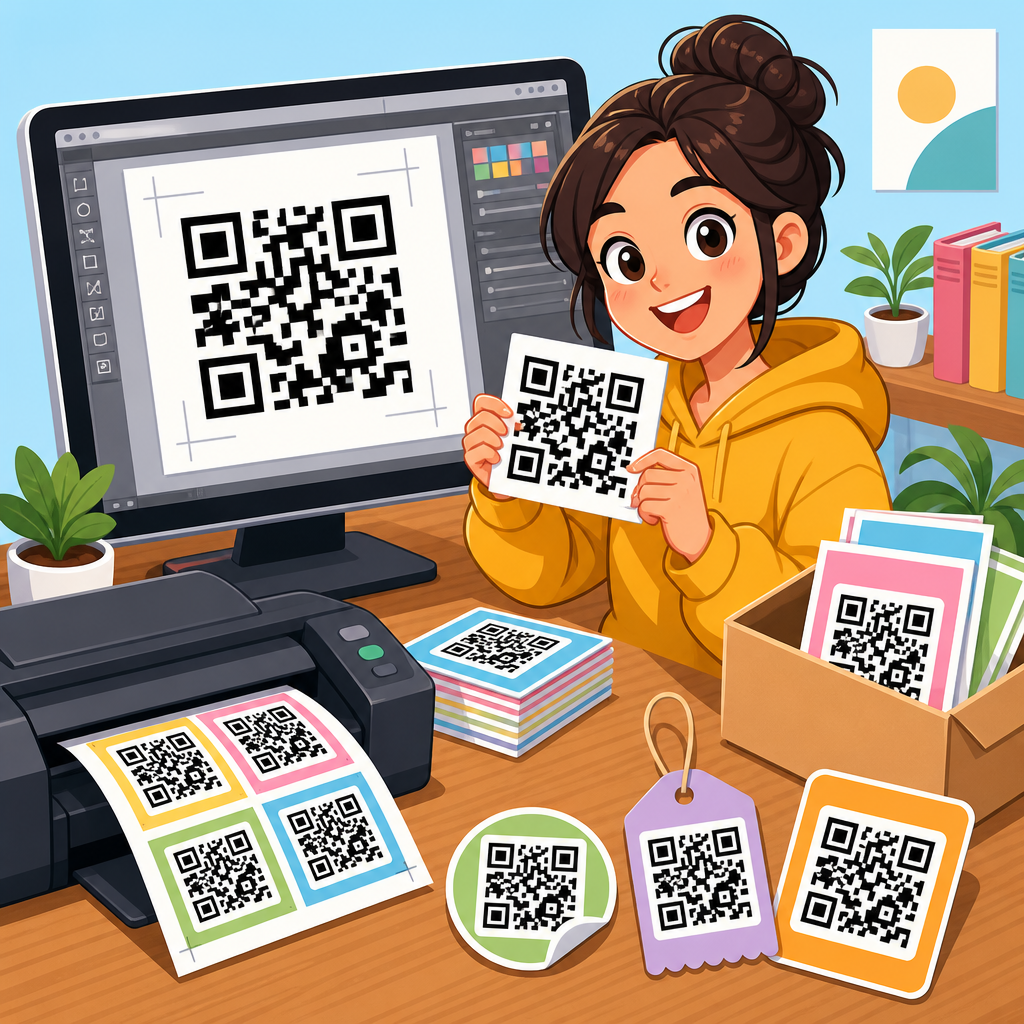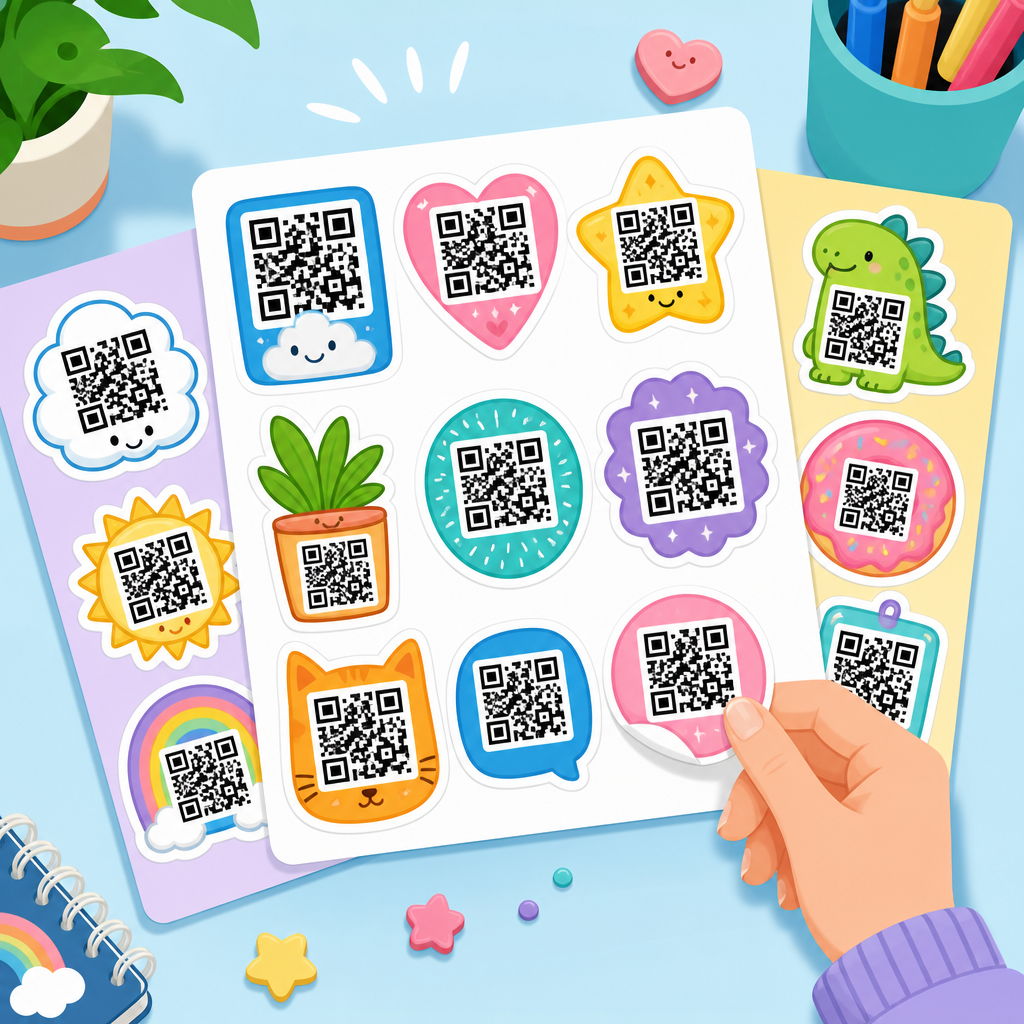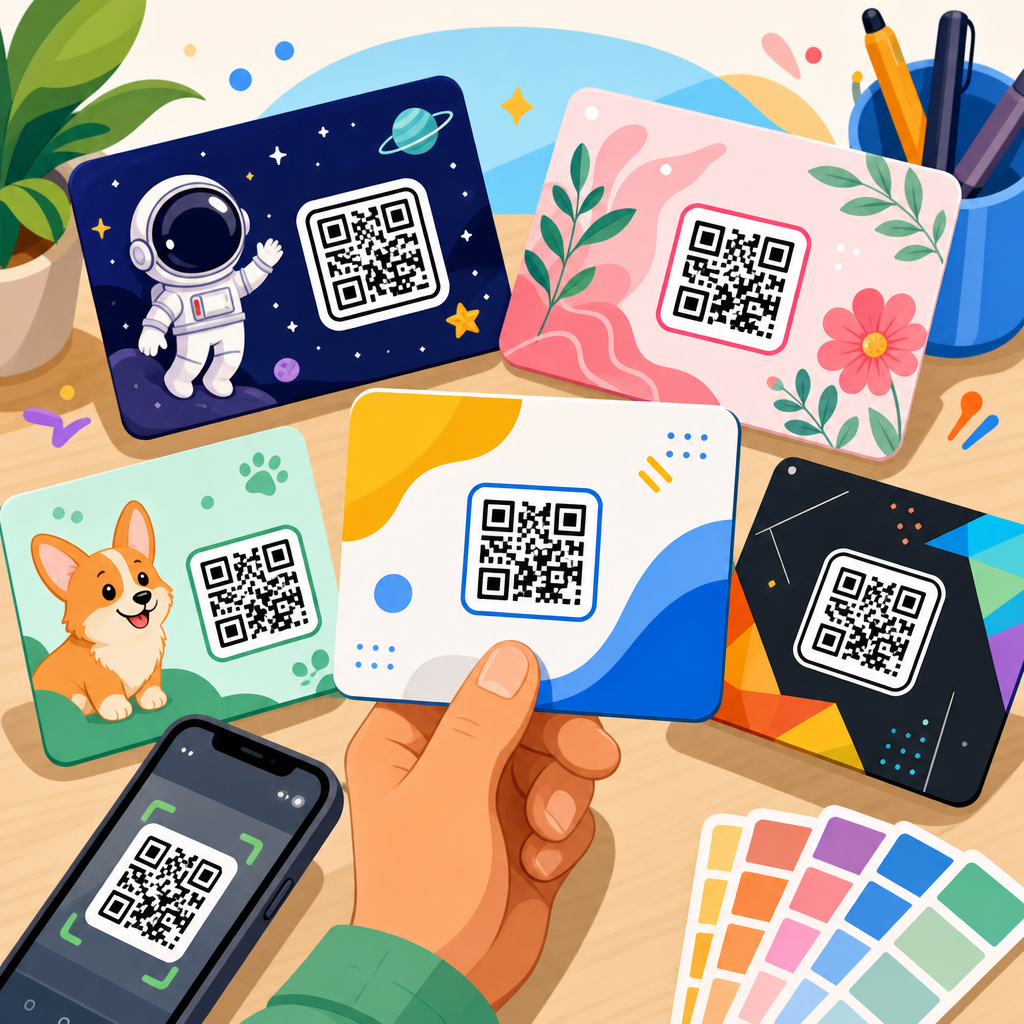
QR codes have moved from a niche industrial labeling system to a mainstream tool for payments, menus, product information, event check-ins, and customer support, yet many beginners still need a clear reference point that explains what they are, how they work, and when to use them well. A QR code, short for Quick Response code, is a two-dimensional matrix barcode that stores data in a grid of black and white modules readable by smartphone cameras and dedicated scanners. Unlike a traditional one-dimensional barcode that usually holds a short product number, a QR code can store website links, contact cards, Wi-Fi credentials, app download links, plain text, and other structured data. That flexibility matters because businesses now rely on QR codes to bridge physical and digital experiences quickly, often without requiring a user to type a URL or install special software.
In practice, I have seen beginner mistakes repeat across restaurants, retail counters, packaging teams, and small event organizers: using low-resolution files, printing codes too small, linking to pages that are not mobile friendly, or choosing the wrong QR format for a campaign that later needs editing. A good beginner’s reference guide solves those problems by defining the core vocabulary, showing the technical building blocks, and explaining the decisions that affect reliability, analytics, privacy, and user trust. This page serves as a hub for glossary and reference content within a broader QR code resources library, so the goal is not only to explain the basics but also to create a durable foundation for deeper articles on QR code templates, testing, tracking, design, and deployment. If you understand the key terms and practical standards here, you will make better choices before generating your first code and avoid costly reprints later.
What a QR Code Is and Why It Works
A QR code is a machine-readable symbol made of square modules arranged on a square grid. Its most recognizable features are the three large position markers in the corners, which help a scanner detect the symbol and determine orientation. Around and inside those markers are timing patterns, alignment patterns, format information, version information on larger codes, and the encoded data itself. The scanner captures the image, corrects perspective distortion, interprets the pattern, and reconstructs the stored content using error correction. That process is why a code can still scan when part of it is scratched, partially obscured, or printed on a curved surface within reason.
The original QR code standard was created by Denso Wave in 1994 for tracking automotive parts, and its design solved the speed limitations of linear barcodes. Modern smartphones made the technology common because native camera apps can now recognize a QR code instantly. For beginners, the important principle is simple: a QR code is only as useful as the destination and experience behind it. If the code opens a fast mobile landing page, joins a Wi-Fi network, or launches a payment screen cleanly, it feels seamless. If it points to a dead link, a desktop-only PDF, or a page buried in pop-ups, the code becomes a friction point instead of a convenience tool.
Core QR Code Terms Every Beginner Should Know
Beginners benefit from learning the reference terms used across QR code tools, print vendors, and marketing platforms. “Static QR code” means the encoded content is fixed after creation. If you embed a website URL directly in the pattern, changing the destination later requires a new code. “Dynamic QR code” means the symbol contains a short redirect URL managed by a service, allowing you to change the destination without changing the printed code. Dynamic codes are widely used for campaigns, packaging, posters, and signage because they support analytics and editing, though they often depend on a paid platform.
Another essential term is “error correction level.” QR codes use Reed-Solomon error correction and are commonly offered in four levels: L, M, Q, and H. Higher levels allow more damage or logo overlay tolerance but reduce total data capacity because more modules are allocated to recovery information. “Quiet zone” refers to the blank margin around the QR code. Without sufficient quiet zone, scanners may struggle to separate the symbol from the surrounding design. “Version” describes the code size, from Version 1 at 21 by 21 modules up to Version 40 at 177 by 177 modules. Higher versions hold more data but become denser and harder to scan at small print sizes.
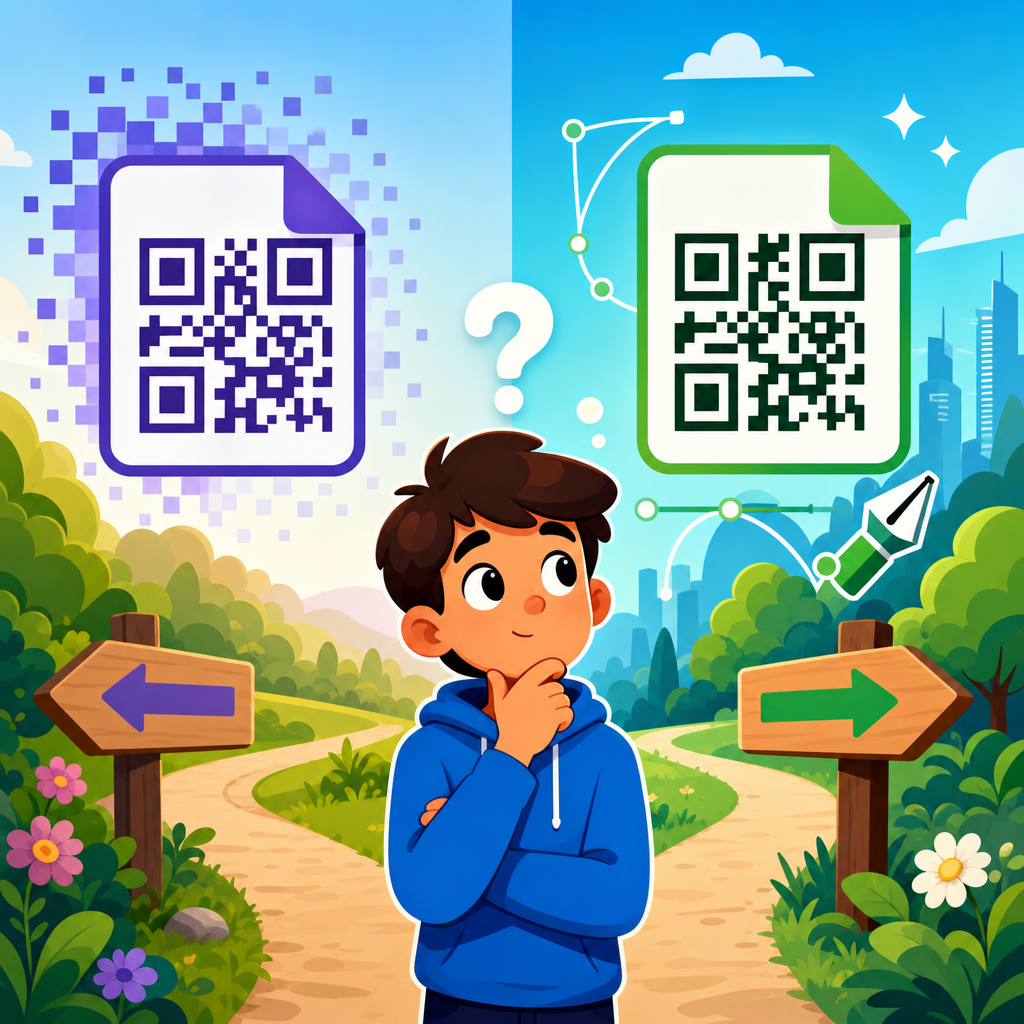
Data types also matter. Numeric mode stores digits most efficiently. Alphanumeric mode supports uppercase letters, numbers, and a limited symbol set. Byte mode handles broader character sets and is common for URLs and multilingual content. Kanji mode is optimized for certain character encodings. You will also encounter file format terms such as PNG, SVG, EPS, and PDF. For print, vector formats like SVG and EPS are preferred because they scale cleanly without blur. For digital use, PNG is common, but resolution still matters. Understanding these terms gives you the vocabulary to compare QR code generators, speak clearly with designers, and evaluate whether a code is appropriate for packaging, posters, labels, menus, or onboarding flows.
Static vs Dynamic QR Codes: Choosing the Right Type
The most important beginner decision is whether to use a static or dynamic QR code. Static QR codes are simple, low cost, and independent of a third-party redirect service once generated. They work well when the content is permanent, such as a manufacturer URL, a plain text serial lookup instruction, or a stable contact card. Their limitation is inflexibility. If the URL changes, the printed code becomes obsolete. I have seen this create unnecessary waste on brochures and product inserts when a campaign page was renamed after printing thousands of copies.
Dynamic QR codes solve that operational problem by separating the printed symbol from the final destination. You can update the destination later, route users by country or device, add UTM parameters, pause a campaign, or review analytics such as scan counts, time of day, and approximate location. That makes dynamic codes better for marketing, event management, restaurant menus, real estate signs, and any use case where content evolves. The tradeoff is dependency. If the provider account lapses, the redirect may stop. Some platforms also place brand domains or interstitial pages in the user path, which can affect trust and speed.
| Type | Best for | Main advantage | Main limitation |
|---|---|---|---|
| Static QR code | Permanent links, simple labels, fixed contact data | No ongoing redirect dependency | Cannot change destination after printing |
| Dynamic QR code | Campaigns, menus, packaging, events, analytics | Edit destination and track scans | Requires service management and monitoring |
As a rule, use static codes when permanence is certain and risk is low. Use dynamic codes when the cost of reprinting would exceed the cost of managing a platform subscription. That framing keeps the decision practical instead of theoretical.
How QR Codes Store Data and What Affects Capacity
QR code capacity depends on the type of data, the error correction level, and the selected version. Beginners often assume a QR code can hold unlimited information, but dense data creates complex patterns that are harder to scan, especially when printed small or displayed on low-quality screens. The best practice is to store as little data as necessary. For web destinations, that usually means using a short, trustworthy URL rather than a long string packed with tracking parameters. If analytics are needed, a dynamic code often produces a cleaner symbol because the encoded redirect URL is shorter than the final destination.
Error correction is one of the most misunderstood concepts. The four common levels allow roughly 7 percent, 15 percent, 25 percent, and 30 percent recovery capacity respectively, though real-world performance depends on the damage pattern and scan environment. Designers often increase error correction to support a centered logo, but that should not be treated as permission to heavily distort the symbol. In testing, scanning reliability drops quickly when contrast is weak, modules are stylized too aggressively, or the quiet zone is compromised. A QR code can be branded, but it must remain unmistakably machine readable first.
Character encoding also matters for multilingual content. UTF-8 handling, percent encoding in URLs, and special characters in Wi-Fi passwords or vCard fields can create compatibility issues across generators. When building codes for international audiences, test with both iPhone and Android devices and verify that the intended apps interpret the payload correctly. For example, a Wi-Fi code may encode SSID, encryption type, and password, but a formatting mistake can stop auto-join behavior even though the code appears valid.
Design, Print, and Placement Best Practices
Good QR code performance depends more on execution than novelty. The first rule is contrast: dark modules on a light background scan best. Black on white remains the safest option, though dark blue on white also performs well. Avoid light gray codes, busy image backgrounds, and reversed designs unless they have been thoroughly tested. The second rule is size. A common practical guideline is that the scanning distance should be roughly ten times the code width. A code meant to be scanned from one meter away should be about ten centimeters wide, though camera quality and lighting can shift that requirement.
Print quality matters. Use vector artwork for anything going to professional print, especially packaging, posters, menus, window decals, and trade show graphics. Raster images can soften edges, and compression artifacts can reduce readability. Maintain a clear quiet zone, usually at least four modules wide on all sides. Do not place a QR code across folds, bottle seams, curved corners, or reflective laminates without testing. I have also seen failures caused by placing codes behind glossy acrylic on point-of-sale displays, where overhead lighting created glare that cameras could not overcome.
Placement affects trust and completion rates. Put the code where users naturally pause and where connectivity is available. A transit poster in an underground platform may generate curiosity but not conversions if mobile signal is weak. Add a short call to action such as “Scan to view menu,” “Scan for setup guide,” or “Scan to pay securely.” Users are more likely to scan when they know what will happen next. If the destination requires login, app installation, or personal data entry, say so upfront. Transparency increases scan confidence and reduces abandonment.
Common QR Code Uses and Real-World Examples
QR codes succeed when they remove friction. In restaurants, a table tent code can open a live menu that updates prices, allergens, and item availability without reprinting. In retail packaging, a code can link to assembly instructions, warranty registration, authenticity verification, or recycling guidance. In events, codes are used for ticket validation, venue maps, session schedules, lead capture, and post-event surveys. Healthcare providers use them for patient education handouts and appointment flows, although privacy safeguards and careful destination design are essential.
Payments are one of the clearest examples of functional QR code value. In many markets, merchant-presented and customer-presented QR payments have reduced hardware costs and sped up checkout. Standards vary by country and payment network, but the beginner lesson is that payment QR codes require stricter control than marketing codes. Destination integrity, tamper resistance, and visible trust signals matter because fraudsters sometimes replace legitimate codes with malicious ones. Regular inspection and secure mounting are basic operational safeguards.
Internal business uses are equally practical. Warehouses use QR codes for bin locations, asset records, maintenance logs, and training videos. Offices use them for guest Wi-Fi access, room booking instructions, and employee onboarding documents. For a small business, these uses often produce faster return than promotional campaigns because they save staff time immediately. The key is matching the code type to the workflow and ensuring the landing page or payload is concise, mobile friendly, and reliable.
Testing, Tracking, Security, and Maintenance
Before launch, test every QR code across multiple devices, lighting conditions, screen brightness levels, and print samples. Scan from realistic distances, angles, and user positions. If the code will appear outdoors, test in glare and shadow. If it will be printed small, test after final production, not just from a designer proof. This discipline catches issues with low contrast, poor placement, destination errors, and mobile rendering before customers do. A code that scans in the office may fail on a storefront window at noon.
Tracking should answer business questions, not just collect vanity metrics. Dynamic QR code dashboards can show total scans, unique users, repeat scans, device types, geography, and time trends. Pair that with web analytics using tagged landing pages to measure downstream behavior such as purchases, form fills, or downloads. For example, if a product package code gets many scans but few support article views, the issue may be that the landing page is slow or the support answer is buried. Measurement only matters when it informs an action.
Security deserves explicit attention in any QR code beginner’s reference guide. Users cannot visually inspect a destination from the pattern alone, which creates phishing risk. Use recognizable domains, HTTPS, and clear labels near the code. Avoid unnecessary URL shorteners that obscure trust. For public installations, inspect for sticker tampering. For enterprise use, document ownership of each code, destination, and platform account so redirects do not break when staff changes. A QR code is not a one-time graphic asset; it is a maintained access point that needs lifecycle management.
The most useful habit is to treat every QR code like a tiny product experience. Define the goal, choose the right type, keep the data lean, design for reliable scanning, test in context, and monitor after launch. Beginners who learn those fundamentals avoid the common failure points that give QR codes a bad reputation. Use this hub as your starting point, then build your library with deeper guides on glossary terms, templates, sizing, analytics, and secure deployment. When QR codes are planned carefully, they turn printed surfaces into fast, measurable, user-friendly digital entry points. Start by auditing one existing code in your business and improve it using the standards outlined here today.
Frequently Asked Questions
What is a QR code, and how is it different from a traditional barcode?
A QR code, or Quick Response code, is a two-dimensional barcode designed to store information in both horizontal and vertical directions. That structure allows it to hold far more data than a traditional one-dimensional barcode, which typically stores information in a single line of varying widths. In practical terms, a standard barcode is often used for simple identification, such as a product number at retail checkout, while a QR code can store a website URL, contact information, Wi-Fi credentials, payment details, event registration links, app download destinations, and more.
Another major difference is how people interact with them. Traditional barcodes usually require a dedicated scanner in a controlled business setting. QR codes, on the other hand, are built for fast access with everyday devices, especially smartphones. Most modern phones can scan a QR code directly through the camera app, making the technology much more accessible to the public. That ease of use is one reason QR codes have become common in restaurants, product packaging, posters, tickets, and support materials.
QR codes also include built-in error correction, which helps them remain scannable even if part of the code is smudged, scratched, or obscured. This makes them more durable in real-world environments than many people realize. For beginners, the simplest way to think about a QR code is as a compact visual shortcut: instead of typing a long web address or entering information manually, a user scans the code and is taken directly to the intended action or content.
How do QR codes work when someone scans them?
When someone points a smartphone camera or QR scanner at a QR code, the device recognizes the square grid pattern made up of black and white modules. Special marker squares in the corners help the scanner detect the code’s orientation, size, and alignment. Once the code is identified, the scanner interprets the pattern and decodes the data stored inside it. That data might be plain text, a URL, a phone number, a payment payload, or another supported format.
If the QR code contains a web link, the phone will typically prompt the user to open it in a browser. If it contains contact details, the phone may offer to save a new contact. If it contains Wi-Fi login information, some devices can offer to connect automatically. In other words, the scan itself is only the first step; the real value comes from what the encoded data tells the phone to do next. That is why QR codes are often described as bridges between offline materials and digital actions.
The scanning process is usually very fast because QR codes were designed for quick readability and efficient data retrieval. Lighting, print quality, contrast, code size, and the distance between the camera and code can all affect performance, but a properly generated and clearly displayed code should scan within seconds. For beginners, it helps to remember that the QR code is not “the website” or “the file” itself. It is simply the machine-readable container that points to information or carries compact data in a form devices can interpret instantly.
What kinds of information can a QR code store, and what are the most common beginner-friendly uses?
QR codes can store many types of information, which is one reason they are so widely used across industries. Common examples include website URLs, PDF links, plain text, email addresses, phone numbers, SMS prompts, map locations, calendar event details, digital business cards, payment instructions, and Wi-Fi network credentials. The exact amount of data a QR code can hold depends on the code version, character type, and error correction level, but for most everyday uses, it can easily handle the information needed to direct users to a digital destination.
For beginners, the most practical uses are usually the simplest ones. A business might place a QR code on packaging to link customers to product instructions or warranty details. A restaurant might use one on a table to open a digital menu. An event organizer might use QR codes for check-in or ticket validation. A store may place one near a display to connect shoppers to reviews, demonstrations, or product specifications. Customer support teams often use them to direct users to setup guides, troubleshooting pages, or live chat portals.
The key is matching the QR code to a clear, useful action. If scanning saves the user time, reduces friction, or delivers relevant information quickly, it is likely a good use case. If it leads to something confusing, unnecessary, or difficult to view on a phone, it becomes less effective. For that reason, beginners should focus on utility first. Start with a single purpose, such as “scan to pay,” “scan to view menu,” or “scan for setup instructions,” and make sure the destination is mobile-friendly, trustworthy, and easy to understand.
When should you use a QR code, and what best practices make it effective?
You should use a QR code when it genuinely makes access faster and easier than asking someone to type, search, or manually enter information. QR codes work especially well in situations where users are already on mobile devices and need a quick transition from a physical object to a digital resource. Good examples include payments at a counter, posters promoting an event, manuals linking to video tutorials, packaging that connects to product details, or printed receipts that guide users to support pages or feedback forms.
To use QR codes effectively, start by defining a single clear purpose. Every code should answer the question, “What happens when someone scans this?” If that answer is vague, the experience will likely underperform. It also helps to include a short call to action near the code, such as “Scan to order,” “Scan for directions,” or “Scan to download the guide.” That small instruction improves confidence and increases scan rates because users know what to expect before they engage.
Design and placement matter as much as the code itself. Maintain strong contrast, usually dark modules on a light background. Do not make the code too small for the expected scanning distance. Avoid placing it where glare, wrinkles, folds, or busy backgrounds could interfere with readability. Test the code on multiple devices before publishing it widely. If the code opens a webpage, ensure that page loads quickly and works well on mobile screens. From a strategy standpoint, QR codes perform best when they remove friction, support a real user need, and lead to a destination that is as polished as the printed material that introduced it.
Are QR codes safe to use, and what should beginners watch out for?
QR codes themselves are not inherently dangerous, but like any link-based technology, they can be used responsibly or abused. A QR code is simply a method of delivering data. The safety concern usually comes from where that code leads. For example, a malicious QR code could direct someone to a fake website designed to steal login credentials, trigger a misleading download, or impersonate a trusted brand. That means the real security issue is not the visual code pattern, but the destination and the user’s level of caution.
Beginners should treat scanned QR codes the same way they treat unfamiliar links in email or text messages. Before opening a destination, check whether the phone shows a preview of the URL and look for signs that it belongs to a legitimate source. Be cautious with codes placed in public spaces where stickers can be swapped or layered over originals. If a payment code appears tampered with, or if a login page looks suspicious after scanning, do not continue. Trustworthy organizations also help by placing QR codes in branded materials, explaining what the code does, and sending users to recognizable domains.
For people creating QR codes, safety and trust go hand in hand. Use secure destinations, prefer HTTPS-enabled websites, keep landing pages updated, and avoid surprising users with unclear redirects. If the QR code initiates a payment, download, or account-related action, clarity becomes even more important. In short, QR codes are safe when used thoughtfully, but beginners should combine convenience with basic digital awareness. Scan with confidence, but verify before acting on anything sensitive.