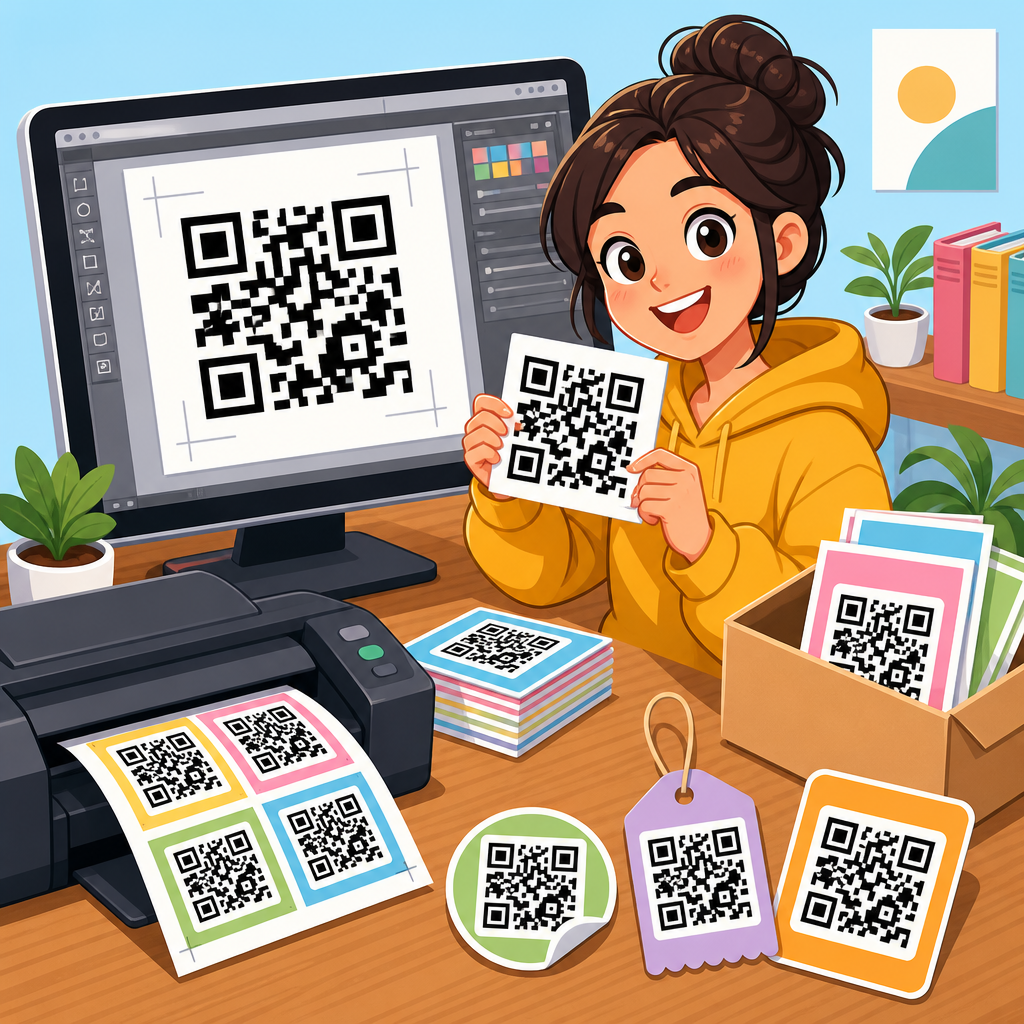
QR codes look simple on a phone screen, but for developers they represent a tightly specified data carrier with defined encoding modes, error recovery rules, symbol geometry, and scanner behavior. A QR code technical glossary gives teams a shared language for discussing generation libraries, print constraints, payload design, testing, and analytics without confusion. In practice, that shared language prevents expensive mistakes: oversized payloads that force unreadably dense symbols, poor contrast that breaks scans in retail lighting, or misuse of dynamic redirects that weakens reliability. I have seen projects stall because product managers said “resolution” when they meant module count, designers asked for a “small QR” without understanding quiet zone requirements, and engineers selected the wrong correction level for packaging exposed to abrasion. A precise glossary solves those gaps.
At its core, a QR code is a two-dimensional matrix barcode standardized under ISO/IEC 18004. It stores data in black and white modules arranged on a square grid, then adds structural patterns so scanners can detect orientation, timing, version, and error correction. Developers typically work with several related ideas at once: the payload, or raw content being encoded; the symbol, or visible matrix image; the scan pipeline, including camera autofocus, image binarization, and decode algorithms; and the delivery architecture behind the code, such as static content or a short URL that redirects dynamically. Each of those layers has its own vocabulary. Understanding the distinction between character count and byte length, for example, is essential when encoding UTF-8 text, while knowing the difference between vector output and raster export matters when preparing files for print.
This glossary page matters because QR implementation sits at the intersection of software, design, printing, and operations. Developers need terms that connect API decisions to real-world scanning outcomes. If your team publishes restaurant menus, warehouse labels, event tickets, manufacturing tags, or direct-mail campaigns, you need to understand why mask patterns exist, how Reed–Solomon recovery works, what a finder pattern contributes, and when a Micro QR or rMQR symbol is more appropriate than a standard square code. You also need a hub that points conceptually toward deeper reference material across encoding, testing, accessibility, security, and measurement. The entries below are organized into practical groups so you can use this article as a reference during planning, implementation, debugging, and documentation.
Core symbol structure and encoding terms
Module: the smallest black or white square in a QR symbol. Developers sometimes call this a pixel, but that is only accurate on screens. In print and vector artwork, the module is a logical cell, not a display pixel. Scanner reliability depends heavily on module size at the point of capture.
Version: the size class of a QR code. Standard QR versions run from 1 to 40, increasing grid dimensions from 21×21 modules upward in steps of four modules per side. Higher versions hold more data but reduce readability when physical size stays fixed.
Quiet zone: the blank margin around the symbol. Standard guidance requires a margin four modules wide on all sides. In production, missing quiet zones are one of the most common causes of failed scans because adjacent graphics interfere with symbol detection.
Finder patterns: the three large square markers placed at three corners. They let scanners locate the symbol and determine orientation quickly. Alignment patterns help correct distortion, especially in larger versions. Timing patterns are alternating module sequences that establish grid spacing.
Data codewords store payload bits, while error correction codewords add redundancy. Together they are arranged after interleaving according to the symbol specification. Format information encodes the error correction level and mask pattern. Version information appears on symbols version 7 and above.
Encoding mode: the method used to represent data efficiently. Standard modes include numeric, alphanumeric, byte, and Kanji. Numeric mode is most compact for digits. Byte mode is common for URLs and arbitrary text. Good libraries choose the most efficient mode automatically, but developers should still inspect output when payload size matters.
Character set and ECI, or Extended Channel Interpretation, matter when text goes beyond default assumptions. If you encode multilingual text, the scanner and generator must agree on interpretation. Inconsistent encoding explains many “garbled text” issues seen in legacy systems.
Error correction, masking, and capacity planning
Error correction level determines how much damage a code can tolerate. Standard levels are L, M, Q, and H, roughly corresponding to increasing recovery capability. The tradeoff is capacity: more recovery means less room for payload. For a short landing-page URL on outdoor signage, I usually choose Q or H because weathering and oblique scans are predictable risks. For dense industrial labels with controlled scanning distance, M is often enough.
Reed–Solomon error correction is the mathematical scheme used to recover lost or corrupted data codewords. Developers do not usually implement it by hand, but understanding that the code repairs symbol damage rather than poor focus is important. Error correction cannot rescue a code that is too small, low contrast, or heavily motion blurred.
Mask pattern refers to one of several predefined ways of inverting selected modules to avoid problematic visual artifacts such as large blocks, repeating patterns, or imbalanced dark-light distribution. Encoders score candidate masks using penalty rules and select the best result. If you have ever seen two QR codes with identical data but different appearance, mask selection is usually why.
Capacity planning means estimating whether your payload will fit at an acceptable symbol size. A long URL with campaign parameters can force a larger version than expected. In production systems, I shorten URLs aggressively, remove unnecessary query strings, and move metadata server-side. That approach reduces density and improves scan speed.
| Term | What it controls | Main tradeoff | Practical example |
|---|---|---|---|
| Error correction level | Damage tolerance | Higher resilience reduces payload capacity | Packaging codes often use Q or H |
| Mask pattern | Visual distribution of modules | Better scan reliability may alter appearance | Dense URL symbols benefit from optimized masking |
| Version | Grid size and capacity | Larger versions need more physical space | Business cards usually target low versions |
| Encoding mode | Bit efficiency for payload type | Wrong mode wastes capacity | Numeric IDs should not be forced into byte mode |
Structured append allows one logical payload to span multiple QR symbols. It exists in the standard, but support in consumer scanning apps is limited, so it is rarely the right choice for public-facing experiences. Use it only when you control both encoder and decoder.
Rendering, print production, and scan performance
Raster output means a bitmap such as PNG or JPEG. Vector output means mathematically defined shapes such as SVG, EPS, or PDF. For print workflows, vector is strongly preferred because modules remain sharp at any size. JPEG is the worst export choice because compression artifacts soften edges that scanners rely on.
Module size in print is often specified in millimeters. A common rule is to scale symbol size with scanning distance, but the more reliable approach is to test with actual devices under actual lighting. In retail displays, a code scanned from one meter away needs substantially larger modules than a code on product packaging scanned from twenty centimeters.
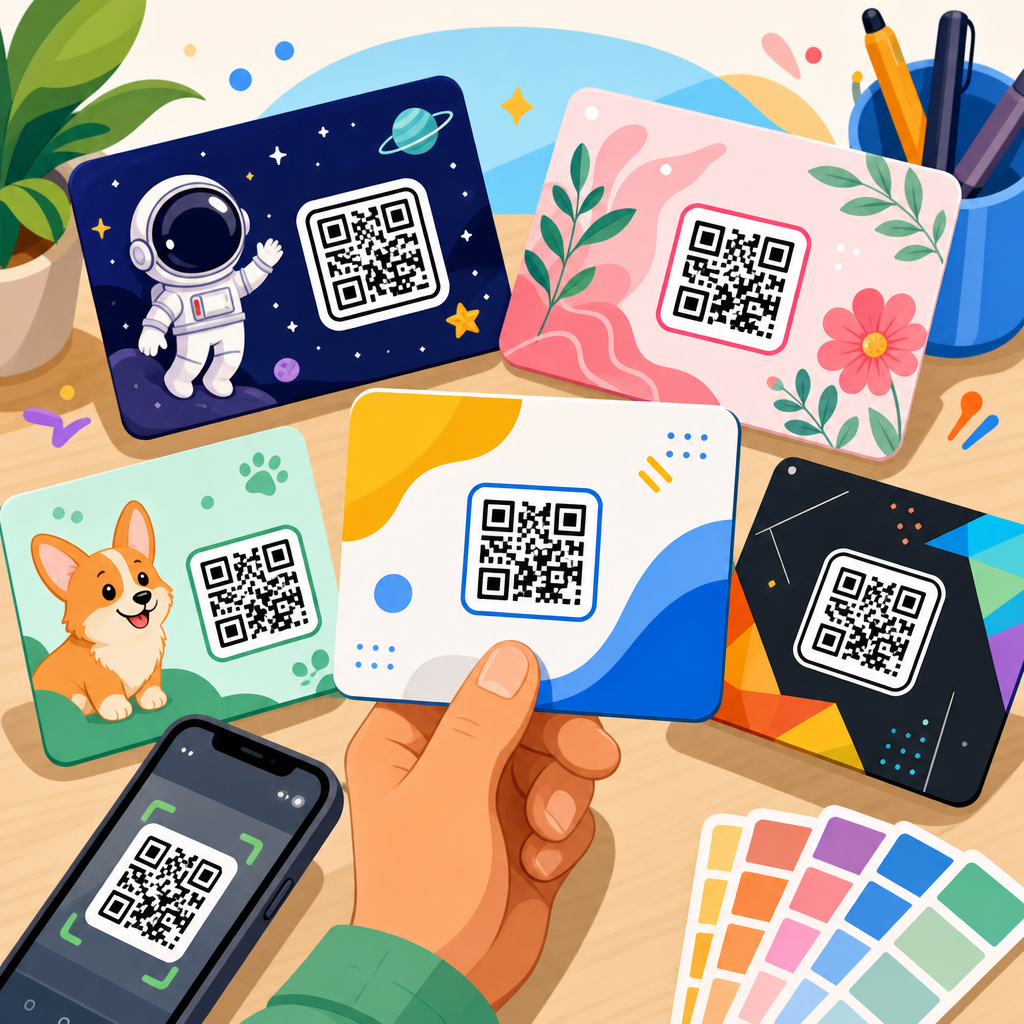
Contrast ratio is the luminance difference between dark and light areas. Dark foreground on a light background remains the safest configuration. Inverted codes, pastel palettes, metallic inks, and transparent overlays can work, but they require testing because many low-end scanners still assume strong contrast during image thresholding.
Dot gain affects printed modules when ink spreads on paper or porous packaging. Tiny white gaps can close, changing effective geometry. Trap and bleed considerations also matter when codes sit near design elements. I routinely ask printers for substrate details before approving minimum size recommendations.
Curvature distortion appears on bottles, cans, and wrapped surfaces. Even when the symbol itself is technically correct, cylindrical placement can bend timing lines and reduce decode reliability. The usual fix is larger symbols, careful placement on flatter areas, and higher correction levels, not simply “raising resolution.”
Screen rendering brings different concerns: responsive layout, high-DPI displays, dark mode clashes, and CSS transforms. Avoid scaling a raster QR with browser interpolation. Generate the symbol at final dimensions or use SVG so modules stay crisp. Also ensure tap targets and surrounding instructions are accessible on mobile devices.
Dynamic delivery, security, and analytics vocabulary
Static QR code directly encodes final content such as a URL, Wi-Fi configuration, vCard, or plain text. Dynamic QR code usually encodes a short redirect URL that points to a service capable of changing the destination later. Static codes are durable and infrastructure-light. Dynamic codes support campaign changes, tracking, A/B tests, georouting, and expiration rules.
Redirect is the HTTP response that sends a scanner from the short URL to the destination. For production deployments, 301 and 302 behavior matters for caching, analytics attribution, and browser handling. A chain of multiple redirects slows user experience and can break attribution in privacy-restricted mobile environments.
UTM parameters are query-string tags used by analytics platforms to classify traffic source, medium, campaign, term, and content. They are useful, but encoding them directly into a static QR often creates bloated payloads. A cleaner pattern is short dynamic URLs that append campaign metadata server-side.
Scan analytics should be interpreted carefully. A scan event recorded by a QR platform may represent a redirect request, not a fully loaded page or a unique human visitor. Bot traffic, link previews, and repeated scans from the same device can distort numbers. Align QR reporting with web analytics definitions before presenting performance results.
Phishing risk is a real security concern because users cannot visually inspect a destination from the symbol alone. Safer implementations use branded short domains, HTTPS everywhere, HSTS, and clear on-page branding after the scan. In enterprise settings, mobile device management and secure scanning apps can further reduce risk.
Signed payloads and tokenized URLs are used when authenticity matters, such as tickets, coupons, access badges, or medical workflows. The QR itself does not provide trust; the backend validation model does. Time-limited tokens, nonce values, and server-side revocation are standard defensive measures.
Specialized formats, tooling, and implementation choices
Micro QR is a reduced-footprint variant intended for small spaces and limited payloads. rMQR, or rectangular Micro QR, is designed for narrow surfaces such as labels and component markings. Model 1 and Model 2 are historical QR variants, with Model 2 being the form most developers mean today. iQR supports different capacities and shapes but has less universal scanner support than standard QR.
GS1 Digital Link is important in retail and supply chain projects. It encodes identifiers such as GTINs into web-resolvable URIs so one scan can support both point-of-sale and consumer experiences, depending on the application resolver. If your team works on packaging modernization, this concept deserves dedicated implementation planning.
Reader library refers to software that detects and decodes symbols from images or camera frames. Common examples include ZXing, ZBar, Dynamsoft, Google ML Kit, and OpenCV-based pipelines. Performance differs by device class, lighting, autofocus behavior, and symbology mix. Benchmark with representative phones rather than relying on a single simulator.
Generator library creates the symbol from input data. Important evaluation criteria include standards compliance, ECI support, vector export, logo handling controls, deterministic outputs for testing, and active maintenance. When teams ask whether they can place a centered logo over a code, my answer is yes only after calculating coverage, raising correction level appropriately, and validating scans across devices.
Decode rate is the percentage of attempted scans that successfully resolve under defined conditions. Time to first decode measures how long a scanner needs from camera view to successful read. Both metrics belong in QA plans. Testing should vary distance, angle, glare, substrate, screen brightness, network latency, and damaged-symbol conditions.
Fallback UX describes what happens after the scan if the user lacks network access, opens an unsupported app deep link, or lands on a non-mobile-optimized page. The best QR implementations treat scanning as the first step in a complete mobile journey, not as an isolated artifact.
As the hub for glossary and reference guides, this page should anchor your broader documentation set. Build linked companion resources around payload limits, print sizing formulas, scanner testing checklists, dynamic URL architecture, GS1 implementations, secure token design, and accessibility standards for signposted instructions. The benefit of a strong technical glossary is speed with fewer mistakes: teams align faster, specifications become clearer, vendors receive better briefs, and production issues get diagnosed with the right terms. Keep this glossary close during planning and QA, then expand each concept into your own implementation playbooks and reusable engineering standards.
Frequently Asked Questions
What does a QR code “version” mean, and why does it matter to developers?
In QR code terminology, a version is the size definition of the symbol, not a software release. Standard QR codes range from Version 1 to Version 40, with each higher version adding more modules in both width and height. A Version 1 symbol is 21 by 21 modules, and every step up adds 4 modules per side, so Version 40 reaches 177 by 177 modules. For developers, this matters because version directly affects data capacity, physical print size, scanner tolerance, and visual density. A larger version can store more data, but it also creates smaller individual modules when printed at the same overall dimensions, which can make scanning less reliable in real-world conditions.
Version selection is closely tied to payload design. If a team puts too much data into the symbol, the encoder may be forced to use a higher version, resulting in a denser code that is harder to scan on low-quality screens, packaging, labels, or signs viewed at a distance. Developers should think of version as a practical engineering tradeoff: more capacity versus more complexity in reproduction and scanning. In a glossary-driven workflow, using the term “version” precisely helps teams discuss whether a QR code problem is caused by payload size, print constraints, or scanner limitations rather than vaguely calling it “too big” or “too detailed.”
How do encoding modes affect QR code capacity and implementation choices?
Encoding modes define how content is represented inside the QR symbol. The main QR code modes include numeric, alphanumeric, byte, and kanji, with some implementations also supporting structured or specialized handling depending on the library and standard interpretation. These modes are important because they determine how efficiently the payload is compressed into the available space. Numeric mode is the most efficient for digits only, alphanumeric works for a limited character set, and byte mode is more flexible because it can handle arbitrary binary or text data, but often at a higher space cost.
For developers, the practical consequence is that the same human-readable input can produce very different QR symbol sizes depending on how it is encoded. A short identifier composed only of digits may fit comfortably into a low version symbol in numeric mode, while a full URL with mixed case, punctuation, tracking parameters, and UTF-8 characters may force a significantly larger symbol when encoded in byte mode. This is one reason payload optimization matters so much. Removing unnecessary query parameters, shortening URLs, or choosing a more efficient data representation can dramatically improve scan performance by reducing symbol density.
Encoding mode also affects interoperability and testing. If a generation library auto-selects modes, developers need to confirm that the resulting symbols are decoded correctly across iOS, Android, industrial scanners, and browser-based readers. A technical glossary helps teams distinguish “content format” from “encoding mode,” which are often confused. A payment string, for example, is an application-level format, while byte mode or alphanumeric mode is the lower-level mechanism used to store that string in the symbol.
What is error correction in a QR code, and how should developers choose the right level?
Error correction is the mechanism that allows a QR code to remain readable even when part of the symbol is damaged, obscured, distorted, or poorly printed. QR codes use Reed-Solomon error correction and typically support four levels: L, M, Q, and H. Higher levels allow more recovery from missing or damaged data, but they consume more of the symbol’s total capacity. In simple terms, increasing error correction improves resilience while reducing the amount of payload space available for application data.
For developers, choosing an error correction level should be based on the delivery environment, not just a default library setting. A QR code shown on a clean, high-resolution mobile screen in a controlled app flow may scan reliably at a lower correction level. By contrast, a code printed on product packaging, outdoor signage, ID badges, or shipping labels may need stronger correction because of glare, scratches, folds, dirt, ink spread, or partial obstruction. Teams that add logos or design overlays should pay especially close attention, since branding treatments effectively remove or alter modules and therefore require additional recovery margin.
The key implementation point is that error correction is not a free upgrade. If a payload is already close to capacity, raising the correction level may force the encoder to move to a larger version, which increases module density and can reduce practical scanability. That tradeoff is exactly why glossary terms matter in development conversations. If someone says, “Let’s make it more robust,” the team should be able to translate that into a precise discussion about correction level, version growth, physical size, quiet zone preservation, and scanner test results.
What are modules, finder patterns, alignment patterns, and the quiet zone, and why are they essential for scanning?
A QR code is built from small square units called modules. These are the actual black and white cells that encode data and structural information. Around those modules are several fixed patterns that help scanners detect, orient, and decode the symbol. The three large squares in the corners are finder patterns, which allow the scanner to identify the code’s position and rotation. Alignment patterns, which appear in larger versions, help correct distortion caused by angle, curvature, or uneven printing. Timing patterns help define the grid spacing across the symbol. The quiet zone is the empty margin around the QR code, and it is just as important as the visible symbol itself because scanners rely on that clear boundary to isolate the code from surrounding graphics or text.
From a development and production perspective, these terms are not academic. If the quiet zone is trimmed too tightly in a UI component, cropped by a PDF layout, or invaded by background artwork, scan performance can degrade sharply even if the encoded data is valid. If modules become too small because the symbol is scaled down without regard to output resolution, the code may look fine on screen but fail on printed materials or lower-end cameras. If design teams place logos over structural areas without understanding finder and alignment patterns, they can make the code unreadable despite using a “working” generator library.
This is where a technical glossary creates real operational value. It gives developers, designers, QA teams, and print vendors a common vocabulary for discussing whether a failure is caused by missing quiet zone, insufficient module size, poor contrast, or damage to structural patterns. Without that shared language, teams often treat all scan failures as generic “QR bugs,” which slows diagnosis and leads to repeated production mistakes.
How should developers test QR codes for real-world reliability, analytics, and long-term maintainability?
Testing QR codes should go far beyond verifying that one phone can scan one generated image. Reliable testing includes validating the payload, checking symbol size and version, confirming the selected error correction level, reviewing quiet zone spacing, and exercising the code across multiple scanner types and environmental conditions. Developers should test on both major mobile platforms, different camera qualities, browser-based scanners if relevant, and any dedicated hardware scanners used in operations. Real-world conditions matter: low light, glare, angled scans, motion blur, curved surfaces, small print sizes, and low-contrast output can all expose weaknesses that are invisible in a desktop preview.
Analytics and maintainability are equally important in production systems. Many teams encode URLs into QR codes, which means scan tracking often happens downstream at the web or redirect layer rather than in the symbol itself. A good technical glossary helps distinguish the QR payload from the analytics implementation. For example, adding too many tracking parameters directly into a URL may bloat the payload and force a denser symbol, while a short redirect URL can preserve scanability and still support robust campaign measurement. Developers should also think about longevity: if a QR code appears on printed assets, the destination URL strategy must remain stable over time, since replacing the printed code is often expensive or impossible.
From a process standpoint, teams benefit from documenting standard terms and acceptance criteria. Define what counts as minimum module size, acceptable print contrast, required quiet zone, supported scanner matrix, and maximum payload length for common use cases. That turns the glossary into more than reference material; it becomes part of engineering quality control. In practice, this shared language prevents costly mistakes such as oversized payloads that create unreadably dense symbols, inconsistent library settings across services, or analytics changes that unintentionally reduce scan reliability.