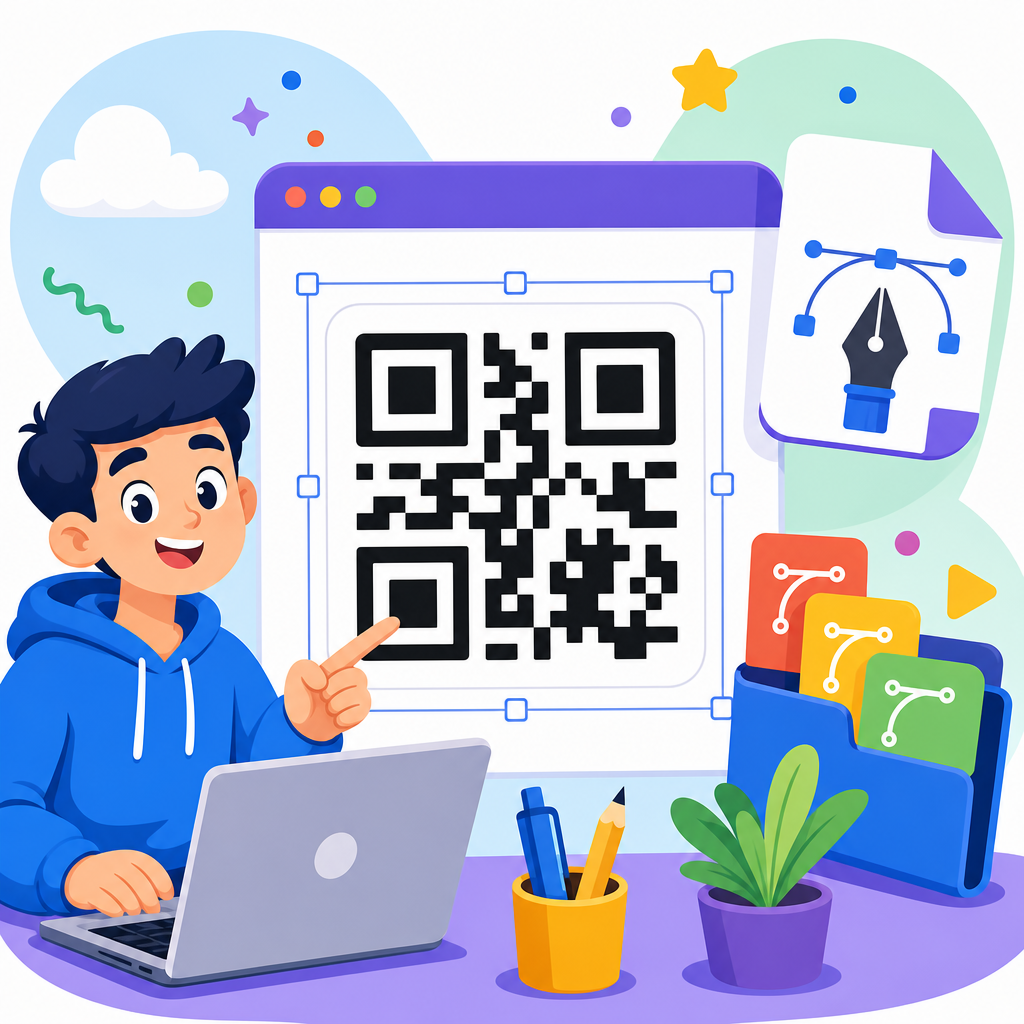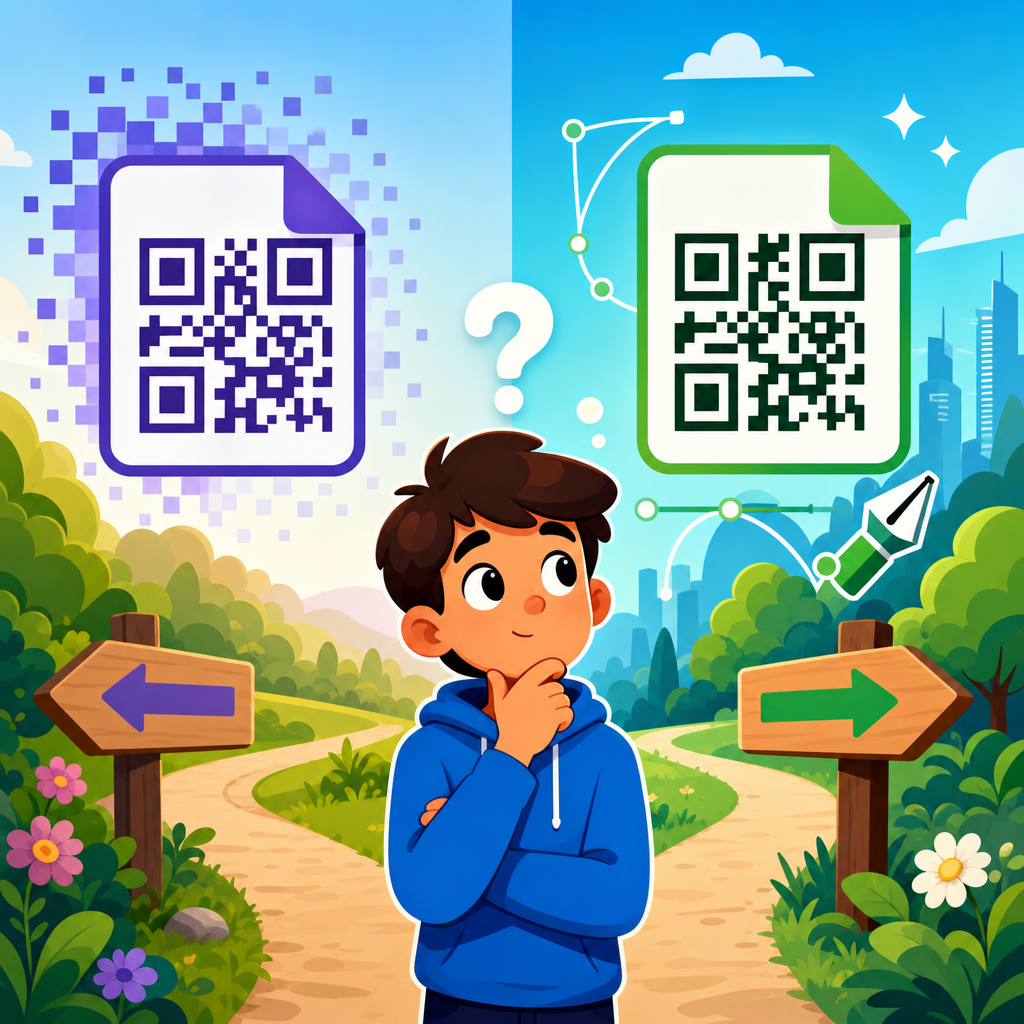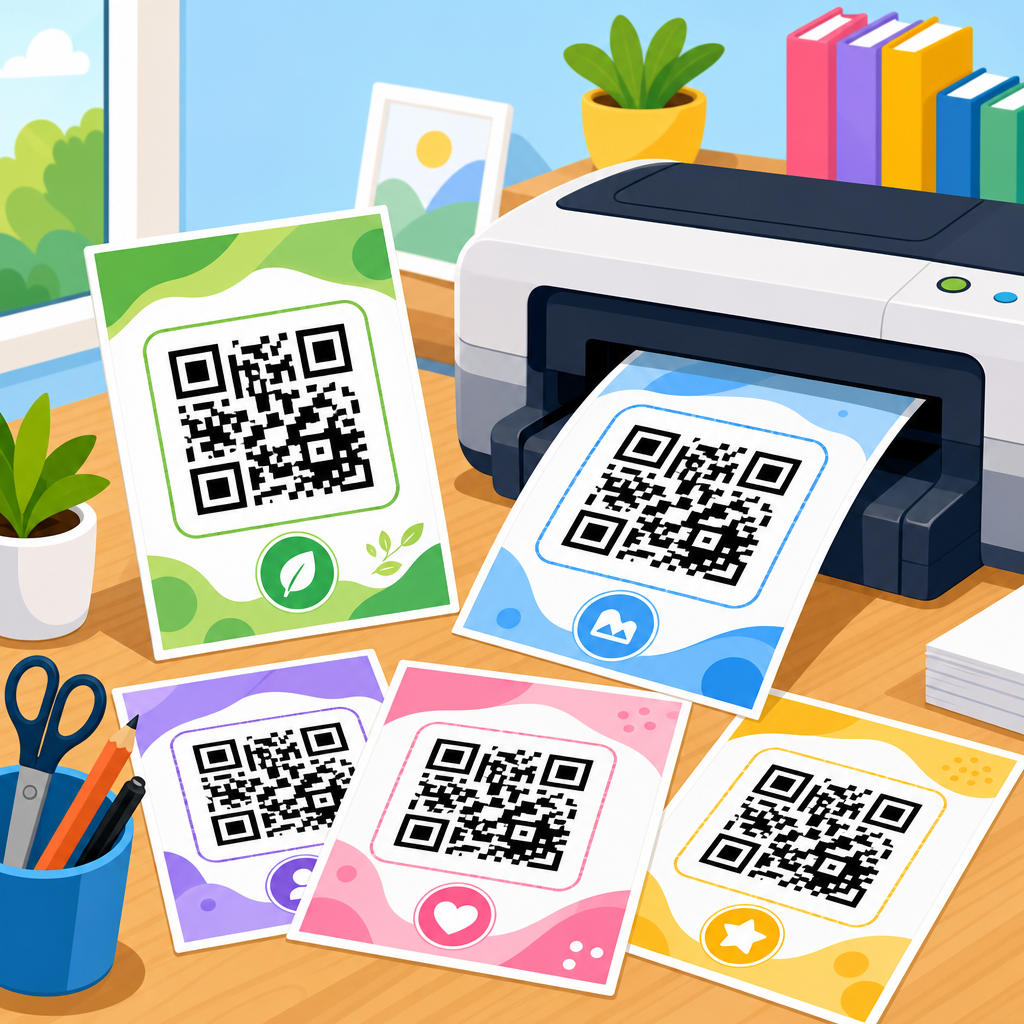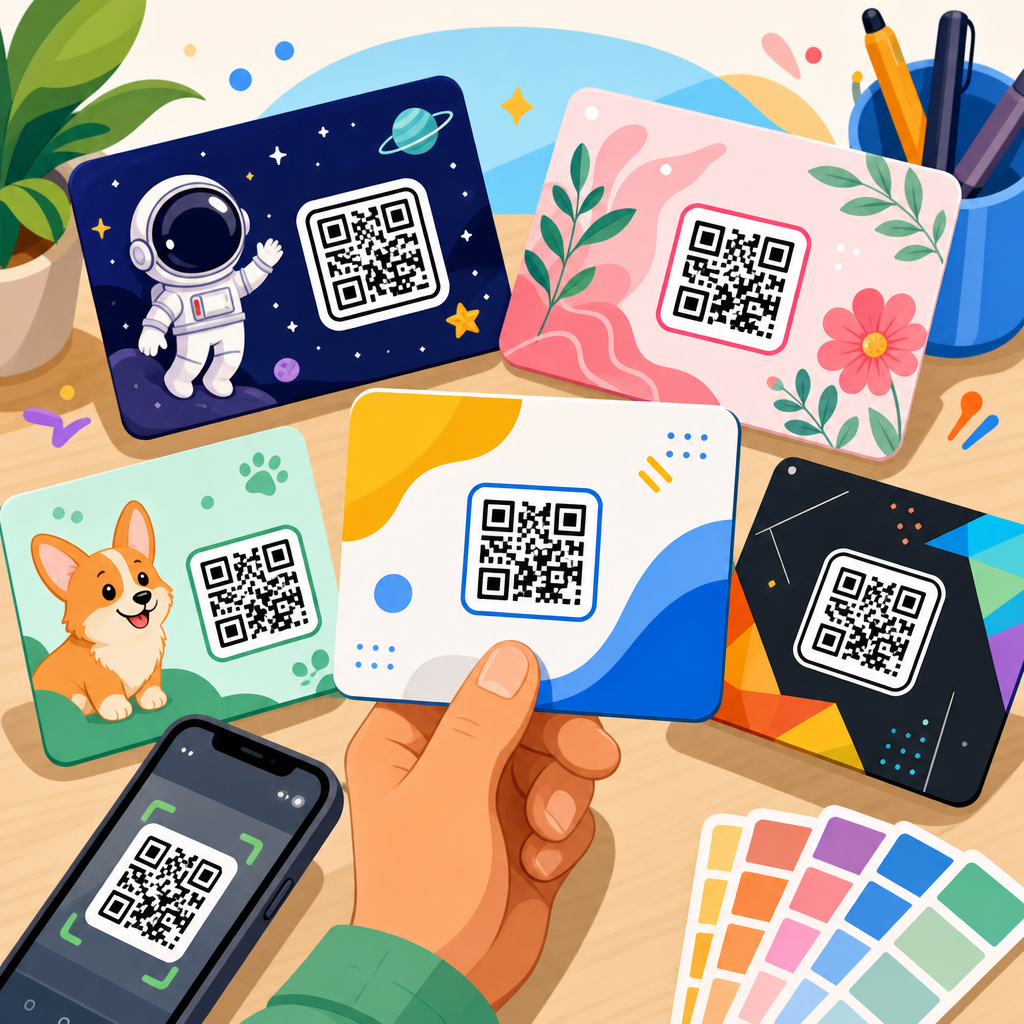
Downloadable QR code business card designs give companies a fast way to combine printed networking with instant digital access, turning a small card into a gateway for contact details, portfolios, booking links, menus, payment pages, and lead capture forms. In practice, this topic sits at the intersection of brand design, print production, mobile usability, and QR code management. A downloadable asset can be a ready-made template, an editable source file, a print-ready PDF, a vector icon pack, or a full card system built for tools such as Adobe Illustrator, Canva, Figma, InDesign, or Microsoft Word. The core idea is simple: instead of designing every business card from scratch, teams use reusable files that already account for layout, scan distance, contrast, bleed, safe zones, and link strategy.
That matters because business cards still play a real role in sales meetings, conferences, retail counters, service calls, and local networking, but the expectation has changed. People want a tap or scan experience that saves a contact, opens a calendar, downloads a brochure, or starts a chat without manual typing. I have seen the difference firsthand at events where a standard card gets pocketed and forgotten, while a card with a well-placed dynamic QR code produces immediate visits, tracked scans, and follow-up conversations the same day. Downloadable QR code business card designs make that performance repeatable across teams, locations, and campaigns.
For a hub page, the goal is broader than showcasing attractive templates. It needs to explain what downloadable assets include, how to choose the right file type, what technical standards protect scan reliability, and which design patterns work in real environments. It should also point readers toward the related resources they are likely to need next, from editable templates and print setup guides to vCard QR code tools, analytics platforms, and brand implementation checklists. When this page does its job well, a designer can find usable files, a marketer can deploy a campaign, and a small business owner can print cards that look polished and function correctly from the first batch.
Clear definitions help. A static QR code stores fixed data directly in the code pattern and cannot be changed after printing. A dynamic QR code points to a short redirect URL that can be updated later, which is usually the better choice for business cards because roles, phone numbers, landing pages, and campaigns change. Print-ready means the file is prepared for production with correct dimensions, color settings, bleed, and export quality. Editable means the recipient can modify text, colors, logo placement, and the QR destination. Vector files such as AI, EPS, SVG, and PDF scale cleanly and are preferred for logos and icon elements, while raster formats such as PNG and JPG are useful for previews or quick online sharing but are less flexible for production work.
What downloadable assets belong in this hub
Downloadable assets for QR code business cards cover more than front-and-back card templates. A useful hub in the QR Code Resources, Templates & Tools category should organize files by task. That includes minimalist card layouts, premium brand styles, realtor cards, salon cards, restaurant cards, consultant cards, and event-specific handout cards. It also includes supporting assets: QR code placement guides, print specification sheets, icon libraries, mockups for approval workflows, and alternate sizes for US standard 3.5 by 2 inches and international 85 by 55 millimeters. If a team works across regions, those regional formats are not optional; mismatched card sizes often break alignment and trim expectations during print runs.
Editable source files are especially important because business cards are living assets. Sales titles change, office numbers shift, and campaign links get updated. In my own projects, the most durable asset packs include a master design file, locked brand layers, editable text styles, linked image placeholders, and a separate QR code layer with notes about minimum size and error correction. This structure prevents accidental distortion and makes handoff easier between designers, coordinators, and local printers. Good asset packs also include font notes or open-source alternatives to avoid broken layouts when a recipient does not own the original typeface.
A strong hub should also collect downloadable assets by outcome. Some cards are built for contact saving through vCard or digital business card pages. Others are designed for appointment booking, product catalogs, review requests, loyalty signups, payment links, or map directions. The destination changes the layout. A booking-focused card needs a strong call to action near the QR code. A portfolio card for a photographer benefits from larger visual space and a shorter supporting URL. A card meant for field service technicians often prioritizes phone, emergency response language, and after-hours contact options. Download categories should reflect those real usage patterns, not just visual style labels.
| Asset Type | Best Use | Preferred Formats | Key Requirement |
|---|---|---|---|
| Editable card template | Brand customization and repeat printing | AI, INDD, Figma, Canva | Locked dimensions, bleed, safe zone |
| Print-ready card file | Immediate production | PDF/X, high-resolution PDF | CMYK export and outlined assets where needed |
| QR code graphic pack | Swapping destinations across versions | SVG, EPS, PNG | High contrast and tested scan performance |
| Mockup set | Approvals and sales presentation | PSD, PNG, JPG | Accurate scale and realistic placement |
| Implementation guide | Team consistency | PDF, DOCX | Instructions for sizing, links, and testing |
Design standards that make QR code business cards scan reliably
The first rule of QR code business card design is that scan reliability matters more than decoration. A beautiful card that fails under average lighting or older phone cameras is a wasted print job. In most business card layouts, the QR code should be at least 0.8 inches square, and often closer to 1 inch when the audience may be scanning in motion or in low light. Quiet zone is essential: leave a margin around the code, typically four modules wide at minimum, so the camera can distinguish the pattern from surrounding graphics. High contrast is nonnegotiable. Black on white remains the safest option. Branded colors can work, but only if contrast stays strong and testing confirms consistent scans.
Error correction levels deserve attention. QR codes use L, M, Q, and H levels, allowing a percentage of the code to be restored if part is obscured. For business cards with a logo overlay or light wear expected in pockets and wallets, Q or H is often appropriate, but there is a tradeoff: higher correction increases code density, which can make very small codes harder to scan. That is why downloadable designs should specify not only where the code sits, but how the QR is generated. A template without generation guidance leaves too much room for user error.
Placement also affects real-world performance. Back-of-card placement often gives the code more room and visual focus, while front placement can support immediate action if the card is displayed in holders or handed over quickly. I generally avoid placing codes near rounded corners, metallic foil, heavy texture, or glossy glare zones. Specialty finishes can look premium but interfere with scanning. Matte lamination is usually a safer choice than high-gloss UV over the code area. If a design uses dark backgrounds, placing the QR inside a white knockout box is a proven fix that preserves both brand aesthetics and readability.
Supporting text improves usability and conversion. A QR code should not stand alone without context. Add a clear action line such as “Scan to save my contact,” “Scan to book a consultation,” or “Scan to view our product catalog.” This small addition answers the user’s immediate question and raises scan intent. It also helps when the audience is unfamiliar with QR-driven business cards or assumes the code leads somewhere generic. Effective downloadable QR code business card designs therefore pair visual balance with explicit instruction.
Choosing the right format, platform, and workflow
The best downloadable asset depends on who will edit it and how often it will change. For agency teams and in-house designers, Adobe Illustrator and InDesign remain strong choices because they support precise vector handling, color control, and print export standards. Figma works well for collaborative review and template systems, especially when multiple stakeholders need browser-based access, although final print checks still matter. Canva is popular with small businesses because it lowers the editing barrier, but not every Canva file is prepared for exact print production, so templates need disciplined setup. Microsoft Word templates are useful only for very simple, low-budget scenarios and should not be the default for brand-critical cards.
Dynamic QR code platforms deserve equal consideration because the card design is only half the system. Tools such as QR Code Generator Pro, Bitly, Flowcode, Beaconstac, Uniqode, and Scanova support editable destinations and scan analytics. For business cards, dynamic management usually wins because it protects the investment in print. If a salesperson changes roles or a restaurant updates its booking page, the printed card can keep working. The platform should support HTTPS, fast redirects, UTM tagging, and ideally downloadable SVG output for clean placement in the card file. Without those capabilities, even an attractive template becomes fragile.
Workflow discipline prevents costly errors. A practical downloadable asset hub should include a path that starts with choosing the card objective, then selecting the template format, generating the QR code, inserting the destination link, testing on multiple devices, exporting for print, and reviewing a physical proof. This sounds basic, but most failures come from skipping one of those steps. I have seen cards printed with low-resolution screenshot QR codes, codes linked to staging sites, and designs exported without bleed, creating trim issues that cut into contact details. Templates are helpful, but process is what turns them into dependable business assets.
Version control matters when companies distribute cards across teams. A central folder structure with naming conventions, approved QR destinations, and archived print PDFs avoids duplicate variants and outdated links. The best hubs do not just offer a download button; they create a repeatable operating model. That model should include permission rules, quality checks, and an ownership plan for both the visual file and the QR destination.
Use cases, measurement, and linked resources in the subtopic hub
Different industries use QR code business cards in distinct ways, and downloadable designs should reflect those realities. Real estate agents often link to property listings, mortgage calculators, and contact forms. Healthcare practices may direct patients to intake forms, telehealth instructions, or office maps, while carefully avoiding sensitive data inside the code itself. Restaurants use cards for catering menus, reservations, loyalty programs, and review collection. Freelancers and consultants link to case studies, portfolios, Calendly pages, and testimonials. Event exhibitors use cards to route scans to lead forms segmented by product line. The design, call to action, and landing page should be tuned to that use case, not treated as generic.
Measurement is one of the biggest advantages over traditional cards. A dynamic QR code allows scan counts, device patterns, time trends, and campaign attribution through analytics dashboards or Google Analytics with UTM parameters. That means a downloadable QR code business card design can support actual performance review. A consultant can compare scans from conference cards versus direct meeting cards. A retailer can test whether “Scan for 10% off” outperforms “Scan to join our VIP list.” A regional sales team can use different redirect links by market while keeping the same visual template. These are practical, measurable gains, not abstract design theory.
As the hub page for downloadable assets in the broader QR Code Resources, Templates & Tools topic, this article should connect readers to the next materials they need: free and premium editable templates, vCard QR generators, print size guides, QR code testing checklists, branding rules for custom QR codes, NFC versus QR comparisons, and analytics setup tutorials. Internal linking should mirror the user journey. Someone starting with “downloadable QR code business card designs” often needs a template first, then a generator, then a printing checklist, then a measurement guide. Organizing resources in that sequence helps readers move from idea to implementation without friction.
Downloadable QR code business card designs work best when they are treated as a system, not a one-off graphic. The essential pieces are straightforward: a well-built editable template, a reliable dynamic QR code, a landing destination matched to user intent, and print specifications that protect scanning in the real world. When those pieces align, a business card becomes more than contact information. It becomes a portable conversion tool that supports networking, lead capture, booking, and brand recall.
The most useful asset hubs make those results easy to reproduce. They offer files in the right formats, explain when to use each one, show the scan and print standards that matter, and route readers to related tools and guides for the next step. That approach saves time for designers, reduces errors for marketers, and gives business owners a clearer return on every print run. It also prevents the common mistake of choosing a stylish template that looks impressive on screen but performs poorly in a pocket, on a counter, or under event lighting.
If you are building or refreshing your card system, start with a downloadable template designed for your specific use case, pair it with a dynamic QR code, and test it before you print at scale. Then use the rest of the QR Code Resources, Templates & Tools hub to choose generators, print guides, and measurement workflows that keep every card useful long after it leaves your hand.
Frequently Asked Questions
What should I look for in a downloadable QR code business card design?
A strong downloadable QR code business card design should balance brand presentation, print quality, and real-world scan performance. At a minimum, look for files that are easy to customize, available in professional formats, and built with enough spacing around the QR code to keep it readable after printing. Good design packs often include editable source files such as AI, PSD, INDD, SVG, or layered PDF files, along with print-ready exports that already account for bleed, trim, and safe zones. If you are outsourcing printing, those production details matter because even a visually attractive card can fail if important elements sit too close to the edge or if the QR code gets clipped.
It is also important to evaluate how the QR code fits into the layout. The best templates do not treat the code as an afterthought. Instead, they give it a clear position, enough white space, and a logical call to action such as “Scan to save my contact,” “View portfolio,” or “Book now.” This helps both usability and conversion. A card can include your logo, colors, typography, and contact details, but the QR code should still remain the easiest element for a smartphone camera to detect. Designs that overload the front or back with too much text, decorative patterns, or low-contrast backgrounds can reduce scan reliability.
Finally, consider whether the download supports your intended use case. Some businesses want a QR code that opens a digital business card or vCard, while others need it to direct people to menus, payment links, appointment forms, product catalogs, or lead capture pages. A useful downloadable design gives you enough flexibility to match the destination to your sales process. In other words, the best business card file is not just attractive on screen. It is editable, print-safe, scan-friendly, mobile-conscious, and aligned with the action you want the recipient to take after scanning.
Which file formats are best for editing and printing QR code business card templates?
The best file format depends on who will edit the card and how it will be printed. For professional design control, vector-based formats such as AI, EPS, and SVG are usually the strongest options because they scale cleanly without losing sharpness. That matters for logos, line art, and QR codes, all of which should remain crisp at any size. If you are working with a designer or print shop, vector files are often preferred because they preserve detail, support color management more accurately, and can be exported into high-quality press-ready PDFs.
PDF files are especially valuable when you need a reliable print-ready version. A properly prepared PDF can include bleed settings, crop marks, embedded fonts, and CMYK color profiles, making it one of the safest handoff formats for commercial printing. Editable PDFs can also work for simple text changes, although they are usually less flexible than source files created in Adobe Illustrator or InDesign. For users who need to update the design themselves, layered PSD files may be helpful, particularly when the card uses more photographic or texture-heavy layouts. However, raster-based files should be handled carefully because resizing can reduce quality if not managed correctly.
If the downloadable package includes multiple formats, that is often a sign of a practical, well-prepared asset. For example, a bundle might contain AI or SVG for editing, PDF for printing, PNG previews for review, and a font list or style guide for consistency. For QR code elements specifically, vector output is ideal because it preserves the exact geometry of the code. That said, no matter the file type, the final printed card should be exported at professional quality with proper dimensions, sufficient contrast, and no distortion applied to the QR area. The best format is ultimately the one that supports clean editing, dependable production, and accurate scanning in the finished card.
How do I make sure the QR code on a business card actually scans reliably?
Reliable scanning starts with the destination and the code itself. First, decide whether you need a static QR code or a dynamic one. A static code points directly to a fixed destination and cannot be changed after printing, while a dynamic code routes through a managed link that can usually be updated later without reprinting the card. Dynamic QR codes are often better for business cards because contact links, booking pages, menus, and landing pages may change over time. They can also provide tracking data such as scan counts, device types, and locations, which is useful when measuring networking or campaign performance.
From a design perspective, the biggest scanning factors are size, contrast, quiet zone, and surface finish. The code should be large enough to be recognized quickly by common smartphone cameras, and it should sit on a high-contrast background, typically dark code elements on a light background. Avoid placing the QR code over busy textures, gradients, photography, metallic foil, or glossy glare-prone finishes unless you test extensively. The “quiet zone,” or clear empty space around the code, is essential because scanners use it to distinguish the code from surrounding graphics. Removing that margin to fit more design elements onto the card is a common mistake.
Testing is the final and most important step. Before ordering a full print run, print physical proofs at actual size and scan them with multiple phones under normal lighting conditions. Test both iPhone and Android devices if possible, and verify that the scan opens a mobile-friendly page quickly. Also make sure the destination is useful once the user arrives. A perfectly scannable QR code still underperforms if it leads to a slow website, a non-mobile form, or a confusing landing page. The goal is not just technical scan success. It is a smooth experience from camera to action.
What should a QR code business card link to for the best results?
The best destination depends on your business goal, but in most cases the QR code should lead to a high-intent, mobile-optimized experience that is easier than manually searching for your information later. For many professionals, a digital contact card or vCard landing page is the most practical option because it lets the recipient save your phone number, email, company name, website, and social profiles in a few taps. This is especially effective at trade shows, conferences, and sales meetings where speed and convenience matter. Instead of relying on the recipient to type in details from a printed card, the QR code turns the exchange into an immediate digital connection.
Other businesses may get better results by linking to a portfolio, appointment scheduler, service menu, product catalog, payment page, review request page, or lead capture form. A restaurant may use a downloadable QR code card design that points to a menu or catering inquiry form. A consultant may direct people to a booking page. A freelancer may send visitors to a portfolio with a contact button. A retail brand may prefer a landing page with featured products and a promotional offer. The key is to choose one destination that reflects the primary next step you want the user to take, rather than overwhelming them with too many choices at once.
It is also smart to think beyond the link itself and design the whole flow. The landing page should load quickly, look polished on mobile devices, and clearly reinforce the same branding used on the card. If you use a dynamic QR platform, you can update the destination later as campaigns change or route people to specialized pages for events, regions, or audience segments. In short, the most effective QR code business card does not just connect to “something online.” It connects to the right digital experience for your audience and your conversion goals.
Are downloadable QR code business card designs suitable for professional printing and brand consistency?
Yes, as long as the downloadable design is built properly and customized with production standards in mind. Many downloadable templates are created specifically for professional print workflows, which means they can be excellent options for startups, agencies, restaurants, consultants, and established brands that need speed without sacrificing presentation. A well-prepared file should include accurate dimensions, bleed areas, safe margins, and editable brand elements so you can insert your own logo, color palette, typography, and messaging. When these fundamentals are present, a downloadable asset can produce results that feel every bit as polished as a custom design.
Brand consistency depends on how thoughtfully the template is adapted. Even the best template should be reviewed to ensure that fonts align with your existing identity, colors are converted appropriately for print, and the QR code destination matches the brand experience after the scan. If your company uses specific design standards, it may be worth having a designer update the file rather than using it exactly as downloaded. This is especially true for businesses with strict visual guidelines or premium brand positioning. Templates save time, but consistency comes from controlled customization, not from leaving every default setting unchanged.
Professional printing also requires attention to materials and finishing choices. Card stock thickness, matte versus gloss lamination, rounded corners, spot UV, and specialty coatings can all affect both appearance and scan performance. For example, a matte finish often reduces glare and may improve scan usability compared with a highly reflective glossy surface. Before committing to a large order, request a printed proof and test the QR code in realistic conditions. When combined with careful editing and proofing, downloadable QR code business card designs can be a fast, scalable, and highly professional solution that supports both brand integrity and digital engagement.