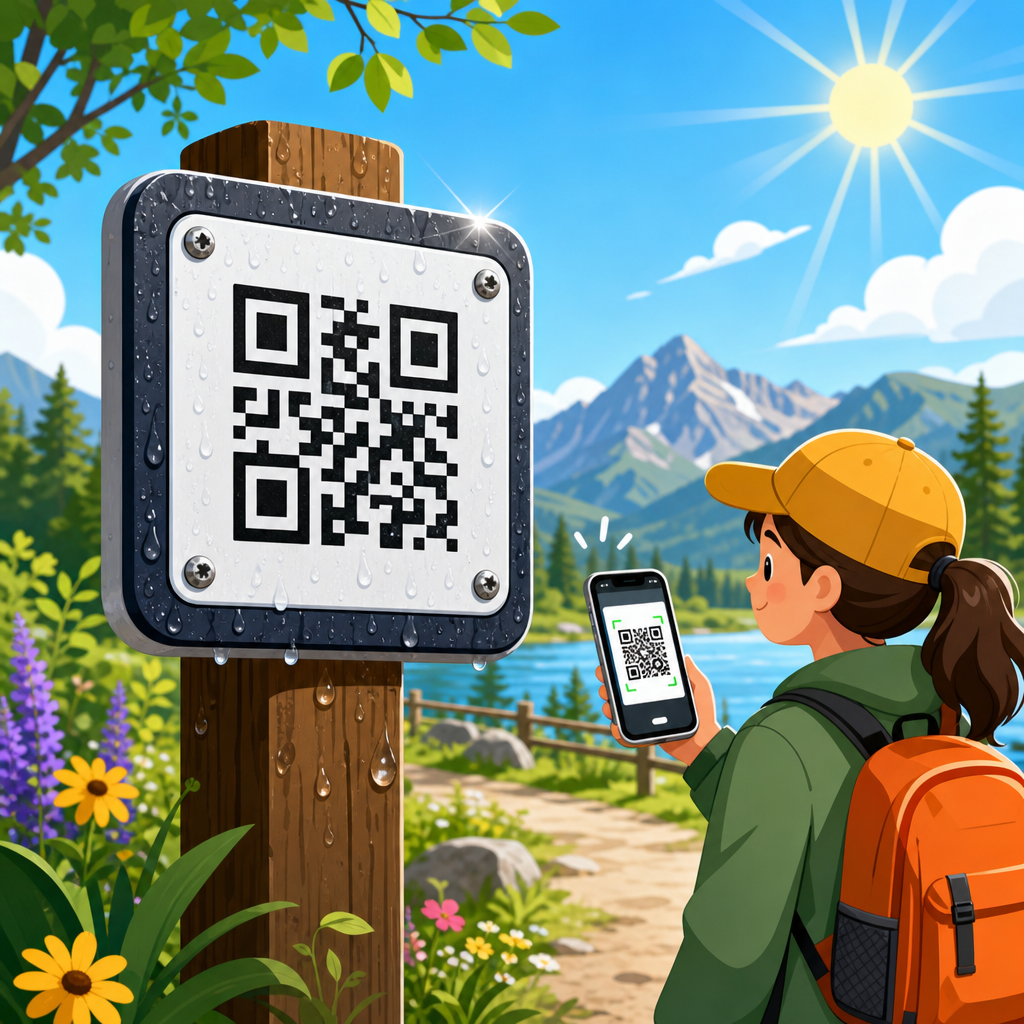
Printing QR codes looks simple until a code fails on a wet package, fades in a sunny window, or becomes unreadable because the print method could not hold the required module detail. Indoor vs outdoor QR code printing is really a materials, environment, and scan-reliability decision. The right choice affects marketing performance, operations, customer experience, and replacement cost. In practice, a QR code is only successful when it survives long enough, scans quickly on common smartphone cameras, and stays attached to the surface where people expect to find it.
In this subtopic hub, “printing QR codes” means the full production chain: choosing the code size and error correction level, selecting a substrate, choosing an ink or toner system, deciding between adhesive labels, direct print, engraved plates, or laminated signage, and validating readability after installation. Indoor printing usually assumes controlled light, limited moisture, moderate abrasion, and shorter campaign cycles. Outdoor printing must account for ultraviolet exposure, temperature swings, rain, dirt, cleaning chemicals, vandalism, and longer service life. Those conditions change what works.
I have seen the same QR artwork perform perfectly on an indoor retail shelf tag and fail within weeks when moved to an exterior pickup locker. The data did not change; the print physics did. Dot gain blurred the modules, gloss created glare, and a low-grade adhesive lifted at the corners. That is why this topic matters. If you are building product labels, event signage, menus, direct mail pieces, equipment tags, construction notices, or storefront decals, understanding indoor vs outdoor QR code printing helps you choose methods that balance cost, durability, and scan speed from the start.
This article serves as the hub for the broader “QR Code Design, Printing & Materials” subtopic. It covers the major decisions behind printing QR codes and points to the kinds of deeper articles teams usually need next: QR code size and scan distance, paper versus synthetic labels, matte versus gloss finishes, lamination, adhesive selection, UV-resistant inks, metal and acrylic signage, testing protocols, and common print failure modes. If you need one page to frame the entire printing conversation before specification or procurement, this is it.
How indoor and outdoor QR code printing differ
The core difference is environmental tolerance. Indoor QR code printing is optimized for short- to medium-term readability in stable conditions. Typical materials include coated paper, polypropylene labels, standard toner output, and low- to mid-tack adhesives. Common indoor use cases are brochures, packaging inserts, shelf talkers, table tents, badges, office wayfinding, and temporary promotional signs. Indoors, you can often prioritize low unit cost, high visual quality, and fast turnaround, because the code will not face heavy weathering.
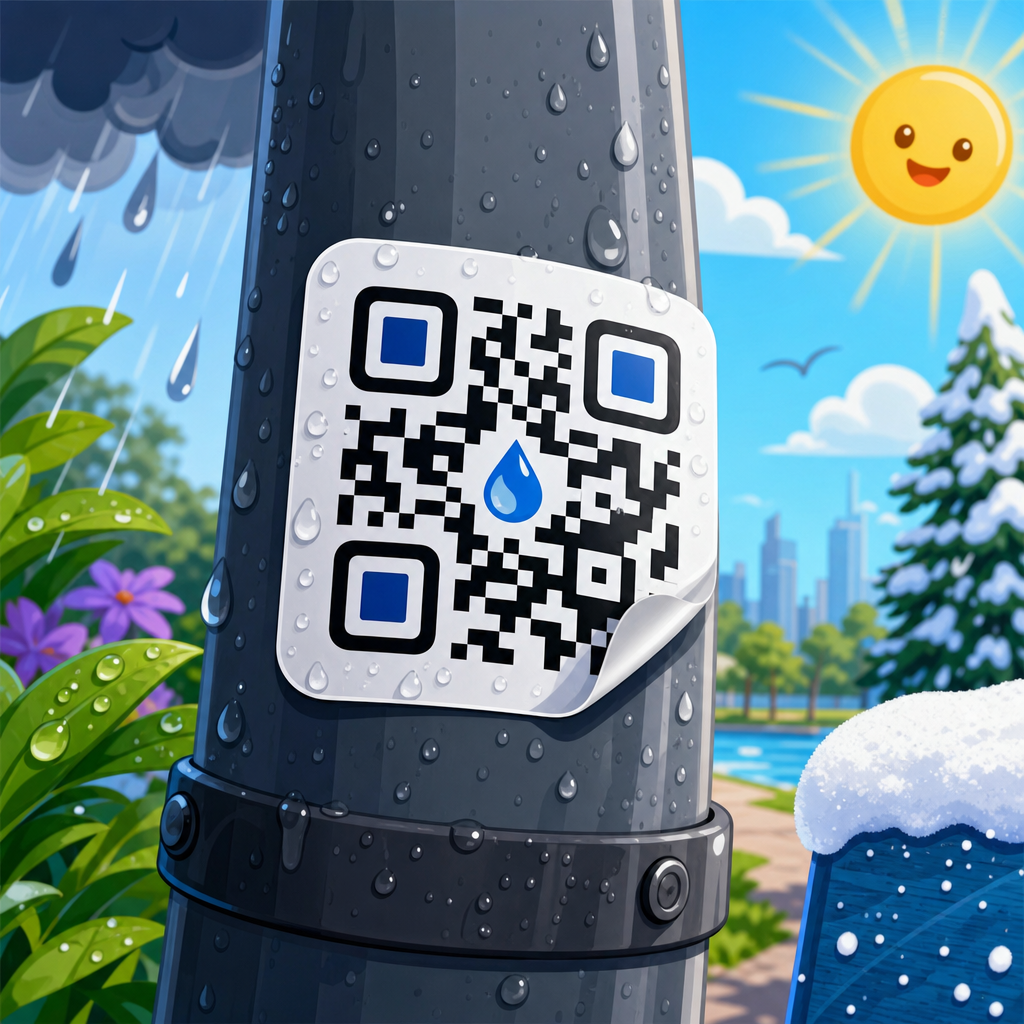
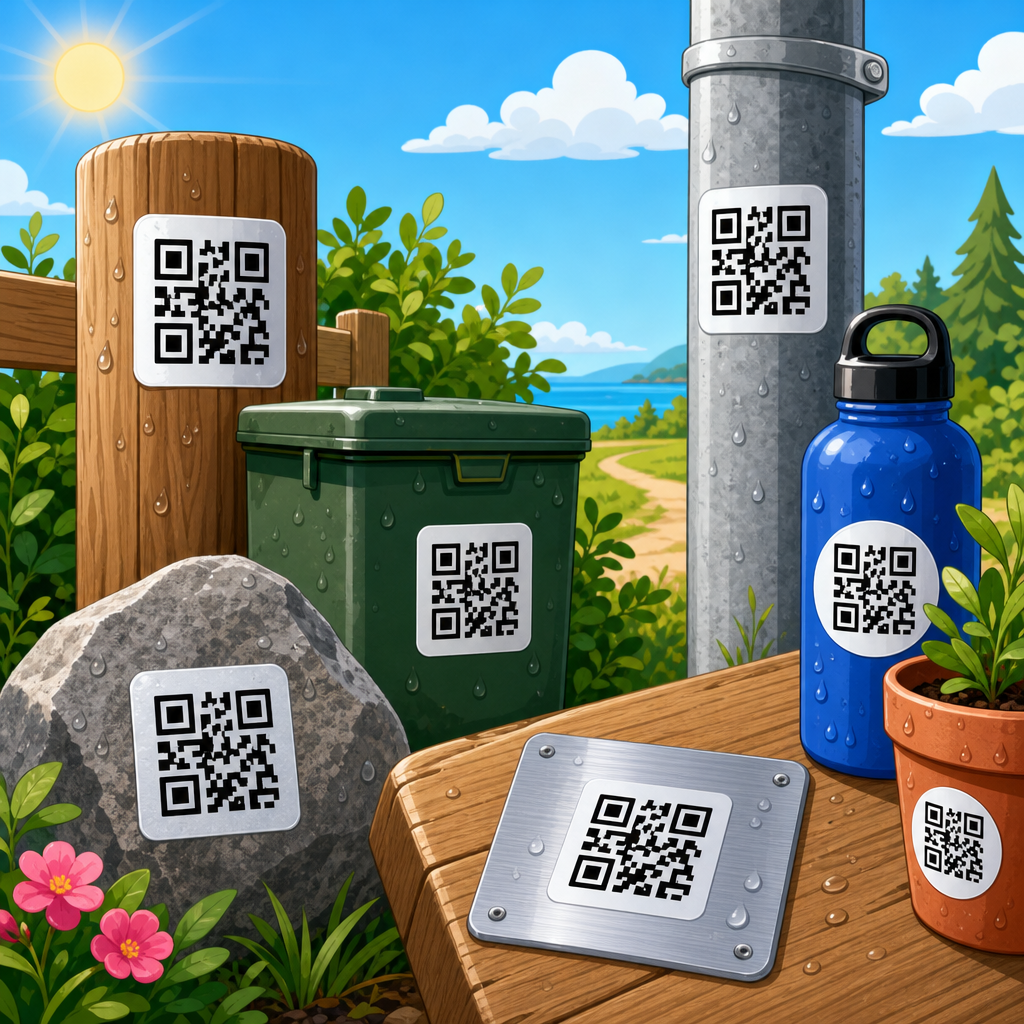
Outdoor QR code printing shifts the priority to survivability. Exterior decals, real-estate signs, municipal notices, trail markers, parking instructions, utility labels, and equipment plates need substrates that resist water, UV fading, thermal expansion, and abrasion. That usually means polyester, vinyl, polycarbonate, anodized aluminum, powder-coated metal, engraved laminate, or UV-stable rigid boards. Outdoor adhesives may need to bond to painted metal, concrete, glass, or textured plastic while tolerating freeze-thaw cycles. Print systems may include resin thermal transfer, UV-cured inkjet, screen printing, laser marking, or etched plates.
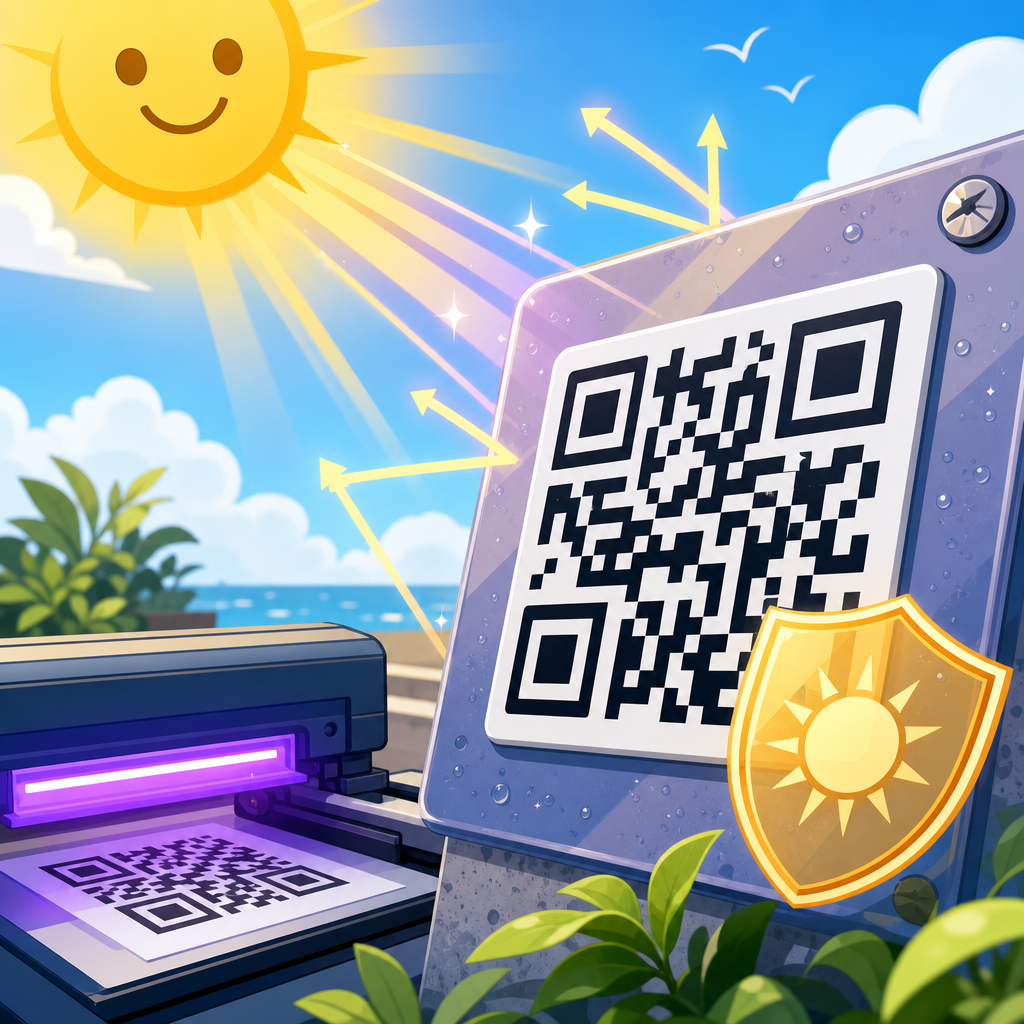
Scanning conditions differ too. Indoor codes are often scanned at close range under even lighting. Outdoor codes may be scanned in direct sun, shade, rain, or at night under street lighting. This makes finish selection critical. Matte surfaces reduce specular glare and generally improve scan reliability. High-gloss laminates can look attractive, but I routinely avoid them for outdoor QR signs unless viewing angles are controlled. A code that reflects the sky can become effectively unreadable, even when the print itself is technically sharp.
Materials, print methods, and durability by use case
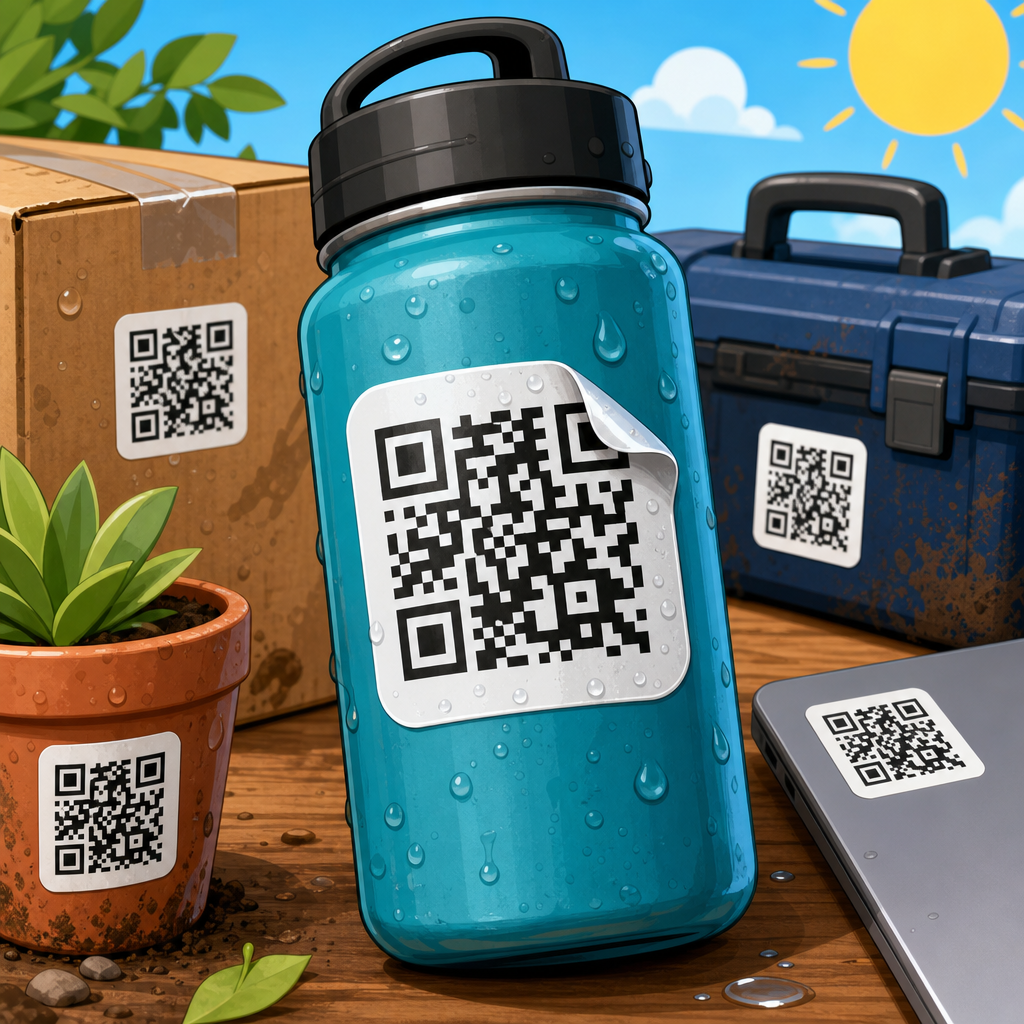
Material and print method should match both lifespan and substrate. For a two-week indoor campaign, digitally printed paper or polypropylene labels are usually sufficient. For six months on a retail window, a weather-resistant vinyl decal with fade-resistant inks and a protective overlaminate is safer. For asset tracking on forklifts or generators, polyester labels printed with resin ribbons, or engraved metal tags, hold up far better than office-printed stickers. The mistake I see most often is selecting the code graphic first and the production method second. In reality, production constraints should shape the code specification.
| Use case | Recommended material | Typical print method | Expected environment | Key risk to manage |
|---|---|---|---|---|
| Restaurant table tent | Coated card or laminated synthetic | Digital toner or inkjet | Indoor, light cleaning | Smudging and glare |
| Storefront window decal | Exterior-grade vinyl | Eco-solvent, latex, or UV inkjet | Sun, heat, condensation | UV fade and reflective finish |
| Equipment asset tag | Polyester or anodized aluminum | Resin thermal transfer or laser mark | Abrasion, oils, weather | Adhesive failure or surface wear |
| Construction site sign | Aluminum composite or polycarbonate | Screen print or UV flatbed | Outdoor exposure, dirt | Distance scanning and debris buildup |
Paper remains useful indoors because it is inexpensive and prints crisply on most digital presses. However, it absorbs moisture, tears easily, and changes dimensionally with humidity. Synthetic films such as BOPP, PET, and vinyl are more stable and often preferable for labels that face refrigeration, cleaning, or repeated handling. For the harshest outdoor applications, hard signage or metal plates are best because they resist curl, edge lift, and impact. In manufacturing environments, etched stainless steel or laser-marked anodized aluminum can remain readable for years where standard labels fail in months.
Print technology matters as much as substrate. Office inkjet can produce acceptable indoor QR codes at low volume, but inks may feather on porous stock and run if exposed to water. Toner is more stable on paper, though some devices soften edges at small sizes. Thermal transfer printing with a resin ribbon is a workhorse for industrial labels because it creates durable, chemical-resistant images on polyester. UV inkjet excels on rigid signs, while screen printing is still valuable for high-volume outdoor signage with excellent ink durability. Laser engraving and chemical etching are premium choices for permanence.
Design rules that make printed QR codes scan reliably
A printed QR code must preserve contrast, quiet zone, and module geometry. Contrast is nonnegotiable: dark modules on a light background outperform decorative color treatments. Black on white remains the benchmark because smartphone camera algorithms detect it quickly. Dark blue on white can work. Light gray on silver usually does not. The quiet zone, the empty margin around the code, should remain clear of borders, text, folds, or graphic elements. If that margin is compromised, scanners may not isolate the symbol correctly, especially under poor lighting.
Size should be set by scan distance, camera quality, and code density. As a practical starting point, many teams use at least 0.8 to 1 inch for simple close-range codes on print collateral, then increase size as encoded content grows or scan distance increases. Tiny codes packed with dense URLs are common failure points. Dynamic QR codes help because they shorten encoded data and produce less dense symbols. Higher error correction can improve resilience when a code may get scratched or partially blocked, but it also increases symbol complexity. There is always a tradeoff.
Print resolution must be sufficient to hold clean module edges. A QR code made of blurred squares, spread dots, or jagged stair-steps may still look acceptable to a designer but scan inconsistently in the field. I recommend proofing at final size on the exact device or press whenever possible. Test several smartphones, including older models, because real audiences do not all use flagship cameras. Also test under realistic conditions: on the wall, behind glass, in sunlight, after lamination, and after the sign has been mounted to any curved or textured surface.
Finish choice is another hidden variable. Matte coatings usually outperform gloss because they reduce reflections from overhead lights and sun. If branding requires a premium finish, use spot treatments outside the code area and keep the symbol itself matte. Avoid placing QR codes across seams, folds, rivets, corrugation valleys, or heavily textured materials. Do not reverse a code out of a dark background unless you have verified scanner compatibility. Some modern apps can read inverted codes, but black-on-light still delivers the highest reliability across devices and contexts.
Production, installation, and testing before full rollout
The safest workflow for printing QR codes is specification, prototype, test, then production. Start with the destination URL or encoded action, choose static or dynamic delivery, define lifespan, identify the exact mounting surface, and document environmental exposure. Then select substrate, adhesive, print method, finish, and installation process. Procurement teams often compare only unit price, but installation labor and replacement frequency can dominate total cost. A cheaper label that fails outdoors in three months is usually more expensive than a premium label that lasts three years.
Adhesive choice deserves special attention. Permanent acrylic adhesives handle many outdoor applications better than general-purpose removable systems. Low-surface-energy plastics, powder-coated metals, and rough masonry may require specialty formulations or mechanical fastening. Surface preparation matters: oils, dust, condensation, and low installation temperature are frequent causes of early failure. I have seen excellent printed decals fail because they were applied to uncleaned equipment in cold weather. The QR code itself scanned fine, but the label detached before the campaign ended.
Testing should include both print quality verification and environmental validation. For print quality, use a verifier when requirements are strict, especially in industrial settings where uptime matters. ISO/IEC 18004 defines the QR code symbology, and verification practices help confirm reflectance, modulation, and decode performance. For general marketing use, hands-on smartphone testing is still essential. Simulate wear with abrasion, moisture, and chemical exposure when relevant. For outdoor signs, inspect after UV exposure and temperature cycling. Even a basic pilot across one location can prevent a costly multi-site reprint.
Measurement after launch closes the loop. Dynamic QR platforms let you track scans by date, location, and campaign asset, which helps identify whether a printing decision is hurting performance. If one store window poster gets far fewer scans than identical indoor counter cards, glare or placement may be the issue rather than audience intent. This hub article should connect naturally to your deeper resources on QR code sizing, laminates, adhesives, signage materials, and testing checklists. Use it as the planning page that informs every later specification and purchasing decision.
Indoor vs outdoor QR code printing comes down to matching the code to its real operating conditions. Indoors, lower-cost papers, films, and digital print methods often work well because exposure is limited and replacement is easy. Outdoors, durability drives the specification: UV resistance, water tolerance, abrasion resistance, stable adhesives, and glare control become essential. The code design itself must support printing realities, with strong contrast, an intact quiet zone, sufficient size, and a finish that does not sabotage scanning once the piece is installed.
The biggest lesson from real deployments is that printing QR codes is not only a graphic design task. It is a production and field-performance decision. Material, ink system, adhesive, mounting surface, and lighting conditions all influence whether someone can scan the code in one second or gives up entirely. Teams that prototype at final size, test on multiple phones, and specify for lifespan rather than lowest upfront cost consistently avoid the most common failures. They also protect campaign ROI by reducing replacements, preserving brand presentation, and keeping customer journeys frictionless.
As the hub for printing QR codes within the broader design and materials category, this page should guide your next steps. Use it to decide whether your project needs paper labels, synthetic decals, rigid signs, or permanent metal tags; whether matte lamination is worth the extra cost; and whether indoor assumptions are accidentally being applied to outdoor environments. Then move into the supporting articles on size, substrates, adhesives, finishes, and testing. If you are preparing a print run now, start by defining the environment and lifespan, then build the QR specification from there.
Frequently Asked Questions
1. What is the main difference between indoor and outdoor QR code printing?
The main difference is durability under real-world conditions. Indoor QR code printing is typically designed for controlled environments such as retail displays, product packaging stored inside, office signage, menus, event materials, and shipping workflows that do not face long-term exposure to sunlight, moisture, temperature swings, or abrasion. In those settings, standard paper stocks, basic adhesives, and conventional print methods may be perfectly adequate because the code only needs to remain sharp and scannable for a limited time and in relatively stable conditions.
Outdoor QR code printing, by contrast, must account for environmental stress. Sunlight can fade inks and reduce contrast, rain and humidity can distort paper-based materials or weaken adhesives, dirt can obscure small modules, and heat or cold can cause warping, cracking, or surface breakdown. A code that scans well on day one may fail after a few weeks if the substrate, laminate, ink, or print process was not selected for outdoor use. That is why outdoor QR codes often require more durable materials such as polyester, vinyl, metal plates, weather-resistant coatings, UV-stable inks, or thermal transfer systems built for industrial labeling.
From a performance perspective, the distinction is not just “inside versus outside.” It is really about expected lifespan, exposure, handling, and scan reliability. A QR code in a sunny storefront window may need outdoor-grade fade resistance even though it is technically indoors. Likewise, a warehouse label may be inside a building but still need strong resistance to friction, dust, and chemicals. The smartest approach is to define the environment first, then match the print method and material to the conditions the code must survive.
2. Why do outdoor QR codes fail more often, and how can that be prevented?
Outdoor QR codes fail more often because they face several threats at once, and even small losses in print quality can make a code unreadable. The most common causes are fading from UV exposure, water damage, low-quality adhesives, surface wear, poor contrast, and printing that does not preserve crisp module edges. Smartphone cameras need a clear distinction between dark and light areas of the code. If black modules fade to gray, if the white background becomes stained, or if the code surface becomes scratched or wrinkled, scan speed drops and failure rates rise quickly.
Another frequent issue is using a print method that looks fine up close but lacks long-term stability. For example, some lower-durability label materials may curl, absorb moisture, or lose adhesion on rough or hot surfaces. In other cases, the QR code itself is printed too small for the expected scanning distance, so once any wear appears, the camera can no longer resolve the pattern accurately. Outdoor applications also tend to involve more angle variation, glare, dirt, and inconsistent lighting, all of which put more pressure on print quality and contrast.
Prevention starts with engineering the code for the environment rather than treating it like a generic graphic. Use outdoor-rated substrates, UV-resistant inks or ribbons, and protective laminates where appropriate. Maintain a strong black-on-white contrast unless there is a compelling reason to customize. Avoid glossy finishes that create heavy glare in direct sun if scanning conditions are unpredictable. Make the code physically large enough for expected user distance, and preserve a proper quiet zone around it so smartphone cameras can detect the boundaries. It is also wise to field-test printed samples in the actual environment before full deployment. In practice, the most reliable outdoor QR codes are not simply printed well; they are specified well from the beginning.
3. Which printing methods and materials are best for indoor versus outdoor QR codes?
For indoor QR code printing, the best method depends on volume, lifespan, and surface type. Digital printing works well for marketing collateral, posters, packaging, and variable-data jobs because it is flexible and efficient for short to medium runs. Laser printing can be suitable for office-based labels and documents when the environment is stable and high abrasion resistance is not required. Inkjet can also perform well indoors, especially for color-rich applications, provided the substrate and ink set produce sharp module detail and high contrast. Common indoor materials include coated paper, synthetic paper, cardstock, polypropylene, and standard adhesive labels.
For outdoor use, material and print technology need to work together. Thermal transfer is a strong option for industrial labels because it can produce dense, durable marks on synthetic substrates using ribbons formulated for chemical, abrasion, and weather resistance. UV printing is useful on rigid materials such as plastic, acrylic, metal, or signage boards and can offer good outdoor performance when paired with the right inks and coatings. Solvent, eco-solvent, latex, and screen printing may also be appropriate for signage, decals, and long-term installations depending on the surface, exposure level, and required lifespan. Durable outdoor materials often include polyester, vinyl, polycarbonate, anodized aluminum, and specialty weather-resistant label stocks.
The key is that “best” does not mean the most expensive method in every case. It means the method that can consistently hold the QR code’s fine detail on the chosen material for the required lifespan. If the code contains a lot of data, the modules become smaller, so print resolution becomes even more important. If the surface is curved, textured, or exposed to cleaning chemicals, material compatibility may matter more than raw print resolution alone. The most dependable results come from matching data density, code size, substrate, exposure conditions, and production process as a single system rather than making the decision based on print cost alone.
4. How do size, contrast, and print quality affect QR code scan reliability?
These factors directly determine whether a smartphone camera can interpret the code quickly and accurately. Size matters because the QR code must be large enough for the device to resolve individual modules at the intended scan distance. A very small code may still work at arm’s length in ideal lighting, but if users will scan it from farther away, through glass, at an angle, or in bright outdoor light, it needs more physical space. As a rule, scan reliability improves when the code is sized generously relative to the use case rather than reduced to the smallest possible footprint.
Contrast is equally critical. Dark modules on a clean, light background remain the safest choice because they maximize camera recognition across a wide range of phones and lighting conditions. Design customization can be effective for branding, but every visual change introduces risk. Low-contrast color combinations, patterned backgrounds, gradients, metallic finishes, and heavy gloss can all interfere with detection. This risk increases outdoors, where reflections and sunlight already challenge the camera. For that reason, functional readability should come before aesthetics whenever the code supports a customer journey, product information, payments, or operational tracking.
Print quality is where many failures begin. QR codes depend on sharp geometry. If ink spreads, edges feather, dots break up, or modules fill in, the pattern can become ambiguous to the scanner. This is especially important for dense codes with small modules. Even when a print looks acceptable to the human eye, a smartphone may struggle if edges are soft or the quiet zone is inconsistent. The best practice is to produce the code at a suitable resolution, maintain crisp edges, leave enough surrounding whitespace, and test across several phone models. A QR code does not need to be visually fancy to perform well, but it does need to be clean, high-contrast, and appropriately sized for real usage conditions.
5. How can businesses choose the right QR code printing approach without overspending?
The most cost-effective approach is to start with the true use case rather than defaulting to either the cheapest label or the most rugged specification. Ask how long the code needs to remain readable, where it will be placed, what it will be exposed to, how often it will be handled, and what happens if it fails. A temporary in-store promotion may only need economical indoor printing on paper or standard synthetic stock. A code placed on outdoor equipment, returnable packaging, storefront glass, or long-life product labeling may justify a more durable substrate, stronger adhesive, UV protection, or a different print process entirely. The cost of replacement, rescanning delays, lost traffic, or customer frustration often exceeds the upfront savings from under-specifying the print.
It also helps to think in terms of total lifecycle cost. If a low-cost printed code has to be replaced repeatedly because it fades, peels, or stops scanning, it becomes more expensive over time than a higher-quality solution that works reliably for months or years. This is especially true in operations, logistics, and asset tracking, where every failed scan can slow workflows and create manual intervention. In marketing, poor scan performance means lost conversions and reduced campaign value. Reliability has a measurable business impact, not just a technical one.
To avoid overspending, segment your applications. Use standard indoor print specs where the environment is controlled and the code’s lifespan is short. Reserve outdoor-grade materials and more durable print methods for codes that truly face weather, UV, abrasion, chemicals, or long-term public use. Finally, always test before scaling. Print samples, place them in their actual environment, and check scan performance over time with common smartphone cameras. That small validation step is one of the best ways to balance cost, durability, and performance with confidence.