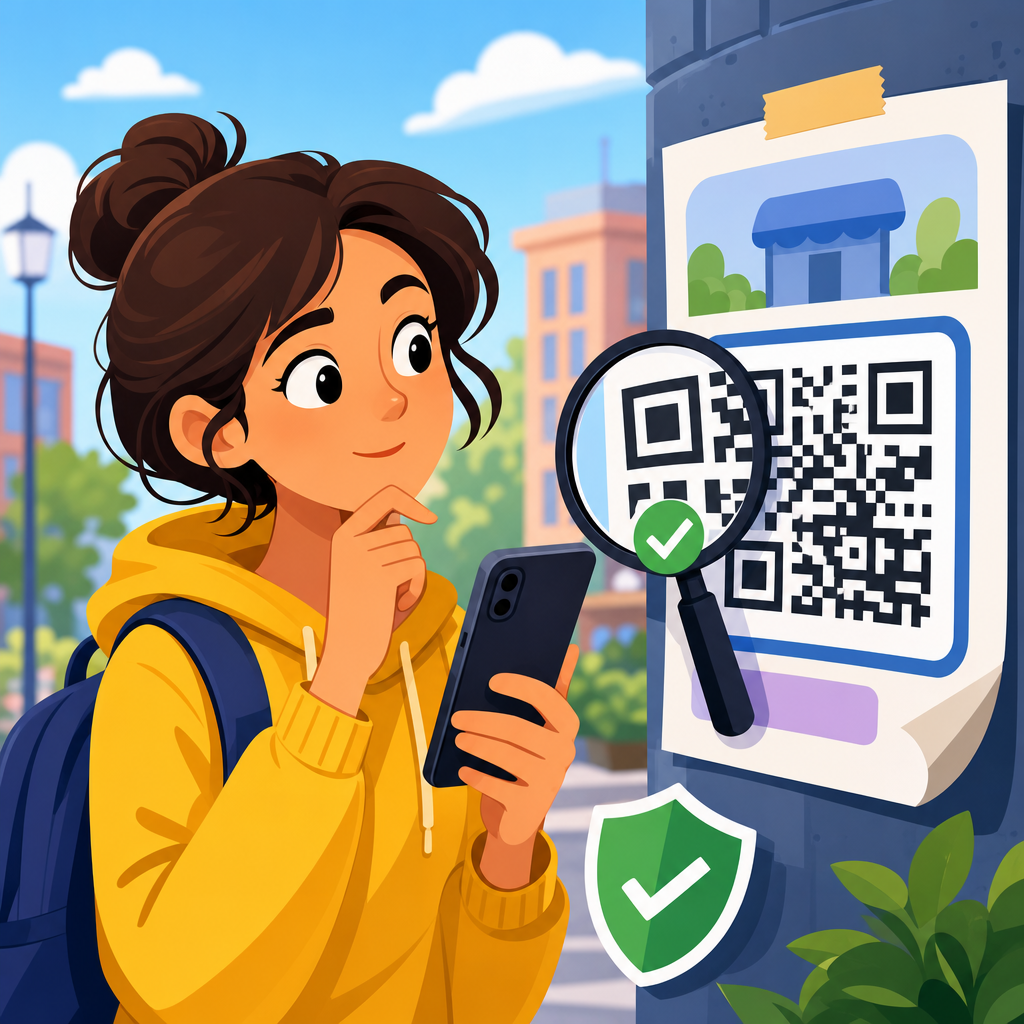
QR codes are convenient, fast, and now deeply woven into everyday life, but that same convenience makes them a powerful tool for fraud when users scan without checking what sits behind the pattern. A QR code, short for Quick Response code, is a two-dimensional barcode that stores data such as a website URL, payment request, contact card, Wi-Fi credential, app download link, or authentication token. In practice, most consumer risk comes from QR codes that redirect a phone to a web page, because the code itself is not visibly readable in the way a printed URL is. I have spent years reviewing phishing flows, mobile redirect chains, and payment fraud tactics, and QR-based attacks repeatedly succeed for one simple reason: people trust the code more than the destination.
Verifying a QR code before scanning means checking the context, the source, the physical condition of the code, and the destination preview your device shows before any page loads. It also means understanding what a legitimate business process usually looks like. Restaurants place menu codes on tables, banks use secure apps for login approval, and parcel lockers display transaction-specific codes on authenticated screens. Criminals exploit those familiar patterns by pasting malicious stickers over real codes, sending QR images by email, or placing fake payment codes in public spaces. Security teams sometimes call this quishing, a QR-enabled form of phishing that shifts the attack from keyboard to camera.
This matters because mobile devices compress the warning signs that users would normally notice on a laptop. A phone screen shows less of a URL, browser indicators are smaller, and people scan while distracted: standing in a parking garage, entering a venue, or paying at a counter. Attackers know that rushed users are less likely to inspect domain names, certificate details, or suspicious prompts. A single scan can lead to credential theft, malicious profile installation, fake customer support chats, unwanted app sideloading, or unauthorized payment requests. Verifying a QR code is therefore not a niche habit for security professionals. It is basic digital hygiene for anyone who uses a smartphone.
As the hub for safe scanning tips within QR code security and privacy, this guide explains how to assess a code before you point your camera at it, what to inspect after the preview appears, which scenarios carry the highest risk, and what practical settings reduce exposure without making QR use impractical. The goal is not to create fear around QR codes. The goal is to help you separate ordinary convenience from avoidable risk using a repeatable checklist that works in shops, offices, transit systems, events, and online messages.
Start With Context, Not the Camera
The safest way to verify a QR code begins before scanning. Ask why the code is there, who placed it, and whether that use case matches normal business practice. If you are at a café, a QR menu on the table can be legitimate, but a separate sticker near the register claiming to update your payment details is unusual. At a parking meter, a code that jumps straight to a payment page may be expected, but it should also match the operator name printed on the machine and the location signage around it. Context catches many scams before technology even enters the process.
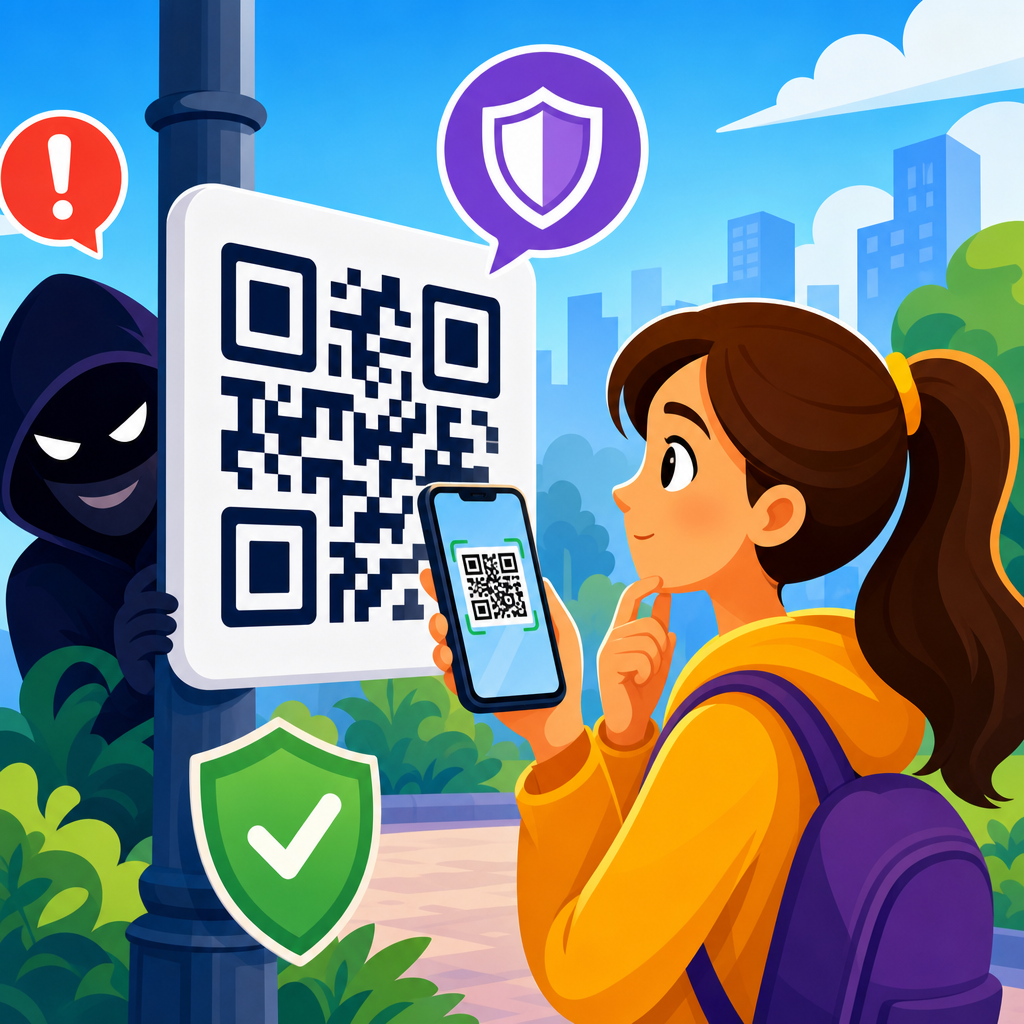
Physical inspection is especially important in public places. One of the most common fraud methods is overlay tampering, where a scammer places a new sticker over a real code. In audits I have conducted, fake stickers were often slightly misaligned, printed on glossier material, or covered nearby instructions that originally named the legitimate service. Look for peeling edges, mismatched branding, unusual grammar, low-resolution printing, or a code placed where a business would normally show a plain URL. If anything feels improvised, do not scan. Use the company website or official app instead.
Source credibility matters just as much in digital settings. Treat QR codes in unsolicited emails, text messages, social posts, and messaging apps with the same skepticism you would apply to a suspicious link. Attackers use QR images because some email filters inspect visible URLs more effectively than encoded ones. A message that says your package failed, your payroll account needs revalidation, or your bank requires immediate identity confirmation is a classic pressure tactic. Legitimate organizations usually direct users to their official apps or known websites, not to random QR codes embedded in urgent messages.
Use the Preview Screen to Check the Destination
Most modern smartphones show a preview of the destination before opening it. That preview is your best technical checkpoint. Read the domain carefully, not just the brand name in the path or page title. Attackers rely on lookalike domains such as paypaI-secure.example, where a capital letter resembles a lowercase one, or on long subdomains like bank.example.attacker-site.com, where the trusted brand appears before the true registrable domain. The core question is simple: who controls the final domain? If the answer is unclear, stop.
Shortened links deserve special caution. A QR code may resolve to a shortener such as bit.ly or tinyurl before forwarding to the final page. That extra step obscures the true destination and reduces your ability to judge legitimacy at a glance. Some businesses use shorteners for campaign tracking, but sensitive actions such as payments, logins, password resets, and document signing should land on recognizable first-party domains. If a QR code meant for payment opens a shortened link, that is a strong reason to back out and verify through official channels.
Be wary of nonstandard actions. A safe QR scan typically opens a website preview, contact card, or known app intent. A risky one may trigger a file download, prompt you to install a configuration profile, open an app store page for unfamiliar software, or initiate a prefilled payment in a wallet app. On iPhone and Android, the camera preview often gives enough information to decline before any action happens. Use that pause. Convenience is not a reason to approve a request you do not fully understand.
When in doubt, do a controlled verification. Instead of tapping the preview immediately, note the domain and type the official brand website manually in your browser, or search for the company and navigate from its verified site or app. This is slower by seconds but dramatically safer. In corporate environments, I recommend that employees treat QR-driven logins the same way they treat email login links: if the scan asks for credentials, abandon the flow and start from a known bookmark or enterprise app.
Know the High-Risk QR Code Scenarios
Not all QR codes carry the same risk. The highest-risk scenarios share one trait: they ask you to do something sensitive quickly. Payment, authentication, account recovery, software installation, and personal data submission deserve extra scrutiny. Public payment codes are a major example. Criminals place fake codes on parking meters, charity posters, vending machines, and restaurant tables, then route funds to their own accounts. The victim sees a convincing mobile payment page, enters card details, and often receives no immediate sign of fraud. By the time the business notices missing payments, many victims have already completed transactions.
Login and multifactor authentication flows are another major target. Some services legitimately use QR codes for device pairing or web login approval. WhatsApp Web, Microsoft account pairing, and various enterprise identity tools use authenticated QR handshakes. The difference is that legitimate codes are displayed inside trusted sessions on official sites or apps. A QR code in an email that claims to restore Microsoft 365 access or re-enroll your VPN profile is not normal. It is a credential capture tactic until proven otherwise.
Event access and public Wi-Fi also deserve caution. Fake QR posters outside concerts or airports may promise ticket activation, baggage updates, or faster internet access. Users scan because the setting feels official, then land on phishing pages that harvest names, phone numbers, card details, or social login credentials. A legitimate venue usually pairs a QR code with clear branding, staffed support, and a domain that matches the organizer. If the code stands alone with urgency-driven language, assume risk.
| Scenario | What legitimate use looks like | Common scam sign | Safer alternative |
|---|---|---|---|
| Parking payment | Code printed by the operator, matching meter branding and location | Sticker overlay, unrelated domain, extra service fee screen | Use the official parking app or operator website |
| Restaurant menu or pay-at-table | Consistent branding, menu domain, no login required | Code asks for card details on a generic page | Ask staff for the menu URL or paper menu |
| Account login or MFA | Shown inside a signed-in official site or app session | Emailed QR code demanding urgent re-authentication | Open the service directly from a saved bookmark |
| Public Wi-Fi access | Venue signage with the network name and support desk confirmation | Code collects email, card data, or downloads a profile | Join the published SSID manually |
| App download | Official app store listing from the publisher’s verified name | Direct APK link, unknown developer, profile install prompt | Search the app store yourself |
Inspect the Page After Scanning Before You Interact
Even if the QR code passes the first checks, verification is not finished when the page opens. Stop and inspect the landing page before entering data. The domain in the browser bar should still match the organization you expected. On mobile, tap the address bar if needed to reveal the full domain. Look for secure transport using HTTPS, but remember that HTTPS alone does not prove legitimacy. Attackers can obtain valid certificates for fraudulent domains. HTTPS is necessary, not sufficient.
Check for brand consistency and functional credibility. A legitimate payment or login page usually includes a privacy policy, contact details, terms, support links, and predictable navigation. Scam pages often focus narrowly on one conversion step: enter card details, sign in now, or download immediately. They may have copied logos but lack the surrounding structure of a real site. Spelling errors are still useful signals, but polished design no longer guarantees safety. Many phishing kits now produce pages that look nearly identical to the originals on a phone screen.
Watch for excessive permissions or unusual prompts. A menu page should not ask for microphone access. A parking payment page should not request your email password. A public Wi-Fi onboarding page should not try to install a device management profile. Mobile browsers and operating systems provide permission prompts precisely because these actions carry risk. Decline anything that falls outside the obvious purpose of the interaction. If the service genuinely requires an app or a profile, confirm that requirement on the company’s official site before proceeding.
One more practical check is session continuity. If you scanned a code from a trusted environment, the destination should fit that environment. A QR code on a conference badge may lead to a profile page on the event platform, not to a generic file-sharing service. A code on a product package should lead to the manufacturer’s domain, not an unrelated coupon site. In incident reviews, mismatched ecosystems are one of the fastest ways to spot fraud.
Build Safer Habits and Device Protections
Good judgment matters most, but device settings add a valuable second layer. Keep your phone operating system, browser, and security software current. Apple and Google regularly patch WebKit, Chrome, and Android vulnerabilities that can affect malicious redirects, browser exploits, and app handling. Use built-in safe browsing protections in Safari, Chrome, or Firefox, and do not disable warning screens just to save time. On managed business devices, mobile threat defense tools from vendors such as Microsoft, Lookout, or Zimperium can flag risky links and suspicious app behavior associated with QR-driven attacks.
Prefer official apps over browser flows for recurring services. If you regularly pay for parking, transport, or food pickup, install the known app from the Apple App Store or Google Play and access the service there. App stores are not perfect, but verified publishers, review histories, and update records provide more assurance than an anonymous mobile page reached through a sticker in public. The same principle applies to banking, ticketing, and courier updates. Start from the app you trust, not from the code you happen to see.
For organizations, safe scanning requires process design as well as user training. Employees should know that IT, HR, payroll, and identity teams will not send QR codes for urgent credential resets. Physical QR codes placed in offices should be inventoried, branded, and checked for tampering during routine walkthroughs. Customer-facing codes should include a readable fallback URL so users can compare the destination. That practice improves accessibility and security at the same time. When I advise teams on QR deployments, the best results come from removing ambiguity: one purpose, one domain, one clear owner.
The core rule is simple: trust the process, not the pattern. A QR code is only a container. Its safety depends on where it came from, what it opens, and what it asks you to do next. If you make context checks, inspect the previewed domain, treat high-risk scenarios with extra skepticism, and verify landing pages before interacting, you will avoid the vast majority of QR scams. Use official apps and bookmarked sites whenever possible, keep device protections enabled, and report suspicious codes to the business or platform involved. Start applying these safe scanning tips today, and every future scan becomes a deliberate choice instead of a gamble.
Frequently Asked Questions
1. How can I verify a QR code before scanning it?
The safest approach is to treat every QR code like an unknown link. Before scanning, look at where the code appears and whether it makes sense in that setting. A QR code posted on official business signage, product packaging, or a printed receipt is generally more trustworthy than one placed on a random sticker, flyer, email attachment, or social media image from an unfamiliar source. If the code is on a public kiosk, parking meter, restaurant table, or utility bill, inspect it closely for signs of tampering, such as a sticker placed over an original code, mismatched branding, unusual wording, or a code that looks recently added.
When you do scan, do not tap through immediately. Most phones and scanning apps show a preview of the destination before opening it. Use that moment to read the full web address carefully. Check for misspellings, extra words, strange subdomains, unnecessary numbers, or odd country-code endings that do not match the company or organization you expected. If the destination looks suspicious, cancel. If the QR code is asking for payment, login details, or app installation, stop and verify through an official source such as the company’s website, customer service number, or mobile app you already trust. Verification is less about decoding the pattern visually and more about checking the context, the destination, and the requested action before you engage.
2. What are the warning signs that a QR code may be malicious or fraudulent?
One of the clearest warning signs is mismatch. If the QR code claims to belong to a bank, parking service, delivery company, or restaurant, but the landing page shows a different domain, poor design, strange grammar, or a rushed payment request, that is a red flag. Another common warning sign is physical tampering. Attackers often place fraudulent QR code stickers over legitimate ones in public places because people scan quickly and rarely inspect them. If the code looks layered, crooked, recently applied, or different from surrounding materials, it deserves extra caution.
You should also be skeptical of urgency and pressure. Malicious QR codes often lead to pages that demand immediate payment, claim your account is locked, promise prizes, request one-time passcodes, or push you to install an app outside the official app store. Shortened links, deceptive lookalike domains, and pages that ask for sensitive information not normally requested in that situation are also strong signs of trouble. For example, a restaurant menu QR code should not suddenly ask for your email password, and a utility payment code should not redirect to a page with generic branding and no company contact details. In general, the more a QR code tries to hurry you into paying, logging in, or downloading something, the more carefully you should verify it.
3. Is it safe to scan QR codes in public places like restaurants, parking meters, and posters?
Public QR codes are not automatically unsafe, but they do carry more risk because they are easier for scammers to replace, cover, or imitate. Restaurants, transit stations, parking meters, event posters, and bulletin boards are common targets because people expect to scan in those environments and often do so without thinking twice. The problem is not the QR technology itself. The risk comes from the destination behind the code and the fact that public signage can be altered without being noticed right away.
If you scan a QR code in public, pause to confirm it belongs there. Look for official branding, matching business information, and signs that the code is part of the original sign rather than an added sticker. If it leads to a website, verify that the domain matches the business or agency you intended to reach. For payments, it is often safer to open the merchant’s official app or type the known website manually instead of relying on the posted code. In restaurants, you can ask staff whether the QR menu or payment code is current. At parking meters, compare the payment website with the city or operator name listed on the machine. Public QR codes can be used safely, but only when you verify both the physical source and the digital destination.
4. What should I check in the link preview after scanning a QR code?
The link preview is one of your best defenses because it gives you a chance to inspect the destination before your browser opens it. Start with the domain name, which is the most important part. Focus on the main website address, not just the brand name shown on the page. Scammers often create lookalike domains using slight misspellings, added hyphens, extra words, or misleading subdomains. For example, a fake page might place a trusted brand name at the beginning of a longer suspicious address to make it look legitimate at a glance. Read carefully from right to left if needed to identify the true root domain.
Next, consider whether the link matches the purpose of the QR code. A menu code should lead to a restaurant site or menu platform the business actually uses. A product code should lead to the manufacturer, product support page, or a recognized retailer. A payment code should connect to a verified payment processor or official merchant domain. Be cautious with shortened URLs because they hide the destination, and be wary of links that immediately route through multiple redirects. If your phone or scanner app allows it, use options such as “copy link,” “share,” or “open in browser later” so you can inspect it more carefully without visiting right away. A trustworthy preview should make sense, match the context, and point to a domain you can independently recognize or confirm.
5. What should I do if I already scanned a suspicious QR code?
If you scanned a QR code but did not interact with the page, close it immediately and do not grant any permissions, enter credentials, approve logins, download apps, or submit payment details. In many cases, the risk increases only after you take an additional action. Still, it is wise to clear the browser tab, review any downloaded files, and watch for unusual behavior such as unexpected pop-ups, prompts to install profiles, or requests for accessibility permissions. If anything was downloaded, delete it unless you are certain it came from a legitimate source. Avoid opening downloaded apps or configuration files from an unknown QR destination.
If you entered a password, payment information, or personal data, respond quickly. Change the affected password immediately, especially if it is reused elsewhere, and enable multi-factor authentication if it is not already active. Contact your bank or card issuer if payment details were submitted, monitor accounts for unauthorized transactions, and report the incident to the organization being impersonated if applicable. If you approved a login or provided a one-time code, review recent account access and sign out of active sessions. Running a mobile security scan can also help, particularly if you downloaded anything. The key is speed: once you suspect a QR code was malicious, assume the destination may have been part of a phishing or fraud attempt and take protective steps right away.