HTTPS should be the default destination behind every QR code because the moment a user scans, they are trusting a tiny square pattern to open a website, download a file, start a payment flow, or reveal private information. In practical terms, HTTPS is the secure version of HTTP, the protocol used to transfer data between a browser and a website. It adds Transport Layer Security, usually shortened to TLS, which encrypts data in transit, verifies the server’s identity through a digital certificate, and helps prevent tampering. For QR codes, that protection matters more than many teams realize. A printed code on packaging, signage, menus, invoices, direct mail, or event badges often sends users to a mobile landing page at the exact moment they are least likely to inspect the link carefully.
I have seen this firsthand in campaigns where scan rates were strong but trust signals were weak. When the destination loaded over HTTP, modern phones displayed warnings, blocked forms, or stripped referrer details. Worse, users hesitated and abandoned the interaction. A QR code can be physically swapped, digitally spoofed, or redirected through poorly configured links, so the destination must do as much security work as possible. HTTPS is not a complete defense against malicious QR codes, but it is the foundation of secure QR code practices because it reduces interception risk, supports secure cookies, enables browser protections, and signals legitimacy to users and search engines alike.
This article serves as a practical hub for secure QR code practices within a broader QR Code Security and Privacy strategy. It explains how to use HTTPS with QR codes, when to use static versus dynamic destinations, how certificates and redirects affect scans, what settings to check before printing, and where privacy mistakes usually happen. It also answers the common questions people ask before launching QR campaigns: Is HTTPS enough? How do you secure a QR code on printed material? What happens if a certificate expires? Can you track scans safely? If your QR code leads to a web page, form, app store listing, PDF, Wi-Fi configuration page, or payment request, the guidance here applies. The short version is simple: use HTTPS everywhere, minimize redirects, verify the full journey on mobile, and design QR experiences that earn user trust at first scan.
Why HTTPS matters for QR code security
HTTPS protects three things that directly affect QR code security: confidentiality, integrity, and authenticity. Confidentiality means third parties on the network cannot easily read what the user sends to the destination, such as login credentials, email addresses, order details, or payment information. Integrity means the content should not be modified in transit by a malicious hotspot, compromised router, or ISP injection. Authenticity means the certificate helps the browser confirm it is talking to the intended domain and not an impostor. For QR codes, these protections are especially important because scanners often open links from public networks in hotels, airports, cafes, retail stores, and events.
In real deployments, the most common misconception is that a QR code image itself can be made secure. The image is only a carrier for data, usually a URL. Security comes from what the code contains and where it sends the user. If that URL starts with HTTPS and the website is configured correctly, the scan session is far safer. If it starts with HTTP, the browser may still attempt an upgrade, but you are relying on redirects and browser behavior instead of enforcing security from the first request. That is a poor tradeoff when users may scan in low-trust environments.
HTTPS also enables browser features that modern QR destinations need. Secure cookies require HTTPS. Many progressive web app capabilities assume secure contexts. Geolocation prompts, camera access for web forms, and service worker behavior are all governed by security rules tied to HTTPS. If your QR code powers a product registration form, warranty lookup, loyalty flow, or ticket validation tool, these features matter operationally, not just theoretically.
Use HTTPS from the encoded URL to the final landing page
The safest implementation is straightforward: encode an HTTPS URL directly in the QR code and ensure every redirect in the chain also stays on HTTPS. This includes vanity domains, link shorteners, campaign trackers, geo-redirect tools, and the final landing page. A scan path is only as secure as its weakest hop. I regularly audit QR campaigns by scanning on both iPhone and Android, then tracing the network chain with developer tools or redirect checkers. The biggest issues usually appear in intermediate services, not the landing page itself.
If you use a dynamic QR code platform, confirm that its short domain supports TLS 1.2 or higher, serves a valid certificate, and avoids mixed content on the destination page. Mixed content happens when a secure page loads scripts, images, forms, or stylesheets over HTTP. Browsers increasingly block active mixed content, and passive mixed content still damages trust and analytics consistency. A restaurant menu QR code, for example, may open on HTTPS but fail to load menu images because the content delivery network URL is still HTTP. Users experience broken pages, and operators often misread the problem as a scanning issue rather than a transport security issue.
Canonicalization also matters. Pick one preferred host, such as https://example.com or https://www.example.com, and redirect all variants cleanly with a single 301 or 308 response. Avoid redirect chains like HTTP to HTTPS to non-www to campaign URL to mobile page. Every extra hop adds latency and more points of failure. On mobile networks, those delays are noticeable. Faster secure resolution improves user confidence and increases successful conversions.
Certificate management, redirects, and mobile trust signals
A valid TLS certificate is non-negotiable for QR destinations. Most organizations now use providers such as Let’s Encrypt, DigiCert, GlobalSign, or Sectigo, with automatic renewal handled at the server, CDN, or load balancer layer. Automation is best practice because QR codes often remain printed and in circulation for months or years. If a certificate expires, the code may still scan, but the browser warning can effectively kill the campaign. A product box, poster, or direct mail piece cannot be recalled as easily as a web banner can be edited, so certificate monitoring deserves the same seriousness as uptime monitoring.
Implement HTTP Strict Transport Security, or HSTS, on QR landing domains where appropriate. HSTS tells supported browsers to use HTTPS automatically for future visits and prevents protocol downgrades. It is valuable for repeat-scan scenarios such as loyalty programs, resident portals, patient intake forms, and equipment manuals. That said, only enable preload or long max-age values after confirming all subdomains and dependencies are ready. I have seen teams break legacy assets by applying aggressive HSTS to domains that still served old files or support endpoints over HTTP.
User trust is also influenced by what they see after the scan. Branded domains outperform generic shorteners because users can recognize the destination. A QR code on a utility bill that opens power-company-payments.example is inherently more credible than a random shortened link. Match the printed context to the scanned destination. If the code appears on healthcare paperwork, the URL should reflect the healthcare provider’s brand and load a page with a clear privacy notice, contact details, and purpose statement. HTTPS supports trust, but design and domain hygiene complete it.
Static versus dynamic QR codes and the security tradeoff
Static QR codes encode the final destination directly and cannot be changed after printing. Dynamic QR codes usually encode a short URL that redirects to a destination you can update later. From a security perspective, static codes reduce dependence on third-party redirect infrastructure, but dynamic codes provide operational control when a destination changes, a page must be disabled, or a malicious issue is discovered. In enterprise settings, dynamic codes are usually the better fit because they let you rotate URLs without reprinting physical assets.
The tradeoff is governance. A dynamic QR code platform becomes part of your security perimeter. Review access control, single sign-on support, audit logs, custom domains, certificate handling, export options, and incident response procedures. If a marketer can change the destination without approval, a phishing risk exists whether the intent is malicious or accidental. The safer model is role-based access control with documented ownership for every live code, especially in regulated environments such as finance, healthcare, and education.
Use static codes for low-risk, durable destinations like a permanent support page on your own HTTPS domain. Use dynamic codes when you need campaign analytics, expiration rules, geotargeting, device routing, or emergency destination changes. In both cases, the guiding principle stays the same: the first encoded URL and the final resolved page must be secure, monitored, and aligned with user expectations.
Secure QR code practices before printing and publishing
Most QR security failures happen before the first scan. Teams rush to production, test only the happy path, and assume the browser padlock solves everything. A better process is to treat a QR launch like a miniature application release. Verify the URL, inspect redirects, validate the certificate chain, test on multiple mobile operating systems, and confirm the page is mobile-friendly under weak network conditions. Then document ownership, review privacy disclosures, and define what happens if the code must be retired.
| Checkpoint | What to verify | Why it matters |
|---|---|---|
| Encoded link | Starts with HTTPS and uses the correct branded domain | Prevents insecure first requests and improves trust |
| Redirect chain | No unnecessary hops, all redirects remain on HTTPS | Reduces failure points and mobile latency |
| Certificate status | Valid, unexpired, correctly installed, auto-renewing | Avoids browser warnings on long-lived printed assets |
| Landing page | No mixed content, clear purpose, responsive design | Protects users and supports completion rates |
| Data collection | Forms use HTTPS, minimum fields, clear consent language | Limits privacy risk and regulatory exposure |
| Ownership | Named owner, access controls, monitoring in place | Enables rapid response if issues appear |
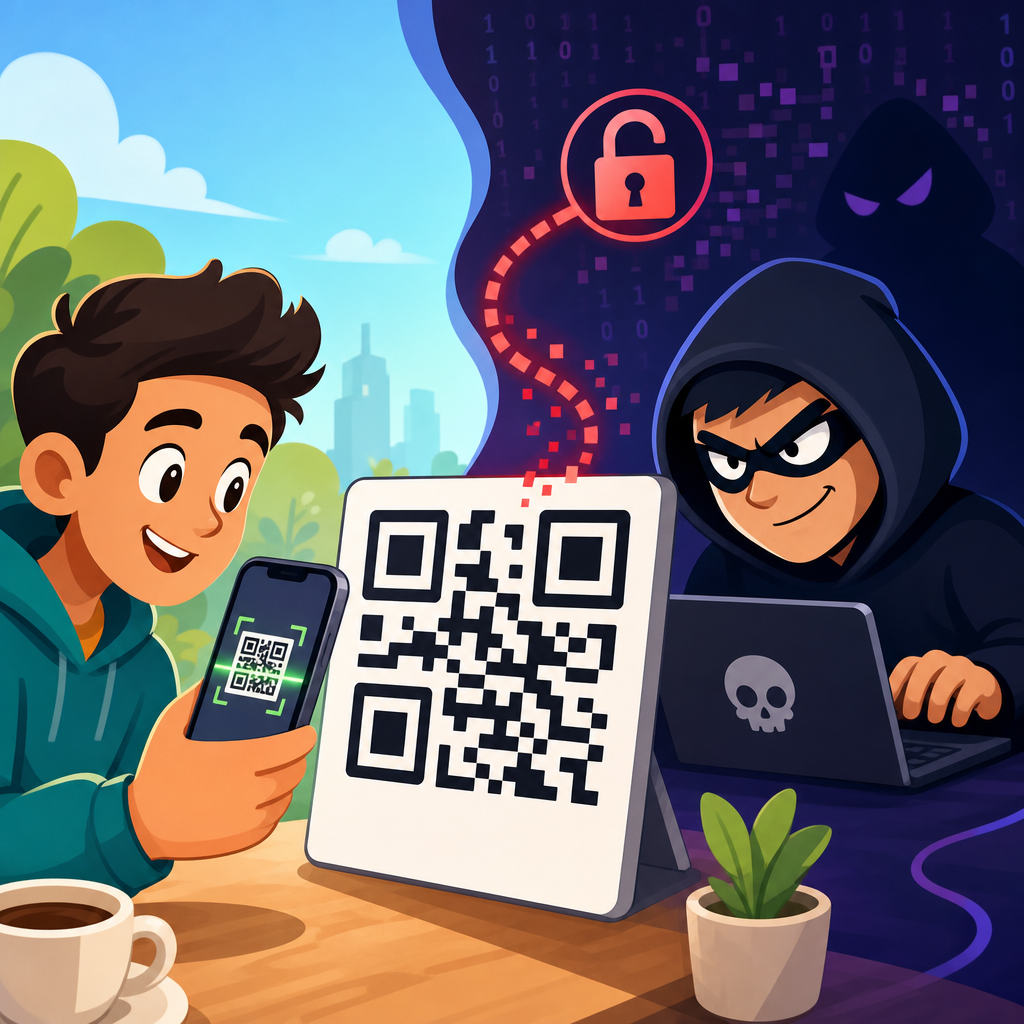
Physical security belongs on this checklist too. Printed QR codes can be replaced with stickers that point to fraudulent destinations. For public posters, kiosks, parking meters, and tabletop signage, inspect assets regularly and use tamper-evident materials when justified. In high-risk use cases, print the destination domain in plain text next to the code so users can compare before scanning. This simple step reduces successful substitution attacks because the attacker must replace both the code and the visible URL consistently.
Privacy, analytics, and safe scan tracking
Tracking QR scans is useful, but it should be done carefully. A secure QR program collects only the data needed to measure performance and maintain service quality. Basic metrics usually include scan count, timestamp, approximate location at the city or region level, device type, operating system, and referrer details when available. That is enough for most campaign decisions. Avoid collecting personal data unless the user knowingly provides it through a secure form tied to a clear business purpose.
When I review QR analytics setups, I look for three common privacy problems. First, excessive redirect tracking that leaks parameters across vendors. Second, forms that request more information than necessary on a mobile screen. Third, PDF or file downloads hosted insecurely or without access controls. If your QR code points to a downloadable brochure, invoice, lab result, or onboarding guide, host the file on HTTPS and consider signed URLs or authenticated access when the content is sensitive.
Consent and transparency matter as much as encryption. If a QR code launches a form, explain why the information is requested and how it will be used. If cookies or analytics tags are present, align them with your legal obligations and regional requirements. Secure QR code practices are not only about defeating attackers; they are also about respecting the expectations of legitimate users. Trust grows when the path is secure, the data request is proportionate, and the destination behaves exactly as the printed prompt suggested.
Common mistakes and the simplest secure setup
The most common mistakes are predictable: encoding HTTP instead of HTTPS, relying on too many redirects, using generic shorteners, neglecting certificate renewal, sending users to pages with mixed content, and publishing QR codes without a visible brand or destination clue. Another frequent error is forgetting lifecycle management. A QR code on packaging may outlive the campaign page, causing 404 errors, domain parking, or redirect repurposing years later. Retire pages responsibly or maintain a safe evergreen destination.
The simplest secure setup is also the strongest for many organizations. Use a branded domain you control. Serve the destination over HTTPS with automatic certificate renewal. Encode the HTTPS URL directly when the destination will remain stable; otherwise use a dynamic code on your branded short domain with strict access controls. Keep redirects to a minimum. Test the full scan journey on current iPhone and Android devices over cellular and public Wi-Fi. Monitor certificate validity, uptime, and page integrity. Publish a clear privacy notice when collecting data. If the QR code appears in public spaces, print the domain beside it and inspect for tampering.
HTTPS with QR codes is not a cosmetic upgrade. It is the baseline control that makes secure QR code practices possible across marketing, operations, payments, support, and identity workflows. When every scan starts on a secure URL, ends on a trusted page, and handles user data carefully, you reduce fraud risk, improve completion rates, and protect your brand. Audit your live QR codes, upgrade any remaining HTTP destinations, and standardize this process before the next code goes to print.
Frequently Asked Questions
Why should every QR code point to an HTTPS link instead of HTTP?
Every QR code should ideally lead to an HTTPS destination because scanning a code is an act of trust. When someone opens a QR code, they are often doing it quickly, on a mobile device, and without closely inspecting the destination first. If the link uses HTTPS, the connection between the user’s browser and the website is encrypted with TLS, which helps protect sensitive data such as login credentials, payment details, contact information, or downloaded files from being intercepted in transit. HTTPS also verifies that the website is really the one it claims to be through a digital certificate, reducing the risk of impersonation and tampering.
From a practical standpoint, HTTPS improves both security and credibility. Modern browsers often label HTTP pages as “Not Secure,” which can cause users to abandon the page immediately after scanning. That is especially damaging for QR codes used in payments, forms, account access, product authentication, event check-ins, and downloadable resources. In many cases, mobile operating systems, browsers, and corporate networks are increasingly restrictive about insecure content, so using HTTP can also create compatibility and trust issues. If a QR code is meant to produce action, HTTPS gives users a safer and smoother path to complete it.
How do I create a QR code that uses HTTPS correctly?
To use HTTPS with a QR code correctly, start by confirming that the destination URL begins with https:// and loads without security warnings on both desktop and mobile devices. Before generating the code, test the exact link you plan to encode. Make sure the website has a valid SSL/TLS certificate, redirects work properly, and there are no mixed-content issues where secure pages attempt to load insecure scripts, images, or files. Once the secure URL is verified, copy the full HTTPS address into your QR code generator and create the code using that exact version rather than relying on users to be redirected from HTTP later.
It is also wise to think beyond the initial scan. If you are using a dynamic QR code, verify that the redirect service itself is secure and that every destination in the chain remains HTTPS. Keep the URL clean, avoid unnecessary tracking parameters where possible, and test the printed or shared QR code on multiple devices after creation. A secure QR experience is not just about the final page; it includes the entire journey from scan to destination. If any intermediate redirect, landing page, form, or download is insecure, user trust can be reduced and data can be exposed.
What happens if a QR code points to an HTTP page or a site with certificate problems?
If a QR code points to an HTTP page, the user may still reach the site, but the experience is immediately less trustworthy and potentially less safe. Because HTTP does not encrypt data in transit, anything sent between the browser and the server can be more vulnerable to interception or modification, especially on public or shared networks. This becomes a serious issue if the page requests passwords, personal details, payment information, or file downloads. Even when no form is involved, an insecure connection can allow content to be altered or injected before it reaches the user.
If the site has certificate problems, the result is often even worse from a user-experience standpoint. Browsers may display prominent security warnings stating that the connection is not private or that the certificate is invalid, expired, or mismatched to the domain. Many users will stop immediately at that point, and they should. Certificate errors can indicate misconfiguration, neglect, or, in some cases, an attempted attack. For businesses and organizations using QR codes in marketing, support, packaging, menus, signage, or billing, these warnings can seriously damage brand credibility. A QR code should feel frictionless, and certificate issues create exactly the kind of hesitation you want to avoid.
Is HTTPS enough to make a QR code safe?
HTTPS is essential, but it is not a complete safety guarantee by itself. HTTPS secures the connection and helps verify the identity of the server, but it does not automatically mean the destination content is trustworthy, ethical, or free from malicious intent. A phishing site can still use HTTPS, and a compromised website can still serve harmful content over an encrypted connection. In other words, HTTPS tells users that the connection is protected and that the certificate matches the domain; it does not certify that the page itself is beneficial or legitimate in every other respect.
To make QR codes genuinely safer, combine HTTPS with broader security and quality practices. Use clear branding around the QR code, place it in trusted physical or digital contexts, and if possible display a short readable URL near the code so users know where they are going. Keep landing pages well maintained, updated, and free from suspicious redirects. If the QR code launches payments, downloads, or account access, add strong website security controls such as secure hosting, malware scanning, content integrity checks, and form protections. HTTPS is the baseline, not the finish line. It should be treated as the default first layer in a larger trust strategy.
What are the best practices for managing HTTPS QR codes over time?
The best long-term approach is to treat QR code security as an ongoing maintenance task rather than a one-time setup. First, monitor your SSL/TLS certificates to ensure they renew before expiration and continue to match the correct domain names. If you change domains, restructure URLs, or migrate landing pages, make sure your QR code destinations are updated promptly, especially if you use dynamic QR codes. Broken redirects, expired certificates, and domain mismatches can silently undermine campaigns long after a QR code has been printed on packaging, posters, manuals, business cards, or product labels.
It is also smart to perform routine testing. Scan your QR codes periodically on different devices and networks to confirm that the full experience remains secure and functional. Check for unnecessary redirect chains, mixed-content warnings, failed downloads, and mobile usability issues. Use analytics carefully to monitor engagement, but do so in a privacy-conscious way and keep all tracking endpoints under HTTPS as well. If a QR code is distributed at scale or in permanent materials, dynamic management can be especially valuable because it allows destination updates without replacing the printed code. The key principle is simple: once a QR code is public, users may interact with it for months or years, so the HTTPS destination behind it should remain secure, current, and reliable for the entire lifespan of the code.