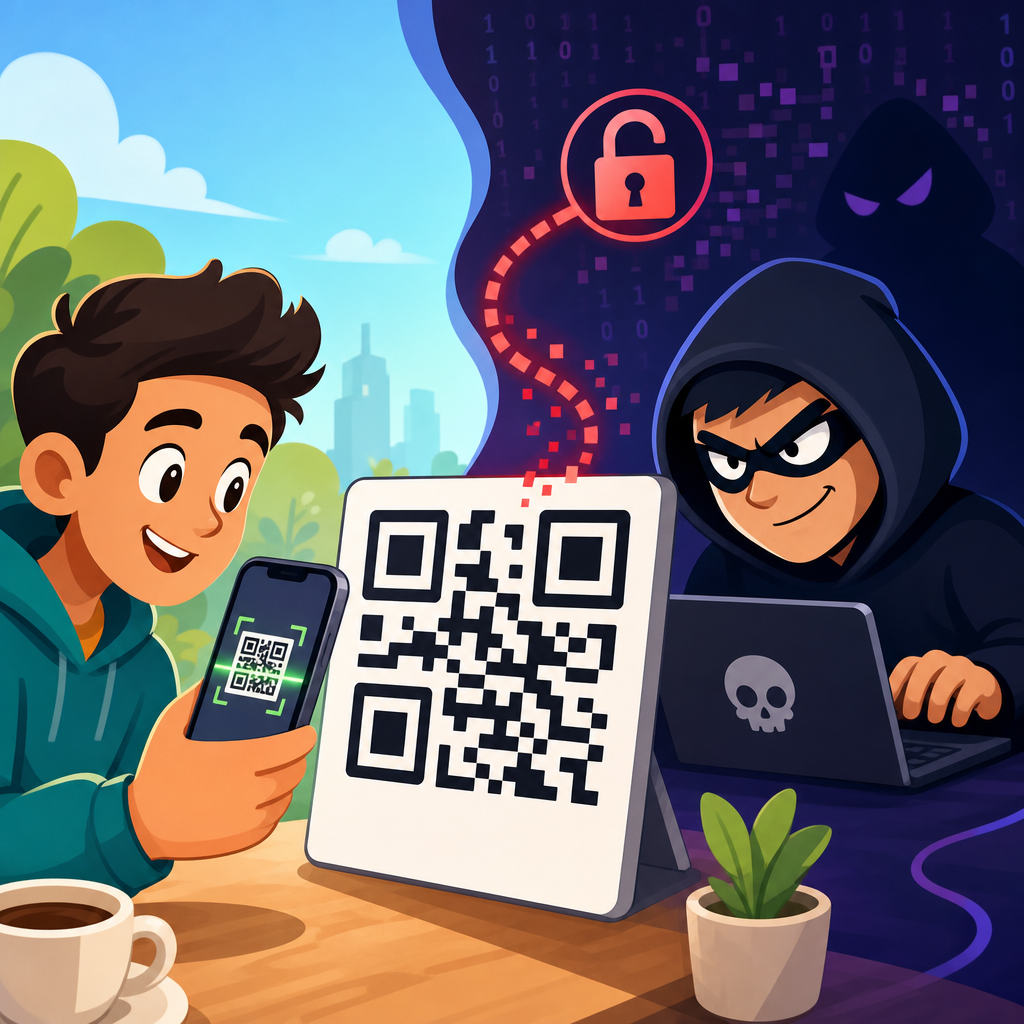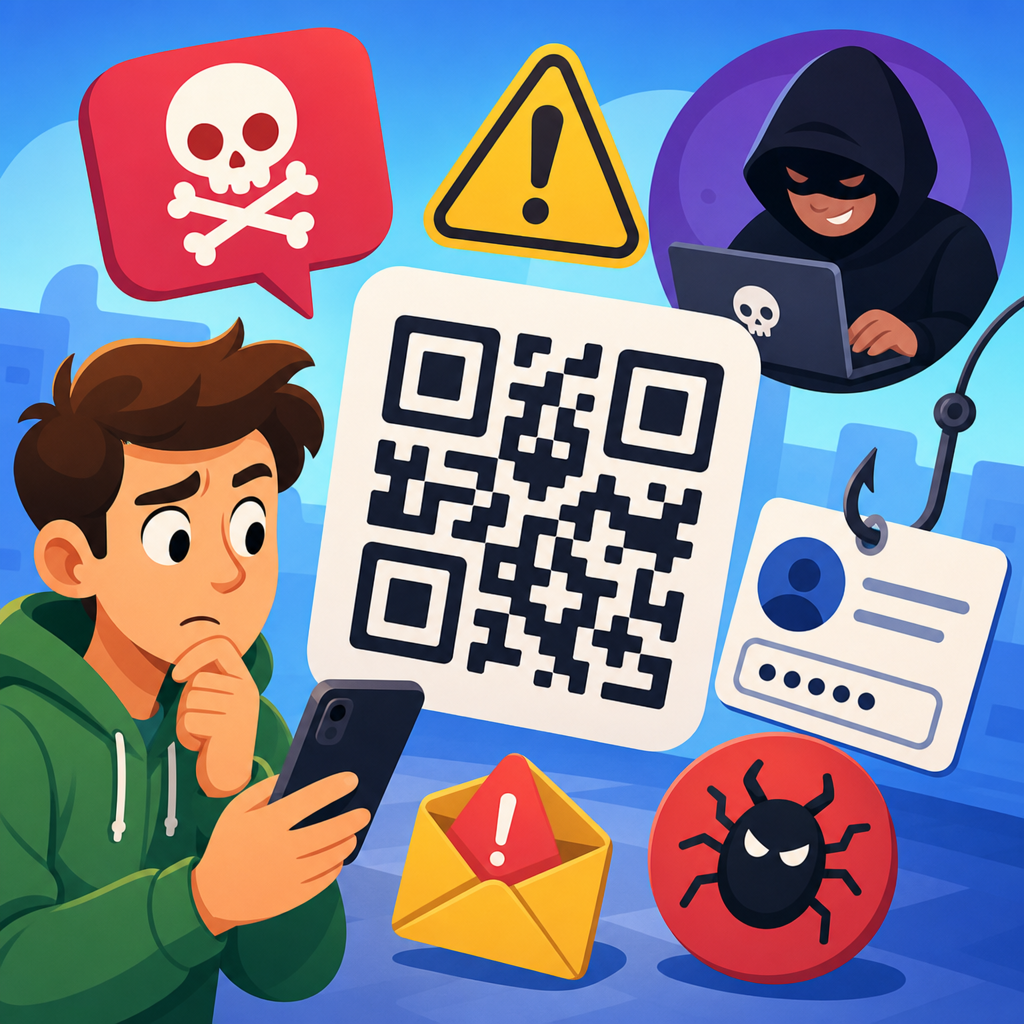
QR code security for marketing campaigns matters because a square image can instantly move a customer from a poster, package, receipt, or event badge into a digital experience, and that jump creates both opportunity and risk. In practical terms, secure QR code practices are the policies, technical controls, and review steps that prevent a QR campaign from sending people to unsafe destinations, exposing customer data, or damaging brand trust. I have worked on retail launches, venue activations, and direct mail programs where QR codes were treated as a small design element, yet they carried the same security implications as a web form, paid ad, or email link. That is the central point: a QR code is not just artwork. It is a distribution channel for URLs, app actions, payment requests, contact data, Wi-Fi settings, and tracking parameters, all of which can be abused if they are not governed carefully.
For marketers, the threat model is broader than many teams expect. Attackers can replace printed codes with stickers, clone branded landing pages, use open redirects to send scanners somewhere else, or exploit weak destination pages that collect personal information without proper controls. Internal mistakes are equally common: expired domains, unmanaged short links, excessive data collection, and campaigns launched without approval from legal, IT, or privacy teams. The result can be phishing, malware exposure, compliance issues, broken attribution, or a measurable drop in conversion because users no longer trust the code. Secure QR code practices reduce those failures by tying campaign planning to clear destination governance, domain ownership, analytics discipline, tamper resistance, and incident response. When done well, security improves performance. People scan more readily when the destination is recognizable, the experience is fast, and the brand consistently behaves in a trustworthy way.
What secure QR code practices mean in marketing
Secure QR code practices start with controlling what the code does, where it sends people, and how the destination behaves after the scan. In most campaigns, the safest default is a dynamic QR code that points to a branded redirect under a domain the company owns, such as go.brand.com/summer, rather than a third-party shortener with weak governance. This gives the marketing team flexibility to update content while keeping security, analytics, and certificate management centralized. It also supports internal linking and campaign reporting because redirects can be documented, tested, and retired on schedule instead of disappearing inside a design file. Static codes still have a place, especially for very long-lived printed assets, but they should lead only to stable, company-controlled destinations that have been reviewed for availability and abuse prevention.
The destination page itself is part of QR code security. Every scan should resolve over HTTPS with a valid TLS certificate, minimal redirect hops, and content that matches the context of the physical asset. A code on pharmaceutical packaging should not dump visitors onto a generic homepage; it should land on the exact product verification or safety page promised nearby. A conference booth code should lead to a clearly branded lead capture form with a short explanation of why data is requested. These details matter because users make trust decisions in seconds. Security also includes limiting the data encoded in the QR itself. Marketing teams should avoid embedding personal identifiers, direct payment instructions, or internal network settings unless there is a compelling use case and strong operational control. The best practice is simple: encode as little as possible in the symbol and govern everything at the destination.
Primary risks that affect campaign performance and trust
QR code threats fall into several predictable categories. The first is destination substitution, where an attacker overlays a malicious sticker on a poster, table tent, or kiosk. This is common in public spaces because users rarely compare the printed context against the resulting URL. The second is spoofing, where a fake landing page copies brand colors and logos to harvest credentials or payment data. The third is redirect abuse, often caused by open redirect parameters or poorly managed link shorteners. I have seen teams unintentionally create this risk by allowing unvalidated query strings that can send traffic from a trusted domain to an untrusted one. A fourth category is data leakage through excessive tracking parameters, embedded customer IDs, or misconfigured analytics tags that expose campaign information in referrer logs.
There are also operational risks that look less dramatic but hurt results just as much. Domains expire, certificates lapse, mobile pages load slowly, and app deep links fail silently on certain devices. In retail and event environments, damaged print quality can force users to hold their phones at odd angles, increasing abandonment and making people suspicious that the code is broken or unsafe. Regulatory exposure is another major concern. If a QR destination collects names, email addresses, location data, or payment details, the campaign must align with privacy laws and industry requirements, including consent rules, retention limits, and secure processing. Marketers should assume that any QR campaign can be audited after launch, either by customers, platform reviewers, or internal compliance teams. That assumption leads to better records, tighter controls, and fewer unpleasant surprises.
Core controls every campaign should implement
The most effective secure QR code practices are straightforward and repeatable. First, use a branded domain or subdomain dedicated to campaign redirects, and lock down DNS, registrar access, and certificate renewal. Second, create redirect rules centrally rather than inside isolated vendor dashboards whenever possible. Third, require destination allowlists so campaign owners can send users only to approved domains. Fourth, disable open redirects and sanitize all parameters. Fifth, keep the mobile landing page lightweight and specific, with recognizable branding above the fold and a clear statement of what happens next. When users immediately see the campaign name, product, or offer they expected, they are less likely to bounce or suspect fraud.
Sixth, establish a review workflow before any QR asset goes to print. The workflow should include marketing, web operations, security, legal, and privacy stakeholders when relevant. Seventh, test on multiple devices and scanning apps, including native iPhone and Android camera behavior. Eighth, set redirect monitoring and uptime alerts, because a dead link during a national print run is both a security and revenue problem. Ninth, document ownership: every code needs an accountable business owner, a technical owner, a launch date, and a retirement date. Tenth, publish a playbook for tampering reports so field teams know how to respond if a code is covered, replaced, or linked to suspicious behavior. Security maturity grows when QR operations stop being ad hoc and become part of normal campaign governance.
| Control | Why it matters | Practical marketing example |
|---|---|---|
| Branded redirect domain | Improves trust and centralizes link control | A cereal box code points to scan.brand.com/falloffer instead of a generic short URL |
| Destination allowlist | Prevents accidental or malicious sends to unapproved sites | Agency users can route traffic only to brand-owned domains |
| HTTPS and certificate monitoring | Protects transit and avoids browser warnings | Event badges continue to resolve securely throughout a three-day conference |
| Preprint QA | Catches unreadable codes and wrong destinations | Direct mail proofs are tested on multiple phones before the run starts |
| Tamper inspection | Reduces sticker-overlay fraud in public spaces | Store staff check window posters during opening rounds |
| Incident response plan | Shortens the time from report to containment | Suspicious traffic triggers redirect shutdown and poster replacement |
Safe design, printing, and physical deployment
Physical execution is where many QR security discussions become too abstract. If a code will appear in a storefront, airport, stadium, or tradeshow hall, assume it can be tampered with. That means choosing placements that are visible, easy to inspect, and hard to cover without being noticed. Laminated surfaces, tamper-evident labels, and integrated printing on packaging all reduce sticker replacement risk compared with loose paper signs. Size and contrast also matter. A code that fails on first scan creates hesitation, and hesitation lowers trust. Follow established QR design guidance: strong contrast, sufficient quiet zone, and a tested error correction level that balances brand styling with scan reliability. Decorative logos in the center are acceptable only if they survive real-world testing under glare, distance, and motion.
Printed context should do part of the security work. Place a short destination cue near the code, such as “Scan for warranty registration at brand.com,” so users have a mental checksum before they open the page. For payment or account actions, add a warning never to enter credentials unless the page is on the official domain. In hospitality and restaurants, I recommend printing human-readable URLs beneath high-risk QR codes because it gives cautious users another verification path. Field operations need a simple inspection routine for long-running campaigns. Staff should know what the original asset looks like, how to spot overlays, and where to report anomalies. These low-tech controls are often the difference between a manageable issue and a widely shared social media complaint that questions the brand’s competence.
Landing page, analytics, and privacy requirements
A secure QR campaign does not end at the redirect. The landing page must be intentionally designed for mobile, because poor usability increases suspicion and abandonment. Pages should load quickly, avoid intrusive interstitials, and request only the minimum information needed for the campaign goal. If the objective is coupon redemption, the first screen should not ask for date of birth, full address, and marketing consent unless there is a lawful, documented need. Excessive form fields are not only bad for conversion; they also enlarge the privacy and security footprint of the campaign. Marketers should work with web teams to implement server-side validation, bot protection, content security policy where appropriate, and clear retention rules for captured data.
Analytics should be useful without becoming invasive. UTM parameters, first-party analytics, and conversion events are normal parts of attribution, but they should not include personal data in URLs. Query strings are often logged by browsers, analytics tools, web servers, and third-party services, so putting email addresses or account numbers in them is a preventable mistake. A better pattern is to assign opaque campaign IDs and keep any sensitive mapping on secure back-end systems. Consent banners and privacy notices should reflect the actual behavior of the page, especially if pixels, geolocation, or retargeting tags are present. For organizations operating across regions, coordination with privacy counsel is essential because QR promotions frequently cross borders in packaging, travel, and ecommerce fulfillment.
Governance, tools, and incident response for hub-level coverage
As the hub for secure QR code practices, this topic should connect campaign teams to deeper guidance on dynamic versus static codes, branded link management, tamper prevention, phishing defense, compliant data capture, payment QR safety, and vendor assessment. In mature programs, those subjects live inside a documented governance model. My preferred structure uses a single inventory of all active QR codes, tied to owners, domains, destinations, print locations, expiration dates, and analytics tags. That inventory can sit in a campaign operations platform, a CMDB, or even a disciplined spreadsheet at smaller organizations, but it must exist. Without an inventory, no one can answer basic questions during an incident: What does this code do, who approved it, and how fast can we disable it?
Tooling should support governance rather than replace it. Common components include enterprise DNS management, certificate automation, web application firewall rules, redirect management in a CMS or link platform, uptime monitoring, and analytics dashboards. Security teams may add URL reputation checks, phishing monitoring, and SIEM alerts for unusual redirect changes or traffic spikes. Vendor due diligence matters if an agency or QR platform can create links on the brand’s behalf. Review access controls, audit logs, data processing terms, and export options before relying on any service. Finally, plan for failure. A response plan should define how to pause a destination, swap a redirect, notify stakeholders, inspect physical assets, and communicate with affected users. The brands that handle QR risk best are not the ones that assume nothing will go wrong; they are the ones that can contain a problem quickly and transparently.
QR code security for marketing campaigns is ultimately a discipline of trust management. The code may be tiny, but it sits at the intersection of print, mobile web, analytics, privacy, and brand reputation. Secure QR code practices begin with a simple principle: every scan should lead to an expected, verifiable, low-friction experience on an approved destination. From there, the essentials are consistent—use branded domains, protect redirects, test mobile landing pages, minimize data collection, inspect physical placements, and maintain clear ownership from launch through retirement. These controls reduce fraud risk, improve campaign reliability, and give customers visible reasons to trust what happens after they scan.
As a hub page, this topic should guide teams toward specialized procedures while giving decision-makers a complete baseline they can use immediately. If you manage packaging, retail signage, events, direct mail, or product education, treat QR codes with the same care you apply to email links and checkout pages. Build an inventory, formalize approvals, and monitor every live destination. Start with your highest-traffic campaigns, fix ungoverned redirects, and replace generic short links with branded ones. Those steps are practical, measurable, and worth doing now. Better QR security does not slow marketing down; it protects conversion, customer confidence, and the long-term credibility of the brand.
Frequently Asked Questions
Why is QR code security so important in marketing campaigns?
QR code security matters because a marketing QR code creates an immediate bridge between a physical touchpoint and a digital destination. That convenience is exactly what makes it powerful, but it also means any weakness in the process can affect customers quickly and at scale. A code printed on packaging, signage, receipts, direct mail, or event materials may be scanned by hundreds or thousands of people who assume the experience is safe because it is associated with a trusted brand. If that code points to a compromised page, a spoofed domain, a broken redirect, or a destination collecting more information than expected, the result can be customer confusion, data exposure, reputational damage, and lost campaign performance.
In practice, secure QR code use is about controlling the full journey. That includes validating the destination URL, limiting who can edit redirects, protecting the landing page with standard web security controls, reviewing analytics tools and form fields, and monitoring the code after launch for signs of tampering or abuse. It also means thinking operationally: how the code is generated, where it is stored, who approves creative, and how changes are documented. For marketers, the goal is not to make campaigns harder to launch. It is to reduce the chance that a fast, high-visibility customer interaction turns into a trust problem. Good QR security protects the user experience, preserves brand credibility, and supports stronger long-term campaign results.
What are the most common QR code security risks marketers should watch for?
The most common risks usually fall into a few categories: malicious destination changes, physical tampering, poor redirect management, unsafe landing pages, and overcollection of customer data. One frequent issue is a QR code that points to a redirect URL managed through a platform with weak access controls. If too many people can edit the destination, or if accounts are not protected with strong passwords and multi-factor authentication, an attacker or unauthorized user may be able to change where scans go. Another common risk is physical replacement, where someone places a sticker with a fake QR code over the original in a store, at a venue, or on a public display.
Marketers should also pay attention to domain trust and landing page quality. If the QR code sends users to a domain that looks unrelated to the brand, people may hesitate to continue, and attackers may exploit that uncertainty with lookalike URLs. Even if the destination is legitimate, the page itself can create risk if it lacks HTTPS, contains insecure scripts, uses vulnerable plugins, or asks for unnecessary personal information. Campaign forms, coupon redemptions, email signups, and app download prompts can all become weak points if they are not reviewed carefully. Analytics tools are another area to watch. Teams often add multiple tracking layers, but if those systems are not configured responsibly, they can expose customer behavior data or create compliance issues. The safest approach is to treat the QR code as part of a larger system, not just a graphic asset.
How can brands make sure a QR code campaign is secure before it goes live?
A secure launch starts with a structured pre-publication review. First, confirm the final destination URL and make sure it uses HTTPS, loads reliably on mobile devices, and matches the branding customers expect. If a dynamic QR code or redirect service is being used, verify who has admin access, require multi-factor authentication, and document the approved destination. It is also wise to use a short, readable, brand-controlled domain whenever possible so users can recognize where they are being sent. Before printing or distributing the code, test it across different devices, camera apps, and operating systems to confirm that the scan behavior is consistent and that no broken links or unintended redirects appear.
Next, review the landing experience from both a security and privacy perspective. Check that forms collect only the information needed for the campaign, that data is transmitted securely, and that any third-party tools on the page have been vetted. Make sure analytics, consent banners, and tracking parameters are configured correctly. Teams should also establish a sign-off process involving marketing, web, security, and legal or compliance stakeholders when needed. For physical deployments, inspect the production file and printed proof to ensure the correct code was used and that placement will allow for monitoring after launch. A final best practice is to create a response plan before the campaign begins. If a URL must be changed, a page goes down, or tampering is discovered in the field, the team should already know who owns the issue and how it will be corrected quickly.
Are dynamic QR codes safer than static QR codes for marketing use?
Dynamic QR codes are not automatically safer, but they are often more manageable and more secure in real-world marketing operations when used properly. A static QR code contains the final destination directly, which means it cannot be changed after printing. That can be helpful from a simplicity standpoint, but it also limits your ability to respond if the destination page changes, a URL breaks, or a campaign needs to be redirected in an emergency. Dynamic QR codes typically point to a controlled redirect that can be updated without reprinting the code. That flexibility is valuable for campaign continuity, issue response, and performance tracking.
The security advantage of a dynamic code depends entirely on how well the redirect environment is governed. If the platform is reputable, access is tightly controlled, audit logs are available, and destination changes are reviewed, dynamic QR codes can reduce operational risk and improve incident response. On the other hand, if the redirect account is shared widely, lacks multi-factor authentication, or is managed through an untrusted vendor, dynamic codes can introduce a new point of vulnerability. Static codes may reduce one layer of complexity, but they can become a liability if a mistake makes it into print or if a destination later needs to be retired. In most marketing environments, the better question is not whether dynamic or static is universally safer, but which option is better governed, better monitored, and better aligned with the campaign’s lifecycle.
What should a company do if a QR code in a marketing campaign is compromised or tampered with?
The first priority is to contain the issue quickly. If the code is dynamic, pause or update the destination immediately to send users to a safe notice page or the correct landing page. If the issue involves a static code or physical tampering, coordinate with field teams, retail staff, venue operators, or partners to remove or cover the affected materials as fast as possible. At the same time, identify the scope of the problem: which locations are affected, how long the issue may have been active, what users might have seen, and whether any data was exposed. Pull access logs, redirect histories, and web analytics to understand what happened and whether the compromise came from account misuse, a web vulnerability, or a physical replacement in the field.
After containment, communicate clearly and proportionally. Internal stakeholders should know what happened, what has been fixed, and whether any customer-facing response is needed. If customer data may have been exposed, involve legal, compliance, and security teams right away to determine notification obligations. Then conduct a post-incident review focused on prevention. That usually includes tightening account permissions, enabling or enforcing multi-factor authentication, improving URL approval workflows, increasing physical inspection routines for public materials, and refining vendor requirements. Brands that respond well to QR code incidents treat them as both a security event and a customer trust event. Fast correction matters, but so does showing that the company has strong processes, learns from failures, and takes the scan experience seriously.