QR codes are everywhere, from restaurant menus and parking meters to payment screens, product packaging, event tickets, and patient intake forms. That convenience is exactly why secure QR codes matter. A QR code can bridge the physical and digital worlds in one scan, but it can also direct people to phishing pages, trigger unsafe downloads, expose personal data, or break trust if it is poorly managed. Creating secure QR codes means more than generating a black-and-white square. It requires careful choices about destination URLs, hosting, redirects, analytics, access control, branding, lifecycle management, and user expectations.
In practice, a secure QR code is one that delivers the intended action safely, resists tampering, minimizes unnecessary data collection, and remains trustworthy over time. That definition covers both technical security and operational security. Technical security includes HTTPS, domain control, tokenized links, signed payloads, and mobile-safe landing pages. Operational security includes approval workflows, print verification, expiration rules, campaign monitoring, and a plan for what happens if a code is copied or abused. I have implemented QR programs for retail signage, account onboarding, field service manuals, and event check-in systems, and the same lesson repeats: the image is only the entry point. The real security posture lives in the full system behind it.
This matters because QR codes compress trust into a moment. A user cannot easily inspect a destination before scanning, especially on small mobile screens. Attackers know this, which is why “quishing,” or QR-enabled phishing, has grown as criminals place malicious stickers over legitimate codes or distribute fake codes in emails and printed notices. Organizations also create their own risks when they use free shorteners, route users through unsecured redirects, or encode sensitive information directly in the symbol. The good news is that secure QR code practices are straightforward when approached systematically. This hub article explains how to create secure QR codes, what standards and tools to rely on, and which practical controls reduce risk without hurting usability.
Start with the destination, not the graphic
The most important decision is where the QR code sends the user. If the destination is unsafe, the code is unsafe, regardless of how polished the image looks. Use a URL you control on a domain your audience already recognizes. For example, a bank should send users to a page on its primary domain or a clearly documented subdomain, not to a generic short link. The safest pattern is a dedicated campaign path such as examplebank.com/pay or support.examplebank.com/setup with HTTPS enforced and HSTS enabled. This gives users a visible trust signal after the scan and simplifies certificate management, logging, and takedown response.
Avoid encoding confidential data directly in the QR code whenever possible. Static payloads are easy to screenshot, copy, and decode. I regularly see teams place account numbers, email addresses, Wi-Fi passwords, or internal inventory identifiers into codes because it is convenient at print time. That creates an unnecessary disclosure risk. A better design is to encode a short opaque identifier or time-limited token that resolves server-side after validation. The server can then decide what content to show, whether the request is authorized, and whether the code has been revoked or expired.
Landing page design also matters. Keep the post-scan experience simple, mobile-first, and specific to the context promised on the printed asset. If a poster says “View warranty instructions,” the code should open exactly that page, not a generic homepage. Ambiguous redirects increase abandonment and make spoofing harder to spot. Clear page titles, concise copy, and recognizable branding reduce uncertainty. So does eliminating unnecessary interstitials. Every extra redirect, consent wall, or tracking step adds another place where links can break or be manipulated.
Choose the right QR code type and management model
Security depends heavily on whether you use a static or dynamic QR code. A static code contains its final destination directly. It is simple, cheap, and durable, but you cannot change the destination after printing, and there is no centralized control if the URL structure changes. A dynamic code points to a managed redirect service that forwards the user to the current destination. That extra layer is useful for updates, analytics, A/B testing, expiration, and emergency response, but only if the redirect service itself is secured and owned by your organization or a vetted vendor.
For most business uses, dynamic QR codes are the safer choice because they support governance. If a campaign page is compromised, moved, or retired, you can update the destination centrally rather than recalling printed materials. You can also disable a code immediately if abuse is detected. However, do not outsource trust blindly. Evaluate the provider’s controls: custom domains, HTTPS support, role-based access control, audit logs, uptime guarantees, data residency, API security, and exportability. If the vendor shuts down, your codes should not die with it.
The table below shows when each model fits best and which risks to manage.
| QR code type | Best use case | Security strengths | Main risks | Recommended controls |
|---|---|---|---|---|
| Static | Permanent signage, simple public information, low-change assets | No dependency on redirect platform; predictable behavior | Cannot update destination; exposed payload may reveal data; hard to revoke after print | Use only controlled HTTPS URLs; never encode sensitive data; verify print proofs carefully |
| Dynamic | Campaigns, payments, event check-in, support flows, regulated environments | Centralized updates, revocation, analytics, expiration, easier incident response | Redirect layer can be abused or misconfigured; vendor dependency | Use custom domain, MFA, RBAC, audit logs, approved redirect rules, periodic reviews |
Secure the redirect chain and web infrastructure
A QR code often leads through one or more redirects before the final page loads. Each hop must be secured. Use HTTPS end to end, with valid certificates and no mixed content. If you run a redirect service, restrict who can create and edit redirects. In several client environments, we reduced risk significantly just by removing broad marketing-team write access and moving link changes into an approval workflow. Redirect abuse is common because a trusted domain can become a launchpad for phishing if administrators do not lock it down.
Keep redirect logic transparent and minimal. Prefer one clean redirect rather than chains that pass through analytics tags, third-party campaign tools, and geolocation services. Long chains slow load time and complicate troubleshooting. They also increase the chance of open redirect vulnerabilities, where attackers manipulate parameters to send users to malicious destinations. Validate all destination parameters against an allowlist. Do not accept arbitrary external URLs in query strings. OWASP guidance on unvalidated redirects is directly relevant here and should be part of review checklists.
Monitor uptime and certificates continuously. A secure QR code that lands on a certificate warning is not secure in practice because users are trained to click through danger when under pressure. Use standard controls such as HSTS, CSP on landing pages, WAF rules, DNS change monitoring, and centralized logging. For payment-related experiences, align your pages with PCI expectations around secure transmission and minimal data exposure. For healthcare or identity workflows, map landing page data handling to your regulatory obligations before the campaign launches, not after complaints arrive.
Protect users from phishing, tampering, and code replacement
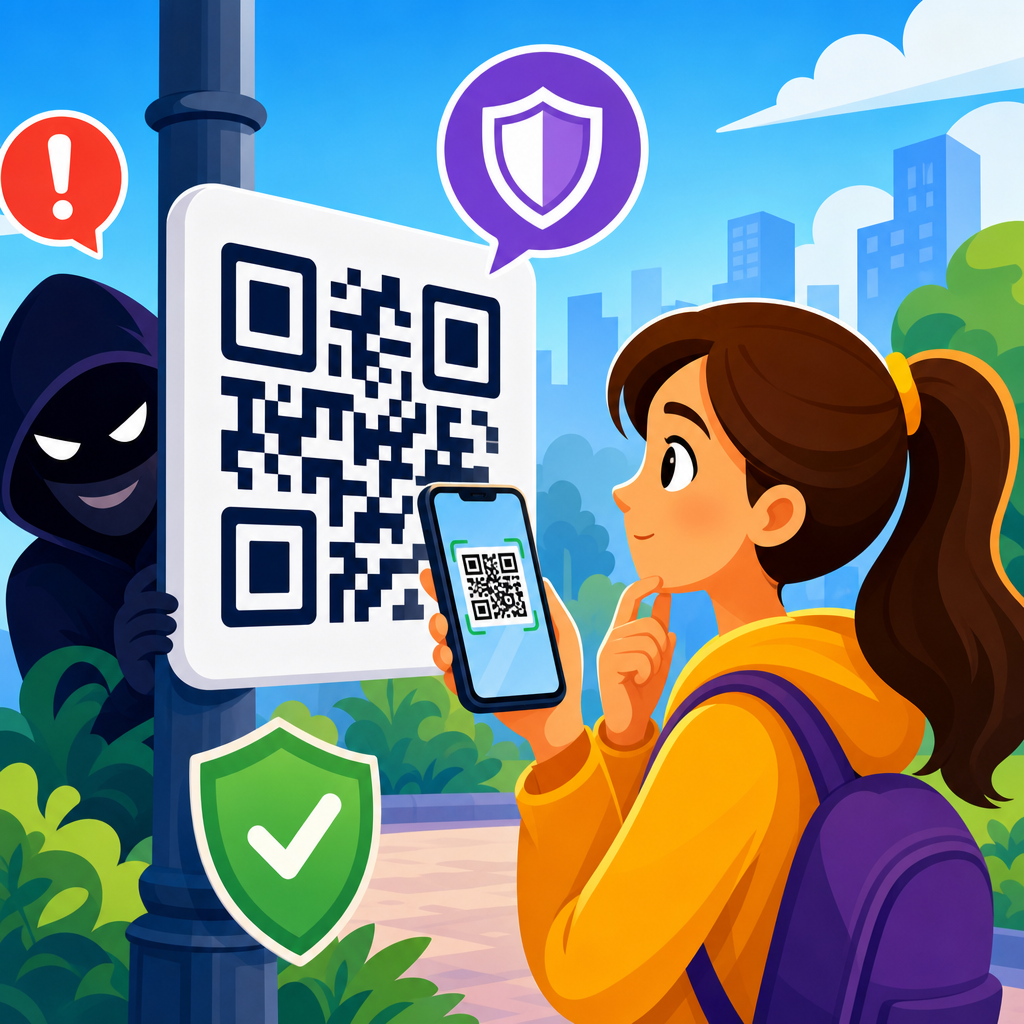
Many QR threats are low-tech. Attackers place a malicious sticker over a real code on a parking kiosk or utility bill. This works because users trust the physical context. To reduce that risk, design for tamper evidence. Print codes within branded templates that include human-readable URLs, campaign names, or instructions that are hard to mimic convincingly. For example, printing “Scan only if the page opens to cityname.gov/parking” gives the user a direct verification step. On high-risk assets, use destructible labels, holographic overlays, serial numbers, or placement behind protective covers.
Regular inspection matters for public installations. If your organization places QR codes on storefront windows, kiosks, shipping boxes, or event booths, create a checklist and schedule for field verification. Teams in facilities, retail operations, and event management should know what authentic assets look like and where to report suspected replacements. In one rollout for venue check-in, we paired each printed code with a tiny alphanumeric location ID so staff could confirm that entrance A displayed the correct code version after setup and before doors opened.
User education should be specific, not generic. Tell people what to expect after scanning: the exact domain, the purpose of the page, whether login is required, and what information will never be requested. If your QR code starts a payment flow, say whether the user should enter card data, use Apple Pay, or confirm an existing account. Clear expectations help users detect fraud. Ambiguity helps attackers. This is especially important for email-delivered PDFs and posters, where users may have no other signal besides the code itself.
Minimize data collection and protect privacy
Secure QR code practices are inseparable from privacy practices. Many QR platforms collect scan time, approximate location, device type, referral data, and conversion events. That information can be useful, but it can also become excessive surveillance if gathered without necessity or notice. Start with data minimization. Collect only what supports the business purpose, define retention periods, and avoid tying scan behavior to named individuals unless there is a lawful reason. If you can measure campaign performance with aggregated analytics, do that instead of persistent user profiling.
Be careful with UTM parameters and other identifiers. Marketing teams often append long query strings that expose campaign names, partner IDs, sales reps, or customer segmentation labels. Those parameters can leak via browser history, screenshots, shared links, server logs, or referer headers. Use concise tags, keep personal data out of URLs entirely, and prefer server-side attribution where possible. If a scan leads to authentication, transition quickly to secure session handling rather than carrying identifiers in the URL after login.
Transparency builds trust. If the landing page uses analytics, cookies, or location-aware content, say so in plain language and link to a relevant privacy notice. For regulated environments, coordinate with legal and compliance teams before launch. The practical question is simple: if a user asked why a QR code collected a specific field, could you justify it clearly? If not, remove it. Secure systems do not just prevent attacks; they also reduce unnecessary exposure when nothing goes wrong.
Use strong governance, testing, and lifecycle controls
The best secure QR code program looks boring behind the scenes because it follows repeatable process. Create ownership for every code or campaign: who requested it, who approved it, where it is deployed, what destination it uses, what data it collects, and when it should expire. Maintain an inventory, especially for dynamic codes. Without one, organizations lose track of old redirects that still work, retired campaigns that still collect data, or physical signs that point to dead pages. That is both a security problem and a brand problem.
Testing should cover more than whether the code scans. Verify mobile rendering on iOS and Android, redirect behavior on cellular and Wi-Fi, certificate validity, analytics accuracy, and accessibility basics such as readable text and adequate contrast around the code. Test with multiple scanning apps because preview behavior differs by device. Also test failure cases: what happens if the code is revoked, the token is expired, or the user lacks permission? Good error handling explains the issue safely without disclosing internal details or leaving the user stranded.
Finally, plan the retirement path. Every QR code should have an end state: permanent redirect, expiration, archival notice, or removal date. If a code supports a short-term promotion, do not let it drift into a 404 page six months later. Route it to a current resource or a message explaining that the offer has ended. Review logs for unusual scan spikes, foreign traffic patterns, repeated invalid tokens, or sudden drops in conversion. Those signals often surface abuse, print errors, or campaign drift before customers report a problem. If you manage QR codes with the same discipline you apply to web applications, they become a dependable channel instead of a hidden risk.
Creating secure QR codes is ultimately a matter of system design, not graphic design. The code image should point to a trusted, controlled destination; the redirect layer should be tightly governed; and the landing experience should match the user’s expectation clearly and safely. Static codes work for simple durable uses, but dynamic codes usually provide better control when backed by custom domains, role-based access, logging, and clear ownership. The strongest implementations also protect against physical tampering, reduce unnecessary tracking, and provide a plan for updates, revocation, and retirement.
If you remember one principle, make it this: never treat a QR code as a standalone asset. Treat it as a public entry point into your digital environment, with all the security, privacy, and operational standards that implies. When teams start with trusted destinations, validate every redirect, minimize data collection, and monitor codes throughout their lifecycle, QR programs become safer for both the organization and the user. Audit your current QR codes, document where they lead, and replace any unmanaged or ambiguous code with a controlled, secure version now.
Frequently Asked Questions
What makes a QR code secure in the first place?
A secure QR code is one that safely connects a user to the intended destination without exposing them to phishing, malware, data leaks, or tampering. The QR image itself is not inherently safe or unsafe; security depends on what the code does, where it leads, and how it is managed over time. For example, a QR code that points to a legitimate HTTPS website on a trusted domain is generally safer than one that uses a shortened or unfamiliar URL that hides the destination. A secure QR code should direct users to a page that is encrypted, clearly branded, and maintained with strong website security practices.
Security also includes the surrounding process. If the QR code is printed in a public place, it should be designed and placed in a way that makes tampering easier to detect. If it is used for payments, tickets, forms, or account access, the linked experience should include proper authentication, secure hosting, and minimal data collection. In practical terms, secure QR codes are built on trustworthy URLs, clear ownership, active monitoring, and a user experience that reduces confusion. The goal is not just to make the code scannable, but to make the entire scan journey reliable and safe.
How can I create a QR code that protects users from phishing and malicious links?
The most important step is to link your QR code to a destination you fully control and trust. Use your official domain name whenever possible rather than a random-looking URL or generic link shortener. People are far more likely to trust, and safely verify, a code that leads to a recognizable web address. Always use HTTPS so the connection is encrypted, and make sure the landing page has a valid SSL certificate, current software, and no mixed-content or browser warning issues. If the QR code points to a downloadable file, host that file on a secure server and make it clear what the user is downloading before they click anything.
You should also avoid creating unnecessary ambiguity. One of the biggest risks with QR codes is that users cannot see the destination before they scan. To reduce that risk, add nearby text that shows the domain name, explains the purpose of the code, and tells users what to expect after scanning. For example, saying “Scan to view the menu at yourrestaurant.com” is much safer than simply posting a code with no context. If appropriate, use a QR solution that includes a preview page or domain verification step, but only if that extra step does not confuse users. Finally, monitor the destination regularly. A safe QR code can become unsafe if the linked page is compromised, redirected, or allowed to expire and be taken over.
Is it safer to use static or dynamic QR codes?
Both static and dynamic QR codes can be secure, but they serve different purposes and come with different risk considerations. A static QR code contains the final destination directly in the code and cannot be changed once it is created. That can be beneficial for security in some cases because there is no redirect layer and less moving infrastructure to manage. If you are linking to a simple, permanent page on your own secure website, a static QR code may be the cleanest and most transparent option. It reduces dependency on a third-party platform and lowers the chance that a redirect service could fail or be misconfigured.
Dynamic QR codes, on the other hand, route users through a managed URL that can later be updated. This flexibility is extremely useful if you need to change destinations, fix broken links, track scans, run campaigns, or retire old content without reprinting materials. From a security perspective, dynamic QR codes can actually improve control because you can quickly redirect traffic away from a compromised page or disable the code entirely. However, they require more careful vendor selection and ongoing oversight. If you use dynamic codes, choose a reputable provider, secure the account with strong passwords and multi-factor authentication, limit access permissions, and confirm that the redirect domain is trustworthy and branded if possible. The safer option depends on your use case: static for simplicity and permanence, dynamic for manageability and rapid response.
What are the best practices for using QR codes on payments, forms, tickets, and sensitive workflows?
When a QR code is tied to money, personal information, healthcare, event access, or account activity, the security bar needs to be much higher. Start by limiting the action to the minimum necessary. A payment QR code should lead directly to an official payment page or trusted payment app, not a general landing page with multiple confusing options. A form QR code should point to a secure form hosted on a legitimate platform with encryption enabled and only request the information that is truly needed. Ticketing QR codes should be connected to a validated check-in system that can detect duplicates or expired entries rather than relying on a simple image alone.
It is also important to build trust signals into the experience. Use branding, organization names, and brief instructions near the code so users know who created it and why. In high-risk situations, consider adding confirmation pages, user authentication, session timeouts, and fraud checks. For example, if a QR code begins a patient intake process, the destination should make it obvious that the page belongs to the provider and should protect any submitted data according to applicable privacy rules. If the QR code is placed in public spaces such as parking meters, posters, or tables, inspect those locations regularly for sticker overlays or replacement attempts. Sensitive QR workflows should never be treated as “set it and forget it” assets; they should be part of your broader security, compliance, and user experience process.
How should I maintain and monitor QR codes after they are published?
Publishing a QR code is only the beginning. To keep it secure over time, you need an ongoing maintenance plan. First, regularly test the code on multiple devices to confirm it still scans correctly and leads to the expected destination. Check that the linked page loads quickly, uses HTTPS, and has not changed in a way that could confuse users. If you are using dynamic QR codes, review redirect settings and account access logs to ensure no unauthorized changes have been made. If the code is printed or displayed in physical locations, inspect those locations for tampering, vandalism, wear, or attempts to place fraudulent stickers over the original code.
Monitoring should also include the destination environment. Keep your website, content management system, plugins, forms, and server software updated so attackers cannot compromise the page behind the code. Renew domains and SSL certificates on time to prevent service interruptions or security warnings. If analytics are enabled, watch for unusual traffic patterns, unexpected geographic activity, or sudden spikes in scans that could indicate abuse. It is also smart to establish a retirement process for old QR codes. If a campaign ends or a page is no longer valid, redirect users to a clear informational page or deactivate the code in a controlled way rather than letting it break. Strong QR code security is not just about safe creation; it is about continuous ownership, visibility, and response.