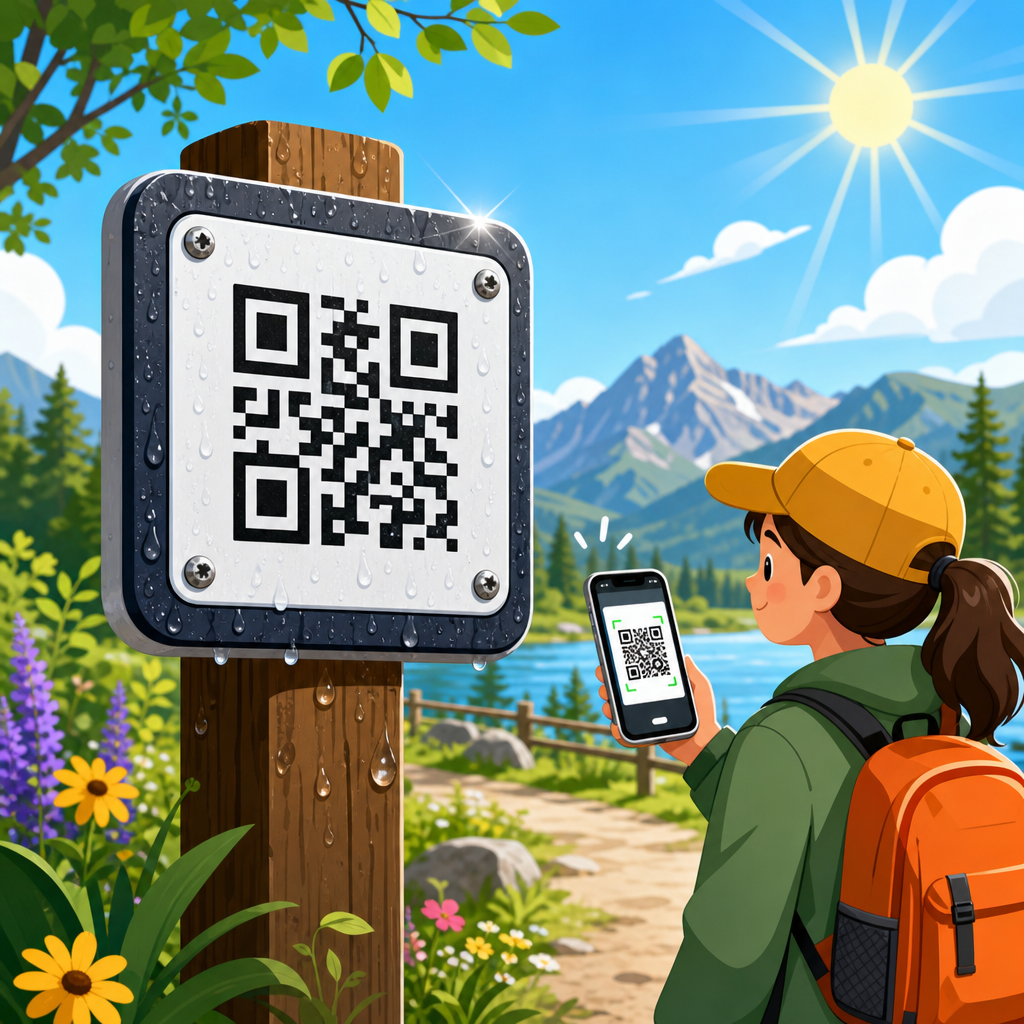
QR code stickers work best when they look intentional, readable, and unmistakably connected to the brand behind them. Adding branding to QR code stickers means more than placing a logo in the middle of a code. It involves aligning the code’s function, visual design, print material, and placement with brand identity while preserving scan reliability. In practice, I have seen branded QR stickers outperform generic ones because people scan what they trust, recognize, and understand at a glance. A well-designed sticker can increase scans, reinforce recall, and make a small printed surface do the work of packaging, signage, and direct response media at once.
Branding a QR code sticker starts with a few key terms. The QR code itself is the machine-readable matrix that opens a URL, file, app action, menu, form, payment page, or other digital destination. The sticker is the printed carrier, which may be paper, vinyl, polyester, tamper-evident stock, or weatherproof laminate depending on where it will be used. Brand elements include logo, color palette, typography, shape language, tone of voice, and supporting graphics such as icons or frames. Quiet zone refers to the blank margin around the code; error correction is the built-in redundancy level that helps the code remain scannable even if part of it is obscured. These definitions matter because branding choices affect technical performance.
This topic matters because QR code sticker design sits at the intersection of marketing, production, and user experience. A restaurant needs table stickers that fit its interior and survive daily cleaning. A manufacturer may need asset labels that carry a logo, serial number, and service portal link on a curved metal surface. A retailer might use seasonal product stickers with campaign colors and dynamic URLs that can be updated after printing. If the sticker looks off-brand, users hesitate. If it looks stylish but scans poorly, the campaign fails. The goal is a branded QR code sticker that is immediately recognizable, easy to scan, durable in its environment, and useful enough to justify the interaction.
Start with the purpose, audience, and scan context
The first step in QR code sticker design is deciding what the sticker must accomplish. Every branding decision should support that purpose. If the code links to a product manual, the sticker should emphasize utility and permanence. If it drives to a giveaway landing page, the design can lean more promotional. I begin projects by answering five operational questions: who will scan, where will they scan, what device will they use, what action should happen after the scan, and how long must the sticker remain in service? These answers shape size, contrast, copy, substrate, adhesive, and link strategy.
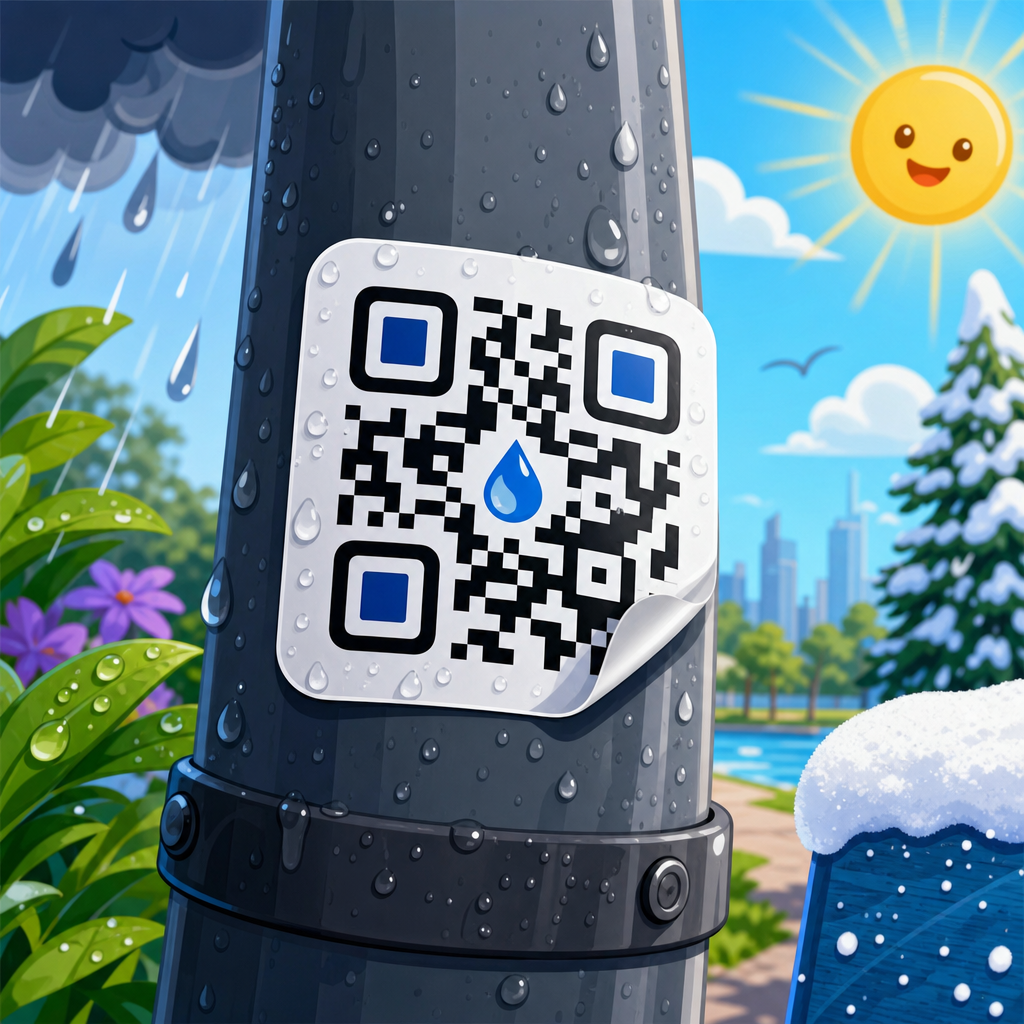
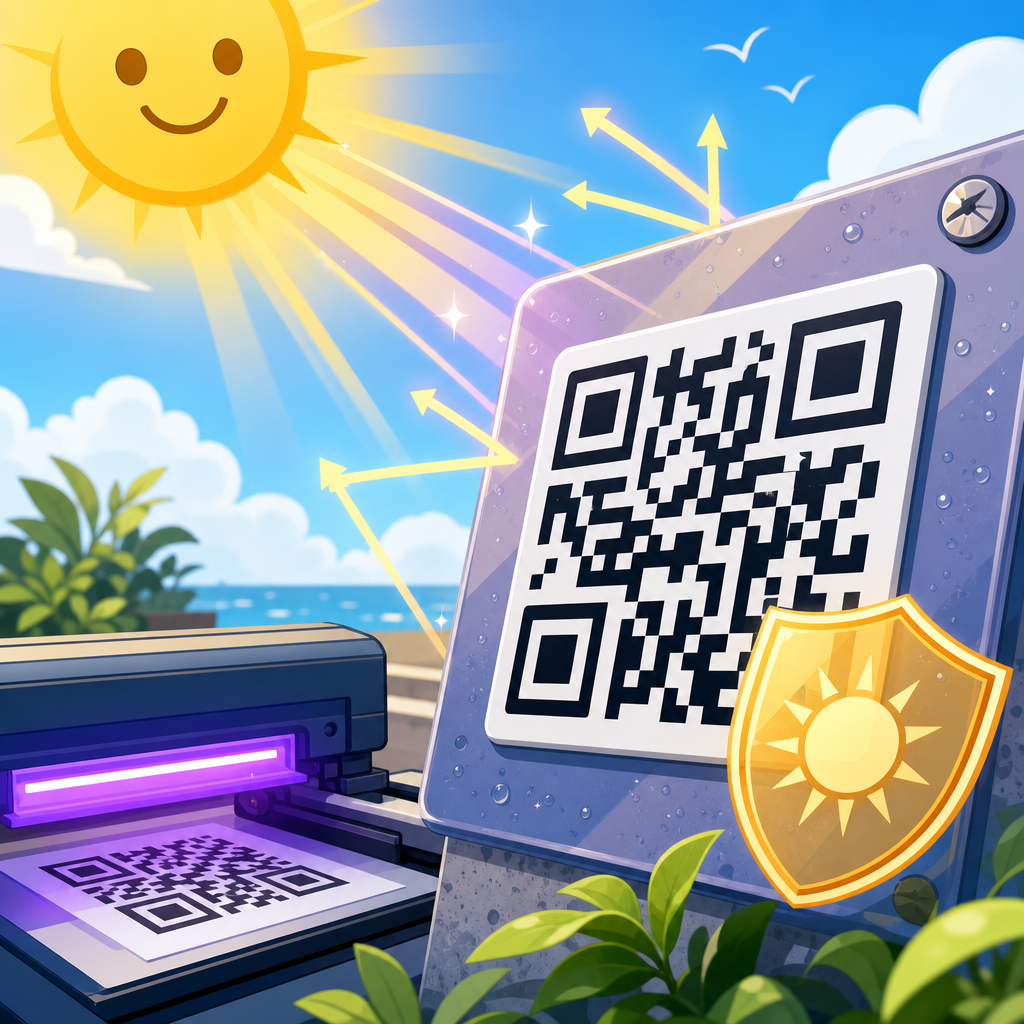
Audience affects both branding and readability. A premium cosmetics brand may prefer a minimal sticker with restrained colors and soft-touch packaging integration, while an industrial parts supplier needs high-contrast labels that can be found quickly in a warehouse. Context also matters. Outdoor QR code stickers need UV-resistant inks and strong contrast because glare, dust, and distance make scanning harder. Indoor promotional stickers can tolerate more decorative framing, but they still need clear hierarchy. A customer should know in one second why the code is there. “Scan for installation guide” consistently beats a bare code with no explanation.
Scan context determines technical margins. Phone cameras vary, ambient light changes, and sticker surfaces can curve or wrinkle. As a rule, the more challenging the environment, the less decorative the code should be. That is why branded QR code stickers for equipment, vehicles, windows, and textured packaging usually perform best with dark modules on a light matte background, a generous quiet zone, and concise adjacent copy. Good branding starts by respecting real-world scanning conditions rather than forcing visual ideas that only work on a mockup.
Build the visual brand layer without breaking scannability
The safest way to add branding is around the QR code first, then inside it only when necessary. Surrounding elements include a branded frame, headline, icon, logo lockup, campaign color band, or shape-cut sticker outline. These communicate brand identity without interfering with the code pattern. In many campaigns I have managed, a branded container with a clear call to action lifted scan rates more reliably than heavily customized code art. People scan faster when the sticker looks official and the benefit is explicit.
Color is the most common branding request, but it needs discipline. High contrast remains non-negotiable. Dark blue on white usually scans well; pale yellow on cream often fails. Most phone cameras detect luminance contrast more than hue distinction, so the difference between foreground and background must stay strong. Avoid metallic inks over the data area, and be careful with transparent stocks on dark surfaces because the background can reduce contrast unexpectedly. If brand guidelines require a light palette, use those colors in the border, copy, or backing shape while keeping the code itself dark and simple.
Logos can be embedded in the center of a QR code, but only within the limits of error correction and module integrity. Use a generator that supports logo placement testing, then verify the output across multiple devices. The logo should not cover finder patterns, alignment patterns, or too much central data area. Vector artwork is preferred because raster logos can soften at small sizes. Rounded modules, custom eyes, and brand-shaped frames are possible, yet each modification increases testing requirements. The practical standard is simple: if the code is business-critical, customize lightly and test heavily.
Choose sticker materials, finishes, and adhesives that support the brand
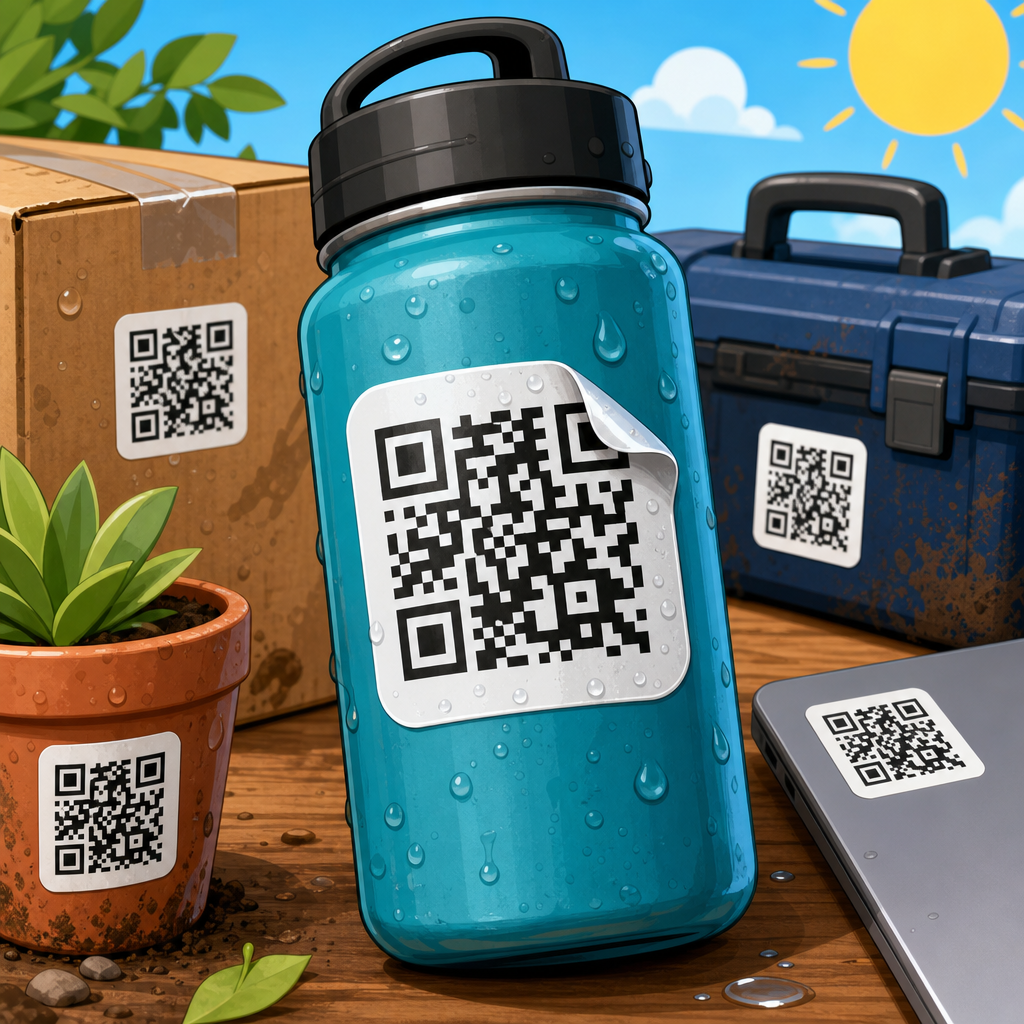
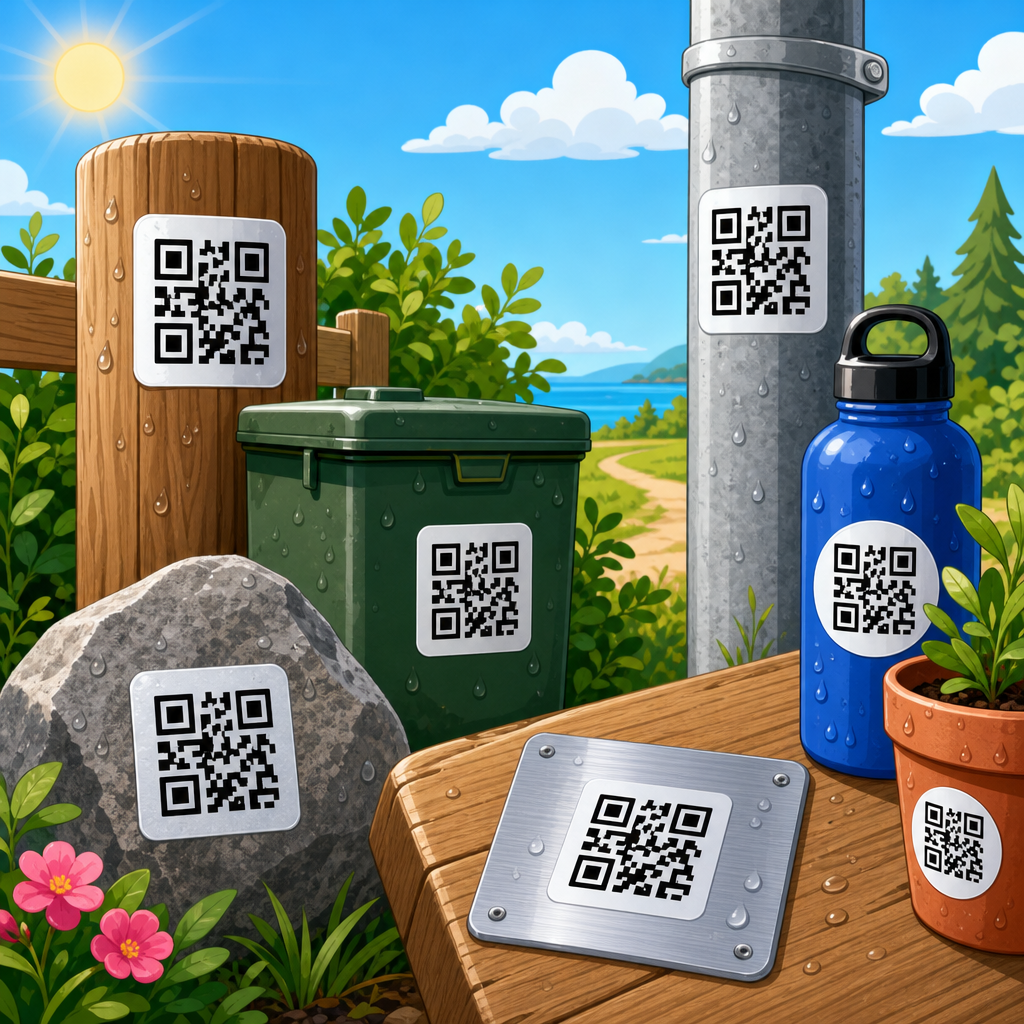
Material choice is part of branding because it changes how the sticker feels, lasts, and is perceived. Paper labels suit short-term indoor promotions, retail packaging, and event handouts. Vinyl is the common choice for durable QR code stickers because it resists moisture, abrasion, and moderate outdoor exposure. Polyester and polycarbonate are used when chemical resistance, dimensional stability, or long service life matter, such as on tools, machinery, or medical carts. A luxury brand may favor a textured paper stock for packaging inserts, while a facilities team needs laminated synthetic labels that survive cleaning agents.
Finish affects both aesthetics and scanning. Gloss can look premium, but glare from overhead lighting often reduces readability. Matte or satin lamination is usually the safer choice for branded QR stickers because it controls reflections while still looking finished. For window applications, reverse printing with a white ink layer may be needed to maintain contrast. For refrigerated or wet environments, adhesives must match the substrate and temperature range; otherwise corners lift and distort the code. I have seen excellent designs fail simply because the wrong adhesive was used on cold plastic containers.
Shape and cut also communicate brand identity. Circle, square, rounded rectangle, and die-cut custom silhouettes all work, but the code area itself should remain undistorted. A die-cut sticker in a brand icon shape can be effective if the code sits on a stable inner panel with full quiet zone. Tamper-evident materials add trust for warranty, authentication, or safety use cases. Removable adhesive works for short campaigns on glass or painted walls; permanent adhesive suits assets and packaging. The material decision should reflect both the brand promise and the operational demands of the environment.
Use layout, copy, and hierarchy to make the sticker self-explanatory
The best QR code sticker design answers the user’s immediate questions without requiring thought: What is this? Why should I scan it? Is it safe? What happens next? Layout handles those answers. Put the QR code in the dominant visual position, but support it with a short action line and, when helpful, a destination cue such as “Scan to register your product,” “Scan for care instructions,” or “Scan to view the menu.” Branded stickers should feel cohesive with packaging or signage, yet clarity must win over decoration every time.
Typography should follow brand standards but remain legible at print size. Thin fonts disappear on small stickers, especially on textured or absorbent stocks. Keep copy concise and place it outside the quiet zone. If a URL is printed as a fallback, use a short branded domain rather than a long tracking string. This improves trust and gives users an alternate path when scanning conditions are poor. A recognizable short domain also reinforces the brand, which is especially important for public-facing stickers where users may worry about unknown links.
Hierarchy matters because users often decide to scan in less than a second. A practical order is benefit first, code second, brand third, then supporting details. For example, on a skincare package, “See ingredients & routine” may sit above the code, with the brand mark below and customer support details in small type. On an industrial label, the product name and service action may take priority. Branded QR code stickers are not miniature posters. They are response tools, and every element should help users complete that response with confidence.
Technical design rules that protect scan performance
Reliable branded QR code stickers follow a few non-negotiable design rules. The code needs a quiet zone of at least four modules on all sides. Module edges should print sharply, which is why vector export and appropriate printer resolution matter. Small stickers require larger modules, not denser codes; reducing encoded content or using a short redirect URL often improves reliability more than any visual adjustment. For most handheld consumer use, 0.8 to 1 inch codes can work at close range, but larger sizes are safer, especially on moving, reflective, or outdoor surfaces.
Error correction levels matter when adding logos or decorative changes. Level M or Q is common for branded applications because it allows moderate damage recovery without making the code excessively dense. Level H offers more redundancy, but the code grows more complex and may become harder to print small. The right choice depends on print size, data length, and customization. Always test from native camera apps on current iPhone and Android devices, not only from one scanner application. Real users rely on built-in cameras under imperfect conditions.
| Design factor | Best practice | Why it matters |
|---|---|---|
| Contrast | Dark code on light matte background | Improves camera detection across lighting conditions |
| Quiet zone | Minimum four modules clear on all sides | Prevents surrounding graphics from interfering |
| Logo size | Keep central mark small and tested | Reduces risk of covering critical data modules |
| Print method | Use high-resolution digital, thermal transfer, or screen printing as appropriate | Maintains sharp edges and consistent density |
| Finish | Prefer matte or satin over gloss | Limits glare and supports easier scanning |
| Destination URL | Use a short branded redirect or dynamic code | Allows updates and lowers data density |
Printing method can make or break the result. Thermal transfer is excellent for durable industrial labels with black-only data and variable fields. Digital printing is flexible for short runs, color branding, and campaign variations. Screen printing suits large quantities and demanding outdoor applications when paired with the right inks. Prepress proofing should include actual-size print tests, not just zoomed PDFs. Before approving production, place the sticker on the real substrate, under real lighting, and scan from the expected distance. That step catches more issues than any software preview.
Use dynamic QR codes, tracking, and governance to keep branded stickers useful
A QR sticker should not become obsolete the moment a landing page changes. Dynamic QR codes solve that problem by pointing the printed code to a short redirect that can later be updated. For branded QR code stickers, this is especially valuable because the physical asset may remain in stores, on products, or on equipment for months or years. You can change the destination to reflect a new campaign, updated support article, revised menu, or localized experience without reprinting the sticker. That flexibility is one of the strongest business cases for careful sticker design.
Tracking also matters, but it should be handled cleanly. Use analytics parameters, campaign naming conventions, and dashboard segmentation that distinguish by location, product line, material, or creative version. If you print ten sticker variants across packaging, point-of-sale, and outdoor posters, you should be able to compare scan rate and downstream conversion by variant. I recommend documenting each sticker with a creative ID, destination owner, revision date, and retirement plan. Governance sounds administrative, but it prevents dead links, inconsistent branding, and forgotten QR codes that send users to outdated pages.
This hub topic connects naturally to deeper articles on QR code size, color contrast, logo placement, sticker materials, adhesives, laminates, print methods, outdoor durability, tamper-evident labels, and testing protocols. That broader system is important because QR code sticker design is never only about artwork. It includes URL management, analytics, maintenance, compliance, and production quality control. The strongest branded sticker programs treat each code as a managed brand touchpoint, not a one-off graphic dropped onto packaging at the last minute.
Common mistakes and how to avoid them
The most common mistake is prioritizing style over function. Designers often shrink the code to make room for graphics, remove the quiet zone, or use low-contrast brand colors across the entire sticker. The result may look refined on screen but fail in stores or in the field. Another frequent problem is placing QR stickers on curved seams, highly reflective metal, or heavily textured surfaces without compensating in size and finish. When placement is unavoidable, increase size, simplify customization, and test on the real surface before committing to volume.
Another mistake is sending users to generic homepages. If the sticker promises installation help, the code should open the exact guide, not the top-level site where users must search again. Mismatch between printed promise and landing experience destroys trust. So does failing to maintain the destination over time. Broken redirects, expired campaign pages, and mobile-unfriendly forms waste scans that the brand has already paid to earn. The printed sticker is only half the experience; the landing path completes the promise.
Finally, many teams skip user validation. A five-minute hallway test with different phones, lighting conditions, and scanning distances reveals whether the sticker is understandable and fast. Ask testers what they expect before scanning, how safe the sticker feels, and whether the call to action is obvious. Small wording changes can have outsized effects. “Scan for warranty activation” is clearer than “Learn more,” and clarity usually increases action. Good branded QR code stickers are not mysterious. They are obvious, credible, and friction-free.
Adding branding to QR code stickers is most effective when brand expression supports scan performance instead of competing with it. Start by defining the sticker’s job, audience, environment, and lifespan. Then build the visual identity around the code with strong contrast, disciplined logo use, clear copy, and a layout that explains the benefit immediately. Match materials, finishes, and adhesives to the real surface and conditions, because durability is part of brand quality. Protect scan reliability with proper quiet zones, print resolution, testing, and realistic sizing. Finally, use dynamic links, analytics, and governance so the sticker remains useful long after it is printed.
When done well, a branded QR code sticker becomes a compact, measurable brand asset. It can connect packaging to product education, signage to conversion, equipment to service instructions, and retail displays to campaign landing pages. The strongest designs feel familiar to the customer and effortless to use. If you are building a QR code sticker design system, audit your current stickers, test them in real conditions, and standardize the rules that improve both trust and scanning. That process will produce better-looking stickers, better user outcomes, and stronger performance across every printed touchpoint.
Frequently Asked Questions
1. What is the best way to add branding to QR code stickers without making them hard to scan?
The best approach is to treat branding as a supporting design layer, not the main event. A QR code sticker still has one primary job: it must scan quickly and consistently. That means any branded elements, including logos, custom colors, frames, taglines, or background graphics, should be added in a way that preserves the code’s contrast, quiet zone, and overall readability. In most cases, the safest strategy is to start with a high-error-correction QR code, keep the data destination simple, and then apply branding carefully around the code before making small visual adjustments inside it.
For example, placing a logo in the center can work well, but only if the logo does not cover too much of the code. The code also needs a clear margin around the edges, often called the quiet zone, so scanners can detect it properly. Brand colors can absolutely be used, but they should maintain strong contrast between the dark and light areas. A common mistake is choosing stylish color combinations that match a brand palette but reduce scan performance in real-world lighting. Deep navy on white often works; pale gray on beige usually does not.
It is also smart to brand the sticker beyond the code itself. A short call to action, a recognizable brand name, and a clean frame can make the sticker feel intentional and trustworthy without compromising function. In practice, this often performs better than over-designing the code pattern. The strongest branded QR stickers are usually the ones that look clearly associated with the company while remaining instantly scannable from normal phone-camera distance.
2. Can I put my logo in the middle of a QR code sticker, and is it actually a good idea?
Yes, you can put a logo in the middle of a QR code sticker, and in many cases it is a very good idea, as long as it is done correctly. A centered logo can strengthen brand recognition, make the code feel more legitimate, and help people understand that the sticker belongs to a real business rather than a random link. That trust factor matters more than many people realize. People are far more likely to scan a QR code when they can immediately connect it to a familiar or professionally presented brand.
That said, the logo should never be added casually. QR codes rely on encoded patterns and position markers to remain readable. If the logo covers too much of the central area, or if it blends poorly with the code’s colors, scan reliability can drop fast. The best practice is to generate the code with a sufficient error correction level, use a logo that is simple and clean, and keep it proportionate. A small, recognizable logo is usually far more effective than a large one that dominates the sticker.
It also helps to place the logo inside a shaped white or light background so it remains visually distinct from the code modules around it. This improves both appearance and scanning performance. Before printing, the sticker should be tested on multiple phone models, at different distances, and under different lighting conditions. In real-world use, the logo should enhance trust and recognition, not force users to struggle to get a scan. When handled thoughtfully, a logo can be one of the most effective branding additions to a QR code sticker.
3. Which design elements matter most when creating branded QR code stickers?
The most important design elements are contrast, shape, spacing, messaging, and material finish. Many people focus only on the QR code graphic, but a branded sticker works as a complete visual object. Contrast is critical because the code needs to separate clearly from its background. Strong dark-on-light combinations are usually the safest choice. Shape also matters because the sticker itself can reinforce brand identity. A brand with a modern aesthetic may use a clean square or rounded-corner label, while a more playful brand may prefer a custom die-cut shape around the code area.
Spacing is another major factor. A QR code should never feel crowded. It needs breathing room so phone cameras can identify the code quickly. That means the code, logo, headline, and any supporting text must be arranged intentionally. A cluttered sticker often scans worse and looks less professional. Messaging matters too. Even a short phrase such as “Scan for menu,” “Verify product,” or “See the collection” can improve scan rates because it tells users what they will get in return. Branding is not only visual; it is also about setting clear expectations.
Material finish plays a larger role than many brands expect. Glossy stickers may look polished, but glare can interfere with scanning, especially outdoors or under retail lighting. Matte finishes are often a better choice for readability. Durability should also align with brand standards and use case. If the sticker will be used on packaging, windows, equipment, or outdoor surfaces, the print quality and material should reflect the brand experience. The strongest branded QR stickers succeed because every design decision supports both recognition and usability.
4. How do I make sure branded QR code stickers match my brand identity across packaging, stores, and marketing materials?
Consistency starts with building a repeatable QR sticker system instead of designing each sticker from scratch. That system should include approved colors, logo placement rules, typography, sticker shapes, call-to-action language, destination link types, and print specifications. Once those standards are defined, QR code stickers can be adapted for different surfaces and campaigns without losing their connection to the brand. This is especially important if the stickers appear across product packaging, retail displays, event materials, mailers, or in-store signage.
One effective method is to create a branded template library. For example, your brand might use one layout for packaging inserts, another for shelf labels, and another for storefront windows, all with the same visual language. The QR code itself may link to different destinations, but the customer should still recognize the same brand voice and design system immediately. That includes keeping CTA wording aligned with your tone, using approved fonts, and maintaining similar framing or border treatments around the code.
Placement also affects brand consistency. A QR sticker should feel integrated into the design of the object it is placed on, not added as an afterthought. On premium packaging, the sticker should support a premium feel. In a physical store, it should be positioned where customers naturally pause and notice it. Across all settings, the branded QR sticker should communicate the same message: this is a deliberate, trustworthy brand interaction. When businesses standardize these details, QR stickers become a seamless part of the customer experience rather than a disconnected technical tool.
5. What are the biggest mistakes to avoid when adding branding to QR code stickers?
The biggest mistake is prioritizing style over function. A branded QR code sticker should absolutely look polished and on-brand, but if customers cannot scan it easily, the branding effort fails. Low-contrast color choices, oversized logos, decorative backgrounds, missing quiet zones, and overly complex code styling are among the most common problems. These issues often appear because teams want the code to look custom, but they end up weakening the very feature that makes the sticker useful.
Another major mistake is ignoring the physical environment where the sticker will be used. A code that scans perfectly on a digital mockup may fail once printed too small, placed on a curved surface, exposed to glare, or installed in low light. Branding decisions should always account for real usage conditions. If the sticker is going on a bottle, a storefront window, a shipping box, or outdoor equipment, the design and material have to match that setting. Testing is not optional. It is a core part of branded QR implementation.
Brands also sometimes forget to clarify the purpose of the scan. A QR code with no context can feel suspicious or irrelevant. Even strong visual branding will not fully solve that problem. Users want to know what they are getting before they scan. Adding a clear CTA and making sure the linked destination reflects the same branding as the sticker itself creates a much stronger experience. The most effective branded QR stickers avoid gimmicks, respect technical best practices, and make the scan feel both easy and worthwhile.