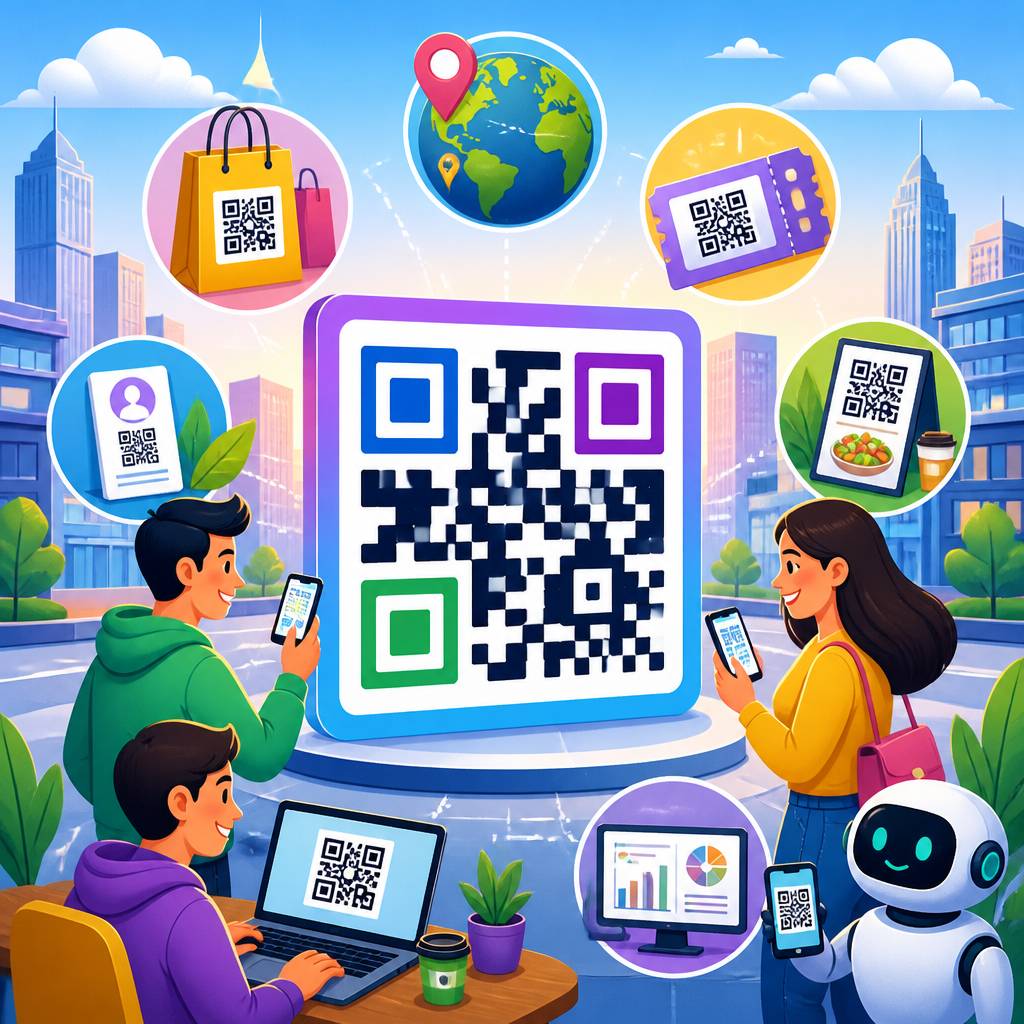
QR codes have moved from a niche inventory tool to a mainstream bridge between physical and digital experiences, and global QR code adoption trends now influence payments, retail, healthcare, logistics, education, travel, and public services. A QR code, short for Quick Response code, is a two-dimensional barcode that stores data such as a URL, payment token, product identifier, contact card, or authentication credential. Unlike traditional barcodes, it can hold more information and be scanned from multiple angles, which makes it practical for phones, kiosks, warehouse scanners, and industrial devices. Over the past several years, I have watched businesses treat QR codes first as a temporary convenience, then as a permanent customer access layer. That shift matters because adoption is no longer driven by novelty. It is driven by utility, cost efficiency, and user behavior.
When people ask why QR codes became so important so quickly, the answer is simple: they remove friction. A printed square can connect a poster to a ticket purchase page, a table tent to a menu, a shipment label to tracking data, or a medicine package to safety information in seconds. Global smartphone penetration has made scanning almost universal, while built-in camera support in iOS and Android eliminated the need for separate apps in many markets. At the same time, merchants and institutions needed low-cost digital touchpoints that worked across devices. QR codes fit that need better than proprietary hardware in many situations. As a result, the future of QR codes is tied not just to scanning technology, but to how organizations design customer journeys, compliance systems, and data collection.
This hub article examines the top QR code trends shaping the future through the lens of global adoption. It covers where growth is happening, why industries are investing, how consumer expectations are changing, and which technical and regulatory forces will define the next phase. The central pattern is clear: QR codes are becoming infrastructure. They support cashless commerce, product transparency, connected packaging, service automation, and secure identity flows. For brands and operators, understanding these trends helps prioritize the right use cases. For readers exploring the wider QR Code Trends & Innovations topic, this page provides the foundation needed to evaluate regional behavior, industry applications, and the practical decisions that separate successful deployments from gimmicks.
Global adoption is expanding from payments into everyday digital access
The first major trend is breadth. QR code usage is no longer concentrated in a few sectors or countries. In China, mobile payment ecosystems normalized QR scanning years ago through platforms such as Alipay and WeChat Pay. India accelerated mass adoption through UPI, where interoperable payment rails made QR acceptance practical for everyone from supermarkets to street vendors. In Brazil, Pix created a similar leap by making instant account-to-account transfers simple and widely trusted. These markets proved that QR codes scale when the payment network, banking system, and consumer habit align.
What is changing globally is that other regions are now using QR codes for more than transactions. In North America and Europe, restaurants popularized digital menus, retailers added scan-to-learn packaging, and transit systems adopted mobile boarding and validation workflows. Airports use QR-based passes for self-service check-in and lounge access. Hospitals use them for patient forms and wayfinding. Universities embed them in campus signage to connect students to events, course resources, and safety updates. The result is a broader usage profile: even where QR payments remain one option among many, QR interactions overall are rising because they solve access problems cheaply and at scale.
This matters for strategy. A company that still views QR as only a payments tool will underinvest in higher-value applications such as product authentication, omnichannel attribution, after-sales support, and first-party data capture. In practice, the strongest programs treat one code as an entry point into a wider digital system. A consumer scans a package not just to read ingredients, but to register a warranty, verify authenticity, join a loyalty program, and receive recycling guidance. Adoption grows when the code opens a useful path, not when it simply replaces a printed web address.
Dynamic QR codes are replacing static campaigns because measurement matters
The second trend shaping the future is the move from static to dynamic QR codes. A static code permanently points to one destination, while a dynamic code routes through a managed link that can be updated without reprinting the asset. In campaigns I have audited, this distinction often determines whether a QR deployment becomes a measurable channel or dead print. Dynamic codes allow marketers to change landing pages by country, device type, language, or campaign period. Operations teams can redirect users during outages. Product teams can keep a packaging code active for years while refreshing the content behind it.
Measurement is the real advantage. A dynamic QR platform can report scans by time, location, device category, and conversion path, helping teams separate curiosity from intent. If a cosmetics brand places codes on shelf talkers, influencer mailers, and product boxes, it can compare performance by touchpoint. If a museum prints one code per exhibit room, it can see where visitors engage most deeply. If a logistics company labels pallets with dynamic QR identifiers, it can trace handoffs and exception points. This data turns physical interactions into analyzable digital events, which is why adoption is accelerating among organizations that already think in dashboards and attribution models.
There are tradeoffs. Dynamic infrastructure requires governance. Broken redirects, poor tag discipline, and privacy missteps can reduce trust quickly. Teams need consistent naming conventions, destination testing, and retention rules. They also need to decide when a dynamic code should resolve to the web versus opening an app deep link. Still, the market direction is unmistakable: as soon as organizations understand that a printed code can become a managed, updateable, and measurable asset, they stop treating QR as disposable creative.
Payments, identity, packaging, and operations are driving different regional growth patterns
Global QR code adoption trends do not look the same everywhere because market structure matters. Banking interoperability, smartphone quality, merchant tooling, regulation, and consumer trust all influence which use cases take off first. The table below summarizes the patterns I see most often when comparing mature and emerging deployments.
| Region | Primary growth driver | Common use cases | Key adoption factor |
|---|---|---|---|
| East Asia | Mobile-first commerce | Payments, super app services, ticketing | Established wallet ecosystems |
| South Asia | Interoperable instant payments | Merchant payments, bill pay, peer transfers | Low-cost acceptance for small businesses |
| Latin America | Real-time payment rails | Transfers, retail checkout, banking access | Trust in fast bank-linked systems |
| North America | Customer convenience and tracking | Menus, product info, event access, loyalty | Built-in smartphone scanning |
| Europe | Information access and compliance | Transit, authentication, packaging, invoices | Regulatory clarity and cross-border travel |
| Africa | Financial inclusion and service reach | Payments, utility access, public information | Mobile adoption and infrastructure gaps |
These differences shape execution. In India, a small merchant may focus on payment acceptance and settlement speed. In Germany, a manufacturer may care more about digital product passports and traceability. In the United States, a restaurant group may prioritize menu updates, loyalty enrollment, and labor savings. In Kenya or Nigeria, a service provider may use QR codes to simplify access where branch infrastructure is limited. The lesson is straightforward: adoption follows the problem being solved. The code is the same, but the economic logic differs by region.
Companies expanding internationally should resist copying one market’s QR playbook into another without localization. Language, payment preference, connectivity quality, and privacy expectations all affect scan completion. Even design choices matter. A code beside a clear call to action outperforms an unexplained code. Local trust signals, recognizable payment marks, and concise value propositions improve performance in every market I have tested.
Connected packaging and product transparency are becoming major growth engines
Another defining trend is the rise of connected packaging. Brands increasingly use QR codes on labels, boxes, and inserts to turn products into digital media channels. This is especially important in food, beverage, beauty, apparel, pharmaceuticals, and consumer electronics, where buyers want more than a transaction. They want provenance, instructions, ingredient details, sustainability claims, and support. A QR code can deliver all of that without crowding the package.
In regulated and trust-sensitive sectors, the value is even higher. Pharmaceutical companies use serialized coding and package-level identification to strengthen traceability and anti-counterfeiting measures. Food producers use QR links to provide allergen information, sourcing stories, and recall updates. Apparel brands use codes to explain materials, care instructions, and resale authentication. The European push toward richer product data and circular economy reporting is increasing interest in digital product information layers that can evolve over time. A printed package may stay on shelves for months, but the content behind the code can reflect current guidance instantly.
From experience, the best connected packaging programs are built around one practical question: what does the customer need after purchase? For coffee, that may be brew guidance and origin details. For skincare, it may be usage order and patch-test advice. For electronics, it may be setup videos and warranty registration. If the answer is useful, scans continue long after launch. If the code leads only to a generic homepage, adoption stalls. This is why QR codes are becoming central to lifecycle communication, not just point-of-sale marketing.
Security, standards, and consumer trust will determine long-term adoption quality
Growth alone does not guarantee durable success. The future of QR codes depends on trust, and trust depends on security design, visible standards, and responsible implementation. QR phishing, malicious redirects, and fake payment stickers are real risks. In physical environments, I have seen criminals place fraudulent overlays on parking meters, restaurant tables, and donation signs. A user cannot visually inspect a QR destination before scanning, so organizations must compensate with good practices: branded domains, HTTPS, clear destination previews, tamper checks, and staff inspection routines.
Standards also matter. GS1 Digital Link is important because it helps connect product identifiers to web-based information in a structured, interoperable way. EMV QR specifications matter in payments because they improve consistency between issuers, acquirers, and merchants. Device-level security features such as passkey support, secure elements, and in-app confirmation screens reduce fraud exposure in authentication and payment flows. Where public institutions deploy QR at scale, procurement should include uptime requirements, redirect controls, audit logging, and accessibility testing.
Consumer trust is earned in small details. Tell users what happens after they scan. Use short, human-readable calls to action such as “Scan to verify authenticity” or “Scan to view ingredients and allergens.” Avoid sending people through unnecessary forms on mobile. Make pages fast and lightweight for weak connections. If data is collected, explain why and obtain consent where required. These practices are not cosmetic. They directly affect repeat scanning and determine whether QR codes become a reliable habit or a one-time experiment.
What businesses should do now to benefit from global QR code adoption trends
Organizations planning for the next phase of adoption should start with a use-case map, not a design file. Identify where a scan would remove friction, reduce service cost, or improve conversion. Then choose the right code architecture, analytics model, and governance process. In most cases, dynamic QR codes are the default choice because they support updates and measurement. Pair every code with a mobile-optimized destination, a clear promise, and one primary action. If multiple regions are involved, localize language, payment options, and compliance notices from the outset rather than retrofitting later.
Next, measure outcomes that matter. For a retailer, that may be scan-to-purchase rate, loyalty sign-ups, or repeat scans by product line. For a manufacturer, it may be warranty registrations, support deflection, or verified product checks. For a transit provider, it may be throughput, fraud reduction, and passenger satisfaction. QR code programs perform best when they are owned cross-functionally by marketing, operations, IT, and compliance rather than sitting as a minor creative add-on. This is one lesson I have seen repeated across successful rollouts: the code is tiny, but the system behind it is not.
Finally, think of this article as the hub for a broader decision framework. Global QR code adoption trends point to one conclusion: QR is becoming a durable interaction standard because it works across markets, industries, and devices at low cost. The most important trends are expansion beyond payments, the rise of dynamic management, regional variation in growth drivers, connected packaging, and the central role of security and trust. Businesses that act now can turn simple scans into measurable service, commerce, and product experiences. Audit your customer journey, identify the highest-friction touchpoints, and build your next QR deployment around genuine usefulness.
Frequently Asked Questions
What are the biggest QR code trends shaping the future across industries?
The biggest QR code trends center on convenience, real-time connectivity, and the growing need to link physical environments with digital services. One of the most important shifts is the rise of dynamic QR codes, which allow businesses to change the destination or content behind a code without reprinting it. This gives brands, retailers, healthcare providers, schools, and public agencies far more flexibility for campaigns, documentation, menus, forms, product details, and service updates.
Another major trend is the expansion of contactless payments. QR-based payment systems have become a practical alternative to cards and cash in many markets because they are relatively low-cost to deploy and simple for consumers to use with smartphones. Retailers, restaurants, transportation systems, and small businesses increasingly rely on QR payment flows to reduce friction at checkout and support mobile-first customer behavior.
There is also strong momentum behind personalized and data-driven experiences. Businesses now use QR codes to direct users to location-specific landing pages, loyalty rewards, onboarding content, digital receipts, how-to videos, or product authentication tools. In sectors such as logistics and healthcare, QR codes are improving traceability, asset tracking, and fast access to critical records. In education and travel, they streamline information delivery, check-ins, schedules, and interactive learning resources.
Perhaps the most defining trend is that QR codes are no longer viewed as a novelty. They are becoming core infrastructure for digital engagement, identity verification, service access, and operational efficiency. As smartphone camera scanning, mobile wallets, and cloud platforms continue to improve, QR codes are positioned to play an even larger role in everyday digital interactions.
Why have QR codes become so widely adopted beyond their original use in inventory and manufacturing?
QR codes have grown far beyond their roots in inventory management because they solve a universal problem: how to connect an offline object or physical location to digital information quickly and cheaply. A QR code can store or point to a wide range of data, including a website URL, payment token, product identifier, contact card, ticket, login credential, form, or authentication step. That flexibility makes it useful in almost any industry.
A major reason for adoption is accessibility. Most modern smartphones can scan QR codes directly through their built-in camera, which removes the need for specialized hardware or separate apps in many cases. That ease of use lowered the barrier for consumers and made deployment more practical for organizations of all sizes. Compared with other technologies, QR codes are also inexpensive to create, easy to print or display digitally, and adaptable to both high-tech and low-tech environments.
The pandemic period also accelerated familiarity with QR interactions, especially for menus, payments, registrations, digital documents, and contactless workflows. Once users became comfortable scanning codes, many organizations realized they could use the same tool for a broader range of services. Retailers use them for product information and promotions, hospitals use them for patient workflows and medication tracking, logistics firms use them for package identification, and educators use them for classroom resources and assignments.
In short, QR codes became mainstream because they are practical, scalable, and versatile. They offer a simple bridge between the physical and digital worlds, which is exactly what many modern customer journeys and operational systems require.
How are QR codes changing customer experience in retail, payments, and marketing?
QR codes are reshaping customer experience by reducing friction and adding immediate access to relevant digital content at the exact moment a customer needs it. In retail, shoppers can scan a code on packaging, shelving, displays, or receipts to view product specifications, ingredient lists, sustainability information, reviews, promotions, loyalty offers, or reordering options. This gives customers more confidence while helping brands deliver richer information than physical packaging alone can hold.
In payments, QR codes simplify checkout by allowing customers to pay through mobile wallets or banking apps without swiping a card or handling cash. This is especially valuable for quick-service restaurants, market vendors, transit systems, event venues, and small merchants that want a fast, low-cost payment method. QR-based payments can also support peer-to-peer transactions, table-side ordering, bill splitting, and self-service kiosks.
From a marketing perspective, QR codes make offline media measurable and interactive. A printed ad, poster, product box, in-store display, direct mail piece, or event badge can instantly launch a landing page, coupon, signup form, augmented experience, or app download. That means marketers can connect physical campaigns to digital analytics, track engagement by location or channel, and adjust campaigns over time when using dynamic QR codes.
The most important change is that QR codes help create seamless omnichannel experiences. Instead of treating physical and digital touchpoints as separate, businesses can use a simple scan to move customers from awareness to action, from purchase to support, or from packaging to community engagement. When implemented thoughtfully, QR codes improve convenience for customers and produce valuable behavioral insights for businesses.
What role will QR codes play in healthcare, logistics, education, travel, and public services?
QR codes are becoming increasingly valuable in sectors where speed, accuracy, and reliable access to information matter most. In healthcare, they can support patient identification, appointment check-ins, medication verification, equipment tracking, lab sample management, discharge instructions, and access to digital records or educational materials. When used properly, they help reduce manual errors and make critical information easier for both staff and patients to retrieve.
In logistics and supply chain operations, QR codes improve traceability and process efficiency. They can identify packages, pallets, parts, or inventory items while linking to shipment status, origin data, handling instructions, maintenance history, or chain-of-custody records. Because they can store more information than traditional one-dimensional barcodes, QR codes are particularly useful in environments that need detailed identification and fast mobile scanning.
In education, QR codes support blended learning by connecting printed materials to videos, assignments, attendance forms, reading resources, language exercises, or interactive activities. Teachers and institutions can use them to simplify classroom workflows and make learning materials easier to access. In travel, QR codes streamline boarding, ticketing, hotel check-in, attraction entry, wayfinding, and access to multilingual information. Travelers benefit from faster service, while operators gain more efficient digital verification processes.
Public services also stand to benefit significantly. Governments and municipal agencies can use QR codes on notices, forms, utility bills, permits, signage, and transit systems to direct people to up-to-date digital information, self-service portals, emergency alerts, or authentication tools. Across all of these sectors, the value of QR codes lies in their ability to deliver timely, scan-and-go access to services in a format that is already familiar to the public.
Are there any security, privacy, or implementation challenges businesses should consider with QR codes?
Yes, and addressing them is essential for long-term success. While QR codes are highly useful, they can also be misused if organizations do not apply proper security and governance practices. One common risk is QR phishing, sometimes called “quishing,” where malicious actors place fraudulent codes over legitimate ones or direct users to deceptive websites. For that reason, businesses should use trusted QR generation platforms, monitor physical placements, and clearly brand the destination experience so users know they are interacting with an authentic source.
Privacy is another important consideration. If a QR code leads to a page that collects personal information, payment details, health data, or location-related insights, organizations need to follow applicable data protection laws and be transparent about what is being collected and why. Secure landing pages, encrypted transactions, limited data collection, and strong consent practices all matter. In regulated industries such as healthcare and finance, QR-based workflows must align with strict compliance requirements.
Implementation quality also affects performance. A poorly designed QR code experience can frustrate users if the code is hard to scan, the destination page is not mobile-friendly, or the linked content is outdated or irrelevant. Businesses should pay attention to code size, contrast, placement, testing, analytics, and destination speed. Dynamic QR codes are often preferable because they allow updates without replacing the printed asset and can provide useful scan metrics.
The key takeaway is that QR codes are not just graphic elements; they are gateways into a digital experience. When organizations treat them strategically—combining secure deployment, clear user communication, mobile optimization, and ongoing performance tracking—they can unlock significant value while minimizing risk.