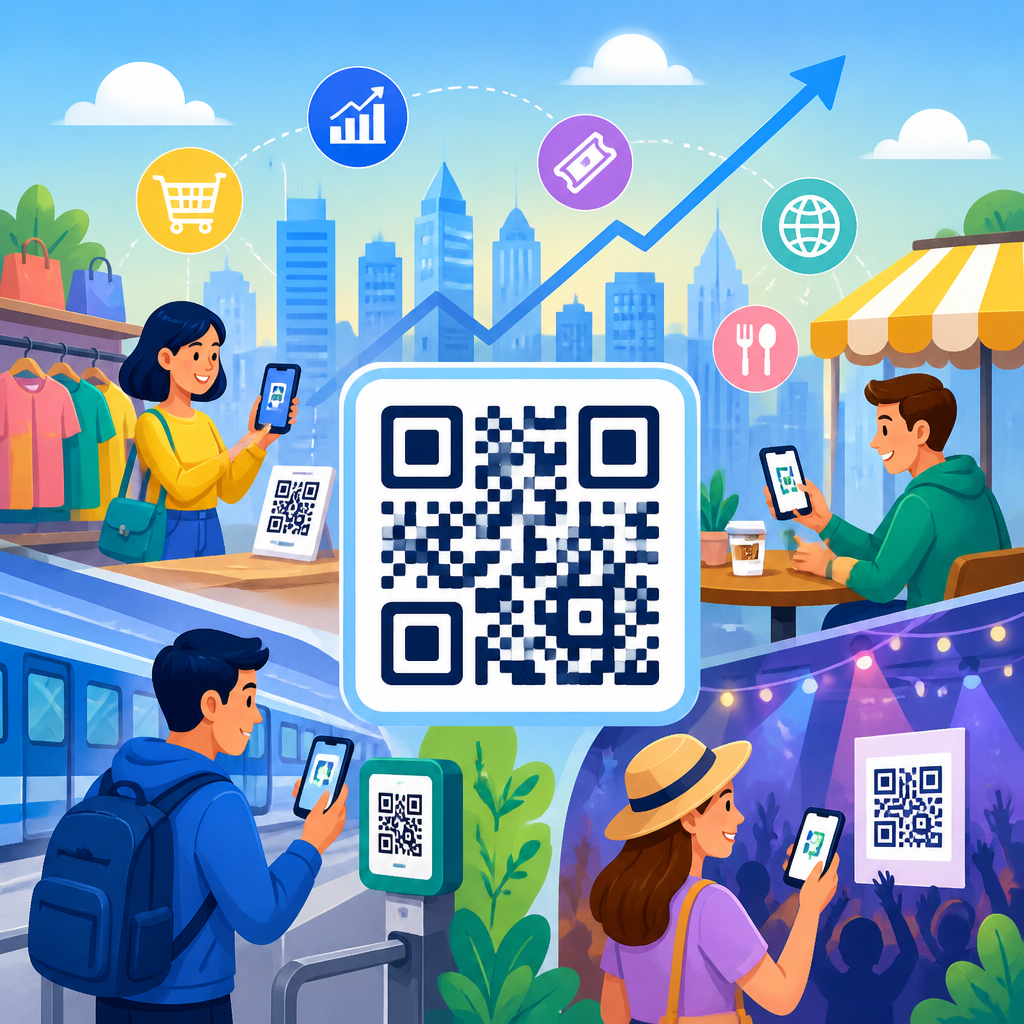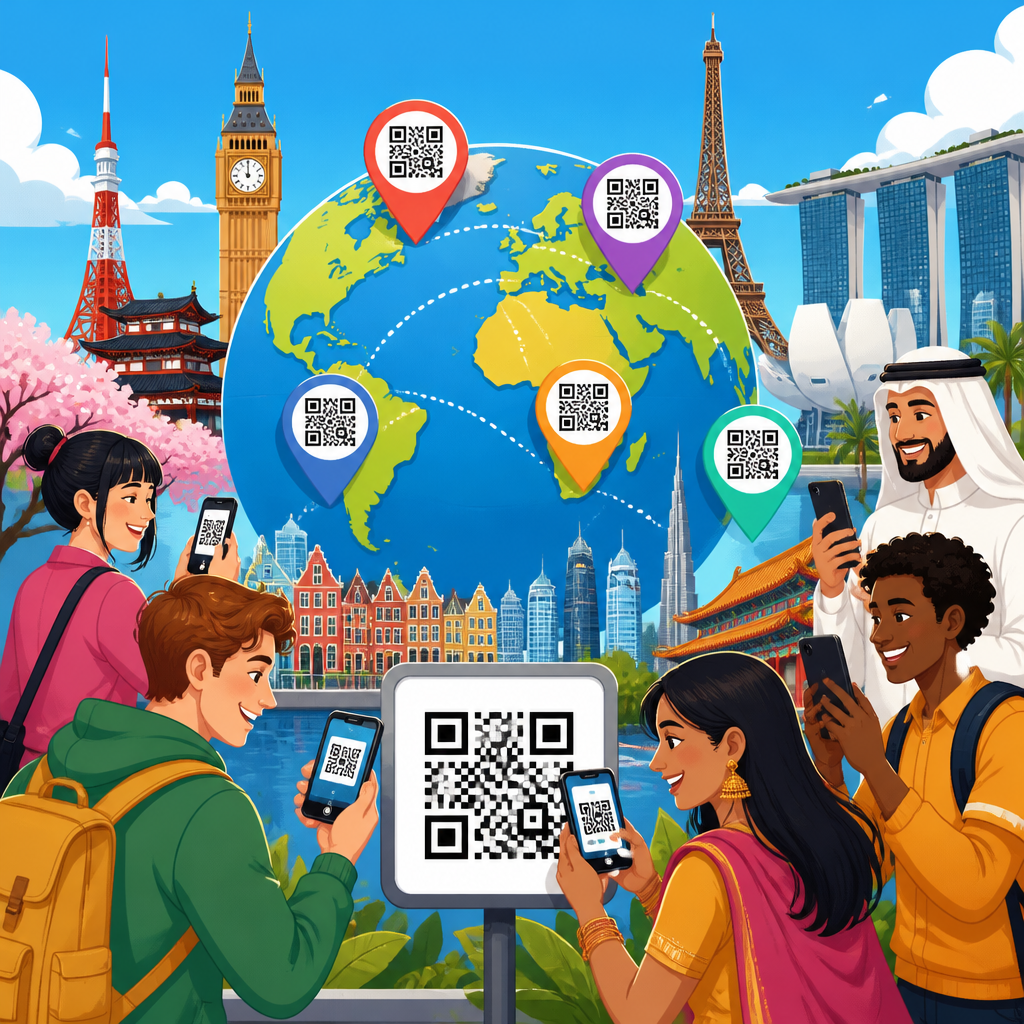
QR codes are growing worldwide at a pace few businesses predicted five years ago, moving from a niche tracking tool into a mainstream bridge between physical and digital experiences. A QR code, short for Quick Response code, is a two-dimensional matrix barcode that stores information such as a URL, payment instruction, product identifier, app download link, menu, ticket, or authentication token. Unlike traditional barcodes, which usually hold a single string of numbers, QR codes can contain far more data and can be scanned rapidly by a smartphone camera without specialized hardware. That simple technical advantage matters because it lowers friction at the exact moment a person wants information, access, or payment.
Global QR code adoption trends now span retail, restaurants, manufacturing, healthcare, logistics, banking, travel, education, and government services. In practical terms, growth means more consumers recognize the symbol, more merchants place it at checkout, more products carry scannable packaging, and more software platforms generate dynamic codes tied to analytics. I have watched this shift directly in campaigns, storefront launches, and product rollouts: what was once an optional add-on is now routinely built into customer journeys from the start. Teams ask not whether to use QR codes, but where they remove effort most effectively.
The reason growth has accelerated is not a single event, although the pandemic clearly compressed years of behavior change into a short period. Smartphone camera improvements, digital wallet expansion, contactless payment habits, and cloud-based QR management platforms all combined to expand use cases. At the same time, standards and familiar apps reduced user hesitation. When Apple and Android made native scanning easier, the cost of consumer education dropped. When payment ecosystems in China, India, Brazil, Southeast Asia, Europe, and North America integrated scan-to-pay flows, merchant acceptance widened. When restaurants replaced printed menus, even reluctant users learned how to scan.
For businesses following QR code trends and innovations, the key question is not only how fast QR codes are growing worldwide, but why the growth looks different by region, industry, and use case. Some markets lead in payments, others in marketing and packaging, and others in identity, transit, and public services. Understanding those differences helps companies design better campaigns, benchmark realistic performance, and choose the right next article to explore within this broader topic. This hub explains the major growth drivers, regional adoption patterns, industry applications, limits, and strategic implications shaping global QR code adoption trends today.
What is driving worldwide QR code growth?
Worldwide QR code growth is being driven by convenience, low implementation cost, and the rapid normalization of smartphone-first behavior. A printed QR code can be deployed on packaging, shelf talkers, invoices, kiosks, posters, tickets, and labels for almost no marginal cost. A dynamic QR code can be updated after printing, which makes it especially attractive for marketers, operations teams, and product managers. In my experience, this flexibility is one of the biggest reasons companies expand usage after a first pilot succeeds: the same printed asset can power changing destinations, timed offers, localized content, or A/B testing.
Another major driver is payment infrastructure. In several Asian markets, QR payments became common before contactless cards reached mass penetration. India’s Unified Payments Interface made interoperable QR payments familiar across small merchants and street vendors. China’s Alipay and WeChat Pay turned scanning into a daily behavior for millions of people. Brazil’s Pix accelerated account-to-account payments, including QR-initiated transactions. These systems matter globally because they prove that QR codes are not just a marketing tactic; they are an interface layer for regulated financial flows, identity checks, and authenticated transactions.
Consumer trust has also improved. Early QR campaigns often failed because users encountered broken links, poor mobile pages, or unclear value. Today, a scan is more likely to open a mobile-optimized destination, app deep link, digital menu, loyalty sign-up, support article, or secure payment screen. The user expectation has shifted from curiosity to utility. That change is crucial for adoption metrics because repeat usage depends less on novelty and more on whether the scan reliably saves time. The strongest programs answer a simple question immediately: what do I get by scanning right now?
How adoption differs by region
Global QR code adoption trends are uneven because local payment rails, consumer habits, regulation, and merchant technology stacks differ sharply. Asia remains the clearest example of mature everyday usage, especially in mobile payments, super apps, and consumer services. China normalized QR scanning through ubiquitous payment acceptance and embedded mini-program ecosystems. India scaled through interoperability, low-cost acceptance, and government-backed digital payment infrastructure. Southeast Asian markets such as Singapore, Thailand, Indonesia, Vietnam, and Malaysia have also expanded merchant QR acceptance through banking coalitions and wallet providers.
Latin America has become one of the most important growth regions because QR adoption is solving real payment and financial inclusion problems. Brazil’s Pix has pushed QR payment behavior into both formal retail and peer-to-peer contexts. Mexico, Argentina, and Colombia have seen continued rollout through banks, fintechs, and marketplaces seeking low-cost digital payment acceptance. In these markets, QR codes often outperform more expensive hardware-based solutions because they reduce onboarding friction for small businesses.
North America followed a different path. Adoption was slower in payments because card networks and tap-to-pay cards were already entrenched. However, QR codes expanded quickly in restaurants, marketing, event ticketing, packaging, and customer service. During the pandemic, menu access and check-in flows accelerated familiarity. Since then, brands have used QR codes for product education, loyalty enrollment, app installs, and connected packaging. Europe shows a mixed picture, with strong use in payments in some countries, transport and ticketing in others, and increasing traction in retail media and traceability initiatives. The Middle East and Africa are also growing, especially where mobile-first commerce and fintech expansion make low-cost scan experiences attractive.
Which industries are adopting QR codes fastest?
The fastest-adopting industries are those where a scan replaces waiting, manual entry, printed material, or expensive hardware. Restaurants are an obvious case: digital menus, table ordering, feedback collection, and payment can all begin from a single code. Retail is another leader, using QR codes for shelf-level product information, reviews, coupons, self-checkout, loyalty, and returns. Consumer packaged goods brands increasingly place codes on packaging to deliver recipes, sourcing details, authentication, warranty registration, and post-purchase engagement.
Healthcare use has widened because QR codes support patient intake, medication verification, lab sample tracking, vaccination records, device identification, and educational materials. Logistics and manufacturing rely on them for asset tracking, work instructions, quality control, and serialized traceability. Travel and events use QR codes for boarding, mobile ticketing, venue entry, and identity-linked confirmations. Education uses them for attendance, assignment access, campus navigation, and learning resources. Government agencies use QR codes for document access, tax payments, service appointments, and public information campaigns.
The common pattern is operational efficiency. When I have seen QR deployments succeed at scale, they usually solve an immediate process problem before they try to create a marketing moment. A factory code that pulls up the right maintenance procedure saves errors. A medicine pack code that verifies authenticity reduces risk. A boarding pass code speeds throughput. Those utility-led use cases create sustained scan volume, while campaign-only uses often spike and fade unless connected to a broader customer journey.
Where growth is strongest by use case
Not all QR scans are equal, and the strongest growth is happening in a handful of high-frequency use cases. Payments remain the largest volume engine in many emerging and mobile-first markets because consumers scan repeatedly in daily transactions. Authentication is growing quickly as brands combat counterfeiting and grey-market diversion through serialized codes tied to product databases. Connected packaging is expanding as consumer goods companies seek first-party engagement without relying only on retail intermediaries.
Marketing use continues to grow, but it has matured. The best-performing campaigns connect offline impressions to measurable digital actions: scan for a coupon, product demo, instant win, review prompt, or store locator. Out-of-home advertising, direct mail, and in-store signage all benefit because the scan closes the gap between awareness and action. Customer support is another strong category. A QR code on a device, invoice, or receipt can route users to setup videos, manuals, chatbot flows, warranty claims, or live service.
| Use case | Main growth driver | Typical example | Why adoption sticks |
|---|---|---|---|
| Payments | Low-cost acceptance and fast checkout | Merchant counter code linked to wallet or bank transfer | High frequency and clear consumer value |
| Packaging | Post-purchase engagement and traceability | Food label linking to sourcing details and recipes | Works across every physical unit sold |
| Ticketing | Faster validation and fraud reduction | Event entry or mobile boarding pass | Operational savings for every transaction |
| Support | Reduced service friction | Appliance sticker linking to setup guide | Solves problems at the moment of need |
| Authentication | Counterfeit prevention | Luxury item verification scan | Protects brand trust and resale value |
These categories matter because they show where future articles in this hub should go deeper. Payment QR codes, dynamic marketing QR codes, packaging innovation, QR analytics, and security design each follow different metrics and implementation rules. Companies that treat them all as the same tool usually underperform.
How fast are QR codes growing in business practice?
In business practice, QR code growth is best understood through deployment breadth rather than one universal global number. Most organizations start with a single departmental use, then expand once analytics show scans, conversions, or efficiency gains. A retailer may begin with window signage and later add packaging, receipts, shelf tags, and returns. A restaurant may start with menus and then add payment, loyalty, catering, and review requests. A manufacturer may first label assets and later extend QR workflows to quality documentation, supplier traceability, and field service.
Dynamic QR platforms have reinforced this expansion pattern. Tools such as Bitly, QR Code Generator, Scanova, Flowcode, Beaconstac, and enterprise campaign systems let teams create trackable codes, edit destinations, segment scans by geography or device, and integrate results with analytics platforms. Once stakeholders see measurable value, codes proliferate because the technical barrier is low. That is why global QR code adoption trends often look exponential inside specific organizations even when national adoption appears gradual from the outside.
The strongest indicator of durable growth is repeat placement in core operations, not one-off promotional volume. A code printed on every shipment label, menu, invoice, product carton, or event credential creates persistent scan opportunities. This embedded presence is what turns QR codes from a trend into infrastructure.
What limits adoption and what improves results?
QR code growth is real, but adoption is not automatic. Poor execution still suppresses scan rates. Common problems include tiny code sizes, low contrast, reflective surfaces, weak mobile landing pages, and vague calls to action. Security concerns also matter. Users are less likely to scan unknown codes if phishing risk is high or destination branding is unclear. In regulated sectors, privacy, consent, and data retention obligations can limit how scan data is collected and used.
Results improve when teams follow established implementation rules. ISO/IEC 18004 provides the technical standard for QR code symbology. Error correction levels should match the environment, especially when codes may be damaged or partially obscured. URLs should resolve quickly over mobile networks. Landing pages should load fast, explain value immediately, and minimize form friction. Branded short links, verified domains, and clear on-page identity help reduce security hesitation. Placement matters as much as design: a code at the point of decision performs better than one buried in clutter.
I also advise teams to separate vanity from utility. Adding a QR code because there is empty space on a package rarely works. Adding one because customers need assembly instructions, refill ordering, or authenticity verification usually does. That distinction explains why some sectors report weak engagement while others see sustained growth.
What global QR code adoption trends mean next
Global QR code adoption trends point toward deeper integration, not decline. The next stage is less about teaching people how to scan and more about making scans smarter, safer, and more personalized. Expect wider use of dynamic codes connected to inventory, loyalty profiles, store context, and product lifecycle data. Connected packaging will expand as sustainability disclosures, digital product passports, and circular economy requirements gain traction, especially in Europe. Payments will keep growing where account-to-account rails and wallet ecosystems make QR acceptance cheaper than cards.
For businesses, the central takeaway is straightforward: QR codes now function as a universal access layer between offline touchpoints and digital systems. Their worldwide growth is fast because they reduce friction for both organizations and users. The winners will not be the brands that use the most codes, but the ones that place them where they answer a specific need instantly and measurably. If you are building a strategy under the broader QR Code Trends & Innovations topic, use this hub as your starting point, then map the regional, industry, payment, packaging, analytics, and security articles most relevant to your next deployment. Scan behavior is now mainstream. The opportunity is to design for it with precision.
Frequently Asked Questions
How fast are QR codes growing worldwide?
QR codes are growing rapidly across nearly every major region, driven by the widespread use of smartphones, better mobile internet access, and a major shift in how people interact with businesses offline and online. What was once used mainly for inventory tracking and industrial workflows has become a mainstream tool for payments, marketing, ticketing, customer support, product authentication, restaurant ordering, and app downloads. In practical terms, global adoption has accelerated because scanning a QR code is now easy, familiar, and built directly into most smartphone cameras, removing the friction that once slowed usage.
The pace of growth is especially notable because QR codes are no longer tied to one industry or one geography. In Asia, QR-based payments and super-app ecosystems helped normalize daily use early on. In North America and Europe, adoption surged through contactless menus, touch-free check-ins, digital forms, and retail engagement during and after the pandemic. Today, businesses of all sizes use QR codes not just as a convenience feature, but as a measurable conversion tool that links physical packaging, signage, direct mail, and in-store displays to digital actions. That broadening use case is why worldwide growth continues to look strong rather than temporary.
What is driving the global rise in QR code adoption?
Several factors are fueling the worldwide expansion of QR codes at the same time. First, smartphone penetration is high in most markets, and nearly all modern devices can scan QR codes instantly with the default camera app. That convenience matters because consumers are far more likely to use a technology when there is no extra app to install and no learning curve. Second, businesses increasingly need low-cost ways to connect physical environments with digital content, and QR codes offer exactly that. A printed code can point someone to a payment page, menu, loyalty program, product manual, video, review form, or event registration page in seconds.
Another major driver is the growth of contactless behavior. Many consumers now expect fast, self-serve digital interactions whether they are shopping in a store, dining at a restaurant, attending an event, or receiving a delivery. QR codes support those expectations without requiring expensive hardware changes. They are also flexible and highly measurable. Marketers and operations teams can track scans, test different destinations, update linked content, and use dynamic QR codes to change campaigns without reprinting materials. In other words, QR codes are growing not just because they are simple, but because they solve multiple business problems at once: convenience, affordability, speed, and data visibility.
Which industries are seeing the biggest impact from QR code growth?
Retail, hospitality, food service, healthcare, transportation, manufacturing, and financial services are among the sectors seeing the strongest impact from QR code expansion. In retail, brands use QR codes on packaging, shelf displays, and receipts to drive product education, loyalty sign-ups, reviews, and repeat purchases. Restaurants and cafes use them for menus, ordering, table payments, and promotions. In transportation and events, QR codes are widely used for digital tickets, boarding passes, and access control because they reduce paper use and streamline entry processes.
Healthcare has also embraced QR codes for patient forms, appointment check-ins, prescription information, and medical device labeling. Manufacturers use them for part tracking, authentication, maintenance instructions, and supply chain visibility. In payments, QR codes have become a major enabler of mobile commerce, especially in markets where scanning a code is often faster and more accessible than using cards or cash. What makes QR code growth so significant is that it is not confined to one trend cycle. Different industries are adopting them for different reasons, which creates a durable global expansion rather than a short-lived spike in use.
Are QR codes still growing because of the pandemic, or is the trend now permanent?
The pandemic unquestionably accelerated QR code adoption by familiarizing millions of consumers with contactless interactions, but the trend has moved well beyond that initial catalyst. During the peak of touch-free demand, QR codes became a practical solution for menus, payments, check-ins, and information access. What matters now is that businesses and customers discovered lasting benefits that remain valuable even without public health pressures. QR codes reduce printing costs, support real-time content updates, speed up transactions, and make it easier to measure user engagement from physical touchpoints.
That is why the growth appears structural rather than temporary. Once a consumer becomes comfortable scanning a code to pay, join a loyalty program, validate a ticket, or get product details, that behavior can carry over into many other situations. At the same time, businesses have integrated QR codes into broader digital strategies that include analytics, personalization, automation, and omnichannel customer journeys. In short, the pandemic may have accelerated awareness, but the continuing growth comes from long-term usefulness. QR codes now serve as a practical bridge between offline experiences and digital outcomes, and that role is becoming more important, not less.
What do QR code growth trends mean for businesses going forward?
For businesses, the continued worldwide growth of QR codes signals a clear opportunity to simplify customer experiences and make physical marketing more interactive and measurable. A QR code can turn a package, poster, product label, window sign, flyer, table tent, or invoice into a digital entry point. That means companies can guide customers directly to the next best action, whether that is making a payment, watching a demo, downloading an app, leaving a review, checking authenticity, or accessing support. The technology is inexpensive to deploy, easy to test, and adaptable across both local and global campaigns.
Going forward, the businesses that benefit most will be the ones that use QR codes strategically rather than as a novelty. That includes choosing clear calls to action, linking to mobile-friendly destinations, using dynamic codes when updates may be needed, and tracking performance to understand scan behavior and conversion rates. It also means thinking about trust and usability: codes should be placed where they are easy to scan, branded when appropriate, and connected to content that immediately delivers value. As QR code usage continues to expand worldwide, businesses that treat them as a core part of the customer journey will be better positioned to capture attention, reduce friction, and connect the physical world to digital engagement in a measurable way.