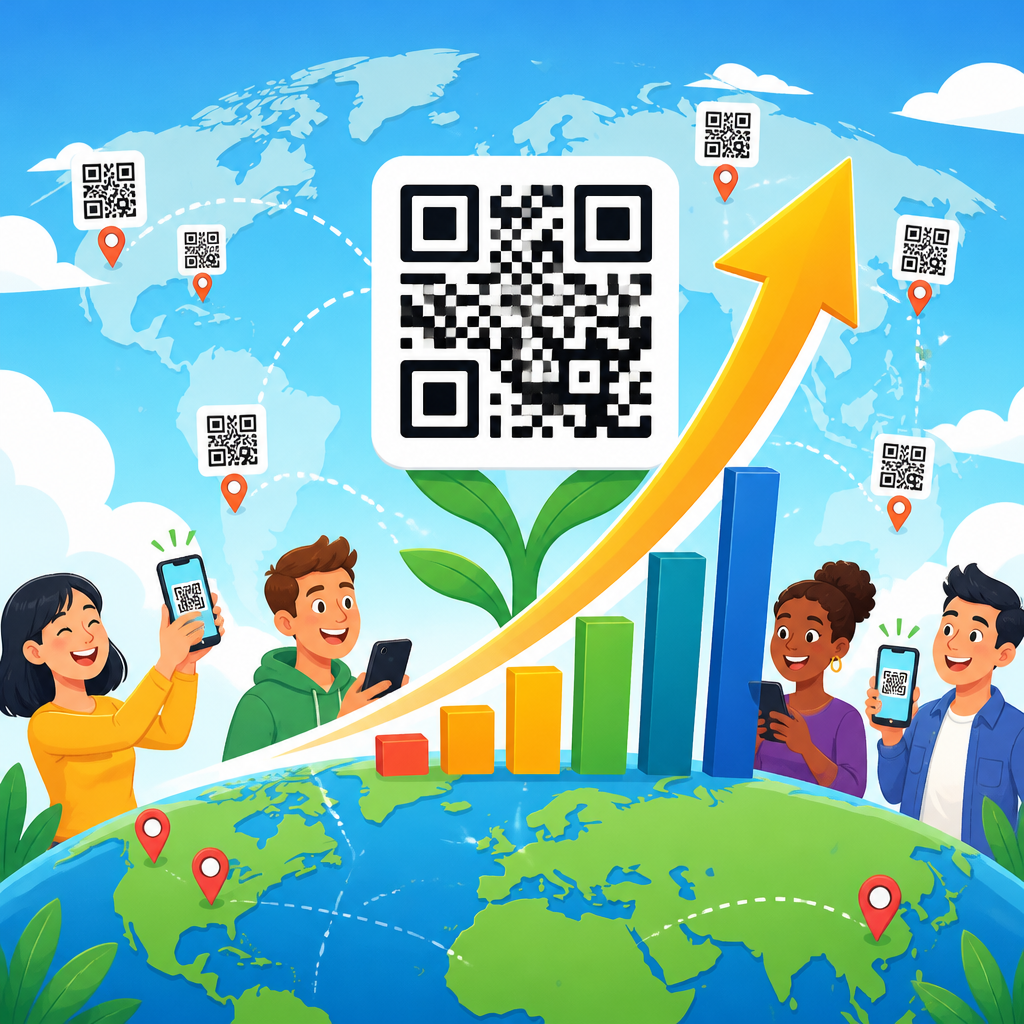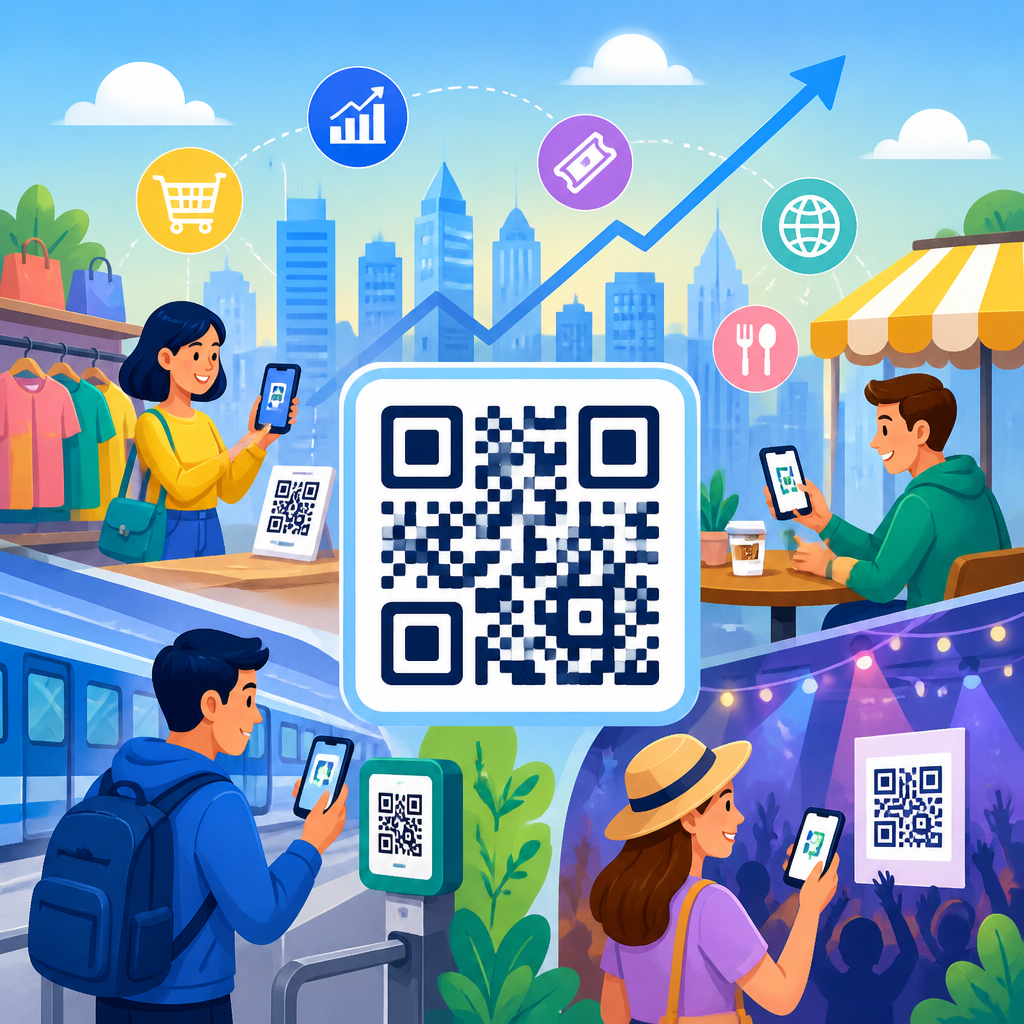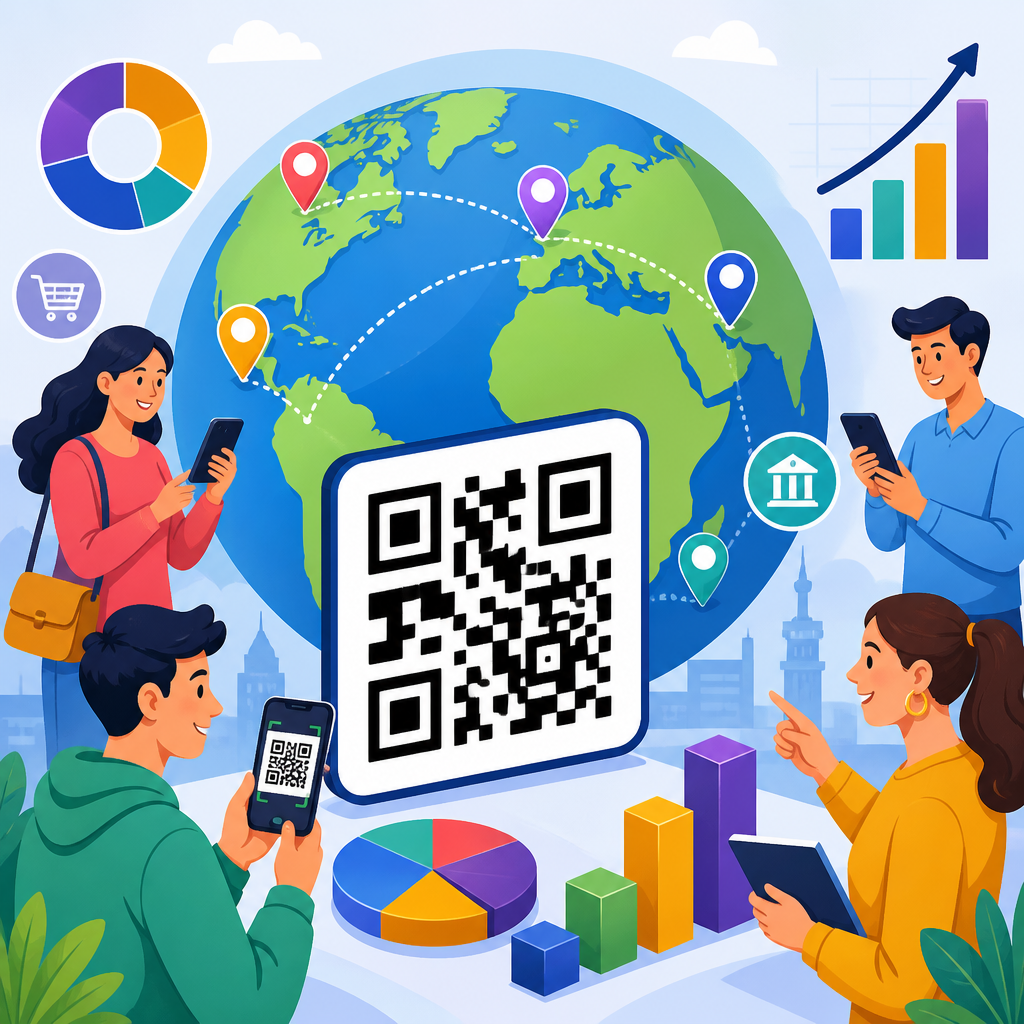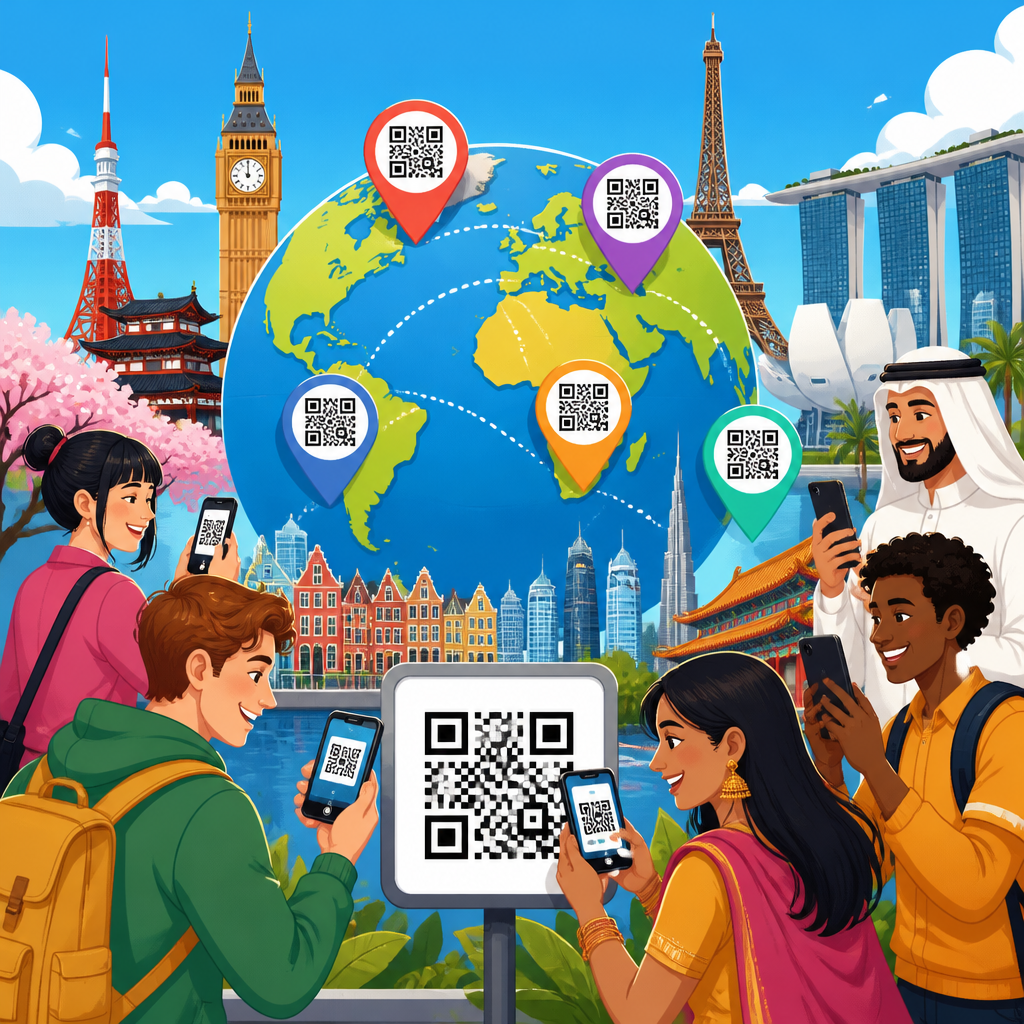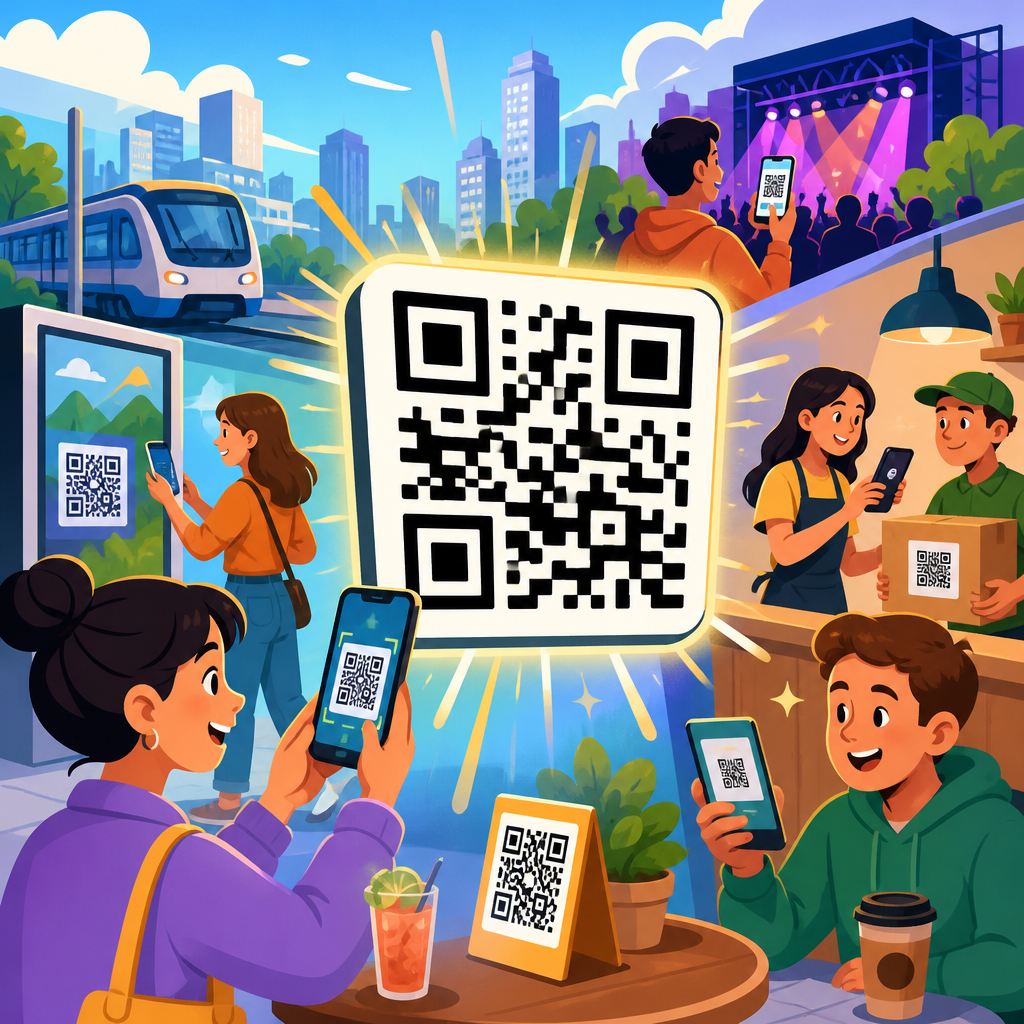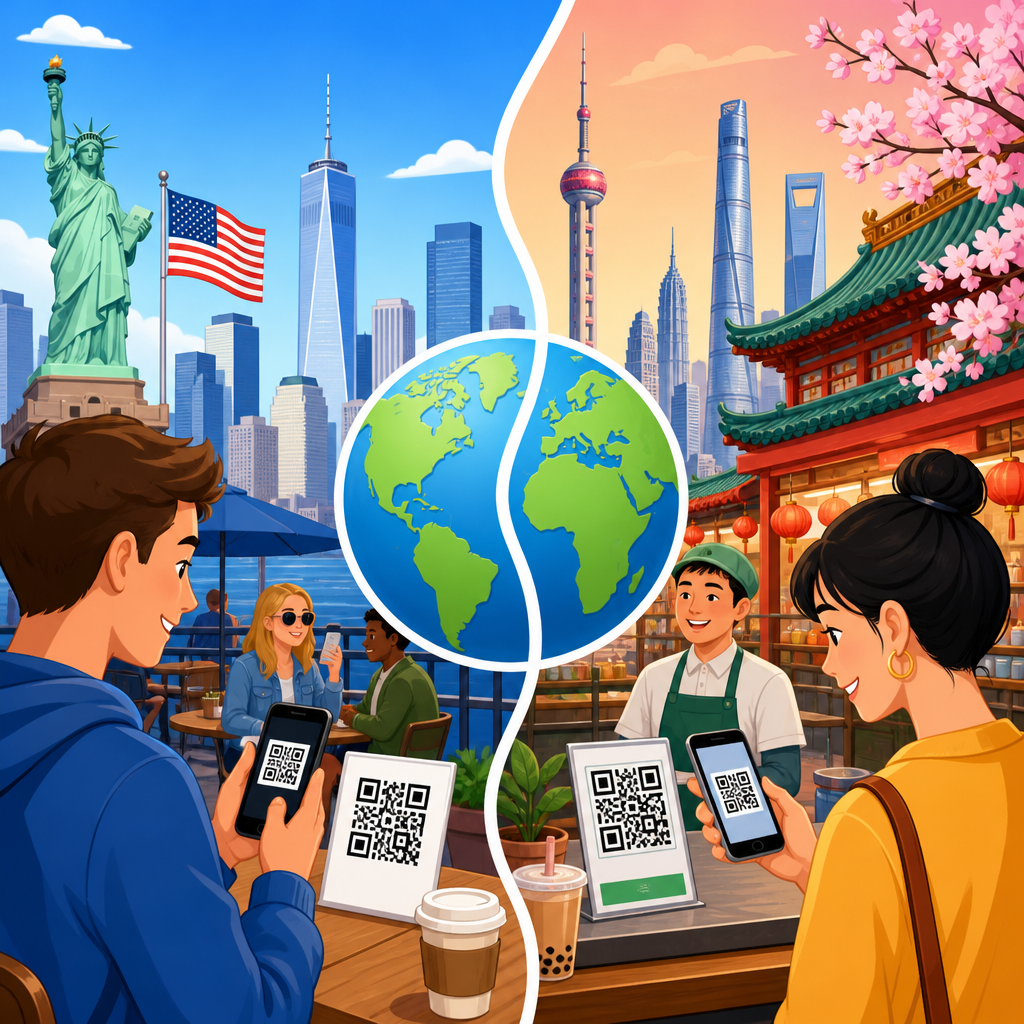
QR code adoption in the U.S. vs Asia reveals one of the clearest regional contrasts in modern consumer technology: the same square barcode can feel like a convenience feature in one market and essential daily infrastructure in another. A QR code, or Quick Response code, is a two-dimensional barcode that stores data such as a web address, payment token, contact card, app deep link, ticket credential, or product identifier. In practice, people scan QR codes with smartphone cameras to open websites, pay merchants, join loyalty programs, view menus, authenticate logins, or trace products through supply chains. I have worked on QR code campaigns for retail, events, restaurants, and packaging, and the pattern is consistent: adoption succeeds when scanning solves a real task faster than typing, searching, or waiting in line.
Understanding global QR code adoption trends matters because QR codes now sit at the intersection of payments, marketing, identity, logistics, and customer experience. In Asia, especially China, India, Japan, South Korea, Singapore, and parts of Southeast Asia, QR codes became normalized through super apps, wallet ecosystems, and public acceptance of mobile-first transactions. In the U.S., adoption accelerated later, driven by restaurant menus during the pandemic, curbside pickup, ticketing, and omnichannel marketing. That difference is not simply cultural. It reflects smartphone penetration, card-network dominance, merchant hardware costs, app ecosystems, regulatory frameworks, and user trust. Businesses planning international campaigns need to know where static QR codes are enough, where dynamic QR codes are necessary, which call to action converts best, and when a QR code should lead to a landing page, a wallet pass, or a payment screen.
This hub article explains how QR code use evolved across regions, where adoption is strongest, which sectors are leading, and what practical lessons companies can apply now. It also clarifies key terms. Static QR codes contain fixed destination data and cannot be edited after printing. Dynamic QR codes route through a short URL, allowing updates, scan analytics, retargeting, and A/B testing. Consumer QR codes are scanned by the public for payments, menus, coupons, or product information. Industrial QR codes support inventory, manufacturing traceability, asset management, and quality control. The core story behind QR code adoption in the U.S. vs Asia is that broad usage does not come from the code itself. It comes from the surrounding system: camera readiness, wallet support, merchant acceptance, strong use cases, and user habits built over time.
Why Asia reached mass QR code adoption first
Asia reached mass QR code adoption first because QR codes became embedded in everyday payment and messaging ecosystems before they became common in Western marketing. China is the clearest example. WeChat Pay and Alipay made merchant-presented and customer-presented QR payments routine across large chains, taxis, street vendors, and rural markets. Merchants did not need expensive point-of-sale terminals to accept digital payments; many only needed a printed code linked to a wallet account. That sharply lowered acceptance costs and removed friction for small businesses. Once users were already opening super apps for chat, shopping, transport, and utility payments, scanning a QR code to complete a transaction felt natural rather than novel.
India followed a different but equally powerful path through interoperable digital payments. Unified Payments Interface, known as UPI, gave consumers a bank-linked, real-time transfer system that worked across apps such as PhonePe, Google Pay, and Paytm. QR codes became the easiest front-end for account-to-account payments. In field work with convenience merchants, I saw that a laminated countertop code often replaced concerns about card terminal rental, chargeback exposure, and settlement delays. Government support, financial inclusion goals, and standardized rails mattered as much as consumer demand. The result was scale: QR acceptance spread from organized retail into pharmacies, vegetable stalls, fuel stations, and peer-to-peer transfers.
Japan and South Korea also built strong QR habits, though with more competition from transit cards, NFC methods, and established card systems. In Japan, QR code payments from PayPay and others gained momentum by using cash-back incentives and wide merchant onboarding. In Singapore, Thailand, Indonesia, Vietnam, and Malaysia, national payment modernization programs and growing wallet ecosystems helped QR become a practical bridge between cash and digital commerce. Across these markets, QR codes did not succeed because people loved the code format itself. They succeeded because QR codes reduced onboarding costs, expanded merchant acceptance, and fit mobile-first behavior already in place.
Why the U.S. adopted QR codes differently
The U.S. adopted QR codes differently because the market already had mature card infrastructure, broad e-commerce penetration, and strong consumer habits around plastic cards and contactless terminals. For years, many U.S. consumers associated QR codes with awkward scanning apps, clumsy redirects, or novelty advertising. Early campaigns often sent users to non-mobile-optimized pages, which damaged trust and lowered repeat use. The technical barrier dropped when Apple and Android integrated QR scanning directly into native camera apps, but broad behavioral change still took time. In many U.S. sectors, the existing way to pay or access information already worked well enough, so QR codes needed a sharper value proposition.
The pandemic created that value proposition. Restaurants needed touch-free menus. Retailers needed curbside check-in. Health systems needed low-contact registration and vaccine information access. Event organizers needed digital tickets that could be issued and scanned at scale. I worked with hospitality operators during this period, and scan rates rose dramatically when the destination solved an immediate need in under ten seconds. A tabletop code that opened a menu, ordering page, or payment option performed far better than a generic “scan me” prompt. Even so, U.S. usage remains more fragmented than in many Asian markets. Consumers commonly scan codes for menus, promotions, product details, Wi-Fi access, app downloads, and authentication, but fewer rely on QR as the default payment behavior across all merchants.
Another reason is structural. In the U.S., card networks, Apple Pay, Google Pay, and tap-to-pay terminals already offered familiar checkout experiences with strong fraud protections and loyalty integrations. That made QR code payments compete against entrenched options rather than replacing cash-first workflows. As a result, American adoption has been strongest where QR codes reduce search friction, connect physical spaces to digital experiences, or bypass expensive hardware and printed materials. The U.S. story is not weak adoption. It is selective adoption centered on convenience, marketing attribution, service access, and niche payment scenarios rather than universal daily payment dependence.
Sector-by-sector comparison of QR code adoption
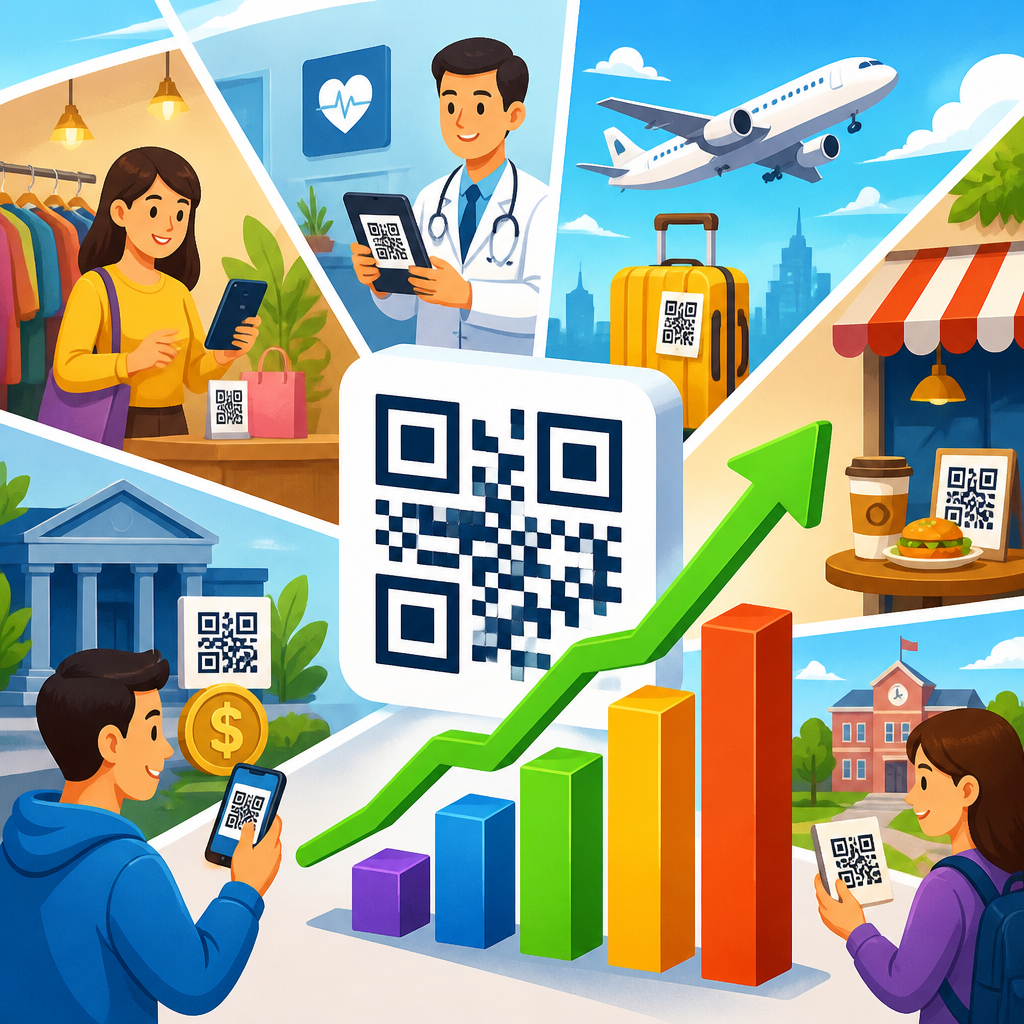
Across both regions, the strongest growth appears in sectors where QR codes solve a repeatable operational problem. In restaurants, Asia normalized code-based ordering and payment earlier, while the U.S. popularized QR menus and table ordering during labor shortages and health restrictions. In retail, Asian merchants use QR codes for payments, loyalty, shelf-level promotions, social commerce, and post-purchase engagement. U.S. retailers more often use them for product education, customer reviews, app onboarding, and buy-online-pickup-in-store flows. In transportation, airlines, rail systems, and metro operators across Asia have long used QR boarding and ticketing, while U.S. transit systems vary widely by city and operator maturity.
Healthcare shows another distinction. Asian markets with strong mobile wallet and identity integrations can use QR codes for appointment check-in, digital health records access, or pharmacy workflows at scale. In the U.S., healthcare QR use is growing in patient intake, prescription education, device instructions, and telehealth onboarding, but compliance, legacy systems, and privacy concerns often slow implementation. Manufacturing and logistics are more globally consistent. Warehousing teams in both regions use QR codes for bin identification, asset tracking, and serialized inventory because camera-based scanning can be cheaper and more flexible than proprietary hardware.
| Sector | Asia adoption pattern | U.S. adoption pattern | Main driver |
|---|---|---|---|
| Payments | Daily default at many merchants | Selective, often secondary to cards and tap | Merchant cost and wallet ecosystem |
| Restaurants | Ordering and payment integrated | Menus, ordering, and promotions | Speed and labor efficiency |
| Retail | Payments, loyalty, social commerce | Product info and omnichannel journeys | Digital engagement |
| Transit and events | Common for ticketing and access | Growing but uneven by operator | Fast verification |
| Packaging | Traceability and authentication rising | Education and campaign measurement | Connected product experiences |
Consumer packaged goods and luxury goods are especially important for future growth. Brands increasingly place dynamic QR codes on packaging to provide nutrition data, recycling instructions, authenticity checks, warranty registration, and storytelling content. In Asia, these codes often connect to messaging apps or brand mini-programs that keep the customer inside a familiar ecosystem. In the U.S., the same packaging scan is more likely to open a mobile website, retailer partnership page, or loyalty signup. The pattern matters because destination design affects repeat scans, data capture quality, and conversion.
What drives successful QR code adoption worldwide
Successful QR code adoption worldwide depends on six conditions. First, the scan must be easy. Native camera recognition, clear print contrast, and reliable mobile connectivity are basic requirements. Second, the reward must be immediate. Users scan when they expect payment completion, useful information, a discount, a ticket, or faster service. Third, the destination must load quickly and be mobile optimized. Fourth, the call to action must be explicit. “View ingredients,” “Pay now,” or “Track your package” consistently outperform vague labels. Fifth, trust signals matter. Branded landing pages, HTTPS URLs, and recognizable wallet interfaces reduce hesitation. Sixth, measurement must be built in through dynamic codes, tagged URLs, and analytics integration.
When these conditions are missing, performance drops. I have audited campaigns where beautifully designed posters produced poor scan-through rates because the code was mounted behind reflective glass, placed too high, or sent users to a desktop PDF. By contrast, a simple shipping-box QR code can perform exceptionally well if it offers assembly guidance, replacement parts, or setup videos at the exact moment of need. That is why global QR code adoption trends should be analyzed by use case rather than by raw popularity alone. A market may have lower scan frequency overall but very high effectiveness in specific contexts such as warehousing, stadium entry, direct mail attribution, or connected packaging.
Standardization is also shaping the next phase. GS1 Digital Link is important because it allows brands to connect product identifiers to web-based experiences, improving traceability, recalls, and consumer transparency. That has implications for food, healthcare, and regulated categories where the QR code is not just a marketing shortcut but part of data governance. Security education is equally important. Malicious “quishing” attacks use fake QR codes to redirect users to phishing pages, so enterprises increasingly add domain recognition, tamper-evident labels, and user guidance. Adoption grows faster when convenience and security advance together.
Future trends shaping U.S. and Asian QR ecosystems
Looking ahead, the gap between the U.S. and Asia will narrow in some areas and persist in others. Asia will likely remain ahead in QR-native payments because merchant and consumer habits are already deeply formed. However, the U.S. is likely to expand rapidly in packaging, authentication, in-store media, connected TV response, and first-party data capture tied to physical locations. One reason is that marketers now demand measurable offline-to-online attribution, and QR codes are one of the simplest bridges. A retail display can connect impression, scan, session behavior, and purchase path more cleanly than many traditional channels.
Cross-border interoperability is another major trend. Tourists expect to scan familiar payment or information formats abroad, and merchants want systems that work across wallets and languages. Dynamic redirection by device type, geography, and language is becoming standard practice. So is personalization. A single printed code can route loyal customers, new visitors, and wholesale buyers to different experiences based on referral logic or campaign parameters. That makes QR a durable part of omnichannel architecture rather than a temporary tactic.
For businesses building a QR strategy now, the practical lesson is straightforward: start with a high-intent use case, choose dynamic codes, define one primary action per scan point, test the destination experience, and measure completion rates rather than scans alone. If your audience is in the U.S., assume QR codes need context and a clear benefit. If your audience is in Asia, assume scanning may already be habitual, but execution quality still determines conversion. In both regions, QR codes work best when they are treated as service design, not decoration. Audit your customer journey, identify friction, and deploy codes only where they remove a step, unlock data, or create lasting convenience.
QR code adoption in the U.S. vs Asia is ultimately a story about ecosystem design, not barcode geometry. Asia moved earlier and deeper because wallets, payments infrastructure, merchant economics, and mobile-first behavior aligned around scanning as a default habit. The U.S. moved later and more selectively, but it has developed strong use cases in menus, ticketing, packaging, healthcare access, retail attribution, and omnichannel engagement. For companies tracking global QR code adoption trends, that distinction is essential. It explains why the same code can drive payment in Bangkok, identity in Shanghai, transit access in Tokyo, and product education in Chicago.
The main takeaway is simple: adoption rises when QR codes remove friction at the exact moment a user needs something. Markets differ in payment rails, hardware availability, trust, and app behavior, but the winning formula is consistent. Make scanning effortless, state the benefit clearly, send users to a fast mobile destination, and measure what happens after the scan. Businesses that follow those principles can use QR codes to lower costs, improve service, and connect physical touchpoints to digital outcomes with precision.
As the hub for this topic, this guide should anchor deeper exploration into payments, packaging, restaurant technology, QR security, analytics, and regional case studies. Use it to benchmark your market, refine your deployment strategy, and identify where global patterns apply to your business. Then review your current customer journey and launch one well-designed QR experience that solves a real problem today.
Frequently Asked Questions
Why has QR code adoption historically been faster and deeper in many Asian markets than in the United States?
QR code adoption grew faster across much of Asia because the technology became embedded into everyday consumer behavior earlier and more comprehensively. In many Asian markets, especially China, Japan, South Korea, Singapore, and parts of Southeast Asia, QR codes were not treated as a niche add-on for marketing campaigns. Instead, they became part of the practical infrastructure of daily life. People used them for mobile payments, transit access, restaurant ordering, app downloads, digital identity workflows, event check-ins, and peer-to-peer transactions. Once consumers experienced QR codes as a fast, reliable shortcut for common tasks, repeated use reinforced habit formation.
Another major factor was the mobile ecosystem itself. In several Asian countries, smartphone-first behavior developed rapidly, and consumers became comfortable using super apps, mobile wallets, and integrated digital services. QR codes fit naturally into that environment because they are low-cost, device-friendly, and easy for businesses of all sizes to deploy. A street vendor, a subway system, and a national retailer could all use QR codes without expensive hardware investments. That made the technology scalable across both formal and informal sectors.
In the United States, by contrast, adoption was more uneven for years. QR codes were often associated with advertising experiments, packaging links, or promotions rather than mission-critical services. Consumer trust and familiarity also developed more slowly, partly because early scanning experiences could be clunky and required third-party apps. The U.S. already had widespread card infrastructure, strong point-of-sale systems, and established consumer habits around credit and debit payments, so there was less immediate pressure to replace existing behavior. As a result, QR codes often felt optional in the U.S., while in many Asian markets they became essential.
How are QR codes typically used differently in the U.S. compared with Asia?
The difference is often less about the technology itself and more about the role it plays in the customer journey. In the United States, QR codes are commonly used as a convenience layer. Consumers scan them to view restaurant menus, access product details, join Wi-Fi networks, download apps, claim promotions, check in at events, or open web pages without typing a URL. They are useful, familiar, and increasingly common, but in many cases they still supplement an existing process rather than define it.
In many Asian markets, QR codes are frequently used as a primary interface for essential services. They commonly serve as the gateway to mobile payments, transit systems, account logins, ticketing, loyalty programs, government services, digital receipts, and merchant-customer interactions. In some places, a QR code is not just a shortcut to a website; it is a payment rail, an identity touchpoint, a service credential, or a business workflow. That deeper level of integration changes consumer expectations. People begin to assume that scanning is the default method for completing a task.
This difference also shows up at the merchant level. In the U.S., a business may add a QR code to a tabletop display or a poster to improve convenience. In Asia, a business may build entire operations around QR-based interactions, including ordering, paying, booking, validating, and customer engagement. That is why QR codes can seem lightweight in one market and foundational in another, even though the underlying square barcode is exactly the same technology.
Did the pandemic permanently change QR code adoption in the United States?
Yes, the pandemic accelerated QR code adoption in the U.S. in a way that appears to have produced lasting change. Before 2020, many U.S. consumers encountered QR codes only occasionally, and businesses often used them inconsistently. During the pandemic, however, contactless interactions became a priority. Restaurants replaced printed menus with QR menus, venues adopted digital check-ins, healthcare providers used QR-linked forms and information access, and retailers looked for ways to connect physical environments with mobile experiences. This dramatically increased consumer familiarity with scanning.
The most important long-term impact was behavioral normalization. Millions of consumers who had previously ignored QR codes learned that smartphone cameras could scan them instantly and that the experience was simple. Once that usability barrier fell, QR codes became much more practical for mainstream deployment across sectors. Businesses also discovered that QR implementations were relatively inexpensive, easy to update, and valuable for analytics, conversion tracking, and rapid communication.
That said, the pandemic did not suddenly make the U.S. identical to Asia in QR usage patterns. Adoption rose sharply, but the technology still tends to function more as a flexible convenience tool than as universal daily infrastructure. The U.S. market remains fragmented by industry, payment behavior, platform preferences, and customer expectations. Even so, the pandemic clearly moved QR codes from “occasional novelty” to “widely accepted interaction method,” which is a major shift in long-term market maturity.
What role do mobile payments play in the gap between QR code adoption in the U.S. and Asia?
Mobile payments are one of the biggest reasons QR code adoption developed differently across regions. In many Asian markets, QR-based payments became a powerful engine for widespread usage because they solved real merchant and consumer needs at scale. They allowed businesses to accept digital payments without expensive card terminals, and they gave consumers a simple way to pay using apps they already used every day. As mobile wallets and super apps expanded, QR payments became deeply integrated into retail, food service, transportation, marketplaces, and peer-to-peer transfers.
In the United States, the payments landscape was already heavily shaped by established card networks, EMV chip cards, and contactless card or wallet transactions. Consumers were accustomed to swiping, inserting, tapping, or using Apple Pay and Google Pay. That meant QR-based payments did not arrive in an empty space; they had to compete with highly entrenched alternatives. From a user perspective, scanning a merchant code to pay is not always clearly better than tapping a card or phone, especially in environments where contactless infrastructure is already reliable.
Because of that, QR code growth in the U.S. has often been stronger in areas beyond payments, such as menus, authentication, ticketing, customer education, and omnichannel marketing. QR payments are still important and continue to expand, particularly in certain retail, hospitality, and app-driven contexts, but they have not yet become the dominant everyday payment behavior across the U.S. in the same way they have in parts of Asia. In short, where QR codes became central to digital payments, adoption accelerated broadly. Where alternative payment systems were already highly effective, QR growth followed a more diversified path.
What should businesses understand if they want to use QR codes effectively for U.S. audiences versus Asian audiences?
Businesses should start by recognizing that user expectations can be very different across markets. In the U.S., QR codes tend to perform best when they clearly remove friction from a specific step, such as opening a menu, launching a product page, accessing support information, joining a loyalty program, or connecting offline media to digital content. American consumers generally respond well when the value proposition is obvious and immediate. If the destination is unclear, the experience is slow, or the code leads to generic content, engagement drops quickly.
In many Asian markets, users may be more comfortable treating QR codes as a standard operating layer for multiple actions, including payment, authentication, booking, service access, and commerce. That means businesses can often design more deeply integrated QR workflows, provided they align with local app ecosystems, wallet behavior, and platform norms. The code itself may serve not just as a link but as the customer’s expected entry point into the transaction.
From a strategy perspective, localization matters. Businesses should evaluate the surrounding infrastructure, payment preferences, app usage patterns, and customer trust levels in each region. They should also focus on fundamentals: make the code easy to scan, place it in a logical context, explain what happens after scanning, optimize the landing experience for mobile, and ensure security and brand credibility. A QR code is only effective when it connects to a meaningful next step. In the U.S., that often means emphasizing convenience and clarity. In many Asian markets, it may mean supporting a broader ecosystem where QR interactions are already assumed to be part of everyday life.