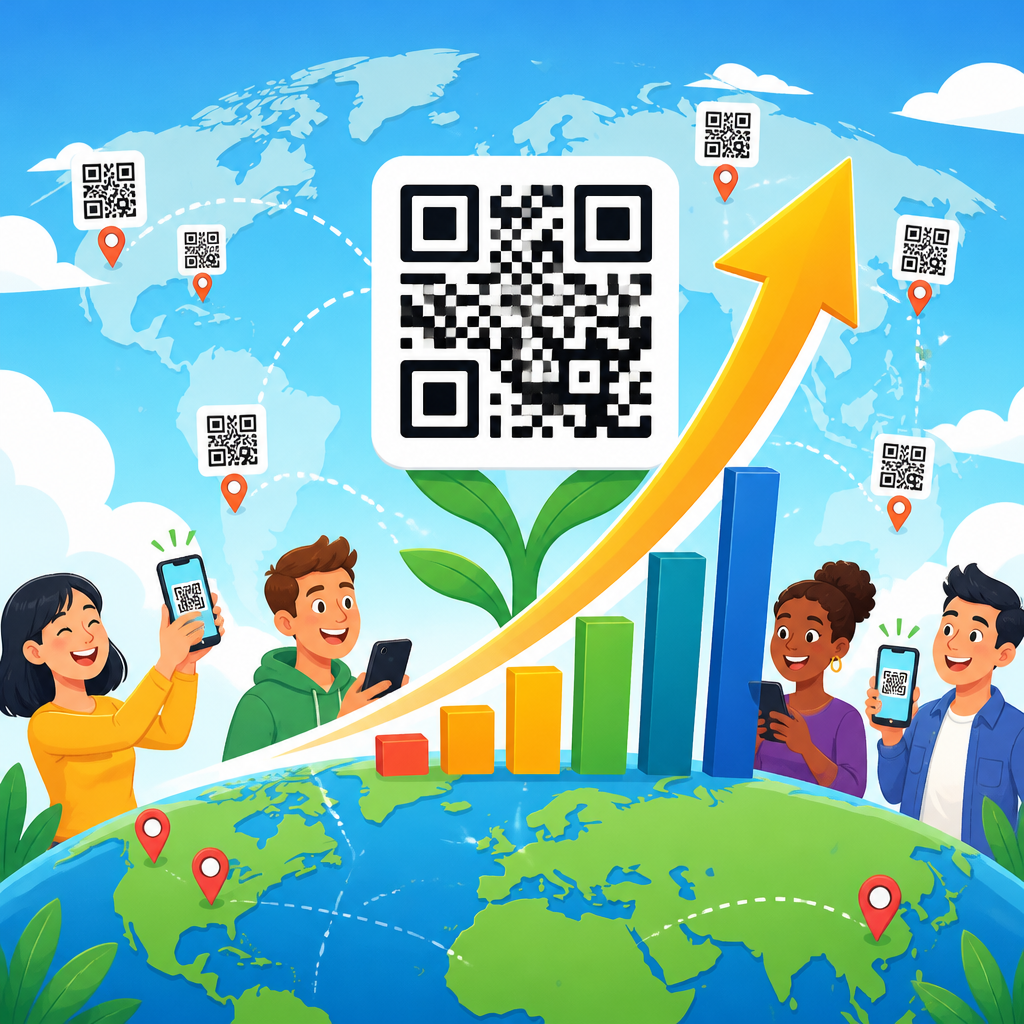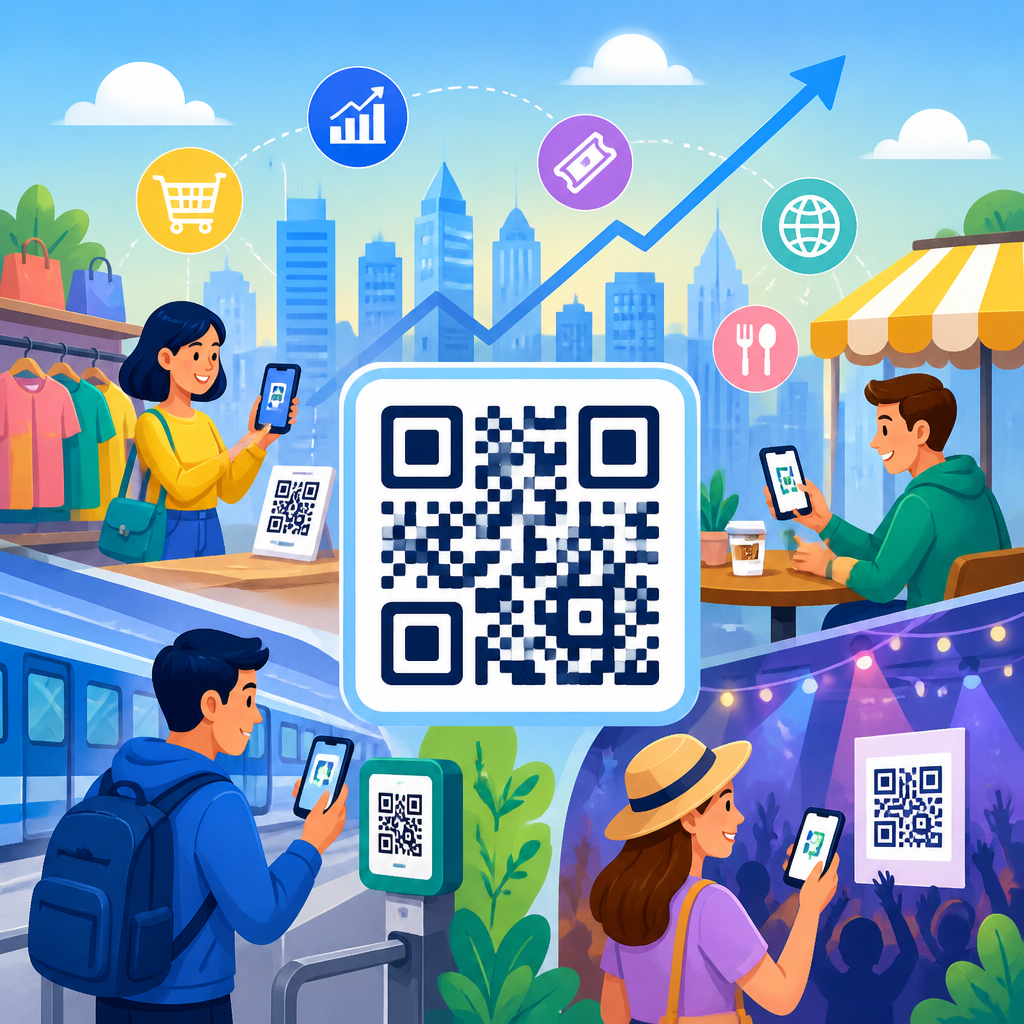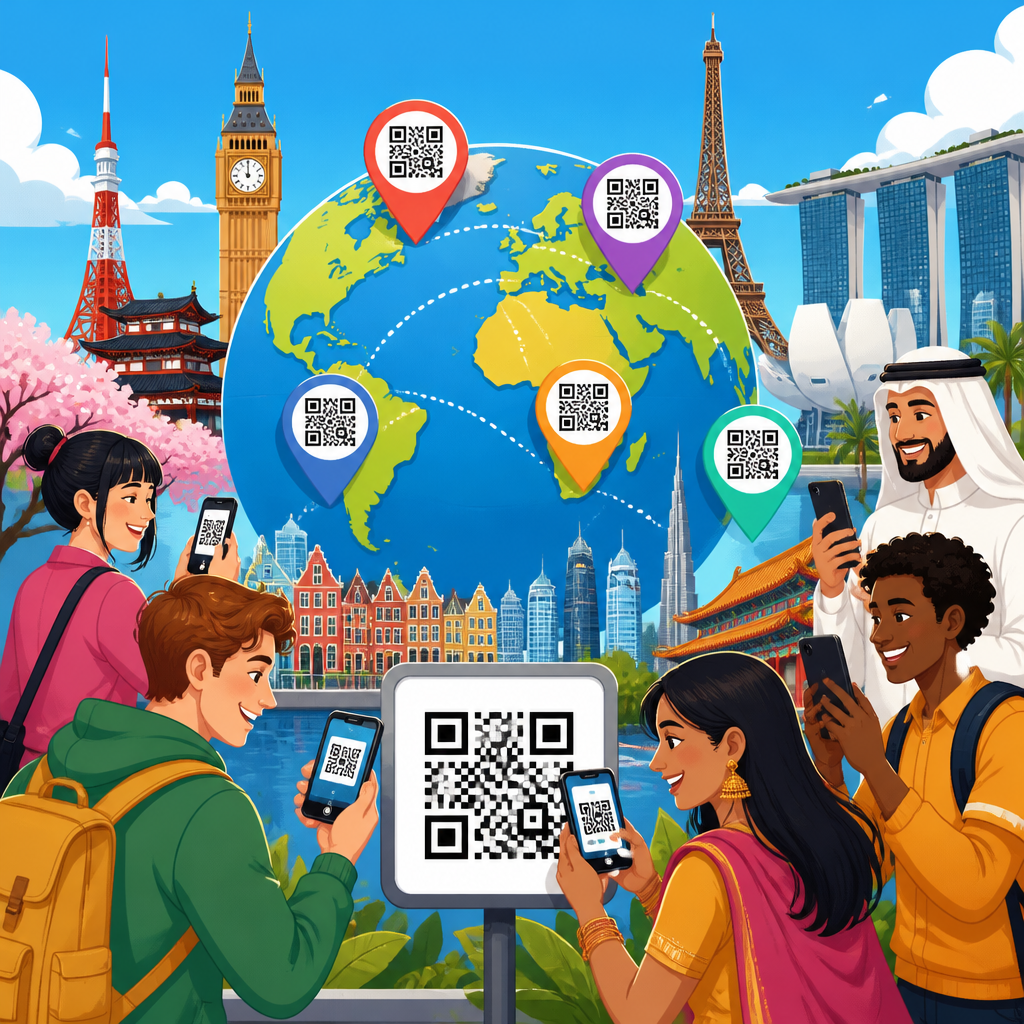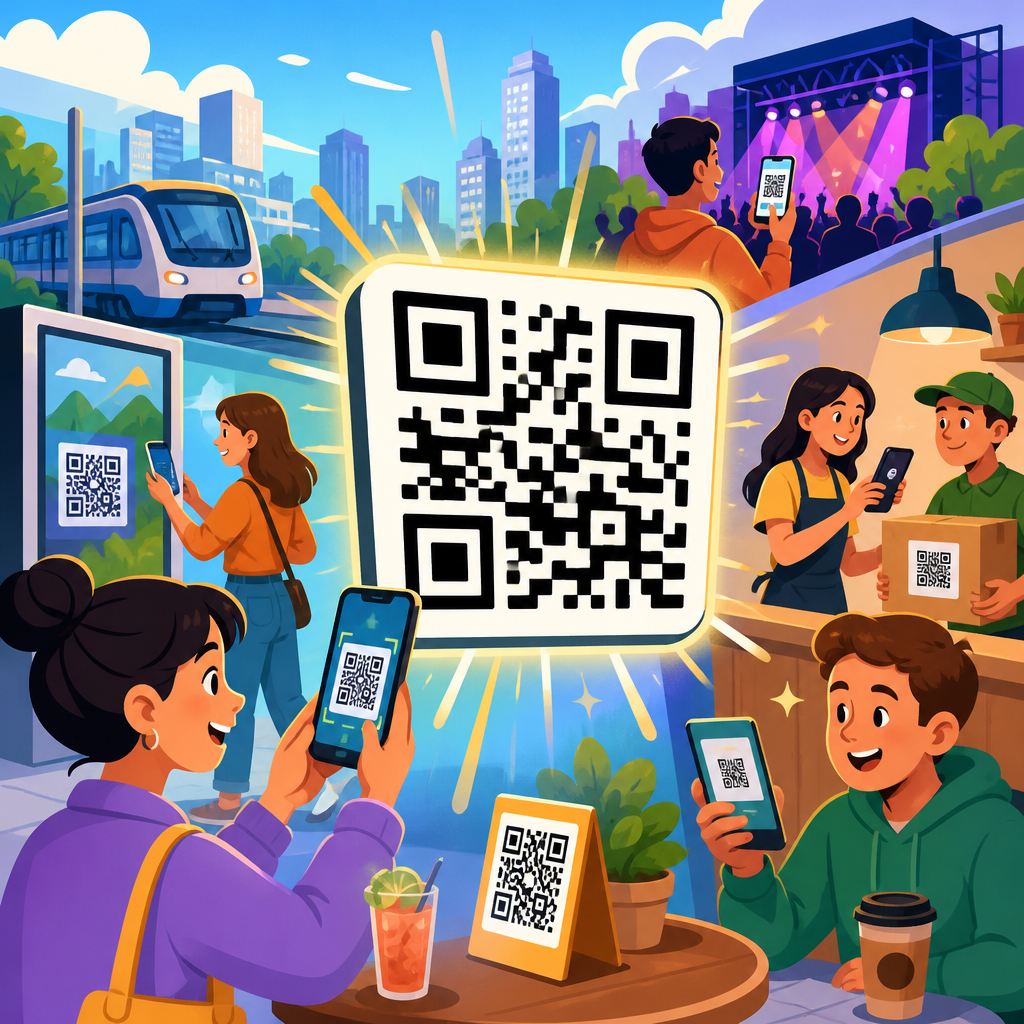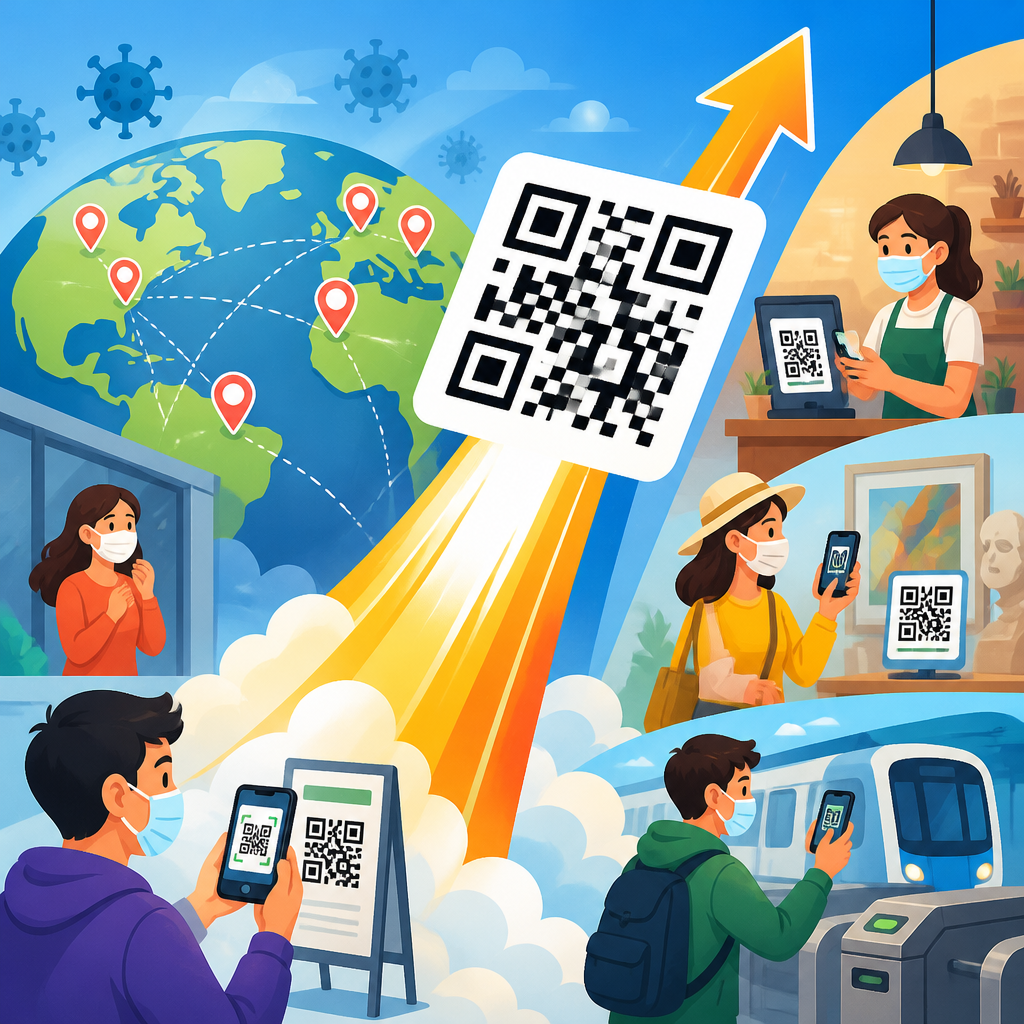
COVID-19 turned the QR code from a niche convenience into a global habit almost overnight. Before 2020, many businesses treated QR codes as optional marketing tools, useful for app downloads, event promotions, or quick links on packaging, but rarely essential to daily operations. The pandemic changed that assumption. As lockdowns, distancing rules, and hygiene concerns reshaped commerce, governments, restaurants, retailers, hospitals, transit systems, and payment providers needed a low-cost way to connect physical spaces with digital actions. QR codes met that need better than almost any other tool.
A QR code, or Quick Response code, is a two-dimensional matrix barcode that stores data such as URLs, payment details, contact information, product identifiers, or authentication tokens. Unlike traditional barcodes, QR codes can hold more information and are easily scanned by smartphone cameras without specialized hardware. That technical simplicity mattered during the pandemic. Businesses did not need to install expensive equipment, and consumers did not need to learn a new behavior beyond opening a camera app. In practical deployments I have worked on, that low training burden often made the difference between a pilot that stalled and a rollout that scaled nationally.
The importance of global QR code adoption trends goes far beyond temporary public health measures. COVID-19 accelerated digital transformation by compressing years of behavioral change into months. Once consumers used QR codes to view menus, check in at venues, confirm vaccine records, or make touch-free payments, many kept using them after restrictions eased. That persistence matters for any company planning customer experience, omnichannel retail, mobile payments, packaging, logistics, or identity workflows. Understanding how COVID-19 accelerated QR code growth globally helps explain why QR codes are now core infrastructure across industries, not a passing pandemic workaround.
This hub article maps the major forces behind that growth, the regional patterns that shaped adoption, the sectors where usage became sticky, and the limits organizations still need to manage. It also provides context for deeper articles on restaurant QR menus, QR code payments, dynamic code analytics, retail engagement, authentication, and contactless customer journeys. If you want a clear view of global QR code adoption trends, start with the simple answer: the pandemic created an urgent need for contactless, low-friction digital access, and QR codes were the fastest scalable bridge between offline and online behavior.
Why COVID-19 made QR codes essential
The pandemic created three immediate problems that QR codes solved well. First, organizations needed contactless interactions. Shared touchscreens, paper menus, brochures, and cash all became perceived health risks. Second, businesses needed to update information constantly. Restaurant hours, health policies, occupancy rules, testing protocols, and travel requirements changed weekly or even daily. Third, companies needed low-cost deployment at scale because revenues were under pressure. Printing a QR code on a sign, table tent, label, receipt, or window was dramatically cheaper and faster than building custom hardware systems.
Dynamic QR codes became especially valuable because they point to editable destinations. A restaurant could keep the same printed code on every table while updating menu items, prices, and allergen notices centrally. A public health agency could revise a landing page without reissuing every poster or flyer. In my experience advising location-based businesses, this flexibility reduced reprint waste and eliminated the operational lag that often kills adoption. The result was not just emergency use, but visible proof that QR infrastructure could save time and lower operating costs.
Smartphone readiness amplified the effect. By 2020, Apple and Android devices widely supported native QR scanning in camera apps, removing a barrier that existed a decade earlier when users needed separate scanner apps. Network access was also better, with mobile broadband and public Wi-Fi more common in urban markets. That meant the installed base for QR code interactions was already present; COVID-19 simply activated it.
Where global QR code adoption grew fastest
QR growth was global, but it did not start from the same baseline everywhere. China entered the pandemic with mature QR code payment ecosystems through Alipay and WeChat Pay. Consumers were already comfortable scanning codes for street vendors, taxis, e-commerce, and peer-to-peer payments. COVID-19 reinforced that behavior and widened adjacent use cases such as health status verification, venue access, and logistics tracking. Southeast Asian markets including Singapore, Thailand, Vietnam, and Indonesia also expanded quickly, often combining payment standardization with government-backed digital initiatives.
India saw major acceleration through UPI-linked QR payments, which became a practical way for small merchants to accept digital transactions without card terminals. Pandemic-era concerns about cash handling and the rise of delivery services increased scan-and-pay volume across both urban and semi-urban markets. In Latin America, Brazil’s Pix ecosystem and merchant QR adoption lowered entry barriers for real-time payments, while Mexico and Argentina expanded QR-based financial access in retail and service settings.
Europe and North America started from a lower everyday-use base but saw rapid behavior shifts in hospitality, healthcare, and marketing. Restaurants in the United States, Canada, the United Kingdom, Germany, France, and Spain adopted QR menus at scale. Event venues and employers used QR check-ins to support capacity management and contact tracing. Retailers placed codes on shelf talkers, curbside pickup signage, and product packaging to bridge in-store browsing with mobile purchasing. Once consumers became comfortable scanning in these settings, broader uses such as loyalty, product information, and self-service support became easier to introduce.
| Region | Pre-pandemic baseline | Primary COVID-era use cases | Lasting impact |
|---|---|---|---|
| China | Very high | Payments, health passes, delivery, access control | QR became embedded infrastructure |
| India | Rising | UPI payments, merchant acceptance, service access | Mass-market payment normalization |
| Europe | Moderate | Menus, check-ins, public information, tickets | Strong hospitality and travel retention |
| North America | Low to moderate | Menus, retail engagement, authentication, payments | Broader acceptance across industries |
| Latin America | Moderate | Real-time payments, retail, delivery, financial inclusion | Faster digital payment adoption |
Industries transformed by pandemic-era scanning
Hospitality offers the clearest example of accelerated QR code growth. When indoor dining reopened under restrictions, restaurants needed a way to remove physical menus and update offerings quickly as supply chains fluctuated. QR menu systems allowed instant changes to pricing, inventory, specials, and language options. The best implementations did more than display PDFs. They used mobile-optimized menu pages, accessible design, item photos, modifiers, allergen filters, and direct ordering. Businesses that stopped at static PDFs often saw weaker engagement because the user experience felt clumsy.
Healthcare also expanded QR use significantly. Hospitals, clinics, and pharmacies used codes for appointment check-in, patient forms, medication information, and vaccination documentation workflows. Public health agencies deployed QR-linked guidance at testing sites, airports, schools, and community centers. The advantage was not just contact reduction. QR codes improved version control in a period when clinical guidance and eligibility rules changed frequently.
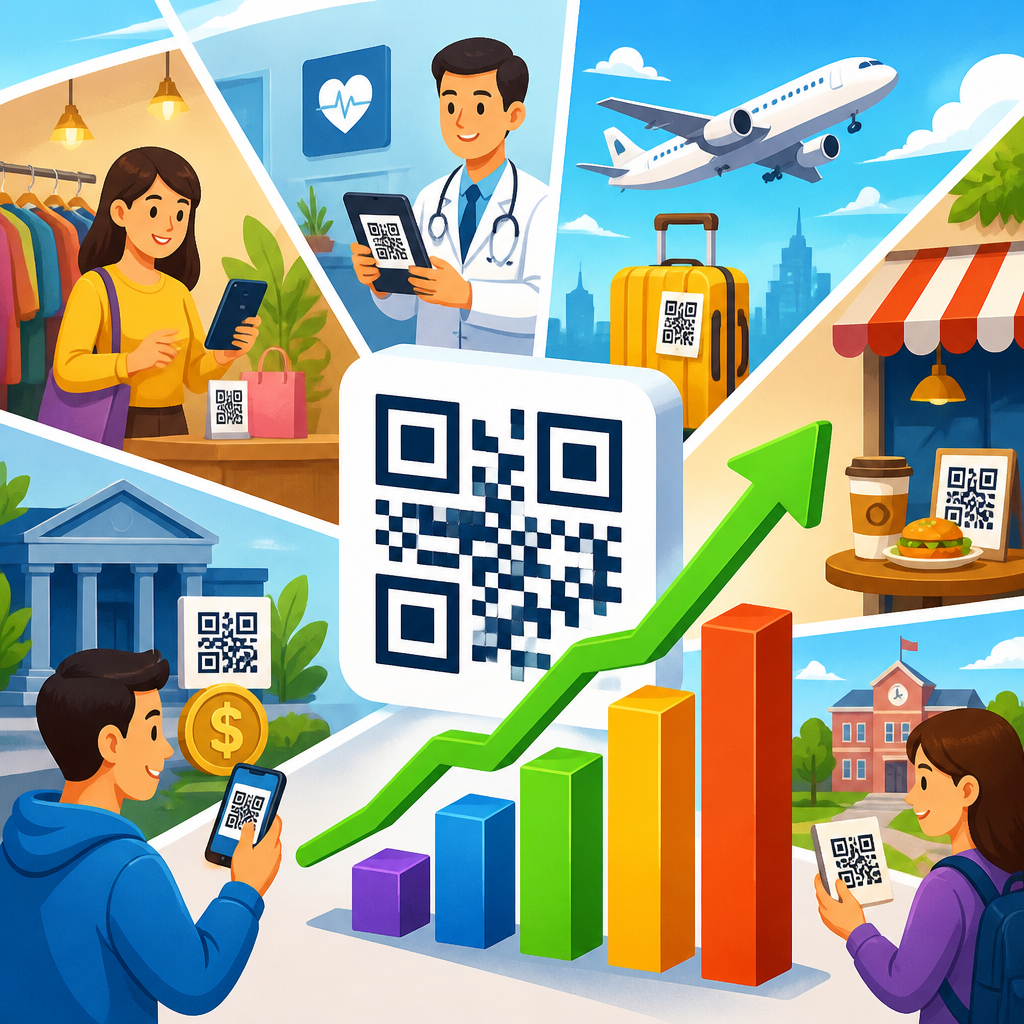
Retailers adopted QR codes to support curbside pickup, self-service product discovery, and omnichannel journeys. A shopper scanning a shelf code could see stock availability, reviews, dimensions, or alternate colors without waiting for staff. Consumer packaged goods brands used QR codes on labels to deliver sourcing information, recipes, warranty registration, and loyalty experiences. Logistics and manufacturing teams expanded internal scanning for tracking and traceability as supply chains came under pressure.
Payments became one of the most durable growth categories. Merchant-presented QR codes let small businesses accept digital payments without near-field communication terminals. Customer-presented codes supported app-based wallets and stored value systems. The common thread across industries was straightforward: QR codes reduced friction at a time when every extra touchpoint, delay, or hardware dependency became a liability.
Why many QR behaviors persisted after lockdowns
Not every pandemic behavior lasted, but many QR code behaviors did because they proved genuinely useful. Persistence depends on whether a tool solves a real operational problem after the crisis. QR codes often did. Businesses learned they could change content without reprinting materials, route users to localized pages, track scans by time and location, and connect offline campaigns to digital analytics. These benefits remained valuable long after sanitation anxiety declined.
Consumer learning also matters. Once millions of people discovered that scanning a code could open a menu, pay a bill, join Wi-Fi, verify a ticket, or access support, the action became normal. Behavioral adoption costs dropped permanently. This is one reason post-pandemic QR usage expanded into product authentication, loyalty enrollment, digital manuals, and connected packaging. The consumer no longer asks, “What is this square code?” They ask, “What do I get if I scan it?”
There were, however, clear limits. Poor mobile experiences, broken links, slow landing pages, and codes placed in low-light or low-signal environments undermined trust. Accessibility remains a serious issue when businesses remove all alternatives for people without smartphones, stable data connections, or camera literacy. Strong programs keep backup options available, use short redirect chains, test device compatibility, and follow recognized barcode quality standards such as ISO/IEC 18004 for symbol structure and ISO/IEC 15415 for print quality verification.
What global QR code adoption trends mean for businesses now
The central lesson from COVID-19 is that QR codes work best when they are treated as infrastructure, not decoration. Organizations that gained the most used them to solve specific workflow problems: faster ordering, cleaner payments, better tracking, easier onboarding, and more resilient information delivery. That remains the right approach today. A successful QR strategy starts with the destination experience, then the symbol, placement, analytics, and governance. If the landing page is weak, no code design can rescue performance.
For growth teams, QR codes now support measurable offline-to-online attribution. Dynamic code platforms such as Bitly, QR Code Generator PRO, Flowcode, Beaconstac, and enterprise campaign tools can report scans by date, approximate location, device type, and campaign variant. That data helps marketers compare in-store displays, direct mail, packaging, out-of-home advertising, and event signage. For operations teams, codes reduce manual handoffs and improve document access. For product leaders, they create persistent links between physical goods and digital services throughout the customer lifecycle.
Looking ahead, global QR code adoption trends point toward richer integrations rather than simple redirects. Expect broader use in digital identity, passkeys onboarding, connected packaging under initiatives like GS1 Digital Link, warranty activation, circular economy tracking, and authenticated resale. The pandemic did not invent QR codes, but it proved their scalability under pressure. Businesses that understand that history can design smarter customer journeys now. Review your physical touchpoints, identify moments where users need instant mobile access, and build QR experiences that are fast, accessible, secure, and worth the scan.
COVID-19 accelerated QR code growth globally because it aligned urgent public needs with a mature, inexpensive technology. Contactless access, real-time information updates, and smartphone-native scanning made QR codes the simplest bridge between physical environments and digital services during a period of extreme disruption. Regions with strong payment ecosystems scaled fastest, but nearly every market saw adoption rise in hospitality, healthcare, retail, transit, events, and public services. What began as a response to crisis became a durable shift in customer behavior and business operations.
The most important takeaway is that QR codes persisted where they delivered clear value after restrictions ended. Businesses kept them because they lowered print costs, enabled analytics, improved flexibility, and supported better self-service experiences. Consumers kept using them because scanning became familiar and useful. That is why global QR code adoption trends should be viewed as part of a broader digital transformation story, not as a temporary pandemic footnote. The technology succeeded because it solved practical problems at scale with almost no learning curve.
For companies building within QR Code Trends & Innovations, this hub should frame every deeper decision. Evaluate regional expectations, choose use cases with obvious user benefits, follow print and mobile usability standards, and measure outcomes beyond scan volume alone. A high scan count means little if the destination fails to convert, inform, or complete a task. The organizations that win with QR codes design the full interaction, from symbol placement to final action, with the same rigor they apply to websites or apps.
If you are planning content or implementation around global QR code adoption trends, start by auditing where your audience already encounters friction in the physical world. Then map those moments to fast, mobile-friendly QR journeys that answer a real need. Done well, QR codes are no longer just labels on signs or packaging. They are scalable digital entry points, and the pandemic showed the world exactly how powerful that can be.
Frequently Asked Questions
Why did COVID-19 cause such a dramatic rise in QR code usage around the world?
COVID-19 created the exact conditions needed for QR codes to move from occasional use to everyday necessity. Before the pandemic, QR codes were often seen as helpful but nonessential, mainly used for marketing campaigns, product packaging, app downloads, or event promotions. Once the public health crisis began, businesses and institutions suddenly needed fast, inexpensive ways to reduce physical contact while still sharing information, processing payments, and managing customer interactions. QR codes fit that need extremely well because they could be generated quickly, printed almost anywhere, displayed on screens, and scanned with devices people already carried: their smartphones.
The shift happened across multiple sectors at once. Restaurants replaced physical menus with scan-to-view digital menus. Retailers used QR codes for contactless product information, self-checkout support, and digital promotions. Payment providers expanded scan-to-pay systems to reduce cash handling and minimize contact at checkout. Hospitals and clinics used QR codes for check-ins, patient forms, visitor instructions, and health information access. Governments and transit systems also adopted QR-based tools for everything from health declarations and digital passes to public service updates and mobile ticketing. This broad, cross-industry adoption made QR codes feel familiar and normal very quickly.
Just as important, consumer behavior changed. During the pandemic, people became more willing to scan codes because the action solved immediate real-world problems: avoiding shared surfaces, accessing required information quickly, and completing transactions with fewer touchpoints. In that sense, COVID-19 did not simply introduce QR codes to the public; it gave them a strong practical purpose. Once millions of people experienced how convenient scanning could be, QR codes stopped being viewed as a novelty and became a standard part of digital interaction worldwide.
How did restaurants, retailers, and other businesses use QR codes during the pandemic?
Businesses used QR codes as a practical bridge between physical spaces and digital experiences. In restaurants, the most visible example was the digital menu. Instead of handing the same printed menu to every guest, staff could place a QR code on the table, window, receipt, or counter, allowing customers to browse menu items, specials, allergens, and pricing on their phones. Many restaurants went further by connecting QR codes to ordering systems, payment pages, loyalty programs, and customer feedback forms. This reduced touchpoints, sped up service, and helped businesses update menu information instantly without reprinting materials.
Retailers also found multiple uses for QR codes. Stores used them to share product specifications, inventory availability, safety policies, and promotional offers without requiring printed handouts or close staff interaction. Some retailers added QR codes to shelves, packaging, or displays so customers could access tutorials, reviews, or alternative sizes and colors online. In environments where social distancing mattered, QR codes supported more self-service behavior by giving shoppers the information they needed independently. For businesses balancing safety with customer experience, that was a major advantage.
Other sectors applied the same concept in different ways. Hotels used QR codes for contactless check-in, digital room directories, and service requests. Gyms and event venues used them for reservations, waiver forms, attendance tracking, and health policy communication. Offices and coworking spaces used QR codes for visitor registration and space management. Salons, clinics, and local service providers used them for appointment check-in, intake forms, and cashless payment options. In each case, QR codes worked because they offered a low-cost, flexible way to digitize customer interactions without requiring expensive hardware upgrades or a complete operational overhaul.
Did the pandemic change consumer attitudes toward QR codes permanently?
Yes, in many markets the pandemic created a lasting behavioral shift. Before COVID-19, one of the biggest barriers to QR code adoption was inconsistency. Many consumers had seen QR codes before, but they were not part of routine daily life, and some people were unsure whether scanning them would be useful, safe, or worth the effort. The pandemic changed that by making QR code interactions both common and necessary. When people repeatedly used QR codes to read menus, make payments, check into locations, download health information, or access transit services, scanning became a familiar digital habit rather than an experimental action.
This matters because technology adoption often depends as much on user comfort as on technical capability. Smartphones had already become powerful enough to support seamless scanning, especially once camera apps began recognizing QR codes natively. What COVID-19 added was a strong reason for regular use. Consumers learned that scanning a code could be faster than searching manually, safer than touching shared objects, and easier than typing long web addresses. Once that level of convenience became obvious, many people continued using QR-enabled services even after restrictions eased.
The long-term effect is that QR codes gained mainstream legitimacy. They are now widely accepted for payments, menus, tickets, authentication, product details, support resources, and marketing journeys. Businesses no longer have to explain what a QR code is in the way they often did years earlier. Instead, they can design experiences around the assumption that customers understand the basic interaction. While not every pandemic-era use case remained equally important, the overall trust, awareness, and comfort level surrounding QR codes rose significantly and has stayed elevated in many parts of the world.
What role did contactless payments and public health concerns play in QR code growth?
Contactless payments and health-related safety concerns were two of the strongest drivers behind global QR code growth during COVID-19. At the height of the pandemic, businesses and consumers were trying to reduce unnecessary physical contact, especially in high-traffic environments such as restaurants, grocery stores, pharmacies, transit systems, and convenience retailers. Cash handling, card terminal sharing, paper exchanges, and close face-to-face interactions all became areas of concern. QR codes offered a simple way to support safer transactions and information access without requiring every business to invest in costly new systems.
In payments, QR codes enabled customers to scan and pay using mobile wallets, banking apps, or merchant platforms. This helped reduce interaction with payment terminals and minimized the exchange of cash or cards. In many regions, especially where mobile payments were already growing, the pandemic accelerated QR-based transactions even further. Small merchants benefited in particular because QR payment setups were often cheaper and easier to deploy than more traditional point-of-sale hardware. That made QR codes a scalable solution not just for major brands, but also for independent shops, market vendors, cafes, and service providers.
Public health concerns also pushed QR codes into broader operational use beyond payments. Organizations used them for health screening forms, digital check-ins, location tracing systems where applicable, vaccination or testing verification workflows, and rapid access to safety guidelines. The appeal was clear: QR codes could connect physical spaces to digital processes instantly, helping organizations communicate, document, and manage interactions with fewer manual touchpoints. Their success during the pandemic showed that a small visual code could support large-scale operational resilience when flexibility and speed were essential.
Why have QR codes remained important even after the peak of the pandemic passed?
QR codes remained important because the pandemic did more than trigger temporary emergency behavior; it accelerated digital transformation that many organizations were already moving toward. Once businesses invested in QR-based systems for menus, payments, check-ins, support materials, or promotions, they discovered additional benefits beyond hygiene and distancing. QR codes made updates easier, reduced printing costs, improved data tracking, supported faster customer journeys, and created direct links between offline environments and online platforms. Those advantages did not disappear when restrictions eased.
For businesses, QR codes offer flexibility that is hard to match with static print or manual processes. A single code can lead customers to dynamic content that changes over time, whether that means seasonal menus, inventory updates, digital coupons, event schedules, onboarding steps, or support documentation. For marketers, QR codes provide measurable engagement and help connect packaging, signage, direct mail, and in-person experiences to digital campaigns. For operations teams, they can streamline workflows such as equipment labeling, employee access to internal resources, asset tracking, and customer self-service.
For consumers, the habit stuck because the experience is efficient. Scanning a code is now a routine action for ordering food, accessing tickets, downloading apps, joining Wi-Fi, verifying information, or completing payments. As smartphone use remains nearly universal in many markets, QR codes continue to serve as a low-friction interface between the physical and digital worlds. In that sense, COVID-19 acted as the catalyst, but the lasting growth of QR codes comes from their practicality. The pandemic proved their value under pressure, and businesses have continued using them because they solve real problems in a simple, scalable way.