QR code growth by industry has moved from a niche packaging tool to a global customer access layer connecting physical touchpoints with digital services. A QR code, or Quick Response code, is a two-dimensional barcode that stores data such as a URL, payment credential, app deep link, contact card, product identifier, or authentication token. When smartphones began including native camera scanning, friction dropped sharply. That single product change turned QR codes into practical infrastructure for retail, restaurants, healthcare, logistics, banking, travel, and manufacturing. I have worked with teams deploying QR campaigns across packaging, menus, field service labels, and payment flows, and the pattern is consistent: adoption accelerates when scanning solves an immediate user problem in under ten seconds.
Global QR code adoption trends matter because they reveal how consumers and businesses now expect instant, camera-first interactions. In mature markets, QR codes support payments, loyalty, onboarding, support, and traceability. In emerging markets, they often leapfrog older systems by giving merchants low-cost digital acceptance and consumers direct mobile access without expensive hardware. The technology is standardized through ISO/IEC 18004, widely supported by iOS and Android devices, and flexible enough for static or dynamic implementation. Static codes encode fixed information. Dynamic codes point to a managed destination that can be updated, tracked, localized, and tested after printing. That distinction is central to understanding industry growth, because large-scale programs increasingly depend on analytics, governance, and content control rather than simple one-time links.
This hub article covers global QR code adoption trends comprehensively by industry, geography, use case, and operational model. It explains where growth is strongest, why certain sectors scale faster than others, and which constraints still limit performance. It also highlights how scanning behavior has evolved since the pandemic-driven surge, when contactless interactions pushed menus, check-in flows, and cashless payments into the mainstream. Today the strongest implementations are not gimmicks. They reduce wait time, lower service costs, improve attribution, and create measurable conversion paths from offline media. For organizations planning future content within QR Code Trends and Innovations, this page serves as the strategic overview: the industries leading adoption, the metrics that matter, the standards shaping trust, and the practical decisions that determine whether QR programs become durable digital infrastructure or remain underused experiments.
Why Global QR Code Adoption Accelerated
The biggest driver of global QR code adoption was usability, not novelty. Early QR programs often failed because users needed a separate app, landing pages were poorly optimized, and code placement ignored context. Native smartphone scanning changed the equation. Apple added QR recognition to the Camera app in iOS 11, and Android vendors followed with broad camera-level support. Once scanning required no instructions, QR codes became a low-friction bridge from print, packaging, posters, labels, and screens to mobile experiences. The pandemic then compressed years of adoption into months. Restaurants replaced physical menus, venues used touchless check-in, and merchants expanded digital payment acceptance quickly.
Economics also favored growth. A merchant can print a QR code for cents, unlike deploying NFC terminals, kiosks, or proprietary hardware. Dynamic QR platforms added enterprise value through redirect management, UTM tracking, geolocation rules, A/B testing, and expiration controls. That made QR codes useful beyond access. They became attribution tools. Marketers could finally measure how many scans a shelf talker, direct mail piece, in-store sign, or product box generated and connect it to downstream conversion. Operations teams could link equipment to manuals, service histories, and replacement parts. Compliance teams could attach product documents or safety instructions without reprinting large manuals.
Consumer behavior reinforced the trend. Mobile wallets, super apps, and app-deep-linking trained people to complete high-value actions on phones, from account opening to prescription refills. QR codes fit that habit. They work across channels and require little user education. This universality is why global QR code adoption trends remain strong even after the emergency phase of contactless interaction passed. The enduring use cases are faster service, lower cost, and better measurement.
Which Industries Lead QR Code Growth
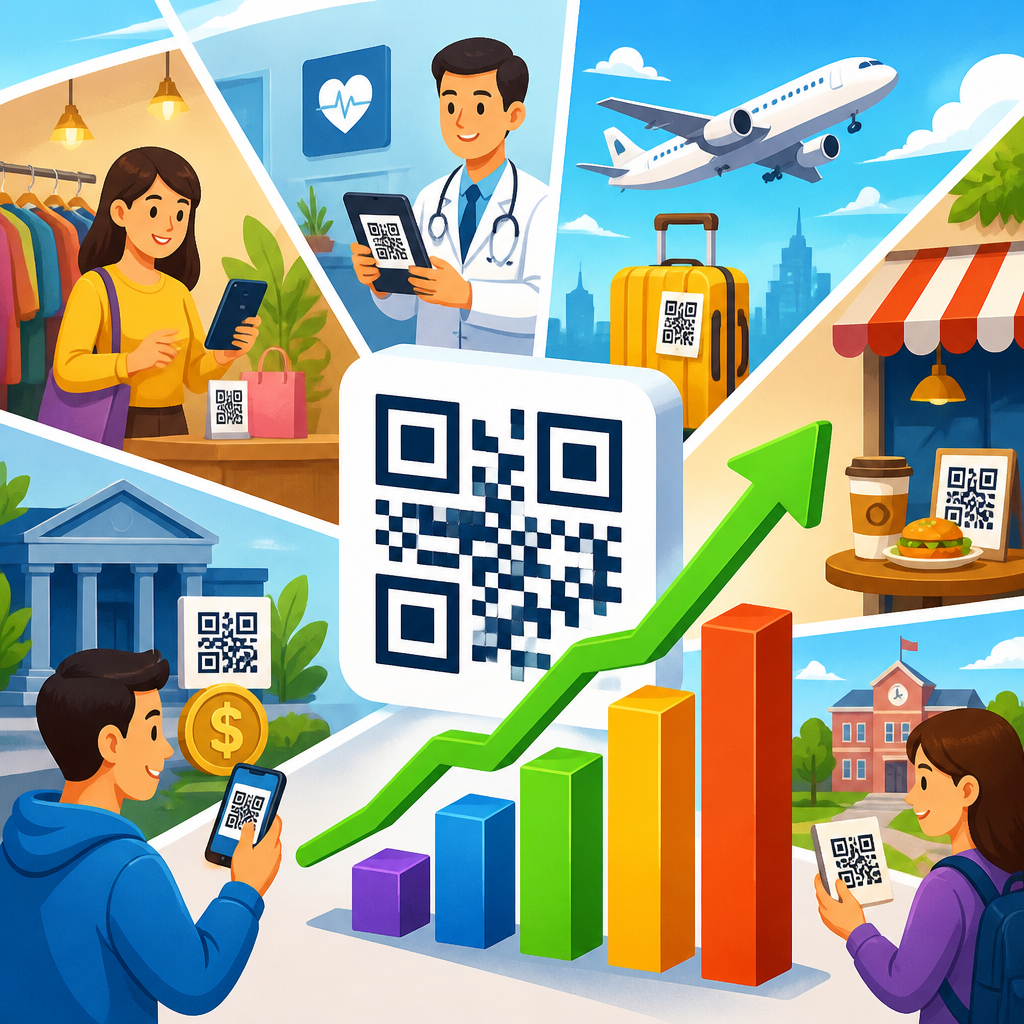
Not every sector adopted QR codes at the same pace. Industries with frequent customer interactions, distributed physical assets, and strong mobile conversion paths moved first. Retail uses QR codes on shelves, packaging, endcaps, receipts, loyalty prompts, and digital signage. Restaurants use them for menus, ordering, reviews, and table payments. Financial services use them for peer-to-merchant payments, account linking, authentication, and customer acquisition. Healthcare uses them for patient check-in, lab access, prescription workflows, device tracking, and educational materials. Logistics and manufacturing use them for asset identification, work instructions, inventory movement, and traceability.
The strongest pattern I have seen is that adoption grows fastest where one scan replaces several manual steps. A code on product packaging can open setup instructions, warranty registration, and accessories in one mobile page. A code on a restaurant table can present the menu, trigger ordering, and close payment. A code on a parcel label can connect drivers or recipients to status updates without calling support. Sectors where the scan leads directly to a completed task see repeat use and long-term retention.
| Industry | Primary QR Use Cases | Main Growth Driver | Typical KPI |
|---|---|---|---|
| Retail | Packaging, product info, loyalty, promotions | Offline-to-online conversion | Scan-to-purchase rate |
| Restaurants | Menus, ordering, table payment | Faster service and lower printing costs | Average order value |
| Payments | Merchant acceptance, P2P, bill pay | Low-cost digital transactions | Transaction volume |
| Healthcare | Check-in, records access, medication guidance | Operational efficiency and education | Completion rate |
| Logistics | Tracking, routing, proof of delivery | Asset visibility | Scan compliance |
| Manufacturing | Work instructions, maintenance, traceability | Error reduction | Time to task completion |
Travel, events, education, and real estate also show meaningful growth. Airlines and rail operators use QR boarding and service access. Event organizers use codes for ticketing, wayfinding, and sponsor activations. Universities deploy them for campus navigation, attendance, and resource access. Real estate agents place QR codes on signs, brochures, and model homes to capture leads instantly. Across sectors, the common thread is simple: QR codes succeed when they remove friction from a task users already want to complete.
Regional Adoption Patterns Around the World
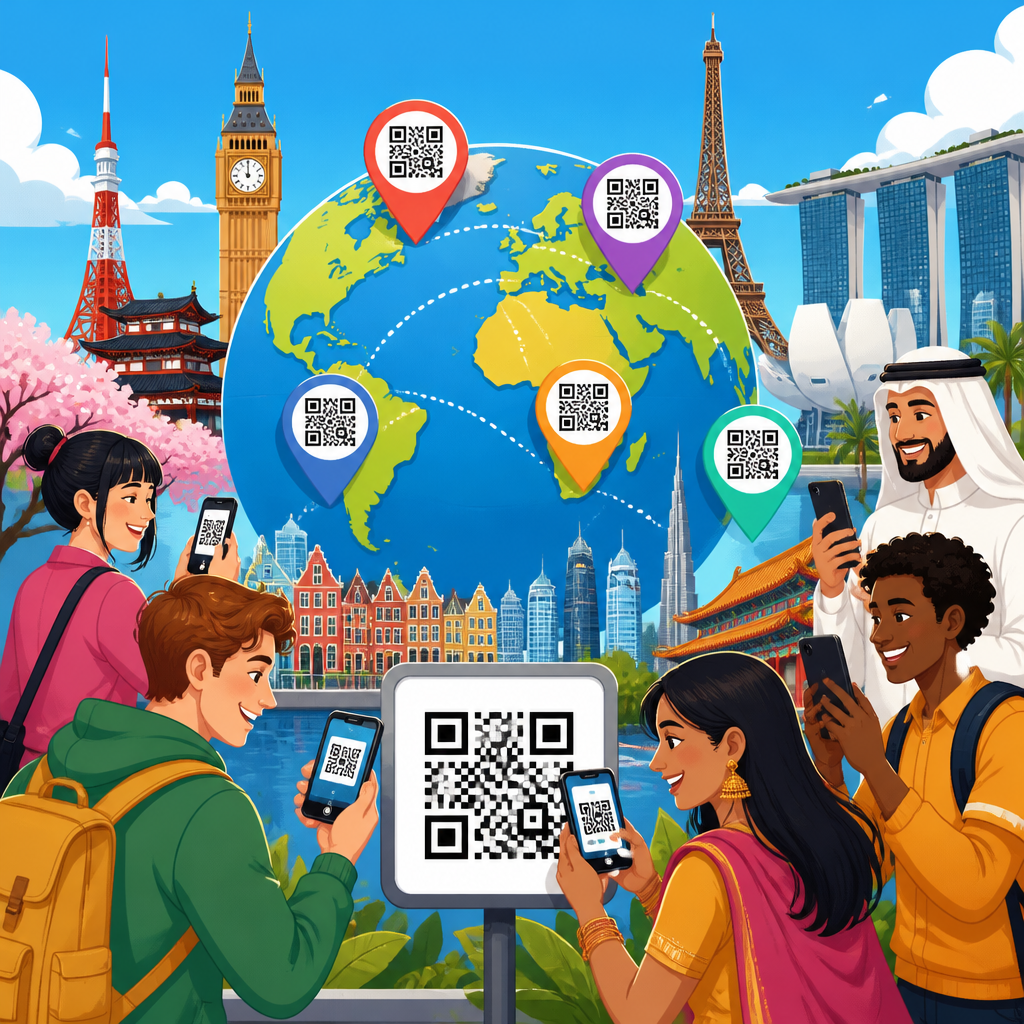
Global QR code adoption trends are not uniform, and regional context matters. In China, QR codes became deeply embedded in daily life through super apps and merchant payments years before many Western markets normalized scanning. Consumers use codes for transit, ordering, e-commerce, bill payment, and social connection. India saw major growth through UPI, where QR-based merchant acceptance lowered barriers for small businesses and accelerated digital payments at enormous scale. Southeast Asian markets, including Singapore, Thailand, Indonesia, and Vietnam, expanded QR interoperability across banking and wallet ecosystems, often supported by central banks or national payment frameworks.
North America followed a different path. Adoption historically lagged because card infrastructure was already mature and merchant habits were entrenched. That changed when restaurants, sports venues, packaging teams, and omnichannel retailers began using codes for service and engagement rather than only payments. In the United States and Canada, packaging, direct mail, and in-store signage are now important growth surfaces. Europe combines strong consumer protection expectations with increasing mobile usage. There, QR adoption often centers on payments, transport, sustainability documentation, digital product information, and cross-border tourism services.
Latin America and Africa present some of the most interesting growth stories because QR codes can expand formal commerce efficiently. Small merchants can accept digital payments without costly terminals. Governments and service providers can connect citizens to digital forms and information through printed notices and IDs. However, regional growth still depends on smartphone penetration, data affordability, network reliability, and trust in digital systems. The lesson for any global program is clear: design must match local payment behavior, language, device conditions, and regulatory expectations rather than assuming one universal deployment model.
Use Cases Driving the Next Phase of Expansion
The next phase of QR code growth is less about proving that people will scan and more about integrating scans into complete customer and operational journeys. Packaging is a prime example. Brands increasingly use QR codes as gateways to product origin stories, ingredient information, sustainability claims, recycling instructions, loyalty enrollment, replenishment, and authentication. This shift is especially relevant in markets preparing for richer digital product information frameworks. Consumer packaged goods companies can treat the package as a persistent digital media channel instead of a static label with limited space.
Payments remain a major engine of growth, but the most durable programs solve more than transaction acceptance. They bundle receipts, rewards, stored value, and merchant-funded offers. In hospitality, QR codes now support guest onboarding, room service ordering, feedback collection, and property guides. In healthcare, codes on appointment reminders and discharge papers can route patients to localized instructions, refill requests, or telehealth options. In B2B settings, field technicians scan equipment labels to pull maintenance logs, parts lists, and service videos on site, reducing repeat visits and training delays.
Authentication and anti-counterfeiting are also expanding. A serialized dynamic code can verify whether a product is genuine, where it was distributed, and whether a warranty has been activated. This matters in pharmaceuticals, electronics, luxury goods, and industrial components. Another growth area is connected print. Publishers, museums, and training providers use QR codes to extend static materials with updated content, video explainers, or multilingual support without reprinting core assets. In each case, the value comes from persistence and adaptability: one printed code can serve evolving digital content over time.
Implementation Standards, Metrics, and Common Pitfalls
Strong QR performance depends on execution discipline. The technical standard most teams reference is ISO/IEC 18004, but practical deployment also requires attention to contrast, quiet zone, error correction, size, placement, and destination experience. Codes should be large enough for expected scan distance, printed with sufficient contrast, and tested across device types. A beautiful campaign fails quickly if the code sits on reflective packaging, curves around a bottle seam, or launches a page blocked by geolocation errors. I have seen scan rates improve simply by moving a code higher on packaging, adding a direct call to action, and reducing the number of taps after landing.
Measurement should go beyond raw scans. Serious teams track unique scans, scan location, device split, bounce rate, task completion, revenue contribution, and repeat engagement. Dynamic QR management platforms can append analytics parameters and support redirect rules by language, time, or inventory state. For packaging, post-purchase engagement rate matters more than total scan count. For retail signage, scan-to-store-visit or scan-to-cart may be the critical metric. For operations, completion speed and error reduction are often better indicators than traffic volume.
Security and trust are real constraints. Because QR codes can obscure destination URLs, users may hesitate if branding is unclear or if they have experienced phishing attempts. Branded domains, HTTPS, transparent preview text, and consistent visual identity improve trust. Accessibility matters too. Important information should not exist only behind a scan; alternatives must be available for users without compatible devices or connectivity. The best programs balance convenience with resilience. They treat QR codes as an access layer, not the entire service model.
What Businesses Should Do Next
QR code growth by industry points to a simple strategic conclusion: the winners are not the companies printing the most codes, but the ones building the clearest scan journeys. Start by matching each code to a specific user intent. If the context is shelf-level discovery, route to concise product proof and availability. If it is post-purchase support, prioritize setup, registration, and troubleshooting. Use dynamic codes unless the use case is truly permanent. Govern them centrally, document ownership, and review destinations regularly so legacy pages do not break printed assets months later.
Next, localize by market and measure by outcome. A payment QR strategy in India will differ from one in Germany or the United States because consumer expectations and infrastructure differ. Test calls to action, landing page speed, and page depth. Connect scans to CRM, commerce, or service systems so offline touchpoints contribute to measurable business outcomes. Finally, treat packaging, signage, and labels as long-lived digital entry points. That mindset turns QR codes from campaign accessories into durable infrastructure. If your organization is building out its QR Code Trends and Innovations roadmap, use this hub to prioritize the industries, regions, and use cases where global adoption is proving strongest, then launch a focused pilot and measure what one good scan really delivers.
Frequently Asked Questions
1. What is driving QR code growth across different industries?
QR code growth by industry is being driven by a combination of technology readiness, customer behavior, and business demand for faster digital access. At the most basic level, a QR code gives people an instant bridge between a physical object and a digital action. That could mean opening a website, launching a payment flow, downloading an app, viewing a menu, verifying a product, or accessing support content. Once smartphone cameras began supporting native scanning, the biggest barrier to adoption largely disappeared. Users no longer needed a separate app, which made scanning feel natural and immediate.
From a business perspective, QR codes are attractive because they are inexpensive to deploy, easy to print, and flexible enough to support many use cases without changing the customer’s hardware. A retailer can place a code on signage, a manufacturer can add one to packaging, a hospital can use one for patient intake, and a restaurant can use one for ordering or digital menus. In each case, the same simple scanning behavior unlocks a different service. That makes QR codes less of a single-purpose tool and more of a shared access layer across industries.
Another major growth factor is the shift toward connected customer journeys. Companies want to reduce friction at every touchpoint, and QR codes help do that by shortening the path from intent to action. Instead of asking a customer to type a URL, search for a product, or wait for staff assistance, a code can take them directly to the right destination. The result is better convenience for the user and more measurable engagement for the business. Industries are increasingly recognizing that QR codes are not just a marketing tactic; they are practical infrastructure for linking physical presence with digital services.
2. Which industries are seeing the strongest QR code adoption, and why?
Several industries are seeing especially strong QR code adoption because their customer interactions naturally benefit from quick, low-friction digital access. Retail is one of the clearest examples. Stores use QR codes for product information, self-service promotions, loyalty enrollment, in-store navigation, mobile checkout, and post-purchase support. In retail, every second of reduced effort matters, and QR codes can help turn browsing into action without requiring a sales associate or a manual search.
Food service and hospitality have also adopted QR codes at scale. Restaurants use them for digital menus, ordering, table service, reviews, and payments. Hotels use them for guest check-in information, room service access, amenity guides, and local recommendations. These environments benefit because customers are already on-site and ready to act, making the scan-to-service model particularly efficient. The value is not just convenience; it also helps businesses update information dynamically without reprinting static materials every time details change.
Healthcare is another major growth area. Providers use QR codes for patient registration, appointment check-in, prescription access, educational materials, and medical device documentation. In healthcare, reducing administrative friction can improve both operational flow and patient experience. Manufacturing and logistics are also important sectors, especially for traceability, inventory management, authentication, and service records. A code on a part, box, or machine can connect workers and customers to detailed digital records immediately. Financial services, transportation, events, and education are also expanding their use of QR-based payments, ticketing, access control, and onboarding. Across all of these sectors, the strongest adoption tends to happen where speed, clarity, and measurable interaction are business priorities.
3. How have smartphones changed the role of QR codes in business and customer experience?
Smartphones changed QR codes from an occasional utility into mainstream digital infrastructure. Before native camera scanning became common, QR codes often required users to install a dedicated app, and that extra step created enough friction to limit widespread adoption. Once phone manufacturers and mobile operating systems made scanning a built-in behavior, QR codes became dramatically easier to use. That convenience reshaped how businesses viewed them. Instead of being a novelty or a campaign-specific tool, they became a dependable way to connect physical environments with digital experiences.
For customers, the change is simple but powerful: see code, scan code, complete task. That flow feels fast and intuitive. It removes the need to type long web addresses, search for the right page, or ask for printed information. In practice, that means a shopper can access product details instantly, a traveler can retrieve a boarding pass, a patient can check in at a clinic, or a diner can place an order from a table. The smartphone acts as the universal interface, and the QR code acts as the trigger.
For businesses, smartphone readiness unlocked scale. Companies could now deploy QR codes with much greater confidence that most users would know how to interact with them. That made QR-supported workflows more practical across sales, support, payments, operations, and authentication. It also improved measurement, since QR interactions can be tied to campaigns, locations, product categories, or customer actions. In short, smartphones did not just improve QR code usability; they transformed QR codes into a broadly accessible customer access layer that works across many industries and touchpoints.
4. What are the most important business benefits of using QR codes by industry?
The biggest business benefit of QR codes is their ability to reduce friction while increasing measurable engagement. They help customers move from interest to action quickly, whether that action is making a payment, viewing a product page, registering for a service, redeeming an offer, or accessing support. Because the interaction starts with a scan, businesses can simplify the first step in a digital journey and improve conversion opportunities. This matters in nearly every industry, especially when customer attention is limited and speed influences outcomes.
QR codes also offer strong operational flexibility. Unlike many physical tools, a printed code can often point to a destination that is updated over time, depending on how the deployment is structured. That means businesses can change menus, offers, instructions, or landing pages without replacing every printed asset. In industries like hospitality, retail, healthcare, and manufacturing, this can save time and reduce maintenance costs while keeping information current.
Another important advantage is data visibility. QR interactions can reveal which locations, products, campaigns, or touchpoints are generating engagement. Businesses can use that information to improve customer journeys, refine marketing strategy, and identify underperforming assets. In logistics and manufacturing, QR codes also support traceability and workflow accuracy. In payments and ticketing, they help speed transactions and reduce manual handling. In product packaging, they can extend the relationship beyond the sale by linking customers to tutorials, warranty registration, or authenticity checks. The broader point is that QR codes deliver value not only because they are convenient, but because they can combine convenience, adaptability, and insight in one lightweight format.
5. What should companies consider when implementing QR codes for industry-specific growth?
Companies should begin by treating QR codes as part of a complete customer or operational journey, not as isolated graphics placed on a surface. The most effective implementations start with a clear purpose. A business should know exactly what the user is expected to do after scanning and why that action matters. In retail, the goal might be product education or conversion. In healthcare, it may be intake efficiency or patient guidance. In manufacturing, it could be traceability or maintenance access. The use case should determine placement, destination, and success metrics.
It is also critical to optimize the destination experience. A QR code may successfully generate a scan, but if the landing page is slow, confusing, or not mobile-friendly, the value is lost. Because most scans happen on smartphones, the digital endpoint should be fast, clear, secure, and aligned with the user’s immediate context. Businesses should also provide a strong call to action near the code so people understand what they will get by scanning. Simple prompts such as “View product specs,” “Pay now,” or “Check in here” can significantly improve performance.
Security, trust, and governance are equally important. Since QR codes can trigger payments, authentication, or sensitive account actions, organizations need to manage destinations carefully and protect against misuse. Consistent branding and secure domains help reassure users that the code is legitimate. Finally, companies should measure results continuously. Track scan rates, completion rates, drop-off points, and downstream outcomes such as purchases, registrations, or service usage. The industries seeing the strongest QR code growth are generally the ones that approach deployment strategically: they match the code to a real workflow, make the experience easy, and use performance data to improve over time.