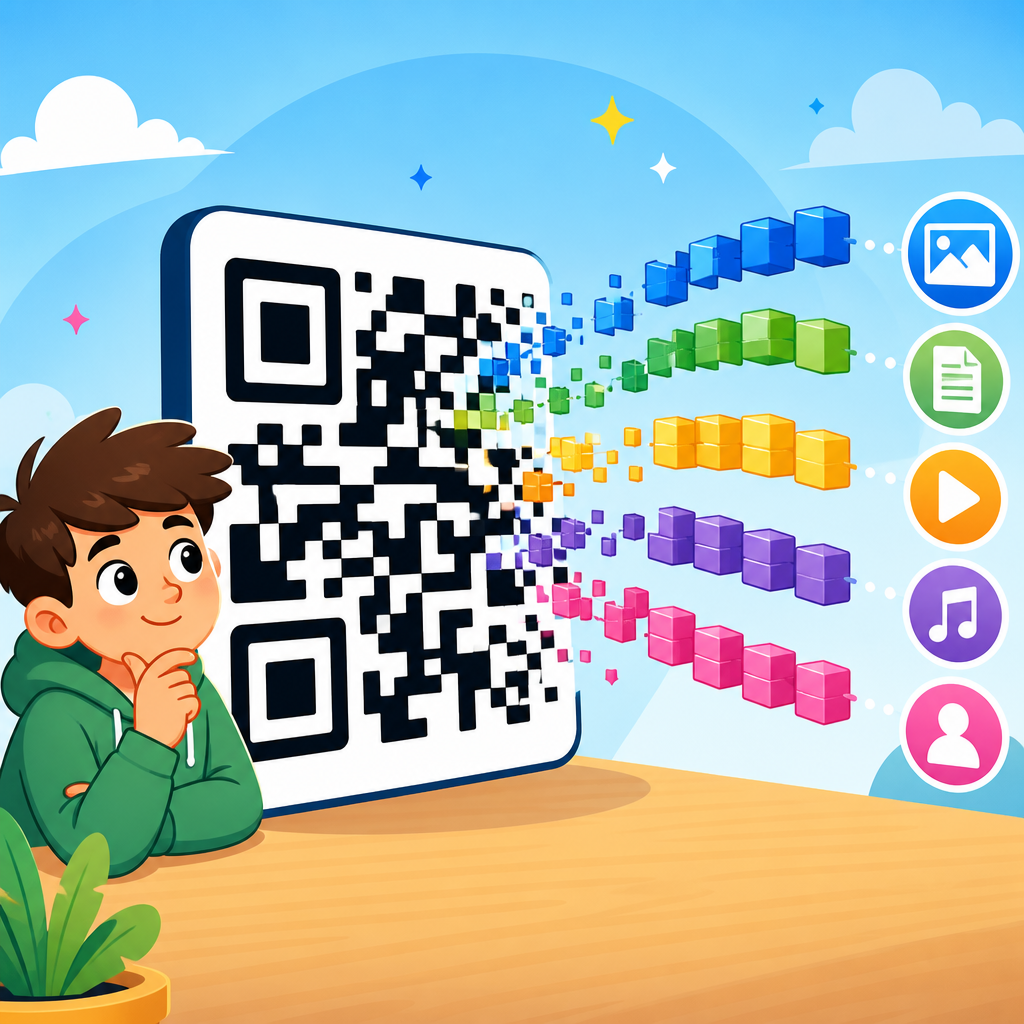
QR codes have moved from a niche packaging tool to a core bridge between physical media and digital experiences, and their role in the future of marketing is expanding quickly. A QR code, short for Quick Response code, is a two-dimensional matrix barcode that stores data such as URLs, contact details, payment credentials, coupon information, and app deep links. Marketers value QR codes because they reduce friction: a customer points a phone camera, scans, and lands directly in the experience a brand wants to deliver. That simple action turns posters, labels, store displays, mailers, event badges, product packaging, and even television screens into measurable digital touchpoints.
The future of QR code technology matters because modern marketing depends on seamless movement between offline attention and online action. Brands no longer compete only for impressions; they compete for low-friction conversions, first-party data, personalized follow-up, and attributable revenue. QR codes support all four. I have seen campaigns fail when a landing page demanded too many steps, and I have seen response rates climb when a printed call to action was replaced with a scannable code tied to a mobile-optimized destination. The technology works best when it is treated not as decoration but as infrastructure for discovery, engagement, and retention.
Several trends explain why QR codes are becoming more important. Smartphone cameras now recognize codes natively on both iOS and Android, which removes the need for separate scanning apps. Digital payments have normalized scanning behavior in markets across Asia, Latin America, Europe, and North America. Privacy changes have also pushed marketers toward channels they can control more directly, especially experiences that collect consented, first-party data. At the same time, advances in dynamic QR codes, analytics, URL routing, geolocation triggers, and secure authentication have made QR campaigns more flexible and more accountable than static print tactics from the past.
For marketers, the key terms are straightforward. Static QR codes point to fixed information and cannot be edited once printed. Dynamic QR codes point to a short redirect URL that can be changed later, allowing brands to update destinations, A/B test pages, add tracking parameters, pause campaigns, or localize content without reprinting the code itself. Branded QR codes use custom colors, logos, and design treatments while preserving scannability. Secure QR flows add tokenization, expiration rules, or identity checks for uses such as ticketing, payments, and authenticated product content. Understanding these differences is essential when planning future-facing marketing systems rather than one-off campaigns.
Why QR codes are becoming a permanent marketing channel
QR codes are becoming a permanent channel because they solve a basic marketing problem better than most alternatives: they connect intent to action in one step. A billboard can inspire interest, but a memorable URL still requires typing. Near-field communication can be elegant, but device compatibility, user awareness, and placement issues can limit adoption. QR codes are visible, inexpensive, and familiar. In retail, restaurants, healthcare, real estate, and live events, they already act as the handoff point from a physical environment to a digital workflow. That installed behavior gives marketers an advantage they should not ignore.
Another reason for long-term adoption is measurement. Traditional offline media has often been criticized as hard to attribute. Dynamic QR code platforms change that by recording scans, unique visitors, device types, rough location, time of day, and downstream conversion behavior when integrated with analytics tools. When a retail chain places different QR codes on window posters, shelf talkers, and receipt inserts, it can compare which placement generates more landing page views, sign-ups, or purchases. That transforms print and packaging from broad awareness assets into testable performance media.
QR codes also fit how consumers behave across channels. A person may see a code on a subway ad, scan it to save an offer, return later through email, and buy in an app. Good campaign architecture preserves that journey by using mobile-first pages, first-party identifiers, CRM tagging, and consistent messaging. In practice, QR codes are not replacing search, social, or email. They are connecting them. The future of marketing belongs to brands that can orchestrate those connections without forcing customers to work for access.
Future QR code technology: smarter, dynamic, and personalized
The future of QR code technology is not about the square itself changing dramatically. It is about the system behind it becoming smarter. Dynamic routing will let one printed code serve different destinations based on language, device type, time, weather, inventory status, campaign source, or loyalty status. A beverage brand, for example, can place one code on millions of cans, then route scanners in different countries to localized promotions and age-gated content. If a product line sells out, the destination can shift instantly from purchase to waitlist or store locator.
Personalization will expand as QR systems connect more deeply with customer data platforms and consent management tools. A code on direct mail can carry a unique identifier, so the landing page recognizes the household and shows the nearest showroom, relevant product category, and a prefilled form. In stores, loyalty members may scan shelf tags to unlock member pricing, reviews, tutorials, or replenishment reminders. These experiences work because the code is not the campaign; it is the access point to tailored content and measurable intent.
Marketers should also expect more use of deep linking and progressive app journeys. Instead of routing every scan to a generic homepage, advanced programs send existing app users into specific in-app screens while sending new users to a lightweight mobile web page or app install flow. This reduces drop-off significantly. I have seen brands improve campaign completion rates simply by sending scanners to a single task page, such as claim offer, book demo, verify authenticity, or watch setup instructions, rather than to a broad navigation menu.
Where QR codes will have the biggest marketing impact
The strongest future growth areas are product packaging, retail environments, out-of-home advertising, events, connected television, and direct mail. Packaging is especially powerful because it stays with the customer after purchase. A skincare brand can use one on-box code for ingredient transparency, usage tutorials, refill subscriptions, and review generation. Consumer packaged goods companies are also using QR codes to prepare for richer digital product passports, a concept gaining traction in sustainability and compliance discussions, especially in Europe.
Retail environments benefit because QR codes can add endless shelf information without adding physical clutter. Stores can connect scanners to comparison guides, stock availability, financing options, how-to videos, or customer reviews. Real estate marketers use codes on signs to open listing tours and schedule showings. Event teams use them for registration, lead capture, agenda access, and post-session surveys. On television and streaming placements, time-sensitive QR codes let viewers respond immediately instead of hoping they remember a URL later. That is especially useful in sports, live entertainment, and limited-time offers.
| Channel | High-value QR use | Primary metric |
|---|---|---|
| Packaging | Education, loyalty, reorder | Repeat purchase rate |
| Retail | Product details, reviews, offers | Assisted conversion rate |
| Events | Check-in, lead capture, follow-up | Qualified leads |
| Out-of-home | Immediate response to ads | Scan-through rate |
| Direct mail | Personalized landing pages | Response rate |
| CTV | Second-screen engagement | Attributed visits |
These use cases matter because each one solves a specific friction problem. Packaging answers questions after the purchase. Retail supports decision-making before the purchase. Events compress the gap between interest and sales follow-up. Out-of-home captures attention while it exists. Direct mail makes offline personalization measurable. Connected TV links passive viewing with active response. When marketers map QR placements to customer intent rather than using them generically, performance improves.
Data, attribution, and first-party relationships
One of the most important reasons QR codes will shape the future of marketing is their role in first-party data strategy. When a scan leads to a consented interaction such as email signup, preference center update, account creation, or loyalty enrollment, the brand gains a durable relationship not dependent on rented audiences. This matters in a world where third-party cookies have weakened, mobile identifiers face limits, and privacy expectations are higher. QR codes do not bypass privacy rules, but they do create a clear, user-initiated moment to request value-based consent.
Attribution improves when QR programs are set up correctly. Best practice includes unique codes by placement, campaign, and creative version; UTM parameters for analytics platforms; event tracking for page views, clicks, scroll depth, form submissions, and purchases; and CRM integration so offline source data stays attached to the lead or customer record. Tools commonly used in this workflow include Google Analytics 4, Adobe Analytics, HubSpot, Salesforce, Branch, AppsFlyer, and enterprise QR platforms that support redirects and dashboards. Without this setup, teams often know scans occurred but cannot prove business impact.
There are limits. A scan does not always equal intent, and not every environment supports easy scanning. Poor lighting, weak connectivity, cluttered creative, low-contrast design, or a non-mobile page can hurt results. QR codes also work best when paired with a clear value exchange. “Scan me” is weak; “Scan for ingredients, reviews, and 10% off your refill” is stronger because it answers why the action is worth taking.
Design, security, and trust: what brands must get right
Future success with QR codes depends on execution quality. The first rule is scannability. Maintain sufficient contrast, adequate quiet zone, proper error correction, and a tested size based on viewing distance. ISO/IEC 18004 provides the foundational standard for QR code symbology, and teams should treat it as practical guidance, not trivia. Branded customization can improve recognition, but logos, gradients, or stylized modules should never compromise scan reliability. Before launch, test across iPhone and Android devices, different camera generations, and real-world lighting conditions.
Trust is equally important. Consumers have learned that codes can lead anywhere, so the destination must feel credible and safe. Use recognizable domains, HTTPS, fast-loading pages, and messaging that matches the surrounding creative. For sensitive uses such as payments, ticketing, identity verification, or product authentication, add signed tokens, expiration logic, fraud monitoring, and anti-duplication controls. Phishing risks are real, and attackers have used sticker overlays on public codes to redirect users. Brands should inspect physical placements regularly and educate teams on tamper checks.
Accessibility should not be treated as optional. Include nearby text instructions, a plain-language description of the benefit, and an alternate short URL when possible. In some settings, such as older demographics or low-connectivity environments, not everyone will scan. A strong marketing system respects that reality instead of assuming one interaction method fits every audience.
How to build a future-ready QR marketing strategy
A future-ready strategy starts with customer intent, not code generation. Define the job each QR code will do: educate, convert, identify, authenticate, retain, or reactivate. Then match the destination to that single purpose. Use dynamic codes by default, create mobile-first landing pages, and establish naming conventions so analytics remain clean over time. Build internal governance for redirects, expiration dates, campaign ownership, and archive management. This sounds operational, but it prevents the common problem of orphaned codes that still circulate after teams forget where they lead.
Next, connect QR activity to broader lifecycle marketing. A scan on packaging can trigger a post-purchase onboarding sequence. A trade show scan can push lead details into a sales queue with source context. A retail scan can suppress irrelevant prospecting ads and replace them with cart recovery or loyalty prompts. This is where QR codes become strategic: they create intent signals that other channels can act on immediately.
The brands that will benefit most are the ones treating QR codes as durable digital infrastructure across products, stores, media, and service touchpoints. Start with one measurable use case, set up analytics correctly, test relentlessly, and expand from what the data proves. In the future of marketing, QR codes will not be a gimmick or a temporary convenience. They will be one of the simplest and most effective ways to turn physical attention into digital relationships, revenue, and long-term customer insight.
Frequently Asked Questions
1. Why are QR codes becoming so important in the future of marketing?
QR codes are becoming central to modern marketing because they create an immediate, low-friction connection between offline attention and online action. In the past, a customer might see a print ad, product package, event sign, or storefront display and then have to remember a website, search for a brand manually, or type in a long URL. QR codes remove those extra steps. With a quick camera scan, a person can move directly from physical media into a landing page, product demo, coupon, loyalty program, payment screen, app download, video, or personalized offer.
That matters because consumer behavior now moves fluidly between physical and digital environments. People discover brands in stores, on packaging, in direct mail, on posters, at live events, and even on television, but they expect a digital response to be instant. QR codes meet that expectation. They help marketers turn passive exposure into measurable engagement, whether the goal is lead generation, conversions, app installs, purchases, or first-party data capture.
Another reason QR codes are gaining importance is accessibility. Most smartphones now scan QR codes natively through the camera, which means consumers do not need a separate app. That wide adoption lowers barriers and makes QR-driven campaigns more practical at scale. As marketing continues to prioritize speed, personalization, and measurable performance, QR codes stand out as a versatile tool that bridges the real world and the digital customer journey.
2. How do QR codes improve the customer experience in marketing campaigns?
QR codes improve the customer experience by making interactions faster, easier, and more relevant. Instead of asking people to take extra steps, marketers can deliver exactly what the customer needs at the moment of interest. For example, a shopper scanning a code on packaging can instantly access product instructions, ingredient details, reviews, warranty registration, or reorder options. Someone at an event can scan a code to get a schedule, claim a special offer, follow a brand on social media, or join a mailing list without filling out long forms manually.
This convenience is especially powerful because it aligns with how people behave on mobile devices. Consumers respond well to simple actions that provide immediate value. A QR code can lead to a mobile-optimized experience, such as a localized promotion, a one-tap coupon redemption page, a digital menu, a personalized product recommendation, or a contactless payment flow. The scan itself becomes a natural entry point into the experience, rather than an interruption.
QR codes also support richer, more interactive brand experiences. They can unlock augmented reality features, behind-the-scenes videos, loyalty rewards, tutorials, or exclusive content that deepens engagement beyond the initial impression. When used thoughtfully, QR codes do more than provide information—they make the journey smoother and more useful. That improved customer experience often leads to stronger trust, higher satisfaction, and better campaign results.
3. What types of marketing campaigns benefit most from QR codes?
QR codes are highly flexible, but they are especially effective in campaigns that connect physical touchpoints to digital action. Packaging is one of the strongest use cases. Brands can place codes on labels, boxes, inserts, or shipping materials to drive repeat purchases, cross-sell related products, explain usage, collect reviews, or offer loyalty benefits. Print advertising is another strong fit because QR codes turn static placements in magazines, brochures, flyers, and direct mail into measurable response channels.
Retail and out-of-home marketing also benefit significantly. In-store signage can direct shoppers to product comparisons, availability information, customer testimonials, or limited-time discounts. Window displays and posters can generate traffic even when a location is closed by sending people to ecommerce pages or appointment booking tools. At events and trade shows, QR codes streamline registration, booth engagement, lead capture, and post-event follow-up, making them valuable for both B2C and B2B marketers.
They are also effective in omnichannel campaigns, where consistency across touchpoints matters. A TV commercial, product package, social ad, and in-store sign can all use QR codes to bring audiences into coordinated digital experiences. Because QR codes can be linked to different content, tracked individually, and updated in many cases through dynamic code platforms, marketers can tailor the destination based on campaign goals, audience segments, or geographic regions. This versatility is a major reason QR codes are likely to play an even larger role in future marketing strategies.
4. How can marketers measure the success of QR code campaigns?
One of the biggest advantages of QR codes is that they make offline marketing more measurable. Marketers can track scans, time of interaction, device type, location trends, conversion paths, and destination performance, depending on the tools they use. This turns physical assets such as packaging, signage, direct mail, and print ads into performance channels with real data attached. Instead of guessing whether a customer responded to an offline touchpoint, marketers can observe engagement directly and connect it to downstream actions.
To measure success effectively, marketers should start by defining the campaign objective. If the goal is awareness, scan volume and unique visitors may be the primary metrics. If the goal is lead generation, form completions and email sign-ups matter more. For ecommerce, the focus may be on add-to-cart actions, purchases, average order value, or coupon redemptions. For app campaigns, installs, activations, and retention may be the relevant indicators. The QR code itself is only the entry point, so performance should be evaluated across the full experience after the scan.
Dynamic QR codes are particularly useful because they allow marketers to update destinations without reprinting materials and often include analytics dashboards. Combined with UTM parameters, CRM integration, landing page tracking, and conversion reporting, QR code data can help teams compare creative assets, placements, audiences, and calls to action. In the future, this kind of measurement will become even more important as marketers look for privacy-conscious ways to understand engagement and optimize campaigns using first-party interactions.
5. What are the best practices for using QR codes effectively in future marketing strategies?
Effective QR code marketing starts with a clear value exchange. People are far more likely to scan when they understand what they will get in return. That means the call to action should be specific and compelling, such as “Scan to get 20% off,” “Scan to watch the demo,” or “Scan to reorder instantly.” A vague code with no explanation often underperforms because customers do not know whether the scan is worth their time. The destination should also be mobile-friendly, fast-loading, and directly relevant to the context in which the code appears.
Placement and design are equally important. QR codes should be easy to spot, large enough to scan comfortably, and positioned where users have both time and signal access to complete the interaction. A code on fast-moving transit signage may need a different strategy than one on product packaging or tabletop displays. Marketers should test contrast, sizing, and scanning reliability across devices before launch. It is also smart to include a short fallback URL for accessibility and for users who prefer not to scan.
From a strategic perspective, the best results come when QR codes are integrated into the broader customer journey rather than treated as a novelty. They should support a larger objective such as data capture, personalization, loyalty, retention, commerce, or education. Marketers should also think about trust and security by using recognizable branding, secure destinations, and transparent messaging. Looking ahead, the most successful brands will use QR codes not just as shortcuts, but as intelligent touchpoints that personalize experiences, connect channels, and make marketing more seamless from first impression to final conversion.