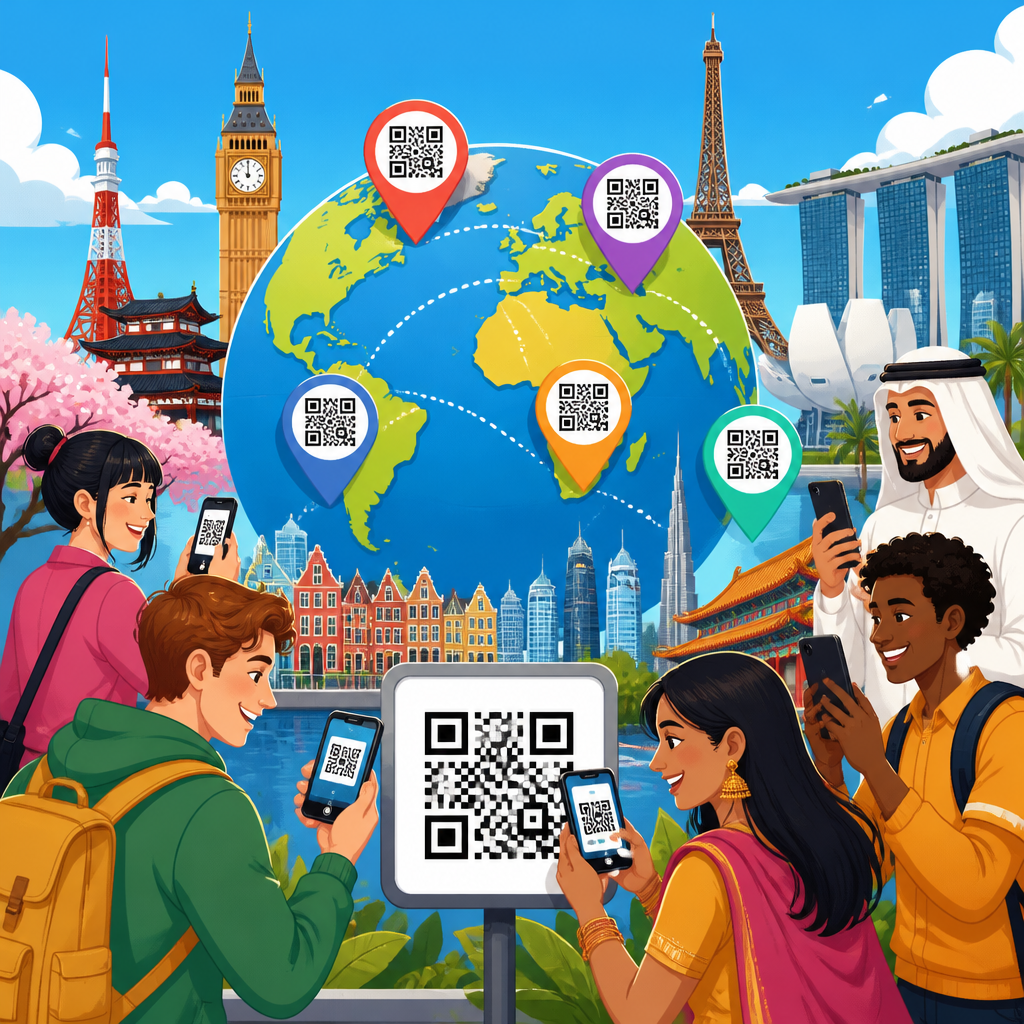
QR code market size and future projections are central to understanding how a once niche barcode format became a mainstream bridge between physical and digital experiences. A QR code, short for Quick Response code, is a two dimensional matrix barcode that stores data such as URLs, payment credentials, product identifiers, ticket details, and authentication tokens. Unlike traditional one dimensional barcodes, QR codes can hold much more information and remain readable even when partially damaged because they use Reed-Solomon error correction. That technical resilience, combined with near universal smartphone camera access, turned QR codes into a practical global interface for commerce, logistics, marketing, healthcare, and public services.
I have worked with retail, restaurant, and event clients that treated QR codes as a temporary pandemic workaround, then discovered they improved attribution, reduced print costs, and shortened customer journeys. That pattern explains why market discussions now go well beyond simple code generation. The real market includes software platforms, analytics suites, dynamic code management, payment infrastructure, label printing, industrial scanning hardware, and campaign services. When analysts estimate QR code market size, they often combine several adjacent categories, so forecasts differ depending on whether they focus on code management software, QR payments, scanning applications, or broader automatic identification and data capture ecosystems.
Why does this matter? Because global QR code adoption trends now influence payment modernization, omnichannel retail, first party data collection, and product transparency. In Asia, consumers use QR codes for everything from peer to peer payments to transit access. In North America and Europe, adoption accelerated through restaurant menus, contactless check in, and connected packaging, then expanded into loyalty and product education. In manufacturing and healthcare, QR codes support traceability and patient interaction. Businesses evaluating future demand need a realistic view of where adoption is mature, where it is still forming, and which use cases generate durable value rather than one time novelty.
This hub article maps the market by defining its economic drivers, regional patterns, major industries, technical enablers, and likely future trajectory. It also answers practical questions searchers usually ask: How large is the QR code market? What is driving growth? Which countries lead in adoption? What are the limits? And where are the strongest opportunities over the next five years? Taken together, those answers provide a grounded view of global QR code adoption trends and the commercial outlook behind them.
How large is the QR code market today?
There is no single universally accepted figure for the QR code market because researchers measure different slices of the value chain. Some studies focus narrowly on QR code label and generator software. Others include mobile payments transacted through QR rails, customer engagement platforms, scanner hardware, and authentication solutions. In practice, the most useful way to read market size estimates is directionally: every serious dataset points to sustained growth, with double digit expansion in many segments through the late 2020s and early 2030s.
From project work and vendor reviews, I group the market into four economic layers. First is creation and management: static and dynamic code platforms, campaign analytics, redirects, and API integrations. Second is interaction: scanning through smartphone cameras, dedicated readers, point of sale systems, and industrial devices. Third is transaction: payments, ticket validation, coupon redemption, and identity flows. Fourth is lifecycle data: attribution, behavioral analytics, traceability, and compliance records. Growth is strongest where these layers connect, especially in dynamic QR code systems that let brands update destinations without changing the printed asset.
That is why future projections remain favorable even if simple QR generation becomes commoditized. The code itself is cheap. The measurable business outcome attached to it is not. A retailer using QR codes on shelf signage to connect store traffic with online conversion data generates marketing value. A manufacturer placing serialized QR codes on packaging to support recalls and anti counterfeiting creates operational value. A restaurant replacing disposable menus reduces printing cost while collecting loyalty sign ups. The market expands when organizations stop seeing QR codes as images and start using them as trackable interaction points.
What is driving global QR code adoption trends?
Global QR code adoption trends are being driven by three durable forces: smartphone ubiquity, friction reduction, and demand for measurable offline to online journeys. Smartphone cameras now natively detect QR codes on iOS and Android, removing the old need for third party scanner apps. That single usability change mattered more than many companies realized. When scanning became built into the camera, user education requirements dropped and conversion rates improved.
Friction reduction is the second major driver. A QR code compresses discovery, action, and confirmation into one scan. Consumers do not need to type a long URL, search for an app, or ask staff for instructions. In real environments, fewer steps matter. I have seen menu conversion improve simply because guests scanned and ordered faster than they would have navigated a web search or downloaded a branded app. The same principle applies in boarding, ticketing, visitor access, warranty registration, and quick payment acceptance for small merchants.
The third driver is measurement. Marketers have long struggled to connect physical media with digital outcomes. Dynamic QR codes change that by allowing campaign level tracking, device segmentation, geographic analysis, and destination testing. Brands can compare packaging scans in different retailers, posters in transit locations, or direct mail offers by region. Those insights support budget decisions, which makes QR spending easier to defend internally.
| Driver | Why it matters | Example |
|---|---|---|
| Native smartphone scanning | Removes app download friction | Consumers scan menus directly through the camera app |
| Contactless behavior | Speeds low touch interactions | Restaurants, parking meters, and event check in |
| Digital payments growth | Enables low cost merchant acceptance | Small vendors accept account to account or wallet payments |
| Offline to online attribution | Measures campaign performance | Packaging links to tutorials, reviews, and loyalty enrollment |
| Traceability and compliance | Supports recalls, authentication, and product history | Serialized codes on pharmaceuticals or electronics packaging |
Another underappreciated driver is implementation cost. Printing a QR code on packaging, signage, receipts, or labels is inexpensive compared with deploying NFC hardware or custom kiosks. That low cost allows experimentation. Once a pilot proves useful, companies can scale quickly across locations and product lines.
Which regions lead the market, and why?
Regional adoption is uneven, and that is important for forecasting. China remains the clearest example of QR code maturity because mobile wallet ecosystems normalized scan based payments years ago. Platforms such as Alipay and WeChat Pay made merchant acceptance simple, and consumers became comfortable scanning for payment, promotions, social connections, and service access. India also became a major QR market through UPI, where interoperable payment rails and mass merchant onboarding created powerful network effects. In both countries, QR codes are not a novelty layer on top of commerce; they are embedded in daily transactions.
Southeast Asia shows similar momentum, though market structure varies by country. Singapore, Thailand, Indonesia, Vietnam, and Malaysia have all supported QR payment standards or cross border initiatives that improve merchant and traveler usability. In these markets, future growth is tied not just to more scans but to interoperability, tourism payments, and small business digitization.
North America grew differently. Adoption accelerated sharply during the pandemic through menus, vaccination workflows, event check in, and touchless retail interactions. Some of those use cases normalized and stayed. Others faded when restrictions eased. The durable winners were payments, connected packaging, loyalty enrollment, and omnichannel marketing. The United States has strong upside because brands increasingly use QR codes in television ads, out of home media, direct mail, and ecommerce returns, but payment behavior remains more card centric than in Asia.
Europe presents a mixed but promising picture. Western Europe has broad smartphone penetration and strong retail digitization, but payment habits differ by country. Some markets embraced QR billing and peer transfers; others still prefer cards and bank transfers. Regulation and sustainability goals are pushing new packaging disclosure models, which favors QR deployment for digital product passports, multilingual instructions, and recycling information. That may become one of the most important long term growth levers in the region.
Latin America, the Middle East, and Africa should not be treated as peripheral. Brazil’s Pix system helped normalize instant digital payments and expanded scan based transactions. African markets are exploring QR rails as a lower cost acceptance option than card terminals. Gulf countries are active in tourism, events, and smart city services where QR interactions are operationally efficient. Growth in these regions may be less uniform, but it can be fast where public infrastructure and payment modernization align.
How major industries are expanding QR code use
Retail is one of the broadest QR code markets because the format works across discovery, conversion, and post purchase service. On shelf, a code can link to reviews, ingredients, tutorials, or variant availability. On packaging, it can activate registration, loyalty, replenishment, or recycling instructions. For ecommerce, QR codes simplify returns and cross channel retargeting. In my experience, the highest retail ROI often comes from connected packaging rather than flashy campaigns because packaging stays in circulation longer and reaches confirmed buyers.
Food service remains a major use case even after the early menu boom cooled. Restaurants use QR codes for table ordering, payment, loyalty, and feedback. Quick service chains use them in apps, cups, tray liners, and receipts to pull customers into rewards programs. Hotels use them for room service menus, guest directories, and local recommendations. The value here is operational as much as promotional.
Healthcare adoption is growing in more careful ways. QR codes appear on patient forms, medication packaging, specimen tracking, appointment workflows, and education materials. In pharmaceuticals and medical devices, serialized labeling supports traceability and anti diversion programs. Accuracy and privacy standards matter, so the best healthcare deployments avoid exposing sensitive data directly in the code and instead use secure tokens or authenticated destinations.
Manufacturing and logistics rely on QR codes for work instructions, asset histories, maintenance records, and parts identification. Compared with traditional barcodes, QR codes can store more data in compact spaces, which helps on small components and dense labels. They also support direct links to digital twins, manuals, and service logs. Event management, transportation, education, and government services add further volume through ticketing, ID validation, public information, and self service transactions.
Future projections, risks, and what businesses should do next
Future projections for the QR code market remain strong because the format benefits from both consumer familiarity and enterprise versatility. Over the next five years, the biggest gains will likely come from dynamic code management, QR based payments in developing and travel heavy markets, connected packaging, and authenticated product identity. Regulations around supply chain transparency, sustainability disclosures, and product traceability will also create structural demand. When companies must communicate more data than a physical label can reasonably hold, a QR code becomes the practical bridge.
Several technical trends support this outlook. Better analytics platforms now connect scans with CRM systems, marketing automation, and commerce events. Computer vision and AI improve scan reliability and contextual experiences after the scan. GS1 Digital Link is especially important because it provides a standards based way to connect product identifiers with web resolvable experiences, making QR codes more useful across retail and supply chains. As more brands align with recognized standards, interoperability and retailer confidence improve.
There are limits, and strong strategy requires acknowledging them. Poorly designed landing pages kill scan conversion. Static codes printed with outdated destinations create customer frustration. Overuse can train consumers to ignore codes entirely. Fraud is another concern, especially in public places where malicious actors replace legitimate codes with altered stickers. Payments and healthcare uses need stronger verification, secure redirects, and governance controls. Accessibility also matters; every QR interaction should include a fallback path for users who cannot scan easily.
For businesses, the practical next step is to treat QR as infrastructure, not decoration. Start with a use case that solves a real user problem: faster payment, clearer product information, easier returns, or measurable offline attribution. Use dynamic codes where destinations may change. Apply UTM parameters and analytics discipline. Test placement, size, contrast, and calls to action. Connect scan data to broader customer and operational reporting. Most important, measure outcomes beyond scan count, including conversion, retention, support deflection, or compliance efficiency.
The QR code market size will keep expanding because the technology solves a persistent problem: how to move people and products smoothly between physical environments and digital systems. Global QR code adoption trends show that markets grow fastest when scanning is easy, the post scan experience is useful, and the underlying payment or data infrastructure is trusted. Companies that build around those principles will capture the real opportunity. Review your current customer journey, identify one high friction touchpoint, and deploy a QR experience that makes it simpler today.
Frequently Asked Questions
1. What is driving the growth of the QR code market worldwide?
The QR code market is growing because QR codes have evolved from a simple data storage tool into a highly practical connection point between offline and online environments. Businesses across retail, banking, healthcare, transportation, hospitality, manufacturing, and public services now use QR codes to make customer interactions faster, cheaper, and more measurable. A single code can direct users to a website, activate a digital payment, verify a product, open a menu, deliver a coupon, register attendance, or authenticate identity. That flexibility has made QR codes one of the most scalable low-cost digital engagement technologies in the market.
Another major growth driver is smartphone penetration. As more consumers carry devices with built-in cameras and QR reading capabilities, the barrier to adoption has dropped significantly. Users no longer need a separate app in many cases, which has helped turn QR scanning into a normal behavior. Contactless interaction also accelerated market expansion, especially in payments, ticketing, and food service, where QR codes offered a quick way to reduce physical touchpoints while preserving convenience.
From a business perspective, QR codes are attractive because they are inexpensive to generate, easy to deploy, and simple to update when linked to dynamic content. Companies can place them on packaging, storefronts, advertisements, receipts, ID badges, and shipping labels without major infrastructure investment. At the same time, organizations gain access to useful analytics such as scan volume, time, location, and campaign performance. This combination of low implementation cost and strong marketing utility is one of the biggest reasons the global QR code market continues to expand.
2. How large is the QR code market today, and what do future projections generally indicate?
The QR code market is widely viewed as being in a strong growth phase, supported by broad commercial adoption and expanding use cases. While exact market size estimates vary by research methodology, geography, and whether analysts are measuring software platforms, code generation services, payment transactions, marketing solutions, or the broader QR-enabled ecosystem, most assessments point to a rising market with healthy compound annual growth over the coming years. In other words, the market is no longer defined by experimentation alone; it is increasingly supported by recurring enterprise use and consumer familiarity.
Future projections generally indicate continued expansion because QR codes are becoming embedded in digital transformation strategies rather than being treated as standalone tools. As enterprises modernize customer engagement, supply chain visibility, authentication systems, and mobile payment infrastructure, QR code usage tends to increase alongside those efforts. Growth is also expected to remain strong in emerging markets where mobile-first behavior is common and QR-based payment systems can scale quickly without requiring expensive card infrastructure.
Long-term projections are especially positive in sectors where QR codes solve multiple problems at once. For example, in retail they support promotions, loyalty, product information, and checkout experiences. In manufacturing and logistics, they improve tracking and traceability. In healthcare, they assist with patient workflows, medication verification, and records access. Because QR codes are useful across so many industries, future market projections usually reflect both horizontal adoption across sectors and deeper integration within existing enterprise systems.
3. Which industries are expected to contribute most to future QR code market expansion?
Several industries are positioned to play a major role in future QR code market growth, with payments and retail leading the way in many regions. In digital payments, QR codes provide a simple method for person-to-merchant, peer-to-peer, and bill-payment transactions. They are especially effective in mobile-first economies because they allow secure payment experiences without requiring costly point-of-sale hardware upgrades. As financial inclusion initiatives continue and cashless ecosystems expand, QR-based payment infrastructure is expected to remain one of the strongest drivers of market value.
Retail is another major contributor because QR codes support both customer experience and operational efficiency. Brands use them on packaging, shelves, displays, and receipts to connect shoppers with product details, reviews, promotions, loyalty programs, and post-purchase support. Retailers also benefit from the ability to track campaign engagement in real time. As omnichannel commerce becomes more sophisticated, QR codes are likely to play a bigger role in linking physical shopping with mobile content and digital conversion paths.
Healthcare, transportation, logistics, hospitality, and manufacturing are also expected to contribute meaningfully. In healthcare, QR codes can improve access to patient information, appointment management, medical labeling, and authentication. In transportation and events, they streamline ticketing and access control. In logistics and manufacturing, they help with inventory management, traceability, and asset identification. Hospitality businesses use them for menus, room services, check-ins, and promotions. Because these industries rely heavily on speed, accuracy, and digital access, QR codes are well aligned with their future operational needs.
4. What technologies and trends will shape the future of the QR code market?
The future of the QR code market will be shaped by the growing use of dynamic QR codes, analytics, mobile payments, product traceability, and security-focused applications. Dynamic QR codes are especially important because they allow businesses to change the destination or content behind a code without replacing the printed asset. That makes campaigns more flexible and cost-efficient, while also enabling better performance measurement. As companies place more value on measurable offline-to-online engagement, dynamic code platforms are expected to gain even more traction.
Integration with broader digital ecosystems will also influence market development. QR codes increasingly connect with customer relationship management platforms, marketing automation systems, payment gateways, inventory software, and identity verification tools. This means their value is no longer limited to being scanned; it extends into the data and workflow systems they trigger. As a result, market growth will likely be supported by software and service innovation around QR code management, analytics, personalization, and enterprise integration.
Another powerful trend is the rise of authenticated and transparent product journeys. Consumers and regulators are placing greater emphasis on origin verification, anti-counterfeiting, sustainability information, and product lifecycle data. QR codes are well suited for these needs because they can connect physical goods with cloud-based records that are easy to update and inspect. Looking ahead, the market may also benefit from stronger use of QR codes in smart packaging, connected devices, digital identity solutions, and location-aware customer experiences, all of which expand the role of the code beyond simple web linking.
5. Are there any challenges or risks that could affect QR code market projections?
Yes, despite strong growth expectations, the QR code market faces several challenges that can influence adoption rates and future projections. One of the most important concerns is security. Because QR codes can hide malicious links or redirect users to fraudulent sites, consumers and businesses must remain cautious about phishing, fake payment pages, and unauthorized code replacement. If organizations do not implement proper safeguards, misuse can weaken trust and slow broader adoption in sensitive applications such as banking, healthcare, and identity verification.
Standardization and user education also matter. In some markets, adoption can be fragmented across payment systems, software platforms, and scanning experiences. Businesses may face interoperability issues if systems are not aligned, especially in cross-border commerce or multi-platform environments. At the same time, some users still lack awareness about how to verify legitimate QR interactions, which creates both usability and cybersecurity concerns. Continued market growth will depend partly on better design practices, platform trust signals, and consumer familiarity.
There are also practical limitations related to connectivity, user experience, and campaign execution. A QR code only performs well when the destination content is relevant, mobile-optimized, and quick to load. Poor landing pages, weak internet access, or unclear calls to action can reduce scan success and lower return on investment. Even so, these challenges are generally seen as manageable rather than structural barriers. With stronger governance, better security controls, and more thoughtful implementation, the QR code market is expected to maintain positive momentum and continue expanding across industries.