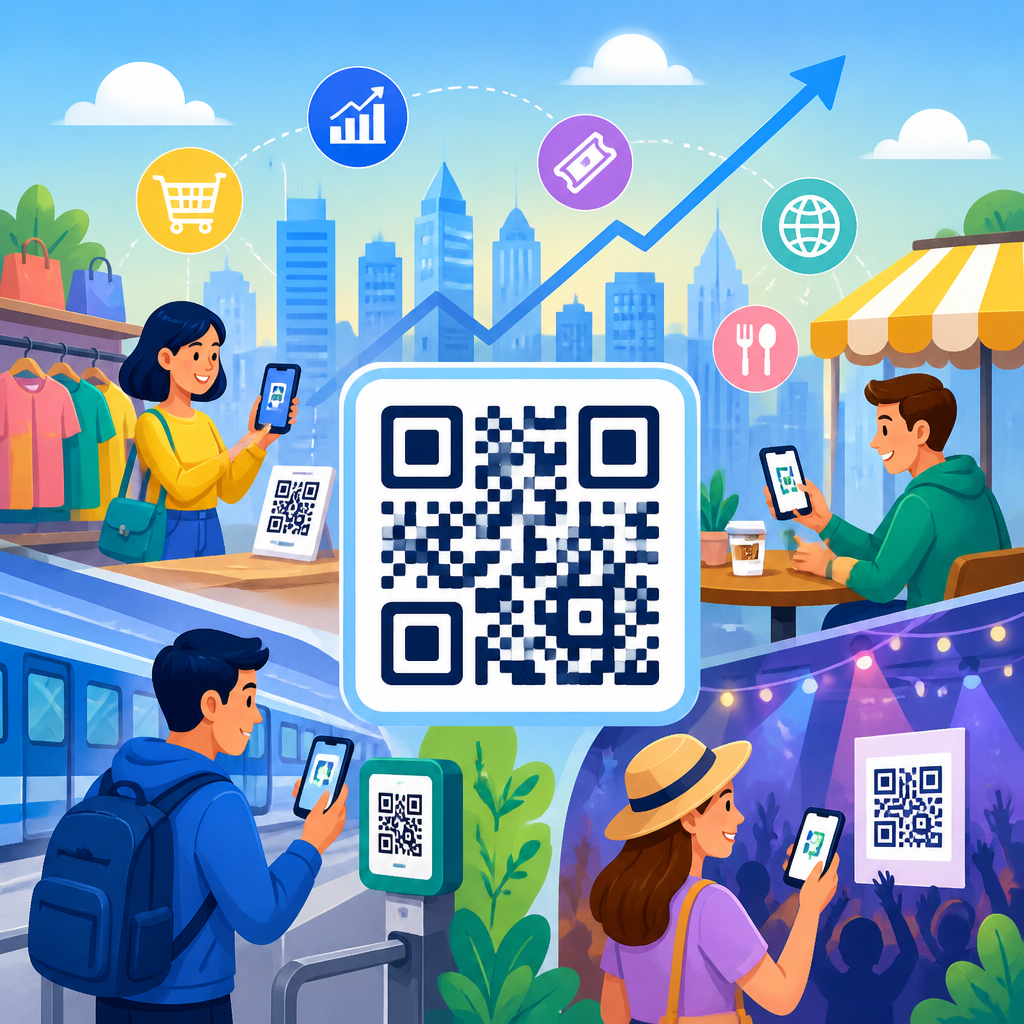
QR codes have become a core layer of modern mobile payments, turning a printed square or on-screen image into a fast bridge between a customer, a merchant, and a payment network. In practical terms, a QR code in payments encodes data that a smartphone camera or wallet app can read, then pass to a banking app, card network, or digital wallet to authorize a transaction. I have implemented QR payment flows for retailers and event operators, and the attraction is always the same: low hardware cost, quick deployment, and broad compatibility across iOS, Android, and dedicated payment apps.
To understand the category, it helps to define the main models. Merchant-presented QR payments show a static or dynamic code that the customer scans to pay. Customer-presented QR payments reverse the process: the shopper shows a code in an app, and the merchant scans it at checkout. Static codes usually contain a merchant identifier or payment address and rely on the payer to enter the amount. Dynamic codes are generated per transaction and can include amount, invoice number, store location, timestamp, and checksum data. Dynamic QR codes are generally better for reconciliation, fraud control, and customer support because every payment event is uniquely tied to a sale.
Why this matters is simple. QR payments reduce the need for expensive point-of-sale terminals, support contactless checkout, and work in environments where NFC adoption is uneven. They are especially important for small businesses, street vendors, restaurants, transit operators, and cross-border travelers who need a flexible payment method without heavy infrastructure. Markets such as China, India, Brazil, and parts of Southeast Asia proved that QR rails can scale to billions of transactions when linked to wallets, bank transfer systems, and interoperable standards. For businesses building a QR code payments strategy today, the opportunity is not only lower acceptance cost, but also better customer convenience, richer transaction data, and easier omnichannel integration.
How QR code mobile payments work
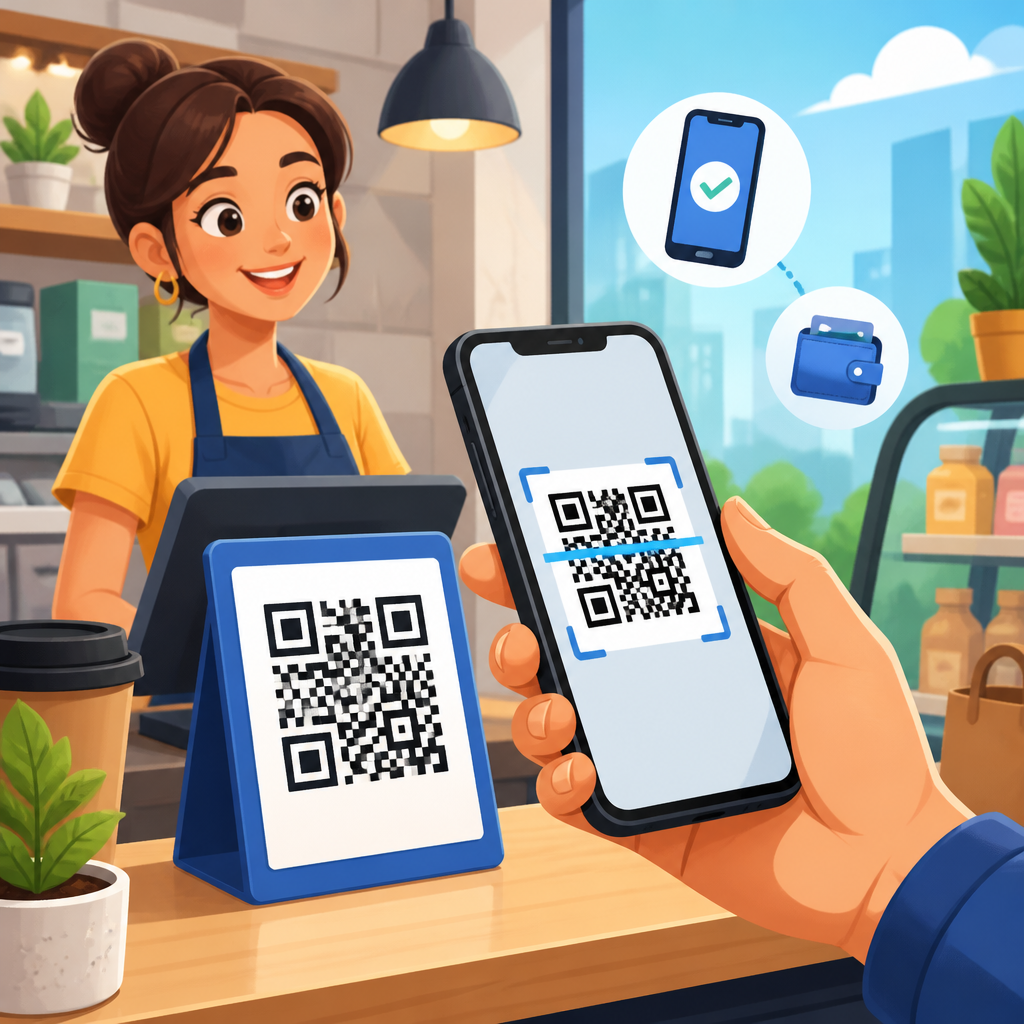
A QR payment flow starts with encoded payment information and ends with confirmation from a processor or bank. In the merchant-presented model, the business displays a code on a terminal screen, receipt, poster, or product page. The customer opens a banking app, super app, or wallet, scans the code, verifies payee and amount, then authorizes with a PIN, biometric, or device passcode. The app sends the payment instruction through a scheme such as UPI, Pix, Alipay, WeChat Pay, PromptPay, or a card-linked wallet. Within seconds, both parties receive confirmation. In customer-presented flows, the app generates a tokenized or account-linked QR code, and the cashier scans it to pull the payment credentials into the checkout system.
The encoded payload varies by ecosystem. Some schemes use EMVCo QR specifications for merchant-presented or consumer-presented codes, with structured fields for merchant category code, transaction amount, country code, currency, and merchant account information. National real-time payment systems often add domestic routing fields. Card-based wallet systems may reference a token rather than an actual card number. In the deployments I have worked on, success depends less on the visible code than on the orchestration behind it: API calls, token management, fraud scoring, terminal software, and settlement reporting. The code is simply the trigger for a broader payment message flow.
One reason QR payments spread so quickly is device simplicity. A smartphone camera is enough for consumers, while merchants can begin with a printed placard or a low-cost scanner. That lowers barriers compared with chip-card terminals or full NFC acceptance stacks. At the same time, good implementation requires clear prompts, robust internet connectivity, and instant status updates so a cashier knows whether payment succeeded, failed, or is still pending.
Types of QR codes in payments and where each fits
Static and dynamic QR codes serve different operational needs. A static QR code is fixed and reusable. It often contains a merchant account alias, payment address, or URL that launches the payer’s app. Static codes are easy to print and ideal for micro-merchants, donation boxes, market stalls, taxis, and utility bills. Their weakness is that the customer may need to type the amount manually, and the merchant may struggle to match payments to specific orders. They also create more room for social engineering if a fraudster replaces the printed code.
Dynamic QR codes are generated in real time, usually by the point-of-sale system, ecommerce checkout, kiosk, or billing platform. They include the exact payable amount and a transaction reference, making them far better for retail checkout, click-and-collect, invoicing, and subscription catch-up payments. Dynamic codes improve reconciliation because the payment can be tied directly to an order ID. They also support expiration rules, reducing the risk that an old code is reused or shared.
Another useful distinction is push versus pull. Most account-to-account QR payments are push payments: the customer actively authorizes funds to the merchant. Many customer-presented wallet codes act more like pull transactions because the merchant system requests payment from stored credentials after scanning. Push models can reduce chargeback exposure, while pull models often feel closer to a traditional card acceptance flow and may fit loyalty programs more neatly.
| QR payment type | Best use case | Main advantage | Main limitation |
|---|---|---|---|
| Static merchant-presented | Small shops, tips, donations | Very low setup cost | Weak reconciliation and code replacement risk |
| Dynamic merchant-presented | Retail checkout, invoices, ecommerce | Exact amount and transaction reference | Requires software integration |
| Customer-presented wallet code | Loyalty-linked checkout, transit, events | Fast repeat payments | Needs merchant scanner compatibility |
Benefits for merchants and consumers
The strongest business case for QR code payments is cost-efficient acceptance. A small merchant can begin without investing in multiple card terminals, and a larger merchant can expand payment options at kiosks, tables, parking facilities, and temporary pop-ups. In restaurant deployments, I have seen table-side QR payment cut wait times because guests can scan, tip, and settle without waiting for a handheld terminal. In field service, technicians can collect payment on an invoice screen immediately after a job is completed. In ecommerce, a desktop shopper can scan a checkout QR code with a banking app on a phone to complete payment without typing card details.
Consumers benefit from speed and convenience, but the deeper value is flexibility. QR payments can connect directly to bank accounts, prepaid wallets, credit instruments, loyalty profiles, or buy now, pay later products, depending on the local ecosystem. They are accessible for users who do not want to carry cards, and they reduce key-entry errors because the payee details and amount can be prefilled. In transit and event settings, customer-presented codes also help bundle ticketing, identity, and payment in one app.
There are strategic advantages as well. Because QR interactions are software-led, businesses can attach metadata such as store ID, campaign source, basket number, or service category. That improves analytics and can support internal links between payment data, CRM records, and inventory systems. The result is not just payment acceptance, but cleaner operational reporting and a better foundation for personalized offers.
Security, fraud risks, and compliance requirements
QR code payments are secure when implemented through trusted apps, tokenization, encrypted transport, and strong user authentication, but they are not automatically safe. The biggest real-world threat is not the QR image itself; it is malicious redirection. Criminals may place a fake sticker over a legitimate merchant code, leading customers to a fraudulent account or phishing site. In digital channels, attackers can distribute lookalike payment pages with cloned codes. For that reason, businesses should inspect physical codes regularly, prefer dynamic on-screen codes where possible, and show the verified merchant name inside the payer app before authorization.
Authentication matters. Secure apps use device binding, one-time passcodes, biometrics, and risk engines that flag unusual location, device, or behavioral patterns. For card-linked flows, tokenization keeps the primary account number out of the QR payload. For account-to-account schemes, app-to-bank encryption and signed requests protect the payment message in transit. Merchants still need sound governance: restricted admin access, audit logs, secret rotation, and webhook validation for payment confirmations.
Compliance depends on payment rail and geography. Card data environments may bring PCI DSS scope, while wallet providers may impose their own certification. If personal data is stored with transaction records, privacy laws such as GDPR or local data protection rules apply. EMVCo specifications, ISO 8583 or ISO 20022 messaging environments, and domestic real-time payment rulebooks shape implementation choices. The right approach is to map every data element, identify who stores it, and minimize retention wherever possible.
Global adoption trends and industry use cases
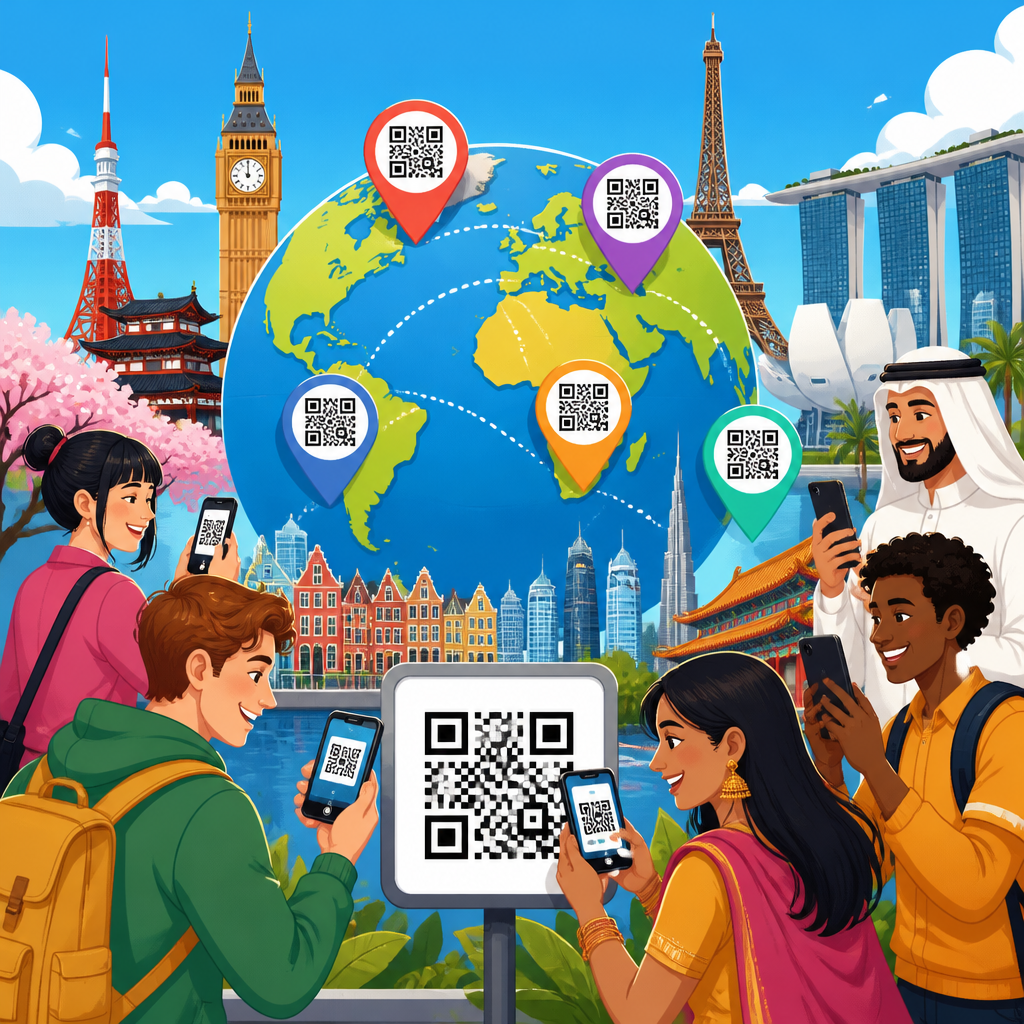
Global growth in QR code mobile payments has been driven by interoperability, smartphone penetration, and instant payment rails. China normalized QR wallets at enormous scale through Alipay and WeChat Pay, making scan-to-pay routine from luxury malls to produce markets. India accelerated adoption through UPI and Bharat QR, enabling banks and apps such as PhonePe, Google Pay, and Paytm to support low-friction account-to-account transfers. Brazil’s Pix brought similar momentum by pairing instant bank payments with simple QR initiation. Southeast Asian markets, including Thailand and Singapore, have pushed cross-border QR linkages so travelers can pay in local stores using home-country banking apps.
Industry use cases continue to widen. In retail, QR codes support cashier-assisted checkout, self-checkout, and endless-aisle purchases when an item is out of stock in store. In hospitality, hotels use them for deposits, minibar settlement, and local service payments. Utilities and government agencies place payment QR codes on bills to reduce collection friction. Hospitals and clinics use them for outpatient invoices where speed at discharge matters. Transit agencies deploy customer-presented wallet codes for gates, top-ups, and multimodal ticketing. Even B2B payments benefit when invoices include dynamic codes that post cash automatically against open receivables.
What these examples show is that QR code payment adoption is not one trend but several converging ones: instant payments, wallet growth, lower-cost acceptance, and software-defined checkout. The merchants winning with QR are usually the ones that align the payment method with a clear operational problem, not those that add it as a novelty.
How businesses should implement QR payments
Successful implementation starts with selecting the right rail for the market. If customers already trust a domestic bank-transfer scheme, support that first. If tourism is central, add internationally recognized wallets. Then decide where QR belongs in the journey: countertop, table, invoice, app, website, kiosk, or delivery handoff. Dynamic QR should be the default for attended retail and ecommerce because it improves reconciliation and customer confidence. Static QR is acceptable for low-value, low-complexity situations, but it should still be governed with regular checks and clear merchant branding.
Integration work should cover order creation, code generation, payment status polling or webhooks, refund handling, and settlement reporting. The best teams test timeout scenarios, duplicate scans, partial payments, offline behavior, and customer abandonment. Staff training is just as important. Cashiers need simple scripts for confirming status, spotting tampered codes, and helping customers use the correct app. Signage should explain accepted apps, limits, and whether tips are supported.
Measure outcomes with precise metrics: scan-to-pay conversion rate, payment success rate, average authorization time, reconciliation exception rate, refund turnaround, and fraud incidence. These numbers tell you whether the QR code mobile payments rollout is solving the intended problem. Start with one or two high-fit use cases, refine the flow, and expand from evidence rather than assumption.
QR codes in mobile payments are no longer an emerging experiment; they are a proven acceptance method that can serve micro-merchants, national retailers, public agencies, and global travelers. The key concepts are straightforward: static versus dynamic codes, merchant-presented versus customer-presented flows, and wallet versus bank-transfer rails. What determines success is not the graphic itself but the surrounding system of authentication, messaging, reconciliation, and user experience. When those pieces are designed well, QR payments deliver a rare combination of low hardware cost, fast deployment, and strong customer convenience.
For merchants, the biggest benefit is practical flexibility. You can accept payments on a printed sign, a POS screen, a PDF invoice, or a web checkout with less infrastructure than many traditional methods require. For consumers, the value is equally clear: fewer steps, fewer typing errors, and direct use of trusted banking or wallet apps. The tradeoffs are real, especially around code tampering, fragmented standards, and integration quality, but they are manageable with dynamic codes, strong app verification, and disciplined operations.
If you are building a QR code payments strategy, begin with your highest-friction payment moment and match it to the right QR model. Choose trusted rails, integrate deeply, monitor the right metrics, and expand where the data proves value. Done properly, QR payments can become one of the most efficient and versatile tools in your payment stack.
Frequently Asked Questions
What is a QR code in mobile payments, and how does it actually work?
A QR code in mobile payments is a machine-readable code that stores payment-related information in a format a smartphone can quickly scan and interpret. In a real payment flow, the code may contain a merchant identifier, transaction amount, order reference, currency, or a secure payment URL. When a customer opens a banking app, digital wallet, or merchant app and scans the code, the app reads that data and converts it into a payment request. The customer then reviews the details, authenticates with a PIN, fingerprint, or face recognition, and the payment is routed through the relevant banking rails, card network, wallet platform, or real-time payment system for authorization.
What makes QR payments so appealing is their simplicity. A merchant can display a printed code at a checkout counter, embed one on a receipt, or generate one on-screen for a specific transaction. That means businesses can accept digital payments without investing in traditional card terminals everywhere they sell. For customers, the experience is fast and familiar: scan, confirm, authenticate, and pay. Behind that simple experience, however, there is a structured exchange of data between the customer device, the merchant system, and the payment network, all designed to make the transaction both convenient and traceable.
What is the difference between static and dynamic QR codes for payments?
Static and dynamic QR codes serve different payment use cases, and understanding that distinction is important for both merchants and customers. A static QR code usually contains fixed merchant information, such as a payee ID or account reference. The code does not change from one transaction to the next, which makes it inexpensive and easy to deploy. A small shop, market stall, taxi driver, or event vendor can print a static QR code once and start accepting payments immediately. In these cases, the customer often enters the amount manually before authorizing the transaction.
A dynamic QR code is generated uniquely for a specific payment session. It can include the exact amount due, a transaction reference, invoice number, expiration time, terminal ID, and even data useful for reconciliation in the merchant’s back-office systems. This reduces manual entry, lowers the risk of input errors, and improves automation for accounting and order management. Dynamic QR payments are commonly used by retailers, restaurants, ticketing platforms, and e-commerce checkout pages because they create a tighter connection between the payment and the actual order.
In practice, static QR codes are ideal for low-cost acceptance and simple operations, while dynamic QR codes are better for higher transaction control, cleaner reporting, and a more seamless customer experience. Businesses choosing between them should consider not just setup cost, but also fraud controls, reconciliation needs, refund handling, and whether transaction-specific payment data matters to daily operations.
Are QR code payments safe for customers and merchants?
Yes, QR code payments can be very safe when designed and used properly, but like any payment method, their security depends on the implementation. The QR code itself is typically just a carrier of payment data, not the source of security. The real protection comes from the payment app, device security, network encryption, tokenization, customer authentication, fraud monitoring, and the rules enforced by the payment provider or bank. In many cases, the customer must explicitly confirm the payment and authenticate before any money moves, which adds an important layer of protection.
For merchants, a well-built QR payment flow can reduce hardware exposure because there is less reliance on physical card readers in every scenario. It can also provide strong audit trails when each transaction is tagged with order or merchant references. For customers, the benefit is that they do not usually need to hand over a card or touch shared payment hardware. Many wallet and banking apps also show the merchant name and amount before confirmation, helping users catch suspicious or incorrect charges.
That said, risks still exist. Fraudsters can replace legitimate printed QR codes with fake ones, tricking customers into sending funds to the wrong account. Malicious links embedded in non-payment QR codes can also lead to phishing pages. The best defense is a combination of merchant controls and customer awareness: merchants should inspect displayed codes regularly, use tamper-evident materials where appropriate, prefer dynamic codes tied to active transactions, and work with reputable payment providers. Customers should verify the merchant details in the app before approving payment and avoid scanning codes from untrusted sources. With those safeguards in place, QR payments are widely considered a secure and scalable payment option.
Why are QR codes so popular with retailers, small businesses, and event operators?
The biggest reason is cost efficiency. QR code payments dramatically lower the hardware barrier to digital acceptance. A merchant may not need a full point-of-sale terminal at every location, lane, booth, or temporary sales point. For small businesses, that can mean getting started with little more than a printed code and a mobile device. For larger operators, including retailers and event venues, QR codes create flexibility in places where traditional checkout infrastructure is inconvenient, expensive, or too slow to deploy.
Operational flexibility is another major advantage. QR payments work well in pop-up stores, outdoor markets, food stalls, festivals, parking areas, self-service kiosks, and in-seat ordering environments. Event operators in particular benefit because they often need to stand up payment acceptance quickly across temporary or high-traffic locations. A QR-based flow can help reduce queues, support contact-light transactions, and make it easier to link payments to a specific order, ticket, table, or concession stand.
There is also a customer experience benefit. Many consumers are already comfortable using their phones to pay, so scanning a code feels natural. In the right setup, QR payments can connect smoothly with loyalty programs, digital receipts, promotions, and order tracking. Merchants gain cleaner data, easier reconciliation, and in some cases lower deployment complexity than card-terminal-heavy setups. That combination of low hardware cost, speed of rollout, and broad usability is exactly why QR codes have become such a core layer in modern payment acceptance.
What should businesses consider before implementing QR code mobile payments?
Businesses should start by defining the use case clearly. A quick-service restaurant, a full-service retailer, a transit operator, and an event venue may all use QR payments, but the workflow requirements are very different. The first question is whether the business needs static acceptance for simplicity or dynamic, transaction-level codes for accuracy and automation. From there, companies should evaluate how the QR flow will connect to checkout, order management, refunds, settlement reporting, customer support, and fraud prevention.
Integration is a major consideration. A QR payment experience should not exist in isolation. Ideally, the payment data should tie back to the merchant’s POS, invoicing, commerce platform, or event system so staff can confirm payment status in real time and finance teams can reconcile transactions without manual effort. Businesses should also review the customer journey carefully: which app will customers use, how many steps are involved, what happens if connectivity is weak, how quickly payment confirmation appears, and how exceptions are handled if a customer scans but does not complete the transaction.
Security and compliance matter as well. Merchants should work with established providers, use signed or validated payment flows where available, monitor for tampered codes, and train staff on what legitimate payment confirmations look like. It is also important to understand settlement timing, transaction fees, dispute processes, and refund mechanics, especially if the payment method routes through account-to-account rails rather than standard card processes. Finally, businesses should think long term. The best QR payment implementation is not just cheap to launch; it is reliable, easy for customers to understand, simple for staff to operate, and scalable as transaction volumes grow.