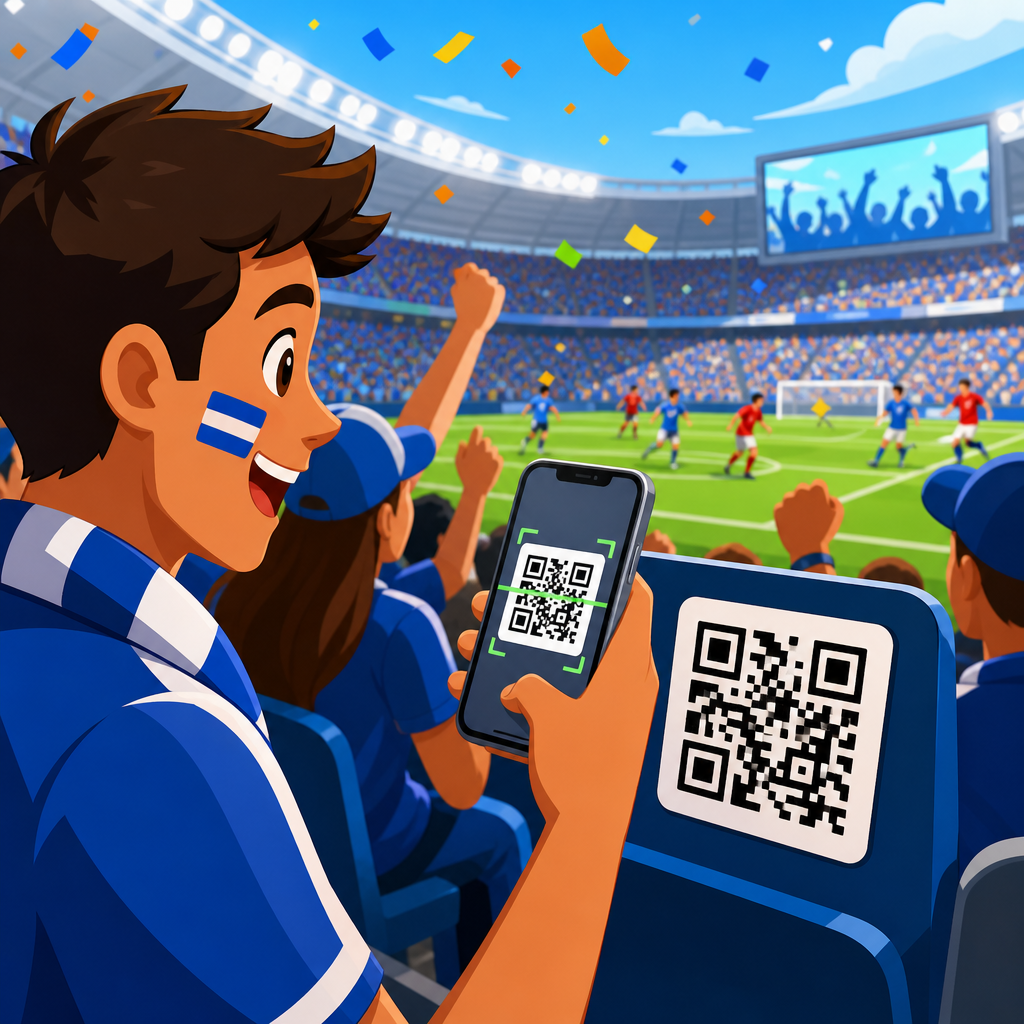
QR codes in sports and fan engagement have moved from novelty to infrastructure, giving teams, leagues, venues, sponsors, and broadcasters a simple way to connect physical moments with digital experiences. In practice, a QR code is a machine-readable matrix barcode that opens a URL, launches a mobile action, stores a credential, or triggers an app workflow when scanned by a smartphone camera. In sports, that means a poster in a concourse can deliver instant wayfinding, a jersey patch can unlock sweepstakes, a seatback card can power in-game voting, and a ticket confirmation can become a wallet pass with live updates. The technology matters because it reduces friction at the exact point fans are most motivated: before kickoff, during a timeout, in a merchandise line, or after a dramatic win when emotional engagement is highest.
I have seen the shift firsthand in venue projects where the same code system supported mobile ticketing, concession ordering, sponsor activations, and postgame surveys without requiring fans to download a new app for every task. That flexibility is why QR code use in sports has expanded so quickly since mobile cameras began recognizing codes natively on iPhone and Android devices. Teams no longer need to teach scanning behavior from scratch. They need to design relevant moments, connect the scan to a clear value exchange, and measure what happens next. For organizations building a modern fan journey, QR codes have become one of the lowest-cost, highest-visibility tools available.
As a sub-pillar within QR code trends and innovations, this hub focuses on emerging use cases rather than basic setup alone. The central question is not whether sports organizations can use QR codes, but where they create measurable value across the fan lifecycle. That lifecycle includes discovery, ticket purchase, venue entry, navigation, food and beverage ordering, seat upgrades, interactive content, loyalty, merchandise, social sharing, and retention. Each touchpoint can benefit from a scan if the destination is fast, mobile-friendly, and tied to a real fan need. The best programs also account for privacy, accessibility, security, and sponsor fit, because a poorly implemented code creates confusion faster than a static sign ever could.
Several terms are worth defining clearly. Fan engagement refers to the repeated interactions that deepen a supporter’s relationship with a team, athlete, event, or brand. Activation usually means a campaign that turns sponsorship visibility into measurable action such as sign-ups, redemptions, votes, or content views. First-party data is information a team or venue collects directly from fans with consent, such as email addresses, preferences, attendance behavior, and purchase history. Dynamic QR codes point to destinations that can be updated after printing, making them far more useful than static codes for season-long campaigns. Understanding those concepts is essential because successful sports QR strategy is less about the square itself and more about the operating model behind it.
Why QR codes fit the sports environment
Sports venues are uniquely well suited to QR code experiences because they combine dwell time, emotional intensity, captive attention, and repeated attendance. Fans spend hours moving through parking lots, gates, concourses, seating bowls, clubs, and team stores. Every one of those spaces can contain a useful prompt to scan, especially when lines are long or screens are out of view. Stadium operators use codes to absorb demand that would otherwise go to guest services desks, while marketers use them to turn passive branding into attributable digital engagement. A printed sign can suddenly become a self-service kiosk, and that changes staffing economics as much as fan convenience.
Adoption also benefits from audience readiness. According to industry reporting from Statista and mobile commerce research, smartphone penetration and camera-based QR scanning are now widespread across age groups, making the behavior familiar rather than experimental. During the pandemic, contactless menus, payments, and check-ins normalized scanning in public spaces. Sports organizations inherited that behavior change and applied it to attendance workflows, especially ticketing and concessions. What started as a health and safety measure evolved into a broader engagement channel because teams discovered that a code near the point of excitement often outperformed generic email follow-up sent hours later.
The format is operationally attractive for another reason: it is channel-agnostic. A code can appear on LED ribbons, jumbotrons, printed tickets, apparel tags, sponsor packaging, locker room tours, and social posts. Dynamic routing allows organizations to change the destination based on game date, geography, language, device type, or campaign source. In one rollout I worked on, the same printed code on season-ticket holder welcome materials directed fans to different pages over time: first onboarding, then parking maps, then renewal offers. That kind of persistence makes QR deployments cost-efficient compared with constantly replacing physical materials.
Emerging use cases across the fan journey
The most important emerging use cases are the ones that solve a real fan problem while giving teams measurable outcomes. Before arrival, QR codes streamline onboarding through parking directions, digital ticket retrieval, stadium policies, and public transit guidance. On arrival, they accelerate entry with wallet pass enrollment, identity verification prompts, and lane-specific instructions. Inside the venue, they support seat-finding, accessibility services, restroom maps, and premium hospitality menus. During the game, codes can launch prediction contests, replay hubs, roster pages, multilingual commentary, and sponsor-funded instant win experiences. After the event, they can trigger highlight packages, loyalty points claims, customer feedback, and return-visit offers.
Merchandise is another fast-growing category. Teams place QR codes on product tags, packaging, kiosks, and even commemorative items to connect physical purchases with digital storytelling. A retro jersey can link to archival footage from the season it honors. A bobblehead giveaway can unlock a certificate of authenticity, care instructions, or a limited-edition discount for related products. For collectors, that digital layer matters because it extends the life of the item beyond the initial transaction. For operators, it creates attribution: they can see which products generate scans, which campaigns drive revenue, and which segments are most responsive to personalized offers.
Sponsorship activation has arguably the biggest upside because it turns logos into accountable media. Instead of simply placing a brand on a scoreboard, a team can pair that placement with a QR experience that delivers samples, coupons, game predictions, sweepstakes entries, or educational content. Consider a beverage partner running a “scan to vote for player of the match” campaign. The fan gets a participatory moment; the sponsor gets opt-in traffic, dwell time, and conversion data; the team gets a richer presentation for inventory it already sells. That is why rights holders increasingly bundle QR-enabled digital engagement metrics into sponsorship recaps rather than relying only on impressions.
Operational, marketing, and data advantages
When implemented well, QR codes improve both fan experience and business intelligence. Operationally, they reduce bottlenecks by moving routine requests to self-service flows. A code on a concourse sign can answer “Where is section 214?” or “Which concessions accept mobile order pickup?” without sending every guest to staff. Marketing-wise, they create a direct path from physical media to owned channels, helping teams capture first-party data as third-party tracking becomes less reliable. Because every scan can be timestamped and tagged by source, campaigns become easier to attribute than traditional static signage. That matters for budget planning, sponsor reporting, and iterative optimization.
The strongest programs map QR interactions to specific key performance indicators. For ticketing, teams track wallet pass saves, transfer rates, and gate throughput. For concessions, they monitor menu views, order starts, completed checkouts, and average order value. For fan engagement, they measure scans per thousand attendees, opt-in rate, return visits, and content completion. For sponsorship, they compare scan volume by placement, redemption rate by creative, and lead quality by partner. These metrics are not theoretical. Modern QR management platforms, analytics suites, CRM systems, and point-of-sale integrations make them accessible to lean teams, provided campaign governance is clear.
| Use case | Typical placement | Main fan benefit | Primary team metric |
|---|---|---|---|
| Mobile ticket help | Parking lots, entry gates, confirmation emails | Faster entry and fewer app issues | Wallet saves and gate speed |
| Concession ordering | Seatbacks, tables, suite menus | Shorter lines and easier payment | Completed orders and average order value |
| Sponsor activation | LED boards, jumbotron, product packaging | Rewards, contests, exclusive content | Scans, leads, and redemptions |
| Merchandise storytelling | Product tags, kiosks, team store displays | Authenticity, highlights, related offers | Product-linked revenue and repeat visits |
| Postgame feedback | Exit signage, receipts, follow-up cards | Quick voice to the team | Survey completion and satisfaction score |
There is also a meaningful cost advantage. Compared with building custom hardware or deploying large numbers of staff ambassadors, QR codes are inexpensive to print and easy to update when dynamic links are used. The caveat is that low production cost does not excuse poor destination design. The landing page must load quickly, match the promise of the sign, comply with privacy requirements, and work on weak cellular connections common in full stadiums. In my experience, organizations that invest in destination quality see dramatically better scan-to-completion rates than those that treat the code as the campaign itself.
Implementation best practices, security, and accessibility
The most common question teams ask is simple: what makes a sports QR code campaign successful? The answer is relevance, clarity, and reliability. Fans scan when the value proposition is immediate and obvious. “Scan for mobile ordering” works better than “Scan here.” “Vote for the next walk-up song in 10 seconds” outperforms vague promotional language. Placement matters too. A code must be large enough, contrasted enough, and visible long enough to scan under stadium lighting and crowd movement. On video boards, dwell time should account for camera focus and user reaction. On printed materials, the code should sit near a concise call to action and, when useful, a short fallback URL.
Dynamic QR codes are the standard for sports because schedules, rosters, offers, and operational details change constantly. They also support governance. Teams can pause a compromised destination, retarget by event, and analyze performance without replacing signs. Reputable platforms provide password protection, expiration controls, UTM tagging, and role-based permissions. Security cannot be an afterthought. Because fans are trained to scan quickly, malicious replacement stickers or spoofed destinations are real risks. Best practice includes using branded domains, HTTPS everywhere, visual inspection routines for physical assets, and clear communication that official team codes lead only to recognized properties.
Accessibility deserves equal attention. Not every fan can scan easily, and not every environment supports seamless mobile use. Codes should never be the only way to access essential information such as emergency procedures or ticket support. Provide a short URL, text alternative, or staffed option nearby. Landing pages should support screen readers, adequate color contrast, and plain-language navigation. For multilingual audiences, route based on browser language or offer a visible selector. These details are not cosmetic. They determine whether a QR strategy broadens access or quietly excludes part of the audience, and inclusive design almost always improves completion rates for everyone.
Finally, integration determines scale. A single code linked to a generic microsite may produce vanity metrics, but connected systems create business value. Tie scans into CRM records, loyalty programs, marketing automation, payment flows, and customer service platforms. Use event naming conventions and campaign taxonomies from the start. Coordinate with venue operations, legal, sponsorship sales, and IT before rollout. The organizations getting the best results treat QR codes as a layer in the fan experience architecture, not as isolated creative. If your team is building a hub for emerging use cases, start by auditing every fan touchpoint where a mobile action could replace friction with convenience, then test, measure, and expand deliberately.
Where this subtopic is heading next
Looking ahead, QR codes in sports will become more personalized, more integrated with live content, and more tightly linked to loyalty economics. Expect broader use of one-to-one codes in ticketing and membership materials, deeper connections with mobile wallets, and more event-specific destinations that change by inning, quarter, or stoppage. Computer vision, near-field communication, and app clips may handle some premium scenarios, but QR codes will remain the universal bridge because they are cheap, familiar, and interoperable. Their role as the hub for emerging fan engagement use cases is secure precisely because they do not require fans to learn a new behavior.
The main takeaway is straightforward: QR codes work in sports when they respect context. They should answer a fan question, save time, unlock value, or deepen participation at the moment interest peaks. The best programs are measurable, secure, accessible, and connected to broader data and revenue goals. For teams and venues, that means more than adding codes to signage. It means designing a coherent scan journey across ticketing, operations, sponsorship, retail, and retention. If you are building out your QR code trends and innovations strategy, use this hub as the starting point, then prioritize the use cases where one scan can remove friction and create a stronger fan relationship.
Frequently Asked Questions
How are QR codes used in sports and fan engagement today?
QR codes are now used across nearly every part of the sports ecosystem because they make it easy to connect in-person moments with digital actions. Teams and venues place them on tickets, seat backs, concourse signs, jumbotrons, parking passes, merchandise tags, food packaging, sponsor activations, and even player apparel or collectible items. A fan can scan a code to pull up a mobile ticket, find the fastest route to a section, order concessions, enter a sweepstakes, download a team app, join a loyalty program, watch instant replays, access exclusive content, or claim a promotional offer from a sponsor.
What makes QR codes especially valuable is their flexibility. A single scan can launch a webpage, open a map, trigger an app workflow, store a credential, or start a personalized fan journey tied to a campaign. During live events, that means less friction and faster action. Instead of asking people to type a long URL, search for an app, or wait in line for information, a QR code creates a direct path from physical touchpoint to digital experience. For teams, leagues, and brands, that translates into better engagement, more measurable campaign performance, and more opportunities to serve relevant content in real time.
Why have QR codes become so important for live sports venues and event operations?
QR codes have become important because they solve both fan-facing and operational challenges at scale. On the fan side, they reduce friction in environments where speed matters. Entering a stadium, finding a seat, locating restrooms, checking transit options after the game, redeeming a sponsor perk, or upgrading seats all benefit from a fast mobile action. On the operations side, QR codes help venues distribute information instantly without reprinting static materials every time something changes. Dynamic codes can redirect fans to updated parking instructions, revised gate entry procedures, weather alerts, event schedules, or emergency communications.
They also support a more connected venue experience. A stadium can use QR codes for contactless entry, mobile ordering, digital menus, cashless promotions, feedback collection, and service requests. That improves efficiency while giving operators valuable data about where fans scan, what they respond to, and which experiences create the most participation. In a high-traffic sports environment, that combination of convenience, adaptability, and measurability is why QR codes have shifted from being a nice extra to being part of the infrastructure of modern fan engagement.
What are the biggest benefits of QR codes for teams, sponsors, and broadcasters?
For teams, QR codes create a practical bridge between attention and action. They help convert game-day excitement into measurable outcomes such as app installs, newsletter signups, membership enrollment, merchandise purchases, content views, and repeat visits. Because codes can be campaign-specific, teams can track which in-venue signs, video board placements, player features, or promotions are driving response. That makes fan engagement more accountable and easier to optimize over time.
For sponsors, QR codes turn passive branding into interactive activation. Instead of simply placing a logo in the arena or on a broadcast graphic, a sponsor can invite fans to scan for a discount, enter a contest, unlock augmented reality content, receive a coupon, or claim a limited-time reward. This gives sponsors clearer return-on-investment data and a stronger case for partnership value because the interaction is no longer just seen, it is acted on and measured.
For broadcasters and media partners, QR codes create a second-screen bridge that extends beyond the televised moment. A code shown on screen can direct viewers to live stats, alternate camera angles, fantasy integrations, voting experiences, betting-related information where permitted, or behind-the-scenes content. That helps broadcasters deepen engagement without interrupting the main viewing experience. Across all three groups, the core value is the same: QR codes simplify access, increase participation, and generate actionable insights from moments that used to be difficult to capture digitally.
What makes a sports QR code campaign successful rather than easy to ignore?
The most successful sports QR code campaigns are built around clear value for the fan. People scan when they immediately understand what they will get and why it matters right now. If the call to action says “Scan to save 20% on merchandise today,” “Scan for fastest route to your gate,” or “Scan to win a signed jersey,” the benefit is obvious. If a code is presented with no explanation or weak incentive, many fans will ignore it. Good placement also matters. The code must be large enough, visible from the expected scanning distance, and shown long enough on screen or in the venue for someone to act comfortably.
Strong campaigns also respect the context of live sports. A fan in a crowded concourse needs a quick mobile experience with fast-loading pages, simple forms, and minimal typing. A television viewer needs enough on-screen time and a concise reason to scan. A sponsor activation near a team store should connect directly to a relevant offer, not a generic homepage. Dynamic QR codes are especially useful because they can be updated without changing the printed asset, and they allow marketers to test destinations, track performance, and adjust messaging throughout a season. The best campaigns combine timely relevance, strong creative, mobile-first design, and a clearly defined outcome.
Are there any privacy, security, or user-experience concerns with QR codes in sports?
Yes, and addressing them is essential for trust. From a security perspective, teams, venues, and sponsors should make sure QR codes lead to legitimate, branded, and secure destinations. Fans are more likely to scan when the context is official and the landing page clearly matches the organization they expect. Using trusted domains, HTTPS, and consistent branding helps reduce hesitation and protect users from spoofed or malicious links. Organizations should also monitor physical placements because printed codes in public spaces can sometimes be tampered with or replaced if not managed carefully.
From a privacy standpoint, any data collection should be transparent and proportionate to the experience being offered. If a scan leads to a contest entry, loyalty signup, or personalized offer, the organization should clearly explain what information is being collected and how it will be used. From a user-experience perspective, the biggest mistakes are slow pages, confusing flows, intrusive forms, and content that is not optimized for mobile devices. In sports, fans are often moving, multitasking, or trying to complete an action quickly between plays or during a break. A secure, fast, mobile-friendly, and trustworthy experience is what turns a QR code from a gimmick into a reliable part of fan engagement.