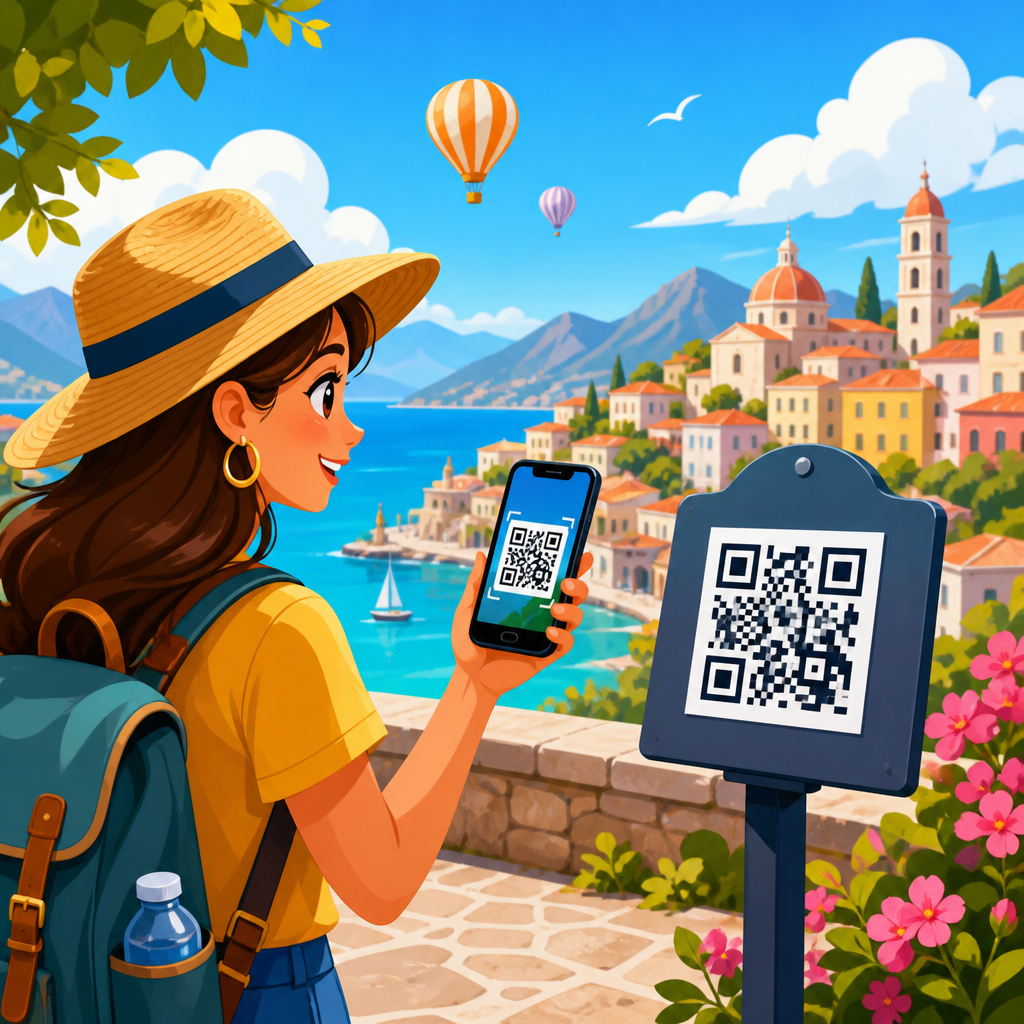
QR codes for tourism and travel experiences have moved far beyond simple website links, becoming practical tools that connect visitors to maps, tickets, stories, translation help, safety information, and personalized offers in seconds. In tourism, a QR code is a scannable two-dimensional barcode that opens digital content through a smartphone camera, while travel experiences include every touchpoint from trip planning and airport navigation to hotel check-in, attraction entry, museum interpretation, local transport, and post-visit feedback. I have watched destinations adopt them in phases: first as a low-cost replacement for printed URLs, then as a health-conscious contactless measure, and now as a flexible layer that improves guest convenience and gives operators measurable data. That evolution matters because tourism is fragmented. Travelers move across airlines, rail, hotels, restaurants, attractions, guides, and municipal services, often in unfamiliar places and languages. A well-placed code reduces friction at each step. It can answer immediate questions, shorten queues, support accessibility, and keep information current without reprinting signs. For destination marketers, it also creates a bridge between physical spaces and digital analytics, showing what visitors scan, when they engage, and which content drives bookings or longer stays. As travel rebounds and expectations rise, emerging QR code use cases are becoming part of modern visitor infrastructure rather than a novelty.
Why QR codes are reshaping travel touchpoints
The strongest reason QR codes work in tourism is that they solve a context problem. Travelers need the right information at the exact place and moment they need it. A code at a trailhead can open route difficulty, weather warnings, and Leave No Trace guidance. A code at a train platform can launch live departure boards in a visitor’s language. A code on a hotel room card holder can surface checkout times, spa booking, Wi-Fi credentials, and late-night dining. Each example removes a search step, and those seconds matter when a visitor is tired, lost, or deciding what to do next.
From an operations perspective, QR codes are attractive because they are cheap to deploy, easy to update when dynamic, and compatible with almost every smartphone. Tourism organizations do not need travelers to install an app first, which is critical because app fatigue is real. In projects I have seen perform well, destinations use dynamic QR codes tied to campaign-specific landing pages, UTM parameters, and multilingual content blocks. That setup lets teams change offers, seasonal opening hours, emergency notices, or event schedules without replacing printed materials. Static codes still have a place for permanent assets, but dynamic management is usually the better choice for active visitor environments.
Accessibility and inclusion are also driving adoption. Properly designed QR destinations can offer text-to-speech compatibility, high-contrast layouts, alt text for images, and translation into key inbound-market languages. For deaf or hard-of-hearing visitors, a code can trigger captioned video guides. For visually impaired guests, it can open audio narration paired with tactile signage. None of this replaces universal design, but it extends it in practical ways.
Emerging use cases across the visitor journey
The most important emerging use cases are no longer isolated pilots. They are appearing across the full visitor journey, often connected through a destination content management system, reservation platform, or customer data platform. The table below shows where QR codes create the most value and what they typically unlock.
| Journey stage | Common QR code use case | Visitor benefit | Operator benefit |
|---|---|---|---|
| Trip planning | Brochures, posters, and ads linking to itineraries | Fast access to bookable ideas | Track campaign response by location |
| Arrival | Airport, port, and station wayfinding links | Easier navigation in unfamiliar spaces | Fewer service desk questions |
| Accommodation | Mobile check-in, digital room guides, upsells | Less waiting, more convenience | Reduced printing and higher ancillary revenue |
| Attractions | Timed entry, audio guides, exhibit interpretation | Smoother access and richer context | Better crowd control and content updates |
| Local mobility | Transit passes, scooter rules, parking payment | Simple movement around the destination | Higher compliance and lower confusion |
| Dining and retail | Menus, provenance stories, loyalty offers | Transparent choices and faster ordering | Data capture and promotion flexibility |
| Post-visit | Reviews, surveys, return-visit offers | Easy feedback and future planning | Reputation growth and remarketing signals |
What makes these use cases “emerging” is not the code itself but the richer systems behind it. A museum code can now identify the exact gallery scanned, adjust language automatically, and offer child, expert, or accessible versions of the same exhibit content. A regional tourism board can place codes on scenic-route signage that branch to weather-aware recommendations, nearby independent businesses, and emergency alerts. Hotels can use codes for digital compendiums that connect directly to housekeeping, maintenance, and concierge workflows instead of static PDFs. The pattern is clear: QR codes increasingly act as lightweight interfaces into smarter tourism systems.
Attractions, heritage sites, and cultural storytelling
At attractions, QR codes are changing how interpretation is delivered. Historic sites once depended heavily on fixed plaques with limited text. Today, the plaque can stay concise while the code opens layered storytelling: short summaries for casual visitors, deeper archival context for enthusiasts, and multimedia for school groups. This matters because heritage interpretation often has to balance preservation, cost, and space limitations. A dynamic digital layer solves all three.
Museums and galleries have seen especially strong fit. A visitor can scan object labels to hear curators explain provenance, conservation challenges, or cultural significance. Large institutions have used this model to reduce rented audio-guide hardware, while smaller institutions use it to offer multilingual access they could not otherwise afford. The practical caveat is connectivity. Thick stone buildings, underground sites, and rural ruins often have poor signal, so high-performing implementations compress media, support offline caching, or provide guest Wi-Fi near key zones.
City tourism offices are also using QR codes for self-guided trails. Public art walks, architecture routes, food trails, and literary tours all benefit from scannable checkpoints. A visitor scans a marker, gets a map, reads a short story, listens to a two-minute audio segment, and moves on at their own pace. This format is effective because it supports independent exploration without requiring guide staffing at every stop. It also extends dwell time into secondary neighborhoods, which can spread visitor spend beyond crowded cores.
Hotels, restaurants, and local service experiences
Hospitality operators were among the fastest adopters of QR codes, but the most useful implementations now go beyond digital menus. In hotels, the digital guest directory is the standout use case. Instead of a printed binder that is outdated as soon as rates, hours, or policies change, properties place a code at reception, in elevators, and in-room. Guests access restaurant times, minibar details, pillow menus, airport transfer booking, local recommendations, and express checkout. Staff save time on repetitive questions, and guests get answers without picking up a phone.
Restaurants in visitor-heavy areas use QR codes to bridge language gaps and surface details that matter to modern travelers, including allergens, ingredients, origin stories, and digital payment. For culinary tourism, that storytelling layer is valuable. A vineyard tasting room can link each wine to its parcel, vintage conditions, and pairing notes. A market stall can show fishing method, farm location, or protected designation of origin status. These details increase trust and enrich the experience, especially for premium products.
Local operators such as bike rentals, surf schools, spas, and tour providers are also using codes to simplify waivers, safety briefings, and post-booking instructions. That reduces paper handling and helps standardize compliance. The warning here is that too much friction after the scan kills conversions. If the landing page is slow, not mobile optimized, or asks users to pinch and zoom through a PDF, the value disappears immediately.
Transport, smart destinations, and real-time visitor support
Transportation is where QR codes show their utility most clearly because travel is full of urgency. Airports, rail stations, ferry terminals, and urban transit systems use them for boarding passes, platform guidance, disruption updates, and local onward-travel options. In destinations with integrated mobility, a single code can launch a transport hub page with metro maps, bike-share docks, taxi regulations, and walking directions to major attractions. This reduces confusion and supports smoother arrivals.
Smart destination projects are extending this model into public space. Codes on street furniture, visitor kiosks, and scenic viewpoints can open real-time crowding indicators, parking availability, wildfire or weather alerts, and accessible route alternatives. National parks and coastal destinations are especially well suited because conditions change fast. A code at a beach access point can display tide times, rip current warnings, and temporary closures. A mountain trail code can show avalanche advisories or heat-risk notices. This is not just convenience; it is risk communication in a format people will actually use.
For destination management organizations, the hidden advantage is data. Scan analytics reveal what visitors are asking in place, not just what they searched before arrival. If a waterfront code gets heavy evening traffic for dining suggestions, the destination can improve signage, partner offers, or staffing. If trail safety pages spike during heat waves, managers can revise communication plans. Used responsibly and in compliance with privacy rules, QR scan behavior becomes a practical feedback loop for better tourism design.
Best practices, limitations, and what comes next
Successful QR code programs follow a few nonnegotiable rules. First, the destination after the scan must be mobile-first, fast, and useful within seconds. Second, the physical placement must match intent. A code for wayfinding should sit where a decision is made, not after it. Third, the label must explain the benefit: “Scan for audio guide,” “Scan for live departures,” or “Scan for trail conditions.” Unlabeled codes underperform because travelers do not like uncertainty, especially in unfamiliar settings.
Security and trust deserve equal attention. Operators should use branded short links or recognizable domains where possible, maintain HTTPS everywhere, and inspect placements regularly so malicious stickers are not layered over legitimate codes. Staff should know what each code does and be able to reassure guests. Governance matters too. Someone must own content updates, analytics review, translation quality, and retirement of expired campaigns.
There are limitations. Not every visitor wants to scan, battery life fails, roaming costs still affect some international travelers, and poor design can exclude less tech-confident users. Printed essentials and staffed support should remain available. QR codes work best as a service layer, not as the only layer.
Looking ahead, the next wave will tie QR codes more tightly to personalization and context. Expect more integrations with digital wallets, loyalty programs, live inventory, and AI-assisted trip guidance. A traveler may scan a district code and receive recommendations based on time of day, family profile, weather, and available tickets. In practical terms, that means tourism businesses should treat QR codes as durable infrastructure for content delivery, measurement, and service design.
QR codes for tourism and travel experiences are valuable because they remove friction, enrich storytelling, and connect the physical journey to real-time digital support. They help destinations answer visitor questions quickly, keep information current, extend access across languages and abilities, and gather useful operational insight without forcing app downloads. The strongest emerging use cases span the whole journey: planning, arrival, accommodation, attractions, transport, dining, and follow-up. When implemented well, they improve both guest satisfaction and destination efficiency.
The key is disciplined execution. Use dynamic codes where content changes, place them at decision points, explain exactly what the scan delivers, and build mobile pages that load fast and solve one problem clearly. Keep accessibility, security, and non-digital alternatives in scope from the start. Tourism is full of variables, but QR codes thrive precisely because they are flexible enough to support changing conditions, seasonal products, and diverse traveler needs.
For any tourism brand, hotel group, attraction, or destination organization building its “QR Code Trends & Innovations” strategy, this topic deserves hub status because it connects so many high-impact use cases. Start by mapping your visitor journey, identifying moments of confusion or delay, and testing QR interventions where immediate information matters most. Then measure scans, engagement, and service outcomes, and expand from there. Done thoughtfully, QR codes become more than a convenience feature; they become a practical engine for better travel experiences and smarter destination management overall today.
Frequently Asked Questions
How are QR codes used in tourism and travel experiences today?
QR codes are now used across nearly every stage of the travel journey, from pre-departure planning to on-site exploration and post-visit engagement. Travelers can scan a code to open digital boarding details, access airport terminal maps, complete hotel check-in, retrieve attraction tickets, and view real-time transportation schedules without downloading a separate app. At destinations, QR codes often connect visitors to multilingual guides, audio tours, historical background, restaurant menus, local event calendars, and emergency contact information. This makes them especially valuable in busy tourism environments where speed, clarity, and convenience matter.
What makes QR codes especially effective in tourism is their flexibility. A single code can direct different types of visitors to useful content in seconds, whether that means museum interpretation, walking tour directions, beach safety updates, or a special offer from a nearby café. Tourism businesses and destination managers also use dynamic QR codes to update content without reprinting physical materials, which is useful when schedules, pricing, or visitor guidelines change. In practical terms, QR codes help reduce friction, improve visitor confidence, and create more connected travel experiences across hotels, airports, attractions, public spaces, and local businesses.
What are the main benefits of QR codes for tourists, hotels, attractions, and destinations?
For tourists, the biggest benefit is instant access to helpful information at the exact moment it is needed. Instead of searching websites manually or waiting in line for assistance, visitors can scan a code and immediately view directions, digital tickets, attraction details, translation support, local recommendations, or safety instructions. This saves time and reduces confusion, especially in unfamiliar places where language barriers, limited connectivity, or crowded visitor areas can make simple tasks more difficult. QR codes also support more independent travel by giving people self-serve access to information on their own devices.
For hotels, attractions, tour operators, and destination organizations, QR codes improve efficiency while enhancing the guest experience. Properties can use them for contactless check-in, room service menus, Wi-Fi access, spa bookings, and local guides. Attractions can streamline entry, share exhibit content, and promote upgrades such as guided tours or membership offers. Destination marketers can place codes on signage, brochures, transport hubs, or public art to connect people with curated itineraries and neighborhood highlights. Because scans can often be measured, QR codes also provide useful data on visitor engagement, helping organizations understand which content is most valuable and where improvements can be made. In short, they support convenience, personalization, operational efficiency, and better communication at scale.
Can QR codes improve the visitor experience at museums, landmarks, and guided tours?
Yes, QR codes can significantly improve interpretation and engagement at cultural and tourism sites. In museums, galleries, heritage sites, and landmarks, a code placed beside an object, room, or point of interest can open detailed descriptions, audio narration, archival photos, videos, or interactive stories that bring the location to life. This gives visitors more context than a traditional sign can provide and allows them to explore at their own pace. It is also an effective way to offer content in multiple languages without overcrowding a physical display with text.
For guided and self-guided tours, QR codes can function as digital checkpoints that unlock route maps, storyteller commentary, augmented content, accessibility support, or trivia for families and school groups. This is particularly useful in outdoor destinations, historic districts, and city walking tours where physical infrastructure may be limited. Tour providers can also use codes to gather feedback, recommend nearby stops, or direct visitors to booking pages for related experiences. When implemented well, QR codes do not replace the human side of travel; they strengthen it by making stories, navigation, and local insight easier to access exactly where they matter most.
Are QR codes safe and secure for travelers to use?
QR codes are generally safe when they come from trusted tourism providers, but travelers should still use basic digital caution. A QR code itself is simply a bridge to online content, so the main safety consideration is where that code leads. Reputable hotels, airlines, tourism boards, attractions, and transport operators typically use QR codes for legitimate purposes such as payments, ticket validation, check-in, information access, and customer support. Before entering personal information or payment details, travelers should check that the destination page looks official, uses secure web protocols, and matches the brand or venue they expect.
It is also wise to avoid scanning codes that appear tampered with, poorly placed over another sign, or posted in suspicious locations without branding or context. If a code leads to a page asking for unexpected account logins, unusual permissions, or urgent payment demands, it is better to stop and verify with staff or the official website. Tourism businesses can strengthen traveler trust by using clearly branded materials, secure landing pages, and concise instructions about what the scan will do. When both providers and travelers follow sensible best practices, QR codes are a practical and secure tool for modern travel experiences.
What should tourism businesses consider when creating QR code experiences?
Tourism businesses should start with usefulness, not novelty. A QR code should solve a real visitor need quickly, such as opening a map, confirming a booking, explaining a landmark, translating key information, or connecting guests to support. If the content behind the code is slow, outdated, difficult to read on mobile, or irrelevant to the visitor’s location and situation, the experience will feel frustrating instead of helpful. The best QR code implementations are mobile-friendly, fast-loading, clearly labeled, and placed exactly where a traveler would expect to need them, such as entrances, reception desks, transit points, exhibits, rooms, or trailheads.
Businesses should also think about accessibility, language support, branding, and analytics. Content should be easy to navigate on different devices, available in the languages most relevant to visitors, and designed with readable text and simple calls to action. Dynamic QR codes are often the better choice because they allow operators to update links and track scan performance without replacing printed materials. It is equally important to test codes in real-world conditions, including low light, outdoor weather, and varying internet connectivity. Finally, tourism organizations should integrate QR codes into the broader visitor journey rather than treat them as isolated tools. When aligned with service goals, destination storytelling, and customer support, QR codes can become one of the most practical and scalable tools for improving travel experiences.