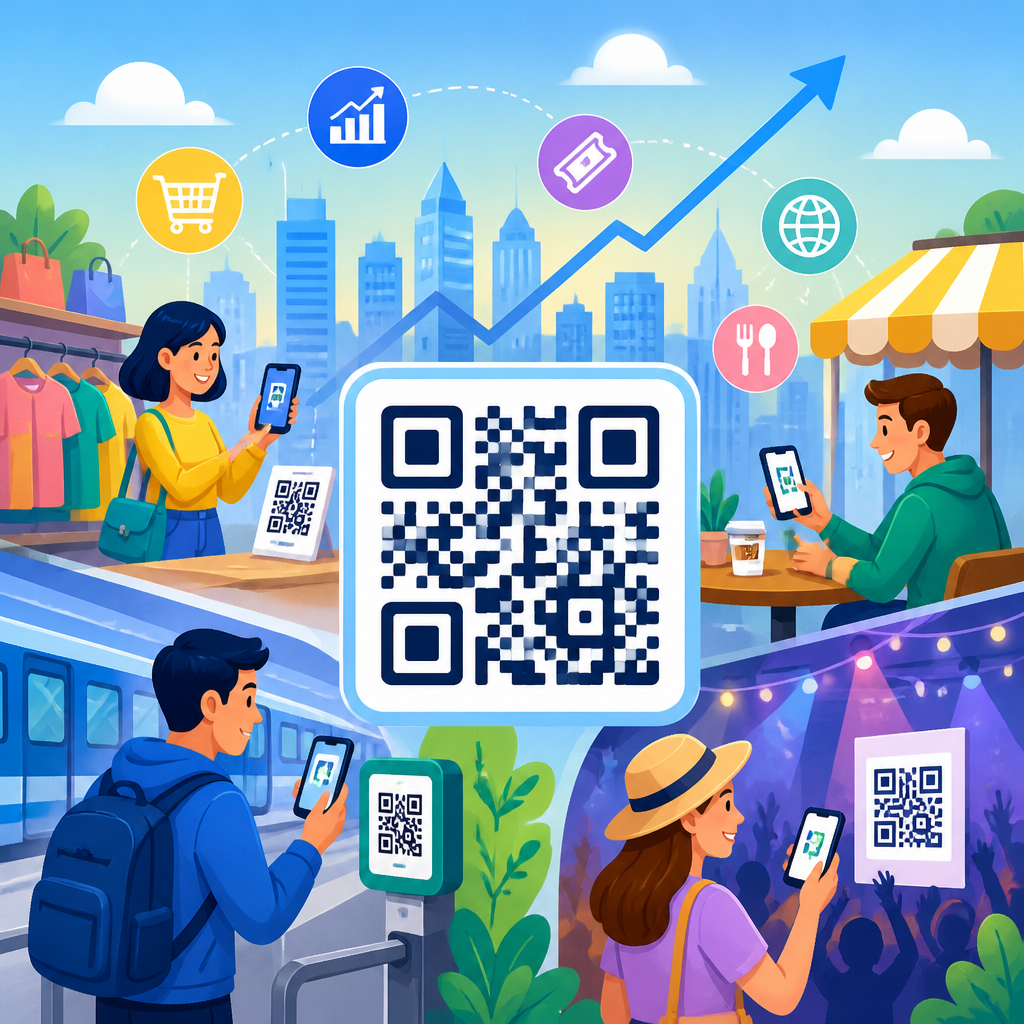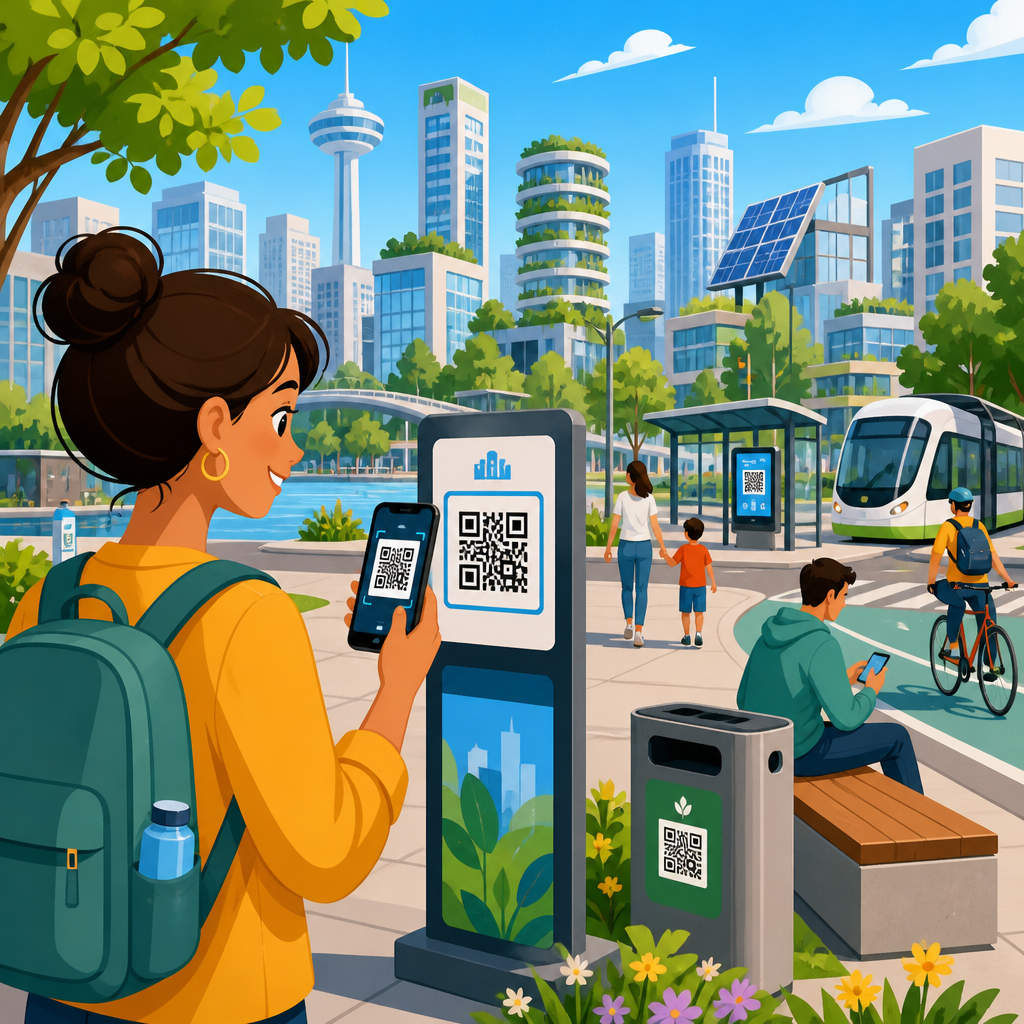
QR codes have moved far beyond restaurant menus and package labels, and nowhere is that shift more visible than in smart cities and public spaces. In urban planning, a smart city uses connected infrastructure, data collection, and digital services to improve mobility, safety, sustainability, and citizen access. A QR code, short for Quick Response code, is a two-dimensional barcode that stores data such as URLs, IDs, payment requests, event details, or app actions that a smartphone camera can instantly interpret. When these two ideas meet, the result is a practical layer of digital access embedded directly into streets, stations, parks, buildings, vehicles, and civic services.
I have worked on QR deployments for transit information, venue operations, and public wayfinding, and the core lesson is consistent: the most successful codes solve a clear physical-world problem at the exact moment a person needs information or action. In cities, that might mean scanning a bus stop sign for real-time arrivals, reporting a broken streetlight from a lamppost sticker, paying for parking without downloading an app, or opening multilingual guidance at a museum entrance. Because the code sits on an object in context, it bridges the gap between digital systems and the built environment better than many alternatives.
This matters because public spaces serve diverse populations with different devices, languages, abilities, and levels of digital confidence. Cities also operate under budget pressure and legacy infrastructure constraints. QR codes are inexpensive to print, fast to deploy, and compatible with nearly every smartphone released in the past decade. During the pandemic, municipal teams and facility managers accelerated adoption for contactless access, but the broader value is now clearer: QR codes can connect residents and visitors to live information, verified services, transactions, educational content, and feedback loops without forcing a major hardware upgrade. As a hub for emerging use cases, this article maps where QR codes are creating real value in smart cities, what design decisions determine success, and which limitations city teams must address from the start.
Transit, mobility, and real-time wayfinding
Public transportation is one of the strongest use cases because riders often need immediate answers in a fixed location. A code on a bus shelter, tram platform, ferry terminal, bike dock, or shared scooter station can open a mobile page with live arrivals, route changes, accessibility notes, and service alerts. In practice, this outperforms static signage when routes change frequently or when digital display boards are too expensive to install everywhere. Transport for London, MBTA, and many regional agencies already rely on mobile trip information ecosystems; QR codes extend those systems to every stop at very low marginal cost.
Wayfinding improves when a code is tied to place-specific context instead of sending everyone to a generic homepage. A rider scanning Platform 3 should land on Platform 3 information, not a broad transit portal. The same principle applies in airports, campuses, and large civic complexes. Codes can launch indoor maps, walking directions to exits, elevator status, restroom locations, or first and last mile options such as bike share. In multilingual environments, the landing page can detect browser language or offer clear language selection, reducing confusion for tourists and new residents.
Mobility integrations are expanding as cities combine transit with micromobility and curb management. QR codes on parking meters can support cardless payments, session extensions, and local parking rules. Codes in EV charging bays can start authenticated charging sessions and display connector compatibility. Curbside pickup zones can use QR check-in to coordinate loading windows for deliveries and ride-hailing. These are practical examples of emerging use cases because they convert a painted curb or static sign into an interactive service point without adding costly touchscreens.
Civic services, reporting, and resident engagement
One of the most effective municipal uses of QR codes is turning public assets into service request gateways. A sticker on a bench, waste bin, playground fence, or streetlight pole can link directly to a reporting form prefilled with the asset location or ID. Residents do not need to guess an address or navigate a complex city website. They scan, describe the issue, optionally upload a photo, and submit. This simple workflow reduces friction for nonemergency reporting, and in my experience it improves both report quality and completion rate because context is captured at the source.
Cities can apply the same model to public consultation. Construction sites, rezoning notices, and park redesign boards often need more engagement than a block of small print can generate. A QR code can open project timelines, design renderings, meeting dates, environmental documents, and survey forms. When paired with analytics, planners can see which locations drive responses and which questions residents abandon. That data helps refine outreach rather than relying on assumptions about participation.
There is also a trust benefit when codes point to official domains and verified content. In an era of misinformation, residents want confirmation that a permit payment page, waste collection update, or election notice is legitimate. Clear branding, HTTPS, and concise calls to action matter. Cities should use short, memorable municipal URLs and avoid redirection chains that appear suspicious. Officiality is not a cosmetic issue; it directly affects scan rates and completion rates.
Tourism, culture, and placemaking
Tourism boards, museums, heritage districts, and parks departments are using QR codes to layer stories onto physical places. A marker beside a public sculpture can open artist commentary, conservation notes, and archival photos. A historic building plaque can provide audio in several languages, accessibility transcripts, and links to nearby sites. This is especially valuable in districts where sign clutter is restricted or where preservation rules limit permanent installations. Rather than overloading a plaque with text, the code extends interpretation without changing the streetscape.
Events and temporary activations benefit even more. Festivals can place codes on banners, maps, or light installations so visitors can pull up schedules, queue information, emergency contacts, or interactive trails. Retail corridors can use codes in window displays to connect foot traffic with neighborhood guides, loyalty offers, or after-hours browsing. For destination marketers, the strategic advantage is measurable engagement. A code tied to a specific mural, square, or market can show exactly which attraction prompted action, unlike broad tourism homepage traffic.
Placemaking also becomes more participatory. Residents can scan to hear oral histories, contribute memories, vote on future programming, or unlock augmented experiences tied to landmarks. The best implementations treat the code as an invitation, not just a link. If the destination delivers rich local context quickly, the public begins to expect that physical places can speak digitally.
Accessibility, public health, and safety applications
Smart city technology is often judged by whether it serves people who face barriers first. QR codes can support accessibility when they supplement, not replace, inclusive design. At transit stops, codes can open screen-reader-friendly pages with live departure data. In civic buildings, they can link to step-free routes, hearing loop availability, or quiet room locations. In parks, they can provide tactile map explanations, trail difficulty, gradient details, and restroom access information. These details are often missing from static signs because space is limited, yet they determine whether a place is actually usable.
Public health use cases are equally practical. Clinics, pharmacies, and community health centers can use codes for appointment check-in, vaccine information, consent forms, and multilingual care instructions. During heat waves or severe weather, codes posted at libraries, bus shelters, and cooling centers can route people to live shelter capacity, water distribution points, and emergency updates. The same logic applies to food safety notices in markets or sanitation guidance in high-traffic venues.
Safety deployments work best when the destination is immediate and concise. A code in a station can provide emergency exit maps, text-based alerts for deaf or hard-of-hearing users, or a discreet reporting channel for harassment. In campuses and nightlife zones, codes can connect to safe-ride programs or security escorts. None of this replaces staffed support or emergency call points, but it broadens access to help in moments when speaking aloud, waiting in line, or navigating a large site is difficult.
Design, governance, and performance standards
Most failed QR initiatives in public spaces break down for operational reasons, not technical ones. The code is too small, placed too high, printed on reflective material, routed to a page that loads slowly, or left unchanged after the underlying service shifts. Cities need standards covering minimum print size, contrast ratio, scan distance, vandal-resistant mounting, redirect management, and content ownership. ISO/IEC 18004 governs QR code symbology, while WCAG provides the baseline for accessible digital destinations. If the mobile landing page fails accessibility checks, the physical code has not solved the public service problem.
| Use case | Primary benefit | Key implementation requirement | Main risk if poorly deployed |
|---|---|---|---|
| Transit stop information | Live arrivals and alerts at low cost | Location-specific landing pages with fast load speed | Riders abandon scans if generic or outdated |
| Asset issue reporting | Faster maintenance requests with precise context | Prefilled asset ID and simple form fields | Low completion if users must enter location manually |
| Tourism and heritage interpretation | Multilingual storytelling without sign clutter | Concise content and strong cellular or Wi-Fi access | Visitor frustration from heavy pages or weak signal |
| Parking and curb payments | Contactless transactions and rule transparency | Verified payment pages on official domains | Fraud concerns from spoofed stickers or fake links |
Governance matters just as much as design. Every code in a public environment should have an owner, review schedule, analytics dashboard, and retirement process. Dynamic QR codes are usually the better choice because destinations can be updated without replacing physical signage. They also support campaign tagging, device analysis, and A/B testing of calls to action. However, dynamic systems require procurement review, data handling policies, and uptime monitoring. Public agencies must also decide what data they truly need. Collecting minimal personal information is both ethically sound and operationally safer.
Security is a growing concern because malicious overlays can redirect scans to fraudulent pages. Tamper-evident labels, periodic inspections, domain verification, and public education help reduce that risk. Some agencies also add human-readable URLs beside the code so users can verify the destination before opening it. That small step builds confidence and supports people whose camera apps do not automatically preview links.
The next wave of emerging use cases
The next phase of QR codes in smart cities is not about novelty. It is about deeper integration with urban systems people already use. Digital product passports, now advancing in regulated sectors, may eventually extend to public procurement and circular economy programs, letting users scan street furniture, shared devices, or construction materials for maintenance history and recycling guidance. In public utilities, codes on hydrants, cabinets, and meters already support field service workflows; over time, some of that transparency may extend to residents through controlled public interfaces.
Another emerging area is identity-light authentication. Rather than forcing a full account login, a scanned code can initiate a time-limited session for guest Wi-Fi, visitor access, locker rental, public printer release, or recreation facility entry. This model is useful in libraries, sports venues, and waterfronts where convenience matters and app fatigue is real. Combined with wallet passes, near field communication, or digital credentials, QR codes can serve as the visible trigger that starts a secure but simple service journey.
Artificial intelligence will likely make these experiences more adaptive, but the visible front end may still be the QR code. A resident scans a construction notice and receives a concise summary, translated automatically, with options tailored to renter, commuter, or business owner concerns. A tourist scans a district marker and gets a personalized walking route based on available time and mobility needs. The enduring value of the code is its universality: it is cheap, familiar, and easy to place wherever the physical city meets a moment of decision.
For city leaders, transport agencies, property managers, and cultural institutions, the practical takeaway is straightforward. QR codes in smart cities and public spaces work best when they connect a person, in a specific place, to the exact next action they need. The strongest emerging use cases center on mobility, civic reporting, tourism, accessibility, safety, and lightweight transactions because each solves an immediate real-world problem. Success depends less on the code itself than on the system behind it: accurate content, accessible mobile design, official trust signals, governance, analytics, and maintenance.
This sub-pillar hub under QR Code Trends and Innovations should guide deeper exploration of each use case, from transit operations to heritage interpretation and secure public payments. If you are planning a deployment, start small, choose one high-friction citizen journey, map the physical context, and measure completion from scan to outcome. A well-placed QR code can make a city feel more responsive, legible, and connected. The opportunity now is to implement these tools with the rigor public spaces demand and the simplicity residents immediately understand.
Frequently Asked Questions
How are QR codes used in smart cities and public spaces?
QR codes play a practical role in helping smart cities connect physical spaces with digital services. When placed on transit stops, parking meters, public buildings, kiosks, street signage, utility stations, and tourism landmarks, they give residents and visitors an instant way to access information with a smartphone. A single scan can open live bus schedules, bike-share availability, walking directions, public Wi-Fi instructions, digital permits, local maps, event listings, emergency contacts, or city service portals. This makes city services easier to reach without requiring people to download a separate app for every function.
In public spaces, QR codes also improve convenience and responsiveness. Cities use them for contactless payments, reporting maintenance issues, accessing accessibility support, checking facility hours, reserving public amenities, and viewing multilingual information. For example, a QR code in a park might link to trail maps, safety notices, restroom locations, and educational content about local ecology. In a transit station, it could connect passengers to delays, platform changes, ticketing, and lost-and-found services. Their value comes from simplicity: QR codes create a low-friction bridge between urban infrastructure and real-time digital content, which is a core goal of smart city design.
What makes QR codes useful for improving public access and citizen engagement?
QR codes are especially useful because they lower barriers between city systems and the public. Instead of expecting residents to search through government websites, stand in lines, or navigate complicated menus, a city can place a scannable code directly where the information or service is needed. That location-based convenience matters. A resident standing in front of a recycling station can scan for disposal rules. A commuter at a bus shelter can scan for route updates. A visitor at a historic site can scan for guided content. The interaction is immediate, contextual, and highly accessible.
They also strengthen citizen engagement by making feedback easier to collect. Municipalities can place QR codes on signage, at community centers, during public meetings, or near infrastructure projects to invite residents to complete surveys, report hazards, submit service requests, or learn about upcoming plans. This can increase participation because it removes extra steps. Instead of asking people to remember a web address or search later, cities capture engagement in the moment. When implemented well, QR codes help public institutions become more transparent, responsive, and user-focused, which supports trust and better communication between governments and communities.
Are QR codes secure enough for use in public environments?
QR codes can be secure and effective in public environments, but their safety depends on how they are created, managed, and maintained. A QR code itself is simply a method of storing or linking to data. The real security issue is where that code leads and whether users can trust the source. In public spaces, one of the main risks is tampering, such as someone placing a fake sticker over an official code to redirect users to a malicious website, payment page, or phishing form. That is why cities and organizations need clear governance, regular inspections, secure hosting, and visual branding that helps the public identify official codes.
Best practices include using HTTPS-secured destinations, short but trustworthy branded URLs, monitored dynamic QR codes, and landing pages that clearly identify the responsible department or agency. Some cities also place QR codes behind protective covers or within signage designs that make unauthorized replacement obvious. For users, common-sense digital safety still applies: verify the destination before submitting personal data, be cautious with payment requests, and avoid downloading unknown files. When paired with strong operational controls, QR codes are a reliable tool for public service delivery, but like any digital access point, they work best when security is part of the planning from the start.
What are the advantages of dynamic QR codes for smart city applications?
Dynamic QR codes are particularly valuable in smart city environments because they can be updated without changing the printed code itself. That means a city can install one code on a permanent sign, kiosk, transit shelter, or public asset and still modify the destination content over time. This is ideal for public infrastructure, where replacing physical materials can be expensive and slow. If a transit route changes, a permit process is updated, an event calendar shifts, or emergency instructions need to be revised, the digital destination can be changed immediately while the same QR code remains in place.
They also provide analytics that help city planners and service teams understand how people are interacting with public services. Scan volume, time of access, location patterns, device type, and engagement trends can reveal whether information is easy to find, which services are most used, and where communication can be improved. For example, if a QR code at a transit hub gets heavy traffic during morning rush hour, the city may decide to expand schedule alerts or improve commuter messaging. Dynamic QR codes make urban communication more flexible, measurable, and scalable, which aligns closely with how smart cities use data to improve service delivery and public experience.
What should cities consider before deploying QR codes across public spaces?
Cities should start with usability, trust, and long-term maintenance. A QR code should never be added just because it is easy to generate. It needs a clear purpose tied to a real public need, such as improving access to transit updates, simplifying payments, supporting tourism, or enabling issue reporting. Placement matters just as much as purpose. Codes should be visible, well-lit, weather-resistant, and positioned where scanning is practical and safe. The linked content should be mobile-friendly, fast-loading, accessible to people with disabilities, and available in relevant languages. If scanning leads to a confusing or outdated page, the experience quickly breaks down.
Accessibility and inclusion are also critical. Not every resident has the same device, connectivity, digital literacy, or language proficiency, so QR codes should support services rather than replace all other access methods. Printed instructions, short URLs, phone numbers, and in-person alternatives should still be available where needed. In addition, cities need a plan for governance: who owns the code, who updates the content, how performance is monitored, how tampering is checked, and how privacy is protected. The most successful QR code programs are not isolated tech add-ons. They are part of a broader digital service strategy designed to make public spaces more informative, efficient, and citizen-friendly.