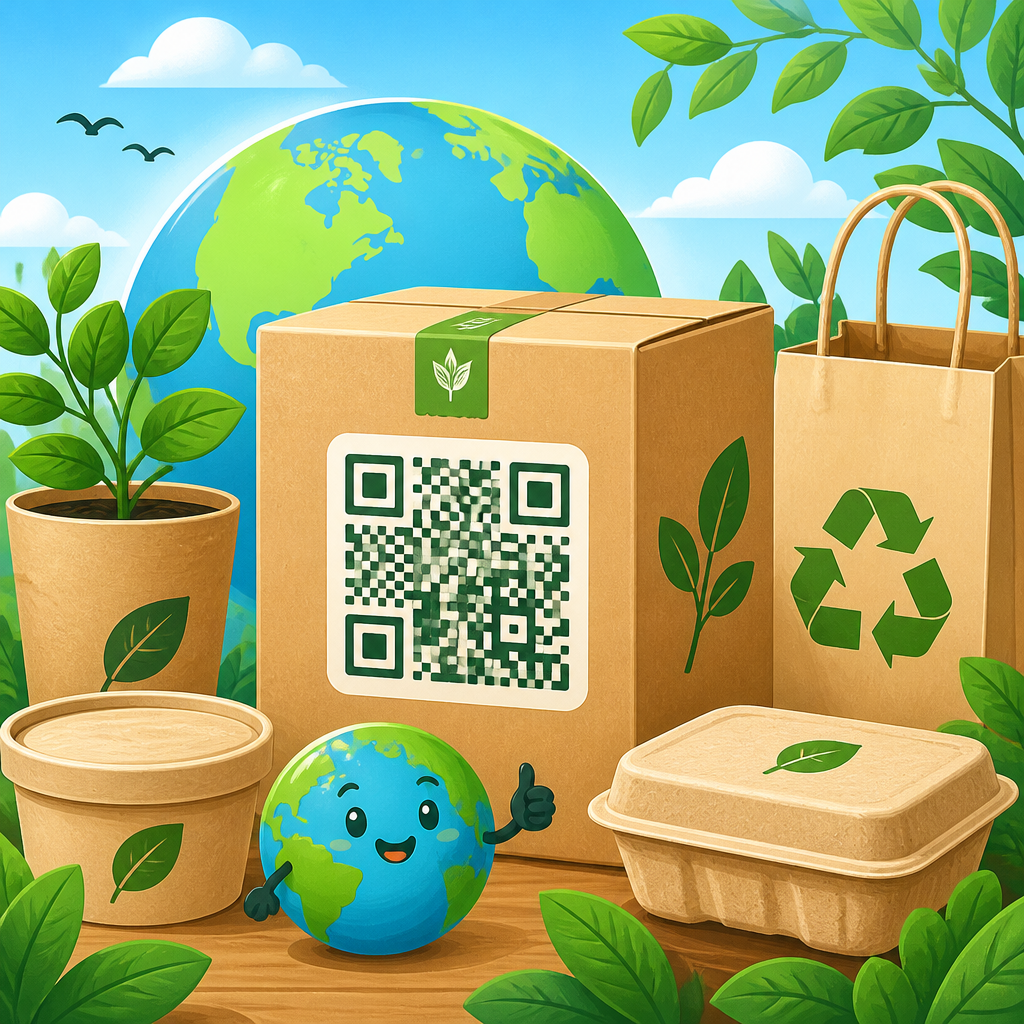
QR codes for sustainability and eco-friendly packaging have moved from marketing novelty to practical infrastructure for brands trying to reduce waste, improve traceability, and make smart packaging useful after the sale. In packaging strategy, “smart packaging” means any package that carries digital functionality, usually through a scannable element such as a QR code, NFC tag, or serialized barcode. For most companies, QR codes are the most accessible starting point because they are cheap to print, easy to update through dynamic links, and familiar to consumers. I have seen packaging teams adopt them first for basic product pages, then expand into disposal instructions, ingredient transparency, refill guidance, loyalty, and compliance content. That progression matters because packaging now has to do more than protect a product on a shelf. It has to communicate sustainability claims clearly, support circular economy goals, and provide product information without adding more paper, inserts, or oversized labels.
Eco-friendly packaging refers to packaging designed to reduce environmental impact across its life cycle, including material sourcing, production, transport, use, and end-of-life recovery. Sustainable packaging can include recyclable mono-material films, post-consumer recycled content, compostable mailers, reusable containers, lightweight glass, fiber-based trays, and refill systems. Yet even well-designed packs often fail in practice because people do not know how to sort them, where to return them, or what environmental claim is actually true. This is where QR codes create measurable value. A simple scan can answer the consumer’s immediate questions, direct them to local recycling rules, explain refill steps, verify certifications, and connect the package to broader supply-chain data. For brands, that means less clutter on-pack and more room for the exact information regulators, retailers, and customers increasingly expect.
This smart packaging hub explains how QR codes support sustainability goals, where they fit in eco-friendly packaging programs, and what brands need to consider when designing, printing, and managing them. The central point is straightforward: QR codes do not make packaging sustainable by themselves, but they make sustainable packaging more understandable, more traceable, and more usable. When companies treat the code as part of the packaging system instead of a decorative add-on, they can cut information waste, strengthen compliance, and improve consumer participation in recycling, reuse, and refill models.
How QR Codes Support Sustainable Packaging Goals
QR codes support sustainable packaging by extending the package into a digital layer. Instead of printing every detail directly on a carton, pouch, or label, the package can carry essential legal information while the code delivers deeper content online. That can reduce the need for multilingual leaflets, expanded labels, and secondary inserts, particularly in cosmetics, supplements, electronics, and household goods sold across multiple markets. In one packaging redesign project I worked on, a consumer goods brand replaced a folded instruction insert with a dynamic QR destination hosting setup videos, care guides, and localized FAQs. The result was less printed material per unit and fewer complaints about missing instructions.
The environmental benefit becomes stronger when the QR code improves correct behavior. Recycling systems depend on accurate sorting, yet consumers regularly misclassify flexible films, coated paper, black plastics, and mixed-material packs. A QR code can route users to disposal guidance based on postal code, municipality, or retailer take-back availability. It can also explain why a package uses a certain material. For example, a mono-polypropylene pouch may not feel premium, but if it is compatible with a store drop-off film stream, the brand can explain that choice and help people complete the recycling action properly. In practice, this is one of the most useful roles for sustainable packaging QR codes: turning a vague claim into a specific instruction.
They also improve transparency. Consumers increasingly question terms like recyclable, biodegradable, compostable, carbon neutral, and plastic free. Those claims require context. Industrially compostable packaging, for instance, is very different from home compostable packaging, and the wrong expectation can send material to landfill or contaminate a recycling stream. A QR code lets brands present clarifying information, recognized certifications, and evidence without overwhelming the label. That combination of precision and flexibility is why QR codes are becoming a core tool in smart packaging strategies.
Smart Packaging Use Cases Across the Product Life Cycle
Smart packaging works best when the QR code serves each stage of the product life cycle rather than only the point of purchase. Before purchase, the code can communicate sourcing, certifications, and packaging material choices. During use, it can provide dosage, assembly, refill, or storage instructions that help consumers avoid product waste. After use, it can direct reuse, return, refill, or recycling actions. This full-life-cycle approach is more effective than a generic campaign landing page because it aligns the digital experience with the decisions people actually make while holding the pack.
Food and beverage brands often use QR codes to explain freshness, origin, and disposal. A coffee bag, for example, may combine a high-barrier structure to preserve aroma with a QR code that explains why the material was chosen, whether local programs accept it, and whether a mail-back option exists. Beauty and personal care brands use codes for ingredient transparency, refill eligibility, and pump separation instructions, since mixed components frequently confuse consumers. Apparel and footwear companies place QR codes on hangtags or care labels to link to material origin, washing guidance that extends garment life, and resale or take-back programs. In electronics, QR codes can replace thick printed manuals and point users to repair instructions, spare parts, battery removal steps, and certified e-waste collection points.
These examples show why this page functions as a hub for smart packaging. The same QR infrastructure can support traceability, product education, extended producer responsibility, and post-purchase engagement. It can also connect internally to specialized topics such as digital product passports, recyclable packaging design, refill packaging systems, anti-counterfeiting, and packaging compliance workflows. Brands that build the system once can activate many sustainability use cases from one printed code architecture.
Designing QR Codes for Eco-Friendly Packaging Performance
A sustainable packaging QR code must be scannable, durable, and intentional. If a code fails under glare, curvature, low contrast, or poor print resolution, the sustainability promise collapses. Packaging teams should test symbol size, quiet zone, substrate interaction, and scan performance across iOS and Android devices before launch. On flexible packs, distortion near seals or gussets can break readability. On glass or glossy labels, reflection can interfere with scanning under retail lighting. Contrast remains critical: dark code on a light background usually performs best, while highly stylized codes often reduce usability.
Material choice matters too. A code printed directly on-pack can eliminate extra labels, but direct printing must hold sharp edges and survive abrasion or condensation. For returnable or reusable packaging, the code may need chemical resistance and repeated scan durability. Dynamic QR codes are generally preferable because they allow destination updates without reprinting inventory. That matters when recycling rules change, a retailer adds a take-back program, or regulations require new disclosures. It also reduces packaging obsolescence, which is an overlooked waste issue in itself.
Packaging copy around the code should be explicit. “Scan to learn more” underperforms compared with “Scan for local recycling instructions” or “Scan to refill and save this bottle.” Consumers respond to immediate value. Accessibility also matters. If the linked page is heavy, slow, or hard to read on mobile, many users will drop off. In effective smart packaging programs, the scan destination is fast, plain-language, and task-focused, not just a brand microsite.
| Packaging goal | How the QR code helps | Example |
|---|---|---|
| Reduce printed material | Moves manuals, ingredients, and FAQs online | Electronics brand replaces 24-page setup booklet with mobile guide |
| Improve recycling accuracy | Provides local disposal instructions by region | Snack pouch directs users to store drop-off film recycling |
| Support refill and reuse | Delivers refill steps, subscription links, and return logistics | Cleaning spray bottle links to concentrate refill ordering page |
| Increase transparency | Explains material choices, certifications, and sourcing | Skincare carton links to FSC certification and ingredient origin map |
| Enable compliance updates | Uses dynamic destinations instead of static printed claims | Global supplement pack updates market-specific guidance without reprint |
Traceability, Trust, and the Rise of Digital Product Information
One of the strongest arguments for QR codes in sustainable packaging is traceability. Consumers, retailers, and regulators all want more verifiable product information, especially around material origin, recycled content, and environmental claims. A QR code can connect the unit in someone’s hand to batch data, factory information, chain-of-custody certificates, and logistics milestones. That does not automatically prove every claim, but it gives brands a structure for publishing evidence instead of relying on vague badge-heavy design.
This trend is accelerating because digital product information is becoming standard practice in many sectors. GS1 Digital Link is especially relevant here. It allows identifiers such as GTINs to connect physical products with web-based information in a structured way, helping brands support retail scanning, consumer engagement, and data consistency from one foundation. In Europe, digital product passport discussions and evolving sustainability disclosure rules are pushing manufacturers toward more robust item-level information systems. Brands that start with QR-enabled packaging now are better positioned for future compliance than brands waiting for mandates.
Trust depends on disciplined content governance. Sustainability pages linked from packaging should name the material, describe recyclability conditions, cite certification schemes accurately, and avoid broad claims that cannot be substantiated. If a pack is only recyclable where facilities exist, say so directly. If recycled content applies to the bottle but not the cap or pump, separate those statements. In my experience, clear limitations increase credibility rather than weakening the message.
Business Benefits, Metrics, and Operational Tradeoffs
The business case for QR codes on eco-friendly packaging is stronger than many teams expect. First, they can reduce artwork complexity and save space on increasingly constrained packs. Second, they create measurable post-sale engagement. Brands can track scan rate, repeat scans, time on page, refill conversions, and geographic patterns in disposal searches. Those signals help packaging, sustainability, ecommerce, and customer support teams improve both communication and design. A refill brand, for example, may discover that consumers in one region repeatedly scan for cap-separation instructions, signaling that the package needs clearer physical cues.
Third, QR codes can support lower-cost updates than static packaging changes. When regulations change or a claim needs clarification, updating a landing page is far faster than scrapping printed stock. This can prevent write-offs and reduce the environmental impact of obsolete packaging inventory. It also helps multinational brands localize sustainability guidance without proliferating separate SKUs for every market.
There are tradeoffs. Dynamic QR platforms require governance, analytics setup, privacy review, and long-term URL maintenance. If a code points to a dead page after twelve months, consumer trust erodes quickly. Companies also need cross-functional ownership. Packaging engineers understand substrate and print constraints; sustainability teams understand claims; legal reviews disclosures; digital teams manage landing pages and analytics. The best programs assign a single accountable owner even when many functions contribute. Smart packaging succeeds operationally when it is treated as product infrastructure, not an isolated campaign asset.
Best Practices for Building a Smart Packaging Hub Strategy
Brands should approach QR codes for sustainability and eco-friendly packaging as a structured content system. Start by mapping the highest-value consumer questions: What is this package made from, how do I dispose of it, can I refill it, what certifications apply, and where can I verify the claim? Then build destination pages around those questions in plain language. From there, create supporting content for related topics such as refill packaging, compostable packaging, reusable packaging, packaging labeling laws, and QR code analytics. This hub-and-cluster model strengthens discoverability and ensures that every scan resolves a real packaging task.
Keep claims specific, maintain mobile-first page design, test scan performance on every substrate, and review linked content on a fixed schedule. Use recognized standards where possible, including GS1 identifiers, How2Recycle instructions where licensed and applicable, and third-party certifications such as FSC or TÜV Austria when they genuinely apply. Most important, design the experience around the consumer action you need. If the goal is recycling, make the recycling instruction the first thing they see. If the goal is refill adoption, lead with refill savings, steps, and container compatibility.
QR codes will not solve unsustainable packaging design, but they make better packaging easier to understand and easier to use correctly. That is their real value in smart packaging. Companies that integrate QR codes into sustainability, compliance, and customer education can reduce information waste, improve transparency, and support circular behaviors at scale. If you are building a smart packaging program, start with one package, one clear use case, and one measurable outcome, then expand the system across your portfolio.
Frequently Asked Questions
How do QR codes make eco-friendly packaging more sustainable?
QR codes support sustainability by helping brands reduce the amount of printed material required on or inside a package while still giving customers access to rich, up-to-date information. Instead of printing large instruction booklets, product guides, promotional inserts, recycling details, warranty information, and ingredient explanations, companies can place a single QR code on the package and connect consumers to a mobile-friendly digital experience. That shift can lower paper use, reduce ink consumption, and simplify packaging design without limiting the amount of information available after purchase.
They also make packaging more useful across the full product lifecycle. A QR code can direct customers to repair instructions, refill options, care guides, return programs, and local recycling guidance, all of which can extend product life and reduce landfill waste. For brands working toward circular packaging systems, this is especially valuable because the code can serve as a bridge between the physical package and the actions consumers need to take to reuse, return, or properly dispose of it.
Another major sustainability benefit is adaptability. Printed packaging is static, but digital content behind a QR code can be updated without changing the physical package itself. If a brand revises recycling instructions, changes suppliers, improves materials, or launches a take-back program, it can update the linked page rather than scrapping old printed stock. That flexibility can reduce obsolete packaging inventory and support continuous improvement without unnecessary waste.
What kind of information can brands deliver through QR codes on sustainable packaging?
QR codes can turn packaging into a practical source of post-purchase value. One of the most common uses is transparency: brands can link to information about sourcing, material composition, certifications, carbon reduction efforts, and manufacturing practices. This helps consumers verify sustainability claims and understand what makes a package or product more responsible than a conventional alternative. In a market where shoppers are increasingly skeptical of vague environmental messaging, giving direct access to detailed documentation can strengthen trust.
They are also highly effective for disposal and recycling guidance. Because recycling rules vary by region and by material type, printed instructions are often too broad to be useful. A QR code can link to dynamic guidance that explains how to separate components, which parts are compostable or recyclable, and whether a package should be returned through a special collection system. Brands can even personalize these experiences by geography, making instructions more accurate and increasing the chances of proper end-of-life handling.
Beyond disposal, QR codes can support education and engagement. A code on eco-friendly packaging might lead to refill subscriptions, reuse ideas, product registration, impact dashboards, ingredient stories, or loyalty rewards for sustainable behavior. It can also connect customers to repair services or tutorials that help products last longer. In that sense, the code is not just a marketing tool; it becomes part of a broader sustainability infrastructure that encourages better consumer decisions before, during, and after use.
Are QR codes a practical option for small and mid-sized brands adopting smart packaging?
Yes, in most cases QR codes are the most practical entry point into smart packaging for small and mid-sized businesses. Compared with technologies like NFC tags or advanced sensor-based systems, QR codes are inexpensive to generate, easy to print, and compatible with nearly every modern smartphone. That lowers the barrier to adoption significantly. A brand does not need custom hardware, specialized packaging equipment, or a major digital transformation project to start using them effectively.
They are also operationally flexible. A company can begin with a simple static QR code that links to a sustainability landing page, then gradually evolve toward more advanced use cases such as serialized codes for item-level traceability, scan analytics, product authentication, or batch-specific supply chain data. This phased approach is important because it allows brands to test consumer behavior, refine their content, and build internal processes without committing to a costly all-at-once implementation.
For smaller brands especially, the real advantage is return on effort. A single well-placed QR code can support compliance information, storytelling, customer education, and recycling instructions all at once. It can also reduce the need for multiple printed inserts or separate communication channels. To get the most value, however, brands should focus on the full experience behind the code. The landing page should load quickly, work well on mobile, and provide genuinely useful information. A QR code is easy to add, but its effectiveness depends on whether the digital destination solves a real consumer need.
Can QR codes improve traceability and reduce greenwashing concerns in packaging?
They can, especially when they are connected to reliable product and supply chain data. One of the strongest use cases for QR codes in sustainable packaging is traceability: giving stakeholders a clear path to information about where materials came from, how products were made, and what standards were followed along the way. Instead of relying on limited on-pack claims such as “recyclable,” “responsibly sourced,” or “eco-friendly,” brands can provide layered evidence through a scan experience that includes certification details, chain-of-custody information, batch data, and supplier narratives.
This matters because environmental claims are under increasing scrutiny from consumers, regulators, and retail partners. A QR code can help brands move from broad assertions to verifiable transparency. For example, it can link to third-party documentation, explain the difference between technically recyclable and locally recyclable materials, or show the percentage of post-consumer recycled content in a package. That added context helps reduce confusion and makes sustainability communication more credible.
That said, the QR code itself does not create trust automatically. Trust comes from the quality, accuracy, and specificity of the information it unlocks. If the linked content is vague, exaggerated, or outdated, the technology will not prevent greenwashing concerns. Brands need strong internal data governance, clear claim substantiation, and regular content updates. When those elements are in place, QR codes become a powerful mechanism for making sustainability claims more transparent, accountable, and easier for customers to evaluate.
What are the best practices for using QR codes on eco-friendly packaging without hurting the customer experience?
The most important best practice is to give the QR code a clear purpose. Consumers are far more likely to scan when they understand exactly what they will get, such as “See how to recycle this package,” “Learn where this product came from,” or “Access refill instructions.” Generic prompts like “Scan me” tend to underperform because they do not communicate immediate value. On sustainable packaging, clarity matters even more because the code should help the customer complete a practical task, not just encounter another promotional message.
Placement and usability also matter. The code should be large enough to scan easily, printed with sufficient contrast, and positioned where it will not be distorted by folds, seams, curves, or glare. It should work quickly across common smartphone cameras without requiring a special app. The destination page should be mobile-optimized, lightweight, and easy to navigate, especially for users scanning in stores, kitchens, or disposal areas where patience is limited. If the content loads slowly or feels irrelevant, scan adoption will drop.
Finally, brands should think beyond the first scan. The best QR code experiences on eco-friendly packaging are maintained over time and integrated into broader packaging strategy. That means keeping recycling instructions current, localizing content when possible, measuring scan behavior, and improving the experience based on real usage data. It also means balancing digital convenience with accessibility by ensuring essential legal or safety information still appears on the package where required. When implemented thoughtfully, QR codes can make packaging simpler, smarter, and more sustainable without adding friction for the customer.