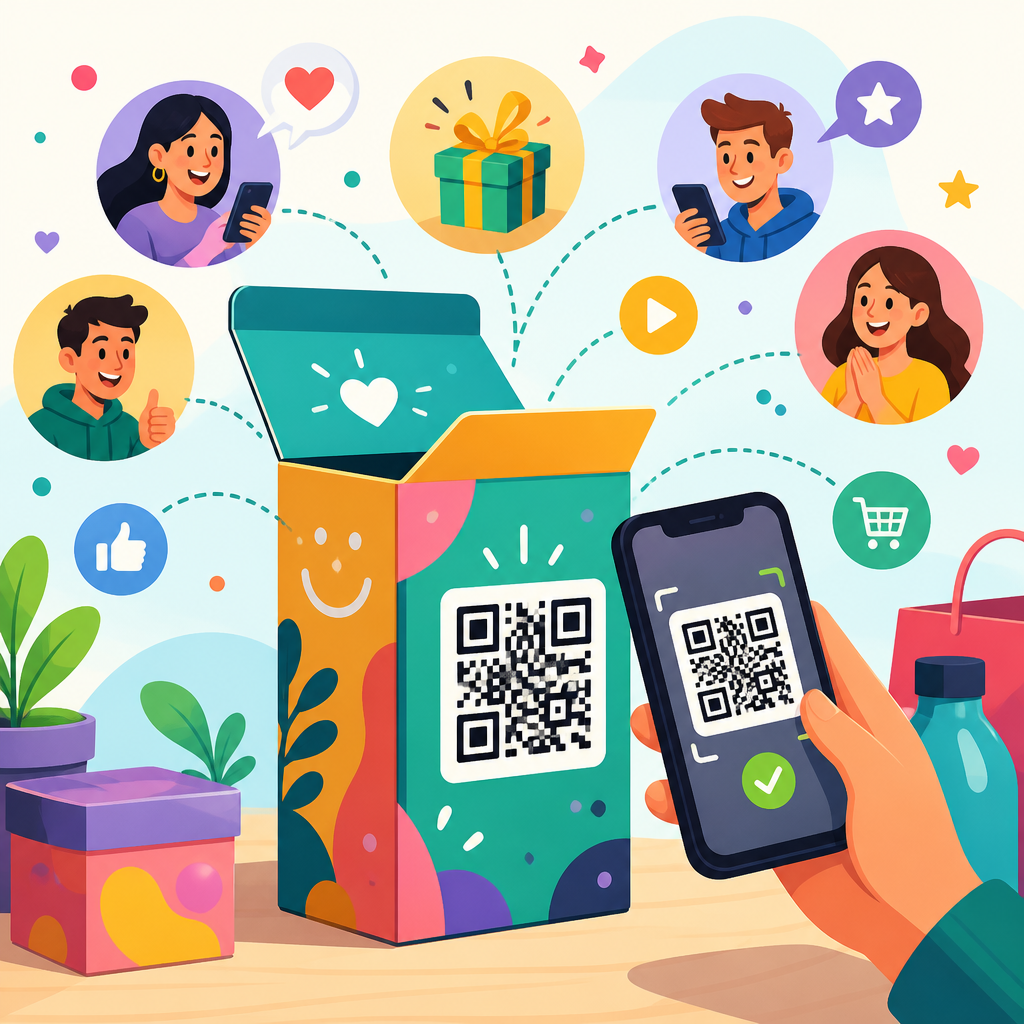
Packaging has become a media channel, and QR codes are the bridge that turns a static box, label, pouch, or carton into a measurable digital experience. In smart packaging, a QR code is more than a scannable square: it is a printed access point that connects the physical product to product education, loyalty programs, authentication, customer support, replenishment, and post-purchase storytelling. Brands use QR codes on packaging because they solve a stubborn problem I have seen across launches in food, beauty, consumer electronics, and healthcare: once a product leaves the shelf, most companies lose the chance to guide, reassure, and learn from the buyer. A well-planned packaging QR code restores that connection in seconds.
The concept matters because packaging has finite space, while customer questions keep expanding. Shoppers want ingredient sourcing, setup help, sustainability details, promotions, and proof that a product is genuine. Retailers want fewer returns and better education. Brand teams want first-party data that does not depend entirely on ad platforms or retailer reports. Regulators increasingly expect clearer disclosures and traceability. Smart packaging answers these pressures by combining physical design, unique identifiers, and cloud-based content management. In practice, that means the same bottle or carton can serve a first-time buyer, a repeat customer, a warranty registrant, and a recycler, each with relevant information delivered after a simple scan.
QR codes are especially effective because they are familiar, low-cost, and supported by native smartphone cameras on iOS and Android. Unlike NFC, they do not require embedded chips. Unlike long URLs, they do not ask a user to type. Modern dynamic QR codes also let brands update destination content without reprinting packaging, which is crucial when offers change, instructions improve, or a recall notice must go live immediately. When marketers, packaging engineers, and operations teams coordinate early, the result is packaging that drives engagement throughout the product lifecycle, from discovery and conversion to retention and advocacy.
For a sub-pillar on smart packaging, the central question is straightforward: how do QR codes on packaging create measurable engagement without adding friction? The answer is that they meet customers at the moment of highest intent. A person holding the product has already crossed the biggest barrier in marketing: attention. A scan can turn that attention into action, whether the goal is to explain how to use the item, invite enrollment in a rewards program, verify authenticity, or capture consent for future communication. The strongest programs do not treat the code as a gimmick. They treat it as infrastructure.
What smart packaging means in practice
Smart packaging is packaging designed to do more than contain and protect a product. In operational terms, it extends packaging into identification, communication, and data collection. Some smart packaging uses sensors or indicators, such as temperature monitors in pharmaceuticals. For most consumer brands, though, the practical entry point is the packaging QR code. It is inexpensive to print, easy to scale across SKUs, and compatible with existing packaging workflows. I have found that teams adopt it fastest when they stop framing it as a campaign add-on and start treating it as a permanent layer in packaging architecture.
A packaging QR code can be static or dynamic. Static codes point to a fixed destination and are fine for simple uses like linking to a manual. Dynamic codes route through a management platform, allowing edits, analytics, localization, A/B testing, and in some cases individualized experiences tied to batch, market, or unit ID. That distinction matters. If a product remains in distribution for months, dynamic management prevents stale pages, dead links, and compliance headaches. It also makes packaging useful beyond the launch window, which is where long-term engagement value appears.
Smart packaging also depends on content strategy. A scan experience should answer the first customer question immediately, ideally within the first screen. For a food product, that may be allergens, recipe ideas, and origin. For cosmetics, it may be usage order, shade matching, and safety information. For electronics, it may be setup, warranty, and troubleshooting. The packaging itself provides context for intent, so the landing experience should feel obvious rather than promotional. When that alignment is right, scan rates and completion rates rise because the interaction respects the customer’s moment.
How QR codes drive engagement across the customer journey
QR codes drive engagement because they support different jobs at different stages of ownership. Before purchase, they can explain features, certifications, ingredients, and social proof. At unboxing, they can simplify onboarding with video setup instructions or assembly guides. During use, they can unlock how-to content, refill reminders, accessories, and customer care. After use, they can route customers to reviews, referrals, loyalty points, and recycling instructions. Each step reduces uncertainty and creates a reason to come back.
One example comes from beverage packaging. A winery can place a QR code on the back label that links to tasting notes, vineyard information, food pairings, and a join-the-club form. That single scan helps the buyer choose, deepens the brand story at the dinner table, and captures an opt-in relationship after consumption. In beauty, I have seen QR codes on cartons increase tutorial completion because consumers no longer search generic instructions on video platforms. They land directly on the product-specific regimen. In home appliances, packaging scans often reduce support calls when activation, registration, and troubleshooting are consolidated into one mobile-friendly path.
The key is matching the destination to real user intent. A packaging QR code that only dumps the visitor onto a homepage usually underperforms because it creates unnecessary navigation. By contrast, a code labeled “See setup in 60 seconds” or “Check authenticity and ingredients” communicates a clear benefit. Microcopy matters. Placement matters too. Codes near opening points often perform well for onboarding, while codes on side panels are useful for pre-purchase scanning on shelf. Engagement improves when the physical context and digital promise are consistent.
High-value use cases for packaging QR codes
Brands often ask which packaging QR code use cases deliver the highest return. The answer depends on category, but several use cases repeatedly prove their value because they solve common commercial and operational problems.
| Use case | How it works on packaging | Primary engagement benefit | Business impact |
|---|---|---|---|
| Product education | Code links to instructions, demo video, FAQs, and safety details | Faster understanding and lower hesitation | Fewer returns, fewer support contacts |
| Loyalty and CRM | Code routes to sign-up, points claim, or personalized offer | Encourages repeat interaction after purchase | More first-party data and retention |
| Authentication | Code checks serial, batch, or token against a verification system | Builds trust in product legitimacy | Reduced counterfeit risk and channel protection |
| Traceability | Code surfaces origin, sourcing, or chain-of-custody details | Supports transparency and informed choice | Better compliance and stronger brand credibility |
| Replenishment | Code links to reorder page or subscription option | Shortens the path to the next purchase | Higher lifetime value |
| Recycling guidance | Code identifies local disposal instructions by market | Improves post-use engagement | Supports sustainability goals and reporting |
Authentication deserves special attention in smart packaging. Counterfeit exposure is high in luxury goods, supplements, pharmaceuticals, and high-demand cosmetics. A packaging QR code tied to a secure database can help confirm that a unit belongs to a valid production run. This is not foolproof on its own, because copied codes can still circulate, but when combined with serialization, tamper-evident design, and anomaly monitoring, it becomes a powerful trust signal. Consumers appreciate simple checks, and channel partners benefit from clearer verification procedures.
Traceability is another fast-growing application. Food brands use scans to show farm origin, harvest dates, certifications, and processing details. This matters because provenance increasingly influences buying behavior, especially in premium categories. It also helps during recalls. Instead of posting broad, confusing notices, a brand can use dynamic routing to direct affected customers to precise instructions by lot number or region. That is a clear example of packaging becoming a service layer, not just a wrapper.
Design, placement, and technical execution that improve scan rates
Successful packaging QR codes are engineered, not merely added. The code must be sized appropriately for scanning distance, printed with sufficient contrast, and placed where glare, folds, seams, or curvature will not interfere. As a rule, dark modules on a light background scan most reliably. Quiet zones should remain clear. Extremely stylized codes often hurt readability, especially on flexible films or textured materials. Branded customization should never compromise function.
Placement should reflect when the customer is most likely to scan. On-pack shelf education works best when the code is visible before purchase and accompanied by a direct instruction. Onboarding codes are effective near the opening area or where the user naturally looks during setup. For refillable or reusable products, a persistent code on the primary container performs better than a code only on secondary packaging, because the container stays in the customer’s environment. In field tests, small placement changes can materially affect scan volume because they change discoverability and user motivation.
Technical execution extends beyond print. The mobile landing page must load quickly, respect privacy requirements, and present one primary action above the fold. Page speed matters because packaging scans often happen in stores with inconsistent connectivity. Platforms such as Bitly, Flowcode, Scanova, and QR Code Generator Pro support dynamic routing and analytics, while enterprise stacks may connect scans to CRM systems like Salesforce or HubSpot. For product information management, integration with systems such as Salsify or Akeneo helps keep content accurate across markets and SKUs. The best setup creates a clean path from packaging to content to measurement.
Measurement, analytics, and the role of first-party data
One of the strongest arguments for QR codes on packaging is measurement. Traditional packaging is notoriously difficult to track once products enter retail and homes. Scans create observable signals: time, location, device type, campaign source, and downstream actions such as registrations, purchases, or support article views. These signals are not a complete picture of customer behavior, but they are far richer than shipment data alone.
In practice, useful measurement starts with clear event design. At minimum, teams should track scan volume, unique users, repeat scans, bounce rate, completion rate on key flows, and conversion to the intended action. For education journeys, success may mean video completion or reduced return rate. For replenishment, it may mean reorder conversion within a set time window. For authentication, it may mean validation checks by market and anomaly detection where one code is scanned repeatedly in distant locations. Good analytics make packaging decisions more accountable.
First-party data collection must be handled carefully. Packaging QR codes can support consented email capture, loyalty enrollment, warranty registration, and preference collection, but only when the value exchange is obvious. “Scan to learn” and “scan to register for points” are different promises and should lead to different experiences. Privacy laws, including GDPR and CCPA-related obligations, require transparent notice and disciplined data handling. Trust rises when forms are short, benefits are immediate, and users are not forced through unnecessary gates. In my experience, brands get better long-term data when they earn it through utility rather than asking for too much on the first scan.
Challenges, limitations, and what brands should avoid
QR codes on packaging are powerful, but they are not automatically effective. The most common failure is weak relevance: the code exists, yet the customer cannot tell why it is worth scanning. Another problem is content neglect. Teams print a dynamic code, launch a landing page, and never update it, even as products, promotions, and support issues change. That quickly erodes trust. Broken redirects, regionally incorrect pages, and generic homepages are still common, and they waste one of packaging’s best moments of engagement.
There are also operational constraints. Packaging lead times can be long, especially for regulated products and multi-market SKUs. If legal review, localization, and content governance are not built into the process, the scan experience can lag behind the package in market. Print conditions matter too. Metallic substrates, shrink sleeves, and curved surfaces may require testing under realistic lighting and camera conditions. Accessibility should not be overlooked; short fallback URLs, readable instructions, and multilingual options improve usability for broader audiences.
Finally, brands should resist overloading one code with too many objectives. A single packaging QR code can support multiple paths, but the first screen should not feel like a cluttered sitemap. Prioritize one primary action and a small number of clearly labeled secondary actions. Smart packaging works best when it reduces decision fatigue. The lesson I have learned repeatedly is simple: relevance, reliability, and clarity outperform novelty.
QR codes drive engagement through packaging because they convert the package into a responsive touchpoint that helps customers in the exact moment they need information or action. That is the core of smart packaging: connecting the physical product to useful digital experiences that increase trust, reduce friction, and create measurable relationships after the sale. When the code is well placed, the destination is purposeful, and the data model is sound, packaging becomes an active part of customer experience rather than a silent container.
For brands building a smart packaging strategy, the most important takeaway is to start with customer intent, not with the code itself. Define the question a buyer has on shelf, at unboxing, during use, and at repurchase. Then design the scan flow to answer that question quickly and accurately. Support it with dynamic content management, clear analytics, and governance that keeps information current across SKUs and regions. This hub topic connects naturally to deeper work in authentication, traceability, loyalty, sustainability communication, and packaging design because all of those functions depend on the same principle: packaging should continue serving the customer after production is complete.
The benefit is practical and compounding. Better education lowers support costs. Easier replenishment improves lifetime value. Clearer authenticity checks strengthen trust. More relevant post-purchase content creates repeat engagement that ordinary packaging cannot deliver. If you are developing a QR code program under the broader QR Code Trends & Innovations umbrella, audit your current packaging, identify the highest-intent scan moments, and build one experience that solves a real customer problem first. That is the fastest path to smart packaging that performs.
Frequently Asked Questions
How do QR codes on packaging increase customer engagement?
QR codes increase engagement by turning packaging from a one-way branding surface into an interactive touchpoint. Instead of stopping at shelf appeal or basic product identification, a package can continue the conversation after purchase with a simple scan. When a customer scans a QR code on a box, label, pouch, or carton, they can be taken directly to setup instructions, ingredient details, how-to videos, care guidance, recipes, product registration, rewards enrollment, or brand storytelling. That makes the package more useful, more responsive, and far more measurable than traditional print alone.
What makes this especially effective is that the interaction happens in context. The customer is already holding the product, already interested, and often already looking for the next step. A QR code meets that moment with low friction. It answers questions quickly, removes barriers to use, and gives the customer a reason to stay connected beyond the first transaction. For brands, this creates more opportunities to educate buyers, increase confidence, reduce confusion, encourage repeat purchases, and gather first-party engagement data. In practice, that means packaging is no longer passive; it becomes a direct bridge between the physical product and a digital experience that can be updated, optimized, and tracked over time.
What kind of content should a brand link to with a packaging QR code?
The best QR code destinations are built around what the customer needs most at the exact moment they scan. That can include product education, usage instructions, troubleshooting support, authenticity verification, subscription or replenishment options, loyalty sign-up pages, promotional offers, user guides, or post-purchase storytelling. For some products, a QR code should answer practical questions such as “How do I use this?” or “Is this genuine?” For others, it may be more valuable as a gateway to recipes, tutorials, sustainability information, sourcing details, or a rewards experience that encourages the next purchase.
Strong packaging QR experiences are concise, mobile-friendly, and highly relevant to the specific product or SKU. A generic homepage is usually a missed opportunity because it forces the customer to search for information they expected to receive immediately. A better approach is to create a landing page tailored to the exact item in hand, with clear next actions and minimal navigation friction. Brands that perform well with smart packaging often think of the QR code as a service tool first and a marketing tool second. When the destination is genuinely useful, customers are more likely to engage, trust the brand, and return for future interactions.
Are QR codes on packaging useful for more than marketing?
Yes, and that is one of the main reasons they have become so important in smart packaging strategies. While QR codes can absolutely support campaigns, promotions, and brand storytelling, their value goes much deeper. They can streamline customer support by linking directly to FAQs, setup videos, care instructions, or live help options. They can support authentication by helping customers verify that a product is legitimate. They can improve compliance by providing access to expanded product information, safety details, or regulatory disclosures without overcrowding the package design. They can also enable replenishment by sending buyers to a reorder page or subscription flow at the exact moment they realize they need more.
Operationally, QR codes also help brands learn what happens after the product leaves the shelf. Scan patterns can reveal when, where, and how often customers engage, which products drive the most post-purchase interaction, and what information people seek most often. That insight can guide packaging updates, content improvements, support planning, and retention strategies. In other words, QR codes solve a common launch and lifecycle challenge: brands often invest heavily to win the sale, but have limited visibility into what happens once the product is in the customer’s hands. Packaging QR codes help close that gap by connecting physical distribution to measurable digital behavior.
What are the best practices for placing QR codes on packaging?
Placement matters because even a well-designed QR experience will underperform if customers do not notice the code or cannot scan it easily. The code should be positioned where it is visible, accessible, and contextually logical. That usually means placing it near product instructions, a callout panel, an authentication area, or a benefit statement that explains why scanning is worth the effort. The surrounding design should give the code enough white space for reliable scanning, and the size should be appropriate for the packaging format and expected scan distance. On curved, reflective, or highly textured surfaces, extra care is needed to preserve contrast and readability.
Equally important is the call to action. A QR code by itself is just a symbol; customers need a reason to use it. Clear prompts such as “Scan for setup,” “Scan to verify authenticity,” “Scan for rewards,” or “Scan for recipes” perform much better than a code with no explanation. Brands should also test scan performance across devices, lighting conditions, print methods, and real packaging materials before rollout. Using dynamic QR codes is often the smartest choice because the destination can be updated without reprinting the package. Done properly, placement and messaging work together to make the QR code feel like a helpful product feature rather than an afterthought.
How can brands measure the success of QR codes on packaging?
Success should be measured by more than raw scan volume. Scan count is a useful starting point, but the more meaningful question is what customers do after they scan. Brands should look at engagement metrics such as unique scans, repeat scans, time on page, click-through to key actions, loyalty enrollments, product registrations, support deflection, coupon redemptions, subscription sign-ups, and replenishment conversions. If the QR code is used for authentication, success may also include verification rates or fraud detection insights. If it is used for education, reduced return rates or fewer support contacts may be important indicators.
The strongest measurement frameworks connect packaging scans to business outcomes across the customer journey. For example, a code on a consumable product might be evaluated on repeat purchase lift, while a code on a technical product might be judged by reduced onboarding friction and increased product adoption. Brands should also compare performance by SKU, retail channel, geography, packaging format, and campaign period to understand where QR-enabled packaging delivers the most value. Because packaging stays with the product beyond the point of sale, it can generate long-tail engagement that other media cannot. That makes QR codes uniquely powerful: they do not just attract attention, they create a measurable, ongoing relationship between the product, the customer, and the brand.