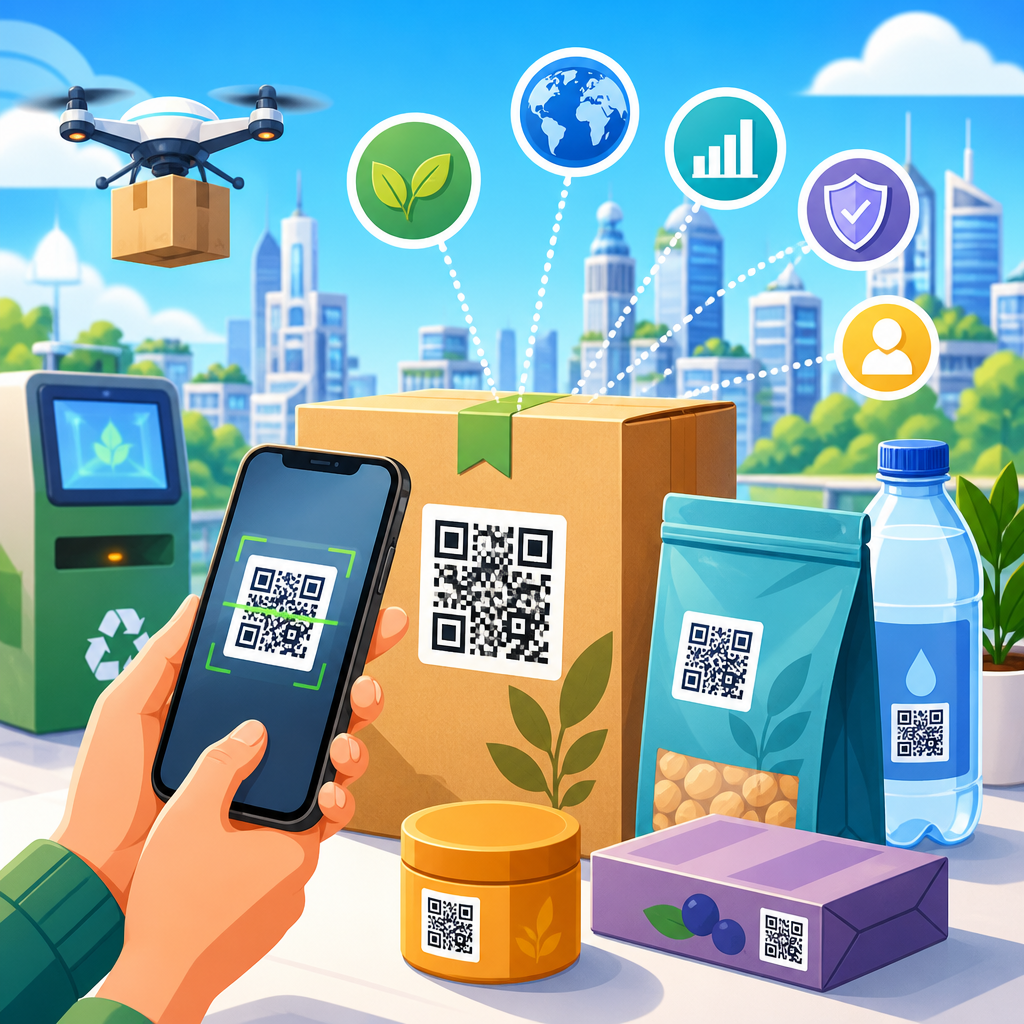
Smart packaging with QR codes is moving from a marketing novelty to a core product infrastructure, giving brands a low-cost way to connect physical packaging to live digital information, customer service, compliance data, and post-purchase engagement. In practical terms, smart packaging means packaging that does more than contain and protect a product: it can identify units, authenticate items, deliver instructions, update safety information, support recycling, and collect interaction data. A QR code is the simplest and most scalable bridge in that system because any modern smartphone can scan it without specialized hardware, and the destination behind the code can change over time when brands use dynamic links.
I have seen this shift firsthand in packaging and digital rollout projects where teams started with a simple campaign landing page and quickly realized the code could support recalls, localization, warranty registration, ingredient transparency, and anti-counterfeit checks on the same printed surface. That is why the future of smart packaging with QR codes matters now. Regulatory pressure is increasing, retail competition is tighter, and consumers expect immediate information at the point of purchase and after opening the product. At the same time, packaging space is limited, print runs are expensive to revise, and brands need better first-party data as third-party tracking becomes less reliable.
The key terms are straightforward. Static QR codes point to fixed content and cannot be edited after printing. Dynamic QR codes point to a short redirect URL, allowing the final destination, language rules, analytics, and device logic to be updated without changing the package artwork. Smart packaging can also include NFC tags, RFID inlays, printed sensors, temperature indicators, or serialization marks, but QR codes remain the most accessible option because they require no reader beyond a camera and almost no behavior change from the user. As a result, they are becoming the visible interface layer for broader packaging digitization across food, beverage, cosmetics, pharmaceuticals, apparel, and industrial goods.
Looking ahead, the most important change is not the code itself but the role it plays. A QR code on packaging is increasingly a persistent digital identity for the product. That identity can power traceability, sustainability disclosures, multilingual content, consumer education, loyalty, and circular economy programs from a single printed entry point. For brands building a long-term packaging strategy, understanding how this model works is no longer optional.
Why QR Codes Are Becoming the Standard Layer of Smart Packaging
QR codes are becoming the standard smart packaging layer because they solve three persistent packaging problems at once: limited physical space, static printed information, and disconnected customer journeys. A package might need to carry ingredients, instructions, certifications, legal warnings, recycling guidance, and promotional messaging, yet label real estate is finite. A code extends the package into a digital environment where information can be organized by market, product variant, user type, or date. This is especially valuable when labels must support multiple countries or frequent formulation updates.
From an operational perspective, QR codes are attractive because they fit existing print workflows. Brands can add a code to flexible packaging, cartons, sleeves, labels, or direct-to-object printing with minimal material change. In many cases, implementation does not require a new substrate or packaging line modification, only artwork revision, redirect infrastructure, and testing for scan performance. Compared with embedded electronics, the cost barrier is low. That makes QR codes the fastest entry point for smart packaging programs that need to prove value before expanding into serialized traceability or connected sensors.
Consumer behavior also supports adoption. During the pandemic, scanning became normalized in restaurants, payments, and event check-in, reducing friction and increasing trust in the interaction. Today, most shoppers understand what a QR code is and expect a useful outcome after scanning. When brands fail, it is usually not because users dislike scanning; it is because the destination is weak, generic, or irrelevant. The future belongs to packaging experiences that answer a clear question immediately, such as “Is this authentic?” “How do I recycle this?” or “What is the best way to use it?”
Core Use Cases Shaping the Future of Smart Packaging
The future of smart packaging with QR codes is being shaped by practical use cases rather than experimental gimmicks. The first is product transparency. Food and beverage brands use codes to show ingredient sourcing, allergen details, nutrition updates, and batch-specific information that cannot fit on-pack. Beauty brands use them to explain active ingredients, skin compatibility, refill systems, and tutorials. In pharmaceuticals and supplements, QR codes can direct patients to dosage instructions, safety leaflets, adverse event reporting channels, or lot verification tools.
The second major use case is authentication and anti-counterfeiting. Luxury goods, cosmetics, spirits, and high-demand consumer electronics are vulnerable to diversion and imitation. A QR code tied to a serialized identifier helps distinguish a legitimate item from copied packaging, especially when it is connected to scan history, region logic, and tamper-evident design. On its own, a visible QR code can be copied, so strong authentication usually combines serialization, secure redirects, backend validation, and in higher-risk categories, covert markers or NFC. Still, the QR code is the consumer-facing verification method because it is easy to access at scale.
The third use case is lifecycle engagement. Packaging is often the last owned media touchpoint a brand controls after the sale. A code can turn that moment into onboarding, replenishment, recipe support, installation help, care instructions, warranty registration, or loyalty enrollment. Household goods brands use package scans to reduce call center volume by surfacing setup videos and troubleshooting steps. Apparel brands use hangtag or mailer scans to explain materials, care, and resale or recycling options. Beverage brands use codes to support promotions while also linking to responsible consumption guidance and local market terms.
The fourth use case is sustainability communication. Consumers increasingly ask where materials came from, whether the package is recyclable locally, and how to dispose of components correctly. Printed recycling symbols alone are often ambiguous. A QR code can provide location-aware disposal instructions, refill participation details, or evidence supporting claims such as recycled content percentages or certifications. This is where smart packaging moves from storytelling to service.
What Leading Brands Are Actually Building
In live programs I have worked on, the strongest smart packaging deployments share a common pattern: one code, multiple outcomes, governed centrally. A dairy product may send one scanner to a recipe page, another to allergy guidance based on language settings, and a third to batch-specific recall information if a safety event occurs. The package remains the same, but the experience changes according to context. That flexibility is the main reason dynamic QR architecture matters more than the graphic itself.
Global standards are reinforcing this shift. GS1, the organization behind the barcode system used across retail, is advancing 2D codes in point-of-sale environments through initiatives commonly described as Sunrise 2027. The goal is to let a single scannable symbol carry identifiers such as GTIN plus additional data including batch, serial, or expiration details. For smart packaging, this matters because the same code can eventually support both retail operations and consumer engagement, reducing clutter and improving data consistency across the supply chain.
Food manufacturers are also using digital product passports in pilot form, particularly in Europe, where sustainability and traceability requirements are tightening. While implementation varies by category, the direction is clear: packaging will increasingly act as a gateway to product identity, sourcing, compliance, repairability, and end-of-life guidance. Fashion and electronics brands are already exploring this model to support resale, warranty, and material disclosure. QR codes are not the entire passport, but they are often the visible key that unlocks it.
| Use Case | How the QR Code Works | Main Benefit | Important Limitation |
|---|---|---|---|
| Ingredient transparency | Links to live product data, sourcing, allergens, and certifications | Reduces label crowding and improves trust | Requires disciplined content governance |
| Authentication | Checks serial or batch data against backend records | Helps fight counterfeits and diversion | Visible codes alone are copyable |
| Instructions and support | Delivers videos, FAQs, setup guides, and manuals | Lowers service costs and improves product use | Poor mobile pages kill scan value fast |
| Recycling and sustainability | Provides local disposal and refill information | Supports compliance and better disposal behavior | Needs region-aware logic and accurate updates |
| Loyalty and retention | Connects packaging to offers, registration, or reorders | Creates measurable post-purchase engagement | Overly promotional flows reduce repeat scans |
Technology, Data, and Design Requirements Behind Effective Programs
Successful smart packaging with QR codes depends on infrastructure, not just creativity. First, brands need a URL management approach that supports dynamic redirects, uptime monitoring, analytics, and permissions. Enterprise teams commonly use QR platforms, customer data platforms, product information management systems, and tag managers together so packaging content can be updated without recreating artwork. A robust stack often includes Adobe Experience Manager, Salesforce, Shopify, Akeneo, Salsify, or custom middleware, depending on scale and channel complexity.
Second, the data model must be planned early. If a brand wants batch-specific or item-level behavior, the code must connect to identifiers that exist in manufacturing and fulfillment systems. This means aligning packaging, operations, regulatory, legal, and digital teams before launch. I have seen programs stall because marketing wanted personalized engagement, but supply chain data was not structured for lot-level retrieval. The fix is not a better landing page; it is a better product data architecture.
Third, design discipline matters. Codes must be large enough to scan, printed with sufficient contrast, and placed on surfaces that remain readable after forming, sealing, condensation, abrasion, or shrink distortion. Curved containers, metallic inks, transparent films, and high-gloss finishes can all reduce performance. ISO/IEC guidance and printer verification processes help, but field testing on actual packaging is essential. Teams should test different phone models, lighting conditions, and user distances, especially in stores where shoppers may scan quickly with one hand.
Content design is equally important. The best scan experiences answer the primary user need within seconds. A cosmetics package should not force users through a generic homepage when they scanned for shade guidance or ingredient details. A medicine package should surface safety and usage information first, not a promotion. High-performing pages are mobile-first, fast-loading, accessible, and structured so key answers appear above the fold. They also respect privacy, disclose data collection clearly, and avoid unnecessary forms during the first interaction.
Challenges, Risks, and What the Next Five Years Will Look Like
The biggest risk in smart packaging is treating QR codes as a campaign device instead of a product system. Campaign thinking produces short-lived microsites, broken redirects, expired promotions, and packaging that outlasts the content behind it. Product-system thinking produces governed destinations, durable URLs, clear ownership, and update workflows that can survive inventory cycles. Because packaging may remain in homes for months, or in supply chains longer, long-term maintenance is not optional.
There are also trust and security concerns. Bad actors can place stickers over legitimate codes or imitate brand experiences through lookalike domains. Brands should use recognizable domains, HTTPS, clear branding on landing pages, and where appropriate, anti-tamper design. Education helps as well: consumers should know what an authentic scan experience looks like. Privacy is another issue. Scan analytics are valuable, but brands must comply with laws such as GDPR and CCPA when collecting personal data, especially if scans lead to registration, loyalty, or geolocation-based personalization.
Accessibility and inclusion cannot be ignored. Not every consumer scans easily, and not every environment supports strong connectivity. Essential safety or legal information still needs appropriate on-pack communication. Smart packaging should extend access, not replace critical disclosure with a digital gate. This balance is especially important in regulated sectors including food, pharma, and chemicals.
Over the next five years, expect four clear developments. First, 2D codes will spread across retail and packaging operations as scanning infrastructure improves. Second, digital product passports will move from pilot to requirement in more categories, especially those affected by sustainability policy. Third, packaging experiences will become more personalized through rules based on location, language, product status, and ownership stage. Fourth, analytics will mature from simple scan counts to operational insight, showing where instructions fail, which markets need better education, and how packaging influences retention or returns.
For brands building a hub around QR code trends and innovations, smart packaging is the strategic center of gravity because it connects manufacturing, compliance, commerce, and customer experience in one visible touchpoint. The future of smart packaging with QR codes is not about putting more codes on more boxes. It is about giving every package a useful digital identity that stays accurate after printing, answers real consumer questions, and supports the full product lifecycle. Start with one high-value use case, build the data and governance correctly, test the scan experience in real conditions, and expand from there. Teams that treat packaging as connected infrastructure will be better prepared for changing regulations, higher consumer expectations, and a retail environment where every surface must work harder.
Frequently Asked Questions
1. What does smart packaging with QR codes actually mean?
Smart packaging with QR codes refers to packaging that connects a physical product to digital content and services through a scannable code. Instead of serving only as a container, the package becomes an active communication layer between the brand, the product, and the customer. When someone scans the QR code with a smartphone, they can be directed to live information such as product instructions, ingredient details, compliance documents, warranty registration, care guidance, authenticity checks, recycling directions, or customer support.
This matters because the information linked to a QR code can be updated without redesigning or reprinting the entire package. That gives brands a practical way to keep product information current across changing regulations, evolving safety guidance, localized language needs, and new marketing campaigns. It also helps reduce the pressure to fit every detail on a physical label, which is especially valuable for products sold across multiple regions or categories with strict disclosure requirements.
In a broader business sense, smart packaging is becoming core infrastructure rather than a novelty. A QR code can help identify a specific unit or batch, link the product to a traceability system, support anti-counterfeit efforts, and create a direct post-purchase relationship with the buyer. Because QR codes are inexpensive to print and easy for consumers to use, they offer one of the most accessible ways to make packaging more intelligent without requiring specialized hardware.
2. Why are QR codes becoming so important in the future of packaging?
QR codes are becoming central to the future of packaging because they solve several problems at once: they improve access to information, reduce friction in customer communication, support compliance, and create measurable digital engagement from a physical product. As brands face increasing pressure to provide more transparency, more personalized service, and more up-to-date product details, a static package alone is no longer enough. QR codes provide a low-cost bridge between the package on the shelf and a dynamic digital experience.
Another reason for their growing importance is flexibility. A single package design can support many use cases over the life of a product. A customer may scan before purchase to verify ingredients or sustainability claims, after purchase to get setup instructions, and later to access troubleshooting, replacement parts, or recycling guidance. At the same time, the brand can use that same infrastructure to update links, add region-specific content, or respond quickly if regulations or product guidance change.
QR codes also align with how consumers already behave. Most people carry smartphones and are familiar with scanning codes, especially since camera-based scanning has become standard. That removes a major adoption barrier. From a business perspective, every scan can also generate useful insight, such as when, where, and how often packaging is being engaged with. This can help brands better understand customer behavior, improve packaging performance, and strengthen the full product lifecycle from purchase through support and repeat sales.
3. How can smart packaging with QR codes improve customer experience and post-purchase engagement?
Smart packaging with QR codes can significantly improve customer experience by making help and information available exactly when the customer needs it. Instead of searching a website, calling support, or digging through printed inserts, a buyer can scan the package and immediately access setup steps, video tutorials, FAQs, usage tips, maintenance instructions, and care recommendations. That convenience reduces frustration and can increase confidence in the product, especially for items that require assembly, technical onboarding, or specific handling.
Post-purchase engagement is another major advantage. Once a product has been bought, the package can still act as a touchpoint for warranty registration, loyalty programs, replenishment reminders, subscription options, product recommendations, and personalized offers. In other words, the sale does not end at checkout. A QR code allows the package to keep working after delivery or unboxing, helping brands extend the customer relationship in a useful and non-intrusive way.
There is also a trust benefit. Customers increasingly expect transparency and responsive support. A QR code can provide direct access to verified product details, authenticity confirmation, safety updates, and customer service channels. That creates a more reliable and helpful experience than relying on generic printed text alone. When implemented well, smart packaging turns the product label into an always-available service interface, which can increase satisfaction, reduce returns, and improve brand loyalty over time.
4. Can QR code packaging help with compliance, traceability, and product authentication?
Yes, and this is one of the most important reasons smart packaging is gaining traction across industries. QR codes can help brands meet compliance demands by linking products to expanded digital disclosures, certifications, safety data, regulatory notices, ingredient lists, and country-specific information that may be difficult to fit on a physical label. Because the linked content can be maintained centrally, companies can respond more quickly to updates in legal requirements or product guidance without overhauling printed inventory.
For traceability, QR codes can connect individual items, batches, or production runs to backend systems. That makes it easier to track where a product came from, when it was made, what materials were used, and how it moved through the supply chain. In the event of a quality issue or recall, this level of visibility can support faster communication and more targeted action. It can also strengthen internal operations by improving inventory accuracy, logistics coordination, and product history management.
Authentication is another major use case. Counterfeiting, diversion, and gray-market activity are serious concerns in sectors such as pharmaceuticals, cosmetics, electronics, food, and luxury goods. A QR code can be tied to unique serial data or verification logic that helps customers and supply chain partners confirm whether a product is genuine. While a QR code alone is not a complete security strategy, it can be a highly effective part of a broader authentication system when combined with serialization, secure databases, and monitoring tools. In that role, smart packaging helps protect both consumers and brand reputation.
5. What should brands consider before implementing QR codes on packaging?
Brands should start by defining the practical purpose of the QR code rather than adding one just because it seems innovative. The most effective smart packaging programs are built around clear goals, such as improving onboarding, reducing support costs, delivering compliance information, enabling traceability, supporting recycling, or collecting engagement data. Once the use case is clear, the digital experience behind the code should be designed to be fast, mobile-friendly, and genuinely useful. A QR code that leads to a generic homepage or outdated content will not deliver much value.
It is also important to think about packaging design and usability. The code must be easy to find, easy to scan, and paired with a short explanation of why someone should use it. Consumers are much more likely to engage when there is a clear benefit, such as “Scan for setup,” “Scan to verify authenticity,” or “Scan for recycling instructions.” Brands should also test how the code performs across materials, print sizes, finishes, lighting conditions, and retail environments to ensure reliable scanning in real-world situations.
Finally, companies should plan for content governance, data privacy, and long-term system management. Because smart packaging connects physical products to digital infrastructure, teams need processes for updating links, maintaining accurate information, analyzing scan data, and protecting customer trust. If personalization or data collection is involved, privacy compliance and transparent consent practices become essential. The future of smart packaging is not just about putting QR codes on boxes or labels; it is about building a dependable digital layer around the product that continues to serve customers, operations, and compliance needs over time.