QR codes for product authentication and transparency have moved from a marketing novelty to a core smart packaging tool used to fight counterfeiting, prove provenance, and give buyers immediate access to trustworthy product data. In practical terms, product authentication means verifying that an item is genuine, untampered, and connected to a legitimate manufacturer or authorized seller, while transparency means revealing meaningful information about origin, ingredients, production methods, logistics, certifications, and after-sales support. I have worked on packaging and traceability projects where the simple act of scanning a code reduced support tickets, improved recall communication, and exposed weak points in distribution. That is why this topic matters across pharmaceuticals, cosmetics, food, fashion, electronics, and luxury goods. Smart packaging is no longer just about shelf appeal. It is about turning the package into a digital interface that connects physical products with secure records, consumer education, compliance data, and brand protection systems.
A well-designed QR code system can answer the questions consumers ask at the moment of purchase: Is this real? Where was it made? Has it been opened? Is it safe? Can I trust the sustainability claim on the label? It can also answer operational questions for brands: Which batch is causing complaints? Which market is seeing gray-market diversion? Which distributors are moving product outside approved channels? Unlike static printed text, dynamic QR codes can route users to current content, region-specific pages, or serialized authentication records. When linked to tamper-evident seals, GS1 Digital Link structures, enterprise resource planning systems, or blockchain-backed traceability databases, they become far more than scannable squares. They become a bridge between packaging, data governance, customer experience, and compliance. For any company building a smart packaging strategy, QR-enabled authentication and transparency should sit near the center of the roadmap.
How QR codes support product authentication in smart packaging
At the most basic level, a QR code stores or points to product information that a smartphone can access instantly. For authentication, however, the important distinction is between generic and unique codes. A generic code sends every scanner to the same page, which is useful for education but weak for anti-counterfeiting. A unique serialized code assigns an individual digital identity to each unit, carton, or pallet. In the projects I have seen work best, that identity is generated during packaging, associated with a batch record, and checked against a secure cloud database when scanned. If the same code appears in two countries within hours, or if scans exceed expected limits, the system can flag suspicious activity for investigation.
Serialization is already standard in regulated sectors. Under the U.S. Drug Supply Chain Security Act and the EU Falsified Medicines Directive, pharmaceutical products use unique identifiers to support traceability and verification. QR codes are not the only carrier format in these systems, but the logic applies broadly to smart packaging. When a brand assigns a unique identifier, captures packaging line data, and validates each scan against live records, it becomes much harder for counterfeiters to succeed with copied labels. Better systems also layer protections: secure printing, cryptographic signatures, tamper-evident labels, covert markers, and anomaly detection. A copied code can still be reproduced, but it becomes detectable when scan behavior does not match expected product movement or customer geography.
Consumer-facing authentication needs to be direct. A scan result should not just open a homepage. It should return a clear status such as “authentic and activated,” “already scanned in another market,” or “unable to verify.” The wording matters because ambiguous pages create doubt and more service contacts. Good smart packaging programs also capture the time, device type, rough location, and referral path for each scan. That data can reveal fraud clusters, identify training needs for retailers, and show where shoppers seek proof before buying. In luxury goods, this often supports resale verification. In cosmetics, it reassures buyers concerned about diluted or expired products. In electronics, it helps buyers confirm warranty eligibility before registering a device.
How transparency builds trust beyond anti-counterfeiting
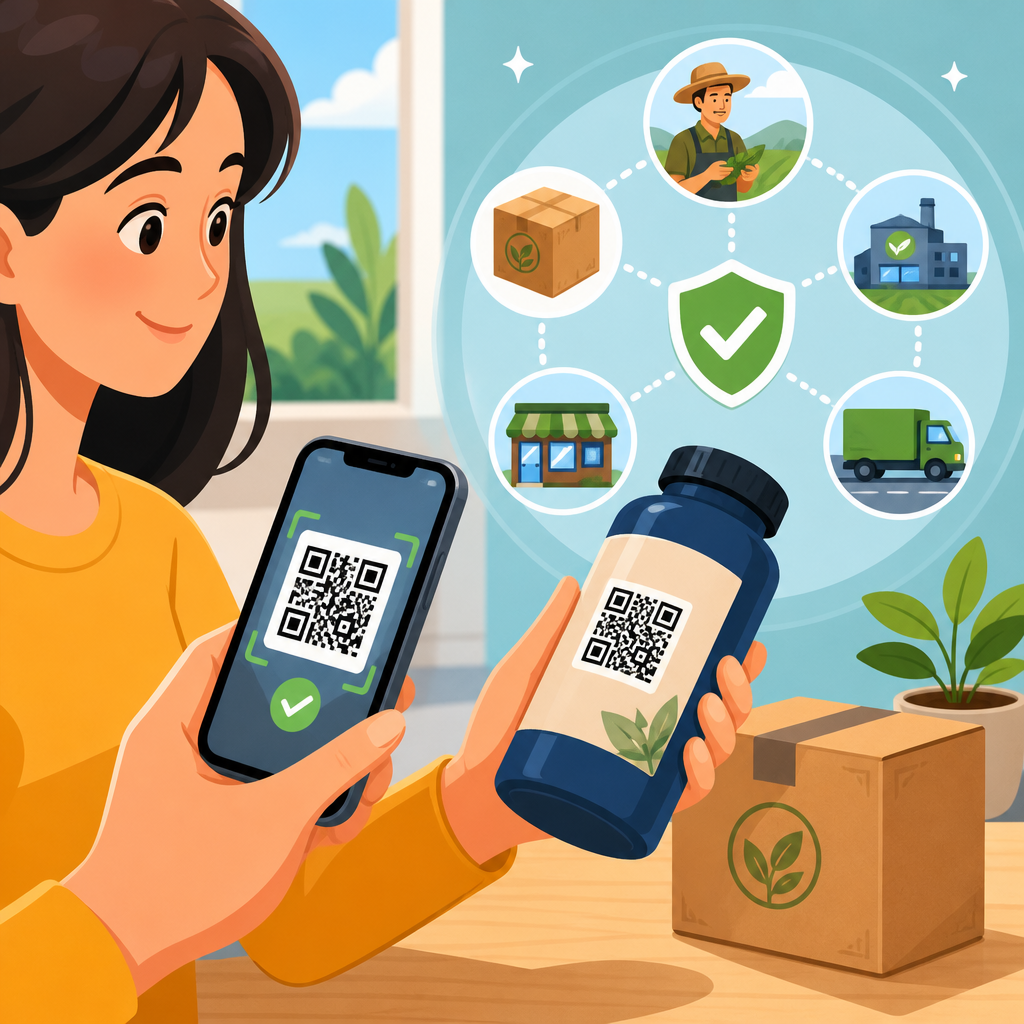
Authentication gets attention because counterfeiting is expensive, but transparency is often what wins customer loyalty. A QR code can present ingredient lists, allergen details, sourcing locations, factory certifications, carbon disclosures, repair instructions, and recall notices in a format that is easier to update than printed packaging. This is especially valuable when label space is limited or when products move across markets with different language and disclosure requirements. In food and beverage, for example, I have seen scan pages used to show farm locations, harvest dates, cold-chain handling notes, and third-party certifications such as Rainforest Alliance, Fairtrade, or USDA Organic. Those details help buyers evaluate claims instead of relying on broad marketing language.
Transparency also reduces the distance between compliance information and the person using the product. Cosmetics brands can link to INCI ingredient explanations and patch-test guidance. Apparel brands can disclose fiber composition, dye processes, and care instructions that support longer garment life. Battery, electronics, and appliance manufacturers can use packaging codes to surface recycling instructions, spare parts, software update policies, and safety bulletins. The strongest examples give shoppers layered access: a simple summary first, then deeper documentation for users who want certificates, audit records, or chain-of-custody details. This structure supports both casual consumers and professional buyers without overwhelming either group.
There is a discipline to credible transparency. It requires source systems, governance, and restraint. If a page says a coffee came from a named cooperative in Colombia, the brand should be able to support that claim with purchase records or verified supplier data. If a seafood label claims full traceability, it should identify what is actually tracked: vessel, landing site, processor, lot number, or retail unit. Vague digital storytelling is not the same as traceability. The more specific the claim, the stronger the packaging experience becomes. That is one reason QR codes fit smart packaging so well: they let brands provide precise, current, evidence-backed information without crowding the physical pack.
Core smart packaging components and technology choices
Successful QR code packaging systems depend on architecture, not just artwork. The code itself is only the visible layer. Underneath it, brands need an identifier strategy, a content management workflow, packaging line integration, scan analytics, and security controls. Static QR codes are acceptable for evergreen educational pages, but smart packaging hubs usually need dynamic QR codes because destinations, campaign logic, and compliance content change over time. Dynamic systems also make it possible to route scans by geography, language, device, channel, or product status. A customer in Germany may need different regulatory disclosures than a customer in Canada, even when the package looks identical.
Many organizations now align QR deployments with GS1 standards because they support consistent product identification and interoperability across supply chains. GS1 Digital Link is particularly important because it can encode standardized identifiers such as GTINs in web-ready form, enabling one scan to connect users and systems to product data. For internal operations, the QR code may connect with ERP platforms such as SAP or Oracle, warehouse systems, manufacturing execution systems, CRM records, and quality databases. For consumer experiences, teams often use landing page builders, analytics tools, and tag managers to measure engagement. Where stronger assurance is needed, some brands add public-key cryptography, secure APIs, or blockchain-based audit trails, though the latter only adds value when off-chain data quality is strong.
| Component | Purpose in smart packaging | Typical tools or standards |
|---|---|---|
| Unique identifier | Distinguishes each item, batch, or case for verification and tracking | Serial numbers, GTIN, lot code, GS1 Digital Link |
| Dynamic QR management | Routes scans to current content and enables analytics | Enterprise QR platforms, campaign managers |
| Packaging line integration | Prints and commissions codes during production | MES, printer-verifier systems, vision inspection |
| Authentication engine | Checks code validity and flags suspicious scan patterns | Secure cloud database, rules engine, APIs |
| Transparency content layer | Delivers provenance, certifications, care, and compliance data | CMS, PIM, supplier data platforms |
| Analytics and alerts | Measures scans and detects diversion or counterfeit hotspots | BI dashboards, geolocation reports, anomaly detection |
Physical implementation matters as much as software. Codes must be printed at the right size, contrast, and quiet zone to scan under warehouse and retail conditions. Curved surfaces, metallic substrates, condensation, abrasion, and overlamination can all degrade readability. I strongly recommend line-side verification and regular ISO/IEC 15415 print quality testing for 2D symbols. Placement also influences trust. A code hidden under a flap may be perceived as more secure for authentication, while a prominent outer-pack code may drive more scans for transparency and service. In some programs, both are used: one visible code for consumer information and one concealed or tamper-linked code for higher-assurance verification.
Industry use cases: pharmaceuticals, food, luxury, and electronics
Pharmaceuticals remain the clearest example of why QR-enabled smart packaging matters. Counterfeit medicines create direct patient harm, so verification systems must be accurate, fast, and tightly governed. Serialized identifiers tied to batch and expiry data help pharmacies, hospitals, and patients confirm product legitimacy. During recalls, a scan experience can route users to lot-specific guidance instead of broad, confusing notices. In over-the-counter health products, packaging codes also reduce misuse by linking to dosage instructions, contraindications, and storage requirements. The combination of authentication and safety information makes the package function as a persistent clinical communication channel.
Food and beverage brands use QR codes differently but just as effectively. A produce company can connect a scan to harvest date, farm region, packing facility, and cold-chain notes. A baby formula manufacturer can provide preparation instructions, allergen statements, and authenticity checks in markets affected by counterfeit imports. Wine and spirits producers often combine serialized labels, tamper-evident closures, and scan verification to protect high-value bottles. This is crucial in secondary marketplaces and travel retail, where substitution and refill fraud are persistent risks. Transparency has commercial value here too. Buyers of premium olive oil, specialty coffee, or pasture-raised meat increasingly expect verifiable origin information, not just branding.
Luxury and fashion brands have embraced digital product passports through QR or NFC-linked packaging and labels. Authentication supports both the first sale and the resale economy, where provenance can preserve value. A handbag, watch, or sneaker with a verifiable digital record is easier to resell confidently. Electronics brands use QR-enabled packaging to streamline onboarding, registration, and support while reducing counterfeit accessories and gray-market diversion. If a charger or battery pack fails verification, the scan page can warn users about safety risks and direct them to approved sellers. These examples show the full range of smart packaging benefits: fraud reduction, better service, richer product storytelling, and cleaner post-purchase journeys.
Implementation challenges, governance, and what brands must get right
The biggest mistake companies make is treating QR code authentication as a design project instead of an operational system. A secure experience depends on clean master data, disciplined serialization, supplier alignment, and response workflows when anomalies appear. If the database is outdated, the scan result will be unreliable. If distributors are not mapped correctly, diversion patterns will be missed. If customer care teams do not know how to handle “unable to verify” cases, the trust benefit disappears. I have seen strong pilots fail because ownership was fragmented across packaging, marketing, IT, and compliance with no single governance model.
Privacy is another consideration. Brands should collect only the scan data they need, disclose practices clearly, and comply with laws such as the GDPR and CCPA where applicable. Geolocation used for fraud analytics should generally be approximate, not invasive. Accessibility also matters. Landing pages should load quickly, support multiple languages, and work well on low-bandwidth mobile connections. If a verification page takes eight seconds to load, many consumers will abandon it, and field teams will lose usable evidence. Security requires realism too. No QR code alone is counterfeit-proof. Codes can be copied, pages can be spoofed, and databases can be mismanaged. The goal is layered defense and rapid detection, not magical immunity.
Brands also need measurable success criteria. Useful metrics include first-time scan rate, repeat scan anomalies, retailer verification adoption, diversion alerts by region, recall engagement, customer service deflection, and conversion from scan to registration or support completion. Content governance is equally important for a smart packaging hub page like this one. The package should connect users to related resources on digital product passports, QR code security, supply chain traceability, serialized packaging, sustainability disclosures, and post-purchase engagement. That creates a coherent information ecosystem instead of isolated scan pages. The best programs treat every package as a durable entry point into product truth.
QR codes for product authentication and transparency are now one of the most practical ways to make smart packaging useful for both brands and buyers. They help confirm whether a product is genuine, connect packaging to batch and origin records, surface current safety and compliance information, and create a direct digital relationship at the moment of need. When combined with serialization, standards-based identifiers, secure databases, and disciplined content governance, they become far more powerful than a simple link. They turn packaging into infrastructure for trust.
The core lesson is straightforward. Authentication without transparency feels defensive, and transparency without verification feels unproven. Smart packaging works best when both are delivered together through a fast, clear scan experience backed by reliable operational data. That approach reduces counterfeit risk, improves customer confidence, supports recalls and service, and gives companies better visibility across channels and markets. It also prepares brands for the wider shift toward connected products, digital product passports, and richer lifecycle communication.
If you are building a smart packaging strategy under QR Code Trends & Innovations, start by mapping one product line, one data model, and one customer journey from print to scan to proof. Then expand with standards, serialization, and governance that can scale. Done well, a QR code does not just label a product. It helps prove the product deserves to be trusted.
Frequently Asked Questions
How do QR codes help authenticate products and reduce counterfeiting?
QR codes help authenticate products by creating a fast, direct link between a physical item and verified digital records controlled by the brand or an authorized supply chain partner. When a customer, retailer, inspector, or distributor scans the code, they can be taken to a secure page that confirms whether the product is genuine, when and where it was produced, and whether it has already been scanned in suspicious ways. This is especially useful in industries where counterfeiting is a serious risk, such as pharmaceuticals, cosmetics, electronics, luxury goods, food, and beverages.
The strongest authentication systems do more than point to a generic website. They often assign a unique QR code or serialized identity to each individual unit, batch, or package. That unique identifier can be matched against manufacturing records, shipping data, and sales channels. If a fake product copies a code, repeated scans from different locations or unexpected patterns can trigger alerts. In that way, QR codes do not just help verify authenticity at the point of purchase; they also support broader anti-counterfeiting monitoring across the product lifecycle.
For brands, this creates a practical and scalable layer of product security without making the customer experience difficult. For consumers, it provides immediate reassurance. Instead of relying only on packaging appearance, they can scan and confirm that the product came from a legitimate source. That combination of convenience, traceability, and real-time verification is why QR codes have become a core tool in modern product authentication programs.
What kind of transparency information can a QR code provide to consumers?
A QR code can provide consumers with a much richer level of product transparency than can fit on a label or carton. After scanning, buyers can access details such as country of origin, farm or factory location, ingredient sourcing, certifications, manufacturing date, batch or lot number, expiration information, quality assurance checks, storage guidance, and recommended usage instructions. For certain categories, brands may also share sustainability metrics, allergen information, recyclability details, or evidence of ethical labor and responsible sourcing practices.
This matters because transparency is not just about offering more data; it is about giving customers meaningful, trustworthy context. For example, a food brand might show where ingredients were grown, how the product was processed, and whether it passed safety testing. A cosmetics company might disclose ingredient functions, cruelty-free certifications, and manufacturing standards. A fashion label might connect the item to material origin, factory compliance information, and care instructions. In each case, the QR code turns static packaging into a live information channel.
Transparency delivered through QR codes also allows brands to keep information current. If guidance changes, certifications are renewed, or additional documentation becomes available, the linked content can be updated without redesigning the entire package. That flexibility helps companies stay accurate while giving consumers timely access to the details they increasingly expect before making a purchase.
Are QR codes alone enough to guarantee product authenticity?
QR codes are highly effective, but by themselves they are not a complete guarantee of authenticity. A basic QR code that simply links to a public webpage can be copied and placed on counterfeit packaging. That is why strong authentication programs usually combine QR codes with additional security and data controls. These may include unique serialized identifiers, encrypted or tokenized links, tamper-evident packaging, hidden markers, holograms, secure databases, geolocation monitoring, scan frequency analysis, and integration with track-and-trace systems.
In other words, the QR code is often the visible access point rather than the entire security system. What makes it powerful is the digital intelligence behind it. If each product has its own identity and scan behavior is monitored, brands can detect cloned codes, suspicious distribution patterns, and unauthorized resellers. Some systems can also display different responses depending on who scans the code, allowing consumers, retailers, and internal teams to view tailored verification information.
For the best results, companies should treat QR-based authentication as part of a layered product protection strategy. Consumers should also understand that not all QR implementations are equal. A well-designed system backed by secure serialization and reliable product data can be extremely effective, while a simple one-size-fits-all code offers more limited protection. The value of the QR code depends on the security architecture, governance, and supply chain discipline supporting it.
What are the business benefits of using QR codes for authentication and transparency?
The business benefits extend well beyond fighting fake goods. First, QR codes help protect revenue and brand reputation by making counterfeiting harder and by giving companies better visibility into where suspicious products appear. A brand that can identify unauthorized sales channels, detect duplicate scans, and validate inventory more effectively is in a much stronger position to protect both customers and market share.
Second, QR codes improve trust and customer confidence. When buyers can instantly verify authenticity and review reliable product details, they are more likely to feel secure in their purchase and more likely to remain loyal to the brand. This is particularly important for products tied to health, safety, performance, or premium pricing. Transparency can also reduce customer service friction by answering common questions about origin, ingredients, instructions, or compliance before the customer needs to reach out.
Third, QR codes create operational and strategic value. They can support recalls, quality investigations, and inventory traceability by connecting products to batch-level or unit-level records. They can also provide insights into consumer behavior, such as where and when products are scanned, which markets show the highest engagement, and what information customers care about most. As regulations and consumer expectations continue to rise, QR-enabled smart packaging helps businesses meet compliance needs while turning packaging into a trusted communication and intelligence channel.
How should brands implement QR codes for product authentication and transparency effectively?
Effective implementation starts with a clear strategy. Brands need to define what they want the QR code system to accomplish: authentication, supply chain traceability, consumer education, regulatory disclosure, post-purchase engagement, or all of the above. Once those goals are clear, the next step is deciding what level of identification is needed, such as a code for each product unit, each package, or each batch. In higher-risk categories, unique serialization is usually the most effective approach because it allows more precise verification and stronger counterfeit detection.
Just as important is the quality of the data behind the experience. The landing page should be fast, mobile-friendly, secure, and easy to understand. Consumers should be able to quickly see whether the item appears genuine and access the most relevant transparency details without confusion. At the same time, the backend should connect to trusted product records, manufacturing data, logistics systems, and compliance documentation so the information presented is accurate and defensible. Poor data quality can weaken credibility even if the QR code itself works perfectly.
Brands should also think carefully about packaging design, user education, and ongoing monitoring. The code needs to be placed where it is easy to scan but difficult to tamper with, and the packaging should tell users why they should scan it. Internally, companies should monitor scan analytics for anomalies, keep linked information updated, and periodically test the experience across devices and markets. The most successful programs treat QR codes not as a one-time packaging feature, but as a managed trust infrastructure that supports authentication, transparency, and stronger customer relationships over time.