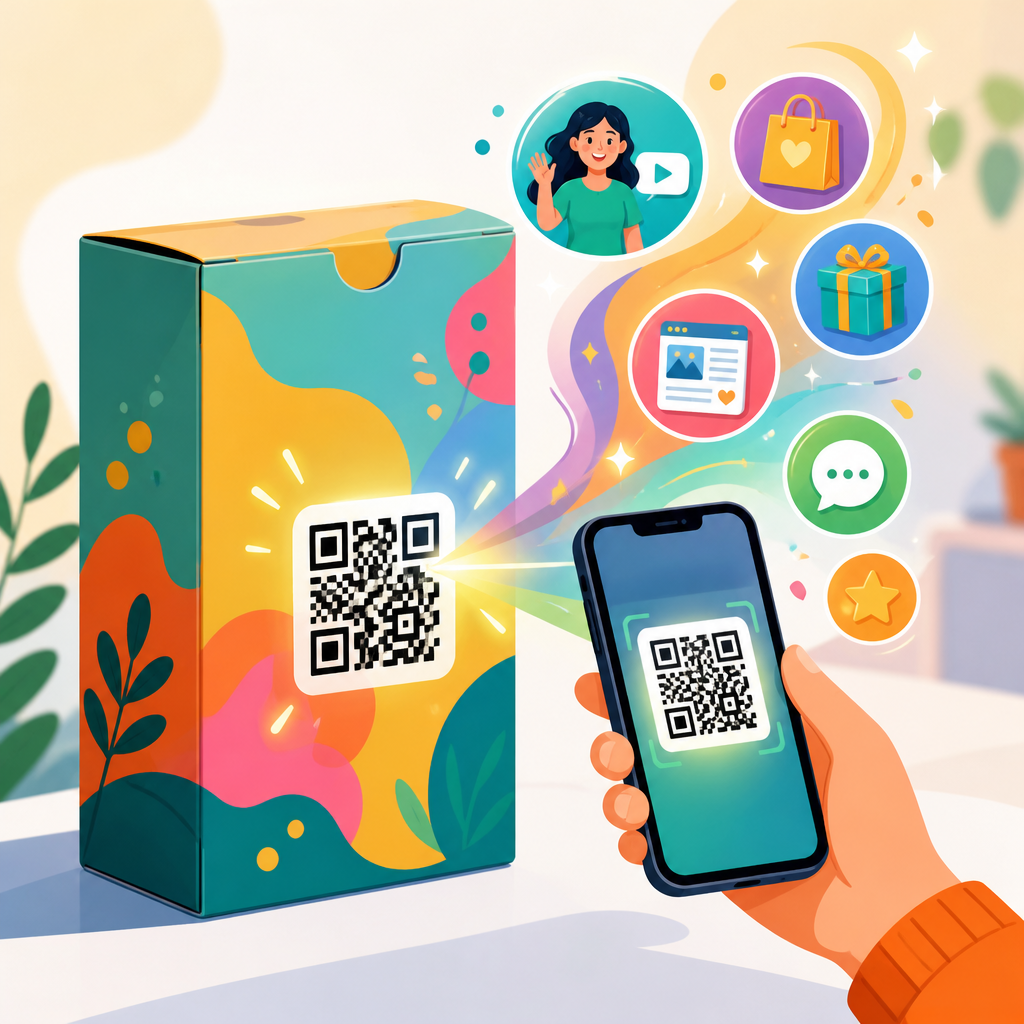
Packaging used to do one job: protect a product, display a brand, and survive the trip from factory to shelf. Today, smart packaging does far more, and QR codes are the simplest technology driving that shift. A quick scan can connect a box, bottle, pouch, or label to digital content, service tools, product verification, and post-purchase support. In practical terms, QR codes turn packaging into digital experiences by creating a low-cost bridge between physical products and mobile devices. For brands, that means measurable engagement. For consumers, it means instant access to useful information without downloading an app or typing a long web address.
Smart packaging refers to packaging enhanced with technologies that improve communication, traceability, authentication, or user interaction. Within that broad category, QR codes matter because they are inexpensive to print, globally recognizable, and flexible enough to support many outcomes. A single code can open instructions, ingredient details, loyalty rewards, repair guidance, reorder pages, or augmented reality experiences. Dynamic QR codes go further by allowing the destination to be changed after packaging is printed, which is essential for campaigns, recalls, regional compliance, and A/B testing. I have worked with brands rolling out connected packaging, and the difference between a static printed message and a scan-enabled package is dramatic: the package stops being the end of the marketing journey and becomes the beginning of an ongoing relationship.
This matters because packaging is one of the few brand touchpoints almost every buyer sees. Digital ads are skippable. Emails go unopened. Social posts disappear in crowded feeds. Packaging is physically present at purchase, unboxing, use, storage, and disposal. When a QR code is placed well and tied to a clear value exchange, it captures attention at the exact moment interest is highest. It also solves a persistent business problem: limited physical space. Labels cannot carry every tutorial, certification, language variation, or promotional message, but a QR code can link to all of it. For companies navigating retail competition, compliance pressure, and rising customer expectations, packaging with QR-enabled digital experiences is no longer a novelty. It is becoming core infrastructure.
What Smart Packaging Looks Like in Practice
Smart packaging is not a single format. It includes connected experiences across food, beauty, pharmaceuticals, electronics, apparel, and industrial goods. In the market, the most common use case is informational packaging: a QR code on-pack leads to a mobile page with product origin, how-to content, FAQs, safety data, or warranty registration. Food brands often use this to show sourcing, nutrition context, recipes, and recycling instructions. Cosmetics companies use it for shade matching, tutorials, ingredient explainers, and replenishment links. Pharmaceutical packaging uses codes for authentication, patient information leaflets, dosage guidance, and adverse event reporting pathways.
The strength of QR codes in smart packaging is that they work across the full product lifecycle. Before purchase, they support comparison and trust-building on shelf. During unboxing, they trigger setup guides, welcome content, or premium storytelling. During use, they provide troubleshooting, refill programs, and support. After use, they can direct the customer to recycling instructions, resale authentication, or subscription reorder pages. This lifecycle view is where many packaging projects either succeed or fail. A code that only links to the homepage wastes the moment. A code that solves the next likely customer question creates measurable value.
Smart packaging also supports internal operations. Brands can encode SKU-level identifiers, batch references, or serialized links that connect front-end experiences with supply-chain systems. That does not mean every consumer sees the same destination. Good connected packaging architecture separates the visible call to action from the underlying data structure, allowing different outcomes for different markets, languages, and product lots while keeping the scan experience simple.
How QR Codes Create Better Consumer Experiences
A successful packaging scan experience answers three questions quickly: what is this, why should I scan it, and what do I get immediately? Consumers will scan when the benefit is concrete. “Scan for setup in 60 seconds” performs better than “Learn more.” “Scan to check authenticity” outperforms generic digital prompts in categories with counterfeit risk. In my experience, the best-performing packaging QR codes remove friction at moments of uncertainty. Examples include furniture assembly videos, electronics quick-start guides, skincare routines for morning and night use, and coffee brewing ratios based on device type.
Personalization is another major advantage. A dynamic QR code can route users by device language, geography, campaign period, or product variant. A snack brand can send first-time scanners to a contest landing page and repeat scanners to a loyalty offer. A wine label can show region-specific legal disclosures while maintaining a consistent package design. Because the package is scanned on a personal phone, the experience feels direct in a way shelf signage does not.
There is also a trust benefit. Customers increasingly want proof, not slogans. They want to verify organic claims, allergen details, sustainability certifications, and refill compatibility. QR-enabled packaging lets brands provide depth without cluttering design. When connected to transparent product data, the code becomes a mechanism for confidence. That is particularly important in regulated categories, where too much simplification can create risk and too little explanation can create confusion.
Core Use Cases Brands Should Prioritize
Not every package needs a flashy campaign. The most durable smart packaging programs start with practical use cases that customers repeatedly need. Based on deployment patterns across industries, the strongest priorities are support, authenticity, compliance, loyalty, and replenishment. Support content reduces contact center volume by answering routine questions. Authentication helps fight diversion and counterfeiting. Compliance links expand room for multilingual instructions and updates. Loyalty programs create first-party engagement at the product level. Replenishment shortens the path from use to reorder.
For consumer electronics, setup and troubleshooting are the highest-value first step. A QR code on the box can launch a model-specific guide, pairing instructions, firmware update page, and live support options. For food and beverage, recipes, sourcing, and freshness education often drive stronger usage. For beauty and personal care, tutorial content and shade or routine recommendations consistently outperform broad brand storytelling. In pharmaceuticals and supplements, patient information, safety details, and verification are foundational. In apparel and footwear, authenticity, care instructions, and styling ideas create the best mix of utility and brand value.
| Industry | Best QR packaging use case | Why it works |
|---|---|---|
| Food and beverage | Recipes, sourcing, recycling guidance | Answers immediate usage and trust questions at home |
| Beauty | Tutorials, ingredient details, refill links | Supports purchase confidence and repeat orders |
| Pharmaceuticals | Authentication, patient information, safety updates | Improves trust and access to regulated content |
| Consumer electronics | Setup guides, troubleshooting, warranty registration | Reduces friction and lowers support demand |
| Apparel | Authenticity checks, care instructions, styling | Extends product value after purchase |
The common thread is utility. People scan packages when the code promises something useful now. Campaign creativity matters, but utility is what sustains scan rates beyond launch month.
Designing QR Codes for Packaging Performance
Placement, contrast, size, copy, and landing-page speed determine whether a QR code on packaging succeeds. The code should sit where the user naturally pauses: near opening points, product names, instructions, or authentication cues. Avoid placing it across folds, curves that distort modules, or reflective finishes that interfere with camera recognition. In production, I usually advise testing printed samples under real shelf lighting and at common hand distances, because a code that scans perfectly in a studio can fail under fluorescent retail conditions.
Call-to-action copy is just as important as print quality. “Scan for recipes” is stronger than “Scan me” because it states the reward. Packaging should also indicate whether scanning requires internet access, creates an account, or opens external content. That small clarity improves trust. On the technical side, error correction, quiet zone spacing, and minimum size must align with package material and print process. A tiny code may preserve aesthetics, but if it forces awkward scanning, it damages both performance and brand perception.
Landing pages should be mobile-first, lightweight, and context-aware. If the page loads slowly or drops users onto a cluttered site menu, the package experience breaks. Good smart packaging pages answer the primary question immediately, then offer deeper links for those who want more. Structured content matters here: short headings, product-specific information, localized details, and obvious next actions consistently outperform generic campaign microsites.
Measurement, Data, and Operational Value
One reason QR codes are central to smart packaging is measurability. Traditional packaging tells a story, but connected packaging produces data. Brands can track scan volume, time, geography, device type, repeat interactions, and conversion paths. With dynamic code platforms such as QR Code Generator Pro, Bitly Connections Platform, Flowcode, and Beaconstac, teams can update destinations, tag campaigns, and compare performance across SKUs or retailers. When integrated with analytics tools like Google Analytics 4 or Adobe Analytics, packaging becomes a measurable media channel rather than a static cost center.
This data supports better decisions. If one product variant shows high scan rates for ingredient content but low engagement with loyalty offers, the brand can adjust the destination mix. If support scans spike after launch, operations can identify onboarding friction early. If specific regions repeatedly access recycling information, sustainability messaging can be expanded there. Packaging data is especially valuable because it comes from people who physically possess the product, making it closer to usage behavior than top-of-funnel ad metrics.
There are limits, and smart teams respect them. Scan data is directional, not complete. Not every customer scans, attribution can be imperfect, and privacy requirements must be handled carefully. Consent, cookie handling, and data retention should follow applicable rules such as GDPR and CCPA where relevant. The goal is not surveillance. The goal is to learn which package interactions help customers most and improve the experience accordingly.
Authentication, Compliance, and Sustainability
Some of the most strategic QR packaging projects are not promotional at all. They are about trust, regulation, and lifecycle transparency. Counterfeiting remains a serious problem in pharmaceuticals, luxury goods, cosmetics, and premium spirits. A QR code tied to a secure verification service can help customers confirm product legitimacy and help brands identify suspicious distribution patterns. The code alone is not enough for high-risk categories; it should be paired with serialization, tamper-evident packaging, or backend verification logic. But as a customer-facing tool, it is highly effective because it gives the buyer a simple action to take.
Compliance is another major driver. Many products need multilingual instructions, safety details, declarations, or updated notices that do not fit comfortably on-pack. QR codes provide access to expanded digital labeling while preserving design clarity. Brands must still validate legal requirements by market, because digital access does not replace every mandatory physical label element. However, for supplementary content and updates, connected packaging is often the most practical route.
Sustainability benefits are equally important. QR codes can explain materials, disposal routes, refill systems, and carbon or sourcing claims with far more nuance than a symbol ever could. They can also support circular models by linking customers to return, refill, repair, or resale programs. When brands say a package is recyclable, compostable, or reusable, they should use the scan experience to define local conditions and actual next steps. That precision prevents greenwashing and increases compliance with emerging environmental disclosure expectations.
Building a Smart Packaging Hub That Lasts
For a smart packaging program to scale, brands need a hub approach rather than isolated campaigns. That means creating reusable templates for product pages, governance for dynamic destinations, print standards, analytics tagging, and cross-functional ownership between packaging, digital, legal, and customer support teams. The package should point to content designed for the exact scan context, and each destination should link logically to deeper resources such as setup centers, ingredient glossaries, sustainability pages, recall notices, and loyalty enrollment. That internal structure helps both users and search visibility.
In practice, the strongest programs start small, prove utility, then expand. Choose one product line, one high-value use case, and one measurable business outcome. Test scan prompts, placement, destination format, and follow-up actions. Once performance is clear, build templates that other categories can adopt without starting from zero. Smart packaging succeeds when it is treated as product infrastructure, not a one-off campaign. If you are planning your next packaging refresh, add QR-enabled digital experiences early in the process, define the customer benefit first, and build the hub that turns every package into a useful, measurable touchpoint.
Frequently Asked Questions
How do QR codes transform product packaging into a digital experience?
QR codes transform packaging by giving physical products a direct, scannable connection to digital content on a customer’s phone. Instead of packaging serving only as a printed surface for branding, instructions, and compliance information, it becomes an interactive touchpoint that can continue the customer journey after the sale. A scan can instantly open product tutorials, setup guides, ingredient details, care instructions, warranty registration, loyalty offers, reorder pages, or customer support resources. This creates a much richer experience than static print alone can provide.
For brands, the value is practical as well as creative. QR codes are inexpensive to add to a box, label, bottle, pouch, or insert, yet they can support marketing, service, education, and retention all at once. They also let brands update linked content without redesigning the packaging itself, which is especially useful for seasonal campaigns, product updates, or region-specific information. In short, QR codes turn packaging into a flexible digital gateway that helps brands extend engagement beyond the shelf and gives customers faster access to useful information exactly when they need it.
What kinds of digital content can brands deliver through packaging QR codes?
Brands can deliver a wide range of digital experiences through QR codes, depending on the product category and the customer’s needs. Common examples include how-to videos, assembly instructions, recipes, user manuals, product registration forms, authentication tools, FAQs, refill or reorder links, promotional campaigns, app downloads, and direct access to customer support. For food and beverage products, a QR code might lead to sourcing information, nutrition details, or serving ideas. For cosmetics or personal care items, it can link to tutorials, usage guidance, or ingredient transparency pages. For electronics or home goods, it might open setup walkthroughs or troubleshooting steps.
Beyond utility, QR codes can support brand storytelling and personalization. Packaging can connect shoppers to founder messages, sustainability commitments, behind-the-scenes content, or interactive experiences such as contests, loyalty enrollment, and social sharing prompts. In regulated industries, QR codes can also reduce clutter on the package by moving detailed documentation online while keeping it easy to access. The key advantage is flexibility: one small printed code can open the door to content that is timely, measurable, and tailored to different audiences, markets, or stages of the customer lifecycle.
Why are QR codes considered one of the simplest and most cost-effective smart packaging tools?
QR codes are widely considered one of the simplest smart packaging technologies because they do not require advanced hardware, special scanners, or major changes to packaging production. Most consumers already have smartphones capable of scanning QR codes with the native camera app, which removes friction from the experience. From a brand perspective, adding a QR code to existing packaging artwork is usually straightforward and affordable, especially compared with more complex connected packaging options that rely on embedded chips, sensors, or specialized infrastructure.
They are also cost-effective because a single code can support multiple business goals at once. The same packaging element can help reduce customer service inquiries, improve onboarding, support product authentication, drive repeat purchases, collect first-party engagement data, and strengthen post-purchase communication. Dynamic QR codes are especially valuable because they allow brands to change the destination URL or campaign content after packaging has already been printed. That means companies can test messaging, localize experiences, update landing pages, and extend campaign life without wasting inventory. For brands looking to modernize packaging without taking on high technology costs, QR codes offer a practical and scalable starting point.
How can QR codes on packaging improve customer support and post-purchase engagement?
One of the biggest advantages of packaging QR codes is their ability to help customers immediately after purchase, when questions and support needs are most likely to arise. A quick scan can direct someone to setup instructions, product demonstrations, troubleshooting guides, warranty registration, returns information, or live support channels. That reduces the effort required to find help and can improve the customer experience significantly. Instead of searching a website manually or contacting support for basic questions, customers can get relevant answers directly from the package in seconds.
QR codes also create opportunities for meaningful post-purchase engagement. After the initial sale, packaging can continue to drive interaction through care tips, refill reminders, cross-sell recommendations, loyalty programs, review requests, and reorder links. This is particularly useful for consumables, subscription-friendly products, and items that benefit from education or ongoing use guidance. From the brand’s perspective, this turns packaging into a retention tool rather than a one-time communication asset. It helps extend the relationship, improve product satisfaction, and encourage repeat business, all through a familiar and low-friction mobile experience.
Can QR codes on packaging also help with trust, transparency, and product verification?
Yes, QR codes can play an important role in building trust by making product information easier to verify and understand. When linked to the right digital experience, a QR code can help customers confirm authenticity, review sourcing details, check batch or lot information, explore certifications, or learn more about ingredients and manufacturing practices. This is especially valuable in industries where counterfeiting, compliance, or consumer safety are major concerns, such as cosmetics, supplements, pharmaceuticals, premium beverages, and luxury goods.
Transparency matters because customers increasingly want more than marketing claims on a label. They want evidence, context, and easy access to reliable information. A QR code gives brands a practical way to provide that depth without overcrowding the package design. It can connect buyers to detailed product histories, sustainability initiatives, traceability systems, or official verification portals that reinforce legitimacy and confidence. When used well, this does more than answer questions. It shows that the brand is willing to be open, informative, and helpful, which can strengthen credibility and support long-term customer loyalty.