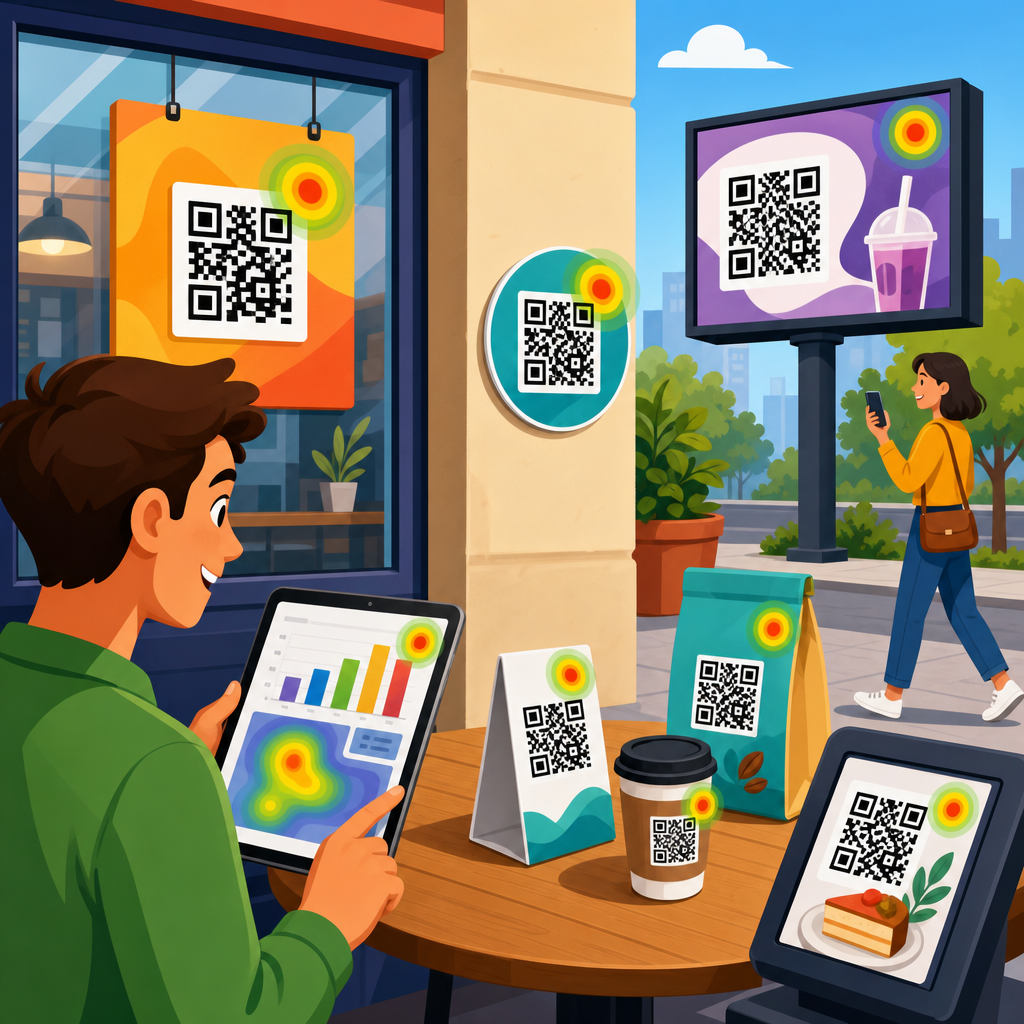
QR codes for omnichannel marketing strategies give brands a practical bridge between physical touchpoints and digital experiences, turning packaging, print, stores, events, and direct mail into measurable entry points for conversion. In this context, omnichannel marketing means coordinating customer interactions across channels so the journey feels connected rather than fragmented, while offline-to-online integration refers to moving someone from a physical environment into a digital action such as visiting a landing page, joining a loyalty program, redeeming an offer, or completing a purchase. I have implemented QR campaigns across retail, hospitality, events, and franchise networks, and the pattern is consistent: when the code, destination, and message align, response rates and attribution improve quickly. This matters because customers already move fluidly between offline and digital channels. They see an in-store display, compare options on mobile, read reviews, sign up by email, and buy later through an app or website. A QR code shortens that path. Instead of asking people to remember a URL, search a brand name, or type a discount code manually, it creates a direct scan-to-action workflow. For marketers, that means less friction, richer first-party data, better campaign tracking, and more opportunities to personalize follow-up communication based on source, location, and intent.
Modern smartphone cameras made QR code adoption mainstream, but broad usage alone does not guarantee results. Effective QR codes for omnichannel marketing strategies depend on campaign architecture. The destination must match the context. A code on product packaging should not send users to a generic homepage if what they need is setup instructions, ingredient details, warranty registration, or replenishment ordering. A code on a retail endcap should lead to product comparisons, reviews, or a buy-online-pickup-in-store option. A code on direct mail should open a page with personalized messaging and a clear next step. When marketers treat the QR code as a media channel rather than a graphic add-on, it becomes a high-intent connector between physical exposure and digital conversion. That is why this topic serves as a hub for offline-to-online integration: it touches campaign planning, landing page design, analytics, consent management, customer relationship systems, and operational execution across every channel a brand controls.
How QR codes connect offline and online customer journeys
A QR code works best when it resolves a real customer task at the moment interest is highest. In stores, that task may be accessing dimensions, care instructions, compatibility information, social proof, or extended inventory not available on the shelf. On packaging, it may be recipes, tutorials, authenticity verification, refill ordering, or customer support. In out-of-home advertising, it may be a location-based offer or app download. At events, it may be lead capture, agenda access, demo booking, or gated content. The strongest omnichannel programs map these moments deliberately. They identify physical touchpoints, define likely intent, and create destinations that answer immediate questions while opening a path to deeper engagement. This is what makes offline-to-online integration operational rather than theoretical.
Retail offers a clear example. A cosmetics brand may place a dynamic QR code on shelf talkers next to a foundation line. Instead of driving to the homepage, the code opens a mobile page with shade matching guidance, user reviews, before-and-after images, and an option to save favorites to an account. If the user consents, the brand can connect the scan to email or SMS follow-up and later attribute an ecommerce sale or an appointment booking. Restaurants use the same logic differently: table tents can send diners to loyalty enrollment, digital menus, allergen details, or a post-meal feedback form tied to a visit window. B2B marketers use QR codes on trade show booths to route attendees to product sheets, calculators, and meeting schedulers, reducing manual lead handling. In each case, the code is not the strategy; it is the trigger that activates a coordinated sequence across media, content, data, and retention channels.
Best placements for offline-to-online integration
Placement determines scan volume and scan quality. High visibility helps, but relevance matters more. Packaging is one of the highest-value placements because it reaches existing buyers with strong intent. For consumer packaged goods, packaging QR codes can support onboarding, subscription replenishment, user-generated content campaigns, and post-purchase education. Print media still performs when the audience and offer match. Catalogs, brochures, inserts, and direct mailers can include unique or segmented QR codes tied to specific households, regions, or creative versions. In-store signage works well when the code solves a problem the shelf tag cannot, such as limited space for technical specs or social proof. Window decals can convert walk-by traffic after hours by directing shoppers to browse, book, or buy from mobile.
Events and field marketing create especially strong conditions because attention is focused and intent is concentrated. Badges, booth panels, speaker slides, and handouts can all carry QR codes, but the destination should differ by placement. A booth code may lead to a lead form with hidden campaign parameters, while a session slide may direct people to download the presentation or join a nurture track. Outdoor placements such as transit ads or billboards need short, clear calls to action and a mobile-first destination because the user has limited time and varying connectivity. For franchises and multi-location brands, local landing pages paired with location-specific QR codes help measure store-level performance, support local inventory messaging, and reduce the common mistake of sending everyone to the national homepage.
Campaign design principles that increase scan and conversion rates
In practice, five factors usually determine whether a QR campaign performs: context, incentive, destination quality, technical reliability, and measurement. Context means the offer fits the moment. Incentive means the user understands why scanning is worth the effort, whether that is convenience, exclusive access, savings, or useful information. Destination quality means the landing page loads fast, reflects the promise made next to the code, and presents one primary action. Technical reliability includes dynamic code management, proper redirects, HTTPS security, and testing across iPhone and Android devices. Measurement means every scan is tagged with source, medium, campaign, creative, and, when appropriate, location or store identifiers.
| Offline touchpoint | Best QR destination | Primary KPI | Common mistake |
|---|---|---|---|
| Product packaging | Setup guide, loyalty signup, reorder page | Registrations or repeat purchases | Sending users to the homepage |
| Retail shelf or endcap | Reviews, comparisons, inventory, BOPIS | Add-to-cart or store-assisted sale | Offering too many choices |
| Direct mail | Personalized landing page with offer | Lead conversion rate | Using non-personalized generic pages |
| Trade show booth | Demo booking, brochure download, form | Qualified leads | Collecting data without follow-up routing |
| Window display | Local inventory, appointment booking, ecommerce | After-hours conversions | Ignoring store-specific context |
Creative execution matters more than many teams expect. The call to action should be explicit: “Scan to compare models,” “Scan for ingredients and recipes,” or “Scan to book a demo.” Generic language like “Scan me” underperforms because it does not explain the reward. Size, contrast, and quiet zone affect scannability, especially in low light or on curved packaging. I typically recommend testing the printed code from the actual expected distance rather than relying on on-screen previews. Dynamic QR codes are usually preferable because they allow destination changes, campaign pausing, and analytics without reprinting the asset. However, they should be governed carefully so old scans do not route to expired or irrelevant pages.
Measurement, attribution, and first-party data
One reason marketers prioritize QR codes for omnichannel marketing strategies is attribution. Physical media has historically been hard to measure beyond reach estimates, but a QR scan creates a discrete digital event. That event can be enriched with UTM parameters, timestamp, device type, geography, and campaign metadata, then passed into analytics and automation systems. Google Analytics 4 can track landing page sessions and downstream conversions, while customer data platforms and CRM platforms such as Salesforce, HubSpot, Klaviyo, or Adobe can attach scans to known profiles once a user authenticates or submits a form. This makes it possible to compare store posters against direct mail, or packaging scans against event scans, using the same digital reporting structure.
Attribution still has limits, and strong teams acknowledge them. A scan does not always equal a sale, and some customers may see a QR code but convert later through search, app, or an in-store associate. That is why QR analytics should be interpreted alongside media mix, lift testing, coupon redemption, loyalty data, and point-of-sale signals. For privacy compliance, marketers must be transparent about data collection, especially when tying scans to personal information or retargeting. The practical advantage is that QR programs often generate first-party data in places where brands previously had none. A package insert can turn an anonymous purchase into a registered customer relationship. A receipt QR code can drive feedback and account creation. A venue sign can turn foot traffic into opted-in subscribers. Over time, that dataset improves segmentation, suppression, and lifecycle marketing.
Operational systems behind scalable QR programs
Successful offline-to-online integration requires process discipline. Teams need naming conventions, version control, approval workflows, redirect governance, landing page templates, and clear ownership between brand, web, analytics, and operations. Without these basics, QR codes proliferate but reporting becomes unreliable. I have seen national brands print thousands of static codes that led to retired promotions because there was no centralized register of destinations. The fix is straightforward: maintain a QR inventory with campaign owner, source asset, live URL, backup URL, launch date, end date, and measurement taxonomy. Standardize UTM structures and use redirect rules that can be updated without touching the printed asset.
Localization is another operational priority. Multi-location organizations should route users to the nearest store page, local offer, or region-specific compliance content when appropriate. Restaurants, healthcare providers, real estate groups, and franchise systems benefit from templates that preserve brand consistency while allowing local customization. Accessibility also matters. A QR code should be accompanied by a short fallback URL and enough surrounding text that users understand the destination. Landing pages need readable type, fast performance, and forms that work cleanly on mobile. When QR codes are integrated with loyalty, ecommerce, service, and customer support systems, they stop being campaign novelties and become durable infrastructure for connected customer journeys.
Common mistakes and what better execution looks like
The most common mistake is weak intent matching. A user scans with a question in mind and lands somewhere that does not answer it. The second is overloading the page with multiple conflicting options. The third is treating every placement the same. A package scan, a bus shelter scan, and a showroom scan reflect different motivations and deserve different experiences. Another frequent problem is launching without baseline testing. Teams should validate scan rate, page load speed, form completion, and conversion by device, browser, and physical environment before scaling. Even simple changes such as stronger calls to action, shorter forms, or location-aware content can materially improve results.
Better execution looks disciplined and customer-centered. The code is easy to see, the promise is specific, the mobile experience is fast, and the next step is obvious. The data flows into reporting systems without manual cleanup. Store staff understand the purpose of the code and can reinforce it in person. Expired offers are retired cleanly, and evergreen placements such as packaging remain useful over time. Brands that perform well with QR codes usually do not chase novelty. They focus on removing friction between offline exposure and digital completion, then optimize based on actual behavior.
QR codes are most effective when they are planned as part of the entire customer journey, not added at the end of a campaign. For offline-to-online integration, they provide a direct, measurable path from physical attention to digital action across retail, packaging, print, events, outdoor media, and local marketing. The core principles are consistent: match the destination to intent, use clear calls to action, build fast mobile pages, implement reliable tracking, and connect scan data to CRM and lifecycle systems. Done well, QR codes improve convenience for customers while giving marketers better attribution, richer first-party data, and more control over follow-up across channels.
As a hub topic within QR code marketing and strategy, this area connects naturally to deeper work on packaging QR codes, retail signage, direct mail integration, event lead capture, local landing pages, analytics setup, and conversion-focused mobile experiences. If you are building or refining an omnichannel program, audit every physical touchpoint where customers already pause, compare, wait, or purchase. Then identify the digital action that would be most useful in that moment and design the QR experience around it. Start with a few high-intent placements, measure rigorously, and expand what proves conversion and retention value.
Frequently Asked Questions
1. How do QR codes support an omnichannel marketing strategy?
QR codes support omnichannel marketing by creating a direct, trackable link between physical customer touchpoints and digital brand experiences. In practice, that means a customer can move from a product package, in-store display, print ad, event booth, receipt, or direct mail piece into a landing page, product video, loyalty signup, app download, review form, or special offer in seconds. Instead of treating offline and online marketing as separate efforts, QR codes help unify them into one coordinated journey.
What makes them especially valuable is that they reduce friction. Customers no longer need to type a URL, search for a product, or remember a promotion later. They can scan in the moment of interest, which often leads to stronger engagement and better conversion rates. For brands, that scan creates measurable data that can be tied to campaign performance, location, channel, device type, time of engagement, and post-scan actions.
In a true omnichannel strategy, the goal is consistency across every interaction. QR codes help deliver that consistency by guiding customers from offline exposure to digital content that matches the context of the scan. For example, a code on retail signage can lead to inventory information for that store, while a code on packaging can direct existing customers to how-to content, cross-sell recommendations, or loyalty rewards. This makes the customer journey feel connected rather than fragmented, which is one of the core objectives of omnichannel marketing.
2. Where should brands use QR codes to connect offline and online customer experiences?
Brands should place QR codes anywhere customers naturally pause, evaluate, or make decisions. Common examples include product packaging, shelf talkers, point-of-sale displays, storefront windows, catalogs, brochures, event signage, business cards, menus, invoices, inserts, direct mail, and out-of-home advertising. The best placements are not simply high-visibility locations, but touchpoints where a scan can deliver immediate value to the customer.
For example, on packaging, a QR code can connect buyers to setup instructions, ingredient sourcing, tutorials, warranty registration, subscription options, or reorder pages. In retail stores, codes can extend limited shelf space by linking to full product specs, customer reviews, style guides, and complementary items. At events and trade shows, they can capture leads, distribute gated content, schedule demos, or drive attendees to personalized follow-up pages. In direct mail, they can bridge a traditional format with digital personalization by leading each recipient to a campaign-specific landing page or localized offer.
Placement should also reflect user intent and environment. A code on a busy street poster should lead to a fast, mobile-optimized experience with minimal form fields. A code on a post-purchase insert can support deeper engagement, such as tutorials, communities, or loyalty enrollment, because the customer is already invested. In short, the most effective QR code placements are those that align the physical context, customer mindset, and next digital action into one seamless transition.
3. What types of content or actions should a QR code lead to in an omnichannel campaign?
A QR code should lead to content or actions that are relevant to the customer’s current stage in the journey and meaningful in the context where the code appears. High-performing destinations often include landing pages, product detail pages, limited-time offers, app downloads, loyalty program registration, video demos, booking pages, customer support resources, feedback surveys, digital coupons, location finders, event registration forms, and social or community experiences. The key is not just sending traffic somewhere digital, but sending it somewhere useful.
In awareness-stage campaigns, QR codes often work well when they lead to educational or interactive content, such as product explainers, brand storytelling, or immersive campaign experiences. In consideration-stage environments, they can support purchase decisions with comparison tools, testimonials, reviews, FAQs, or inventory lookup. In conversion-focused campaigns, they may direct users straight to a checkout page, offer redemption flow, click-to-call option, or lead form. After purchase, they can extend the relationship through onboarding resources, care instructions, referral programs, replenishment reminders, or satisfaction surveys.
It is also important to tailor the destination by channel and audience segment. A code on premium packaging may lead to exclusive content or member benefits, while a code in a trade show booth might route visitors to a lead capture form with sales follow-up. Strong omnichannel execution means the scan destination reflects both the physical source and the broader campaign objective. When that alignment is done well, QR codes become more than a shortcut; they become a strategic mechanism for moving people through the funnel with less friction and greater relevance.
4. How can marketers measure the performance of QR codes across multiple channels?
Marketers can measure QR code performance by treating each code as a distinct campaign entry point and connecting scan activity to downstream business outcomes. At a basic level, brands should track scan volume, unique scans, scan location, time of day, device type, and the conversion rate of users after they land on the destination page. More advanced measurement can include lead quality, revenue influenced, repeat visits, assisted conversions, store visits, and customer retention tied to specific offline placements.
To do this effectively, each QR code should be associated with a specific campaign, channel, creative variation, audience segment, or physical location. Unique destination URLs, campaign parameters, and integrated analytics platforms make it possible to compare performance between packaging, print, in-store signage, direct mail, events, and outdoor media. For example, a brand might learn that direct mail generates fewer scans than in-store displays, but a much higher purchase rate, while event QR codes produce stronger lead capture but lower immediate sales. Those insights help refine channel strategy instead of relying on assumptions.
Measurement should extend beyond the scan itself. A scan is only the beginning of the journey, so marketers should evaluate what users do next: whether they browse, sign up, redeem an offer, purchase, register a product, or engage again later through another channel such as email or SMS. This is where QR codes become especially powerful in omnichannel marketing, because they make offline interactions attributable in a way that traditional physical media often cannot. When tied into CRM, marketing automation, and ecommerce or POS systems, QR code data can reveal how physical touchpoints contribute to the broader customer lifecycle.
5. What are the best practices for creating effective QR code experiences in omnichannel marketing?
The best QR code experiences start with a clear purpose. Every code should answer a simple strategic question: what exact action do you want the customer to take next, and why would they want to take it? Once that is defined, the destination should be mobile-friendly, fast-loading, easy to understand, and closely matched to the expectation created by the physical placement. If someone scans a code on a product package, they should not land on a generic homepage. They should reach a page designed specifically for that product and that stage of the customer journey.
Clear calls to action are equally important. Customers are more likely to scan when they know what they will get, such as “Scan for setup instructions,” “Scan to claim your offer,” “Scan to see colors in stock,” or “Scan for event resources.” Including this context increases both trust and scan rates. Visually, the code should be easy to spot, large enough to scan, placed where lighting and angles support usability, and tested across devices before launch. Marketers should also avoid cluttered backgrounds, poor contrast, or placements that require awkward physical positioning.
From a strategic perspective, brands should use QR codes as part of a connected system rather than a one-off tactic. That means aligning the scan destination with audience data, campaign messaging, retargeting flows, follow-up communications, and conversion paths. Dynamic QR codes are especially useful because they allow marketers to update destinations, test variants, and optimize campaigns without reprinting materials. Finally, marketers should keep the customer experience front and center. The most effective QR codes do not exist just because the technology is available; they exist because they make the path from physical interaction to digital engagement simpler, faster, and more relevant for the customer.