QR codes for print-to-digital conversions turn static marketing into measurable customer journeys, connecting flyers, packaging, direct mail, posters, menus, displays, and event signage to digital experiences that can be tracked, tested, and improved. A QR code is a scannable matrix barcode that stores a destination such as a URL, file, payment link, app deep link, or contact record. In marketing practice, the code matters less than the path it creates: someone sees a printed asset, scans it with a phone camera, lands on a mobile page, and completes an action. That action may be a purchase, signup, booking, download, review, coupon redemption, loyalty enrollment, or store visit confirmation.
I have used QR campaigns across retail, hospitality, B2B events, packaging, and direct mail, and the pattern is consistent: print performs better when the next step is immediate, useful, and frictionless. The reason this topic matters is simple. Print still captures attention in physical environments where digital ads cannot always reach, while mobile devices provide instant response. QR codes bridge those channels. They also solve a longstanding attribution problem. Traditional print can be memorable yet difficult to measure. By assigning unique destinations, campaign parameters, and dynamic redirects to each placement, marketers can finally connect an in-store poster or brochure to sessions, leads, revenue, and repeat visits.
Offline-to-online integration means designing campaigns so physical touchpoints move people into digital systems without breaking intent. The best programs do not treat the scan as the goal. They treat the scan as the handoff. That distinction changes everything from code size and placement to landing page speed, analytics structure, CRM tagging, and post-scan conversion design. As the hub for this topic, this article explains the strategic foundation, technical requirements, creative principles, measurement methods, and operational workflows behind QR codes that produce real print-to-digital conversions rather than vanity scans.
How QR Codes Drive Offline-to-Online Integration
Print-to-digital conversion starts with context. People scan when the value proposition is obvious, the timing is right, and the effort is low. A restaurant table tent that says “View today’s lunch specials” aligns with immediate intent. So does product packaging that says “See setup instructions,” or a real estate sign that says “Take the virtual tour.” By contrast, a generic “Scan me” message underperforms because it forces the customer to guess the benefit. In every campaign I have audited, the strongest lift came from rewriting the call to action before redesigning the code itself.
Different print formats create different expectations. On packaging, people want authentication, tutorials, recipes, warranty registration, and reorder links. In direct mail, they respond to personalized offers, landing pages that continue the message, and tracked appointment booking. In out-of-home placements such as transit ads, window posters, or conference banners, the scan window is brief, so the destination has to load fast and present one primary action. This is why offline-to-online integration is not only a media problem. It is user experience design in a physical setting.
Static and dynamic QR codes support this in different ways. A static code points to a fixed destination and cannot be edited after printing. It works for permanent uses such as Wi-Fi access, vCards, or unchanging URLs. A dynamic code uses a short redirect URL behind the scenes, allowing the destination to be updated later without reprinting the asset. For marketing, dynamic is usually the right choice because it supports campaign changes, A/B testing, error correction, geo-routing, device-based redirects, and analytics. When a retailer needs the same in-store sign to send users to seasonal promotions over time, dynamic codes preserve the print investment.
Best Practices for QR Code Design, Placement, and Landing Pages
A high-performing QR campaign begins with scanability. Use sufficient contrast, ideally dark modules on a light background. Maintain a quiet zone around the code, typically four modules wide, so cameras can distinguish the symbol from surrounding graphics. For common smartphone use, a printed code around 2 x 2 centimeters can work at close range, but larger is safer. A practical rule I use for posters and signs is a scan distance ratio of roughly 10:1, meaning a code should be about one inch wide for every ten inches of viewing distance. A code intended to be scanned from six feet away needs to be far larger than one printed on a postcard.
Placement matters as much as size. Codes should sit where the phone can be raised comfortably and where glare, folds, curves, and shadows will not interfere. On product packaging, avoid seams and highly reflective surfaces. On direct mail, keep the code away from perforations and heavy copy blocks. On storefront windows, test for reflections at different times of day. On vehicle wraps, scanning is unrealistic unless the vehicle is stationary and the viewer can approach safely. Good offline-to-online integration respects physical behavior, not just design intent.
The destination experience must match the promise on the print asset. If the code says “Get a 15% coupon,” the landing page should display that offer immediately, not force users through a generic homepage. Mobile landing pages should load in under three seconds on average cellular connections, use large tap targets, and ask only for essential form fields. Every additional field lowers completion rates. For local businesses, the first screen after scan often works best when it offers three clear options: call, get directions, or claim the offer. For B2B campaigns, a short explainer, proof points, and a simple lead capture form usually outperform long brochure-style pages on mobile.
| Print use case | Best QR destination | Primary conversion | Common mistake |
|---|---|---|---|
| Direct mail postcard | Personalized landing page with matched offer | Form fill or appointment booking | Sending to the homepage |
| Product packaging | Setup guide, registration, support, reorder page | Registration or repeat purchase | Using a PDF that is hard to read on mobile |
| In-store signage | Coupon, product page, loyalty signup | Coupon redemption or account creation | No visible incentive to scan |
| Event booth graphic | Lead capture page with calendar booking | Meeting booked | Long forms during busy event traffic |
| Restaurant menu or table tent | Menu, order page, review request, loyalty join page | Order or loyalty enrollment | Overloading one code with too many options |
Tracking, Attribution, and Optimization for Print-to-Digital Conversions
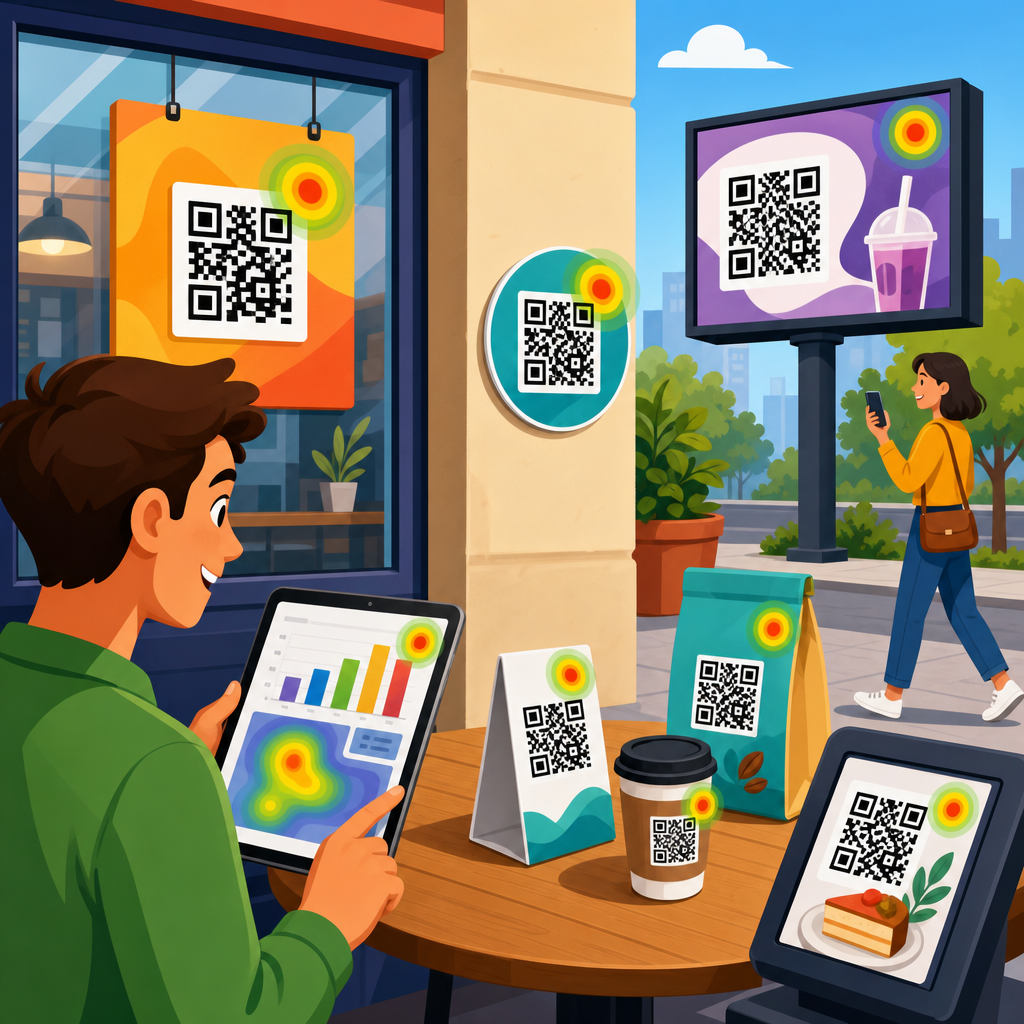
Measurement is where QR codes outperform traditional print. Each code should have a defined campaign structure using consistent naming conventions, redirect logic, and analytics tagging. In practice, that means appending UTM parameters to the destination or managing them in the redirect layer so analytics platforms can distinguish source, medium, campaign, placement, creative, and audience segment. Google Analytics 4 can then attribute sessions and conversion events to specific print assets. If the campaign drives leads, pass those source fields into the CRM so sales can report pipeline and revenue by print placement, not only by digital channel.
Unique codes are critical when you need clean attribution. A national retailer might use separate dynamic QR codes for shelf talkers, endcaps, bag inserts, and window posters, even if all roads lead to the same promotion, because each placement reveals different intent and different operational value. Direct mail is especially powerful here. By pairing unique recipient IDs with dynamic redirects, marketers can create personalized landing pages and measure household-level response while staying within privacy and consent requirements. This is far more actionable than measuring mail performance through coupon codes alone.
Optimization should focus on the whole funnel: scan rate, landing page engagement, conversion rate, and downstream value. If scans are low, the issue is usually CTA clarity, placement, visibility, or incentive. If scans are healthy but conversions lag, the problem is often message mismatch, slow load speed, weak trust signals, or too much form friction. I have seen campaigns double conversion simply by replacing a generic mobile page with a dedicated page that repeated the printed headline, displayed social proof, and reduced a six-field form to three fields. Small UX changes compound quickly when the scan has already signaled strong intent.
Use testing methods that fit print realities. You cannot always swap creative after thousands of brochures are distributed, but dynamic routing allows controlled experiments at the destination layer. Test headlines, offers, form lengths, and local store modules. For stores and events, compare staffed explanation against unassisted scans. For packaging, compare utility-driven prompts such as “Watch setup in 60 seconds” against promotional prompts such as “Unlock member savings.” Tools commonly used in these workflows include Bitly, QR Code Generator Pro, Beaconstac, Uniqode, Google Analytics 4, Adobe Analytics, HubSpot, Salesforce, and Braze. The tool stack matters less than disciplined taxonomy and reliable reporting.
Strategic Use Cases Across Retail, Hospitality, Events, and B2B
Retail brands use QR codes to connect shelf and store traffic to product content, reviews, inventory lookup, coupons, and loyalty enrollment. A cosmetics retailer can place codes near testers that open ingredient details and shade matching guidance, reducing hesitation at the point of decision. Grocery brands can use packaging codes to deliver recipes and then cross-sell related items through a retailer app. Consumer electronics brands often get the strongest results from utility: quick-start videos, warranty registration, and troubleshooting. Utility creates trust, and trust creates later purchases.
Hospitality and food service use QR codes differently because immediacy dominates behavior. Restaurants commonly deploy them for menus, ordering, payment, loyalty, and review generation. Hotels use room signage and key card holders for guest guides, spa booking, late checkout offers, and local recommendations. The most effective examples reduce waiting or uncertainty. A hotel lobby sign that says “Skip the desk, check in here” offers immediate convenience. A tabletop code that opens a reorder flow during a busy service window saves staff time while increasing average order value.
Events and trade shows are another strong fit because the audience is mobile and information-heavy. Booth graphics, badges, brochures, and session slides can all route attendees to speaker resources, demos, lead forms, and meeting calendars. I have found that event QR pages convert best when they avoid long qualification gates. Capture the essential contact details, then let sales enrich the record later. For B2B field marketing, print-to-digital conversions often continue after the event through nurture sequences tied to the exact asset scanned, such as a product sheet, case study, or booth display. That level of context makes follow-up more relevant and improves close rates.
Governance, Compliance, and Building a Sustainable Hub Strategy
Effective QR programs need governance, not just creativity. Establish standards for branded short domains, redirect ownership, campaign naming, expiration rules, and error handling. Broken links on old packaging or legacy signage create support costs and erode trust. Dynamic code management should include redirect audits, destination monitoring, and a documented process for updating expired offers. Security also matters. Customers have learned to be cautious about unknown links, so branded domains, clear copy, and recognizable landing pages help reassure them. For regulated sectors such as healthcare and finance, confirm that the destination flow complies with privacy, disclosure, and consent rules before launch.
This page works best as the hub for the broader offline-to-online integration topic because every specialized article can branch from the same strategic foundation. Supporting content might cover QR codes on packaging, QR codes in direct mail, restaurant QR menu strategy, event lead capture, retail store signage, attribution setup in GA4, dynamic versus static code selection, landing page design, and QR code security practices. Internally linking those articles back to this hub reinforces the central theme and helps readers move from overview to implementation based on their use case. That structure also mirrors how teams actually work: strategy first, then channel-specific execution.
The core lesson is straightforward. QR codes for print-to-digital conversions succeed when they respect context, deliver immediate value, and measure outcomes beyond the scan. The code itself is not the strategy. The strategy is the customer journey from physical attention to digital action, with every step designed for mobile behavior and operational clarity. If you are building or revising an offline-to-online integration program, start by auditing current print assets, map each one to a single high-intent destination, implement dynamic tracking, and improve the post-scan experience before printing more codes. That disciplined approach turns everyday print into a reliable conversion channel.
Frequently Asked Questions
What are QR codes for print-to-digital conversions, and why are they so effective in marketing?
QR codes for print-to-digital conversions are scannable matrix barcodes placed on physical materials such as flyers, brochures, packaging, direct mail, menus, posters, retail displays, and event signage. When someone scans the code with a smartphone camera, they are taken to a digital destination such as a landing page, product page, video, app download, form, coupon, payment page, or contact card. What makes them especially effective is that they transform static print into an interactive, measurable customer journey. Instead of hoping someone remembers a URL or searches for your brand later, the QR code creates an immediate bridge from offline attention to online action.
From a marketing standpoint, the real value is not the code itself but the path it enables. A person sees a printed asset, scans the code, lands in a tailored digital experience, and can then be tracked through meaningful actions such as clicks, sign-ups, purchases, downloads, bookings, or redemptions. That means marketers can connect print exposure with real performance data, making campaigns far easier to evaluate and improve. QR codes also reduce friction, which is one of the biggest reasons they convert well. The easier it is for a customer to take the next step in the moment they are interested, the more likely they are to do it.
They are also highly versatile. A restaurant can link table tents to digital menus and loyalty offers. A consumer packaged goods brand can put codes on packaging to deliver recipes, usage guides, subscriptions, or reviews. A real estate agent can place signs that open property tours and lead forms. A B2B company can use direct mail QR codes to route recipients to customized landing pages. In each case, the printed item becomes a launch point for a measurable digital interaction, which is why QR codes have become such a practical tool for modern omnichannel marketing.
How do QR codes help measure and improve print marketing performance?
QR codes give marketers something print has historically struggled with: visibility into what happens after someone sees a physical asset. By assigning a unique QR code or destination URL to a specific campaign, audience segment, location, product line, or creative version, you can track scans and downstream actions with much greater precision. Depending on your setup, you can measure metrics such as total scans, unique visitors, time of scan, device type, geographic patterns, conversion rate, form completions, purchases, coupon redemptions, and other on-site behaviors. This turns print from a largely unmeasurable channel into one that can be tested and optimized.
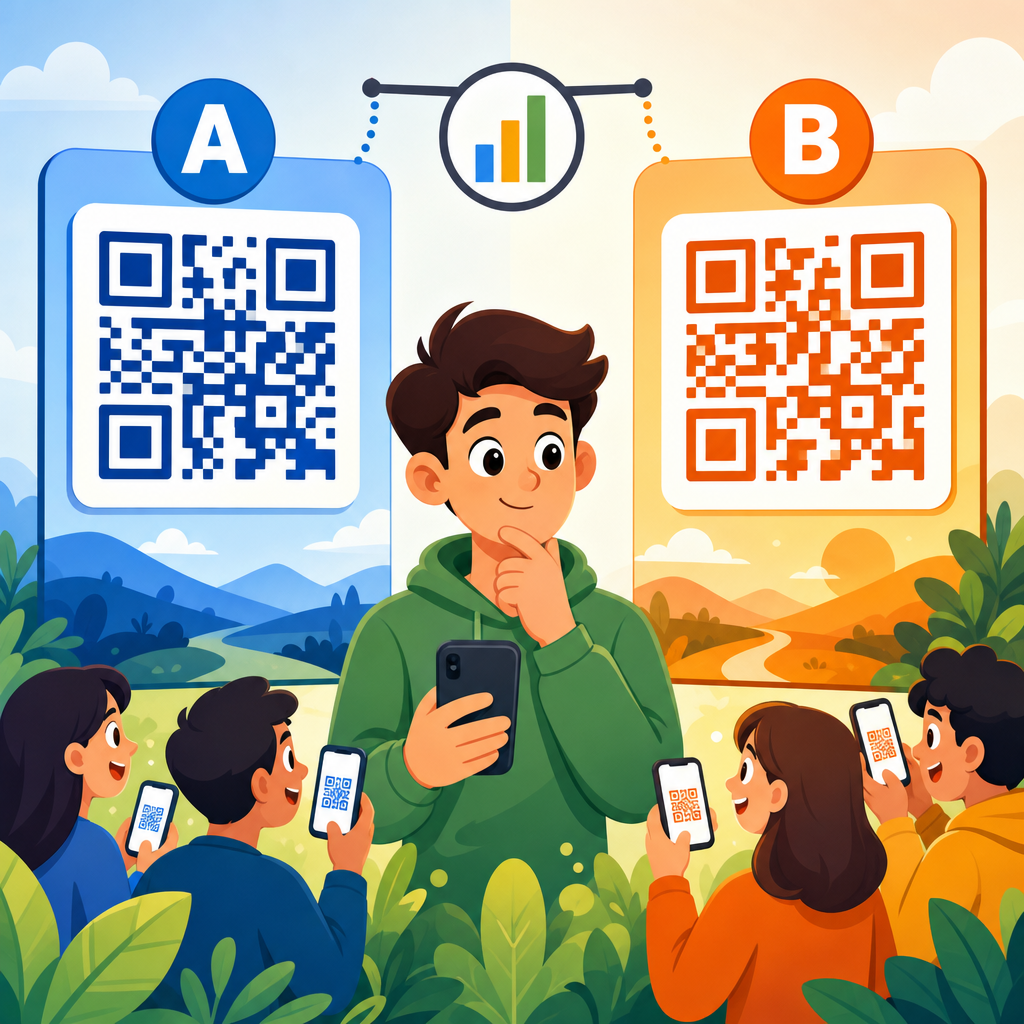
One of the most useful applications is A/B testing. For example, you might use one QR code on one version of a flyer and another on a different headline, call to action, or design variation. If one version drives more scans or more qualified conversions, you have direct evidence about which messaging works better. The same approach can be used across stores, events, neighborhoods, or publication placements. Because QR code traffic can feed into analytics platforms, CRM systems, and marketing automation tools, print performance can be evaluated alongside email, paid social, search, and other digital channels rather than treated as a separate guessing game.
Improvement comes from using that data to reduce friction and increase relevance. If a campaign is getting scans but few conversions, the issue may be the landing page, offer, page speed, mobile usability, or mismatch between the print message and digital destination. If one location drives far more engagement than another, you can adjust placement strategy. If users scan at specific times of day, you can align staffing, promotions, or ad scheduling accordingly. In short, QR codes make print accountable and actionable. They allow marketers to move beyond broad assumptions and make decisions based on observable customer behavior.
What are the best practices for creating QR codes that actually get scanned and converted?
The first best practice is to think beyond the code and design the full user journey. A QR code should have a clear purpose, a strong call to action, and a destination that matches the promise made in the print piece. If the printed material says “Scan for 20% off,” the scan should lead directly to that offer, not to a generic homepage where the visitor has to search for it. Relevance and immediacy are critical. People scan when they expect convenience, speed, or value, so the landing experience needs to deliver on that expectation right away.
From a design standpoint, the code must be easy to see and easy to scan. Use sufficient size, strong contrast, and adequate white space around the code. Avoid placing it on busy backgrounds, curved surfaces that distort the shape, or reflective materials that interfere with scanning. Test the code across multiple devices, lighting conditions, viewing distances, and print samples before launch. It is also wise to use a short, mobile-optimized destination and, in many cases, a dynamic QR code so you can update the destination later without reprinting the asset. Dynamic codes are especially useful for campaigns that may need iteration or that route users differently based on timing, inventory, or audience.
Equally important is the conversion environment after the scan. The landing page should load quickly, display properly on mobile devices, and ask for only the information necessary for the next step. If the goal is lead generation, keep forms short. If the goal is purchase, reduce checkout friction. If the goal is content engagement, make the featured asset immediately visible. Add tracking parameters where appropriate, and align the page with the campaign source so analytics remain clean. Finally, tell users why they should scan. A QR code with no explanation often underperforms, while a simple instruction such as “Scan to watch the demo,” “Scan to reorder,” or “Scan for your event schedule” gives people a compelling reason to act.
Where should businesses use QR codes in print materials for the highest impact?
The best placement depends on customer intent, timing, and context. High-impact uses are usually the ones where the printed item appears at a decision point or a moment of curiosity. Product packaging is one of the strongest examples because it reaches people when they are already holding the item and are primed for additional information, support, recipes, warranties, tutorials, loyalty enrollment, or repeat purchase options. Direct mail is another powerful format because a QR code can move a recipient from physical message to personalized digital experience in seconds, especially when paired with an incentive or segmented landing page.
In physical environments, posters, point-of-sale displays, shelf talkers, window signage, tabletop inserts, and event materials can all perform very well because they capture attention in the moment. Restaurants use QR codes for menus, ordering, feedback, and promotions. Retailers use them for reviews, product comparisons, and stock checks. Trade show exhibitors use them to share brochures, demos, appointment booking, and lead capture forms. Real estate professionals use them on signs and brochures for virtual tours and listing details. Healthcare practices, universities, nonprofits, and service businesses also use QR codes to connect print materials with applications, donations, registrations, FAQs, and educational resources.
The highest-impact placements are usually those that combine visibility, relevance, and low friction. A code buried in tiny print at the bottom of a flyer is less likely to perform than one placed near the headline with a specific value proposition. It also helps to consider environment and distance. A code on a poster in a transit hub needs to be larger and simpler to access than one on a handout. The main principle is to place QR codes where they naturally fit the customer journey. If the code appears at the point where someone wants more detail, wants to act, or wants to continue the experience digitally, it is much more likely to generate meaningful conversions.
What mistakes should marketers avoid when using QR codes for print-to-digital campaigns?
One of the most common mistakes is sending users to a generic homepage instead of a dedicated, campaign-relevant landing page. This creates unnecessary friction and often causes users to drop off because the experience does not match what the printed asset promised. Another frequent issue is failing to optimize for mobile. Since most QR scans happen on smartphones, slow load times, poor page layouts, intrusive pop-ups, or complicated forms can undermine performance even if scan volume is strong. In many campaigns, the biggest conversion problem is not getting people to scan; it is what happens after they do.
Another mistake is using QR codes without a clear call to action or obvious benefit. People need a reason to engage. “Scan me” is weaker than “Scan to claim your discount,” “Scan to see the full menu,” or “Scan to book a demo.” Marketers should also avoid poor production choices such as printing codes too small, using low-contrast colors, placing them on textured or glossy surfaces, or distorting them with design effects that hurt scan reliability. A QR code can be visually branded, but function should always come first. If it does not scan quickly and consistently, the campaign loses momentum immediately.
On the measurement side, a major error is launching without a proper tracking framework. If every print asset points to the same untagged destination, it becomes difficult to know which channel, location, audience, or creative variation drove results. Marketers should also avoid treating QR codes as a set-it-and-forget-it tactic. The best outcomes come from monitoring scan behavior, conversion rates, and landing page performance, then adjusting creative, placement