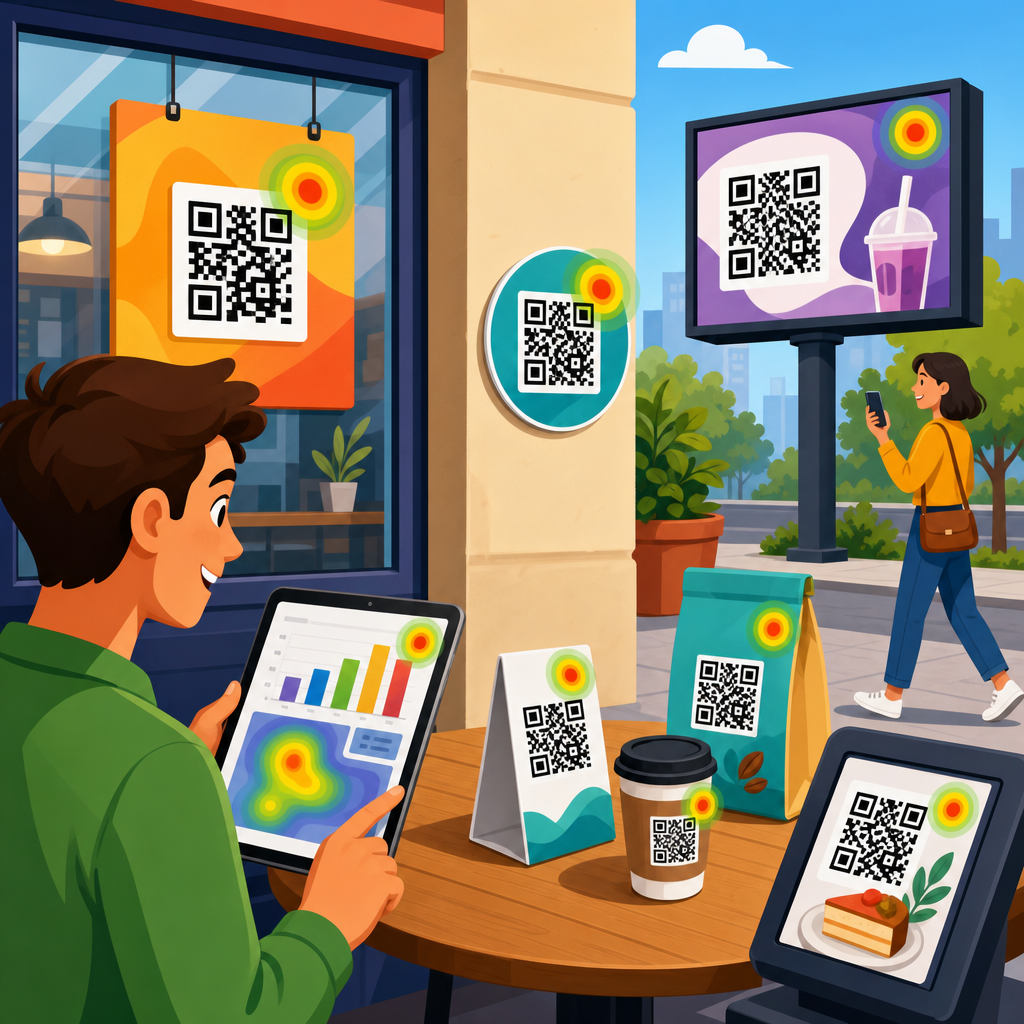
QR code campaigns succeed or fail on details that many teams never measure. If you are asking what should you test in QR code campaigns, the short answer is everything that influences scan rate, post-scan conversion, and data quality. In practice, that means testing the code itself, the creative around it, the placement, the call to action, the destination experience, and the way results are attributed. A/B testing QR codes is not a niche tactic inside QR code marketing and strategy; it is the operating system that turns scans into reliable business outcomes.
A QR code is a machine-readable matrix barcode that stores a destination such as a URL, file, payment instruction, app deep link, or contact card. In marketing, most campaigns use dynamic QR codes, which redirect through a managed link so the destination can be updated and performance can be tracked after print or distribution. A/B testing compares two or more controlled variants to determine which version produces a better result against a defined metric. In QR campaigns, that metric might be scan-through rate, landing-page conversion rate, coupon redemption, app install, average order value, qualified lead rate, or even offline footfall when tied to store data.
This matters because QR behavior is unusually sensitive to context. A code on product packaging faces different constraints than one on an event banner, a restaurant table tent, a direct mail postcard, or a transit ad viewed from ten meters away. I have seen beautifully designed campaigns underperform simply because the code was too small, the quiet zone was compromised, or the landing page loaded slowly on cellular data. I have also seen ordinary creative outperform premium artwork because the offer was clear and the post-scan page matched the promise. Testing isolates those variables, removes guesswork, and gives teams a repeatable framework for improving every subsequent campaign.
Done well, A/B testing QR codes creates benefits beyond immediate conversion lift. It helps marketing teams set design standards, improve print specifications, choose better placements, and build stronger attribution models across offline and digital touchpoints. It also reduces avoidable waste: fewer reprints, fewer broken links, fewer scans lost to mobile friction, and fewer budget decisions based on vanity metrics. The most effective QR programs treat every campaign as an experiment with a hypothesis, a controlled change, and a documented learning that can be applied across channels.
Start with the right success metric
The first thing to test in QR code campaigns is not visual design but the metric that defines success. Many teams default to scans because scans are easy to track, but scans alone can be misleading. A code that attracts curiosity may generate high volume and poor downstream quality, while a code with fewer scans may drive stronger conversion or revenue. The correct primary metric depends on campaign intent. For awareness, unique scans and engagement time may be appropriate. For lead generation, form completion rate and cost per qualified lead are better. For commerce, revenue per scan and redemption rate usually matter more than raw scan count.
Use a measurement stack that separates three layers: exposure, scan behavior, and post-scan behavior. Exposure can be estimated through circulation, footfall, impressions, or sampled audience counts. Scan behavior includes unique scans, repeat scans, device type, location, timestamp, and scan-through rate when exposure is known. Post-scan behavior should be tracked in analytics platforms such as Google Analytics 4, Adobe Analytics, or a CRM with campaign tagging. UTM parameters, first-party event tracking, and consistent naming conventions are essential. If the destination is a lead form, define what counts as a valid lead before the test starts. If it is an in-store redemption, connect the QR identifier to POS data. Without that foundation, A/B testing QR codes produces noise instead of insight.
Test the QR code itself: type, size, contrast, and error correction
The code itself is a major performance variable, and it should be tested with discipline. The most important decision is static versus dynamic. Static codes are fixed and simple, but they cannot be edited after production and usually provide limited analytics. Dynamic QR codes support redirects, parameter management, expiration controls, and richer reporting. For almost all serious marketing use cases, dynamic is the better testing environment because it allows destination updates and cleaner attribution without replacing printed assets.
Next, test physical size relative to scanning distance. A common rule is roughly one centimeter of code width for every ten centimeters of scanning distance, though real-world conditions matter. A code on packaging scanned at arm’s length can be smaller than one on a window poster or billboard. In field tests I have run, increasing a poster code from 2 centimeters to 3.5 centimeters materially improved first-attempt scans, especially under glare and low light. Contrast is equally important. Black on white remains the most reliable choice. Styled codes with inverted colors, gradients, or busy backgrounds often reduce readability, particularly on older devices or when print quality varies.
Error correction level deserves testing when branding is added. QR codes can tolerate some damage or obstruction, but higher error correction increases module density, which can make small codes harder to scan. If you place a logo in the center, test whether Level Q or H improves resilience without making the symbol too dense for the intended size. Always preserve the quiet zone, the empty margin around the code. Designers often treat it as optional whitespace; scanners do not. If the quiet zone is compromised by borders, patterns, or adjacent text, scan reliability drops immediately.
| Variable | What to test | Why it affects results | Practical benchmark |
|---|---|---|---|
| Code type | Static vs dynamic | Dynamic improves editability and attribution | Use dynamic for most campaigns |
| Size | Width by viewing distance | Too small increases failed scans | Increase size for posters, windows, outdoor media |
| Contrast | Black/white vs branded colors | Low contrast reduces readability | Default to dark code on light background |
| Error correction | L, M, Q, H | Higher levels protect logos but increase density | Test Q or H only when branding overlays are used |
| Quiet zone | Standard margin vs reduced margin | Insufficient whitespace breaks detection | Never remove the quiet zone |
Test the creative around the code
Most scan decisions are driven by the creative around the QR code, not the pattern of squares itself. This is where many of the biggest gains are found. Start with the call to action. “Scan me” is vague and underperforms benefit-led language such as “Scan to get 15% off,” “Scan to watch the demo,” or “Scan to see today’s menu.” Good QR code marketing makes the reward explicit, immediate, and relevant to the context. On packaging, users may want recipes, setup instructions, warranty registration, or loyalty rewards. At events, they may want schedules, speaker slides, or prize entry.
Test headline hierarchy, supporting copy, and visual cues. People scan faster when they understand what happens next and how long it will take. Adding “takes 10 seconds” or “no app required” can reduce hesitation. Arrows, framing devices, and whitespace can guide attention, while cluttered layouts suppress scan intent. Brand consistency matters, but not at the expense of clarity. In retail endcap tests, I have seen a plain high-contrast CTA beat a more polished branded version because it reduced cognitive load and made the value proposition obvious from three meters away.
Social proof and trust signals are also worth testing when the destination asks for information. Phrases like “over 50,000 downloads,” “featured by,” or “secure checkout” can increase confidence after the scan. For regulated sectors such as healthcare, finance, and alcohol marketing, legal and compliance language must be reviewed as part of the experiment. A variant that boosts scans but creates compliance risk is not a winning variant.
Test placement, environment, and timing
Placement changes performance more than many creative teams expect. A QR code should be tested where people can physically notice it, orient their phone, and complete the action without friction. On shelf wobblers, eye-level usually performs differently from lower placements. On restaurant tables, top-facing placements outperform side panels because they remain visible throughout the dining experience. On direct mail, front-panel placement can lift scans by making the offer visible before the piece is fully read. On out-of-home media, dwell time is decisive. Codes on fast-moving transit placements often underperform unless they appear in waiting areas where people can stop.
Environmental conditions should be treated as test variables. Lighting, reflection, surface curvature, print finish, and competing signage all influence scanability. Gloss lamination can create glare that blocks camera recognition; matte finishes are often safer for indoor posters. Curved surfaces like bottles and cans distort the code, especially when the symbol is small. In packaging tests, moving the code from a rounded side panel to a flatter back panel improved successful scans without changing the creative offer. Timing also matters. A lunchtime restaurant code can attract a different audience and intent than the same code shown during late evening delivery promotions. Segment results by time of day, day of week, and location before declaring a winner.
Test the destination experience after the scan
A QR code campaign is only as strong as the page or app experience that opens after the scan. This is where A/B testing QR codes becomes broader conversion rate optimization. First, test load speed. Mobile pages should be lightweight, compressed, and stable on average cellular connections. Every extra second of delay reduces completion rates. Use PageSpeed Insights, Lighthouse, WebPageTest, or your performance monitoring stack to validate Core Web Vitals and identify blocking scripts.
Next, test message match between the code prompt and the destination. If the printed CTA promises a discount, the landing page must surface that discount immediately, not bury it below a generic homepage hero. Deep linking usually beats sending traffic to a homepage because it eliminates navigation steps. App campaigns should test app store routing versus deferred deep linking with providers such as Branch or AppsFlyer. Lead generation pages should test shorter forms, autofill, mobile-friendly keyboards, and alternative identity methods like Apple or Google sign-in when appropriate.
Offer design should be tested too. Percentage discounts, fixed-value discounts, free shipping, bundles, samples, and gated content all perform differently by category and purchase stage. The right choice depends on margin structure and audience motivation. A B2B event code might convert better with “download the benchmark report” than “book a demo,” while a restaurant poster may see stronger redemption with a time-limited offer than a generic loyalty prompt. Test one major variable at a time unless sample size supports multivariate analysis.
Test attribution, segmentation, and operational reliability
Smart teams test not only user-facing elements but also the analytics and operational layer behind them. Use distinct dynamic URLs or parameter sets for each variant so every scan can be traced to the exact asset, placement, and date range. If the same creative appears in multiple stores or regions, encode location or distribution metadata. This allows segmentation by venue type, geography, audience, and weather if relevant. A winner in urban transit may not be a winner in suburban retail.
Operational reliability is another test category that prevents silent failure. Check redirect speed, SSL status, uptime, device compatibility, and cache behavior. Test on both iOS and Android, with native camera scanning and common third-party scanner apps. Verify what happens when users have poor connectivity or when the destination app is not installed. For print runs, test samples from production, not just digital proofs. Ink spread, trimming, and substrate choice can alter scanability. Establish a QA checklist before launch and a monitoring cadence after launch. The best QR code marketing and strategy programs combine experiment design with production discipline.
Finally, interpret results conservatively. Use statistically valid sample sizes when possible, but combine significance with business judgment. If Variant B improves scans by 20 percent and lowers conversion quality, it may still lose overall. Look at the full funnel, document the learning, and roll the insight into your next campaign, packaging refresh, in-store sign, or direct mail drop. That compounding effect is the real value of A/B testing QR codes.
The best answer to what should you test in QR code campaigns is simple: test every factor that can change scan intent, scan success, and post-scan outcome. Start with a clear primary metric. Then test the code format, size, contrast, error correction, and quiet zone. Test the surrounding creative, especially the call to action and promised benefit. Test placement, environment, and timing. Test the landing page, offer, and mobile flow. Finally, test the attribution setup and operational reliability so the data can be trusted.
When teams approach QR code marketing and strategy this way, results improve quickly and predictably. You stop debating opinions and start building evidence. Campaigns become easier to scale because each launch inherits what the previous test proved. Print assets work harder, landing pages convert better, and offline media becomes measurable in practical terms. That is why this topic functions as a hub: every specialized article on sizing, landing pages, offers, placement, packaging, direct mail, retail signage, analytics, or compliance sits downstream from the same core discipline of structured experimentation.
If you are running QR codes on packaging, posters, menus, mailers, events, or store signage, do not treat the code as a finished asset. Treat it as a testable conversion path. Define the hypothesis, isolate one meaningful variable, measure the full funnel, and preserve the learning. Then apply that learning across your next campaign. That is how QR programs move from novelty to durable performance.
Frequently Asked Questions
What are the most important elements to test in a QR code campaign?
The most important elements to test are the ones that directly affect whether people scan, what they do after the scan, and how accurately you can measure the result. Start with the QR code itself: size, contrast, error correction level, static versus dynamic format, and whether it scans reliably across different phone models and lighting conditions. A code that looks fine in a design file can still underperform in the real world if it is too small, placed on a curved surface, or printed with low contrast.
Next, test the creative around the code. Most people do not scan a QR code just because it exists; they scan because the surrounding message gives them a reason. That means testing headlines, imagery, incentive language, and especially the call to action. “Scan to learn more” will often perform differently from “Scan for 20% off” or “Scan to watch the demo.” The context matters, and so does the value proposition.
Placement is another major variable. A QR code on packaging, a poster, a direct mail piece, a menu, an event sign, or a product shelf display will attract different behavior patterns. Even within the same channel, the exact position can matter. Testing eye-level placement versus lower placement, front-panel versus side-panel, or high-traffic versus lower-traffic environments can reveal meaningful differences in scan rate.
After the scan, test the destination experience just as rigorously. The landing page, app prompt, form length, page speed, content relevance, and mobile usability all affect conversion. If scans are high but conversions are low, the issue is usually not the QR code itself but the post-scan journey. Finally, test attribution and analytics setup. If campaign tracking is inconsistent, your results may look weaker or stronger than they really are. In short, the right answer to what should you test in QR code campaigns is every touchpoint from first view to final conversion.
How should you A/B test calls to action and creative around a QR code?
A/B testing calls to action and creative should begin with a clear hypothesis. Do not test random variations just to “see what happens.” Instead, decide what behavior you want to influence. If your goal is increasing scan rate, test messaging that changes urgency, clarity, or perceived value. For example, compare “Scan to learn more” against “Scan to claim your free sample” or “Scan to unlock member pricing.” These are not cosmetic changes; they change the motivation to act.
Keep the test controlled. Ideally, change one primary variable at a time so you can isolate what made the difference. If you test a new headline, new image, and new offer all at once, you may improve performance, but you will not know which factor drove the gain. In QR code marketing and strategy, clear learning is as valuable as the immediate lift because it improves future campaigns too.
Creative testing should also account for the user’s environment. A design that works in an email or social post may fail on out-of-home signage, packaging, or print because people have less time and attention in those settings. Test whether short, direct copy works better than explanatory copy. Test whether a visual arrow or frame around the code improves noticeability. Test whether adding trust cues such as “No app required” or “Takes 10 seconds” reduces hesitation.
Most importantly, judge performance using the full funnel, not just scans. Some creative versions may produce more scans but lower-quality traffic. Others may generate fewer scans but better conversion rates. The strongest variation is the one that supports your business objective, whether that is purchases, signups, downloads, bookings, or qualified leads. Effective A/B testing QR codes means balancing scan volume with downstream outcome quality.
Why is landing page and post-scan experience testing so critical in QR code campaigns?
Post-scan experience testing is critical because the scan is only the beginning. Many teams focus heavily on getting more scans, but the real performance question is what happens next. If the destination page loads slowly, looks broken on mobile, asks for too much information, or does not match the promise made near the QR code, users drop off fast. In that situation, even a well-designed QR code campaign will underperform.
Start by testing speed and mobile usability. QR scans happen overwhelmingly on mobile devices, often in imperfect conditions: weak signal, bright sunlight, motion, or divided attention. A slow page load can destroy conversion before the user even sees the offer. Test lightweight pages versus media-heavy pages, shorter forms versus longer forms, and single-step flows versus multi-step journeys. Even small changes in friction can create major gains.
Message match is another essential test area. If the QR code says “Scan for a free guide,” the landing page should immediately confirm that offer. If users land on a generic homepage instead, confusion increases and conversion drops. Test dedicated landing pages against broader destination pages, and test whether personalized pages tied to the scan context perform better. For example, a QR code on product packaging should often lead to a product-specific experience, not a company-wide entry page.
You should also test conversion mechanics. Compare embedded forms versus click-through forms, instant coupon reveals versus email-gated offers, and app-store redirects versus mobile web alternatives. Depending on the audience, requiring too many steps can sharply reduce completion rates. In practical terms, the post-scan experience is where intent becomes action. That is why it deserves as much testing discipline as the QR code design itself.
What placement and technical factors should be tested to improve QR code scan rates?
Placement and technical execution have a direct impact on scan reliability and visibility, which means they should be treated as testable variables, not fixed assumptions. From a technical standpoint, begin with code size, quiet zone, contrast, print quality, and surface type. A QR code should have enough clear space around it and enough contrast from the background to be detected quickly by smartphone cameras. Decorative designs may look attractive, but if they reduce scan reliability, they hurt campaign performance.
Test the code in the exact environment where it will appear. A code on glossy packaging may reflect light. A code on a curved bottle may distort. A code on a moving vehicle or distant billboard may be technically scannable but practically unusable. Distance matters, angle matters, and environmental conditions matter. Testing in the field often reveals issues that are not visible on a laptop screen or in a studio proof.
Placement should also be evaluated based on user behavior. Ask whether the code appears where people naturally look and whether they have enough time and space to act. A QR code placed at the bottom corner of a crowded flyer may be overlooked. A code placed near the main headline with a clear prompt may perform much better. In retail, shelf-level placement can differ significantly from endcap placement. In events, entrance signage may perform differently from booth materials or session screens.
Another overlooked factor is timing and accessibility. If a code appears in a place where users are rushed, moving, or unable to pause, scan rates can suffer even if the design is strong. Test versions in locations where people can comfortably stop and use their phone. The best-performing campaigns usually come from teams that treat real-world conditions as part of the experiment rather than assuming technical scannability alone is enough.
How do you measure QR code campaign results accurately and avoid misleading data?
Accurate measurement starts with understanding that scan count alone is not a complete success metric. Scans tell you interest, but they do not tell you whether the campaign generated meaningful business results. To measure properly, track multiple stages: impressions or estimated exposure, scans, unique visitors, engagement, conversion events, and, where possible, revenue or lead quality. This full-funnel view helps you distinguish between a campaign that gets attention and one that actually performs.
Use dynamic QR codes and consistent UTM parameters so each variation can be tracked separately. If you are running A/B testing QR codes across different placements, creatives, or offers, each version needs clean attribution. Otherwise, traffic gets blended together and you lose the ability to learn. Dynamic codes also let you update destinations without reprinting materials, which is useful for iterative testing and optimization.
Be careful about data quality issues. Repeat scans, internal team testing, accidental scans, and low-intent traffic can distort results. Segment your data where possible by device type, geography, time of day, placement, and campaign version. Also compare scan metrics with landing-page analytics and conversion platform data to catch discrepancies. If scans appear high but sessions are low, or sessions are high but conversions are missing, there may be a tracking issue that needs correction before any conclusions are made.
Finally, define success before the campaign begins. For one brand, success may mean coupon redemptions. For another, it may mean product education, app installs, or qualified leads. When you know the primary goal, you can design tests around the metrics that actually matter. The most reliable QR code marketing and strategy programs do not just test creative and placement; they test their measurement framework too, ensuring that decisions are based on trustworthy data rather than incomplete signals.