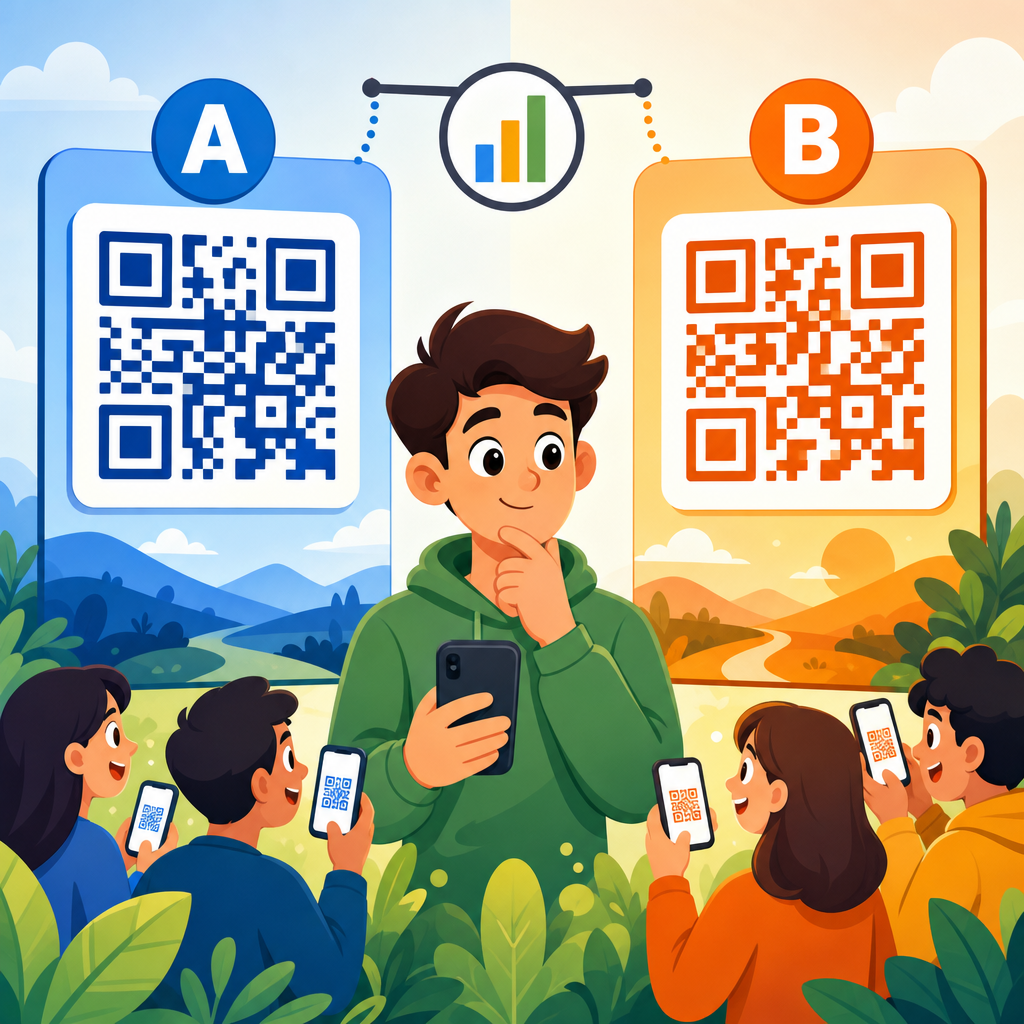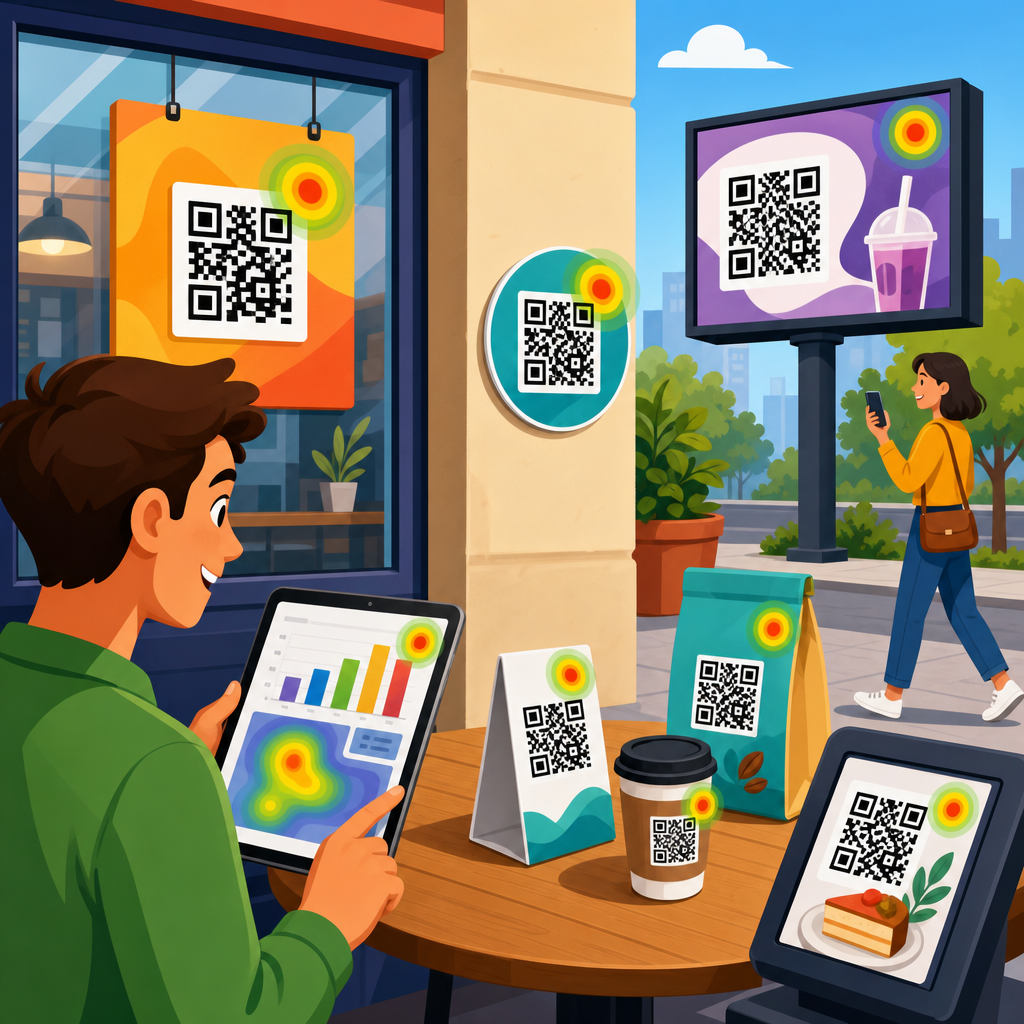
QR code campaigns succeed or fail on one small moment: the instant someone decides whether the code is worth scanning. Testing QR code calls-to-action is the discipline of improving that moment with evidence instead of guesswork. In practice, a call-to-action includes the words near the code, the design of the code itself, the surrounding offer, and the landing experience after the scan. When marketers talk about A/B testing QR codes, they are comparing two or more versions to see which produces stronger scan rate, clickthrough, conversion rate, revenue, or offline response. I have run these tests across retail packaging, direct mail, event signage, restaurant tables, and field sales materials, and the pattern is consistent: the best-looking creative often loses to the clearest promise.
This matters because QR codes connect offline attention to digital action faster than any printed URL or manual search. Smartphone camera support is now standard, making scanning friction much lower than it was a decade ago. Yet lower technical friction does not guarantee performance. People still ask simple questions before scanning: What happens if I scan? Is this safe? Is it worth my time right now? A strong QR code call-to-action answers those questions immediately. A weak one leaves uncertainty, and uncertainty kills response. For teams responsible for packaging, point-of-sale, out-of-home media, or direct response, testing is how you turn a static printed asset into a measurable acquisition channel.
Good testing starts with definitions. A control is the current version. A variant is the new version being evaluated. The primary metric is the main outcome used to choose a winner, such as scans per thousand impressions or completed purchases per scan. Secondary metrics add context, such as bounce rate, average order value, time on page, coupon redemption, or form completion. A valid test changes one major variable at a time, controls for placement and audience as much as possible, and runs long enough to collect meaningful data. If the code appears in physical locations, operational consistency matters too: lighting, distance, print size, and staff behavior can affect results as much as wording.
For a hub article, the goal is to give you a complete framework for testing QR code calls-to-action from strategy through measurement. You need to know what to test, how to set up dynamic QR codes, which metrics indicate true lift, how to avoid biased results, and when a scan increase is actually bad for business. The sections below cover the full workflow in plain terms, using practical examples you can adapt to packaging, posters, menus, mailers, product inserts, storefront windows, and sales collateral. If you build your testing program around these principles, you will improve not just scans, but the business outcomes those scans are meant to create.
Start with the right hypothesis and the right metric
The most common mistake in A/B testing QR codes is testing random creative ideas without a business hypothesis. “Make it bigger” or “use a brighter color” is not a strategy. A useful hypothesis links a specific change to a specific user concern. For example: “Adding ‘Scan for 15% off today’ will increase scan rate on shelf talkers because it makes the value immediate and concrete.” Another example: “Changing ‘Learn more’ to ‘Watch the 30-second demo’ will increase qualified scans on product packaging because shoppers understand what they will receive.” A hypothesis gives the test direction and helps your team avoid reading too much into noisy data.
Then choose one primary metric that matches the real goal. If your campaign is designed to drive email capture, the winning version should be the one that produces the most verified sign-ups per impression, not just the most scans. I have seen campaigns celebrate a 40 percent scan lift that later turned out to bring lower-quality traffic and fewer purchases because the CTA attracted curiosity instead of intent. For awareness campaigns, scans per location exposure may be enough. For retail promotions, coupon redemption rate and margin per redemption matter more. For lead generation, cost per qualified lead is often superior to raw scan volume. The call-to-action should be tested against the business outcome it promises to influence.
What parts of a QR code call-to-action should you test?
A QR code call-to-action is really a bundle of variables. The first and usually most influential variable is the offer. “Scan to enter,” “Scan for menu,” “Scan to compare plans,” and “Scan for same-day rebate” each create different expectations and attract different intent levels. The second variable is message framing. Specific language almost always outperforms generic copy because it reduces ambiguity. “Scan to see pricing” beats “Scan for details” when price transparency is the value. Urgency can help, but only when it is credible; “today only” works on event signage, while permanent packaging should avoid false scarcity.
The next variable is visual treatment. Size, white space, contrast, label placement, iconography, and supporting copy all affect scan behavior. A code buried among dense text underperforms even if the offer is strong. So does a stylized code with insufficient contrast or an oversized logo that reduces readability. Placement matters just as much. On a mailer, the top-right panel may outperform the lower fold because it is seen earlier. On a restaurant table tent, the side facing the entrance may receive more scans during wait time than the side near the register. The landing page is also part of the CTA system. If the page is slow, nonmobile, or mismatched to the promise, even a high-scan variant can be the wrong winner.
| Element to test | Variant example A | Variant example B | Best metric |
|---|---|---|---|
| Offer wording | Scan for 10% off | Scan for today’s in-store coupon | Redemptions per 1,000 views |
| Intent clarity | Scan to learn more | Scan to watch a 30-second demo | Qualified visits and time on page |
| Placement | Front of package | Side panel near instructions | Scans per unit sold |
| Design treatment | Black code with label | Brand-colored frame with arrow | Scan rate and scan failure rate |
| Post-scan destination | Homepage | Dedicated landing page | Conversion rate per scan |
How to design a valid QR code test in the real world
Digital marketers are used to clean online tests. Physical media is messier. To run a valid QR code test, isolate the variable as much as possible and keep distribution conditions comparable. If you are testing two poster versions across retail stores, split stores by similar foot traffic, geography, and operating hours. If you are testing package inserts, randomize inserts across shipment batches instead of sending one version to one region and another version elsewhere. If you are testing signage at an event, rotate placements halfway through the day so location bias does not determine the winner. The more your variants differ in context, the less confidence you can have that the CTA caused the result.
Use dynamic QR codes so the destination can be updated without reprinting and performance can be tracked by unique scan endpoint. Platforms such as Bitly, Uniqode, QR Code Generator Pro, and Beaconstac can assign campaign-level parameters, timestamps, device data, and location data. Pair the QR code with analytics tagging in GA4 or Adobe Analytics so scan sessions connect to downstream events. In mature setups, I also send the parameters into a CRM such as HubSpot or Salesforce to see whether a scan produced an actual sale or qualified lead. This matters because scan data alone is an incomplete proxy. A technically successful scan is not automatically a successful marketing interaction.
Sample size is another practical issue. Many offline teams stop tests too early because print cycles are expensive and results feel obvious. Resist that impulse. Small differences can reverse as more traffic accumulates, especially when one location had unusual weather, one sales associate actively pointed to the code, or one poster was partially blocked. If formal statistical testing is available, use it. If not, at least wait until each variant has enough exposure to smooth out day-to-day volatility. For low-volume environments, pooled testing across multiple similar placements can help. Just do not combine unlike contexts, such as transit posters and product packaging, into one analysis.
Measurement, attribution, and the metrics that actually matter
The most useful QR code dashboard tracks the full funnel. Start with impressions or estimated opportunities to scan, then measure scans, unique visitors, landing page engagement, micro-conversions, and final conversions. For physical placements, impressions are often estimated from store traffic, event attendance, mailed quantity, or packaging units sold. Those estimates are imperfect, but they allow more meaningful comparisons than scans alone. A code in a high-traffic location may generate more scans than a better CTA placed in a lower-traffic location. Normalizing by estimated exposure gives you a truer signal of creative performance.
Scan quality matters as much as scan quantity. I watch scan-to-session rate, bounce rate, scroll depth, form starts, coupon saves, purchases, and assisted conversions. Device split is useful too. If Android scan completion is lower than iPhone completion, the issue may be camera behavior, browser handling, or page load performance rather than the CTA. Time-of-day and day-of-week patterns can reveal operational insights. For example, a “Scan to skip the line” message may outperform during lunch rush but not during slower hours, suggesting you should daypart your signage or vary the message by location.
Attribution requires discipline. Every QR variant should resolve to a unique URL or parameter set, and each destination should preserve those tags through redirects. Shorteners and link wrappers can accidentally strip parameters, breaking campaign reporting. Test the full path before launch on multiple devices. If your post-scan action continues in an app, use deferred deep links where possible so the experience survives install or authentication steps. When offline conversion is the goal, connect scans to point-of-sale or redemption systems with unique codes, single-use coupons, or campaign IDs. Without that bridge, teams often over-credit the scan and under-measure the actual business impact.
Examples of high-impact tests across common QR code placements
On product packaging, the highest-impact tests usually involve clarity and utility. A cereal brand might compare “Scan for recipes” against “Scan for 5 quick breakfasts” and find that specificity increases scans because buyers can picture the benefit. A supplement label might test “Scan for lab results” versus “Verify purity and ingredients” and see stronger engagement from the trust-focused message. In both cases, the post-scan page must honor the promise immediately, not bury the answer under navigation. Packaging is a low-attention environment, so the CTA must earn the scan in seconds.
In direct mail, incentive framing often matters more than design flourishes. I worked on mailers where “Scan to claim your offer” underperformed “Scan to see your personalized rate” because recipients responded to relevance more than generic savings language. For event signage, speed and utility tend to win. “Scan for map and session updates” can outperform “Scan to explore the event” because attendees want a concrete tool, not broad information. In restaurants, table QR codes should reduce friction. “Scan to pay now” and “Scan for allergen info” serve very different needs, so success depends on whether the context is checkout, ordering, or trust.
Retail display tests also reveal an important lesson: more scans are not always better. A beauty display with “Scan for shade finder” may produce fewer scans than “Scan for 20% off,” yet the shade-finder variant can drive higher conversion and lower return rates because it solves a purchase problem. That is why the best hub strategy for QR code testing is to organize your subtopics around use case: packaging, print, events, retail, hospitality, direct mail, post-purchase inserts, and B2B collateral. Each context changes user intent, acceptable friction, and the right success metric. Testing works best when it respects those differences.
Common testing mistakes and how to avoid them
The biggest failure pattern is changing too many variables at once. Teams redesign the code, rewrite the CTA, move the placement, and swap the landing page in one revision, then cannot explain why performance changed. Another common mistake is choosing unreadable design treatments. QR codes need quiet zones, sufficient contrast, and error correction settings appropriate to their styling. ISO/IEC 18004 standards exist for a reason. Branded codes can work well, but heavy customization often reduces scan reliability in low light or at oblique angles. Always test scans across older devices, cracked screens, and real-world distances, not just in the design file.
Another mistake is forgetting trust signals. People hesitate to scan when the destination is unclear or when the code appears pasted into a scam-like context. Add a short plain-language explanation, recognizable brand cues, and, when relevant, a visible URL domain near the code. Privacy-sensitive offers should say what happens next: “Scan to book a demo, no app required” or “Scan to access the menu in your browser.” Finally, avoid false winners caused by staff behavior. If associates verbally promote one version more than another, your creative test becomes a human-sales test. Train staff, document procedures, and audit execution during the run.
Building an ongoing optimization program
The best teams treat QR code testing as a repeatable program, not a one-off campaign task. Start with a testing backlog organized by impact and effort: offer copy, placement, landing-page match, incentive type, visual prominence, and trust messaging. Document each experiment with hypothesis, setup, audience, timing, and success metric. After every test, record not just the winner but the reason it likely won. Over time, patterns emerge. You may find that utility-driven CTAs beat discount CTAs on packaging, while urgency-driven CTAs win in storefront windows. Those insights can inform future campaigns across your broader QR code marketing strategy.
As you scale, create naming conventions and dashboards that make results comparable across channels. Use the same definitions for scan, unique scan, session, assisted conversion, and redemption. Archive screenshots of each variant and note operational conditions. This discipline turns isolated tests into institutional knowledge. The payoff is cumulative: stronger calls-to-action, better landing experiences, more reliable attribution, and smarter media decisions. If you want QR codes to perform as a measurable marketing channel rather than a decorative add-on, start testing the promise around the code, connect scans to outcomes, and keep optimizing with every print cycle.
Frequently Asked Questions
What does it actually mean to test a QR code call-to-action?
Testing a QR code call-to-action means evaluating the specific elements that influence whether someone notices the code, understands what they will get, and decides to scan it. In most campaigns, the call-to-action is not limited to a short phrase such as “Scan Now.” It also includes the promise around the scan, the placement of the code, the visual treatment, the surrounding creative, and the experience that appears immediately after the scan. A strong test looks at that entire decision moment instead of treating the QR code like an isolated graphic.
In practical terms, marketers usually compare two or more versions of a QR code experience to measure which one produces better results. One version might say “Scan to See Today’s Menu,” while another says “Scan for 10% Off Your Order.” The code size, color contrast, position on the page, and landing page message may also change. The goal is to replace assumptions with evidence by observing how real people behave when exposed to different versions under similar conditions.
The most effective testing programs define success clearly before launch. That may include scan rate, click-throughs after the scan, form submissions, purchases, appointment bookings, or time spent on the landing page. By connecting the call-to-action to a measurable outcome, you can identify which variation does the best job of moving users from curiosity to action. That is what makes QR code CTA testing so valuable: it improves a very small moment that can have a very large impact on campaign performance.
Which parts of a QR code call-to-action should be tested first?
The best place to start is with the elements most likely to affect scan intent and ease of use. Usually, that begins with the wording near the code. People need an immediate reason to scan, and vague instructions often underperform. Clear, benefit-driven language such as “Scan to Get the Full Guide,” “Scan for a Free Sample,” or “Scan to Book in 30 Seconds” tends to be more persuasive than generic phrases. Testing message clarity, urgency, and value proposition is often the fastest way to uncover gains.
After the wording, test the visual presentation. Size matters because a code that is too small or poorly placed may be ignored or difficult to scan. Contrast matters because low-visibility designs can reduce usability. Placement matters because a code buried in clutter or positioned away from the main focal area may receive less attention. You can also test whether adding directional cues, icons, a short explanation, or branding around the code helps improve trust and scan confidence.
The landing experience should also be high on the list. Even if people scan, a weak destination can destroy results. If one version of the CTA promises a discount and the landing page does not immediately confirm that offer, drop-off is likely. Test whether message continuity, faster load times, simpler forms, mobile-first layouts, and clearer next steps improve conversion after the scan. In many cases, what appears to be a CTA problem is actually a post-scan experience problem, so testing both together gives a more accurate picture of performance.
How do you run an effective A/B test for QR code calls-to-action?
An effective A/B test starts by changing one meaningful variable at a time and keeping as much else as possible consistent. If you test different CTA wording, keep the audience, placement, timing, and landing experience the same unless the landing page is part of the intentional test. This helps you attribute performance differences to the right factor. If you change too many elements at once, you may get a result, but you will not know what caused it.
You also need a reliable method for separating traffic between versions. In digital placements, this can be done through controlled audience splits, unique URLs, or different campaign assets. In print or out-of-home campaigns, you may use separate QR codes tied to unique tracking parameters, distinct placements, or matched distribution zones. The important part is that each variant can be measured independently. Without clean tracking, the test may produce misleading conclusions.
Sample size and test duration matter as well. A few scans are rarely enough to support a confident decision, especially if downstream conversions are the real goal. Let the test run long enough to collect a representative amount of data and to smooth out time-based fluctuations such as weekday versus weekend behavior. Once results come in, evaluate both top-level and bottom-level metrics. A variant may generate more scans but fewer purchases, while another may attract fewer scanners but better-qualified users. The winning version is the one that best supports the campaign objective, not just the one with the highest scan count.
What metrics should you track when testing QR code CTAs?
The most obvious metric is scan rate, because it tells you how effectively the call-to-action motivates people to interact with the code. Scan rate can be especially useful when comparing wording, placement, or design changes. However, scan rate alone is not enough. A CTA can increase scans by creating curiosity without actually attracting users who convert, so it is important to follow the full journey after the scan.
Strong measurement usually includes landing page visits, bounce rate, time on page, click-through rate, form completion rate, add-to-cart rate, purchases, bookings, downloads, or any other conversion action tied to campaign goals. If your QR code is meant to drive in-store behavior or lead generation, you may also track coupon redemption, phone calls, appointment requests, or CRM-attributed revenue. The right metric stack depends on the business outcome you care about most.
It is also smart to monitor technical and context signals. These can include device type, operating system, page speed, location, time of day, and source placement. For example, a CTA on product packaging may perform differently from the same CTA on a poster, even if the language is identical. Tracking these layers helps reveal whether performance differences come from the CTA itself, the environment where it appears, or the post-scan experience. The more complete your measurement framework, the more confidently you can optimize future QR code campaigns.
What are the most common mistakes marketers make when testing QR code calls-to-action?
One of the most common mistakes is testing without a clear hypothesis. Many marketers launch multiple QR code versions simply to “see what happens,” but that approach can waste time and produce vague insights. A better method is to state exactly what you believe and why, such as “Adding a specific incentive will increase scan rate,” or “Moving the QR code above the fold will improve visibility and scans.” A defined hypothesis makes the test easier to structure and the results easier to interpret.
Another frequent mistake is focusing only on the QR code graphic while ignoring the surrounding experience. People do not scan a code in a vacuum. They respond to the offer, the credibility of the brand, the clarity of the instructions, and the speed and relevance of the landing page. If the CTA says one thing and the destination delivers another, performance will suffer. Likewise, if the page takes too long to load or asks for too much information too soon, you may incorrectly assume the call-to-action failed when the real issue happens after the scan.
Marketers also often end tests too early, rely on small sample sizes, or declare winners based on scans alone. That can lead to overconfidence and poor decisions. Another avoidable problem is failing to use unique tracking links or campaign parameters, which makes accurate comparison difficult. Finally, some teams optimize for creativity at the expense of usability, using stylized QR designs with low contrast or awkward placement. The best-performing QR code CTA is usually one that balances attention, clarity, trust, and convenience. When testing respects all four, results become far more reliable and actionable.