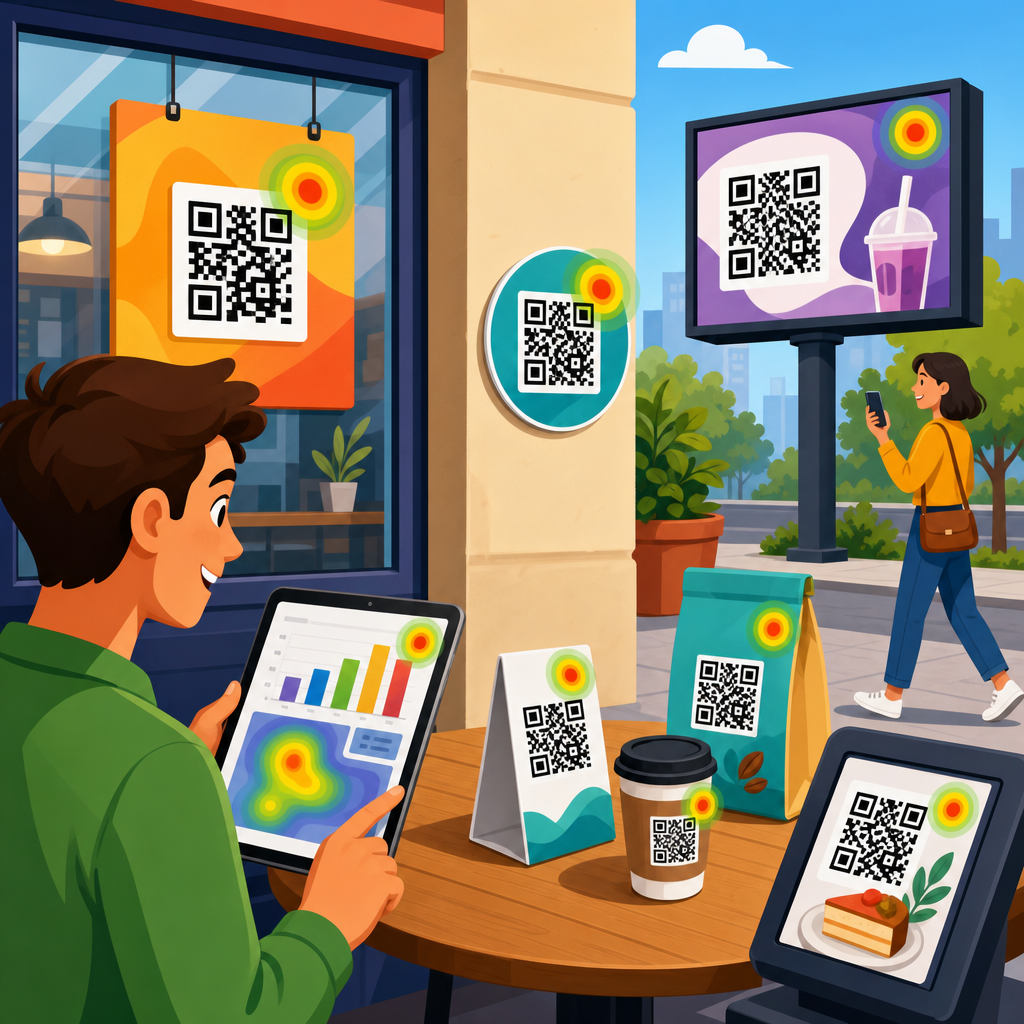
QR code A/B testing is the practice of comparing two or more QR code campaign variations to learn which version drives more scans, conversions, or downstream actions. In simple terms, you change one meaningful element, such as the call to action, landing page, placement, incentive, design treatment, or destination URL, then measure the result. I have used this approach across retail displays, direct mail, event signage, restaurant packaging, and product labels, and the same principle always holds: QR codes are not just scannable images, they are decision points in a customer journey. When those decision points are tested systematically, marketers stop guessing and start improving measurable outcomes.
For beginners, the topic matters because QR codes now sit at the intersection of offline attention and digital response. Smartphone camera apps made scanning friction low, while dynamic QR platforms made tracking practical. A static code sends every scanner to a fixed destination and offers little flexibility after printing. A dynamic code routes through a short URL, allowing updates to the destination, attribution parameters, and analytics without reprinting the code itself. That distinction is central to A/B testing QR codes, because most serious tests require controlled tracking, segmentation, and the ability to redirect traffic cleanly. Without that infrastructure, you may count scans, but you will struggle to explain why one variant won.
A beginner’s guide also needs clear definitions. A variant is one version of a campaign element being tested. A primary metric is the main number used to decide the winner, such as scan-through rate, landing page conversion rate, coupon redemption rate, or revenue per visitor. A secondary metric captures side effects, including bounce rate, time on page, add-to-cart rate, form completion quality, or store visit lift. Statistical significance is the threshold showing whether an observed difference is likely real rather than random noise. Sample size is the number of observations required to make that judgment with confidence. If those terms sound technical, do not worry; the practical idea is straightforward. Run one controlled change at a time, track enough responses, and decide based on evidence rather than preference.
QR code testing deserves its own discipline because it spans both physical and digital variables. A website button test usually changes copy or color on a screen. A QR campaign test may change print size, contrast, placement height, surrounding instructions, scan context, destination experience, and timing all at once if handled poorly. That complexity is exactly why a structured method matters. If your poster in a train station gets more scans than a QR code on a checkout receipt, the difference may come from audience intent, not creative quality. Good testing isolates variables, records exposure conditions, and links scans to business outcomes. That is what turns a QR code from a novelty into a repeatable acquisition channel.
What You Can Test in a QR Code Campaign
The most useful starting point is to separate the scannable asset from the experience around it. Many teams assume they are testing the QR code itself, but the code pattern is only one part of performance. In practice, you can test at least five layers: the physical presentation, the message framing, the destination experience, the audience segment, and the measurement setup. For example, I have seen a plain black-and-white code outperform a branded one in low light because contrast beat aesthetics. I have also seen the opposite happen on premium packaging, where a well-integrated design increased trust and scan intent. Testing reveals which force matters in your context.
Physical presentation includes size, error correction level, quiet zone, contrast, placement, and viewing distance. A small code on a shelf talker may work at arm’s length but fail on a bus shelter where people scan from several feet away. A common rule of thumb is roughly one inch of code size for every ten inches of scanning distance, though camera quality and lighting can shift results. Message framing covers the text around the code: “Scan to see the menu,” “Scan for 15% off,” or “Scan to watch setup instructions.” These messages create different expectations and therefore different scan rates. Destination experience includes mobile page speed, form length, product relevance, and whether the page matches the promise printed beside the code.
Audience and context are often overlooked. A QR code on event badges reaches active attendees already primed to engage. The same offer on outbound mail reaches colder recipients with different motivations. Testing one variant on one channel and another on a different channel is not a fair A/B test; it is a channel comparison. The cleanest method is to hold channel and timing steady, then randomize or split exposure as evenly as possible. Measurement setup is the final layer. Use distinct tracking URLs, UTM parameters, campaign IDs, and analytics events so that every scan can be attributed to the exact variant that produced it. If attribution is muddy, the test result will be muddy too.
How to Design a Clean A/B Test
A clean QR code A/B test begins with one hypothesis. A strong hypothesis is specific, measurable, and grounded in customer behavior. For example: “Adding a benefit-led call to action beside the QR code will increase scan rate by 20% because users understand the immediate value.” Another useful hypothesis might be: “Sending scanners to a shortened mobile form instead of a full product page will improve lead submissions without reducing lead quality.” Start with a single change that can plausibly move a key metric. If you alter design, offer, placement, and landing page all at once, you may improve results, but you will not know what caused the lift.
Next, choose your success metric. For top-of-funnel campaigns, scan rate divided by estimated impressions is often appropriate. For transactional campaigns, conversion rate or revenue per scan is usually better. In restaurant and hospitality settings, menu views may matter less than completed orders. In B2B trade shows, badge scans are less important than qualified demo bookings. Once the metric is selected, define the test window and stopping rule in advance. I recommend avoiding the common mistake of checking results daily and ending the test as soon as one number looks larger. Premature decisions inflate false positives. Set a target sample size based on expected traffic and desired confidence before launch.
Operational discipline matters just as much as the hypothesis. Keep print quality consistent. Verify that both codes scan quickly across iPhone and Android devices, in bright and dim conditions, and from realistic distances. Confirm that redirects preserve analytics parameters. Use a QR management platform or link routing tool that logs scans by timestamp, device, location when available, and destination. Google Analytics 4, Adobe Analytics, Bitly, QR Code Generator Pro, Beaconstac, and Flowcode are commonly used in this workflow. Whichever toolset you choose, document the variant ID, creative version, placement details, and campaign dates so you can audit the result later.
| Test element | Variant A | Variant B | Primary metric | Typical lesson |
|---|---|---|---|---|
| Call to action | Scan now | Scan for 15% off | Scan rate | Specific value usually beats generic instruction |
| Landing page | Homepage | Dedicated offer page | Conversion rate | Message match often improves completion |
| Placement | Bottom of flyer | Center with headline | Scans per 1,000 impressions | Visibility strongly affects behavior |
| Design | Black and white | Branded color treatment | Successful scan rate | Branding helps only if contrast remains high |
| Incentive | No incentive | Free sample or guide | Leads or redemptions | Offer strength can outweigh visual changes |
Metrics, Analytics, and Statistical Confidence
Beginners often focus on scans alone because they are easy to count, but scan volume is only the first signal. A high-scan QR code can still be a poor business performer if the destination disappoints or if scanners are low intent. The analytics stack should follow the full path from impression to outcome. At minimum, track impressions where feasible, scans, unique scanners, landing page sessions, engaged sessions, conversions, and assisted revenue. If you are using promotional codes, redemption data can validate whether scans turned into purchases. In physical retail, POS integration, coupon codes, or vanity offer identifiers can close the loop between digital interaction and in-store sale.
Statistical confidence matters because small differences can be misleading. If Variant A gets 52 conversions from 500 scans and Variant B gets 48 from 500 scans, that gap may not be meaningful. By contrast, 520 versus 480 conversions from 5,000 scans could be meaningful, depending on the baseline and variance. Use an established calculator for two-proportion tests or a platform with built-in experiment analysis. Set a confidence threshold before you begin, commonly 90% or 95%, and avoid changing it after seeing the results. Also account for practical significance. A statistically significant lift of 1% may not justify reprinting materials if production costs rise sharply.
Attribution nuance is especially important with QR codes because offline impressions are difficult to count precisely. A package insert may have known volume, while a store poster has approximate foot traffic. That means scan rate should sometimes be treated as directional rather than absolute. When impression estimates are weak, compare deeper metrics that are cleaner, such as conversion per scan or revenue per scan. Segment your results as well. One variant may underperform overall but win among iOS users, repeat customers, or a specific store region. Those insights can inform future personalization even if they do not change the headline winner for the current campaign.
Common Mistakes That Distort Results
The biggest mistake in A/B testing QR codes is changing too many things at once. If one poster uses a larger code, a different headline, a stronger offer, and a faster landing page, any improvement is impossible to attribute. The second mistake is ignoring scanability basics. Decorative QR designs, low contrast, tiny print, and cramped quiet zones can depress successful scans before the message is even evaluated. In several audits I have run, teams blamed weak offers when the real problem was that the code failed under glare or from normal viewing distance. Technical usability must be verified before marketing conclusions are drawn.
Another frequent error is sending both variants to the same destination without distinguishing parameters. If your analytics tool cannot separate Variant A from Variant B, the test is effectively unmeasured. Related to this is the use of static QR codes in experimental campaigns. Static codes have their place for simple, permanent destinations, but they are poor tools for iterative optimization because they cannot be updated or routed flexibly after printing. Timing bias is also common. If Variant A is displayed during a weekend promotion and Variant B during a slow weekday, the comparison reflects demand conditions as much as creative quality. Try to run variants concurrently whenever possible.
There is also a human bias problem. Internal teams often prefer the most visually branded version, while users prefer the easiest one to trust and scan. Logos in the code center, custom shapes, and gradient fills can work, but only within technical limits. ISO and industry best practices on contrast, error correction, and quiet zones exist for a reason. Finally, do not stop at vanity metrics. A variant that boosts scans by promising a large discount may lower profit or attract low-quality leads. The winner should be the version that improves the metric tied to the business goal, not merely the metric easiest to celebrate in a meeting.
Real-World Use Cases and How Beginners Should Start
Retail is one of the clearest examples. A store can test a shelf-edge QR code that says “Scan for product reviews” against one that says “Scan for today’s offer.” The first may attract research-minded shoppers; the second may drive immediate purchase intent. Restaurants can test menu QR codes with and without a benefit statement such as “Scan to reorder your favorites.” B2B marketers can compare trade show booth signage that sends visitors to a long product page versus a concise booking page with available demo times. Consumer packaged goods brands can test packaging QR codes that unlock recipes, how-to videos, loyalty rewards, or sustainability details.
If you are a beginner, start small and choose a test you can execute cleanly in two to four weeks. Use dynamic QR codes, create two variants that differ by one major element, and make sure each version receives similar exposure. Build mobile-first landing pages with fast load times and clear message match. Track with UTM parameters and analytics events, and define the winning metric before launch. After the test, record not only the winner but the reason. Over time, those learnings become a playbook for your broader QR code marketing strategy. The real value of A/B testing QR codes is not a single uplift. It is the accumulation of evidence that makes every future campaign smarter. Choose one high-traffic placement, write two clear variants, and start testing this month.
QR code A/B testing gives marketers a disciplined way to improve offline-to-online journeys with evidence instead of instinct. The core idea is simple: change one meaningful variable, measure the right outcome, and keep the rest of the environment as consistent as possible. For beginners, the most important lessons are to use dynamic codes, define a hypothesis in advance, track beyond the scan, and respect scanability fundamentals such as size, contrast, and placement. When those basics are in place, even small campaigns can produce reliable insights that carry into packaging, signage, direct mail, events, and in-store promotions.
The strongest programs treat QR codes as part of a complete customer experience rather than as isolated graphics. That means the printed prompt, the scanning context, the redirect logic, the landing page, and the final conversion step all deserve attention. It also means accepting tradeoffs. A more branded design may lift trust in one channel and hurt readability in another. A stronger incentive may increase scans but reduce margin. Good testing surfaces those tradeoffs early, before they become expensive habits. That is why careful experimentation is now a core capability within modern QR code marketing and strategy programs.
If you are building this capability for the first time, focus on repeatable process over complexity. Pick one business goal, one variable, one primary metric, and one realistic test window. Validate technical performance across devices, document your setup, and wait for enough data before declaring a winner. Then apply the lesson to the next campaign and continue refining. Done consistently, A/B testing QR codes turns every printed touchpoint into a source of measurable learning and stronger results. Start with a single campaign, collect clean data, and use what you learn to make the next scan more valuable.
Frequently Asked Questions
What is QR code A/B testing, and why does it matter for beginners?
QR code A/B testing is the process of comparing two or more versions of a QR-driven campaign to see which one performs better based on real user behavior. Instead of guessing what might work, you deliberately change one important variable and measure the outcome. That variable could be the call to action next to the QR code, the landing page experience, the visual treatment of the code, the placement of the code on signage or packaging, the offer attached to the scan, or the destination URL itself. The goal is to identify which variation produces more scans, more conversions, or better downstream results such as purchases, registrations, coupon redemptions, or form submissions.
For beginners, this matters because QR campaigns often look simple on the surface but are influenced by many small decisions. A code on a retail display may get ignored if the nearby message is vague. A direct mail piece may receive more scans if the incentive is clearer. Event signage may perform better when the QR code is positioned at eye level instead of near the bottom. In restaurant packaging or product labels, even a small change in wording can affect whether someone scans immediately or not at all. A/B testing gives you a structured way to learn what actually motivates people in each context, which makes your campaigns more efficient and more profitable over time.
What should I test first in a QR code campaign?
If you are just getting started, the best place to begin is with the elements most likely to influence scan behavior and conversion quality. In most QR code campaigns, that means testing the call to action, the offer or incentive, the landing page, and the placement of the code. A clear call to action such as “Scan to get 15% off” usually outperforms generic wording like “Scan here,” because it tells people exactly why they should engage. Likewise, an incentive test can reveal whether users respond better to a discount, a free sample, exclusive access, a how-to guide, or some other value exchange.
The landing page is another high-impact area because scans alone do not guarantee results. If one version of your campaign sends users to a fast, mobile-friendly page with a clear next step, and another sends users to a cluttered homepage, the difference in conversions can be significant. Placement is equally important in physical environments. A QR code on a product label, event banner, table tent, mailer, or store display can perform very differently depending on visibility, size, surrounding text, and ease of access. As a beginner, focus on testing one meaningful variable at a time. That makes it easier to understand what caused the performance change and gives you cleaner, more actionable insights.
How do I run a QR code A/B test correctly without getting misleading results?
The key to a reliable QR code A/B test is controlling as many factors as possible so the one change you make is the one driving the outcome. Start by defining a specific goal. Decide whether you are trying to increase scan rate, improve conversions after the scan, raise revenue per visitor, or boost another measurable action. Then create two versions of the campaign that are nearly identical except for the single variable you want to test. For example, if you are testing the call to action, keep the placement, design, audience, timing, and landing page consistent across both versions.
You also need a way to track performance accurately. Use unique URLs, campaign parameters, or dynamic QR codes so each variation can be measured separately. That allows you to compare not only total scans but also what happens afterward, such as page engagement, sign-ups, purchases, or redemptions. Try to split exposure as evenly as possible. In retail, that may mean using version A in one group of similar stores and version B in another. In direct mail, it may mean segmenting recipients randomly. At events, it could involve rotating sign placements under similar traffic conditions. Avoid changing multiple things at once unless you are intentionally running a more advanced multivariate test. Beginners often get misleading results because they alter the design, message, offer, and destination all together, which makes it impossible to know what actually improved performance.
Finally, give the test enough time and volume to produce useful data. A small difference after only a handful of scans may not mean anything. Look for consistent patterns over a reasonable sample size, and review both top-of-funnel and bottom-of-funnel metrics. The version with more scans is not always the winner if the traffic is lower quality. A strong A/B test helps you learn which variation creates better business outcomes, not just more activity.
Which metrics should I track in QR code A/B testing?
The most useful metrics depend on your campaign objective, but in general you should track both scan behavior and post-scan outcomes. Start with scan volume, unique scans, and scan rate if you can estimate the number of people exposed to the code. These metrics tell you how effectively the QR code and its surrounding message capture attention. For example, if one version on restaurant packaging gets more scans than another, you know that its presentation is more compelling at the point of interaction.
However, scan counts alone are only part of the picture. You should also measure what users do after the scan. That might include landing page visits, bounce rate, time on page, clicks to the next step, account creations, coupon redemptions, purchases, menu views, app downloads, lead form submissions, or any other meaningful action tied to campaign goals. In a retail display test, one QR version may generate fewer scans but more purchases because it attracts stronger intent. In direct mail, one offer may drive higher scan rates while another produces better average order value. These differences matter.
Other valuable metrics can include device type, time of day, location, repeat scans, and conversion rate by audience segment. If your QR platform supports dynamic code analytics, you can often gather more detailed reporting and make changes without reprinting the code. The most important principle is to match your metrics to the result you care about most. If the campaign is meant to drive sales, judge success by sales-related outcomes. If it is designed to increase engagement or education, then content interaction metrics may matter more. Good QR code A/B testing always connects scan data to real business impact.
What are the most common mistakes to avoid when testing QR codes?
One of the biggest mistakes is testing too many variables at once. If you change the call to action, the color treatment, the landing page, the offer, and the placement all in one test, you may see a performance difference but you will not know which change caused it. Another common mistake is focusing only on scans and ignoring conversions. A design treatment that boosts curiosity may increase scans, but if it sends users to a weak landing page or attracts the wrong audience, overall results can still decline. Always evaluate the full journey.
Poor technical setup is another frequent problem. If you do not use separate tracking links or variation-specific analytics, the data can become impossible to interpret. Inconsistent traffic conditions can also distort outcomes. For instance, comparing one event sign in a high-traffic entrance against another in a low-traffic hallway does not create a fair test. The same issue applies to retail displays in stores with very different customer volumes or direct mail drops sent to uneven audience segments. Try to control the environment as much as possible.
Beginners also often underestimate the importance of mobile experience. Because QR code users typically scan with a phone, your destination must load quickly, display well on smaller screens, and make the next action obvious. A strong QR code can underperform simply because the landing page experience is frustrating. Another mistake is ending the test too early based on a small number of scans. Short-term fluctuations happen, especially in physical campaigns. Let the test gather enough data to reveal a stable pattern. Finally, avoid treating every environment the same. What works on event signage may not work on product labels or restaurant packaging. Context matters, and the most effective testing programs treat QR performance as a combination of message, location, user intent, and mobile experience.