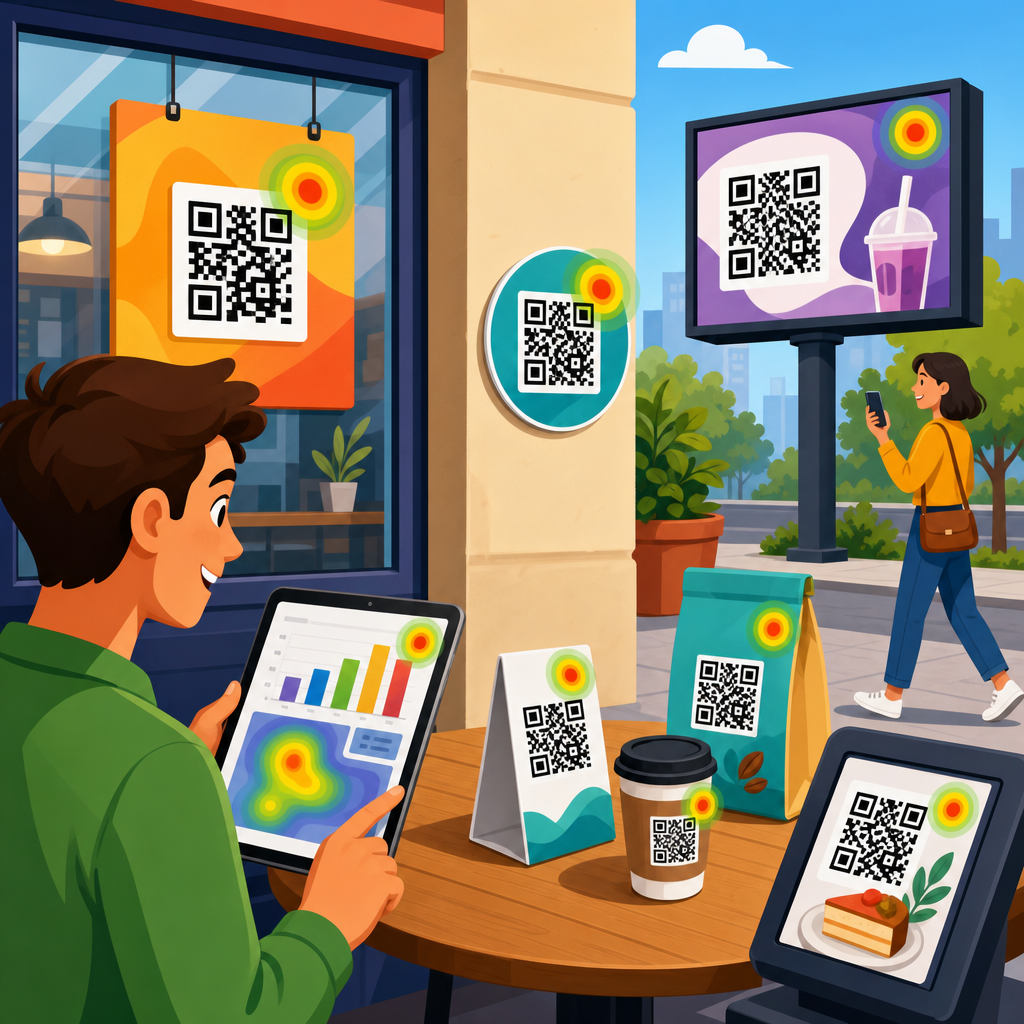
A/B testing QR codes is one of the fastest ways to improve scan rates, landing page visits, and downstream conversions without increasing print volume or media spend. In practical terms, A/B testing means comparing two versions of a QR code campaign element, showing each version to a similar audience, and measuring which one produces better results. For QR code marketing, the tested variable might be the call to action beside the code, the landing page destination, the code size, color contrast, incentive, placement on packaging, or even whether the code uses a frame that says “Scan Me.” The goal is simple: replace guesswork with evidence.
This matters because QR codes sit at the exact point where offline attention becomes digital action. A consumer notices a code on a poster, direct mail piece, shelf talker, menu, product box, trade show sign, or business card and decides in seconds whether to scan. I have worked on QR campaigns where a tiny wording change lifted scans dramatically, and others where the code scanned perfectly but underperformed because the destination page loaded slowly or asked for too much too soon. Most weak QR performance is not caused by the code itself. It is caused by friction surrounding the code.
Understanding key terms makes testing easier. A scan rate is the percentage of people exposed to the QR code who scan it. A conversion rate is the percentage of scanners who complete the desired action, such as signing up, downloading an app, claiming an offer, or making a purchase. Statistical significance indicates whether the observed lift is likely real rather than random noise. A control is the original version, while the variant is the changed version. A dynamic QR code sends users through a redirect that can be updated and tracked; this is usually better for testing than a static QR code because it preserves flexibility and analytics continuity.
For a sub-pillar within QR code marketing and strategy, A/B testing QR codes serves as the operational layer that turns campaign ideas into repeatable performance gains. It helps teams answer practical questions: What offer makes people scan? What placement gets noticed? What destination converts? How large should the code be at three feet versus ten feet? When done well, QR testing improves creative, media efficiency, and user experience at the same time. It also creates a reliable learning loop that can inform packaging, retail signage, event activation, print ads, and omnichannel attribution across the broader marketing program.
What to test in a QR code campaign
The best A/B tests isolate one meaningful variable at a time. In QR programs, I usually group testable variables into four categories: the code, the context, the destination, and the offer. The code includes size, error correction level, quiet zone, contrast, branding, and whether a frame or label is used. The context includes placement, surrounding copy, imagery, distance from the viewer, and environmental conditions such as glare or low light. The destination covers page speed, mobile layout, form length, message match, and analytics setup. The offer includes discounts, gated content, loyalty enrollment, contests, product information, or appointment booking.
A common mistake is testing too many elements at once. If you change code color, placement, and landing page copy in the same experiment, you may get a lift but you will not know which change caused it. Start with the variable most likely to influence behavior. On a direct mail piece, that may be the incentive or CTA. On packaging, it may be placement and context. In a restaurant, menu QR code tests often hinge on readability, load speed, and whether the page opens to the exact menu section promised by the sign.
There are also physical constraints unique to QR codes. A code that works well on a countertop card may fail on a roadside sign because scanning distance changes the minimum practical size. Contrast matters more than brand consistency. Dark code on a light background remains the safest choice. Decorative logos in the center can reduce scan reliability if they consume too much of the pattern. Testing should never violate core scanability standards. ISO/IEC 18004 defines the QR Code symbology, and in production I treat basic readability checks across multiple phones as mandatory before any live split test begins.
How to design a clean A/B test for QR codes
A clean QR code A/B test starts with a single hypothesis. For example: “Adding a benefit-led CTA beside the code will increase scan rate by 15% compared with using the logo alone.” From there, define one primary metric and one secondary metric. If the objective is top-of-funnel engagement, primary metric should be scan rate. If the objective is lead generation, primary metric may be completed forms, with scan rate as a diagnostic secondary metric. Set a fixed testing window, estimate the sample size needed, and keep all non-tested factors as consistent as possible.
Audience splitting must be fair. In digital channels, randomization is straightforward. In print and physical environments, fairness requires planning. If testing two poster versions across stores, distribute versions across similar locations rather than putting version A in high-traffic stores and version B in low-traffic stores. For direct mail, randomize at the household or route level. For product packaging, test by production batch only when distribution can be balanced. If balancing is impossible, use matched-market logic and control for traffic, geography, and timing when reading results.
Tracking infrastructure deserves as much attention as creative. Use dynamic QR codes tied to distinct URLs with UTM parameters, campaign IDs, and variant labels. Analytics platforms such as Google Analytics 4, Adobe Analytics, Bitly, or dedicated QR platforms can log scans, sessions, and conversion events. I recommend validating each step manually on iPhone and Android before launch: camera scan, redirect speed, page render, event firing, and conversion completion. If one version has a broken event tag, the test becomes unusable no matter how strong the creative is.
| Test element | Version A | Version B | Primary metric | Best use case |
|---|---|---|---|---|
| CTA beside code | Scan for details | Scan for 20% off today | Scan rate | Direct mail, posters, packaging |
| Destination page | Homepage | Dedicated mobile landing page | Conversion rate | Lead generation, coupons, events |
| Placement | Bottom right corner | Centered near product image | Scan rate | Print ads, shelf signage |
| Code design | Standard black-on-white | Branded frame with label | Successful scans | Retail, hospitality, trade shows |
| Offer | Learn more | Enter to win | Completed action | Events, product launches |
Metrics that reveal real QR code performance
Many teams stop at scan counts, but scan count alone can mislead. A poster in a crowded subway station may generate many scans and still perform poorly if visitors bounce immediately. The most useful QR code metrics form a funnel. Start with estimated impressions or exposures, then measure scan rate, successful redirect rate, engaged session rate, conversion rate, and cost per conversion if media or print cost is material. For physical placements, exposure is sometimes estimated using foot traffic, circulation, or store visits rather than observed impressions, which means directional accuracy matters more than false precision.
I also separate technical performance from persuasive performance. Technical performance includes successful scan percentage, redirect latency, page load speed, and device compatibility. Persuasive performance includes CTA response, offer appeal, form completion, and revenue per scanner. This distinction helps diagnose problems quickly. If version B gets fewer scans but higher conversion rates, the issue may be visibility rather than landing page quality. If both versions scan well but neither converts, the bottleneck is likely offer-message fit, page friction, or trust signals on the destination.
Statistical interpretation matters. Small samples often create false winners. If one version gets 42 scans and the other gets 37, that is not enough evidence to redesign a national packaging run. Use a significance calculator or experimentation platform, predefine the minimum detectable effect, and avoid peeking too early. Seasonality can also distort results. Event signage tested on day one versus day three may reflect crowd composition rather than creative quality. When possible, run variants concurrently, not sequentially, especially in environments where traffic fluctuates by hour, day, or weather.
High-impact QR code tests by channel
Different channels create different testing priorities. On product packaging, the primary challenge is discoverability. Consumers may not know why they should scan, so tests often focus on placement near a benefit statement, concise copy such as “Scan for setup video,” and a destination page that exactly fulfills that promise. For food packaging, examples include recipe pages, sourcing information, or loyalty enrollment. For electronics, setup tutorials and warranty registration outperform generic brand pages because intent is practical and immediate.
In direct mail, incentive framing usually has the biggest effect. I have seen “Scan to explore” lose badly to “Scan to claim your local offer” because specificity reduces uncertainty. Since direct mail gives you control over household segmentation, it is a strong environment for disciplined testing. You can test personalized landing pages, map-based store locators, or SMS opt-in pages behind the code. Just keep the mailer design consistent enough that the effect of the tested variable remains measurable.
Retail signage and out-of-home placements require extra attention to scanability and context. A QR code on a window poster competes with reflections, movement, and limited dwell time. Tests should focus on code size, placement at natural eye level, short benefit-led prompts, and fast mobile destinations. In restaurants, table tents and menu boards benefit from direct-answer destinations such as menus, allergen information, or pay-at-table flows. At trade shows, badges, booth graphics, and handouts often perform best when the scan leads to a short form, a calendar booking page, or an asset download with immediate value rather than a general website homepage.
Common mistakes that ruin QR code experiments
The most common failure is confusing QR readability with marketing effectiveness. A code can be perfectly readable and still fail because the value proposition is weak. The second major mistake is sending all variants to the same generic page and expecting differences to appear. If the page does not preserve message match, the visitor experiences a disconnect that suppresses conversions across both versions. Another recurring issue is ignoring the physical environment. Lighting, printing quality, paper finish, viewing angle, and distance all influence results in ways that are easy to miss from a desktop review.
Another mistake is using static QR codes when the campaign needs flexibility. Static codes lock the destination permanently, which makes iteration expensive after materials are printed. Dynamic codes allow you to update destinations, tag traffic accurately, pause broken pages, and preserve campaign continuity. They also make post-test rollout faster because the winning variant can remain live while creative assets are updated. Security matters too. Branded short domains and transparent destination copy improve trust, especially when users are wary of scanning unfamiliar codes in public places.
Finally, teams often treat A/B testing as a one-time optimization rather than a system. The strongest programs maintain a test backlog, a naming convention, a QA checklist, and a results archive. Every test should record hypothesis, setup, audience split, launch dates, sample size, outcome, and recommended next action. Over time, this creates channel-specific benchmarks. You learn that packaging scans respond to utility, trade show scans respond to immediacy, and direct mail scans respond to clarity plus incentive. That accumulated knowledge is the real return from QR code testing, because it compounds across future campaigns.
How to build a repeatable optimization process
A repeatable process begins before creative production. Define the business goal, decide what action the scan should trigger, and select a landing experience built for mobile first. Then create a test plan with one priority hypothesis per channel. Use a preflight checklist covering QR generation, error correction, contrast, size, quiet zone, destination QA, analytics, and device testing. During launch, monitor live traffic for anomalies but do not overreact to the first few hours of data. After the test window closes, analyze both scan and conversion behavior, document the result, and decide whether to roll out, retest, or segment further.
The best teams connect QR insights to broader marketing operations. Winning CTA language from direct mail can inform shelf signage. Landing page learnings from packaging can improve paid social post-click experiences. Store-level QR data can guide regional merchandising. If your organization already uses a measurement framework such as GA4 events, CRM source tracking, or marketing automation scoring, integrate QR tests into that structure rather than treating them as standalone experiments. That makes attribution cleaner and allows QR interactions to contribute to lifecycle reporting, not just campaign snapshots.
The core takeaway is straightforward: better QR code results come from disciplined testing of the moments around the scan, not from decoration or intuition alone. Focus on one variable, track the full funnel, protect scanability, and keep message match from code to landing page. Start with high-impact tests such as CTA, offer, placement, and destination page, then build a documented learning cycle that improves every new campaign. If you manage packaging, print, retail, events, or direct mail, make A/B testing a standard part of your QR code strategy and let measured evidence decide the winner.
Frequently Asked Questions
What does A/B testing a QR code campaign actually involve?
A/B testing a QR code campaign means comparing two versions of one specific campaign element to see which version produces better performance. Instead of changing everything at once, you isolate a single variable such as the call to action next to the QR code, the landing page destination, the code size, placement, surrounding design, or color contrast. Version A might say “Scan to Learn More,” while Version B says “Scan for 20% Off.” Both versions are shown to similar audiences under similar conditions, and then you measure which one drives more scans, more landing page engagement, and more conversions.
The reason this works so well is that QR code performance is highly influenced by context. Small changes in wording, visual hierarchy, or offer clarity can have a measurable effect on whether people notice the code, trust it, and decide to scan. A proper A/B test helps remove guesswork and replace it with real performance data. Instead of assuming what your audience prefers, you use actual user behavior to determine what gets better results.
In practice, the process usually starts by choosing one goal. That goal might be increasing scan rate, boosting landing page visits, improving form submissions, or generating more purchases. From there, you create two versions that differ by only one meaningful variable, distribute them in a controlled way, and track the outcome. The winning version is then used as the new control for future tests. Over time, this iterative process can significantly improve campaign efficiency without increasing print volume or media spend.
Which QR code elements should I test first for the biggest impact?
The best elements to test first are the ones closest to user decision-making. In most QR code campaigns, the biggest early wins come from testing the call to action, the landing page experience, and the visual presentation around the code. A strong call to action can directly influence whether someone scans at all. For example, “Scan to See Menu” is functional, but “Scan to Get Today’s Specials” may create more urgency and value. The difference seems small, but it often has a major effect on scan behavior.
The landing page is another high-impact testing area because a successful scan means very little if the destination fails to convert. You can test a product page against a dedicated mobile campaign page, a short form against a longer one, or a discount-focused page against an informational page. If your QR code is generating scans but not conversions, the landing page is often the first place to investigate. Improving the post-scan experience can raise results across the entire funnel.
Visual factors also matter. Code size, placement, white space, contrast, and surrounding design can all affect scanability and confidence. A QR code that is technically functional may still underperform if it is too small, blends into the background, or lacks a clear reason to scan. Start with tests that are easy to implement and likely to influence either attention or motivation. A practical order is: first test the message beside the code, then the destination page, then the presentation details. That sequence often gives marketers the fastest and clearest performance gains.
How do I run a fair QR code A/B test without skewing the results?
A fair QR code A/B test depends on controlling as many outside variables as possible so the difference in performance can be attributed to the element you intended to test. The most important rule is to test one variable at a time. If Version A uses a different call to action, a different landing page, and a different design than Version B, you will not know which change caused the result. Keeping the versions nearly identical except for one factor makes the outcome much more trustworthy.
Audience consistency is also essential. Both versions should be shown to similar groups in similar conditions. If one QR code appears in a high-traffic retail location and the other appears in a lower-traffic area, the test is already biased. The same applies to timing. If one version runs during a promotion and the other runs after it ends, your comparison becomes less reliable. Ideally, both versions should be distributed at the same time, in comparable placements, and to audiences with similar intent and behavior.
Measurement discipline matters just as much. Use dynamic QR codes or campaign-specific tracking parameters so each version can be monitored separately. Define your success metric before the test begins. That could be scan rate, click-through rate from the landing page, conversion rate, revenue per scan, or another business outcome. Also make sure the sample size is large enough to produce a meaningful comparison. A handful of scans is not enough to draw a confident conclusion. A fair test is not just about launching two versions; it is about creating conditions where the data can actually guide a smart decision.
What metrics should I use to decide which QR code version is the winner?
The right metric depends on the specific goal of the campaign. If your main objective is awareness or engagement, scan rate is often the first metric to examine. It tells you how effectively the QR code and its surrounding message prompt people to take action. However, scan rate alone can be misleading because a version that gets more scans is not always the one that drives better business results. That is why it is important to look beyond the first interaction.
Landing page visits, bounce rate, time on page, form completion rate, purchases, and revenue per visitor are often more meaningful indicators of campaign quality. For example, one QR code variation may attract more curiosity-driven scans, while another brings fewer but more qualified visitors who actually convert. If your goal is lead generation, form submissions or qualified leads should carry more weight than raw scan volume. If your goal is e-commerce, completed purchases and average order value may matter most.
A strong evaluation framework usually follows the full user journey. Start with top-of-funnel metrics like impressions and scans, then move to mid-funnel metrics like landing page engagement, and finally review bottom-of-funnel outcomes like sign-ups, sales, or bookings. This layered approach helps you identify where each version succeeds or fails. The winner should not simply be the version with the most activity; it should be the version that best supports your actual business objective. In many cases, the most valuable version is the one that produces the highest-quality outcomes, not just the highest scan count.
How long should I run a QR code A/B test, and what mistakes should I avoid?
A QR code A/B test should run long enough to gather a representative amount of data, but not so long that the market conditions change too much during the test period. There is no universal timeframe because the right duration depends on traffic volume, audience size, and campaign visibility. A high-traffic in-store display may produce enough data in a few days, while a lower-volume print campaign may need several weeks. The key is not choosing a duration arbitrarily, but running the test until you have enough observations to make a confident decision.
One of the most common mistakes is ending the test too early because one version appears to be winning right away. Early results can be misleading, especially with small sample sizes. Another common error is changing multiple elements at once and then trying to interpret the outcome. Marketers also often overlook technical consistency, such as making sure both QR codes scan equally well across devices and both landing pages load quickly on mobile. If one version is harder to scan or slower to load, the test may reflect execution issues rather than genuine preference.
It is also important to avoid focusing only on vanity metrics. A test that improves scans but reduces conversions is not a true success. Likewise, avoid running tests in uneven conditions, such as comparing different stores, different geographies, or different customer segments without accounting for those differences. The best practice is to plan the test in advance, define the winning metric clearly, ensure both versions are technically sound, and document the results so future tests build on what you learn. QR code optimization works best as an ongoing process, not a one-time experiment.