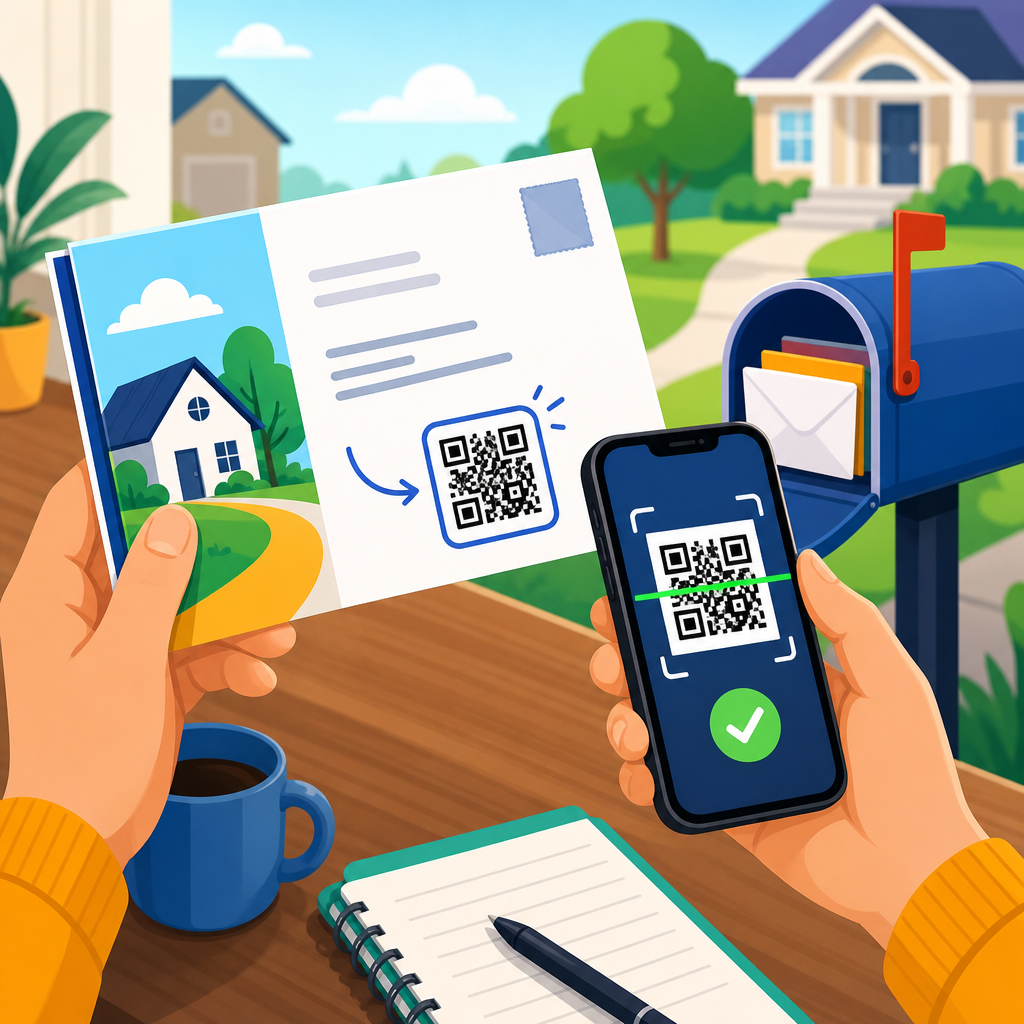
QR codes have become one of the most practical tools for connecting print marketing to digital action, and direct mail is where they often perform best. In direct mail campaigns, a QR code is a scannable two-dimensional barcode that sends recipients from a postcard, letter, catalog, or package insert to a website, landing page, video, coupon, form, map, or app. That simple bridge matters because direct mail still earns attention in the home, while digital channels make response measurable, personalized, and fast. When those strengths are combined well, offline-to-online integration stops being a buzzword and becomes a reliable acquisition and retention system.
I have seen the difference firsthand in campaigns where a beautifully designed mailer generated only vague brand lift until a QR code was added with a clear call to action and a purpose-built landing page. Response became easier to attribute, customer intent was visible, and follow-up became immediate. This article explains how to use QR codes in direct mail campaigns strategically, not decoratively. It covers the mechanics of setup, what to offer, how to design the mail piece, how to track performance, and how to avoid the mistakes that reduce scans. Used correctly, QR codes turn direct mail from a static impression into a measurable customer journey.
Why QR Codes Work in Direct Mail
QR codes work because they reduce friction between interest and action. A recipient does not need to type a long URL, remember a promo code, or search for your company later. They point a phone camera, tap, and arrive exactly where you want them. That speed is important in direct mail, where attention is brief and context matters. A homeowner looking at a roofing offer, a patient reviewing a healthcare reminder, or a donor reading a nonprofit appeal is far more likely to respond when the next step is instant.
Direct mail also has qualities digital channels cannot fully replicate. It is tangible, can be shared within a household, and often receives focused attention without competing tabs or notifications. The Data & Marketing Association has repeatedly reported strong response rates for house lists compared with many digital display benchmarks, which is one reason brands continue to invest in mail despite rising postage costs. QR codes improve that investment by adding a direct digital response path, behavioral tracking, and destination-level personalization.
Another reason they work is device behavior. Smartphone camera apps on iPhone and Android now read QR codes natively, so most recipients no longer need a separate scanner app. That lowered the barrier to adoption. During the pandemic, mass consumer familiarity accelerated as restaurants, events, and retailers normalized scanning for menus, check-ins, payments, and product information. Today, many recipients already understand what the square code means; your job is making the value of scanning obvious.
Choose the Right Goal Before You Generate a Code
The most effective QR code direct mail campaigns start with one business objective, not with the code itself. In practice, I map campaigns to five common goals: lead generation, sales conversion, appointment booking, customer retention, and attribution. If the goal is lead generation, the code may send recipients to a short form, gated guide, or quote request page. If the goal is sales, it may open a product bundle page with a deadline-based offer. For appointment booking, the destination should be a calendar page that loads quickly on mobile and preselects the relevant service category.
Retention campaigns benefit from different destinations. Existing customers can scan to register a warranty, access loyalty rewards, reorder consumables, or watch onboarding videos. Attribution-driven mailings often use QR codes to isolate the impact of specific segments, creative versions, or geographic drops. For example, a regional healthcare provider might mail three postcard variants to separate ZIP code clusters and assign a unique QR destination to each audience. That makes it easier to compare response rate, appointment completion rate, and downstream revenue.
One code should generally support one primary action. When marketers try to make a single mailer do everything at once, they dilute response. A postcard that asks the recipient to scan for a coupon, read a blog article, follow social profiles, and download an app will almost always underperform a postcard with one obvious payoff. Decide what success means before design begins, then build the code, landing page, and measurement plan around that outcome.
Match the QR Code Destination to the Audience and Offer
The destination matters more than the code graphic. A QR code should lead to a mobile-first page that continues the exact promise made in the mailer. If the postcard says “Scan to book your free HVAC inspection,” the landing page should open directly to the booking experience, not the company homepage. Message match is critical because every extra click loses users. In campaigns I have audited, sending traffic to a generic homepage is one of the most common reasons scan activity fails to convert.
Personalization improves performance when used carefully. Variable data printing allows different recipients to receive mailers with unique QR codes tied to specific offers, sales reps, account portals, or localized landing pages. A university can send admitted students a code that opens a campus tour booking page filtered by program interest. A retailer can send loyalty members a code linked to a personalized product recommendation page with inventory for the nearest store. This works especially well when CRM data and marketing automation are connected to the mailing list.
The offer itself must justify the scan. Strong offers include limited-time discounts, exclusive content, event registration, consultations, instant estimates, rebate claims, and service reminders. Weak offers are vague invitations such as “Learn more” with no clear user benefit. For direct mail, the best offers are concrete and time-bound. “Scan to claim 20% off by Sunday” consistently beats “Scan to visit our website” because it gives the recipient a reason to act now rather than later.
Design QR Codes and Mail Pieces for Real-World Scanning
Design affects scan rate more than many teams expect. Start with sufficient size. For most postcards and letters, a QR code around 0.8 to 1.25 inches square is a practical baseline, though larger is better when viewing distance increases. Maintain strong contrast, ideally dark modules on a light background, and avoid placing the code over busy imagery. Error correction can tolerate some damage or logo overlays, but overbranding the code often harms readability. I recommend testing every final production file on multiple phones before print approval, not just the on-screen mockup.
Placement matters too. The code should sit near the main call to action, not hidden on the back panel without context. White space around the code, known as the quiet zone, is essential for reliable scanning. Equally important is instruction. Although many consumers recognize QR codes, response improves when you tell them what happens next. “Scan to get your estimate in 60 seconds” is better than displaying a code with no explanation. Specificity removes uncertainty and sets expectations.
Print quality cannot be ignored. Low-resolution artwork, excessive compression, glossy glare, folds crossing the code, or tiny placement near perforations create preventable failures. Use vector formats where possible, verify color contrast with the actual stock, and check how coatings affect visibility under household lighting. If a code appears on curved packaging or dimensional mail, test scanning angles in realistic conditions. A technically correct QR code can still fail in the field if the print environment was not considered.
Track Performance with Dynamic Codes, URLs, and Analytics
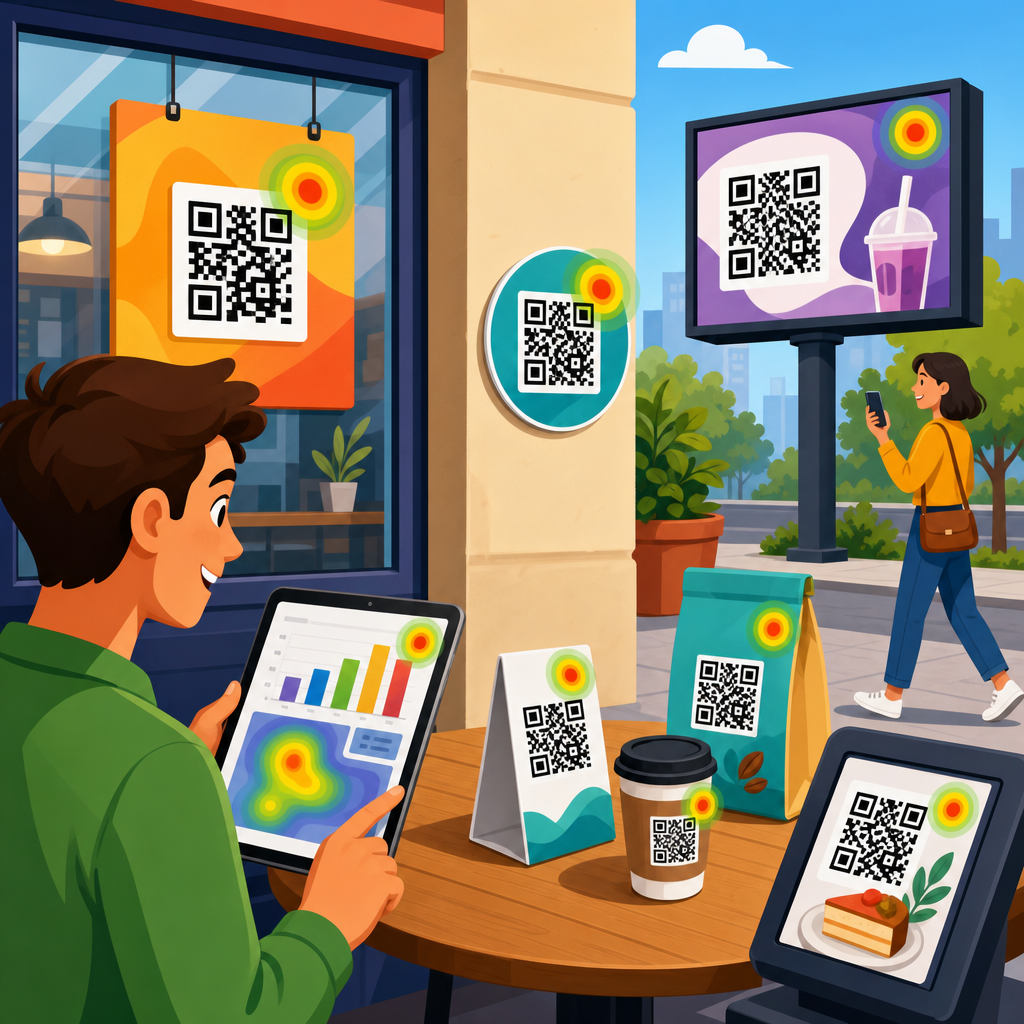
Measurement is where QR codes justify their place in direct mail budgets. Use dynamic QR codes whenever possible so the destination can be updated without reprinting and scan analytics can be collected centrally. Dynamic platforms such as Bitly, QR Code Generator PRO, Beaconstac, and Uniqode allow teams to monitor scan counts, timestamps, approximate location data, device type, and campaign-level performance. Static codes are acceptable for simple evergreen uses, but they limit flexibility and tracking depth.
UTM parameters should be attached to the destination URL so web analytics platforms like Google Analytics 4 can attribute sessions, conversions, and revenue to each mailing. I typically define campaign naming conventions before creative production starts. That prevents messy reporting later. A disciplined structure might include source as direct_mail, medium as qr, campaign as spring_offer, and content for segment or creative variant. If call tracking, CRM fields, or ecommerce events are also configured, you can tie scans to qualified leads, booked appointments, or purchases.
| Measurement element | What it shows | Practical use in direct mail |
|---|---|---|
| Unique QR code by segment | Which audience scanned | Compare neighborhoods, customer tiers, or prospect lists |
| UTM-tagged landing URL | Sessions and conversions in analytics | Connect scans to forms, sales, and revenue |
| Dynamic redirect | Destination changes without reprint | Swap expired offers or route by region |
| Promo code on landing page | Verified redemption | Measure in-store or online purchase impact |
| CRM campaign ID | Lead and customer lifecycle outcomes | Track pipeline value after the initial scan |
Do not rely on scan count alone. A campaign with fewer scans but stronger conversion intent may outperform one with high curiosity and low sales. Evaluate the full funnel: delivery volume, scan rate, landing page conversion rate, cost per response, cost per acquisition, average order value, and customer lifetime value where available. This fuller view is how direct mail teams move from novelty metrics to accountable marketing.
Use Segmentation, Testing, and Compliance to Improve Results
Segmentation is the difference between generic mail and relevant mail. Good direct mail campaigns use purchase history, geography, household demographics, service intervals, or customer lifecycle stage to decide which offer and landing page each group sees. A dental practice can mail lapsed patients a QR code for fast rebooking, while new patients receive a code leading to insurance verification and first-visit instructions. The code is only one element; relevance is the real performance driver.
Testing should be structured and limited to variables that matter. Start with offer, call to action wording, and landing page experience. Then test format, placement, and creative emphasis. For example, one version may say “Scan for your free sample,” while another says “Scan to claim your free sample before Friday.” The latter usually creates stronger urgency. Keep sample sizes large enough to produce directional confidence, and avoid changing multiple major variables at once unless the audience is big enough to support multivariate analysis.
Compliance and trust are also essential. If the landing page collects personal information, use secure forms, clear privacy disclosures, and consent language appropriate to your market. Regulated sectors such as healthcare, finance, and insurance need additional care with data handling, eligibility language, and claims. Trust can be reinforced with recognizable branding, a short backup URL, and copy that tells recipients exactly what they will receive after scanning. People are more willing to engage when the destination feels legitimate and safe.
Common Mistakes That Hurt QR Code Direct Mail Campaigns
The biggest mistake is sending recipients to a generic homepage. The second is offering no compelling reason to scan. Others include using tiny codes, poor contrast, weak mobile pages, and missing attribution setup. I also frequently see campaigns where the creative team finalizes print before anyone tests the live code on real devices. That is risky, especially when redirects, geotargeting, or form integrations are involved.
Another common problem is overcomplication. Marketers sometimes combine augmented reality, app downloads, long forms, and too many choices into a single user journey. In direct mail, simple usually wins: scan, land, complete one clear action. Finally, do not forget fallback paths. Some recipients prefer typing a short URL, calling a phone number, or visiting a store. Giving them options broadens response without weakening the QR experience.
QR codes in direct mail campaigns work best when they are built as part of a complete offline-to-online system. Start with a single goal, create a meaningful offer, send recipients to a mobile-first landing page, and track every step with dynamic codes and analytics. Design for real-world scanning, segment your audience, and test the message before scaling. The result is not just more scans, but better attribution, faster response, and stronger customer journeys from mailbox to conversion.
For brands building a QR Code Marketing & Strategy program, this topic deserves a hub-level approach because it connects creative, print production, data, analytics, and customer experience. Once the fundamentals are in place, supporting tactics such as personalized URLs, retargeting, loyalty workflows, and in-store redemption become far more effective. Review your next mailer with the recipient’s phone in mind, then build a scan experience that is useful, measurable, and easy to complete.
If you want better performance from direct mail, start by auditing one campaign: the offer, the code, the landing page, and the tracking. Small fixes in those four areas often produce the fastest gains. Then expand with segmentation and testing. That is how QR codes move from an add-on graphic to a dependable engine for offline-to-online integration.
Frequently Asked Questions
How do QR codes improve direct mail campaign performance?
QR codes improve direct mail by making it much easier for recipients to act the moment your mail piece captures their attention. Instead of asking someone to type a long web address, search for your brand online, or remember an offer for later, the QR code creates an immediate path from print to digital. A person can scan the code with a smartphone camera and land directly on a targeted destination such as a product page, coupon, appointment scheduler, event registration form, video, or personalized landing page. That reduction in friction often leads to higher response rates because fewer steps usually mean fewer drop-offs.
They also make direct mail more measurable. Traditional mail can be excellent for visibility and recall, but it has historically been harder to track than digital advertising. With QR codes, marketers can monitor scans, landing page visits, time of engagement, conversions, and even compare performance across different offers, audience segments, and formats. This makes direct mail feel less like a one-way message and more like a trackable, optimizable campaign channel. In practice, QR codes help combine the strong attention of physical mail with the speed, convenience, and analytics of digital marketing.
What should a QR code in direct mail link to?
A QR code should link to a destination that is relevant, specific, and immediately useful to the person receiving the mailer. The best destination depends on the goal of the campaign. If the objective is lead generation, the code might send recipients to a simple landing page with a short form. If the goal is sales, it could link directly to a product page, limited-time promotion, or mobile checkout experience. If the campaign supports local traffic, the code might open a store locator, map, or appointment booking page. For service businesses, it can connect to a quote request form, consultation scheduler, or testimonial video that builds trust before the next step.
The key is alignment. The offer on the mail piece and the experience after the scan should match perfectly. If the postcard promises “20% off your first order,” the QR code should not lead to a generic homepage where the visitor has to search for the discount. It should open a page that clearly repeats the offer and makes redemption easy. Mobile optimization is equally important because most scans happen on smartphones. Pages should load quickly, display cleanly on smaller screens, and focus on one primary action. In many cases, a dedicated landing page performs better than a general website page because it keeps the user focused and supports stronger tracking.
What are the best practices for placing and designing QR codes on direct mail pieces?
Effective QR code use starts with visibility and clarity. The code should be large enough to scan easily and placed in a location where it naturally supports the call to action. On a postcard, that usually means near the main offer or response section rather than buried in a crowded design. On letters, catalogs, or package inserts, the code should appear close to the messaging that explains why someone should scan. White space around the code is also essential because it helps smartphone cameras detect it more accurately and keeps the design from feeling cluttered.
Context matters just as much as placement. Never assume recipients will scan a code simply because it is there. Add a short, compelling instruction such as “Scan to claim your discount,” “Scan to book your appointment,” or “Scan to watch a 30-second demo.” This tells the reader what they will get and why it is worth the action. From a technical standpoint, use a high-contrast design, test the code on multiple devices before printing, and avoid distorting it too heavily with decorative branding. It is fine to customize a QR code with brand colors or a logo if readability remains strong, but function should always come first. A well-designed QR code is easy to notice, easy to understand, and easy to scan on the first try.
How can you track and measure QR code results in a direct mail campaign?
QR code tracking works best when each campaign has a clearly defined destination and measurement plan. At a basic level, marketers can use unique URLs, campaign parameters, dedicated landing pages, and analytics tools to see how many people scanned, what pages they visited, how long they stayed, and whether they completed a desired action. That desired action might be a purchase, form submission, coupon redemption, phone call, appointment booking, or app download. By giving different audience segments, mail drops, or creative versions their own QR codes, you can compare performance and identify which message, offer, or list delivered the best results.
Good measurement goes beyond scan counts. A high number of scans may look promising, but the more important question is whether those scans led to business outcomes. For that reason, marketers should connect QR code activity to conversion data wherever possible. For example, a retailer might track purchases tied to a coupon page, while a service provider might measure completed consultations. It is also useful to review timing, because response patterns often reveal how quickly recipients engage after delivery. When combined with customer relationship management systems, call tracking, or ecommerce reporting, QR codes can turn direct mail into a more accountable channel with clearer return on investment.
What mistakes should businesses avoid when using QR codes in direct mail?
One of the most common mistakes is sending recipients to a generic homepage instead of a focused landing page. When the post-scan experience is vague or disconnected from the offer on the mail piece, people lose momentum and leave. Another frequent issue is failing to explain the value of scanning. A QR code without a benefit statement often feels like an afterthought. Recipients need a reason, such as access to a discount, exclusive content, a faster signup process, product details, or a personalized experience. If the value is not obvious, response rates usually suffer.
Technical execution can also create problems. Small codes, low contrast, poor print quality, or placing the code over a busy background can make scanning difficult. Linking to pages that are slow, not mobile-friendly, or too complicated to navigate will weaken performance even if the mail piece itself is strong. Some campaigns also overlook testing, which is risky because even a minor URL error can break the entire response path after printing. Finally, businesses should avoid treating QR codes as a novelty. They work best when they are integrated into a broader campaign strategy with a clear goal, strong offer, relevant audience targeting, and a smooth digital follow-up experience. When used strategically, QR codes can be one of the most effective ways to make direct mail interactive, measurable, and easier to act on.