QR codes have moved from a pandemic-era utility to a core marketing asset, and the strongest gains now come from customer retention rather than one-time acquisition. In practical terms, QR codes for customer retention strategies means using scannable codes to keep buyers engaged after the first purchase through loyalty enrollment, product education, reordering, support, personalization, and timely follow-up. A retention strategy aims to increase repeat purchases, average customer lifetime value, and brand preference over time. In my work with retail, hospitality, and service brands, the highest-performing QR code marketing strategies are rarely flashy. They are useful, fast, and tied to a clear next step that makes the customer’s life easier.
That distinction matters because retention economics are compelling. Acquiring a new customer usually costs more than keeping an existing one, while even modest improvements in repeat purchase rate can raise profitability significantly. QR codes help because they bridge physical and digital moments without friction. A package insert can open a reorder page. A receipt can trigger a loyalty account. A restaurant table tent can unlock personalized offers based on visit history. For marketers building a QR code marketing strategy, the question is not whether codes can drive scans; it is whether each scan solves a customer problem and moves the relationship forward.
This hub article explains how to use QR codes across the retention journey, from onboarding and loyalty to support and win-back campaigns. It also defines the core terms marketers need. A static QR code points to fixed information and cannot be edited after printing. A dynamic QR code redirects through a short URL, allowing the destination, tracking, and campaign parameters to be updated later. First-party data is information collected directly from customers, such as purchase history or loyalty preferences. Scan-through rate measures how often people scan a code after seeing it, while conversion rate measures what they do next. Understanding those basics is essential if you want QR code marketing strategies that are measurable, scalable, and worth the print space.
The reason this topic matters now is simple: retention is increasingly won in micro-moments. Customers decide whether to buy again when opening a shipment, using a product, waiting for support, or visiting a location for the second time. Those moments are easy to miss with email alone, especially as inbox competition rises and app adoption stalls for many mid-market brands. A well-placed QR code can activate those moments immediately, on the exact object the customer is already touching. Done well, the code is not an add-on; it is the shortest path between experience and action.
Where QR codes fit in a retention-focused marketing strategy
QR codes support retention best when mapped to the post-purchase lifecycle. After the first transaction, customers generally need one of five things: orientation, value reinforcement, support, replenishment, or recognition. Orientation means helping them set up, use, or understand what they bought. Value reinforcement means reminding them why the purchase was smart through tips, recipes, tutorials, or member perks. Support means resolving issues quickly before frustration turns into churn. Replenishment means making the next purchase effortless. Recognition means showing loyal customers that the brand knows them and rewards their repeat behavior. Every effective QR code retention program I have seen serves at least one of those needs clearly.
For example, a skincare brand can place a dynamic QR code inside the shipping box that opens a personalized routine guide based on the purchased products. A specialty coffee roaster can print a code on the bag linking to brew ratios, storage guidance, and a reorder subscription. A fitness studio can put codes at the front desk and in follow-up texts that let first-time visitors join a class-pass loyalty program without downloading an app. In each case, the code does more than send traffic; it reduces effort at a decisive moment. That is why QR code marketing strategies outperform generic post-purchase messages when they are tightly connected to use context.
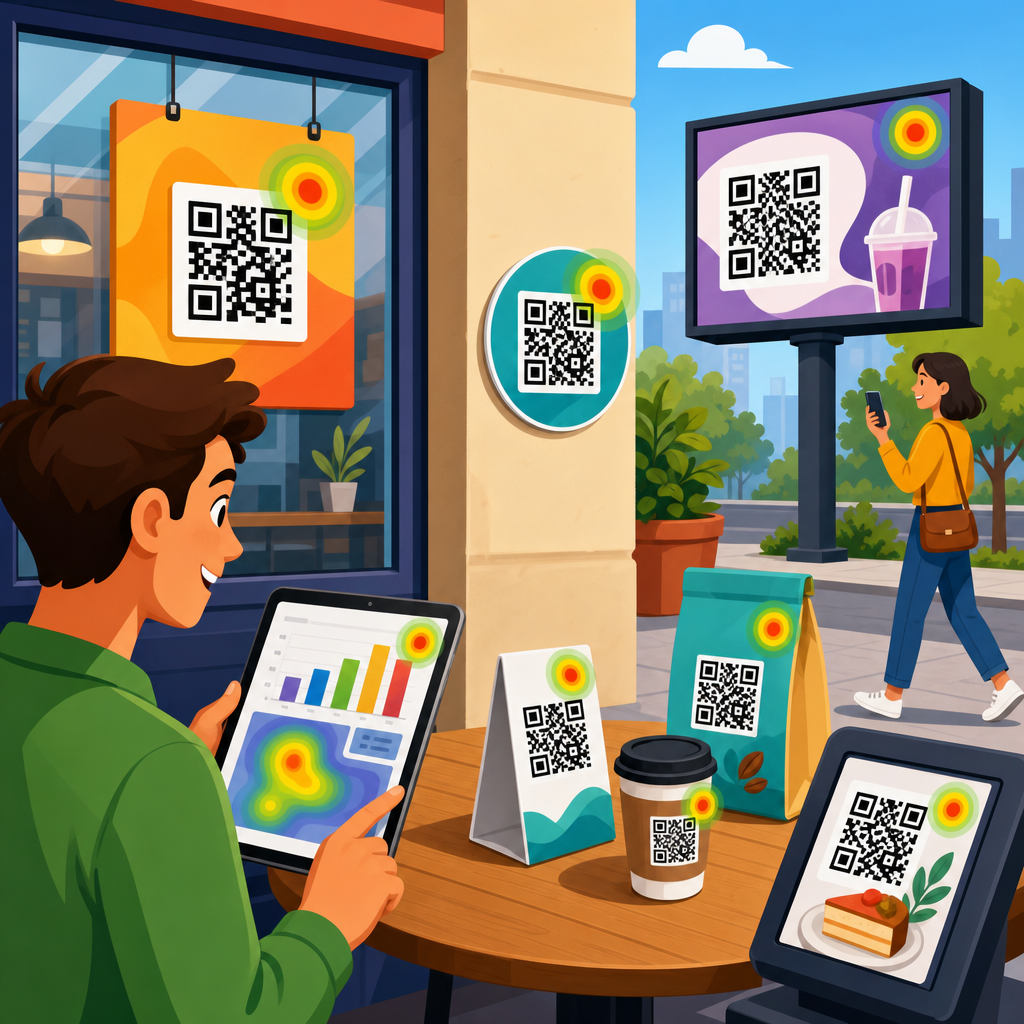
There is also a channel advantage. Physical surfaces are underused media inventory. Packaging, receipts, signage, labels, inserts, menus, invoices, and even staff name badges can carry QR codes that connect offline interactions to digital experiences. This makes them especially valuable for omnichannel brands that struggle to unify store and online behavior. With dynamic codes, UTM parameters, and event tracking in analytics platforms, marketers can attribute which store, campaign, product line, or print run generated not just scans but retained revenue. That level of visibility turns QR code marketing strategies from a design tactic into a lifecycle marketing system.
High-impact use cases that increase repeat purchases
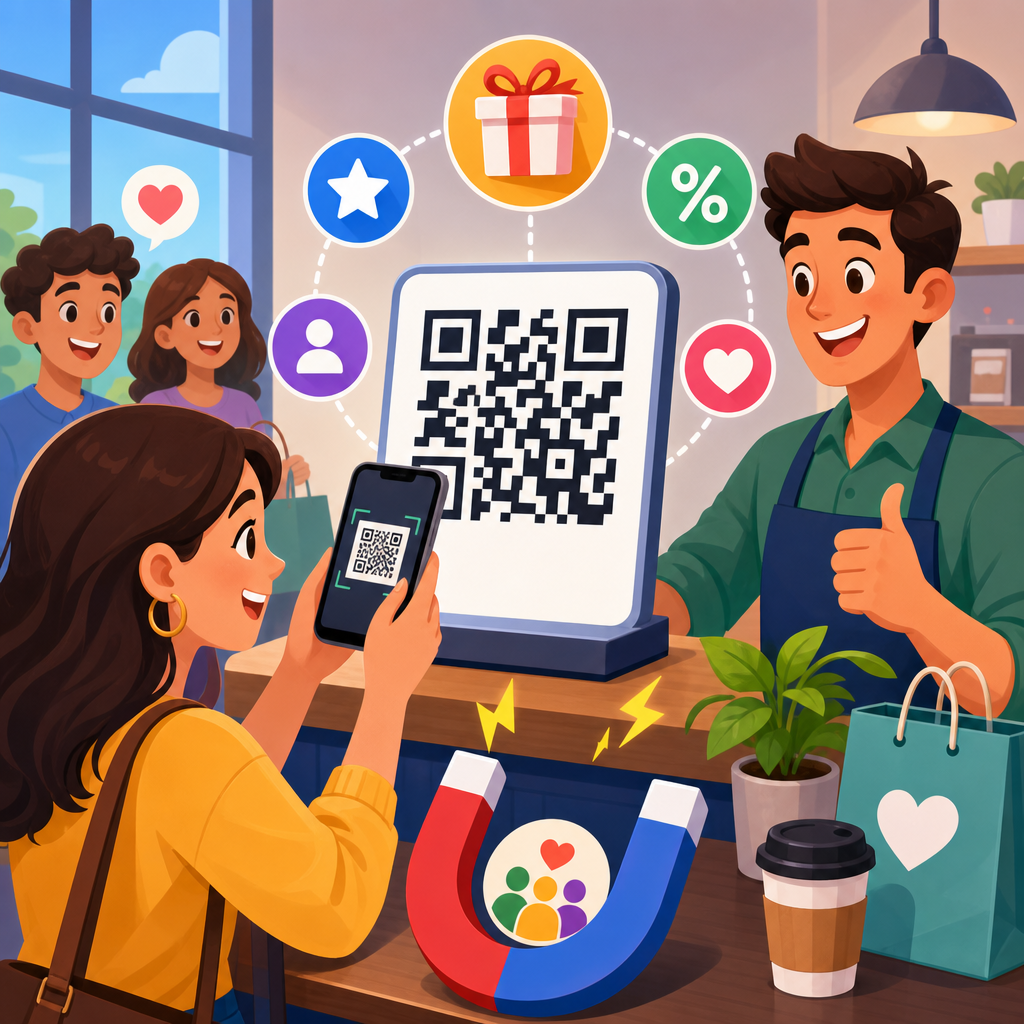
The most reliable retention use cases are loyalty enrollment, reorder pathways, educational content, and service shortcuts. Loyalty enrollment works because the action is simple and the benefit is immediate. A customer scans a code on a receipt or package, enters minimal information, and receives points, a bounce-back offer, or members-only access. Reorder pathways are powerful for consumables and replacement parts. If the customer can scan the package and land on the exact SKU, quantity, or subscription option, friction drops sharply. Educational content matters for products with a learning curve. Customers who use a product correctly are more likely to perceive value and buy again. Service shortcuts reduce churn by deflecting avoidable support tickets and resolving genuine issues faster.
Hospitality offers clear examples. Hotels often place QR codes in rooms for amenities, late checkout, dining reservations, and local recommendations. Those same codes can drive retention when they connect the stay to future value, such as enrolling guests in a loyalty program, offering a repeat-stay discount, or collecting preferences for the next visit. Restaurants use table tents, takeout bags, and receipts to encourage feedback, loyalty signups, and return-visit offers. The best campaigns segment by behavior. A first-time diner may get a welcome incentive; a regular may get early access to seasonal specials. QR code marketing strategies become materially stronger when the destination experience reflects customer history rather than treating every scanner the same.
Retail and consumer packaged goods brands can go even further by extending the product itself. A code on an apparel hangtag might link to care instructions, styling ideas, and complementary items. A pet food brand can route scanners to feeding guides by breed or age, then prompt autoship enrollment. A home appliance company can use a setup code to register warranty details, surface maintenance reminders, and recommend accessories six weeks later. These are not theoretical improvements. In practice, scan-linked onboarding reduces buyer remorse, and clear reorder options shorten the time to second purchase. That is the core retention payoff.
How to design QR experiences that customers actually use
Most QR failures are experience failures, not technology failures. Customers scan when the value proposition is obvious, the destination loads quickly, and the next action is effortless on mobile. Start with the on-object message. Never print a code without a reason to scan stated in plain language, such as “Reorder in 10 seconds,” “Join loyalty for your receipt points,” or “See setup video for your exact model.” Generic prompts like “Scan me” consistently underperform because they ask for attention without promising value. The destination should also match the promise exactly. If the code advertises reorder speed, the landing page should preselect the item and surface Apple Pay, Google Pay, Shop Pay, or another accelerated checkout option.
Visual execution matters too. Keep strong contrast, quiet space around the code, and adequate print size for the expected scanning distance. ISO/IEC 18004 standards govern QR code structure, but marketers mainly need to remember practicality: codes on shelf talkers, packaging, and menus should scan under normal indoor lighting with average smartphone cameras. Test across iPhone and Android devices before launch. I also recommend dynamic QR codes for nearly all retention campaigns because they allow destination updates, A/B testing, and emergency fixes after materials are printed. A static code is acceptable only when the destination will not change and measurement is not critical.
Landing pages should be intentionally minimal. Reduce fields, remove unnecessary navigation, and use autofill where possible. If authentication is required, offer passkeys, magic links, or SMS verification instead of forcing password creation mid-flow. When appropriate, personalize the page based on the code source. A code printed in a blender box should not send users to a generic homepage; it should open the specific blender’s getting-started guide, warranty registration, recipe library, and replacement-part options. Good QR code marketing strategies respect context so completely that the scan feels like part of the product.
Measurement, segmentation, and optimization for long-term retention
Retention programs fail when teams measure only scans. Scans indicate curiosity; retention requires downstream outcomes. The essential metrics are scan-through rate, landing-page completion rate, loyalty enrollment rate, second-purchase rate, days to reorder, repeat revenue per scanner, and churn reduction where applicable. Set up event tracking in Google Analytics 4, Adobe Analytics, or your customer data platform so each QR destination records meaningful actions. Use campaign naming conventions that encode placement, creative version, product line, geography, and date. Without disciplined taxonomy, analysis becomes anecdotal and optimization slows.
Segmentation is where QR code marketing strategies become sophisticated. New customers, repeat purchasers, high-value members, and at-risk buyers should not all see the same destination. A dynamic QR platform can route scanners based on campaign source, while your landing page or CRM can personalize the offer based on recognized identity. For example, if a known loyalty member scans a package insert, the page can show current points and a reorder suggestion. If an unknown customer scans the same insert, the page can prioritize account creation and product education. This kind of branching lifts conversion because it aligns the next step with customer readiness.
| Retention goal | Best QR placement | Primary metric | Example next action |
|---|---|---|---|
| Loyalty enrollment | Receipt, package insert | Signup rate | Create account and claim points |
| Faster reorders | Product label, refill pack | Days to reorder | Open exact SKU and checkout |
| Product adoption | Box interior, manual | Guide completion rate | Watch setup video |
| Support deflection | Device label, invoice | Self-service resolution rate | Open troubleshooting flow |
| Win-back | Direct mail, in-store signage | Reactivation rate | Redeem limited-time offer |
Optimization should be continuous. Test the call to action near the code, the landing-page format, the incentive, and the timing of follow-up messages. Small changes matter. In one retail program I worked on, replacing a generic “Learn more” prompt with “Register warranty and unlock care tips” increased completions because the benefit was clearer and more immediate. In another, placing the code inside the package lid outperformed a loose insert because visibility improved during unboxing. Good QR code marketing strategies mature through repeated operational learning, not one launch.
Common mistakes, governance, and privacy considerations
The biggest mistake is using QR codes without a retention objective. If the team cannot answer what customer problem the scan solves and which metric should move, the code is likely decorative. Another common error is linking to a homepage, which forces customers to hunt for the promised content. Poor print placement, low contrast, or tiny code size also sabotage performance. So does overloading the landing page with competing actions. Choose one primary conversion and support it with concise copy, fast loading, and obvious mobile controls.
Governance is equally important once campaigns scale. Establish standards for naming, redirect ownership, expiration rules, and testing. Dynamic codes should live in a managed platform with access controls so links do not break when employees leave or agencies change. Maintain a registry of where each code appears physically and what it is supposed to do. For regulated industries, route review through legal and compliance before printing. Healthcare, financial services, and alcohol marketing have additional disclosure and consent requirements that must shape the destination experience.
Privacy should be handled with the same discipline as any first-party data program. Be transparent about what information is collected after a scan and why. If location, purchase history, or profile data is used to personalize content, disclose that clearly and honor consent preferences. Follow applicable rules such as GDPR, CCPA, and platform-specific requirements for SMS and email capture. Security also matters: use HTTPS, avoid exposing raw personal data in query strings, and monitor redirects for tampering. Customers will keep scanning only if the experience feels safe and dependable.
Building a scalable hub for QR code marketing strategies
As a hub topic, QR codes for customer retention strategies should connect to every major post-purchase use case your organization can support. That includes loyalty QR codes, packaging QR codes, receipt QR campaigns, QR codes for product registration, QR code feedback loops, QR-powered reorder flows, restaurant QR retention, retail omnichannel QR programs, and direct-mail QR win-back offers. The advantage of building this as a coordinated system is consistency. Shared design rules, analytics taxonomy, CRM integration, and landing-page templates let teams launch faster while preserving data quality.
Start with two or three high-intent placements rather than spreading codes everywhere. For many brands, the best first moves are a package insert for onboarding, a product label for reorders, and a receipt code for loyalty. Validate each with hard metrics, then expand to store signage, catalogs, event materials, and service documents. Integrate the resulting data with your email, SMS, and customer support systems so a scan can trigger the next best action automatically. That is when QR code marketing strategies become compounding assets instead of isolated campaigns.
The central lesson is straightforward: retention improves when customers can act at the moment value is most relevant. QR codes create that bridge elegantly because they turn physical touchpoints into measurable digital pathways. When each code has a clear purpose, a contextual destination, and a defined metric, repeat purchases rise, service friction falls, and loyalty becomes easier to earn. Review your current customer journey, identify the overlooked post-purchase moments, and deploy one dynamic QR experience that solves a real customer need this quarter.
Frequently Asked Questions
How do QR codes help with customer retention instead of just customer acquisition?
QR codes are often associated with attracting first-time buyers, but their bigger long-term value is in what happens after the initial sale. A retention-focused QR code strategy gives customers a fast, low-friction path to the next useful action, whether that is joining a loyalty program, registering a product, accessing setup instructions, reordering supplies, contacting support, or unlocking personalized offers. Instead of asking customers to remember a website, search for an email, or download an app on their own, a QR code places the next step directly in front of them at the exact moment they are most likely to engage.
This matters because customer retention depends on consistency and convenience. When brands reduce effort after purchase, they increase the chances of repeat use and repeat buying. For example, a QR code on packaging can lead to product tutorials and care instructions, which improves satisfaction and reduces frustration. A code on a receipt insert can invite customers to enroll in rewards immediately, while a code on a refillable product can take them straight to a reorder page. These touchpoints strengthen the relationship over time and make the brand feel helpful rather than intrusive.
In practical terms, QR codes support retention by shortening the distance between ownership and action. They create simple, measurable interactions throughout the customer lifecycle. Instead of treating the sale as the finish line, businesses can use scannable experiences to keep communication relevant, timely, and tied to real customer needs. That is why QR codes have become a strong retention tool: they help brands stay useful after the purchase, which is one of the clearest drivers of loyalty and lifetime value.
Where should businesses place QR codes to improve repeat purchases and long-term engagement?
The best placement depends on when a customer is most likely to need guidance, support, or a reason to buy again. In many cases, packaging is one of the strongest locations because it reaches customers during unboxing, first use, and repeat use. A QR code on the box, label, insert, or instruction card can guide customers to loyalty enrollment, product education, warranty registration, care tips, cross-sell recommendations, or a reorder page. These are all retention-focused actions because they increase satisfaction and make future purchases easier.
Physical environments also create strong opportunities. In-store displays, receipts, bag inserts, shelf tags, table tents, and counter signage can encourage customers to join a rewards program or unlock a post-purchase benefit. For service businesses, QR codes can appear on appointment cards, invoices, membership materials, or printed follow-up documents. For restaurants and hospitality brands, codes can drive repeat visits through personalized offers, feedback requests, digital menus tied to loyalty accounts, or referral incentives that reward existing customers for coming back.
Product-dependent placement is especially effective for replenishable or consumable items. A QR code placed where the customer naturally looks when inventory is running low can connect directly to a one-click reorder flow or subscription option. For durable goods, placement near setup instructions or maintenance information can improve product success and reduce churn caused by confusion or underuse. The guiding principle is simple: place the QR code where it solves a problem or removes friction at the moment of need. Retention improves when customers do not have to search for help, offers, or reorder options because the brand has already made the next step easy.
What are the most effective QR code use cases for loyalty, personalization, and post-purchase follow-up?
Some of the highest-performing use cases start with loyalty enrollment. A QR code can lead customers directly to a prefilled sign-up page, rewards dashboard, or exclusive offer for joining after purchase. This works particularly well when the value exchange is clear, such as points on the current order, access to members-only pricing, birthday rewards, or early access to launches. The less friction involved, the more likely customers are to enroll and return.
Personalization is another strong use case. Dynamic QR codes can direct different customers to different experiences based on product type, purchase history, location, timing, or campaign source. A skincare brand might send a customer to a routine guide based on the item they bought, while a consumer electronics brand might direct users to setup content specific to the exact model in the box. Personalized landing pages, tailored product recommendations, and account-linked offers make the post-purchase journey feel relevant rather than generic, which increases engagement and trust.
Post-purchase follow-up is where QR codes can quietly deliver some of the greatest retention gains. Instead of relying only on email open rates, brands can place a scannable code on packaging or inserts that leads to onboarding content, usage tips, troubleshooting, FAQs, or review requests. This helps customers get more value from what they purchased and reduces the risk of dissatisfaction. QR codes can also support replenishment reminders, subscriptions, service booking, referrals, or VIP upsell paths. The most effective programs do not use QR codes as isolated gimmicks. They connect the scan to a clear next step that makes ownership easier, deepens customer understanding, and naturally leads to the next purchase.
How can businesses measure whether QR codes are actually improving customer retention?
Measurement starts by defining the retention outcome you want to influence. A QR code campaign should not be evaluated only by raw scan volume. Scans are useful, but the stronger question is what happened after the scan. Did customers join the loyalty program, register their product, reorder faster, redeem a personalized offer, submit fewer support tickets, or purchase again within a target window? Those downstream actions are what connect QR code activity to retention performance.
Businesses should track a mix of engagement and business metrics. On the engagement side, useful indicators include unique scans, repeat scans, scan timing after purchase, landing page completion rates, and conversion rates for the intended action. On the business side, focus on repeat purchase rate, reorder frequency, customer lifetime value, subscription sign-ups, loyalty participation, average order value, and churn reduction. If the QR code is tied to education or support, customer satisfaction scores, return rates, and support resolution outcomes can also reveal whether the experience is helping customers stay engaged.
Dynamic QR codes are especially valuable because they allow marketers to update destinations, segment audiences, and compare placements or offers without reprinting materials. For example, a brand can test whether a QR code on the outer package performs better than one on an insert, or whether a loyalty invitation outperforms a reorder offer for a certain product category. When QR scans are connected to CRM, ecommerce, or loyalty data, businesses can see which scan paths lead to higher repeat revenue over time. That is the real standard for success. A good QR retention strategy does not just generate interaction; it helps prove that simpler post-purchase experiences create more loyal, more valuable customers.
What are the biggest mistakes to avoid when using QR codes for customer retention strategies?
One of the biggest mistakes is sending customers to a generic homepage. If someone scans a QR code after making a purchase, they should land on a destination that matches the context of that exact moment. A generic homepage forces them to navigate, search, and guess what to do next, which defeats the purpose of using a QR code in the first place. Retention-focused scans should connect to a highly specific experience such as product setup, loyalty enrollment, reorder, support, or personalized recommendations.
Another common mistake is failing to make the value proposition obvious. Customers need a clear reason to scan. If the code simply says “Scan me,” response rates will usually be weaker than if it promises a concrete benefit such as “Register for rewards,” “Reorder in seconds,” “Get care instructions,” or “Unlock your member offer.” Strong retention programs are built on usefulness, not novelty. The scan should save time, reduce friction, or deliver something relevant enough to earn attention.
Brands also run into trouble when they ignore mobile experience, timing, and measurement. Landing pages must load quickly, display well on phones, and minimize form fields. A long, clunky experience can break trust immediately. Timing matters too: the content should align with where the customer is in the ownership journey. Early on, they may need onboarding or education; later, they may respond better to replenishment or upgrade prompts. Finally, businesses should not launch QR campaigns without analytics and testing. Without data, it is difficult to know whether the code is improving retention or merely generating curiosity. The most successful approach combines clear placement, a meaningful next step, excellent mobile usability, and measurable retention goals tied to real customer behavior.