QR code marketing strategies have moved from novelty to core channel because they connect offline attention to digital action in a single scan. A QR code, short for Quick Response code, is a two-dimensional barcode that stores a link, message, payment request, file, app deep link, or other machine-readable instruction. In marketing, that simple function matters because it reduces friction: a customer can move from a package, poster, receipt, shelf tag, direct mail piece, event badge, or product display to a landing page without typing a URL. I have used QR codes in retail launches, restaurant promotions, field events, and packaging refreshes, and the pattern is consistent: when the offer is clear and the destination is mobile-first, scan rates rise quickly.
This article is a hub for QR code marketing campaign examples that work, but it also explains the larger strategy behind successful campaigns. Many teams still ask the same practical questions. Where should a QR code be placed? What kind of incentive drives scans? Should you use a static or dynamic code? How do you measure performance? What makes one campaign feel useful while another feels gimmicky? The answers come down to context, value exchange, design, and analytics. A good QR campaign is not about the code itself. It is about matching a customer moment to a low-effort next step.
Why does this matter now? Smartphone camera apps have made scanning routine, and marketers need measurable ways to connect physical media to digital journeys. Print, packaging, out-of-home media, and in-store displays are expensive; QR codes add trackable behavior data to those placements. They also support first-party data collection at a time when privacy rules and browser changes have reduced the reliability of third-party tracking. Used well, QR codes can increase conversions, enrich customer profiles, support attribution, and improve customer experience. Used poorly, they send people to generic homepages, broken links, or pages that ignore mobile speed, which wastes attention and budget.
The strongest QR code marketing campaign examples share a few traits. They answer a specific customer question, solve an immediate problem, or deliver a clear benefit such as savings, information, access, or convenience. They use dynamic QR codes so marketers can update destinations without reprinting assets. They include a direct call to action near the code, such as “Scan for sizing help,” “Scan to reorder,” or “Scan for 15% off today.” They also send users to a landing page built for the campaign, not to a broad homepage. The rest of this guide breaks down the strategies, examples, and operational details that make those outcomes repeatable.
What makes a QR code marketing campaign work
A successful QR campaign starts with intent, not artwork. Before generating a code, define the business objective: lead capture, coupon redemption, product education, app installs, event check-in, review generation, loyalty enrollment, or direct purchase. Then define the audience moment. A shopper standing in an aisle needs something different from a conference attendee waiting in a registration line. In practice, the best-performing campaigns align the scan environment with the landing page promise. For example, a wine brand on a shelf can offer tasting notes, food pairings, and a retailer-specific rebate. A B2B booth banner can route visitors to a two-question qualification form and an instant calendar booking page.
Friction is the main conversion killer. Every extra tap reduces response. That is why campaign-specific landing pages consistently outperform generic destinations. If the call to action says “Scan for setup instructions,” the page should open directly to setup instructions, ideally above the fold, with concise steps and optional video. If it says “Scan to claim your offer,” the page should load a pre-applied coupon or wallet pass. I have seen scan volumes stay healthy while conversion lagged simply because users landed on a busy homepage and had to search for the promised content. The lesson is simple: message match matters more than novelty.
Trust also affects performance. People hesitate when a code appears without context because a QR code hides the destination. Reduce that uncertainty by naming the benefit, branding the surrounding creative, and using recognizable domains on the landing page. Dynamic QR platforms such as Bitly, QR Code Generator PRO, Beaconstac, and Flowcode make link management easier, but the destination should still live on a trustworthy branded domain whenever possible. Security concerns are real, especially in public spaces, so marketers should monitor for tampering and avoid placing critical codes where stickers can be swapped unnoticed.
QR code marketing campaign examples by channel
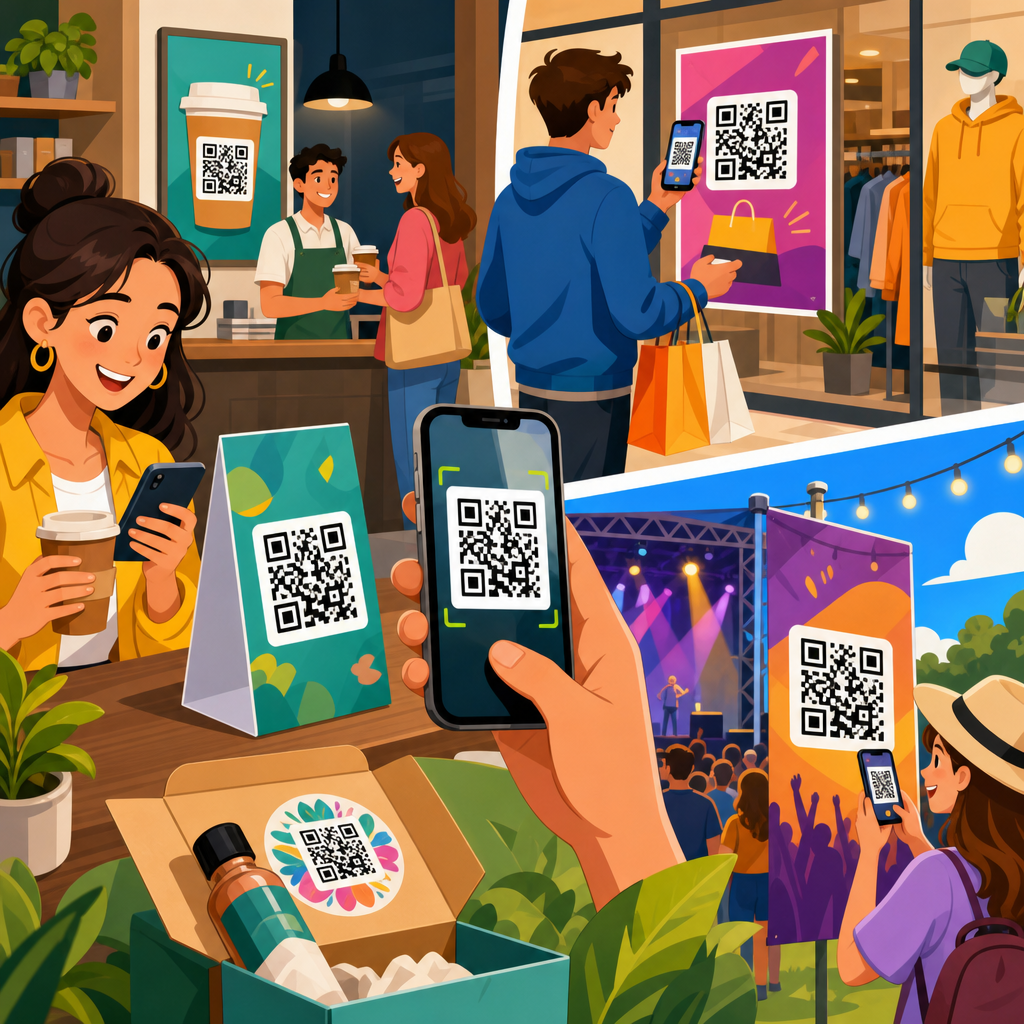
Packaging remains one of the most effective QR code placements because it reaches customers at high-intent moments: before purchase, during unboxing, and during product use. Consumer packaged goods brands often use packaging codes to deliver recipes, warranty registration, authenticity verification, or replenishment options. A coffee brand, for instance, can place a code on the back panel that leads to brew guides by grind type, origin stories, and a subscription reorder flow. This works because the customer is already holding the product and wants more confidence or convenience. The code extends the package without increasing label clutter.
Restaurants and hospitality businesses use QR codes differently. During the pandemic, many adopted digital menus, but the better long-term use case is not replacing paper alone. It is improving upsell, loyalty, and speed. A tabletop code can open a mobile menu with modifiers, limited-time offers, and one-tap loyalty enrollment. A hotel room code can connect guests to late checkout, spa booking, local guides, and service requests. In both cases, performance improves when the page remembers location or table context and when staff mention the benefit verbally. A passive code gets scanned less than one paired with a clear script.
Out-of-home advertising, direct mail, and retail signage can also produce strong results when urgency and relevance are built into the offer. I have seen direct mail pieces with personalized QR codes outperform standard mail because the destination was tailored to the recipient’s segment and prefilled with known information. Billboards and transit ads are harder because scan windows are short and connectivity varies, so the creative must be simple, the URL destination lightweight, and the offer instantly understandable. In-store shelf talkers perform better than billboards because shoppers can stop, scan, and act in the same physical context.
| Channel | Best use case | Example CTA | Primary metric |
|---|---|---|---|
| Product packaging | Education, reorder, warranty, authenticity | Scan for setup and refill options | Scan-to-purchase rate |
| Retail signage | Couponing, comparison, reviews | Scan for today’s bundle price | Coupon redemption |
| Direct mail | Lead capture, appointment booking | Scan to get your personalized quote | Form completion rate |
| Events and trade shows | Check-in, lead qualification, content delivery | Scan to book a live demo | Qualified meetings booked |
| Restaurants and hotels | Menus, ordering, loyalty, service | Scan to earn points on this order | Average order value |
Strategic campaign patterns that consistently perform
Among all QR code marketing strategies, four patterns repeatedly work. The first is utility-driven content. When customers need instructions, ingredients, sizing charts, care guides, or troubleshooting help, a QR code removes search friction. This is especially effective for electronics, furniture, cosmetics, apparel, and food products. The second pattern is incentive-driven conversion. Codes tied to discounts, samples, sweepstakes, or loyalty points generate higher scan rates, though not always better downstream quality. The third pattern is convenience-driven repeat purchase, such as “scan to reorder,” “scan to pay,” or “scan to schedule service.” The fourth is experience-driven engagement, where the code unlocks video, AR try-ons, behind-the-scenes content, or venue-specific content.
Each pattern has a tradeoff. Utility campaigns produce high satisfaction and often reduce support costs, but they may not capture as many leads. Incentive campaigns increase scans quickly, but they can attract bargain-only users unless the follow-up journey qualifies intent. Convenience campaigns tend to raise retention because they remove effort from an existing behavior. Experience campaigns can drive brand lift, but they need stronger creative and faster pages to justify the scan. The right choice depends on the customer lifetime value model. If margins are thin, convenience and retention may beat one-time discounting. If category education is the barrier, utility content usually wins.
Dynamic segmentation makes these patterns stronger. Instead of using one code everywhere, create channel-specific or location-specific variants. A code on a store window can lead to opening hours and local inventory, while the same product code on a package can lead to support and reordering. Marketers often miss this step and lose insight because all scans collapse into one undifferentiated source. With UTM parameters, location tags, and platform analytics, you can compare creative, placement height, store region, and call-to-action language. That evidence supports smarter iteration rather than guesswork.
Design, placement, and user experience rules
Good QR code design is mostly about readability and context. The code must have sufficient contrast, a quiet zone around it, and a size appropriate to the scanning distance. A practical rule used in print is a scanning distance ratio of roughly 10:1, meaning a code intended to be scanned from ten inches away should be about one inch wide. For larger distances, increase size accordingly. Avoid placing codes on curved seams, reflective materials, or heavily textured surfaces that distort the pattern. Brand styling is useful, but excessive customization can reduce scan reliability. Test every variation on both iPhone and Android devices before release.
Placement should follow user flow. On packaging, the code belongs where customers naturally look for instructions or benefits, not hidden under folds or near legal copy. On posters, place it where people can approach safely and where the camera can focus without obstruction. On tables and counters, angle matters; upright holders often outperform flat surfaces because they reduce glare. Always pair the code with a plain-language reason to scan and an expectation of what happens next. “Scan for nutrition facts” is clearer than “Learn more.” If internet access may be weak, keep the destination page lightweight and avoid heavy scripts.
Landing page experience decides whether a scan becomes a result. Use fast mobile pages, concise headlines, and one primary action. If forms are necessary, ask for the minimum information needed at that stage. Autofill, wallet passes, one-tap SMS signup, and mobile payment options improve completion. Accessibility matters too: readable font sizes, strong contrast, descriptive buttons, and captions on video help all users. For multilingual audiences, route by browser language or offer a visible language selector immediately. QR code strategy fails most often at this last mile, not at the moment of scanning.
Measurement, attribution, and optimization
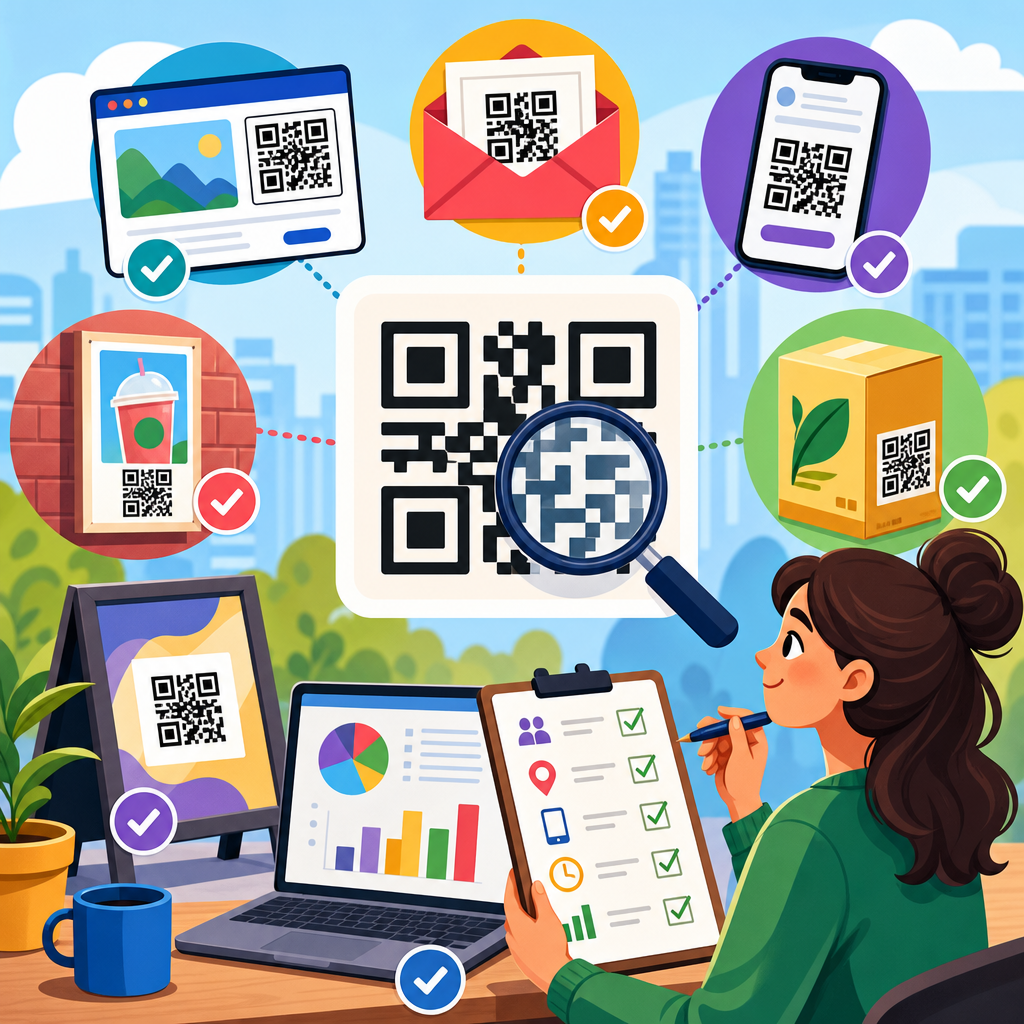
To measure QR code marketing accurately, track more than scans. Scans are a top-of-funnel interaction, not the outcome. The essential metrics are unique scans, scan rate by placement, landing page engagement, conversion rate, revenue or lead value per scan, and assisted conversion impact. If the campaign supports physical retail, connect coupon redemption, POS data, or loyalty IDs where possible. In B2B, connect scans to CRM stages such as meeting booked, opportunity created, and pipeline value. Without these links, teams overestimate campaigns that generate curiosity but not business results.
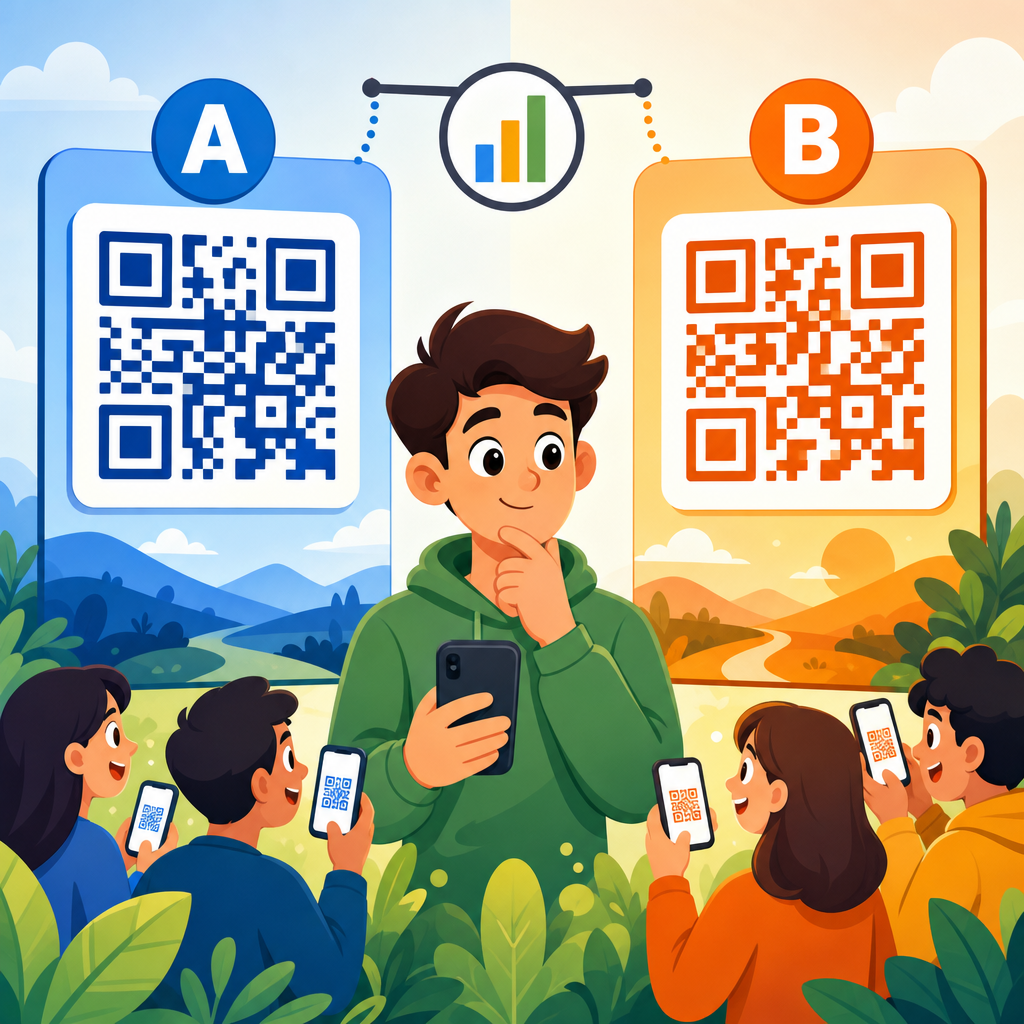
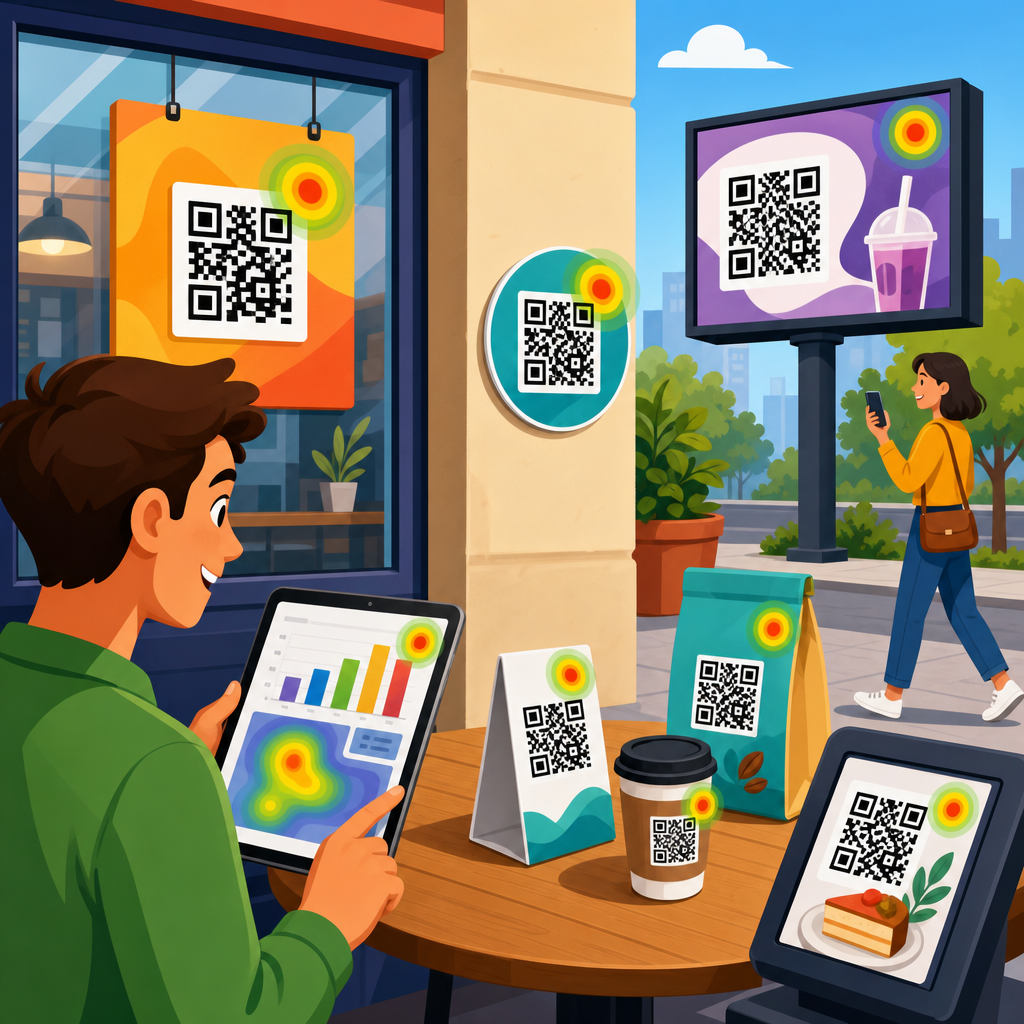
Dynamic QR codes are the operational standard because they allow destination changes, A/B testing, and analytics without reprinting. Pair them with UTM conventions in Google Analytics 4, Adobe Analytics, or your CDP so physical placements appear as structured acquisition sources. For events, I usually create unique codes by booth zone, session room, and staff badge because those distinctions reveal which conversations convert. Heatmapping physical context is harder than digital page testing, but simple controlled experiments still work: compare two calls to action, two placements, or two offers over matched periods and keep everything else fixed.
Optimization should be continuous. If scans are low, improve visibility, the call to action, or the offer. If scans are high but conversions are low, fix the landing page, load speed, or message match. If conversion is healthy but economics are weak, adjust the incentive or target higher-value segments. Governance matters as campaigns scale. Maintain an inventory of active codes, destinations, owners, expiration dates, and compliance reviews. Broken QR destinations erode trust quickly, and printed materials often outlive the original campaign timeline.
Building a scalable QR code marketing strategy
The best QR code marketing strategies are documented, testable, and integrated with the broader customer journey. Start with a use-case map: acquisition, education, conversion, retention, advocacy. Then assign placements, offers, and metrics to each stage. Build reusable templates for landing pages, naming conventions, analytics tags, and creative guidelines so teams do not reinvent the process. Align with legal, IT, brand, and operations early, especially if codes support payments, regulated claims, age gating, or data capture. This discipline is what turns one successful scan campaign into a repeatable growth channel.
As a sub-pillar hub under QR Code Marketing and Strategy, this page should lead naturally to deeper topics such as dynamic versus static QR codes, packaging QR code best practices, restaurant QR code marketing, event lead capture, QR code analytics, and QR code design standards. That internal structure helps users move from overview to implementation. It also mirrors how teams work in practice: strategy first, channel playbooks second, optimization third.
QR code marketing campaign examples that work all follow the same principle: make the next step obvious, useful, and easy on mobile. The code is not the strategy. The strategy is the value exchange around it, supported by clean design, tight message match, and disciplined measurement. If you are building or refreshing a QR program, audit your current placements, identify the customer moments with the highest intent, and launch one utility-driven and one incentive-driven test this quarter. The data will show you where QR codes can become a dependable part of your marketing mix.
Frequently Asked Questions
What are some of the most effective QR code marketing campaign examples?
Some of the strongest QR code marketing campaign examples are the ones that make the next step obvious, useful, and fast. Product packaging is a leading example because it reaches people at the point of purchase or use. Brands place a code on a box, label, or insert to send customers to how-to videos, product registration pages, loyalty programs, recipes, setup guides, or cross-sell offers. Retail shelf tags also perform well because they help shoppers access reviews, comparisons, coupon offers, and real-time inventory without leaving the aisle. In out-of-home advertising, posters, billboards, transit ads, and in-store displays work when they connect a brief moment of attention to an immediate action, such as claiming a discount, finding a nearby location, entering a giveaway, or watching a short product demo.
Direct mail is another high-performing use case because it gives recipients a simple bridge from print to digital. A postcard or catalog with a QR code can lead to a personalized landing page, appointment booking form, financing application, or limited-time promotion. Event marketing is especially effective as well. QR codes on badges, booth signage, table tents, and presentation slides can capture leads, distribute brochures, collect feedback, or drive app downloads. Restaurants have used them for menus, reorder flows, and loyalty enrollment, while service businesses use them on receipts, invoices, and vehicle wraps to collect reviews and repeat bookings. The common thread across the best examples is not the code itself. It is the relevance of the destination, the clarity of the call to action, and the low-friction path from scan to conversion.
Why do QR code marketing campaigns work so well compared with other offline-to-online tactics?
QR code marketing campaigns work because they remove steps from the customer journey. Traditional offline advertising often asks someone to remember a brand name, type a URL, search for an offer, or revisit the message later. Every extra step creates drop-off. A QR code compresses that journey into a single action. Someone sees a package, poster, receipt, shelf tag, direct mail piece, or event badge, scans once, and lands exactly where the marketer wants them to go. That speed matters because attention is limited, especially in retail environments, public spaces, and live events where people are distracted or in motion.
They also work because they are flexible and measurable. Marketers can use codes to direct traffic to landing pages, payment pages, coupon claims, app deep links, contact forms, social campaigns, product education hubs, or downloadable files. Dynamic QR codes make this even more powerful because the destination can be updated without reprinting the code, allowing campaigns to change offers, fix links, rotate creative, or localize experiences after launch. On the measurement side, QR scans can be tracked by source, placement, geography, device, and time, which helps teams compare performance across print channels and physical locations. When combined with UTM parameters, analytics platforms, and conversion tracking, QR campaigns can provide much clearer attribution than many traditional offline tactics. That combination of convenience, adaptability, and trackability is what has moved QR codes from a novelty to a dependable core marketing channel.
What makes a QR code campaign successful instead of ignored?
A successful QR code campaign starts with a strong value exchange. People scan when they understand what they will get and why it is worth the effort. “Scan to save 20%,” “Scan for assembly instructions,” “Scan to see customer reviews,” or “Scan to enter today’s giveaway” are much more compelling than a generic “Scan me.” Clear benefit-focused language is essential because the code alone does not communicate intent. Placement matters just as much. The code must be easy to notice, physically reachable, and scannable in real-world conditions. That means sufficient size, strong contrast, adequate white space, and thoughtful positioning on surfaces where a phone camera can actually capture it comfortably.
The landing experience is equally important. If the scan leads to a slow page, a non-mobile-friendly site, or a destination that does not match the promise on the sign or packaging, the campaign will underperform. The best campaigns use mobile-optimized landing pages with one primary action, short forms, concise copy, and fast load times. Trust signals also help. People are more willing to scan when the code appears in a branded design, near recognizable brand elements, and alongside a clear explanation of what happens next. Finally, testing is what separates average campaigns from high-performing ones. Smart marketers test different calls to action, offers, placements, page designs, and destinations to improve scan-through and conversion rates over time. Success comes from combining relevance, visibility, usability, and continuous optimization.
Where should businesses place QR codes for the best marketing results?
The best placement depends on where customer intent is strongest. If the goal is to influence purchase decisions, packaging, shelf tags, endcaps, point-of-sale displays, and window signage are excellent choices because they reach people while they are actively evaluating products. If the goal is follow-up engagement, receipts, order inserts, invoices, thank-you cards, and shipping boxes are powerful because they connect with customers after a transaction, when interest is still high. For local businesses, storefronts, table tents, menus, waiting areas, and service counters can turn foot traffic into bookings, sign-ups, reviews, and repeat visits. If the objective is lead generation, trade show booths, event badges, brochures, and presentation materials often perform well because attendees expect to gather information quickly and digitally.
Context should always guide placement. A code on a highway billboard may be difficult or unsafe to scan, while a code on a bus shelter, gym poster, campus flyer, or in-store display may be ideal because people have time and proximity. Good placement also considers the likely device angle, lighting, distance, and dwell time. A code printed too small on a high shelf or placed on a curved reflective surface can hurt performance, even if the offer is attractive. Businesses should also align placement with campaign intent. If they want app downloads, places with repeat customer exposure may be best. If they want immediate purchases, checkout areas or product pages may convert better. In short, the highest-performing placements are the ones that match the customer’s moment, attention level, and readiness to act.
How can marketers measure and improve QR code campaign performance?
Measurement starts with setting a clear objective before the code is deployed. A campaign might aim to increase sales, capture leads, drive app installs, collect reviews, promote a specific product, or boost event engagement. Once that goal is defined, marketers can build the QR destination and tracking structure around it. Dynamic QR codes are especially useful because they allow scan data collection and destination changes after launch. Marketers should use unique codes for each channel, location, format, or audience segment so they can tell whether packaging outperforms direct mail, whether one store beats another, or whether one call to action drives more conversions than another. Adding UTM parameters helps connect scan activity to analytics tools, making it easier to see traffic quality, bounce rates, form completions, purchases, and assisted conversions.
Improvement comes from analyzing both the scan stage and the post-scan stage. If scans are low, the likely issues are weak placement, poor visibility, unclear calls to action, or low perceived value. If scans are high but conversions are low, the problem is often on the landing page, such as slow load speed, confusing design, too many form fields, or a mismatch between the offer and the destination. Marketers can improve results by A/B testing headlines, offers, page layouts, button text, and incentive structures. They can also compare time-of-day performance, geography, device behavior, and repeat scans to refine campaigns further. The most effective teams treat QR campaigns like any other performance channel: they track consistently, learn from user behavior, and keep iterating until the offline impression reliably leads to digital action and business results.