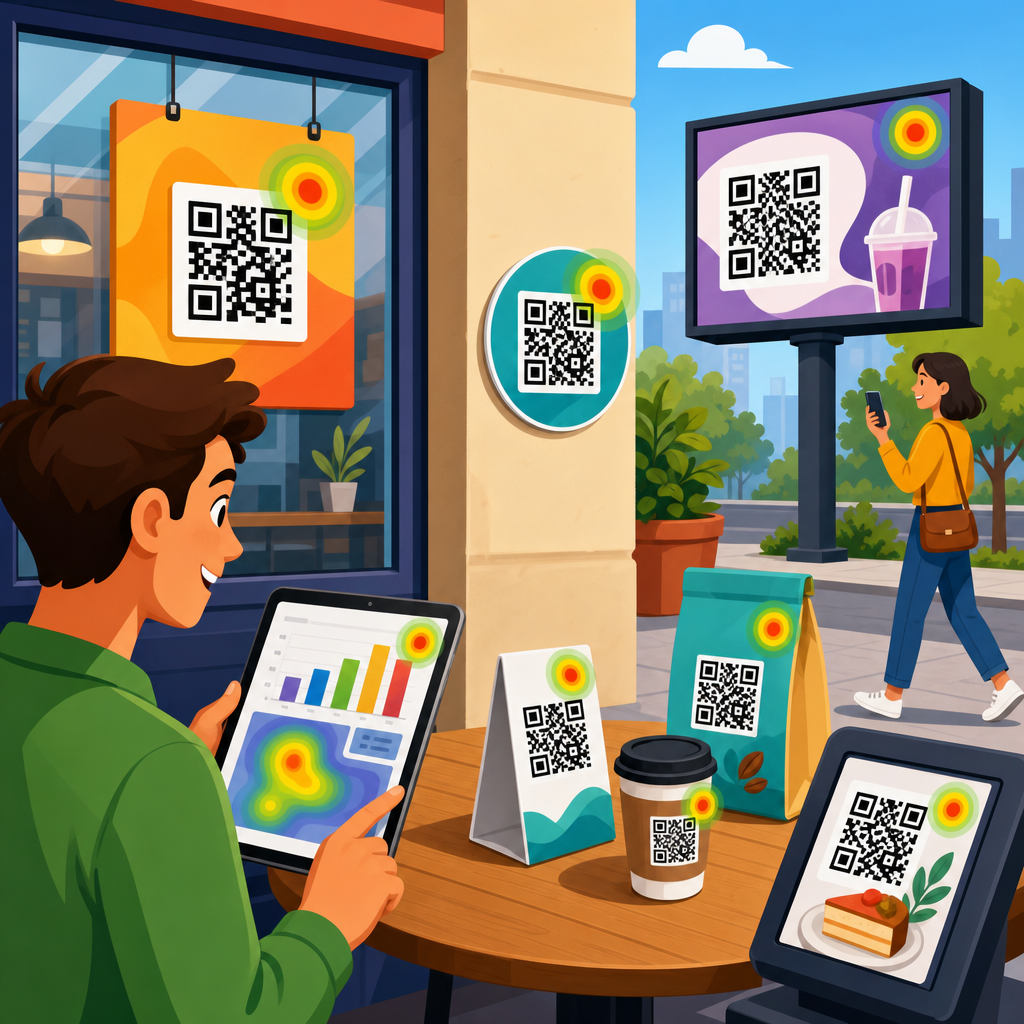
QR codes have become one of the most practical tools for bridging offline customer journeys because they connect physical touchpoints to digital experiences in a single scan. In marketing and operations, offline-to-online integration means turning something a person sees, touches, or receives in the real world into a measurable online action such as visiting a landing page, redeeming an offer, joining a loyalty program, registering a product, or starting a payment flow. A QR code is simply a two-dimensional barcode that stores data, usually a URL, but its strategic value comes from where it is placed, what happens after the scan, and how that interaction is measured. I have used QR campaigns across retail stores, trade shows, packaging, direct mail, hospitality, and field sales, and the pattern is consistent: when the code, context, and destination match customer intent, conversion rises and attribution improves.
This matters because customer journeys are no longer neatly split between store and screen. A shopper may notice a window display, compare reviews on a phone, scan a shelf talker, and complete checkout later from an email reminder. A diner may scan a tabletop code, join a rewards program, then order catering weeks later. A homeowner may receive a postcard, scan it, book an estimate, and finish the sale after an in-person visit. Without a reliable bridge between offline exposure and online behavior, brands lose visibility into what drove action. QR codes solve that gap better than most alternatives because smartphone cameras read them natively, deployment is inexpensive, and destinations can be personalized, tracked, and updated. Used well, they do far more than create convenience; they create continuity across channels.
What QR Codes Actually Do in an Offline-to-Online Strategy
At a tactical level, a QR code reduces friction between attention and action. Instead of asking someone to type a long URL, search a brand name, or download an app before seeing value, the scan delivers the next step immediately. That next step can be informational, transactional, or relational. Informational uses include manuals, ingredient sourcing, product demos, warranty details, and event schedules. Transactional uses include mobile checkout, appointment booking, menu ordering, coupon redemption, and bill payment. Relational uses include CRM enrollment, feedback capture, newsletter sign-up, and loyalty onboarding. The most effective offline-to-online integration plans map each code to a specific job the customer is trying to complete in that moment.
Static and dynamic QR codes serve different purposes. A static code contains a fixed destination and is best for permanent content that will not change, such as a vCard or a stable URL. A dynamic code points to a short redirect that can be edited later, which is what serious marketing teams generally use. Dynamic QR codes enable scan analytics, destination updates, A/B testing, geo-based routing, and campaign continuity when a page changes. If printed packaging is already in market and the landing page must be revised, a dynamic code preserves the printed asset. That operational flexibility is one reason QR codes have become central in retail packaging, out-of-home media, and direct mail programs.
The other key function is attribution. A well-structured QR program uses UTM parameters, campaign naming conventions, analytics events, and CRM integration so each scan can be tied to source, medium, asset, audience, and outcome. For example, the same spring promotion can run on store posters, product inserts, and event signage, but each placement should have its own dynamic QR code and destination parameters. In Google Analytics 4, those visits can be segmented by campaign. In HubSpot or Salesforce, lead records can capture the original scan source. In a call tracking platform, the landing page can swap in a source-specific phone number. This is how an offline customer journey becomes visible, optimizable, and commercially accountable.
Where QR Codes Fit Across the Physical Journey
QR codes work best when placed at moments of natural intent. In storefronts, they capture after-hours demand by sending passersby to book, browse, or message. On shelves, they answer buying questions about specifications, reviews, compatibility, sustainability claims, or available sizes. On packaging, they extend the relationship beyond the purchase with onboarding guides, refill subscriptions, care instructions, and review requests. In restaurants and hotels, they reduce wait times for menus, room service, amenity guides, and post-stay feedback. At events, they turn booth traffic into qualified leads through gated demos, scheduling links, and instant collateral delivery. In printed brochures, catalogs, and mailers, they provide a measurable response path that is faster than typing a URL and easier to attribute than generic brand search.
The practical lesson from campaigns I have managed is that placement should follow motivation, not novelty. A code on a billboard can work, but only if the environment allows a safe and realistic scan window, the message is brief, and the destination is highly relevant. A code on a product carton near the setup instructions usually performs better because the user already needs help. Likewise, a code on a trade show badge handout can outperform a large booth graphic because the person keeps it and scans later when they have time to compare vendors. Context determines scan quality. High-intent scans from packaging or service environments often convert better than high-volume scans from broad awareness placements.
Different industries emphasize different journey stages. Consumer packaged goods brands use packaging QR codes to deliver recipes, traceability data, and loyalty registration. Automotive dealers use codes on window stickers to show vehicle history, finance options, and trade-in estimators. Healthcare providers use them on discharge paperwork to link patients to medication instructions, follow-up scheduling, and telehealth portals, while ensuring privacy controls are respected. Museums use exhibit labels to unlock audio guides and donor appeals. Real estate agents use yard signs and open-house flyers to route prospects to virtual tours and lead forms. The connecting principle is simple: every offline moment that creates a question can also create a scan.
Designing a High-Converting QR Code Experience
A QR code does not convert by itself; the full scan experience does. The first requirement is scannability. Use sufficient size, strong contrast, quiet zone spacing, and a tested error-correction level. Dark code on a light background remains the safest standard. Avoid glossy surfaces that reflect light, busy artwork that competes with the finder patterns, and placements where the code bends around corners or seams. For print, vector output prevents blur. For distance viewing, sizing should reflect expected scan range. Teams often remember branding and forget scan mechanics, but if the camera cannot read the code instantly, adoption drops sharply.
The second requirement is a clear value proposition beside the code. “Scan me” is weak because it tells people what to do, not why. “Scan for installation video,” “Scan to claim 15% off,” and “Scan to see ingredients and sourcing” set expectation and improve intent matching. In retail tests, adding a concise call to action and one line of benefit copy consistently lifts scans because customers understand the payoff before opening the camera. When a code leads to gated content, say so. When it starts a payment, indicate security and supported methods. Transparency increases trust and reduces abandonment.
The third requirement is a mobile-first destination. Pages linked from offline media must load quickly, display cleanly on small screens, and complete the task with minimal fields. If the page asks for too much too early, users drop. The destination should preserve message continuity from the physical asset, repeat the offer or context in the headline, and provide a visible next action above the fold. Structured pages also help search visibility and content reuse.
| Offline touchpoint | Best QR destination | Primary metric | Common mistake |
|---|---|---|---|
| Product packaging | Setup guide, registration, refill subscription | Registrations or repeat orders | Sending users to the homepage |
| Store signage | Offer page, inventory lookup, store-specific coupon | Scan-to-purchase rate | No local relevance |
| Direct mail | Personalized landing page or booking form | Appointments booked | Using one generic code for all segments |
| Event booth | Demo request, calendar booking, asset download | Qualified leads created | No CRM tagging |
| Restaurant table | Menu, order flow, loyalty sign-up | Orders or enrollments | Poor Wi-Fi fallback |
Measurement, Attribution, and Operational Setup
Measuring QR code performance starts before design. Every code should have a naming convention that identifies campaign, channel, location, asset version, and owner. Dynamic QR platforms such as Bitly, QR Code Generator PRO, Flowcode, Beaconstac, and Scanova provide redirect management and scan data, but they should not be the sole source of truth. I recommend pairing them with Google Analytics 4 for behavioral reporting, Google Tag Manager for event setup, and CRM fields that store original source details. This layered approach prevents the common problem of scan counts living in one dashboard while revenue and lead quality live somewhere else.
Useful metrics differ by objective. For awareness placements, scan rate and unique scans matter first. For consideration, measure engaged sessions, content completion, or quote starts. For conversion, focus on purchases, bookings, registrations, or qualified lead creation. For retention, look at repeat scans, reorder rate, support deflection, and review submission. Segmentation is essential. Compare scan behavior by location, device, time of day, creative version, and destination type. A shelf tag that drives fewer scans than packaging may still deliver more revenue if scan intent is stronger. Raw scan volume is not success; downstream action is.
Operationally, governance matters more than teams expect. Someone must own redirect hygiene, expired offer removal, URL standards, privacy review, and print approval. Broken QR journeys usually come from process failures: a page unpublished after a redesign, a code reused without updating tags, or a franchise location linking to the wrong store. For enterprise rollouts, create a QR request workflow with required fields for destination, objective, expiration date, analytics parameters, legal review, and fallback path. If a code appears in long-life media such as packaging, warranty cards, or outdoor displays, plan for future redirects and content maintenance from the start.
Common Pitfalls and How to Avoid Them
The biggest mistake is treating QR codes as a gimmick instead of a journey design tool. When brands add codes without a defined customer need, scans are low and teams conclude the tactic does not work. In reality, the problem is usually weak relevance, poor creative, or an unhelpful destination. Another frequent issue is linking every code to the homepage. Homepages force users to navigate, while the best QR journeys continue the exact task implied by the physical context. A code on assembly instructions should not land on a generic brand page; it should open the precise setup video or support article for that product model.
There are also technical and compliance pitfalls. Some low-quality generators insert ads or unreliable redirects, which undermines trust. Security matters because consumers have learned to be cautious about unknown scans. Use branded domains where possible, HTTPS everywhere, and destination pages that visibly match the brand. In regulated industries, ensure claims on printed assets and destination pages stay aligned over time. Accessibility should not be ignored either. Include a short fallback URL near the code, make destination pages screen-reader friendly, and avoid conveying essential information through the code alone. For shared environments with weak connectivity, such as basements, stadiums, or transit areas, keep pages lightweight and provide an offline fallback when feasible.
Finally, do not assume one code design fits all contexts. On black packaging, reverse-out designs may look elegant but can reduce reliability depending on contrast and print quality. On curved bottles, placement near flat panels scans better. In direct mail, personalization can dramatically lift response, especially when the landing page continues the same offer and audience language from the mail piece. Testing matters. Before any major run, validate scan performance across iPhone and Android devices, camera apps, lighting conditions, distances, and print proofs. Ten minutes of preflight testing can save a six-figure reprint.
Building a Hub Strategy for Offline-to-Online Integration
As a hub topic within QR Code Marketing and Strategy, offline-to-online integration should connect to several deeper subjects: QR code design best practices, dynamic versus static QR codes, QR analytics and attribution, packaging QR code strategy, event lead capture, direct mail response optimization, retail signage, restaurant ordering flows, loyalty enrollment, and QR code security. The hub page sets the strategic framework while those supporting pages answer channel-specific questions. That structure helps readers move from concept to execution and helps search engines understand topical depth through clear internal relationships.
The core takeaway is that QR codes work when they reduce friction at a real moment of intent and route people into a mobile experience built for the next step. They are inexpensive to print, but high-performing programs are not casual. They require thoughtful placement, unambiguous calls to action, dynamic routing, analytics discipline, and ongoing maintenance. When those pieces are in place, QR codes make offline media measurable, improve customer convenience, and give teams a direct line from physical exposure to digital conversion.
If you are building an offline-to-online integration program, start with one journey that already has clear demand: packaging onboarding, store offer redemption, event lead capture, or direct mail appointment booking. Map the customer question, create a dedicated mobile destination, tag every scan properly, and test the experience in the real environment before rollout. Then expand by touchpoint, using performance data to decide where QR codes create the most value. Done well, QR codes do not just connect offline and online channels; they turn scattered interactions into a coherent customer journey you can measure, improve, and scale.
Frequently Asked Questions
1. How do QR codes help bridge offline customer journeys?
QR codes bridge offline customer journeys by turning physical interactions into immediate digital actions. When a customer scans a code printed on packaging, signage, receipts, direct mail, in-store displays, event materials, or product inserts, they move from an offline moment into an online experience without needing to type a URL or search for a brand manually. That single scan reduces friction and creates a cleaner path from awareness to action.
In practice, this means a printed code can send someone to a product page, a campaign landing page, a loyalty program signup, a support center, a payment page, a product registration form, or a limited-time offer. Instead of hoping a customer remembers what they saw in-store and follows up later, the QR code captures attention while intent is high. That is what makes it especially effective for offline-to-online integration.
From a business perspective, QR codes also make offline channels more measurable. Brands can track scans, compare performance across locations or materials, and understand which physical touchpoints are driving digital engagement. This helps connect marketing and operational efforts that were once difficult to measure. The result is a more seamless customer journey, where offline moments no longer stop at exposure but become trackable opportunities for conversion, service, and long-term retention.
2. Where should businesses place QR codes to improve the offline-to-online experience?
The best placement depends on where customers are already engaging with your brand in the physical world. High-impact locations often include product packaging, shelf talkers, storefront windows, table tents, posters, brochures, receipts, invoices, event booths, shipping boxes, business cards, manuals, and loyalty materials. The key is to place the QR code at a moment when the customer naturally wants more information, wants to take the next step, or needs support.
For example, a retailer might place QR codes on shelf displays that lead to product comparisons, reviews, or availability checks. A restaurant might use them on packaging or table signage to connect diners with menus, rewards programs, or reordering pages. A manufacturer could add codes to equipment labels or inserts to support product registration, warranty activation, or setup instructions. Service businesses can use them on print ads, mailers, or in-office signage to prompt appointment booking or consultation requests.
Placement should also be practical. Codes need to be easy to see, easy to scan, and accompanied by a clear call to action such as “Scan to register,” “Scan for 10% off,” or “Scan to watch setup instructions.” Without that context, some customers may ignore the code because they do not know what they will get. Effective placement combines visibility, relevance, and timing so the code feels like a useful next step rather than a disconnected design element.
3. What makes a QR code campaign effective for marketing and customer engagement?
An effective QR code campaign starts with a specific goal. Businesses should know whether they want to drive purchases, collect leads, increase loyalty signups, deliver product education, simplify support, or encourage repeat engagement. When the goal is clear, the destination behind the QR code can be designed to match the customer’s intent and the context in which they scanned it.
Strong campaigns also provide a clear value exchange. Customers are much more likely to scan when there is an obvious benefit, such as instant access to an exclusive offer, useful product information, faster checkout, event registration, or personalized support. A QR code that leads to a generic homepage usually underperforms because it does not respect the customer’s moment of interest. The landing experience should feel direct, relevant, and mobile-friendly.
Good execution matters just as much as strategy. The code should be easy to scan, tested across devices, and placed in locations with enough lighting and space for comfortable use. The accompanying message should explain exactly why the scan is worthwhile. Businesses should also use trackable links or dynamic QR codes so they can measure performance and optimize over time. Reviewing scan volume, conversion rates, page engagement, and location-level performance can reveal which offline touchpoints are creating the most meaningful digital outcomes. The most effective campaigns treat QR codes not as a novelty, but as a deliberate bridge between physical attention and digital action.
4. How can businesses measure the success of QR codes in offline customer journeys?
Success measurement begins by defining what the scan is supposed to accomplish. In some cases, the primary metric may be total scans. In others, it may be redemptions, registrations, purchases, bookings, app downloads, support interactions, or payment completions. The scan itself is only the first signal. What matters most is whether that scan leads to the intended customer action.
Businesses can measure QR code performance by using trackable URLs, campaign parameters, dynamic QR code platforms, analytics dashboards, and conversion tracking on the destination page. This allows teams to identify which printed materials, store locations, products, or campaigns are driving engagement. For example, a brand may discover that packaging inserts generate more loyalty signups than in-store posters, or that codes on receipts lead to more repeat purchases than codes on shelf signage.
It is also useful to evaluate the broader customer journey. Metrics such as bounce rate, time on page, form completion rate, average order value, and repeat visit behavior help show whether the digital experience connected to the code is actually meeting customer needs. If scans are high but conversions are low, the issue may be the landing page, the offer, or a mismatch between the offline context and the online destination. Measuring QR code success properly gives businesses a clearer view of how offline touchpoints contribute to digital performance and where improvements will have the greatest impact.
5. What are the most common mistakes to avoid when using QR codes for offline-to-online integration?
One of the most common mistakes is sending users to a generic or irrelevant destination. If a customer scans a code on a product box expecting setup help and lands on a homepage, the experience feels disconnected and frustrating. The destination should match the reason for the scan as closely as possible. Relevance is what turns a QR code from a gimmick into a useful customer journey tool.
Another frequent issue is poor usability. Codes that are too small, distorted, placed on curved surfaces, hidden in low-contrast designs, or printed where scanning is awkward often fail in real-world settings. Businesses should test codes in the exact environments where customers will encounter them. Mobile optimization is equally important. Even a perfectly placed QR code will underperform if the landing page loads slowly, displays poorly on smartphones, or asks for too much information too soon.
Brands also make mistakes when they fail to explain why customers should scan. A simple call to action can dramatically improve engagement because it removes uncertainty. Finally, many organizations miss the opportunity to track and refine performance. Static implementations without campaign measurement make it harder to learn what is working. The best approach is to combine thoughtful placement, a clear value proposition, a streamlined mobile destination, and reliable analytics. When those elements work together, QR codes become a practical, measurable way to connect offline experiences with digital outcomes.